


Ceppo Marble Slab
Premium Italian Ceppo marble slabs, also widely known as Ceppo Di Gre marble. Features natural grey base with mixed-size aggregate stone fragments, distinctive brecciated texture, high-gloss polished finish, excellent wear and compressive strength. Custom cut sizes and thicknesses available. Ideal for commercial interiors, hotels, retail spaces and residential flooring & wall projects. Factory direct supply for architects and building contractors.
Luxury Marble:Italy Sourced Polished Ceppo Marble Slabs Factory Supplied for Large-Scale Commercial Building Projects
Natural Marble: Ceppo Marble, Ceppo Di Gre Marble
Marble Factory: KA UNITED STONE
Marble Slab Size: 309x177cm, 308x178cm, etc.
Marble Tiles: 24''x24'', 12''x24'', 12''x12'', 18''x18''
Thickness: 20,30mm
Surface: Polished, Honed, Brushed
MOQ: 300 SQM
Application: KA UNITED Supplies A full Range of natural Marbles For Floor, Wall Tiles, Kitchen and Bathroom Countertops, and other Commercial Projects
Product Introduction
Ceppo Di Gré Marble Slabs For Villas Interior Floor, Wall and Countertops designs
 |
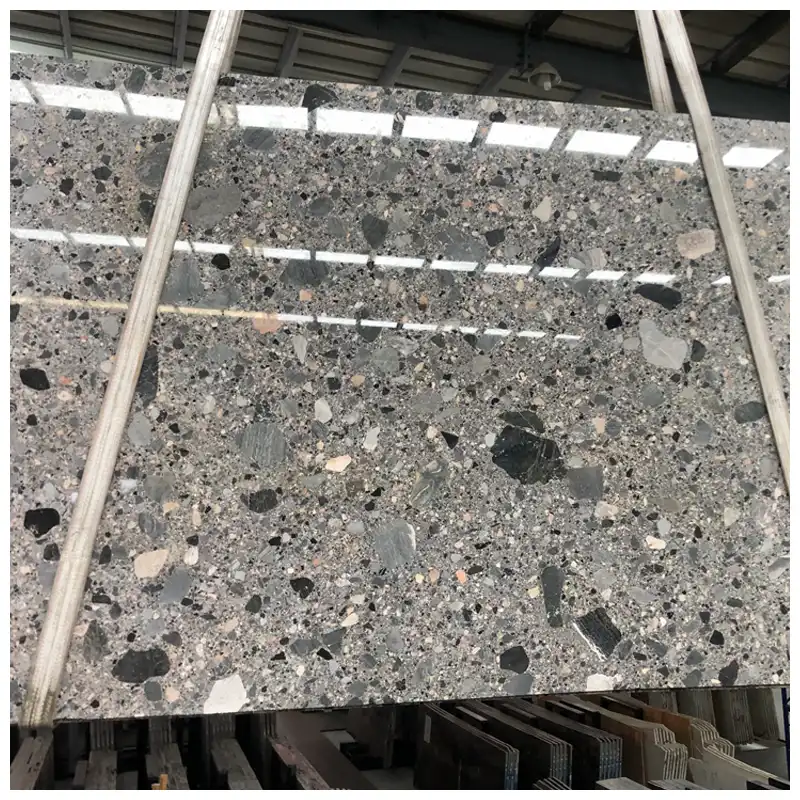
Ceppo Marble Slabs are recognised by an aggregate-like natural structure rather than the flowing linear veining normally associated with conventional marble. Large and small grey fragments sit within a lighter cemented matrix, producing a surface that can look architectural and granular even across a full polished slab. Ceppo Di Gre Marble Slabs is a widely used commercial sourcing description, but the geological identity is more specific: Ceppo di Gré is a strongly cemented dolomitic breccia from Lombardy, Italy, not a true metamorphic marble. The natural clastic structure explains why designers sometimes compare the material with Terrazzo Look Marble Slabs. The visual similarity comes from the irregular fragment distribution, but Ceppo di Gré is a natural rock rather than an engineered terrazzo surface. Buyers searching for Italian Grey Marble may therefore encounter Ceppo di Gré in the same architectural stone category, although its mineral structure, porosity and fabrication behaviour should be evaluated as Ceppo di Gré rather than assumed to match conventional marble. |
Ceppo di Gré Marble Slab Sizes, Thicknesses, Quantity and Price Reference
| Material | Natural Ceppo di Gré stone |
| Petrographic Type | Dolomitic monogenic breccia |
| Origin | Lombardy, Italy |
| Slab Size Reference A | 309 × 177 cm |
| Slab Size Reference B | 308 × 178 cm |
| Thickness | 16 / 18 / 20 / 30 mm |
| Surface | Polished according to the supplied product specification |
| Quantity Reference | 2,000 SQM |
| Reference Price | USD 60–80/SQM; final quotation should confirm slab selection, thickness, quantity and fabrication scope |
| Custom Processing | Floor panels, wall cladding, stairs, countertops, vanity components and project-specific cut-to-size pieces |
The two slab dimensions are current product references rather than a guarantee that every available slab will have identical usable dimensions. Natural edges, cavities and cutting allocation should be considered when calculating project yield.
Ceppo Grey Marble Slabs: Aggregate Distribution and Slab SelectionCeppo Grey Marble Slabs can vary significantly in the number, size and concentration of visible fragments. Some cutting areas contain large dominant clasts, while others show a denser mixture of smaller grey elements within the surrounding matrix. For a single countertop or smaller feature panel, this variation can be selected as part of the design. On a large lobby floor or multi-panel wall, the issue becomes broader: adjacent slabs need to be reviewed together so one area does not shift abruptly from fine aggregate to much larger fragments without design intent. Natural grey tone also ranges from lighter grey to deeper blue-grey and charcoal areas. Large orders should therefore be approved as a material range rather than by expecting every slab to reproduce one sample. Sequential or mirrored layouts can be reviewed when suitable neighbouring slabs and cutting positions are available, but the irregular breccia structure means bookmatching should be approved from the actual slabs instead of promised as a standard visual result. |
 |
Ceppo di Gré Marble for Floors, Walls, Stairs and Cut-to-Size Surfaces
| Application | Selection Priority | Project Consideration |
|---|---|---|
| Large Flooring | Aggregate scale, grey range, panel size and overall floor layout | Group slabs before cutting so fragment density and color changes are deliberate across large floor areas. |
| Wall Cladding | Panel sequence, joints and distribution of dominant clasts | Large fragments can cross visually important zones; panel allocation should be reviewed before fabrication. |
| Stairs | Tread dimensions, visible front edges and stone variation | Finish and wet-slip requirements must be specified separately; polished stone is not automatic evidence of slip resistance. |
| Countertops | Cutout positions, edge treatment and fragment placement | Sink and appliance cutouts should avoid leaving structurally vulnerable narrow sections where practical. |
| Feature Surfaces | Large aggregate character and relationship with surrounding materials | Use the stone as a deliberate architectural texture rather than expecting a quiet, uniform grey background. |
 |
Polished Ceppo di Gré: Surface Voids, Filling and Edge FabricationCeppo di Gré naturally contains visible porosity and occasional local cavities related to its breccia structure. These characteristics should not automatically be treated as fabrication defects when they fall within the approved natural material range. For polished interior slabs, the treatment of surface openings should be agreed according to the finished application. Filling can change both the tactile appearance and the way larger pores read under reflected light, so a representative finished sample is useful for projects with strict visual requirements. Edge fabrication also reveals the aggregate through the slab thickness. Countertop edges, stair nosings and exposed panel returns should therefore be reviewed as part of the design rather than assuming that the edge will look like a uniform grey strip. Because the material is carbonate-based, acidic cleaners and chemicals can attack the stone matrix. Polishing or sealing should not be described as making Ceppo di Gré acid-proof, stain-proof or maintenance-free. |
Ceppo di Gré Physical & Mechanical Properties
The values below are material-reference results from documented tests on Ceppo di Gré natural stone. They describe the tested material and should not be treated as a laboratory certificate for the specific KA UNITED slab lot or finished fabricated pieces.
| Property | Test Reference | Material Reference |
|---|---|---|
| Bulk Density | UNI 9724/2 | 2478 kg/m³ |
| Uniaxial Compressive Strength | UNI 9724/3 | 54 MPa |
| Compressive Strength After Freeze-Thaw Cycles | DIN 52104-A reference | 52 MPa |
| Flexural Strength | UNI 9724/5 | 6.3 MPa |
| Water Imbibition Coefficient | UNI 9724/2 | 2.43% |
| Linear Thermal Expansion | DIN 18155 | 9.3 × 10⁻⁶ °C-1 |
Project specification note: natural-stone performance can vary with the extracted block, natural porosity and test method. When a contract specifies current standards or minimum engineering values, confirm the required testing and documentation for the actual supplied batch.
Ceppo di Gré Marble Slab Approval, Fabrication and Pre-Shipment ChecksFor a large Ceppo di Gré package, approval should begin with the available slab range rather than a single small sample. Grey tone, aggregate scale, dominant fragments, cavities and overall slab condition can then be assessed before finished pieces are allocated. Cut-to-size production should follow the approved drawing for panel dimensions, joints, edge conditions, stair details, countertop cutouts and component numbering. On large wall and floor projects, layout drawings also help control how coarse and fine aggregate areas move across adjoining pieces. Pre-shipment inspection should focus on finished dimensions, polished surface quality, approved filling treatment, exposed edges, visible natural features, component identification and packing condition rather than trying to eliminate every natural difference in the stone. For larger project quantities, slab and finished-piece labels help installers maintain the intended sequence instead of mixing visually different panels at site. |
 |
 |
Ceppo di Gré in Industrial-Modern Interior ArchitectureCeppo di Gré works particularly well when the aggregate pattern is allowed to read as an architectural material rather than being treated as decorative veining. Large floor modules, wall panels and stair elements provide enough area for the fragment structure to become visible at room scale. Its cool grey range can sit beside concrete, dark metal, brushed stainless steel, warm timber and muted plaster without requiring the surrounding finishes to imitate the stone's pattern. This makes the material useful in minimalist, industrial-modern and more monolithic interior schemes. For project approval, the case image should be evaluated together with the actual slab range because aggregate scale and grey tone can change how strongly the stone reads against nearby furniture, lighting and architectural finishes. |
Care for Ceppo di Gré Natural Stone Surfaces
Ceppo di Gré is carbonate-based and should not be treated as acid-resistant. Vinegar, acidic descalers and aggressive chemical cleaners can attack carbonate components and affect a polished surface.
Routine maintenance should use soft cleaning materials and products suitable for natural carbonate stone. On floors, fine grit should be removed regularly because abrasive debris can affect polished surfaces over time.
Natural pores and cavities may require different maintenance from a very dense, visually uniform stone. Filled areas should be cleaned with products compatible with both the stone and the actual filling material used during fabrication.
Where a compatible sealer is specified, it may reduce liquid absorption risk, but it does not make Ceppo di Gré completely stain-proof, waterproof, scratch-proof or resistant to acidic chemicals.
Explore More Marble Slabs from KA UNITED
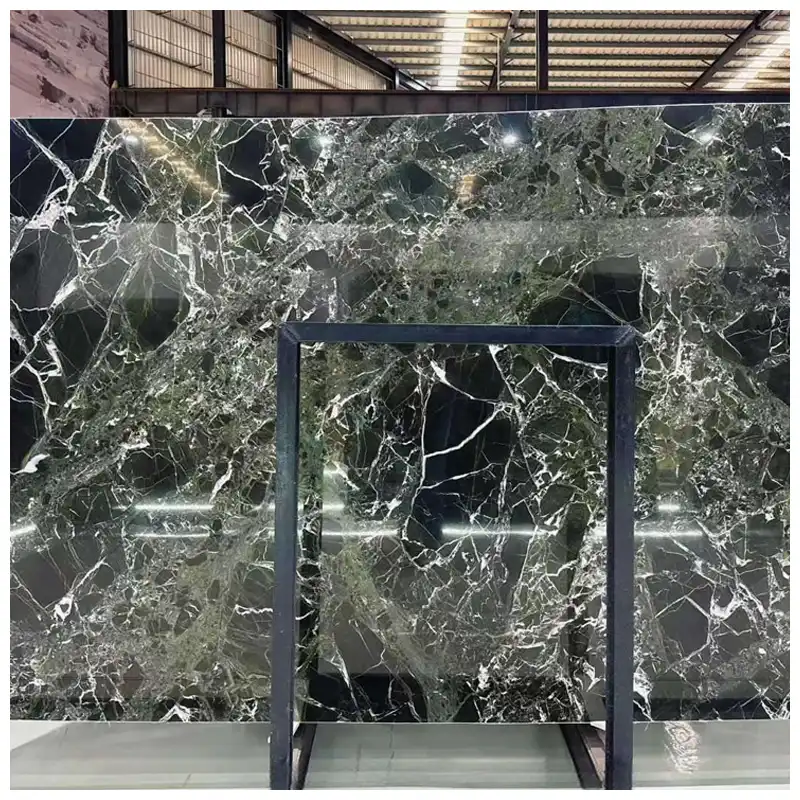
Verde Levanto MarbleDark green marble alternative with pale veining for dramatic walls, floors and statement slab applications. View More |
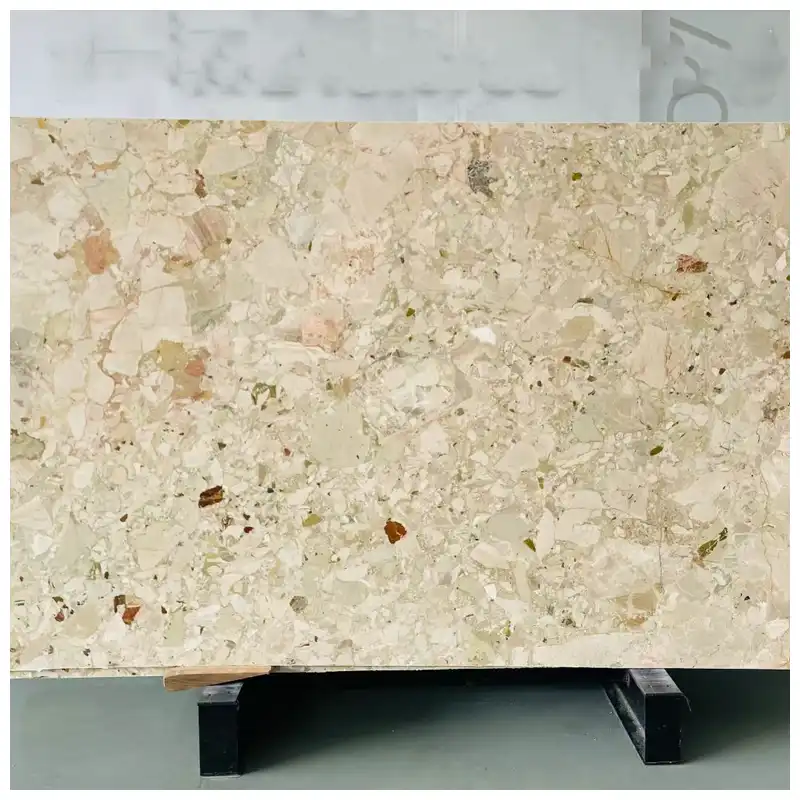
Monreale Marble SlabDecorative breccia marble alternative for projects seeking warmer fragment structure and stronger visual movement. View More |
Volakas Gold Marble SlabWhite marble option with warm gold movement for brighter walls, vanities and custom interior surfaces. View More |
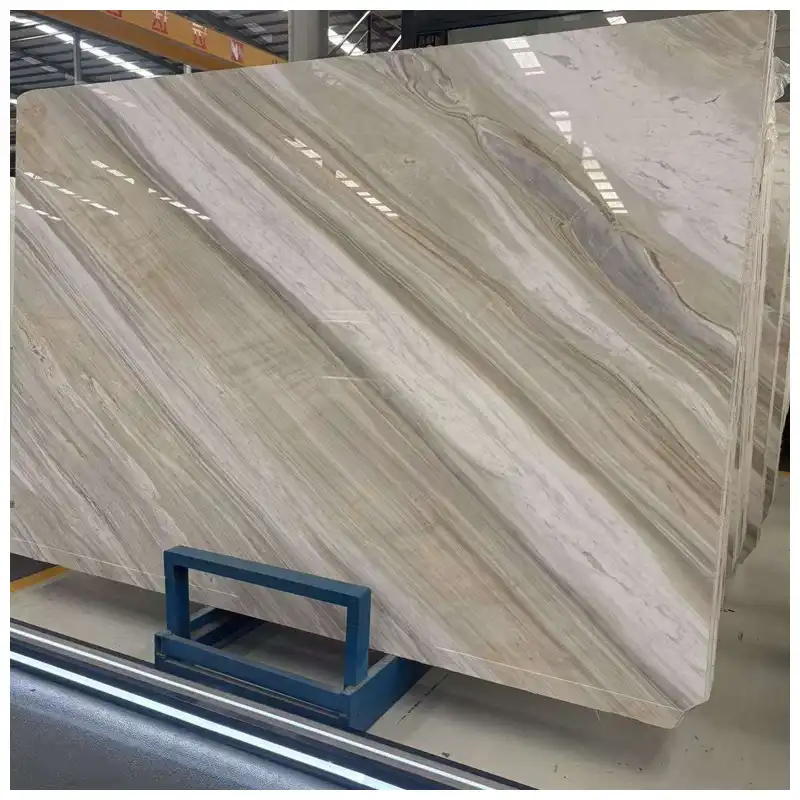
Palissandro Bianco MarbleLight marble option with linear grey movement for elegant walls, floors, stairs and large-format interiors. View More |

Ceppo Marble Slab FAQs
Is Ceppo di Gré actually a marble?
Ceppo di Gré is commonly sold within the architectural marble and natural-stone slab market, but petrographically it is a dolomitic monogenic breccia rather than a true metamorphic marble. The Ceppo Marble Slab wording remains a useful commercial and sourcing term.
Will every Ceppo di Gré slab have the same aggregate pattern?
No. Fragment size, concentration, grey tone and natural cavities vary across the material. Large orders should be reviewed as an approved slab range, particularly when neighbouring panels need visual continuity.
Can Ceppo di Gré slabs be bookmatched?
Mirrored or sequential layouts can be considered when suitable adjacent slabs and cutting positions are available. Because the aggregate pattern is irregular, the proposed layout should be approved from the actual slabs rather than assumed from the material name.
Which slab thicknesses are available for this Ceppo di Gré product?
The supplied thickness references are 16 mm, 18 mm, 20 mm and 30 mm. Final availability should be confirmed against the required slab size, quantity and fabrication scope.
Can polished Ceppo di Gré be used for flooring?
It can be fabricated for interior flooring, but the selected finish should match the actual use condition. A polished finish should not be assumed to meet wet-slip requirements without the applicable project test or specification.
Is Ceppo di Gré resistant to acidic cleaners?
No. Ceppo di Gré contains carbonate minerals and should be treated as acid-sensitive. Use natural-stone-compatible cleaning products and avoid acidic descalers, vinegar and aggressive chemical cleaners.
How should the USD 60–80/SQM reference price be used?
USD 60–80/SQM is the supplied price reference for this product page. Final project pricing should confirm the selected slab range, thickness, quantity, cut-to-size requirements, packing and commercial delivery terms.

Ceppo di Gré Slabs for Interior Projects: Availability, Pricing and Fabrication
For slab selection or project pricing, provide the required area, finished dimensions, preferred thickness, application, quantity and destination. Floor, wall, stair and countertop projects should also include drawings where panel sequence, exposed edges or major cutouts affect slab allocation.
For larger orders, an acceptable grey range and preferred aggregate character can be reviewed against the available Ceppo di Gré slabs before cut-to-size production. This makes it easier to coordinate yield, fragment distribution, panel sequencing and the supplied 2,000 SQM quantity reference with the actual project schedule.
Request Ceppo di Gré Slab Availability
Hot Tags: ceppo marble slab, China ceppo marble slab suppliers, factory, Bianco Sivec Marble, black marquina, Blue Lumen Marble, Daino Reale Marble Slab, dark marble tile, dolomite polished marble tile
You Might Also Like


Send Inquiry
