


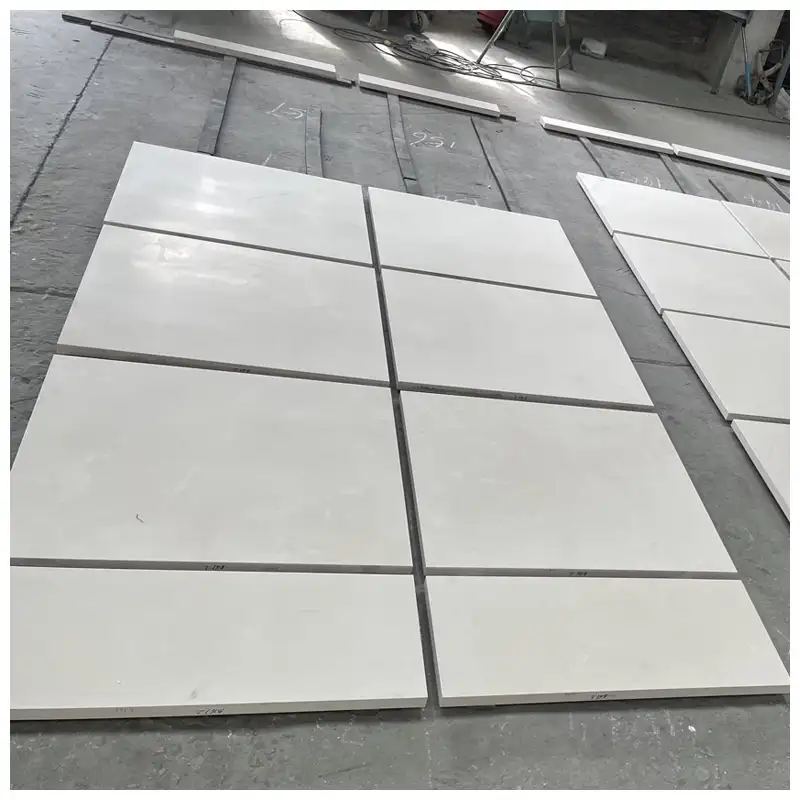


White Sandstone Tiles
Natural White Sandstone features elegant uniform pale white tone with subtle natural texture. This solid sedimentary stone delivers reliable weather resistance and slip resistance, ideal for exterior building facades, courtyard flooring, garden walkways and indoor feature walls. Custom sizes and thicknesses are available. The smooth polished surface creates minimalist, clean architectural aesthetics. Low water absorption ensures stable performance under all outdoor climate conditions, widely used in villa landscaping, resort hotels and residential renovation projects.
Luxury Sandstone: Natural White Sandstone Tiles | Outdoor Paving & Interior Exterior Wall Cladding Stone
Natural Sandstone: White Sandstone
Sandstone Factory: KA UNITED
Sandstone Slab Size: 2400upx600, 2400upx800, 2500upx1200up, etc.
Sandstone Tiles: 24''x24'', 12''x24'', 12''x12'', 18''x18''
Thickness: 20,30mm
Surface: Polished, Honed, Brushed
MOQ: 300 SQM
Application: KA UNITED Supplies A full Range of Sandstone For Floor, Wall Tiles, Kitchen and Bathroom Countertops, and other Commercial Projects
Product Introduction
Quick Summary
White Sandstone Tiles are natural cut-to-size paving and cladding units developed for garden paths, villa courtyards, terraces, building façades, landscape walls, hotel entrances, interior feature walls, lobbies, and selected public-space projects. Their soft white, pale ivory, cream, and light-beige mineral tones support minimalist, contemporary, Mediterranean, and light-luxury architectural schemes. Reference formats include 24 × 24, 12 × 12, 18 × 18, and 24 × 12 inches, with customized dimensions, thicknesses, edges, and surface treatments available. Polished, honed, and natural split finishes create different levels of reflection, texture, traction, and maintenance demand. Exterior use must be confirmed according to the approved sandstone batch, absorption, climate, freeze-thaw exposure, drainage, substrate, fixing system, traffic, and local construction requirements.
|
|
Natural Stone Paving and Architectural Cladding White Sandstone Wall Cladding and Floor Tiles for Garden Pavement and Building Façade ProjectsKA UNITED supplies White Sandstone Floor Tiles and wall-facing components for architectural projects requiring a light natural-stone palette with softer mineral texture than polished marble and greater visual variation than uniform manufactured tile. Square, rectangular, modular, paving, cladding, step, skirting, coping, corner, reveal, and project-specific pieces can be coordinated from approved drawings, samples, installation details, and quantity schedules.
|

Product Overview of White Sandstone Tiles
Natural white sandstone is a sedimentary building material formed from compacted mineral grains. Its surface can range from soft white and pale cream to light ivory, warm beige, and subtle grey-beige, with fine grain, delicate bedding lines, cloudy tonal transitions, and occasional mineral marks.
The material is suited to projects where architects want a brighter natural-stone appearance without the high reflection and pronounced veins associated with polished marble. Its quiet texture can complement concrete, timber, glass, bronze, stainless steel, white plaster, warm render, pale brick, landscaping, and neutral interior finishes.
Different finishes alter the stone substantially. Polishing increases reflection and makes the stone appear denser and slightly darker. Honing creates a smoother matte surface, while natural splitting exposes more pronounced grain, cleft texture, and shadow.
Color consistency should be understood as a controlled natural range rather than exact duplication. Some tiles may appear warmer, cooler, creamier, or more visibly layered than others. Larger projects should approve representative samples and a full installation mockup before production is completed.
KA UNITED can sort material according to background tone, grain scale, bedding direction, surface texture, thickness suitability, edge quality, and required project quantity. The selected range can then be allocated across paving, façades, interior walls, steps, or coordinated cut-to-size components.
Specifications at a Glance of White Sandstone
| Product Type | Natural sandstone paving tiles, wall cladding pieces, and architectural cut-to-size components |
| Material | Natural white sandstone |
| Color Range | Soft white, pale ivory, cream, light beige, and subtle grey-beige mineral variation |
| Reference Size A | 24 × 24 inches / approximately 610 × 610mm |
| Reference Size B | 12 × 12 inches / approximately 305 × 305mm |
| Reference Size C | 18 × 18 inches / approximately 457 × 457mm |
| Reference Size D | 24 × 12 inches / approximately 610 × 305mm |
| Custom Dimensions | Project-specific square, rectangular, modular, border, step, coping, skirting, riser, corner, and façade formats |
| Surface Options | Polished, honed, natural split, lightly brushed, or approved project-specific finish |
| Thickness | Customized according to tile size, application, substrate, load, façade system, surface relief, and project specification |
| Thickness Control | Calibrated underside or approved natural thickness range according to the installation method |
| Edge Options | Sawn, eased, lightly chamfered, tumbled, hand-dressed, natural, or drawing-specific edges |
| Floor Applications | Garden paving, courtyards, terraces, entrance areas, landscape paths, lobbies, corridors, and selected pedestrian zones |
| Wall Applications | Building façades, villa elevations, resort walls, garden structures, feature walls, receptions, fireplace surrounds, and interior cladding |
| View Category | KA UNITED Natural Stone Tiles |
Polished Sandstone Is Not Automatically Suitable for Exterior Paving
A polished finish can become slippery when wet and may show wear, scratches, water marks, and surface changes more readily in exposed areas. Exterior pedestrian applications should normally be reviewed using honed, split, brushed, or another tested finish appropriate to the required slip performance. Final selection must consider slope, rainfall, algae, cleaning, footwear, traffic, sealer, drainage, and applicable testing standards.
|
Use a close-up showing the pale stone color, fine sedimentary grain, delicate bedding, honed texture, edge condition, and approved tonal range. |
Soft White Color with Fine Natural Sandstone TextureWhite sandstone is visually quieter than strongly veined marble. Its character comes from fine grain, soft tonal changes, light bedding lines, and subtle mineral texture that become more noticeable at close viewing distance. Under bright daylight, the material can appear cooler and cleaner. Warm architectural lighting may bring out cream or pale-beige undertones. Finish selection also affects the apparent color. Larger wall or floor areas should be blended from several pallets during installation. This distributes lighter, warmer, cooler, and more visibly layered pieces across the overall composition. A sample panel should be reviewed under representative exterior or interior lighting before the approved color range is finalized. |

Why White Sandstone Works for Architectural Projects
Light Neutral AppearanceThe pale stone range works with white render, timber, glass, bronze, concrete, landscaping, and contemporary architectural materials. |
Multiple Surface DirectionsPolished, honed, split, and lightly textured finishes allow one material family to address different visual and functional requirements. |
Cut-to-Size FlexibilityField tiles, steps, borders, copings, corners, skirting, façade modules, and special pieces can follow the approved project schedule. |
Honed White Sandstone for Floor and Wall Surfaces
White Sandstone Honed Tiles use a flat matte finish that reduces the high and low points of a split surface while retaining the material's fine grain and natural tonal variation. The result is calmer and more architectural than natural cleft stone.
Honed surfaces suit covered courtyards, entrance areas, internal lobbies, corridors, feature walls, bathrooms outside direct shower exposure, retail interiors, reception areas, and residential spaces where a low-reflection finish is preferred.
A honed finish should not automatically be described as non-slip. Surface texture, water, dust, algae, cleaning residue, traffic, slope, and sealers all influence traction. Where a certified slip value is required, the approved stone and finish should be tested under the relevant standard.
Light honed sandstone may show dirt, oils, metal marks, construction residue, and uneven cleaning more readily than darker stone. Protection during installation and a planned maintenance method are therefore important.
The honed reference should be approved as a physical sample because different grinding levels can produce noticeably different color depth, smoothness, reflection, and visible grain.
Wall Cladding and Building Façade DesignWhite Sandstone Wall Tiles can be used to create light textured elevations on villas, boutique hotels, garden walls, entrance volumes, resort buildings, lobbies, and interior feature walls. Low interior wall installations may use a compatible stone adhesive on a properly prepared substrate where permitted. Exterior façades, elevated installations, large formats, projecting details, or exposed locations may require mechanical restraint or an engineered anchoring system. Façade design should review panel dimensions, thickness, dead load, wind load, edge distance, anchor type, backing wall, cavity drainage, flashings, movement joints, window interfaces, copings, drips, and local construction regulations. White stone can make water streaks, rust, efflorescence, sealant migration, and airborne pollution more visible. Wall caps, metal interfaces, fixings, drainage paths, and adjacent materials should be designed to avoid staining. Final fixing and structural design remain subject to qualified façade, architectural, and engineering professionals. |
Show wall cladding, joint alignment, corner pieces, mechanical anchors, flashings, coping, cavity drainage, or a completed white sandstone elevation. |

Garden Paving and Landscape Flooring
White Sandstone Floor Tiles can be considered for garden paths, courtyards, terraces, covered entrances, landscape walkways, patios, and selected pedestrian areas when the stone and surface finish are compatible with the exposure.
The paving system requires a stable base, appropriate bedding or adhesive, full tile support, perimeter restraint, movement joints, and controlled falls that direct water away from buildings, thresholds, walls, and low points.
Standing moisture can contribute to algae, staining, salt movement, freeze-thaw damage, joint deterioration, and localized discoloration. Drainage must therefore be resolved as part of the paving design rather than treated as a maintenance issue after installation.
Pool surrounds, ramps, steps, public access routes, vehicle zones, coastal landscapes, and freeze-thaw climates require separate testing and structural review. A standard garden-paving reference should not be assumed suitable for every environment.
Light stone surfaces can also reflect strong sunlight. Exterior mockups should consider glare, surface temperature, surrounding landscaping, furniture, façade color, and daytime viewing conditions.
Custom Cut-to-Size Tile Options of White Sandstone
| Custom Item | Available Direction | Details to Confirm |
|---|---|---|
| Tile Dimensions | Reference square and rectangular sizes or fully customized modular formats | Area dimensions, module grid, joint width, wall or floor layout, tolerances, edge cuts, and installation pattern |
| Thickness | Calibrated thickness, natural thickness range, or project-specific nominal thickness | Tile size, traffic, substrate, adhesive bed, façade system, anchor depth, packing weight, and installation tolerance |
| Surface Finish | Polished, honed, natural split, lightly brushed, or approved mixed-finish arrangement | Reflection, traction, cleaning, outdoor exposure, color depth, texture range, and physical sample approval |
| Edge Treatment | Sawn, eased, chamfered, tumbled, natural, hand-dressed, or drawing-specific edge | Joint appearance, exposed corners, step nosings, wall returns, cutting tolerance, handling, and installation method |
| Floor Components | Field tiles, borders, steps, risers, landings, coping, skirting, transition pieces, and drainage-edge units | Falls, load, edge exposure, step geometry, nosing, joints, substrate, weather exposure, and local requirements |
| Wall Components | Field cladding, corners, jambs, lintels, sills, returns, reveals, coping, wall caps, and feature strips | Wall build-up, anchoring, cavities, flashings, joints, water management, geometry, and installation sequence |
| Layout Pattern | Straight grid, running bond, modular pattern, mixed-size layout, bordered field, or project-specific arrangement | Tile quantities, cutting allowance, joint alignment, color blending, movement joints, perimeter conditions, and spare material |
| Surface Protection | Unsealed, breathable penetrating treatment, or project-approved natural-stone sealer | Absorption, color change, vapor transmission, traction, exterior exposure, maintenance, and mockup approval |
Tile Blending and Layout Control
White Sandstone Cut-to-Size Tiles should be installed from several pallets simultaneously so subtle changes in white, ivory, cream, beige, grain, and bedding are distributed evenly across the full surface.
Wall and floor layouts should be planned around doors, windows, columns, steps, drains, movement joints, wall returns, façade openings, copings, borders, and changes in level before site cutting begins.
Bedding direction and grain movement may affect the visual result of rectangular pieces, steps, risers, coping, wall caps, and elongated façade modules. Orientation should be marked on approved drawings where consistency matters.
Natural stone dimensional tolerance and edge treatment influence the practical joint width. Tight joints should not be specified unless the selected finish, calibration, and cutting tolerance support them.
A full installation mockup can confirm color blending, joint width, grout color, adhesive method, edge alignment, surface cleaning, lighting response, and any proposed sealer before the main work proceeds.
|
Show blended tiles, modular layout, joint spacing, surface finish range, border pieces, color approval, or a completed sample panel. |
Substrate, Adhesive, and Joint CoordinationThe substrate must be structurally sound, stable, clean, and suitable for natural stone. Movement cracks, loose material, standing moisture, contamination, and incompatible coatings should be resolved before installation. Adhesive or mortar selection depends on stone porosity, tile dimensions, substrate, installation orientation, weather exposure, working temperature, and local construction requirements. Light-colored adhesive may be required where dark bedding material could affect the appearance of pale stone. Full support is important beneath floor tiles to limit voids, concentrated stress, and uneven bedding. Exterior work must coordinate falls, drainage, perimeter restraint, and movement joints. Sandstone Tiles should not bridge active structural joints. Building transitions, wall junctions, large paving fields, substrate changes, and façade movement locations need appropriate flexible detailing. Mortars, sealants, cleaners, grout, metal trims, and protective products should be tested on representative stone because some materials can stain or discolor a pale sandstone surface. |

Architectural and Landscape Applications
Garden Paths and CourtyardsLight natural-stone paving suits villa gardens, courtyards, terraces, covered entrances, patios, and landscape circulation routes. |
Building FaçadesWhite sandstone cladding can define villa elevations, boutique hotels, resort walls, entrance volumes, and landscape structures. |
Interior Walls and LobbiesHoned or polished pieces create light feature surfaces for receptions, lobbies, corridors, restaurants, and residential interiors. |
Steps and Architectural DetailsMatching steps, risers, coping, skirting, sills, wall caps, and transition pieces support coordinated stone packages. |
White Sandstone Wall Tiles can also be developed for fireplace surrounds, garden walls, reception counters, window surrounds, entrance portals, decorative bands, landscape structures, and selected bathroom walls outside continuously saturated areas. Each component requires its own review for thickness, finish, support, edge exposure, fixing, moisture, cleaning, and access.
White Sandstone and Recommended Cut-to-Size Tile Comparison
| Selection Factor | White Sandstone Tiles | Roman Travertine Tile | Gray Emperador Marble | Palissandro Marble Tile | Red Sandstone Tiles |
|---|---|---|---|---|---|
| Appearance | Soft white, ivory, cream, and pale beige with fine sedimentary grain. | Warm beige to cream with linear pores, bands, and layered movement. | Grey to brown-grey marble with lighter veins and a formal decorative appearance. | Layered grey, white, silver, and beige with elongated linear movement. | Warm red, rust, brick, and terracotta with natural sedimentary variation. |
| Product Form | Floor tiles, wall cladding, façade modules, steps, borders, coping, and cut-to-size pieces. | Floor and wall tiles, pavers, cladding, steps, coping, and architectural trim. | Interior marble floor and wall tiles, skirting, stairs, and decorative panels. | Decorative wall and floor tiles, feature panels, stairs, and interior stonework. | Split-face paving, wall cladding, landscape pieces, steps, and rustic architectural components. |
| Typical Finish | Polished, honed, split, or lightly textured depending on the application. | Honed, filled, unfilled, brushed, tumbled, or project-specific finishes. | Polished or honed for refined interior surfaces. | Polished or honed to emphasize elongated mineral movement. | Natural split for texture or honed for a flatter architectural finish. |
| Best-Fit Applications | Minimalist façades, light courtyards, garden paving, hotel entrances, lobbies, and calm neutral interiors. | Warm villas, resorts, terraces, pools, bathrooms, and Mediterranean-inspired schemes. | Hotel interiors, bathrooms, residential floors, walls, lobbies, and formal grey-toned spaces. | Luxury interiors, hotel walls, feature floors, stairs, bathrooms, and statement surfaces. | Rustic façades, landscape walls, courtyards, garden paths, resorts, and earthy architectural designs. |
| Installation Priority | Stain prevention, light adhesive, drainage, finish selection, façade fixing, and tonal blending. | Pore treatment, drainage, filling, sealing, slip review, and exterior detailing. | Substrate flatness, vein direction, acid-sensitive care, joint layout, and interior protection. | Vein allocation, dry-lay planning, finish consistency, support, and natural-feature approval. | Thickness control, drainage, substrate support, façade anchoring, color blending, and weather exposure. |
| Project Positioning | Best for bright, restrained, minimalist, contemporary, and light-luxury architectural concepts. | Best for warm, organic, porous, Mediterranean, and resort-style stone schemes. | Best for formal grey marble interiors requiring a richer decorative surface. | Best for expressive linear movement in luxury interior applications. | Best for earthy, rustic, landscape-led, heritage, and tactile architectural projects. |
Material Selection and Production Risk Control
- Approve current stone samples showing the white, ivory, cream, and beige tonal range, grain, bedding, surface finish, edge condition, and accepted natural variation.
- Confirm whether the order requires calibrated thickness or an approved natural thickness range before tile production begins.
- Use final millimetre dimensions, thickness tolerances, joint widths, quantities, and component codes as the controlling production information.
- Review absorption, strength, freeze-thaw suitability, salt exposure, UV exposure, slip performance, and weathering where the project requires technical confirmation.
- Do not specify a polished exterior walking surface without reviewing wet traction, slope, drainage, traffic, maintenance, and applicable slip testing.
- Use compatible light-colored adhesive or mortar where darker bedding materials could affect pale stone appearance.
- Confirm façade panel size, thickness, fixing method, anchors, edge distance, cavity drainage, flashings, movement joints, and wind-load requirements.
- Approve a representative mockup showing tile blending, finish, joint width, grout, adhesive, edge alignment, cleaning, and any proposed sealer.
- Test sealers and color enhancers before use because they can change the stone's color, gloss, traction, and vapor behavior.
- Include cutting allowance and spare material for natural variation, site breakage, future repair, layout changes, and edge replacement.
- Inspect dimensions, squareness, thickness, finish, surface condition, edge treatment, color blend, quantities, labels, and packing before shipment.
- Protect finished stone from rusting metal, cement residue, paint, landscaping chemicals, mud, dirty water, and uncontrolled construction traffic.
KA UNITED Cut-to-Size Stone SupportKA UNITED can review the tile schedule, paving plan, façade elevations, module dimensions, thickness requirements, finish codes, edge details, step pieces, coping, wall components, packing sequence, and destination as one coordinated supply package. Available sandstone can be sorted according to background tone, grain structure, bedding, finish suitability, usable dimensions, edge quality, and application requirements. Production records can include tile codes, sizes, thickness groups, finish references, quantity lists, wall or paving zones, pallet numbers, inspection photographs, and packing lists. Customization remains subject to current block or slab availability, usable yield, accepted natural features, approved surface range, dimensional tolerance, project quantity, testing requirements, packing weight, installation method, and delivery schedule. |
Suitable content includes block selection, tile cutting, honing, polishing, thickness calibration, color sorting, dimensional inspection, or pallet labelling. |

Project Specification Summary
| Material Standard | Approve the white color range, grain, bedding, finish, edge condition, and accepted natural variation. |
| Tile Schedule | List every field tile, border, step, riser, coping, skirting, wall panel, corner, and custom component in millimetres. |
| Finish Codes | Identify polished, honed, split, brushed, exposed edges, and application-specific surface requirements. |
| Exterior Design | Resolve drainage, falls, flashings, anchors, cavities, movement joints, exposure, traction, and required testing. |
| Installation Mockup | Approve color blending, joint width, grout, adhesive, surface cleaning, edge alignment, and sealer effect. |
| Identification | Align tile codes, elevations, paving zones, pallet labels, quantities, and installation drawings. |
| Logistics | Confirm pallet weights, unloading equipment, clean storage, weather protection, site access, spare quantity, destination, and schedule. |
Packing, Delivery, and Site Handling
Tiles should be packed on reinforced pallets or in suitable crates according to their dimensions, thickness, finish, edge condition, weight, and transport route. Thin façade pieces and long architectural components require additional edge support.
Polished and honed faces should be separated with clean protective material. Split-finish pieces should not rub against smooth surfaces during transport.
Pallet labels should identify the material, finish, size, thickness group, quantity, installation zone, and pallet number. Mixed modular layouts should include a clear component schedule.
Store the stone on a stable, dry, drained surface away from rusting metal, mud, dirty water, cement dust, paint, fertilizer, and other staining materials. Long-term wrapping should not trap persistent moisture.
Before delivery, confirm forklift capacity, crane requirements, pallet access, temporary storage, weather protection, installation sequence, and the order in which paving and façade areas will be released.
Care and Maintenance
Remove loose dust, sand, leaves, and abrasive debris with a soft brush or low-impact cleaning method. Use clean water and a pH-neutral cleaner suitable for natural sandstone when further cleaning is required.
Avoid strong acids, aggressive alkaline chemicals, wire brushes, uncontrolled high-pressure washing, and products that may affect the stone, joints, sealers, metal anchors, landscaping, or surrounding finishes.
Light sandstone should be protected from rust, oil, fertilizer, leaf tannins, colored liquids, muddy runoff, and construction residue. Remove spills and contamination promptly.
Exterior paving should remain free of standing water, moss, algae, blocked drains, and organic buildup. Persistent biological growth normally indicates moisture, drainage, shade, or maintenance conditions that need direct correction.
A breathable penetrating sealer may reduce absorption and provide additional cleaning response time, but it does not make sandstone waterproof, stain-proof, fade-proof, frost-proof, slip-proof, or maintenance-free.
Inspect loose tiles, cracked joints, open façade seals, damaged anchors, failed copings, blocked drainage, and water-entry points periodically. Repairs should address the underlying installation or moisture cause.
Garden and Building Façade Project ReferenceThis image position can show white sandstone in a villa courtyard, boutique hotel entrance, garden pavement, landscape path, building façade, reception wall, lobby floor, or residential feature wall. A useful photograph should show the stone scale, finish, color blending, joints, edge details, lighting, drainage, landscaping, adjacent materials, façade openings, steps, or wall caps. For exterior projects, the completed setting should demonstrate how the light sandstone works with water-management details rather than relying only on the visual appearance of the tile field. |
Use a completed paving or façade installation showing white sandstone, joint layout, finish, surrounding materials, landscaping, lighting, and drainage details. |

Recommended Natural Stone Cut-to-Size Tiles from KA UNITED
KA UNITED offers four related natural-stone tile directions for projects requiring a different color, texture, or architectural character. Roman Travertine Tile provides warm beige layering and linear pores for villas, resorts, terraces, bathrooms, and Mediterranean-style spaces. Gray Emperador Marble introduces a refined grey-brown surface with lighter veins for interior floors, walls, lobbies, and bathrooms. Palissandro Marble Tile offers elongated grey, white, beige, and silver movement for expressive luxury interiors. Red Sandstone Tiles provide rust, brick, and terracotta tones with a natural split texture for courtyards, garden paths, façades, and landscape walls. These options help project teams compare color temperature, finish, exterior suitability, joint design, maintenance, pattern direction, fixing requirements, and compatibility with the intended architectural concept.
``` ```
Roman Travertine TileWarm beige travertine with layered pores and linear movement for villas, resorts, terraces, bathrooms, and façades. View More |
Gray Emperador Marble TilesGrey-brown marble with lighter veins for residential floors, hotel interiors, bathrooms, walls, and lobby surfaces. View More |
Palissandro Marble TileLayered grey, silver, white, and beige marble movement for feature floors, walls, stairs, and luxury interiors. View More |
Red Sandstone TilesRust-red natural sandstone for garden paths, courtyards, landscape walls, façades, entrances, and tactile architectural surfaces. View More |


FAQ About White Sandstone Tiles
1. Is polished white sandstone suitable for an outdoor garden walkway?
A polished finish should not be assumed suitable for wet exterior paving because it can become slippery and may show surface wear more readily. Honed, split, brushed, or another tested texture may be more appropriate. Final selection should consider slope, drainage, climate, traffic, maintenance, sealers, and required slip testing.
2. Can white sandstone be used on an exterior building façade?
Yes, subject to confirmation of the selected stone, panel size, thickness, fixing method, wind load, substrate, anchor design, cavity drainage, flashings, movement joints, weather exposure, and local façade requirements. Elevated or large-format exterior cladding may require mechanical restraint rather than adhesive-only installation.
3. Will all white sandstone tiles have exactly the same color?
No. Natural sandstone varies in white, ivory, cream, beige, grain, and bedding. KA UNITED can sort material within an approved range, but exact duplication is not realistic. Installers should blend pieces from several pallets and follow an approved sample panel.
4. Should white sandstone use light-colored adhesive?
A compatible light-colored adhesive or mortar may be advisable because dark bedding materials, moisture, or contamination can affect the appearance of pale stone. The selected system should be tested with the actual sandstone, substrate, finish, tile size, and installation conditions before full application.
5. Can white sandstone be used in freeze-thaw climates?
Suitability cannot be confirmed from the stone name alone. The selected batch should be reviewed for absorption, saturation behavior, strength, freeze-thaw testing, salt exposure, thickness, drainage, bedding, joints, and maintenance. Project-specific technical confirmation is recommended for cold exterior climates.
6. What should be approved before bulk white sandstone production?
Approve the actual material range, tile schedule, dimensions, thickness, finish, edge treatment, exterior exposure, fixing method, joint width, layout mockup, technical testing, surface protection, pallet labels, spare quantity, destination, and delivery sequence before full production.
Final Product Overview
White sandstone provides a light natural-stone direction for façades, garden paving, interior walls, lobbies, and coordinated architectural details. Successful specification depends on matching the approved color range, surface finish, thickness, installation system, drainage, fixing, and exposure conditions to the actual project.

Request a White Sandstone Tile and Cladding ProposalSend KA UNITED the paving plan, wall elevations, tile schedule, dimensions, thickness, finish, edge details, exterior conditions, fixing method, testing requirements, quantity, destination, and delivery schedule.
|
Inquiry Checklist1. Provide tile sizes and quantities. 2. Confirm thickness and calibration. 3. Select polished, honed, or split finish. 4. Issue paving and façade drawings. 5. Confirm exterior exposure and fixing. 6. Define testing and mockup requirements. 7. Provide destination and schedule. |
Hot Tags: white sandstone tiles, China white sandstone tiles suppliers, factory, 4 inch hexagon marble tile, Bianco Statuario White Marble Tiles, emperador marble, green marble slab, Guangxi White Marble Tiles, leftover marble slabs
You Might Also Like


Send Inquiry
