Azul Bahia Granite vs. Other Blue Stones: Which One is the Real Investment?
Quick Summary: Azul Bahia Granite vs. Other Blue Stones
Azul Bahia Granite and Blue Bahia Granite remain two of the most searched names for Brazilian luxury blue stone, especially among buyers comparing Blue Bahia vs. Sodalite Blue, Blue Macaubas Quartzite, and Lapis Lazuli. For the best investment blue stone 2026, Azul Bahia offers a rare balance of vivid color, countertop practicality, Brazilian blue granite properties, and luxury blue granite price factors.
If the buyer needs a dramatic blue surface for kitchens, bars, flooring, vanity tops, or commercial projects, the key is not choosing the bluest image online. The better decision is to compare mineral composition, durability, porosity, acid resistance, scarcity, fabrication risk, and supply-chain reliability before working with an Azul Bahia Granite manufacturer, Blue Bahia Granite factory, or wholesale blue stone supplier.
Azul Bahia Granite vs. Other Blue Stones: Which One is the Real Investment?
Blue natural stone has always carried emotional power in luxury architecture. It suggests rarity, confidence, ocean depth, gemstone value, and architectural prestige. Yet not every blue stone performs the same after installation. Some blue stones are visually spectacular but too soft for active kitchens. Some are durable but lack the deep royal-blue color that designers expect. Some are rare enough for jewelry but unrealistic for large slabs, flooring, or custom interiors.
This is where Azul Bahia Granite and Blue Bahia Granite stand apart. In international trade, buyers may also search for Blue Azul Bahia Granite, Azul Bahia Granite Slab, Azul Bahia Blue Granite, Bahia Azul Granite, Blue Azul Granite, Granite Azul Bahia, Blue Bahia Grnaite, Bahia Blue Granite Slabs, Blue Granite Tiles, Azul Bahia Granite Countertops, Bahia Blue Granite Vanity Tops, Blue Bahia Granite Tiles, Brazilian Blue Granite, Blue Exotic Granite, and Brazilian Exotic Granite. These variations are useful because different buyers search by color, origin, commercial name, slab type, and application.
For luxury procurement, the real investment is not just the stone that looks beautiful in a showroom. The real investment is the material that can hold its visual value, survive fabrication, perform in the final environment, support property positioning, and remain desirable in future resale or renovation cycles. KA UNITED supports international buyers with stone sourcing, quality inspection, export coordination, OEM fabrication, and custom stone fabrication services for luxury blue stone projects.
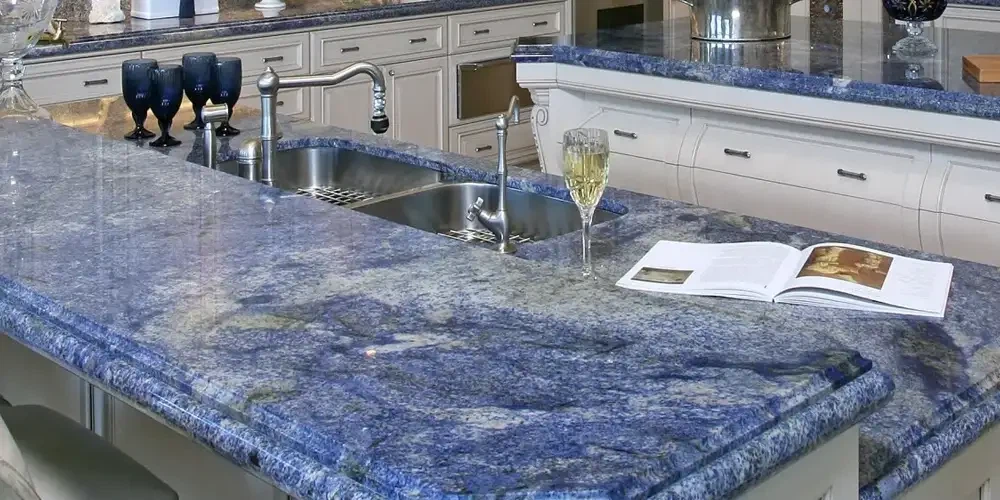
1. The Mineralogical Prestige of the Bahia Shield
The prestige of Azul Bahia begins with geology. The material is commercially described as granite, but it is more accurately understood as a sodalite-rich syenitic or feldspathoid-bearing ornamental stone from Bahia, Brazil. This distinction matters because its intense blue color is not a dye, coating, or artificial enhancement. It is caused by rare blue mineral content within the stone body.
1.1 Geological Provenance: Bahia, Brazil
The state of Bahia is internationally associated with several famous blue ornamental stones. These include Azul Bahia, Blue Sodalite, and blue quartzite varieties such as Blue Macaubas. For buyers, provenance matters because the true Brazilian origin supports rarity, identity, and luxury market recognition. A stone that is only "blue-looking" does not carry the same procurement value as authentic Brazilian blue material.
If a buyer is specifying a premium residence, hotel, private club, luxury retail space, or branded commercial interior, provenance should be part of the purchase file. We recommend asking for supplier background, slab photos, export documentation, quarry-related information where available, and full-slab inspection media before approving a bulk order.
1.2 Sodalite Content and Intense Pigment
The defining visual feature of Blue Bahia is sodalite-rich blue coloration. This is why premium slabs can show a royal-blue or electric-blue surface rather than only blue flashes. Compared with ordinary granite, the stone delivers a gemstone-like impression across larger architectural surfaces.
This mineralogical advantage also creates sourcing risk. Slabs with weak blue saturation, excessive gray clouding, large black clusters, or inconsistent movement may still be genuine material, but they should not be priced as investment-grade slabs. A serious direct stone exporter should distinguish between extra grade, standard grade, and commercial grade before offering the stone to architects, contractors, distributors, or importers.
1.3 The Role of Direct Export Access
With rare blue stones, the best blocks are often reserved quickly by established factories, large importers, or project buyers. A direct stone exporter with access to selected blocks can reduce lead time, improve grade control, and help buyers avoid overpaying for visually downgraded slabs. In high-value projects, this access can be more important than a small difference in quoted square-foot price.
1.4 Decision Logic
If the project needs a one-of-one statement island, choose extra-grade Azul Bahia with the strongest blue saturation.
If the project needs visual movement for a wall or bar, choose Oceanic-grade Blue Bahia with controlled white and gold veining.
If the project needs repetitive commercial use, combine premium focal slabs with standard-grade secondary material.
2. Technical Comparison Matrix: Azul Bahia vs. The World
A blue stone investment should be judged by both visual value and engineering practicality. A stone can be rare but too delicate for a working kitchen. Another stone can be highly durable but lack the blue intensity required for a luxury design statement. The table below compares four important blue stone categories from a practical buyer perspective.
| Metric | Azul Bahia Granite | Sodalite Blue Marble | Blue Macaubas Quartzite | Lapis Lazuli |
|---|---|---|---|---|
| Mohs Hardness | 6.0 – 6.5 | 3.0 – 3.5 | 7.0 | 5.0 – 5.5 |
| Porosity / Absorption | 0.08% – 0.15% | 0.25% | 0.10% | 0.20% |
| Acid Sensitivity | Extremely Low | High / Etching Risk | Very Low | Moderate |
| 2026 Scarcity Index | Very High | High | Moderate | Extreme |
| Primary Use | Kitchen countertops, flooring, walls, bars, vanity tops | Feature walls, decorative panels, low-contact luxury areas | Countertops, islands, walls, floors | Jewelry, inlay, art objects, decorative panels |
| Best Investment Logic | Rare blue color with stronger architectural usability | Beautiful but limited by softness and etching | Strong durability but usually less saturated blue | Extreme rarity but impractical for most large surfaces |
2.1 Why Blue Bahia Granite Balances Marble Beauty and Granite Performance
Sodalite Blue Marble can deliver an elegant blue appearance, but marble is more vulnerable to etching and surface wear in active environments. Blue Macaubas Quartzite offers excellent hardness and striking movement, but its color often leans softer, more linear, and less gemstone-blue than top-grade Azul Bahia. Lapis Lazuli is historically prestigious, but it is better suited to jewelry, inlay, and art than full kitchen islands or flooring.
Blue Bahia sits in the investment center: rare enough to command attention, durable enough for serious architectural use, and visually strong enough to become the defining surface of a luxury project. This is why buyers often compare Azul Bahia Granite and Blue Bahia Granite before deciding between stone beauty and long-term practicality.
3. Real-World Scenarios: Where the Investment Pays Off
Real investment value appears after installation. The stone must perform in the actual environment, not just in a sample box or warehouse photo. For high-end projects, we evaluate blue stones by use case: chef's kitchen, luxury spa, hospitality bar, villa bathroom, commercial lobby, and custom furniture.
3.1 The Chef's Kitchen Test
A chef's kitchen exposes stone to citrus, oil, heat, wine, water, tools, cookware, cleaning products, and daily use. A blue marble may look beautiful at first, but acid etching can quickly reduce its premium appearance. Azul Bahia, when properly sealed and fabricated, is more suitable for luxury kitchens because it offers stronger surface performance and lower acid sensitivity.
Buyers specifying Azul Bahia Granite Countertops should request slab inspection, edge planning, cutout reinforcement, sealing recommendations, and care instructions before installation.
3.2 The Luxury Spa Environment
A spa introduces moisture, cleaning chemicals, steam, cosmetics, oils, and frequent surface contact. Water absorption matters because moisture can affect clarity, staining resistance, and long-term appearance. Azul Bahia's low absorption range makes it more practical than softer decorative blue stones, but professional sealing remains essential.
For vanity tops and bathrooms, buyers may specify Bahia Blue Granite Vanity Tops, wall cladding, shower feature panels, or small-format Blue Bahia Granite Tiles. The final decision should account for slip resistance, stone finish, adhesive type, substrate preparation, and cleaning routine.
3.3 Why Resin Infusion Matters
A professional Blue Bahia Granite factory prioritizes resin-infusion techniques to enhance slab stability, polish quality, and fabrication reliability. Resin does not make a poor slab premium, but it can stabilize natural micro-fissures and improve the finish when applied correctly.
Mistake: Buying a dramatic blue slab without checking resin quality.
Consequence: The stone may show dull areas, weak polish, or visible surface inconsistency after cutting.
Recommendation: Request close-up surface videos, back-side reinforcement photos, and final inspection media.
3.4 Comparative Performance Matrix: Azul Bahia vs. Competitors
To help luxury developers and architects make an informed investment, the following table compares the physical properties of the most popular blue stones in the 2026 market.
| Technical Metric | Azul Bahia (Granite) | Blue Macaubas (Quartzite) | Sodalite Blue (Precious) |
|---|---|---|---|
| Mineral Dominance | Sodalite / Feldspar | Dumortierite / Quartz | Pure Sodalite Cluster |
| Mohs Hardness | 6.0 – 6.5 | 7.0 | 5.5 – 6.0 |
| Acid Sensitivity | Moderate (Avoid Acids) | Low | High |
| Typical Application | Kitchens, Feature Walls | Countertops, Flooring | Jewelry-Grade Accents |
Note: Data based on average Brazilian quarry testing standards for 2026 Grade A material.

4. Pattern Classification and Aesthetic Grading
Blue stone value depends heavily on aesthetic grading. Two slabs may share the same commercial name, but their market value can differ dramatically because of saturation, pattern, inclusions, and slab size. This is especially true for Azul Bahia Granite Slab selection.
4.1 Grade A+ - The Royal Blue
The highest grade shows solid royal-blue saturation with minimal gray, white, or black interruption. This is the grade most suitable for trophy kitchens, luxury hotels, private clubs, executive desks, and architectural features where the stone must become the signature material.
4.2 The Oceanic Grade
Oceanic-grade slabs display flowing white and gold veins that mimic maritime movement. They may not be as uniformly blue as Royal Blue slabs, but they often provide more artistic motion. This grade is highly suitable for bars, spa walls, lobby panels, and statement walls.
4.3 Commercial Grades
Commercial grades usually show more gray, white, black biotite, cloudy patches, or uneven pigment. A professional wholesale blue stone supplier should price these slabs honestly and recommend them for secondary areas, smaller custom pieces, tiles, or budget-sensitive commercial use.
4.4 If You Need Maximum Luxury
Choose Grade A+ Azul Bahia with strong blue saturation, controlled movement, and minimal black inclusions.
4.5 If You Need Natural Drama
Choose Oceanic-grade Blue Bahia with expressive veining for walls, bars, and reception counters.
4.6 If You Need Cost Control
Use commercial grade for secondary cladding, smaller surfaces, tiles, or non-focal areas.
5. Investment Logic: Scarcity vs. Appreciation
Natural stone investment is not the same as financial-market speculation. For architectural buyers, investment value means long-term desirability, scarcity, project distinction, maintenance practicality, and impact on property positioning. Azul Bahia performs well because it is rare, visually memorable, and usable across multiple luxury applications.
5.1 The Limited Quarry Narrative
The strongest investment argument for Azul Bahia is limited supply. Deep blue sodalite-rich blocks are not available in unlimited quantities. Quarry access, extraction cost, block quality, environmental compliance, and export demand all influence availability. As premium blocks become harder to secure, well-selected bulk blue granite slabs can hold stronger commercial appeal for distributors, importers, and luxury project suppliers.
5.2 Resale Value and Property Positioning
A property with a premium Azul Bahia kitchen island, book-matched wall, or luxury bar feature can stand apart in the high-end market. The stone does not merely decorate the space. It signals that the property used rare natural materials rather than standard surfaces. In premium real estate, this distinction can support stronger buyer perception.
5.3 Sourcing Strategy and Cost Control
Buying from an exotic granite wholesaler can reduce lead times, brokerage costs, and selection uncertainty. However, the wholesaler must provide real value: slab inspection, grading transparency, packing control, export coordination, and custom fabrication support. Low-cost sourcing without quality control is not an investment strategy. It is a risk transfer from supplier to buyer.
6. Installation and Engineering Mandates for Ultra-Premium Stones
Azul Bahia should be installed like a semi-precious architectural material. The most expensive mistake is assuming that a luxury slab can be handled with ordinary job-site methods.
6.1 De-risking the Investment: Sourcing Directly from the Source
An investment in Azul Bahia Granite is only as secure as the supply chain behind it. Because this stone is geologically complex, buying from secondary brokers often leads to "visual surprises"-slabs with excessive black clusters or hidden fissures that compromise the ROI.
The KA UNITED Advantage for Global Buyers:
- Direct Brazilian Imports: We don't just buy slabs; we secure high-quality, over-sized raw blocks directly from the most stable veins in Bahia, Brazil. This ensures that the vivid blue saturation-the "investment value"-is consistent across your entire project.
- Ready-to-Inspect Inventory: We maintain a premium collection of Azul Bahia slabs in our Shuitou Luxury Stone Warehouse. Whether your project requires 20mm or 30mm thickness, having immediate access to physical inventory reduces lead-time risks for high-end residential and commercial developments.
- Advanced Resin Treatment: To protect your investment, every slab undergoes specialized vacuum resin treatment, ensuring structural integrity and a mirror-like finish that resists the passage of time.
When choosing between blue stones, remember that price is what you pay, but origin-controlled quality is what you keep.
6.2 The Adhesive Shadow Risk
Translucent or lighter mineral areas can be affected by adhesive color. Dark thin-set, gray epoxy, or inconsistent substrate color may create shadowing under the stone. For premium slabs, white epoxy or color-controlled adhesive is often recommended, especially for backlit features, vanity tops, and wall panels.
6.3 Weight Dynamics and Sub-Structure Planning
Blue Bahia Granite is dense enough to require proper sub-structure planning for islands, wall panels, reception desks, and cladding systems. Installers should verify cabinet support, steel reinforcement, anchoring, panel size, and mechanical fixing before final installation.
6.4 Custom Fabrication for Book-Matching and Mitered Edges
Investment-grade stone deserves investment-grade fabrication. Precision mitered edges, waterfall islands, book-matched wall panels, bar tops, and executive desks require custom stone fabrication services. A basic cut-to-size process may not protect the full value of the slab.
Buyers sourcing Blue Bahia Granite Slab or Azul Bahia Granite Slab should confirm fabrication drawings, edge profiles, cutout positions, seam locations, and crate marking before production begins.

7. Pricing Factors in the 2026 Global Market
Luxury blue granite price factors include quarry yield, block selection, slab size, thickness, resin quality, finish, fabrication complexity, energy cost, freight, export documentation, and destination-market demand. The best price is not always the lowest price. The best price is the one that protects the landed project value.
7.1 Quarry Yield
In high-end trade discussions, only a small portion of available material is considered investment grade. A practical estimate is that a very limited percentage of extracted material meets strict expectations for strong blue saturation, low inclusions, usable slab size, and architectural-grade stability. This is why extra-grade Azul Bahia can command a much higher price than standard commercial blue stone.
7.2 Energy Costs and Factory Pricing
Cutting rare stone requires machinery, skilled labor, water, resin, polishing abrasives, electricity, packing material, and quality control. Modern multi-wire saws and slab-processing lines improve efficiency, but energy and maintenance costs still influence factory pricing. A transparent Blue Bahia Granite factory should explain how grade, thickness, finish, quantity, and fabrication details affect the quote.
7.3 The ROI of Direct-to-Source Sourcing
Partnering with a direct stone exporter can improve ROI by reducing reseller layers, shortening communication paths, improving quality control, and lowering mismatch risk. For bulk orders, the value comes from controlling the entire process: slab selection, approval, cutting, reinforcement, packing, shipping, and after-sales communication.
8. Sustainability and Ethical Sourcing
Luxury buyers increasingly expect natural stone to carry responsible sourcing standards. For Brazilian blue stone, this means quarry legality, environmental licensing awareness, water management, dust control, waste reduction, worker safety, and ethical export practices.
8.1 Compliance with 2026 Green Mining Expectations
Buyers should ask whether the supplier understands current Brazilian mining and environmental expectations. Responsible sourcing is not only a legal issue. It protects the reputation of developers, architects, contractors, distributors, and homeowners investing in rare natural stone.
8.2 Waste Management and Fragment Reuse
KA UNITED encourages smarter use of smaller stone fragments when suitable. Offcuts from premium blue slabs can be repurposed for luxury mosaics, inlays, decorative trims, small vanity pieces, table inserts, and branded interior details. This approach improves material yield and reduces avoidable waste.
8.3 Social Impact in the Bahia Region
The stone industry supports quarry labor, factory processing, logistics, export administration, and local service networks. Ethical sourcing should consider not only the final slab but also the people, skills, and regional economy behind the material.
9. Maintenance for the Next Decade
A real investment stone must remain beautiful after years of use. Azul Bahia offers strong long-term value because it can be cleaned, sealed, maintained, and re-polished by professionals when necessary.
9.1 Advanced Sealing
For 2026 luxury applications, professional sealers, including advanced penetrating and fluorocarbon-based systems, may be specified depending on use environment. Kitchens, bars, vanity tops, and hospitality spaces should receive a maintenance plan at handover.
9.2 Restoration and Re-Polishing
One advantage of natural stone over many synthetic alternatives is restoration potential. Azul Bahia can often be re-polished by trained professionals, restoring brilliance and surface clarity. Synthetic surfaces may be more difficult to restore once surface wear, heat damage, or discoloration becomes visible.
9.3 The Shift Toward Low-Maintenance Exotic Stone
The wholesale blue stone supplier market is shifting toward exotic stones that combine beauty with practicality. Buyers no longer want fragile luxury surfaces that require constant worry. They want rare materials that can perform in kitchens, bathrooms, bars, and commercial interiors with reasonable maintenance.

10. Product Pathways for Different Buyer Scenarios
Azul Bahia Granite Countertops
Best for villa kitchens, statement islands, premium residential interiors, and high-traffic luxury cooking spaces.
Azul Bahia Granite Slab
Best for importers, contractors, designers, and fabricators who need premium full-slab selection.
Blue Bahia Granite Slab
Best for buyers who use Blue Bahia terminology when sourcing Brazilian blue stone for projects.
Azul Bahia Granite Tiles
Best for powder rooms, accent walls, floors, borders, decorative panels, and controlled-budget luxury areas.
Blue Bahia Quartzite
Best for buyers comparing quartzite movement with the stronger blue identity of Azul Bahia.
Azul Bahia Quartzite Slab
Best for projects that need quartzite texture, layered movement, and premium blue-toned natural stone.
11. Industry FAQ: AI and SGE Optimized Snippets
Is Azul Bahia Granite more durable than Blue Sodalite marble?
Yes, Azul Bahia Granite is generally more practical than Blue Sodalite marble for active surfaces because it offers stronger hardness, lower acid sensitivity, and better suitability for kitchen countertops, bars, flooring, and commercial use. Blue Sodalite marble may be visually beautiful, but it is more vulnerable to etching and surface wear.
Why is Blue Bahia considered a gemstone in architectural circles?
Blue Bahia is considered gemstone-like because of its intense sodalite-rich blue color, limited Brazilian origin, high scarcity, and dramatic mineral appearance. It creates the visual impression of a semi-precious surface while remaining usable in architectural slabs, countertops, walls, and furniture.
What is the price of Blue Bahia Granite per square foot in 2026?
The price of Blue Bahia Granite per square foot in 2026 depends on grade, slab size, thickness, origin, finish, fabrication complexity, packing, freight, and destination market. Premium extra-grade slabs with vivid royal-blue saturation can cost significantly more than commercial-grade material with gray background or heavy black inclusions.
Where can I source a verified Azul Bahia Granite manufacturer for large-scale projects?
For large-scale projects, buyers should work with a verified Azul Bahia Granite manufacturer, luxury stone distributor, or export-focused supplier that can provide slab inspection, grade explanation, packing photos, custom fabrication, and logistics coordination. KA UNITED supports global buyers with luxury blue stone sourcing and project fabrication services.
FAQ: Everything You Need to Know Before Ordering Blue Bahia Granite
Best for: First-time buyers comparing price, grade, maintenance, and project suitability.
Why read it: It answers practical buying questions before the buyer commits to a slab order.
Why Azul Bahia Granite for High-End Global Projects?
Best for: Developers, contractors, and distributors specifying stone for international projects.
Why read it: It frames Azul Bahia as a strategic luxury material for global architecture and premium interiors.
Why Choose Azul Bahia Granite?
Best for: Buyers at the early comparison stage.
Why read it: It summarizes the visual, functional, and sourcing reasons behind Azul Bahia's premium market position.
Indoor and Outdoor Kitchen Blue Bahia Granite
Best for: Kitchen designers, villa owners, homeowners, and contractors planning blue stone cooking spaces.
Why read it: It helps evaluate where Blue Bahia performs best and what installation details should be controlled.

Conclusion: The Final Verdict on the Real Investment
Other blue stones offer beauty, but Azul Bahia offers a stronger legacy. Sodalite Blue Marble can be elegant but more fragile. Blue Macaubas Quartzite can be durable but often less intensely blue. Lapis Lazuli is prestigious but usually impractical for large architectural surfaces. Azul Bahia Granite and Blue Bahia Granite remain the stronger investment choice when buyers want rarity, design impact, practical performance, and long-term luxury value in one material.
For global sourcing, slab inspection, book-matching, OEM cutting, export packing, and custom stone fabrication services, KA UNITED supports buyers who need rare blue stone for villas, luxury kitchens, hotels, bars, commercial interiors, and bulk project orders. To finalize technical research on grading and pricing, visit The Ultimate Guide to Azul Bahia Granite in 2026: Pricing, Grading, and Luxury Design Applications.
Azul Bahia Granite Investment Insight Hub: How, Why, What, Options, and Considerations
How should buyers compare Azul Bahia with other blue stones?
Buyers should compare mineral composition, hardness, acid resistance, porosity, color saturation, slab size, fabrication risk, maintenance needs, and long-term design value. Azul Bahia is often the stronger investment when the project requires both gemstone-blue appearance and architectural usability.
Why does Blue Bahia Granite hold investment appeal?
Blue Bahia Granite holds investment appeal because premium royal-blue slabs are rare, visually unforgettable, and suitable for high-value kitchens, bars, walls, vanity tops, and commercial interiors. Its value comes from scarcity, practical performance, and strong buyer recognition in the luxury stone market.
What makes Azul Bahia different from Sodalite Blue marble?
Azul Bahia is generally harder, more practical, and less acid-sensitive than soft marble-based blue stones. Sodalite Blue marble may be beautiful for feature walls, but Azul Bahia is a better choice when the buyer needs countertops, flooring, bars, or high-contact luxury surfaces.
Option: Which blue stone should we choose for each project?
Choose Azul Bahia for luxury countertops, statement islands, and investment-grade interiors. Choose Blue Macaubas Quartzite when linear movement and harder quartzite performance matter more than intense blue saturation. Choose Sodalite Blue marble for low-contact feature walls. Choose Lapis Lazuli for inlays, art pieces, and decorative luxury details.
Consideration: What risks can reduce investment value?
The biggest risks include edited photos, weak blue grade, black mineral clusters, poor resin treatment, mismatched slabs, incorrect adhesive, unplanned cutouts, weak sub-structure, and unreliable export packing. These risks can turn a luxury purchase into a costly project problem.
Market Trend: Why is Azul Bahia still important in 2026?
Azul Bahia fits the 2026 shift toward quiet luxury, rare natural materials, bold color statements, and low-maintenance exotic stones. Designers are using fewer decorative elements but choosing stronger focal materials that can define the identity of an entire property.
Final Google Search Intent FAQ
1. Is Azul Bahia Granite a good investment for luxury interiors?
Yes, Azul Bahia Granite is a strong investment for luxury interiors when the buyer selects premium-grade slabs with vivid blue saturation, stable structure, low black inclusion levels, and professional fabrication support. Its value comes from rare Brazilian origin, gemstone-like appearance, practical architectural use, and strong recognition among designers, homeowners, contractors, and luxury stone distributors. It is especially effective for statement kitchen islands, hotel bars, feature walls, vanity tops, reception desks, and high-end commercial interiors where a rare natural surface can improve the perceived value of the entire space.
2. What is the rarest blue stone for countertops?
Among practical countertop materials, Azul Bahia Granite is one of the rarest and most desirable blue stones because it combines intense natural blue color with better usability than many softer blue marbles. Lapis Lazuli may be rarer as a gemstone, but it is not usually practical for large countertop slabs. Blue Macaubas Quartzite can be durable, but it often has softer linear movement rather than the concentrated royal-blue identity of Azul Bahia. For buyers who need a true luxury countertop surface, Azul Bahia offers one of the strongest balances of rarity, beauty, and performance.
3. Why is Blue Bahia Granite so expensive in 2026?
Blue Bahia Granite is expensive in 2026 because premium blue blocks are limited, quarry yield is low, and only a small portion of available material meets investment-grade expectations. The final price also depends on slab size, thickness, blue saturation, black inclusion ratio, resin treatment, polishing quality, book-match availability, export packing, freight, and custom fabrication requirements. Buyers are not only paying for stone by area. They are paying for scarcity, selection discipline, processing risk, project reliability, and the ability to create a rare visual statement that ordinary granite cannot achieve.
4. Is Azul Bahia Granite better than Sodalite Blue marble?
Azul Bahia Granite is usually the better choice for kitchens, bars, countertops, flooring, and high-contact luxury surfaces because it offers stronger practical performance and lower acid sensitivity than Sodalite Blue marble. Sodalite Blue marble can be beautiful for feature walls and decorative panels, but marble-based blue stones are more vulnerable to etching, staining, and surface wear. If the project requires daily use, easier maintenance, and long-term durability, Azul Bahia is normally the safer investment. If the project is decorative and low-contact, Sodalite Blue marble can still be considered.
5. Where can buyers source verified Azul Bahia Granite for large projects?
Buyers should source verified Azul Bahia Granite from an experienced manufacturer, supplier, factory, distributor, or direct stone exporter that can provide full-slab photos, inspection videos, grade explanation, origin background, book-matched options, packing control, and custom fabrication services. For large projects, the supplier should also support OEM cutting, crate marking, export documentation, and logistics coordination. KA UNITED works with international buyers who need Azul Bahia Granite, Blue Bahia Granite, slabs, tiles, countertops, and custom blue stone fabrication for luxury residential and commercial projects.
References
- The Blue Quartzites and Syenites from Bahia, Brazil - Maria Heloisa Barros de Oliveira Frascá and Nuria Fernández Castro - Geoheritage - Springer Nature.
- Sodalite: Mineral Information, Data and Localities - Hudson Institute of Mineralogy Editorial Contributors - Mindat Mineral Database.
- ASTM C97/C97M: Standard Test Methods for Absorption and Bulk Specific Gravity of Dimension Stone - ASTM International - ASTM Standards.
- ASTM C170/C170M: Standard Test Method for Compressive Strength of Dimension Stone - ASTM International - ASTM Standards.
- Natural Stone Testing Services - Natural Stone Institute Technical Team - Natural Stone Institute - Technical Resources.
- Dimension Stone Design Manual - Natural Stone Institute Editorial Committee - Natural Stone Institute - Professional Stone Specification Guide.
- Mining Laws and Regulations 2026: Brazil - Legal and Mining Industry Contributors - International Comparative Legal Guides.
- Brazilian Ornamental Stone Export and Market Reports - Stone Industry Editorial Contributors - International Natural Stone Trade Publications.