How to Clean and Maintain Patagonia Quartzite: A Step-by-Step Guide for Long-Lasting Beauty
Quick Summary:
This step-by-step maintenance guide explains how to protect Patagonia Quartzite Countertops, Patagonia Quartzite Slabs, Patagonia Quartzite Tiles, and Patagonia Quartzite Tables from daily wear, stains, dullness, water marks, and poor cleaning habits. It covers how to clean exotic quartzite surfaces, the best sealer for Patagonia Quartzite Slabs, and removing stains from Brazilian Exotic Quartzite for homeowners, estate managers, hospitality teams, designers, fabricators, and commercial buyers.
How to Clean and Maintain Patagonia Quartzite: A Step-by-Step Guide for Long-Lasting Beauty
A 2026 technical care guide for luxury homeowners, interior designers, estate managers, hospitality operators, stone fabricators, contractors, distributors, and procurement teams responsible for preserving premium exotic quartzite surfaces.
Patagonia Quartzite is hard, rare, and visually dramatic, but it still deserves disciplined maintenance. Its quartz windows, feldspar blocks, dark mineral ribbons, resin-stabilized fissures, polished finish, and sealed surface all respond differently to water, oil, acidic liquids, heat, and improper cleaning products. Correct daily care protects optical clarity, surface reflection, color contrast, and long-term asset value.
1. Introduction: The Paradox of Indestructibility and Premium Maintenance

Imagine a busy evening in a luxury residence or high-end cocktail lounge. A custom Patagonia kitchen island is covered with red wine drops, citrus juice, cooking oil, ice water, glass rings, coffee residue, and fingerprints. The stone looks strong enough to survive anything. It is quartz-rich, dense, and far more durable than many decorative marbles. Yet the wrong cleaner, poor drying routine, or delayed stain response can slowly compromise the surface's clarity.
This is the paradox of premium quartzite: the stone is hard, but the finish is still a finish. A polished surface can lose brilliance if soap film builds up. Backlit quartz windows can show streak lines if they are wiped with dirty cloths. Feldspar-rich areas can darken if sealer protection is exhausted. Resin-stabilized fissures can be affected by harsh industrial chemicals. Even a high-performance natural stone should not be treated as immune to neglect.
Patagonia Quartzite Countertops are selected for demanding spaces because they combine natural drama with strong practical performance. However, long-lasting beauty comes from routine care: neutral pH cleaning, microfiber drying, periodic sealer testing, immediate spill control, and safe stain remediation. These practices are simple, but they must be consistent.
Before applying specialized impregnating sealers, executing stain-lifting poultice mixtures, or configuring routine care schedules for your stone surfaces, you must understand raw block grading tiers, quarry sourcing, and initial market value variations. Review the complete foundational masterwork: The 2026 Ultimate Buyer's Guide to Patagonia Quartzite: Sourcing, Grading, and Pricing.
KA UNITED supports maintenance-aware project planning through product paths such as Patagonia Quartzite Countertops, Patagonia Quartzite Slab, and Backlit Patagonia Quartzite for kitchens, hospitality bars, feature walls, vanities, and custom furniture.
2. Geological Provenance: How Geological Formation Dictates Modern Care Workflows
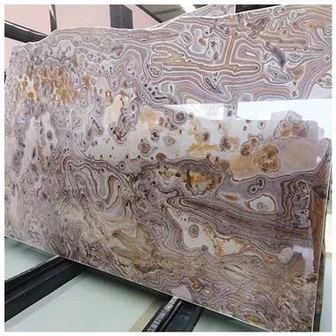
The care routine for patagonia quartzite begins with its geological structure. Patagonia is not a uniform stone. It comes from Brazilian exotic stone environments where intense pressure, mineral growth, and tectonic movement formed massive quartz crystals, cream feldspar blocks, dark biotite-like or tourmaline-style ribbons, and natural fracture boundaries. This complex mineral structure is why the stone looks powerful, but it also explains why each surface should be maintained with precision.
The translucent quartz windows are primarily silica-rich zones. These areas are chemically inert compared with marble, and they can produce a glass-like depth in polished slabs. However, their clarity can make fingerprints, hard water residue, soap film, and streak marks easier to see. A crystal-heavy countertop or backlit panel must be dried and buffed more carefully than a busy dark-patterned slab.
The cream microcline feldspar blocks are dense but may behave differently from pure quartz areas. Feldspar zones can show subtle porosity, micro-texture, or mineral shadowing depending on slab origin and resin treatment. These areas benefit from robust impregnating sealer protection, especially in kitchens, bars, bathrooms, and hospitality spaces where spills are frequent.
Biotite and iron-tourmaline-style ribbons create the dramatic black, charcoal, or metallic mineral lines that make quartzite patagonia recognizable. These ribbons can also be care-sensitive because they may contain brittle mineral boundaries, metallic inclusions, or resin-stabilized transitions. Harsh acidic industrial cleaners, abrasive pads, or aggressive solvents should not be used casually across these lines.
Sourcing slabs through a technologically advanced exotic quartzite manufacturer helps reduce maintenance risk from the beginning. Premium vacuum-pressure resination can stabilize natural micro-voids and reduce subsurface porosity. Strong polishing lines create a smoother reflection. Properly prepared slabs are easier to clean, easier to seal, and more reliable in long-term residential and commercial use.
3. Technical Material Specifications: The Mechanical Benchmarks of Quartzite Care
Quartzite care is different from marble care because the stone's chemistry and hardness are different. True quartzite is silica-rich and typically harder than calcite-based marble. This gives it strong resistance to scratching and acid-related surface dulling, but maintenance still matters because the slab may include resin, feldspar, mica-rich seams, open micro-fissures, and polished surface texture.
The following matrix provides practical reference ranges for care planning. Values are specification benchmarks only, not universal guaranteed test results. Actual performance depends on quarry layer, slab zone, resin treatment, thickness, finish, sealer quality, fabrication method, and maintenance habits.
| Material / Zone | Mohs Hardness | Water Absorption Rate | Compressive Strength | Acid Etch Resistance | Thermal Shock Care Note |
|---|---|---|---|---|---|
| Patagonia Quartzite Quartz Lens | Approx. 6.5–7.5 in quartz-rich zones | Selected dense areas may test near or below 0.03%–0.10% | High in compact crystal areas; slab-specific testing recommended | Strong compared with marble; avoid harsh chemicals on resin lines | Use trivets for cookware above normal serving temperature |
| Patagonia Quartzite Feldspar Base | Approx. 6–7 depending on mineral content | Low but variable around boundaries and fissures | Good when resined and supported correctly | Better than carbonate stone; still use neutral cleaners | Avoid sudden thermal contrast near resined areas |
| Greek Volakas White Marble | Approx. 3–4 | Variable; generally more sensitive to staining | Moderate compared with dense quartzite | Low; acid etching can occur quickly | Heat and acid exposure require more caution |
| Premium Commercial Acrylic Solid Surface | Lower than natural quartzite; formula dependent | Very low due to synthetic composition | Consistent but less stone-like structurally | Good against many stains, but may scratch or scorch | Heat sensitivity can be higher than quartzite |
Porosity realities vary across slabs and tiles. Premium dense Patagonia Quartzite Slabs and calibrated Patagonia Quartzite Tiles can be naturally stain-resistant when the surface is sealed correctly and maintained with neutral cleaners. The important phrase is "maintained correctly." A low absorption number does not excuse poor cleaning, long-term oil exposure, or neglected sealer renewal.
For high-gloss kitchens, the biggest visual threats are not always deep stains. They are film buildup, water spots, micro-scratches from abrasive debris, and dull patches created by inappropriate cleaners. A disciplined daily routine solves most of these problems before they become restoration issues.
4. Architectural Showdown: Patagonia Quartzite Countertops vs. Calcareous Marbles

The chemical difference between quartzite and marble is fundamental. Marble is calcium-carbonate based. Quartzite is silica-rich. This means marble reacts strongly to acidic ingredients, while true quartzite generally resists acid-related etching much better. In a working kitchen or cocktail bar, this distinction is critical.
A splash of lemon juice, vinegar, wine, or acidic cocktail mixer can etch and dull marble quickly because the acid reacts with calcium carbonate. On polished marble, the damage often appears as a dull mark rather than a colored stain. Quartz-rich Patagonia Quartzite Countertops are far more resistant to this kind of chemical dulling, although neutral cleaning is still the safest long-term practice.
The reality of etching versus staining should be understood clearly. Etching is surface corrosion or dulling caused by chemical reaction. Staining is liquid pigment or oil entering the stone's pores or micro-cracks. Quartzite reduces etching risk compared with marble, but staining risk still depends on absorption, resin quality, sealer condition, liquid type, and dwell time.
An integrated Patagonia Quartzite factory with high-quality polishing and vacuum-pressure resination creates a smoother, more closed surface. This helps reduce organic dirt accumulation and improves wipe-down performance. However, the user still needs the right care routine. Factory preparation and maintenance work together.
5. Visual Pattern Classifications: How Slab Aesthetics Alter Cleaning Maintenance
5.1 Crystal-Dominant Slabs: The Backlit Showpiece
Crystal-dominant slabs contain large translucent smoky quartz areas. These are the most visually spectacular surfaces, especially when used for Backlit Patagonia Quartzite islands, wall panels, bar counters, and illuminated furniture. Their clarity also makes streaks and water spots more visible.
Cleaning crystal-heavy surfaces requires microfiber discipline. Use a clean cloth for washing and a separate dry waffle-weave towel for final buffing. Under sub-stone LED systems, even a faint wipe mark can become visible across clear quartz windows. For Patagonia Backlit Quartzite Slabs, streak-free drying is not cosmetic; it is part of the lighting performance.
5.2 High-Contrast Mosaic Formations
High-contrast Patagonia slabs contain cream feldspar, smoky crystal pockets, dark biotite-like lines, and dramatic mineral variation. These patterns naturally hide light dust and minor daily marks better than clear crystal-heavy slabs. This makes them excellent for busy family kitchens, hospitality counters, and Patagonia Quartzite Tables.
However, dark mineral lines should not be scrubbed aggressively. Abrasive pads, acidic cleaners, or metal tools can affect the polish or resin near mineral transitions. The pattern hides dirt visually, but cleaning should still be gentle.
5.3 Fine-Grain Uniform Selections
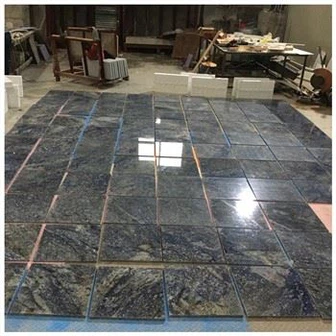
Fine-grain selections are more predictable and often used for flooring, wall panels, stairs, or repeated commercial pieces. When fabricated as Patagonia Quartzite Tiles, they require a neutral pH mopping protocol. Too much detergent can leave a film. Dirty mop water can settle into grout lines. Abrasive grit can slowly reduce shine in high-traffic zones.
For floor tiles, dry dust removal is as important as wet cleaning. Sand and small mineral particles can act like abrasives under foot traffic. Use clean microfiber mops, neutral stone cleaner, and well-rinsed water systems.
6. Step-by-Step Maintenance Protocol: The Zero-Damage Daily Cleaning Routine
Step 1: Microfiber Dusting and Loose Debris Eradication
Before wiping any polished stone surface, remove loose debris. Fine particles of sand, ceramic dust, metal fragments, or dried food residue can behave like abrasives when dragged across the surface. Use a high-pile dry microfiber cloth or soft dusting pad to lift particles instead of pushing them.
For countertops, clear the surface before spraying any cleaner. For dining tables, remove crumbs before wet wiping. For floors, vacuum with a soft brush attachment or use a clean microfiber dust mop before mopping. This small step prevents avoidable micro-scratches.

Step 2: Formulating the Perfect Neutral pH Surfactant Wash
The safest routine cleaner is a neutral pH stone cleaner diluted according to the product instructions. Avoid vinegar, lemon-based sprays, bathroom descalers, bleach-heavy mixtures, strong degreasers, abrasive powders, and unknown "all-purpose" cleaners. Even if quartzite resists acid better than marble, resin lines, sealers, and mixed mineral areas should not be exposed to harsh chemistry unnecessarily.
Standard dish soap can be used occasionally in a mild dilution, but repeated heavy use may leave surfactant or fatty film, especially on polished surfaces. This film can make the stone look dull or streaky. For routine care, a dedicated neutral stone cleaner is more predictable.
For quick cleaning, use warm water and a small amount of neutral cleaner. For greasy kitchen surfaces, a mild isopropyl alcohol and water mixture may be used carefully on sealed surfaces, but it should not replace the manufacturer's stone-care guidance. Always test any new cleaner in an inconspicuous area first.
Step 3: Streak-Free Buffing and Mechanical Drying Workflows
Do not let water dry naturally on polished quartzite. Tap water may contain minerals that leave spots, especially on clear quartz windows. After cleaning, buff the surface dry with a clean waffle-weave microfiber towel. Circular hand-buffing or long overlapping strokes can remove residual water film and improve reflection.
For backlit countertops, final drying is especially important. Water marks that look minor during the day can become obvious under evening LED lighting. For Translucent Patagonia Quartzite, clean cloth rotation is essential: one cloth for washing, one cloth for drying, and one cloth for final buffing on show surfaces.
Step 4: Deconstructing and Reversing Surfactant Film Build-up
One of the most insidious threats to a polished Patagonia Quartzite Slab is the gradual accumulation of surfactant residue, commonly known as soap film buildup. When homeowners or maintenance teams repeatedly use standard liquid dish soaps or insufficiently diluted cleaners, the synthetic fatty acids deposit a microscopic, microscopic-binding layer over the highly reflective crystal zones. Over time, this film traps atmospheric dust, diffuses natural light reflectivity, and alters the stone's specular gloss value.
To safely test for and reverse this condition without altering the factory polish, apply a small mist of a 1:1 mixture of technical-grade isopropyl alcohol (IPA) and distilled water onto a 10x10 cm area. Wipe immediately with a clean, unlaundered microfiber cloth. If the treated zone exhibits a noticeably higher optical clarity and sharper light reflection than the surrounding surface, a surfactant film is present. To restore the entire surface, execute a localized deep strip-wash using this IPA formula, followed by a pure distilled water rinse and immediate mechanical buffing to reveal the unaltered, organic brilliance of the quartzite gemstone matrix.
7. Advanced Stain Remediation: Safely Extracting Stubborn Spills
7.1 The Chemical Poultice Extraction Formula for Oil-Based Stains
Oil-based stains from grease, butter, cosmetics, salad dressing, or cooking oils may require a poultice if they penetrate an unsealed or weakly sealed area. A poultice works by drawing the contaminant out of the stone through capillary action as the paste dries.
A typical stone-care poultice uses an absorbent powder such as talc, diatomaceous earth, or a commercial poultice powder mixed with a suitable liquid agent. For some organic stains, a low-strength hydrogen peroxide solution may be used. For some oil-based stains, acetone may be used by professionals. The mixture is usually blended to a peanut-butter-like consistency, then applied to the stained area.
Because Patagonia can contain resin-treated fissures and translucent quartz zones, aggressive chemistry should be approached carefully. Always test first and avoid spreading solvents across large areas unnecessarily. For high-value surfaces, professional stone restoration support is preferable to experimental treatment.
7.2 Application, Sealing, and Capillary Extraction Timelines
Apply the poultice thickly over the targeted area, generally extending slightly beyond the visible stain. Cover it with plastic wrap, tape the edges lightly, and create small ventilation slits. Allow it to dry for 24 to 48 hours depending on the stain and room conditions. As the paste dries, it may pull the stain material upward.
After drying, remove the poultice gently with a plastic scraper or soft cloth. Clean the area with neutral stone cleaner, rinse lightly, and dry thoroughly. Some stains require multiple applications. If the stain becomes lighter but does not disappear, repeat carefully rather than using stronger chemicals immediately.
7.3 Dealing with Ink, Wine, and Organic Pigment Cross-Contamination
Red wine, coffee, tea, fruit juice, ink, and organic pigments should be blotted immediately. Do not wipe outward aggressively, because that can spread the stain. Use a clean white cloth, then follow with neutral cleaner and drying. If pigment remains, a stone-safe poultice may be used.
Do not use acidic stain removers or unknown household remedies. Lemon juice, vinegar, toilet cleaner, tile acid, and descaling products should never be used. These products may not etch quartzite the same way they etch marble, but they can damage sealers, resins, grout, adhesives, or adjacent materials.
8. Preventive Engineering: Sealing Parameters, Thermal Rules, and Structural Care
8.1 Impregnating Sealer Selection and Cross-Linking Chemistry
The best sealer for Patagonia Quartzite is usually a penetrating impregnating sealer designed for dense natural stone. These products enter microscopic pores and capillary paths rather than forming a visible waxy film on the surface. Superficial wax sealers can create streaks, trap dirt, reduce clarity, and interfere with backlighting.
High-quality fluorocarbon, silane, or siloxane-based impregnating sealers may be suitable depending on the stone and finish. The goal is to reduce liquid absorption without blocking the natural look or light transmission of clear quartz zones. For Backlit Patagonia Quartzite, sealer testing under light is recommended before full application.

8.2 Sealing Testing Protocols and Application Frequencies
The water drop test is a simple field check. Place a tablespoon of clean water on the surface and observe it for about 15 minutes. If the area darkens, absorbs, or leaves a visible shadow after wiping, resealing may be needed. If the water beads and the surface remains unchanged, the sealer is likely still functioning.
Residential countertops are often reviewed for resealing every 12 to 24 months, but the real schedule depends on stone density, sealer type, usage, cleaning frequency, and exposure. Hospitality bars, restaurants, and heavily used kitchens may need more frequent review. Low-use wall panels may need less frequent care.
8.3 Thermal Management and Trivet Placement Enforcements
Quartzite has excellent heat resistance compared with many synthetic surfaces, but sudden thermal shock is still risky. A hot cast-iron pan above 200°C placed directly on a cold stone surface can create stress, especially near resin-treated fissures, seams, or mixed mineral boundaries. The stone may survive many incidents, but professional care practice should not rely on luck.
Use trivets for hot cookware, baking trays, kettles, and heated serving pieces. For Patagonia Quartzite Countertops, this protects both the stone and the factory-infused resins used during processing. It also helps preserve sealers and surface polish over time.
8.4 Regulatory Compliance and Environmental Safety Metrics
For kitchen preparation areas, choose sealers and cleaners with appropriate low-VOC documentation and food-contact suitability guidance where applicable in the project region. Avoid relying on vague marketing claims. Request product data sheets, safety data sheets, and use instructions from the sealer manufacturer.
For hospitality, spa, restaurant, and commercial environments, maintenance teams should use cleaning products that are compatible with natural stone, indoor air quality expectations, and local operating requirements. The best maintenance program protects the stone, the user, and the indoor environment together.
9. Sourcing Economics: Preserving Material Value via Preventive Care
Preventive care has a direct financial return. A properly maintained Patagonia surface keeps its polish, clarity, contrast, and luxury value. A neglected surface may require professional restoration, deep cleaning, re-polishing, stain extraction, or even replacement of damaged pieces. For rare slabs, replacement may not match the original lot.
Professional stone maintenance is far less expensive than on-site grinding and restoration. Daily microfiber cleaning, neutral pH care, immediate spill response, periodic sealer testing, and trivet use can prevent most serious issues. Estate managers and hospitality operators should treat stone care as part of asset management, not housekeeping alone.
Procurement safeguards also matter. A well-resined, properly polished, and correctly packed slab is easier to maintain than a low-grade slab with open fissures, weak polish, or inconsistent resin treatment. Commercial general contractors and luxury real estate networks can secure bulk Patagonia Quartzite slabs or precision-fabricated products directly through a verified wholesale Patagonia Quartzite supplier or bulk stone exporter to lock in quality from the start.
KA UNITED supports global clients with slab documentation, care guidance, factory sealing recommendations, packing information, and project coordination from the Shuitou supply hub. For designers and contractors, maintenance planning should be included before handover, not after the first stain appears.
10. KA UNITED Product Paths for Maintenance-Aware Patagonia Projects
For kitchen surfaces, Patagonia Quartzite Countertops supports buyers evaluating sealing, edge details, daily care, and luxury kitchen performance.
For full slab selection, Patagonia Quartzite Slab supports full-slab approval, resin review, polish inspection, and project material planning.
For illuminated surfaces, Backlit Patagonia Quartzite helps buyers consider additional streak-control and light-transmission care requirements.
For rare color directions, Pink Patagonia Quartzite and Patagonia Green Quartzite support design projects where pigment clarity and surface protection are especially important.
For furniture applications, KA UNITED also provides Patagonia Quartzite Round Tables, Patagonia Quartzite Plinth Table, Patagonia Quartzite Dining Tables, and Patagonia Quartzite Contemporary Rectangle. These products connect Patagonia Quartzite Tables with countertop, wall, and hospitality maintenance planning.
11. Related Blog Recommendation Hub
For buyers who want to understand Patagonia Quartzite from sourcing to grading, cleaning, fabrication, backlighting, cabinetry, maintenance, and logistics, the following topic cluster builds a complete research path. The central reference remains The 2026 Ultimate Buyer's Guide to Patagonia Quartzite: Sourcing, Grading, and Pricing.
Pillar Guide
The 2026 Ultimate Buyer's Guide to Patagonia Quartzite: Sourcing, Grading, and Pricing
The central guide for sourcing, grading, pricing, logistics, technical specifications, and KA UNITED project support.
Mega Project Comparison
Patagonia Quartzite vs. Taj Mahal Quartzite: Which Brazilian Stone Suits Your Mega Project?
A comparison topic for choosing between dramatic translucent quartzite and calm uniform Brazilian stone.
Homeowner Guide
Patagonia Quartzite for Homeowners: The Complete Guide to Choosing, Installing, and Enjoying Your Countertops
A residential guide for countertop selection, installation, sealing, cleaning, and daily use.
Kitchen Comparison
Patagonia Quartzite vs. Marble vs. Granite: Which is Best for Your Luxury Kitchen?
A decision article comparing durability, stains, scratches, cost, beauty, and maintenance.
Backlit Installation
Mastering Backlit Patagonia Quartzite: Installation Secrets and Lighting Techniques for Feature Walls
A technical article for LED panels, cavity depth, adhesive control, anchoring, and illumination quality.
Installation Mistakes
5 Common Mistakes in Backlit Patagonia Quartzite Installation and How to Avoid Them
A risk-control topic for hot spots, dark adhesives, shadow brackets, ventilation, and service planning.
Grade Education
Patagonia Quartzite Quality Grades Explained: A vs B vs C Grade Blocks and Slabs
A grading guide for crystal ratio, feldspar base, micro-fissures, resin levels, and slab value.
Sourcing Story
From Brazil to Shuitou: How KA UNITED Sources Premium Patagonia Quartzite Blocks
A supply-chain article covering quarry selection, block shipping, Shuitou processing, inspection, and export preparation.
Fabrication Guide
How to Handle and Fabricate Patagonia Quartzite: A Guide to Preventing Fissures During Cutting
A fabrication guide for cutting, reinforcement, edge finishing, mitering, and slab handling.
Translucency Science
The Science of Translucency: Why Patagonia Quartzite is the Ultimate Choice for Luxury Bar Counters
A lighting and material science topic for quartz windows, photon diffusion, and hospitality bar design.
Thickness Guide
Backlit Patagonia Quartzite Thickness Guide: 2cm vs 3cm for Walls, Counters, and Ceilings
A technical article for choosing slab thickness based on structure, translucency, and installation type.
Rare Color Series
Beyond the Classic: Exploring the Rare Beauty of Pink Patagonia Quartzite
A color-focused topic for rare blush slabs, translucent rose quartzite, pricing, and luxury applications.
Hospitality Design
Patagonia Green Quartzite in High-End Hospitality: Bringing Exotic Nature Indoors
A biophilic design guide for hotels, spas, private clubs, green quartzite walls, and hospitality counters.
Cabinet Pairing
Matching Cabinetry with Patagonia Quartzite Countertops: 2026 Design Trends
A design guide for cabinet color, timber grain, lacquer tone, millwork structure, and Patagonia island planning.
Furniture Fabrication
Custom Patagonia Quartzite Furniture: Inside Our Fabrication Process for Plinth and Dining Tables
A fabrication topic for plinth tables, dining tables, internal subframes, 3D miter wrapping, and stone furniture engineering.
Maintenance
How to Clean and Maintain Patagonia Quartzite: A Step-by-Step Guide for Long-Lasting Beauty
A practical care guide for neutral pH cleaning, sealing, stain removal, microfiber drying, and long-term stone protection.
Inventory Update
Patagonia Quartzite Inventory Update: 50+ Bookmatched Slabs Ready for Global Shipping
A commercial topic for ready-to-ship slabs, bundle review, and project sourcing.
Application Guide
Patagonia Quartzite Unveiled: 2026 Application Guide
A KA UNITED article for understanding residential and commercial applications.
Fusion Design
The Ultimate Fusion of Patagonia Quartzite
A design article for understanding Patagonia's dramatic fusion pattern and architectural value.
Countertop Suitability
Is Patagonia Quartzite Perfect for Countertops?
A countertop-focused article for kitchens, islands, bars, and residential use.
Quartzite or Granite
Is Patagonia Quartzite or Granite?
A helpful article for buyers comparing commercial naming and geological identity.
Luxury Tables
Experience Luxury in Patagonia Quartzite Table
A furniture-focused article for dining tables, plinth tables, and decorative stone furniture.
Villa Project
Patagonia Quartzite Villa Project by KA UNITED
A project article for villa interiors, luxury kitchens, and custom residential surfaces.
Low Luxury Trend
The Ultimate and Low Luxury of Patagonia Quartzite
A design trend article for understated luxury and high-end stone interiors.
Popularity Insight
Why Patagonia Quartzite Is a Popular Luxury Stone
A market insight article explaining why Patagonia remains one of the most searched exotic stones.
12.: Quartzite Care and Longevity FAQ
Can you use standard vinegar or glass cleaner on natural Patagonia Quartzite countertops?
No. Vinegar, acidic glass cleaner, descaling sprays, bathroom cleaners, and lemon-based products should not be used on Patagonia Quartzite countertops. True quartzite resists acid better than marble, but harsh cleaners can affect sealers, resins, grout, adhesives, and adjacent finishes. Use neutral pH stone cleaner and microfiber drying for routine care.

How do you safely remove a dried oil stain from backlit Patagonia Quartzite slabs?
Blot any fresh oil first. For a dried oil stain, use a stone-safe poultice made from absorbent powder and an appropriate drawing agent, then test in a hidden area before applying. Cover the poultice, allow it to dry for 24 to 48 hours, remove gently, clean with neutral stone cleaner, and dry thoroughly. For backlit slabs, avoid dark or aggressive chemicals that may affect translucent zones.
How often does premium Brazilian exotic quartzite require a new coat of sealer?
Many residential quartzite countertops are reviewed for resealing every 12 to 24 months, but the exact schedule depends on stone density, finish, sealer type, cleaning frequency, and daily use. A water drop test is the simplest field check. If water darkens or absorbs into the surface within about 15 minutes, resealing should be considered.
Why should luxury estate managers source replacement tiles from an authorized luxury stone distributor?
Replacement tiles and slabs should come from an authorized supplier or distributor because Patagonia varies strongly by block, color, crystal ratio, and pattern. A random replacement tile may not match the original project. A professional source can review bundle records, lot photos, thickness, finish, and packing data to improve replacement accuracy.
Why do streak marks and light scratches appear magnified under Backlit Patagonia Quartzite systems, and how do you prevent them?
When sub-stone LED matrix arrays are energized, light rays travel directly through the translucent quartz windows of the Backlit Patagonia Quartzite. If there are mineral rings, hard-water crusts, or cleaning streaks on the exterior polished surface, these superficial anomalies refract the escaping light, casting micro-shadows that magnify their visual size up to ten times. To completely eliminate this backlit refraction anomaly, maintenance protocols must enforce a strict dual-axis drying method: always wipe first in a north-south linear pattern, followed immediately by an east-west buffing pass using an ultra-dry, premium 400GSM microfiber cloth. Never use circular motions on backlit panels, as circular patterns catch light from omnidirectional LED clusters, turning minor maintenance artifacts into prominent visual defects.
13. Conclusion: Protecting an Architectural Masterpiece for Future Generations
The mandatory care rules are straightforward: no acids, no abrasive pads, no heavy soap buildup, no ignored spills, and no hot cookware directly on the stone. Use neutral pH cleaner, microfiber drying, periodic water-drop testing, proper sealing, trivets, and professional poultice treatment when stains occur.
Patagonia Quartzite is an exotic raw earth feature transformed into architectural luxury. A few minutes of structured daily care protects its polished clarity, crystal depth, feldspar contrast, dark mineral movement, and long-term property value. Good maintenance does not make the stone fragile; it respects the value of a rare natural surface.
Luxury interior designers, private estate managers, hospitality groups, contractors, and distributors can coordinate with KA UNITED for technical care guides, premium block sourcing, project slab review, and direct factory support for Brazilian Exotic Quartzite, countertops, tiles, feature walls, and custom stone furniture.

Semantic Closing Insight: How to Keep Patagonia Quartzite Beautiful for Decades
How should daily care begin? Start with dry debris removal, then use a neutral pH stone cleaner, rinse lightly where needed, and dry with clean microfiber. Do not let water, soap, or wine residues dry naturally on polished quartz windows.
Why does sealing matter even on dense quartzite? Dense quartzite is naturally resistant, but feldspar zones, fissures, edges, grout lines, and resin transitions may still benefit from impregnating sealer protection. Sealing reduces absorption risk and makes routine cleaning easier.
What should be avoided completely? Avoid vinegar, lemon juice cleaners, abrasive powders, steel wool, acidic bathroom sprays, bleach-heavy mixtures, wax films, and direct hot cookware contact. These can affect polish, sealer, resin, or surrounding materials even if the quartzite itself is durable.
Option analysis: Use neutral cleaner for daily care, an impregnating sealer for preventive protection, a stone-safe poultice for deep stains, and professional restoration for severe damage. Backlit slabs need extra streak-control and optical clarity care.
Consideration analysis: A crystal-heavy slab may show fingerprints and water marks more easily. A busy mosaic slab may hide dust better. A floor tile installation needs grit control. A dining table needs oil, wine, and heat discipline. Maintenance should match the stone format.
Market insight: In 2026, luxury stone ownership is moving toward lifecycle care. Buyers no longer judge only the purchase price; they also evaluate sealing, cleaning, restoration cost, replacement risk, and long-term visual preservation.
14. FAQ Section
1. What is the safest way to clean Patagonia Quartzite Countertops?
The safest way to clean Patagonia Quartzite Countertops is to remove loose debris with a dry microfiber cloth, wipe the surface with warm water and a neutral pH stone cleaner, then dry and buff it with a clean microfiber towel. Avoid vinegar, lemon-based cleaners, abrasive powders, harsh degreasers, and acidic bathroom sprays. Even though true quartzite is more acid resistant than marble, improper cleaners can damage sealers, resin lines, grout, and the polished finish over time.
2. Does Patagonia Quartzite need to be sealed?
Yes, Patagonia Quartzite should usually be sealed with a high-quality penetrating impregnating sealer, especially in kitchens, bathrooms, bars, and hospitality spaces. Dense quartzite may have very low absorption, but natural fissures, feldspar zones, edges, and resin-treated areas can still benefit from sealer protection. Use the water drop test to check performance: if water darkens or absorbs into the surface within about 15 minutes, resealing should be considered. Many residential installations are reviewed every 12 to 24 months.
3. Can stains be removed from Brazilian Exotic Quartzite?
Many stains can be reduced or removed from Brazilian Exotic Quartzite if they are treated correctly. Fresh spills should be blotted immediately rather than wiped outward. Oil, wine, coffee, ink, or organic pigment stains may require a stone-safe poultice made from absorbent powder and an appropriate drawing agent. The poultice is applied over the stain, covered, vented, and allowed to dry for 24 to 48 hours. Severe stains, backlit slabs, or high-value countertops should be handled by a professional stone restoration specialist.
4. Can you put hot pans directly on Patagonia Quartzite?
Patagonia Quartzite has excellent heat resistance compared with many synthetic surfaces, but hot pans should still be placed on trivets. Sudden thermal shock from cast-iron cookware, baking trays, kettles, or pans above 200°C can stress resin-treated fissures, seams, sealers, adhesives, and mixed mineral zones. A strict trivet policy protects the stone finish and reduces long-term risk, especially around cooktops, bar counters, and kitchen islands where heat exposure is frequent.
5. Where can I get care guidance for Patagonia Quartzite slabs, tiles, and tables?
Care guidance for Patagonia Quartzite slabs, tiles, countertops, and tables should come from a professional manufacturer, supplier, factory, luxury stone distributor, or fabricator familiar with the exact material lot and finish. KA UNITED supports architects, homeowners, estate managers, hospitality operators, contractors, and distributors with Patagonia Quartzite sourcing, slab documentation, sealing recommendations, maintenance guidance, custom fabrication communication, and global project coordination for luxury stone surfaces.
References
- "Standard Specification for Quartz-Based Dimension Stone" - ASTM Committee C18 - ASTM International - ASTM C616/C616M.
- "Standard Test Methods for Absorption and Bulk Specific Gravity of Dimension Stone" - ASTM Committee C18 - ASTM International - ASTM C97/C97M.
- "Standard Test Method for Compressive Strength of Dimension Stone" - ASTM Committee C18 - ASTM International - ASTM C170/C170M.
- "Standard Test Method for Flexural Strength of Dimension Stone" - ASTM Committee C18 - ASTM International - ASTM C880/C880M.
- "Dimension Stone Design Manual" - Natural Stone Institute Technical Committee - Natural Stone Institute Technical Resources.
- "Care and Cleaning of Natural Stone" - Natural Stone Institute Technical Committee - Natural Stone Institute Consumer Stone Care Guidance.
- "Stone Sealer Selection and Maintenance Guidance" - Natural Stone Institute Technical Resources - Natural Stone Care Publications.
- "Patagonia Quartzite Cleaning and Maintenance Knowledge Base" - KA UNITED Editorial and Product Team - KA UNITED Luxury Stone Catalog.