The 2026 Ultimate Buyer's Guide to Patagonia Quartzite: Sourcing, Grading, and Pricing
Quick Summary:
This 2026 buyer's guide explains how to source, grade, price, fabricate, install, and maintain patagonia quartzite for luxury residential and commercial projects. It covers Patagonia Quartzite Slabs, backlit Patagonia quartzite kitchen island applications, exotic Brazilian quartzite grading 2026, and the key procurement checks buyers need before ordering from KA UNITED.
The 2026 Ultimate Buyer's Guide to Patagonia Quartzite: Sourcing, Grading, and Pricing
Executive Procurement Abstract (2026 Edition)
As luxury hospitality and ultra-high-net-worth (UHNW) residential architecture increasingly pivot toward rare biophilic statements, Patagonia Quartzite has established itself as the premier choice for natural feature surfaces. This technical procurement framework is compiled specifically for commercial architects, stone importers, luxury developers, and master fabricators. It systemically deconstructs the entire international supply chain-from tracking geological anomalies in Brazilian pegmatite formations and mastering the crystalline-to-feldspar grading ratio, to mitigating micro-fissures during advanced CNC fabrication. By establishing precise structural tolerances, backlighting matrices, and freight yield calculations, this guide serves as an actionable risk-management tool to safeguard project budgets and guarantee flawless architectural execution.
A technical and procurement-focused guide for architects, interior designers, contractors, stone importers, hotel developers, fabricators, luxury homeowners, and commercial project buyers.
1.Geological Genesis: The Volcanic Architecture of the Bahia and Minas Shields
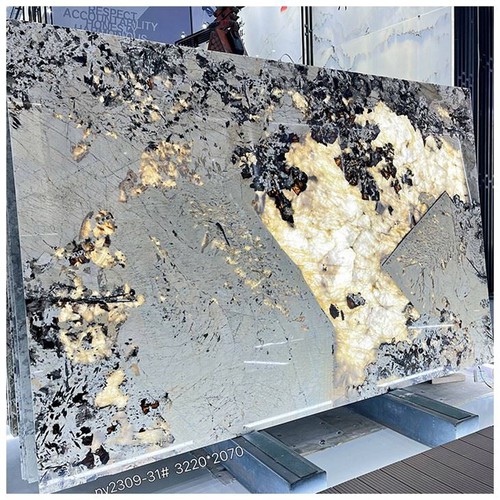
Patagonia Quartzite has become one of the most recognizable exotic stones in the luxury interior market because it does not look like a conventional marble, granite, or quartzite. It appears as a geological collage: creamy feldspar fields, smoky quartz windows, dark mineral patches, golden-brown movement, translucent crystalline zones, and dramatic fractured patterns that look almost painterly. For project buyers, this visual complexity is both the main attraction and the main technical challenge.

The material is associated with Brazilian geological environments where ancient tectonic pressure, heat, and mineral-rich formation conditions transformed silica-rich stone into a dense and visually complex quartzite family. In commercial design language, buyers often search for it as patagonia quartzite slab, quartzite patagonia, Luxury Quartzite Slabs, Exotic Quartzite Slabs, and Brazilian Quartzite Slabs. These keyword variations point to the same procurement reality: the market wants a rare natural stone that combines durability, translucency, and architectural drama.
Unlike uniform white quartzites or linear-veined marbles, Patagonia is driven by pegmatitic anatomy. Slow-cooling mineral environments allowed large crystals of smoky quartz, feldspar, and other mineral components to grow together in a fragmented but visually powerful structure. This creates the "fusion" look that makes Patagonia highly desirable for islands, walls, bar fronts, furniture, and feature installations. The translucent quartz windows are especially valuable because they allow designers to explore backlighting, edge illumination, and dramatic evening atmospheres.
An established Patagonia Quartzite manufacturer should evaluate structural block stability before primary block squaring. This includes checking natural fissures, crystal boundary strength, feldspar integrity, quartz window size, resin response, and expected slab yield. A beautiful block may not always produce stable slabs. Some blocks contain large translucent windows that look spectacular but require careful cutting, reinforcement, and packing. Others have muddy feldspar zones or heavy fracture networks that reduce final value.
KA UNITED supplies multiple Patagonia-related product options for buyers comparing slabs, countertops, backlit applications, and furniture pieces. Key product references include Patagonia Quartzite Slab, Pink Patagonia Quartzite, Patagonia Green Quartzite, Backlit Patagonia Quartzite, and Patagonia Quartzite Countertops.
2.Technical Specification Matrix: Laboratory Benchmarks for High-Stress Zones
Luxury quartzite should be evaluated with both visual and engineering criteria. Patagonia is frequently selected for its dramatic appearance, but high-value projects also require information about hardness, absorption, strength, density, and fabrication behavior. These technical details matter for kitchen islands, bar tops, wall panels, table designs, vanity tops, and backlit installations.
The following matrix provides practical benchmark ranges for buyer education. Actual values vary by block, slab, finish, resin treatment, fissure structure, and laboratory method. Project-specific testing is recommended for major commercial projects, large overhangs, exterior kitchens, and complex engineered assemblies.
| Performance Item | Patagonia Quartzite Reference | Premium Granite Reference | Luxury Italian Marble Reference | Project Interpretation |
|---|---|---|---|---|
| Mohs Hardness | Approx. 6.5–7 where quartz-rich; variable around feldspar and fissure zones | Approx. 6–7 depending on quartz and feldspar content | Approx. 3–4 for calcite-based marble | Patagonia is usually much more scratch-resistant than marble and can be comparable to or harder than many granites in quartz-rich zones. |
| Water Absorption Rate | Approx. 0.03%–0.18% for selected dense slabs; slab testing recommended | Often low, typically below common granite benchmark limits when premium quality | Often higher and more variable depending on marble type | Low absorption improves resistance to wine, oil, and moisture, but sealing is still recommended for countertops and bar use. |
| Compressive Strength | Often strong where quartz-rich; project testing recommended for structural applications | Generally high and reliable for dense granites | Usually lower than granite and quartzite | Important for heavy countertops, thick island tops, wall panels, tables, and international shipping. |
| Flexural Strength | Variable because of natural fissure networks and crystal boundaries | Generally stable when free of major fissures | More vulnerable to bending stress and edge chipping | Critical for waterfall islands, large tables, overhangs, cutouts, and vertical cladding. |
| Density | Approx. 2.60–2.75 g/cm³ depending on mineral composition | Approx. 2.60–2.80 g/cm³ for many premium granites | Approx. 2.60–2.75 g/cm³, variable by marble type | Weight planning is essential for cabinetry, frames, walls, shipping, and mechanical handling. |
The low water absorption range of approximately 0.03% to 0.18% is one reason buyers choose Patagonia for kitchens and hospitality counters. However, it is inaccurate to describe any natural stone as absolutely stain-proof. Low absorption improves resistance to wine, oil, coffee, and moisture, but the surface should still be sealed with a professional impregnating sealer and maintained with pH-neutral stone cleaners.
The massive quartz content in many Patagonia slabs means cutting requires advanced machinery and experienced operators. A technologically capable Patagonia Quartzite factory should use suitable diamond tooling, controlled saw speed, stable water cooling, careful slab support, and appropriate resin reinforcement. Aggressive cutting can create micro-fractures around crystal boundaries, while poor polishing can reduce the depth of the translucent quartz windows.
3.Pattern Classifications and Grading: Decoding the Crystalline Ratio
Patagonia grading is different from grading a plain white quartzite or linear marble. The market evaluates the "crystalline ratio," meaning the balance between translucent quartz windows, creamy feldspar base, smoky mineral structure, brown-gold movement, black mineral inclusions, and natural fracture patterns. The best slabs look dramatic but controlled. They feel exotic without becoming visually chaotic.
| Grade Type | Visual Character | Best Applications | Procurement Risk |
|---|---|---|---|
| A Grade / Premium Crystalline | Large translucent quartz windows, balanced feldspar base, attractive smoky movement, limited muddy zones | Backlit walls, luxury kitchen islands, hotel bars, book-matched features, custom tables | Limited supply; buyers must secure slabs early and verify full-slab photos. |
| B Grade / Architectural Balanced | Good pattern movement, moderate translucent zones, more feldspar base and natural fissure lines | Countertops, vanity tops, wall panels, furniture, feature surfaces | Layout control is needed to avoid visual imbalance across large spaces. |
| C Grade / Commercial Selection | More muddy feldspar areas, heavier fractures, fewer clear quartz windows, less dramatic translucency | Smaller cut-to-size pieces, selected furniture, secondary surfaces, cost-controlled projects | Must be inspected carefully for fissure stability and final finish value. |
High-end commercial spaces should source bulk Patagonia Quartzite slabs from identical quarry bundles whenever possible. A hotel lobby wall, luxury bar face, private villa island, or executive table installation can look inconsistent if slabs from different blocks are mixed. Even when the stone name is the same, the pattern intensity, translucency, feldspar color, and smoky quartz depth can vary dramatically.
Working directly with a wholesale Patagonia Quartzite supplier gives project teams a better chance to map large-format layout sequences before production. Digital slab matching, bundle numbering, dry-lay photos, and layout drawings reduce the risk of mismatched panels. For premium applications, buyers should request high-definition photos of the exact slabs, not generic catalog images.
For buyers considering furniture as part of the same design language, KA UNITED offers related stone furniture references including Patagonia Quartzite Round Tables, Patagonia Quartzite Plinth Table, Patagonia Quartzite Dining Tables, and Patagonia Quartzite Contemporary Rectangle.
4. Patagonia Quartzite vs. Calacatta White Marble: The Structural Confrontation
The comparison between Patagonia Quartzite and Calacatta marble is one of the most important design decisions for luxury kitchens and hospitality spaces. Calacatta marble has a timeless white-and-grey elegance, but it is calcareous, which means it is sensitive to acidic liquids. Lemon juice, vinegar, wine, alcohol, and some common cleaners can etch marble quickly. Etching creates dull marks that cannot be removed by simple wiping.
patagonia quartzite offers a very different performance profile. Quartz-rich zones are harder and more scratch-resistant than marble. The stone generally resists common kitchen wear better than white marble, making it suitable for island tops, hospitality bars, vanity surfaces, and high-traffic residential kitchens. This is a major reason buyers compare Patagonia Quartzite Countertops against premium marble countertops.
Thermal performance is another consideration. Quartzite can tolerate normal kitchen heat better than many delicate marble surfaces, but buyers should still use trivets under hot cookware. Direct thermal shock is never recommended for premium natural stone because resin-filled fissures, edge details, and support conditions can respond differently to sudden temperature changes.
From a lifecycle perspective, Patagonia often delivers stronger long-term value in kitchens and commercial areas where daily use is intense. A corporate executive boardroom table, luxury residential island, private club bar, or hospitality service counter must retain beauty under real conditions. Marble may be selected for classic formality, but Patagonia is often chosen when designers want a more dramatic geological surface with higher resistance to scratching and acid-related dulling.
For homeowners and developers comparing options, the phrase Patagonia quartzite vs Calacatta marble durability reflects a real purchase question. Patagonia usually wins for practical durability, while Calacatta marble remains a strong choice for lower-impact surfaces where natural patina is acceptable. The best decision depends on lifestyle, cleaning habits, design style, and maintenance expectations.
5. Advanced Engineering and Backlighting Protocol for Translucent Zones
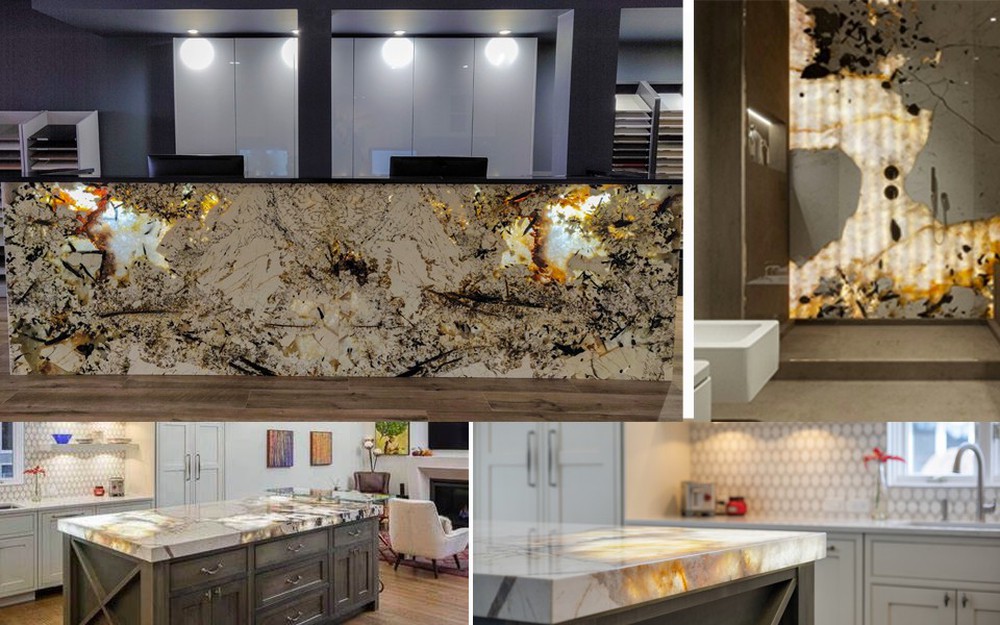
One of the reasons Patagonia remains so powerful in luxury design is its ability to interact with light. Selected slabs contain translucent quartz windows that can transmit and diffuse light in a way that ordinary granite or opaque quartzite cannot. This makes Backlit Patagonia Quartzite highly desirable for bar counters, feature walls, reception desks, wine rooms, and luxury kitchen islands.
The optical physics depends on the natural crystal structure. Smoky quartz sections may soften the light, clear quartz areas may glow more brightly, and feldspar zones may block or scatter light. Dark mineral lines can create shadow. This variation is not a defect; it is the reason Patagonia looks alive when illuminated. However, lighting must be engineered carefully to prevent uneven brightness and visible LED patterns.
The 2026 backlighting blueprint usually favors custom matrix LED light guide plates rather than basic strip lights. Standard LED strips often create optical hot spots, visible bands, or dotted brightness behind the stone. Light guide plates, diffuser layers, reflective backing, and high-CRI LED systems help create a more even glow. A CRI 90+ lighting system is recommended when the project needs accurate color rendering and a natural appearance.
Premium custom stone fabrication services should also calculate the correct structural offset pocket between the LED plane and the stone. A 30mm to 50mm cavity can help light diffuse before reaching the slab, although the exact depth depends on slab thickness, translucency, LED type, brightness, and frame design. For Patagonia Backlit Quartzite Slabs, the lighting system should be tested with the actual stone before final installation.
For buyers focused on illuminated islands or feature bars, KA UNITED provides Backlit Patagonia Quartzite as a relevant product reference. This type of application is especially effective when combined with controlled lighting temperature, removable service panels, and careful adhesive selection.
5.1 2026 Luxury Market Intelligence: Why Developers Invest in Patagonia's High ROI
In the 2026 luxury real estate and premium hospitality sectors, materials are no longer evaluated merely as structural coverings; they are calculated as core brand equity. Commercial developers are heavily favoring Patagonia Quartzite due to its proven ability to command higher room-rates in boutique hotels and increased appraisal values in premium residential builds. The visual "wow-factor" of a masterfully book-matched, illuminated Patagonia feature wall acts as a signature design anchor, driving social media traction and viral organic marketing for luxury venues.
Furthermore, current international design movements have shifted away from sterile, synthetic quartz surfaces toward unreplicable geological drama. Because no two slabs of Patagonia are identical, it satisfies the elite client's demand for absolute exclusivity. According to premium stone market indicators, specifying a Grade-A crystalline Patagonia counter in a high-stress commercial zone yields a much lower total cost of ownership (TCO) compared to luxury marbles. It eliminates the frequent restoration, honing, and stain-removal cycles required by softer calcareous materials, making it a highly strategic, low-maintenance asset for long-term property lifecycle management.
6. Structural Installation Mandates: Adhesives and Substrate Management
Patagonia's translucent zones make installation discipline extremely important. Low-grade grey thin-set, dark epoxy, oil-rich adhesives, and unsuitable fillers can show through clear quartz sections. Once this happens, the damage may be permanent because the shadow is not on the surface; it is visually trapped behind or inside the stone assembly.
The safest installation method uses white, non-staining, stone-compatible adhesives and water-clear structural acrylic resins where transparency matters. Although many buyers still use the older term MIA standards, current professional guidance is generally associated with the Natural Stone Institute. The practical requirement is simple: use adhesives that will not bleed, yellow, shadow, or chemically interfere with the stone.
Substrate management is equally critical. Cabinets, steel frames, wall anchors, and support structures must be dry, flat, stable, and strong enough for the selected thickness. A 20mm slab may be lighter and more useful for some wall or backlit applications, while a 30mm slab may provide more mass for heavy countertops and large islands. The correct choice depends on support, overhang, fabrication details, and design intent.
Massive waterfall island designs need special attention. Mitered edges must be cut precisely, reinforced where needed, and supported properly to reduce edge chipping. Overhangs should be engineered rather than guessed. Backlit surfaces need access space for LED drivers and future maintenance. For vertical walls, mechanical anchors and support systems should be reviewed by qualified professionals.
For projects involving Patagonia Quartzite Kitchen Countertops, Patagonia Quartzite Vanity Tops, Patagonia Quartzite Tiles, or custom furniture, installation details should be finalized before production. Once the stone is cut, changes become expensive and may reduce yield.
7. B2B Procurement Economics and Freight Yield Optimization
Patagonia pricing is shaped by rarity, block quality, slab size, crystalline ratio, translucency, fissure stability, finish, thickness, fabrication complexity, and freight cost. Premium slabs with large translucent quartz windows and dramatic but balanced movement command stronger prices. Slabs with muddy feldspar zones, excessive fractures, or limited usable area are usually valued lower.
Quarry extraction limits and sorting yield are major pricing factors. Not every block can produce premium slabs. Some blocks may contain beautiful zones mixed with unstable fissures. Others may produce small usable areas but limited full-size slab value. This is why buyers should judge Patagonia by actual slab quality rather than by name alone.
Purchasing container loads directly from a direct stone exporter can reduce unnecessary broker layers and improve project communication. For large commercial orders, the advantage is not only price. Direct sourcing allows buyers to coordinate bundle selection, cutting plans, packing, inspection, documentation, and shipping schedule more efficiently. In some market conditions, avoiding multiple distribution layers can materially improve project budget control, though exact savings depend on order size, route, Incoterms, and supplier structure.
Container yield optimization is especially important for stone. A 20-foot container may commonly carry around 21 to 27 metric tons depending on port rules, carrier restrictions, container condition, and regional regulations. The goal is not to overload the container; the goal is to maximize safe slab yield while protecting the material. Heavy slabs require stable A-frame packing, correct spacing, balanced loading, and clear unloading instructions.
Working with a luxury stone distributor, exotic quartzite wholesaler, or direct factory supplier can also help buyers plan mixed orders. For example, one project may require slabs for a kitchen island, cut-to-size panels for walls, and furniture tops for a lounge area. Smart cutting logic reduces waste and increases the value of every selected slab.
8. KA UNITED Product Paths for Patagonia Quartzite Buyers
For full-slab selection, Patagonia Quartzite Slab is the primary product path for buyers comparing grade, translucency, pattern, and large-format project suitability.
For color variations and rare design directions, Pink Patagonia Quartzite and Patagonia Green Quartzite help buyers explore beyond the classic neutral-and-crystalline pattern.
For illuminated luxury interiors, Backlit Patagonia Quartzite is relevant to buyers planning Translucent Patagonia Quartzite walls, bar fronts, reception counters, and backlit islands.
For kitchen, vanity, and hospitality worktops, Patagonia Quartzite Countertops supports buyers specifying Patagonia Quartzite Countertops, Patagonia Quartzite Kitchen Countertops, and custom-cut project surfaces.
For luxury furniture, KA UNITED also provides product references such as Patagonia Quartzite Round Tables, Patagonia Quartzite Plinth Table, Patagonia Quartzite Dining Tables, and Patagonia Quartzite Contemporary Rectangle.
9. Conclusion: Securing a One-of-a-Kind Geological Masterpiece
Patagonia Quartzite is not a basic surface material. It is a high-value geological statement that demands careful sourcing, grading, fabrication, installation, and maintenance. Buyers should verify slab photos, crystalline ratio, fissure stability, thickness, finish, resin treatment, backlighting potential, packing method, and shipment plan before confirming an order.
The key procurement checkmarks are clear: select the exact slabs, compare grade quality, request digital slab mapping, confirm structural support, use non-staining adhesives, test backlighting before fabrication, seal countertops properly, and coordinate logistics early. These steps protect both the project budget and the final design result.
KA UNITED welcomes global B2B tender submissions, custom architectural estimating, and container-level sourcing coordination for Patagonia Quartzite. Whether the project requires Patagonia Quartzite Tables, Patagonia Quartzite Tiles, Backlit Patagonia Quartzite, kitchen countertops, large-format slabs, or custom furniture, the best result begins with technical evaluation and direct project communication.

10. Related Blog Recommendation Hub
For buyers who want to understand Patagonia Quartzite from sourcing to design, installation, fabrication, maintenance, backlighting, and logistics, the following topic cluster builds a complete knowledge path around the material.
Pillar Guide
The 2026 Ultimate Buyer's Guide to Patagonia Quartzite: Sourcing, Grading, and Pricing
The central guide for sourcing strategy, grading logic, pricing factors, technical specifications, and KA UNITED project support.
Mega Project Comparison
Patagonia Quartzite vs. Taj Mahal Quartzite: Which Brazilian Stone Suits Your Mega Project?
A comparison topic for developers deciding between dramatic translucent quartzite and softer neutral Brazilian luxury stone.
Homeowner Guide
Patagonia Quartzite for Homeowners: The Complete Guide to Choosing, Installing, and Enjoying Your Countertops
A residential-focused topic for kitchen islands, worktops, maintenance, and lifestyle use.
Kitchen Comparison
Patagonia Quartzite vs. Marble vs. Granite: Which is Best for Your Luxury Kitchen?
A useful decision article for buyers comparing durability, maintenance, cost, and design value.
Backlit Installation
Mastering Backlit Patagonia Quartzite: Installation Secrets and Lighting Techniques for Feature Walls
A technical article for LED light guide plates, hot spot control, and translucent quartzite installation.
Installation Mistakes
5 Common Mistakes in Backlit Patagonia Quartzite Installation and How to Avoid Them
A practical risk-control topic for adhesives, shadowing, LED hot spots, support frames, and service access.
Grade Education
Patagonia Quartzite Quality Grades Explained: A vs B vs C Grade Blocks and Slabs
A grading guide for importers, distributors, contractors, and designers comparing slab quality.
Sourcing Story
From Brazil to Shuitou: How KA UNITED Sources Premium Patagonia Quartzite Blocks
A supply-chain topic explaining block procurement, processing, inspection, and export preparation.
Fabrication Guide
How to Handle and Fabricate Patagonia Quartzite: A Guide to Preventing Fissures During Cutting
A factory and installation topic for cutting, reinforcement, edge finishing, and slab handling.
Translucency Science
The Science of Translucency: Why Patagonia Quartzite is the Ultimate Choice for Luxury Bar Counters
A design science topic for backlit bars, translucent quartz windows, and high-end hospitality interiors.
Thickness Guide
Backlit Patagonia Quartzite Thickness Guide: 2cm vs 3cm for Walls, Counters, and Ceilings
A technical article for selecting slab thickness based on structure, translucency, and installation type.
Rare Color Series
Beyond the Classic: Exploring the Rare Beauty of Pink Patagonia Quartzite
A color-focused topic for designers seeking softer and more exclusive Patagonia variations.
Hospitality Design
Patagonia Green Quartzite in High-End Hospitality: Bringing Exotic Nature Indoors
A project-design topic for hotels, clubs, restaurants, wellness spaces, and boutique commercial interiors.
Cabinet Pairing
Matching Cabinetry with Patagonia Quartzite Countertops: 2026 Design Trends
A kitchen design topic for cabinet color, metal finish, lighting, and island coordination.
Furniture Fabrication
Custom Patagonia Quartzite Furniture: Inside Our Fabrication Process for Plinth and Dining Tables
A fabrication topic for tables, plinths, statement furniture, edge detailing, and structural support.
Maintenance
How to Clean and Maintain Patagonia Quartzite: A Step-by-Step Guide for Long-Lasting Beauty
A care article covering sealing, daily cleaning, stain prevention, and countertop protection.
Inventory Update
Patagonia Quartzite Inventory Update: 50+ Bookmatched Slabs Ready for Global Shipping
A commercial update topic for distributors and project buyers seeking ready-to-ship premium bundles.
Application Guide
Patagonia Quartzite Unveiled: 2026 Application Guide
A useful KA UNITED article for understanding modern applications and design potential.
Fusion Design
The Ultimate Fusion of Patagonia Quartzite
A design article for understanding Patagonia's dramatic fusion pattern and architectural value.
Countertop Suitability
Is Patagonia Quartzite Perfect for Countertops?
A countertop-focused article for residential kitchens, islands, bars, and practical use.
Quartzite or Granite
Is Patagonia Quartzite or Granite?
A helpful article for buyers confused by commercial naming and geological classification.
Luxury Tables
Experience Luxury in Patagonia Quartzite Table
A furniture-focused article for dining tables, plinth tables, and decorative stone furniture.
Villa Project
Patagonia Quartzite Villa Project by KA UNITED
A project example for villa interiors, premium residential design, and custom stone applications.
Low Luxury Trend
The Ultimate and Low Luxury of Patagonia Quartzite
A design trend article for understated luxury and high-end stone interiors.
Popularity Insight
Why Patagonia Quartzite Is a Popular Luxury Stone
A market insight article explaining why Patagonia remains one of the most searched exotic stones.
11. High-Intent FAQ: SGE and AI Search Snippets
Is Patagonia quartzite harder than granite?
Patagonia Quartzite can be harder than many granites in quartz-rich zones because quartz has a Mohs hardness of about 7. However, natural Patagonia is not a perfectly uniform material. It contains quartz, feldspar, fissure zones, and other minerals, so performance can vary within the same slab. Compared with many granites, it can offer excellent scratch resistance, but the final answer depends on the exact slab and mineral structure.
What causes the transparency in Patagonia quartzite?
The transparency comes from large crystalline quartz zones inside the slab. These quartz windows can transmit light better than opaque feldspar or dark mineral areas. When used with LED panels, selected Patagonia slabs can create a glowing effect, especially in bar fronts, wall panels, and island features. This is why Translucent Patagonia Quartzite is popular for backlit luxury interiors.
How do you clean Patagonia quartzite countertops?
Clean Patagonia countertops with a pH-neutral stone cleaner, warm water, and a soft microfiber cloth. Avoid vinegar, lemon cleaner, acidic sprays, abrasive powders, bleach-heavy products, and harsh commercial chemicals. Although quartzite is durable, the surface should still be sealed, wiped after spills, and protected from unnecessary abrasion. For kitchens, use cutting boards and trivets to preserve the polished finish.
Does Patagonia Quartzite require special impregnating sealers compared to granite?
Patagonia should be sealed with a high-quality impregnating sealer suitable for dense quartzite. Some slabs have very low absorption, while others contain fissure networks or feldspar zones that absorb differently. A test area should always be completed before full sealing. Compared with many granites, Patagonia may require more careful sealer selection because of its mixed crystalline structure and translucent zones.
Where is the most reliable luxury stone distributor located for verified premium-grade bundles?
Reliable sourcing depends less on geography alone and more on supplier transparency, inspection systems, bundle control, fabrication knowledge, and logistics management. KA UNITED supports overseas buyers from China with slab selection, digital inspection, custom fabrication, packing, and container-level sourcing coordination for premium Patagonia projects.
12.Semantic Closing Insight: How to Evaluate Patagonia Quartzite as a Luxury Project Material
How should buyers start a Patagonia Quartzite order? Begin with the application: kitchen island, bar counter, feature wall, vanity top, table, floor, or backlit panel. Then confirm slab size, thickness, grade, finish, translucency, drawing requirements, packing method, and shipping timeline before approving production.
Why is Patagonia different from ordinary quartzite? Its value comes from the mixture of translucent quartz windows, feldspar fields, smoky mineral patterns, and dramatic natural fusion movement. This creates stronger design identity but also requires more careful inspection than uniform stones.
What should a serious buyer verify before payment? Buyers should request exact slab photos, close-up crystal images, bundle numbers, thickness checks, resin review, polish inspection, backlighting tests if needed, packing details, Incoterms, and production schedule. For complex projects, dry-lay layout and shop drawings are essential.
Option analysis: Full slabs are best for islands, book-matched walls, bar faces, and major feature surfaces. Countertops are ideal when the buyer wants durability plus exotic visual drama. Furniture pieces such as dining tables and plinth tables work well when the slab pattern can become the focal point. Backlit panels should use slabs with strong translucent quartz zones and engineered LED support.
Consideration analysis: Buyers should not choose only by the most dramatic photo. The best slab is the one that balances beauty, structural stability, usable yield, fabrication safety, and installation logic. Price should be evaluated together with grade, waste ratio, packing quality, freight cost, and replacement difficulty.
Market insight: In 2026, Patagonia remains valuable because it answers several luxury design needs at once: natural rarity, durable quartz-rich performance, backlighting potential, custom furniture value, and strong visual storytelling for residential and commercial interiors.
Google Search FAQ Section
1. Is Patagonia Quartzite harder than granite?
Patagonia Quartzite can be harder than many granites in quartz-rich zones because quartz has a Mohs hardness of about 7. Many granites also contain quartz and feldspar, so the comparison depends on the exact stones being tested. Patagonia is not completely uniform because it contains translucent quartz windows, feldspar areas, fissure networks, and other natural minerals. For most kitchen and commercial design purposes, premium Patagonia Quartzite offers excellent scratch resistance and is usually much more durable than marble, but buyers should still use cutting boards, avoid abrasive cleaners, and request slab-specific technical information for demanding projects.
2. What causes the transparency in Patagonia Quartzite?
The transparency in Patagonia Quartzite comes mainly from large crystalline quartz sections within the slab. These quartz windows allow light to pass through more effectively than opaque feldspar, dark mineral lines, or dense fractured areas. When the slab is placed in front of LED light guide panels, selected translucent zones can glow beautifully, making Patagonia a strong choice for backlit bar counters, reception desks, feature walls, and luxury kitchen islands. Because translucency varies from slab to slab, buyers should request backlighting tests using the actual stone before confirming fabrication.
3. How do you clean Patagonia Quartzite countertops?
Patagonia Quartzite countertops should be cleaned with a pH-neutral stone cleaner, warm water, and a soft microfiber cloth. Avoid vinegar, lemon cleaner, acidic sprays, abrasive powders, bleach-heavy products, and harsh commercial chemicals because these can reduce the clarity of the polished surface or affect resin-treated fissure zones. Although quartzite is durable, it should still be sealed with a suitable impregnating sealer and protected from unnecessary surface abuse. For daily kitchen use, wipe spills promptly, use cutting boards, place trivets under hot cookware, and avoid dragging metal or ceramic objects across the surface.
4. Is Patagonia Quartzite suitable for backlit kitchen islands?
Patagonia Quartzite can be highly suitable for backlit kitchen islands when the selected slabs contain strong translucent quartz windows and the lighting system is engineered correctly. The best installations use LED light guide plates or matrix panels rather than basic strip lights, because they reduce hot spots and create more uniform diffusion. The design should include proper cavity depth, service access for LED drivers, white non-staining adhesives, and stable structural support. Not every Patagonia slab is equally translucent, so full-slab inspection and lighting tests are essential before cutting.
5. Where can I buy premium Patagonia Quartzite slabs for an international project?
International buyers should source Patagonia Quartzite from a professional manufacturer, supplier, factory, distributor, or exporter that can provide exact slab photos, grade information, bundle numbers, fabrication support, packing details, and logistics documentation. KA UNITED supports overseas stone importers, hotel contractors, interior design studios, luxury developers, distributors, fabricators, and architectural material buyers with Patagonia Quartzite slabs, countertops, backlit applications, custom furniture, export packing, and container-level shipping coordination for residential and commercial projects.
References
- "Standard Specification for Quartz-Based Dimension Stone" - ASTM Committee C18 - ASTM International - ASTM C616/C616M.
- "Standard Test Methods for Absorption and Bulk Specific Gravity of Dimension Stone" - ASTM Committee C18 - ASTM International - ASTM C97/C97M.
- "Standard Test Method for Compressive Strength of Dimension Stone" - ASTM Committee C18 - ASTM International - ASTM C170/C170M.
- "Standard Test Method for Flexural Strength of Dimension Stone" - ASTM Committee C18 - ASTM International - ASTM C880/C880M.
- "Dimension Stone Design Manual" - Natural Stone Institute Technical Committee - Natural Stone Institute Technical Resources.
- "Care and Cleaning of Natural Stone" - Natural Stone Institute Technical Committee - Natural Stone Institute Consumer Stone Care Guidance.
- "Regulation of Wood Packaging Material in International Trade" - International Plant Protection Convention Secretariat - ISPM 15.
- "Patagonia Quartzite Product and Application Knowledge Base" - KA UNITED Editorial and Product Team - KA UNITED Luxury Stone Catalog.