Why is Azul Bahia Granite So Expensive? The Scarcity and Quarrying Story
Why is Azul Bahia Granite So Expensive? The Scarcity and Quarrying Story
KA UNITED's soft after building stone, Brazilian Blue Exotic Azul Bahia Granite, is expensive because it is scarce, difficult to extract, technically demanding to process, and visually unlike almost anything else in the market. It sits in a rare category where geology, logistics, and luxury demand all pull the same direction. The result is a stone that is not simply bought by area. It is acquired by opportunity. Buyers who need a true rare blue natural stone quickly discover that they are paying for access, not just material.
In 2026, the market for Blue Bahia Granite continues to strengthen because the design world has shifted toward bold but disciplined statement materials. High-end kitchens, executive offices, feature walls, boutique hospitality, and yacht interiors increasingly favor surfaces that feel both rare and controlled. This is exactly where luxury blue granite 2026 demand is concentrated. The best projects want a stone that can act like art, yet still function as a surface.
KA UNITED supports that market with project-level sourcing and technical selection. For buyers looking at Blue Granite Slabs, Blue Granite Countertops, or finished architectural pieces, the right approach is not to ask only "What is the price?" but "What is the origin, what is the grade, and how much risk is embedded in the supply chain?" That is the logic that separates premium procurement from ordinary purchasing.

1. The Geological Mystery: Is It Granite or Sodalite?
1.1 The mineralogical identity behind the blue
One reason Azul Bahia Granite is so fascinating is that its reputation exceeds its simple trade name. In technical terms, it is widely described as a sodalite-rich rock, often classified more accurately as a foidolite than a conventional granite. The stone's vivid blue coloration comes from the presence of sodalite minerals, which produce the intense cobalt-to-indigo appearance that designers seek.
This matters because the trade name "granite" is often used as a commercial category rather than a precise mineralogical label. Buyers searching for Blue Bahia Granite should understand that the stone is prized not because it is a standard granite, but because it contains a rare blue mineral system with a very distinctive visual signature. That is why the material is frequently discussed alongside Sodalite Blue Granite and other exotic semi-precious stone procurement categories.
1.2 Why the semi-precious label drives demand
In the luxury market, the term "semi-precious" signals scarcity, collectability, and visual drama. That perception pushes demand beyond ordinary decorative stone. Buyers do not purchase Azul Bahia because it blends in. They purchase it because it stands apart. In many luxury interiors, the stone functions like a jewel box surface, especially when used for countertops, bar fronts, or book-matched walls.

For a serious premium exotic stone supplier, the work begins with verifying whether the material truly carries the expected mineral purity and color intensity. Not all blue material is equal. The best suppliers know how to distinguish strong color saturation from weak or broken material and how to match the stone to the application without overpromising performance.
Granite name versus performance reality
The buyer should not get stuck on the trade name alone. Whether a slab is called granite, foidolite, or sodalite-rich stone, the practical question is whether it performs properly in the intended use. This is especially important when specifying Azul Bahia Granite countertops, where thickness, support, sealing, and fabrication all matter.
The mineralogical identity explains the visual appeal. The technical performance explains the price.
2. The Sourcing Story: A Single Point of Origin
2.1 The Potiragu Mountains and the origin problem
The most important reason Azul Bahia Granite is expensive is that it comes from a highly restricted origin in Brazil. The stone is associated with a very specific geological zone, often referenced through the Potiragu Mountains and surrounding quarry areas in Bahia. That single-point origin creates an immediate scarcity effect. When supply depends on one rare source, the market behaves differently.
Buyers asking for authentic Azul Bahia quarry origin are asking the right question. Origin is not a marketing detail here; it is the foundation of value. A real Brazilian Blue Granite with verified quarry traceability can command a very different price than a loosely described blue stone with no credible source documentation.
2.2 Quarrying hazards and block recovery
Extracting usable blocks from this stone is unusually difficult because the quarrying zones can be fractured and structurally unpredictable. The stone is not simply cut out like a uniform mass. Blocks often require careful stabilization, selective extraction, and conservative yield management. That means a substantial portion of the material may never become finished slab inventory.

For this reason, a Blue Bahia Granite factory faces more risk than a factory handling conventional granite. Blocks may need reinforcement before transport. Slab recovery can be uneven. Color zones can vary. Every stage of the process adds cost, and every mistake can destroy a premium piece of inventory.
2.3 Why logistics are uniquely difficult
A Blue Bahia Granite exporter is not merely shipping a commodity. They are moving a fragile, high-value material across a supply chain that must preserve color, structure, and visual integrity. Because the stone is rare, damage or waste during transit matters more than it would for common material. This increases packaging costs, insurance complexity, and lead-time sensitivity.
That is why sourcing from a trustworthy partner is essential. The right supplier does not just quote a slab. They manage origin verification, processing discipline, and export logistics as one connected system.
3. Technical Specifications: The Quantified Engineering Hub
A luxury buyer should always understand what the stone can do, not just what it looks like. Below is a practical 2026 performance matrix for Azul Bahia Granite in comparison with standard granite categories.
| Property | Azul Bahia Granite Value | Comparison (Standard Granite) | Project Meaning |
|---|---|---|---|
| Mohs Hardness | 6.0 – 6.5 | 6.5 – 7.0 | Slightly softer than many true granites, but still suitable for luxury interiors |
| Water Absorption | 0.10% – 0.20% | < 0.30% | Low absorption supports practical interior use with proper sealing |
| Density | 2,550 – 2,680 kg/m³ | 2,700 kg/m³ | Dense enough for strong visual presence, though not as heavy as some granites |
| Compressive Strength | 160 – 185 MPa | 180+ MPa | Strong enough for countertops and many vertical applications |
| Flexural Strength | 12.5 – 14.0 MPa | 10.0+ MPa | Useful for customized fabrication if supported correctly |
| Visual Signature | Intense blue with white and black mineral movement | Usually more neutral | Defines the stone's luxury identity and market rarity |
These numbers help explain why Azul Bahia Granite price is not comparable to ordinary blue stone. The material is not being priced as a basic slab. It is being priced as a rare visual asset with limited origin, high extraction risk, and meaningful fabrication complexity. In commercial terms, that changes everything.
The numbers also matter for custom luxury stone fabrication. When a stone carries a lower hardness than typical granite but still offers good density and useful flexural performance, the fabricator must select thickness, edge detail, and support strategy very carefully. That precision adds cost, but it also protects the final project.
4. Pattern Classification: The Three Grades of Blue
4.1 Extra Grade: the cobalt standard
The best slabs show a deep, saturated blue with minimal black interruption and strong visual continuity. This is what the market often calls Extra Grade. In practice, these slabs are rare and highly sought after. Their visual intensity makes them suitable for hero pieces such as a Blue Bahia kitchen island, a feature wall, or a luxury office desk.
Top-tier yields can be extremely limited, and that scarcity is one of the key drivers behind the premium. In a material like this, the best pieces are not abundant enough to satisfy all demand. They become collectible within the market.
4.2 A-Grade: balanced and highly usable
A-Grade material usually offers a good balance of blue saturation, white veining, and manageable mineral movement. This is often the best category for wholesale Azul Bahia slabs because it provides visual strength without demanding the absolute premium of Extra Grade. Many developers prefer this middle band because it still feels luxurious but is easier to purchase at scale.
A-Grade also tends to work well in Azul Bahia feature wall applications where consistency matters across a wider surface. If the project needs several slabs to create a unified visual field, A-Grade often provides the right balance of availability and aesthetics.
4.3 Commercial Grade: practical but less pure
Commercial Grade material usually shows more grey, black, or mixed-mineral content. It can still be attractive, but it is not the strongest choice for a pure luxury statement. The stone may be best suited for wholesale blue granite tiles, smaller installations, or secondary applications where the blue is part of the story but not the entire focus.
The key fact is that the best blue material is scarce. In 2026, "clean blue" inventory can be extremely limited relative to demand. That scarcity creates an immediate pricing premium across the market.
5. Comparative Analysis: Azul Bahia vs. Blue Macaubas vs. Sodalite Blue
5.1 Azul Bahia vs Sodalite Blue
The comparison between Azul Bahia vs Sodalite Blue matters because both can sit in the blue luxury category, but they are not always identical in origin, structure, or performance. Azul Bahia is often described as a granite-based or foidolite-type material with strong sodalite content, while pure sodalite blue materials may behave differently and can be more delicate in application.
In practical terms, Azul Bahia is often preferred for kitchens, islands, and vertical luxury surfaces because it combines dramatic color with better structural viability for demanding use. That is one reason many designers and specifiers prioritize it for projects where beauty must coexist with functionality.
5.2 Azul Bahia vs Blue Macaubas
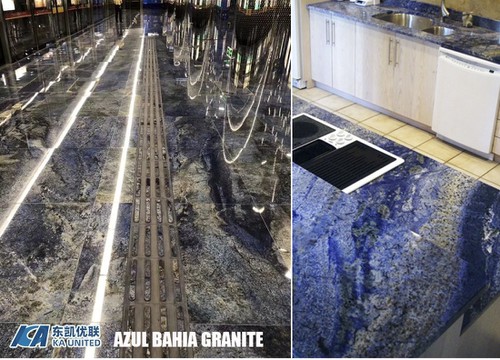
Azul Bahia vs Blue Macaubas is another important market comparison. Blue Macaubas is typically a quartzite and can display a different visual and technical profile, often with more linear movement and a softer blue expression. Azul Bahia, by contrast, is usually more saturated and more jewel-like in appearance.
For the buyer, the choice comes down to intent. Blue Macaubas may feel calmer or more linear, while Azul Bahia can feel more saturated and dramatic. In pure visual intensity, Bahia often wins. In some durability-driven or linear-design projects, Macaubas may be better suited. The right selection depends on the project story.
5.3 Blue Bahia versus artificial blue porcelain
The comparison with Blue Bahia vs artificial blue porcelain is less about technical performance and more about authenticity. Artificial porcelain can imitate color and pattern, but it cannot reproduce the natural depth, mineral variation, or collectible value of a true rare stone. For luxury buyers, that difference is decisive.
Artificial products can be useful in practical contexts, but they do not command the same emotional or market value. A true blue natural stone carries geological rarity, origin story, and visible identity. That is why Azul Bahia remains a benchmark in the luxury category.
6. Why Is It So Expensive? The 2026 Financial Breakdown
1. Quarry yield and the waste-to-slab ratio
The biggest cost factor is yield. The waste-to-slab ratio is often very high because the stone is difficult to recover in large, intact pieces. If a quarry must remove a great deal of fractured material to produce only a few usable slabs, the final price of the good slabs rises quickly. This is a structural reality, not a marketing trick.
2. Fragility in extraction
Blocks often require stabilization before they leave the mountain. This may involve vacuum bonding or other reinforcement methods to protect the material during handling. That process adds labor, material cost, and time. It also increases the amount of technical expertise required at the quarry stage.
In short, the stone is expensive because it is expensive to save.
3. Global scarcity and restricted supply
Supply is restricted by origin and geological reality. The result is a natural monopoly of sorts: the market depends on one source region and a limited number of viable blocks. That gives the stone considerable pricing power, especially when demand rises in luxury residential, hospitality, and collector markets.
4. Specialized processing costs
Fabrication of this material is not comparable to normal granite work. It often requires Italian-made diamond wires, high-purity resins, careful polishing, and slow, disciplined handling. Every step adds cost. But every step also protects the value of the finished stone.
This is why the Blue Bahia Granite cost is not an arbitrary luxury markup. It is the sum of geological rarity, extraction difficulty, processing discipline, and market demand.

6. The KA UNITED Advantage: Mastering the Azul Bahia Supply Chain
Understanding the scarcity of Azul Bahia Granite is only half of the equation; ensuring a consistent, high-grade supply for global architectural landmarks is where KA UNITED excels. We don't just trade stone; we manage the journey from the Brazilian bedrock to the final installation.
1. Direct Quarry Procurement & Raw Block Mastery
To secure the most vibrant blue pigments and structural integrity, KA UNITED maintains year-round direct procurement from Brazilian quarry owners. We import over 300 x 20'GP of Raw Blocks annually, ensuring our clients get the "first pick" of the finest material before it hits the open market.
2. The Shuitou Luxury Hub: 4,000+ SQM of Ready Inventory
Located in the heart of the global stone trade, our Luxury Stone Warehouse in Shuitou spans over 4,000 SQM. Here, we showcase more than 30+ varieties of Brazilian Luxury Quartzite and Granite. Every slab is displayed in full, allowing architects and developers to inspect the vein continuity and color saturation of Blue Bahia in person or via high-resolution digital scans.
3. Proven Execution for Global Landmarks
A stone as prestigious as Azul Bahia requires a supplier with a proven track record. From 5A-grade corporate headquarters and ultra-luxury hotels to premium shopping malls and exclusive private estates, KA UNITED provides the technical expertise and logistics precision required to deliver 30,000+ SQM of premium marble and granite to the most demanding projects worldwide.
In 2026, when you specify Azul Bahia Granite from KA UNITED, you are not just purchasing a rare mineral; you are investing in a supply chain that guarantees consistency, transparency, and architectural excellence for your most prestigious developments.
7. Real-World Applications: Designing with the World's Rarest Blue
7.1 The signature island
One of the most striking uses of Azul Bahia Granite countertops is the kitchen island. A blue island can become the center of the room, especially when paired with restrained cabinetry and warm metal accents. In this context, the stone acts as a jewel-box object rather than a background surface.
For projects that want to make a clear statement, this is often the best use of the material. A well-executed island can carry the entire room's identity.
7.2 Bespoke furniture and executive interiors
Remnant pieces and smaller selected slabs can be transformed into Azul Bahia executive desk surfaces, coffee tables, side tables, and other bespoke furniture elements. This is where Azul Bahia custom fabrication creates value beyond standard countertop use. A small but perfect piece can become an object of real visual power.
In a luxury office or private study, a blue stone desk becomes a declaration of taste. It is not common, and that is exactly why it works.

7.3 Yacht interiors and marine luxury
The marine luxury segment increasingly seeks rare, expressive materials for selected interior zones. Blue Bahia Granite can be used in yacht bars, vanity zones, display panels, and custom decorative features when weight, support, and sealing are properly managed. That is one reason the stone has become associated with elite interiors that want a memorable blue identity.
For yacht projects, the stone must be planned carefully. Weight, movement, and moisture exposure all need to be considered. But when the engineering is correct, the visual result can be extraordinary.
8. Installation and Fabrication: The High-Stakes Protocol
8.1 Adhesive matching and color darkening
With dark blue stones, adhesive choice is critical. A poor adhesive can create darkening, shadowing, or visual distortion beneath the surface. The installer should use color-matched or specially selected epoxies that support the stone visually rather than compromise it. This becomes especially important when the slab is polished or when edges are visible.
A serious Blue Bahia Granite factory should provide shop drawings, fabrication notes, and support guidance so the installer knows how the stone must be treated on site. That paperwork is part of the product in a luxury project.
8.2 Back-buttering and structural support
For Blue Bahia tiles or thin-set applications, back-buttering is essential. The installer must ensure even coverage and stable support so the tile does not fail later due to voids or inadequate bonding. This is especially important in wall applications and flooring where movement or stress may occur.
Good engineering prevents failure. It also protects the beauty of the stone over time.
8.3 Why shop drawings matter
The best projects are not installed from guesswork. A direct stone wholesaler should provide detailed fabrication drawings that show dimensions, seam placement, edge profiles, and layout logic. This is particularly useful when the project includes Blue Bahia book match surfaces or layered cladding systems.
When the supplier and installer work from the same plan, the final result is more predictable, cleaner, and more luxurious.
9. Maintenance and 2026 Care Standards of Azul Bahia Granite
9.1 The no-acid rule
The most important maintenance rule is simple: avoid acids. Azul Bahia maintenance should focus on neutral cleaning products and prompt spill management. Acidic cleaners can dull the surface or affect the minerals over time, especially if the stone has any exposed or lightly finished areas.
This is why buyers should always request a Blue Bahia sealing guide from the supplier and a practical care plan for the end user. Maintenance is not difficult, but it must be consistent.

9.2 Nano-sealing and long-term protection
In 2026, high-performance impregnating sealers can extend the life and appearance of the surface. These products are especially useful in kitchen and bathroom settings where water, oils, and household cleaners are common. While sealing does not make the stone invincible, it can help preserve the finish and reduce stain risk.
This is particularly important for Blue Bahia bathroom vanity installations and countertop applications where daily contact is expected.
9.3 Professional restoration and repair kits
If damage occurs, the stone often requires specialized restoration rather than generic repair solutions. That is why a knowledgeable premium exotic stone supplier can be useful even after the sale, because repair materials and restoration guidance may be needed years later. This is part of the ownership cost of a collectible stone.
Buyers asking how to clean Azul Bahia Granite should keep the answer simple: use pH-neutral cleaners, soft cloths, and avoid abrasive pads or harsh acids. Careful maintenance protects both aesthetics and value.
10. Sustainability and Ethical Quarrying in 2026
10.1 ESG in Brazilian mining
Sustainability now matters in luxury stone procurement. Buyers increasingly expect quarrying and export practices that align with environmental and social responsibility. For a stone as rare as Azul Bahia Granite, this means traceability, labor discipline, and responsible extraction methods are now part of the buying conversation.
A reputable Brazilian Blue Granite Supplier should be able to explain how the material is sourced and how labor and safety practices are handled. Buyers should ask these questions directly.
10.2 The carbon footprint of blue luxury
Any stone that travels long distances has a carbon footprint. That is unavoidable. The practical question is whether the supplier manages packaging efficiency, container use, and shipment planning well enough to reduce waste. In premium projects, this is increasingly part of owner reporting and procurement ethics.
Blue Bahia is a luxury material, but that luxury should still be handled responsibly.
10.3 Fair labor and remote quarry regions
Remote quarrying regions present real challenges. Ethical sourcing requires attention to fair labor practices, safe extraction procedures, and transparent logistics. A Blue Bahia Granite exporter that understands this will be more credible to architects, developers, and procurement teams who need a defensible sourcing story.
11. 2026 Industry Forecast: The Future of Azul Bahia
11.1 Will the quarry run dry?
One of the biggest market questions is whether supply will continue to tighten through 2030. The answer depends on block availability, extraction conditions, and the economics of production. Because the stone comes from a restricted source and top-grade yield is limited, the market is already operating with a scarcity premium.
That means buyers who wait too long may face even higher prices or lower-grade alternatives. In a category this rare, timing is part of the procurement strategy.
11.2 Digital twins and pre-purchase mapping
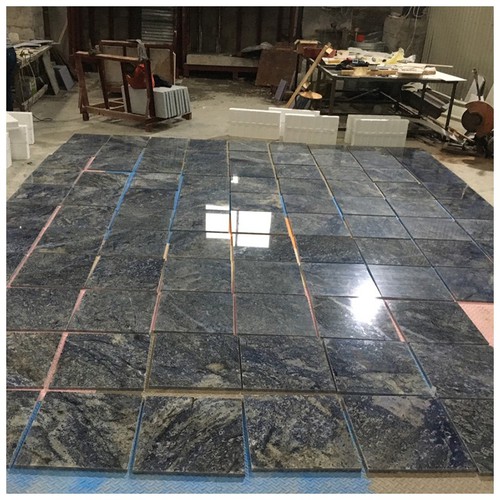
One of the most useful developments in 2026 is the rise of digital twins for slab selection. High-resolution imaging and AI-supported mapping allow buyers to inspect Azul Bahia Granite slabs before purchase. This is especially useful for remote project teams that cannot visit the warehouse in person.
A factory that provides digital inspection tools gives the buyer more confidence and reduces risk.
11.3 Why direct sourcing is the only real hedge against markups
If the buyer wants to reduce unnecessary markups, the most efficient model is to buy Azul Bahia Granite direct from a source that can verify origin, explain grading, and manage fabrication. In a scarce market, every extra handoff adds cost and uncertainty.
That is why many buyers now prefer direct procurement from a trusted Azul Bahia Granite Slabs Factory rather than using layered intermediaries.
12. High-Intent Industry FAQ of Blue Bahia Granite
Q1. Is Azul Bahia Granite a good investment for home resale?
Yes, when used in the right setting. Azul Bahia Granite can significantly enhance a home's perceived luxury because it is visually rare and immediately memorable. Buyers often respond strongly to unique kitchen islands, bar tops, or feature walls made from this stone. While the material does not guarantee a financial return, it can strengthen the overall design identity of a high-end home and make the property more distinctive in the market.
Q2. What is the average Blue Bahia Granite slabs price per square foot in 2026?
The price per square foot varies widely depending on grade, slab quality, size, and origin verification. Extra-grade material with strong blue saturation and minimal black interruption can command a much higher Azul Bahia Granite per square foot value than commercial-grade material. Buyers should expect pricing to reflect not only surface area but also rarity, yield, and processing quality. The more complete the blue color and the more limited the supply, the higher the cost usually becomes.
Q3. Can Azul Bahia be used for outdoor features?
Azul Bahia outdoor use is possible in certain controlled applications, but buyers should approach it carefully. The stone should be evaluated for UV exposure, sealing requirements, weather conditions, and installation detail. In some climates and projects, it may perform well for protected exterior elements or decorative features. However, outdoor use should always be tested and specified by professionals because the stone is rare and should not be exposed carelessly.
Q4. Where can I find a verified Blue Bahia Granite factory for large projects?
Buyers should look for a factory or supplier that can prove origin, explain grading, provide slab imaging, and support export logistics clearly. A verified Azul Bahia Granite manufacturer or Azul Bahia Granite Slabs Factory should be able to handle project-grade selection, fabrication support, and packaging discipline. For large developments, the best partner is one that treats the stone as a premium procurement asset rather than a commodity.

Q5. How do I identify real Blue Bahia?
Real Blue Bahia should show strong natural blue mineral presence, clear origin traceability, and a visual depth that artificial materials cannot replicate. Buyers should ask for quarry origin documentation, slab photos in natural light, and if possible, batch verification. The stone's rarity is part of its identity, so genuine material should be supported by a credible sourcing story. If the supplier cannot explain the origin clearly, the buyer should be cautious.
13. Conclusion: The Verdict on the King of Stones-Azul Bahia From KA UNITED
Azul Bahia Granite is expensive because it is rare, beautiful, and difficult to bring from quarry to finished project. Scarcity is not a side effect; it is the core of its luxury value. That scarcity is reinforced by the stone's mineral identity, limited origin, extraction risk, and the intense fabrication skill required to turn rough blocks into polished architectural elements. That is why the stone remains one of the most coveted materials in the high-end blue category.
In 2026, the smartest buyers are the ones who treat the stone as a strategic material, not just a visual indulgence. Whether the project calls for Azul Bahia Granite countertops, a dramatic Azul Bahia feature wall, a collectible Azul Bahia bar top, or refined Blue Bahia flooring, the best results come from direct sourcing, rigorous grading, and careful fabrication. That is how rarity turns into design value.
KA UNITED continues to support this category with project-oriented supply, technical selection, and export coordination. For architects, developers, and fabricators who need dependable wholesale Azul Bahia supply, the most important decision is not just what to buy, but who to trust with the source, the cut, and the shipment.

For a broader technical and design deep-dive, read: The Ultimate Guide to Azul Bahia Granite in 2026: Pricing, Grading, and Luxury Design Applications.
Product Reference Cards
Blue Bahia Granite
Main luxury stone reference for origin, grading, and project applications.
Azul Bahia Granite
Primary stone page for premium blue granite procurement.
Azul Bahia Granite Countertops
Useful for kitchens, bars, and luxury countertop selection.
Blue Bahia Granite Slab
Slab-focused page for direct project specification.
Azul Bahia Granite Slab
Core slab inventory reference for wholesale buyers.
Related Blog Cards
Why Azul Bahia Granite So Expensive? The Scarcity and Quarrying Story
A core reading piece for understanding rarity, origin, and value drivers.
Why Choose Azul Bahia Granite?
A practical buyer guide focused on design and procurement benefits.
Why Azul Bahia Granite for High-End Global Projects?
Useful for hospitality, commercial, and international project planning.
Grading Azul Bahia Granite: How to Distinguish Premium Slabs from Commercial Grades
Recommended companion reading for slab selection and evaluation.
Azul Bahia Granite vs. Other Blue Stones: Which One Is the Real Investment?
Helpful for comparing Bahia against Blue Macaubas and related stones.
2026 Luxury Interior Trend: Incorporating Blue Bahia into "Quiet Luxury" Aesthetics
Good context for modern interior design positioning.
Custom Fabricated Blue Bahia Granite Masterpieces: Luxury Bar Tops and Executive Desks
Relevant to bespoke furniture and premium detailing.
The Art of Book-matching: Creating Symmetrical Masterpieces with Azul Bahia Granite
Useful for explaining pattern matching and visual composition.
Maintenance and Sealing Guide for Blue Bahia Granite: How to Preserve the Vibrant Blue
Practical care content for long-term ownership and maintenance.
Lighting Techniques for Blue Bahia: Enhancing Natural Color with LED Backlighting
Helpful for backlit and display-oriented applications.
Sourcing Azul Bahia Granite Directly from KA UNITED: Quality Inspection and Global Logistics
Strong source-selection content for serious buyers.
FAQ: Everything You Need to Know Before Ordering Blue Bahia Granite
Supports long-tail buyer queries and conversion-ready content.
Semantic Closure Content Block
How should buyers think about Azul Bahia Granite price in 2026?
Buyers should think of the price as the combined result of scarcity, extraction difficulty, processing intensity, and global demand. The stone is not priced like standard granite because it is not a standard product. The market is buying access to a very rare blue mineral expression, and that access is controlled by a narrow supply chain. In practice, the right price is the one that matches origin verification, grade, slab size, and the intended project use.
Why does grading matter so much for premium Azul Bahia slabs?
Grading determines both appearance and value. A premium slab with clean cobalt color, limited black interruption, and stable structure can transform a project. A lower grade slab may still be useful, but it will not create the same visual impact. Since the market for clean blue material is so limited, grading directly affects procurement strategy, waste ratio, and final installed result.
What should a project team consider before choosing Azul Bahia custom fabrication?
The team should consider slab thickness, support requirements, edge profiles, seam placement, adhesive compatibility, and maintenance planning. This stone is visually powerful, but it also requires careful handling because the goal is not merely to install a surface. The goal is to preserve a rare blue identity in a functional interior or architectural feature. Good fabrication protects both the look and the long-term value of the material.
Option: when is Blue Bahia tiles the better choice than slabs?
Tiles are often the better option when the project needs easier installation, broader area coverage, or tighter budget control. They can work well for Blue Bahia flooring, wall accents, and secondary spaces. Slabs are better for feature pieces, islands, and statement walls. The choice should depend on the visual ambition of the project and the practical constraints of the installation schedule.
Consideration: what makes a trustworthy Blue Granite Slabs and Blue Granite Tiles supplier?
A trustworthy supplier can prove origin, explain the stone's mineral identity, and provide clear guidance on grading, sealing, and fabrication. They also understand shipping, insurance, and the risk profile of a rare stone. In a category as scarce as Azul Bahia Granite, the supplier should function as a technical partner rather than just a sales channel. That is how buyers protect both project quality and procurement confidence.
FAQ
1. Why is Azul Bahia so expensive?
Azul Bahia Granite is expensive because it is exceptionally scarce, difficult to quarry, and costly to process into usable slabs. The stone comes from a restricted origin in Bahia, Brazil, and the best material is recovered in limited quantities from fractured geological zones. The waste-to-slab ratio is high, the extraction process is delicate, and the finishing stage requires specialized equipment and high-purity resins. In a market where rare color and verified origin matter, those constraints create a strong premium.
2. Is Azul Bahia a granite or sodalite?
It is commonly sold as granite in the trade, but mineralogically it is better understood as a sodalite-rich rock, often described as a foidolite rather than a classic granite. The blue color comes from sodalite minerals, which are responsible for the stone's intense cobalt-to-indigo appearance. This technical identity is part of the reason the material is so distinctive and valuable. Buyers should treat it as a rare blue natural stone with a specific mineral profile, not as an ordinary granite substitute.
3. How do I identify real Blue Bahia?
Real Blue Bahia Granite should show strong natural blue coloration, credible quarry origin documentation, and a visual depth that artificial products cannot reproduce. Buyers should request origin records, slab photos under natural light, and batch-level consistency information from the supplier. A genuine slab should also be supported by a clear grading explanation and a traceable source story. If the supplier cannot explain the origin well, or if the blue looks overly flat or printed, the buyer should be cautious.
4. What is the Blue Bahia Granite maintenance guide for 2026?
Maintenance should follow a strict no-acid rule. Clean the surface with pH-neutral products, wipe spills promptly, and avoid abrasive pads or harsh cleaners that can dull the stone. A high-quality impregnating sealer can help protect the surface, especially in kitchens and bathrooms, but it should be part of a broader care plan rather than a replacement for good housekeeping. For polished finishes and high-use areas, routine inspection and gentle cleaning are the best ways to preserve the stone's visual strength.
5. Can Azul Bahia be used outdoors?
Azul Bahia outdoor use is possible in carefully controlled situations, but it should be evaluated cautiously. The stone should be assessed for UV exposure, sealing requirements, weather conditions, and structural support before being used outside. It may work well in protected exterior features or decorative zones, but it is not a casual outdoor material. Because it is rare and valuable, any outdoor application should be engineered by professionals and tested for the specific climate and exposure conditions.
References
- ASTM International. ASTM C97/C97M Standard Test Methods for Absorption and Bulk Specific Gravity of Dimension Stone. ASTM International.
- ASTM International. ASTM C170/C170M Standard Test Method for Compressive Strength of Dimension Stone. ASTM International.
- ASTM International. ASTM C880/C880M Standard Test Method for Flexural Strength of Dimension Stone. ASTM International.
- U.S. Geological Survey. Mineral Commodity Summaries: Stone (Dimension Stone). USGS.
- Natural Stone Institute. Dimension Stone Design Manual. Natural Stone Institute.
- Gemological Institute of America. Sodalite Mineral Information. GIA.
- Stone World Editorial Team. Natural Stone Fabrication and Installation Resources. Stone World.
- Building Stone Institute / Natural Stone Institute. Stone Selection and Care Guidance. Industry Resource.