


Breccia Pontificia Marble
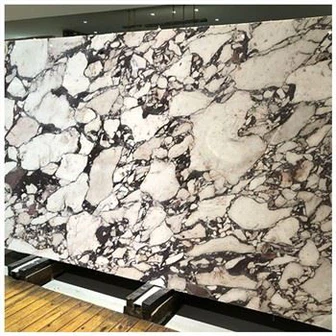
Premium 2cm Breccia Pontificia marble slabs quarried from Cusde Mountains, Sicily, Italy. Features unique multicolor breccia pattern with deep green, red, ivory, warm yellow and grey tones. Available in polished and honed finishes, excellent durability for indoor and outdoor use. Ideal for countertops, feature walls, flooring and dining tables. Factory direct supply for architects, designers and project contractors.
Luxury Marble:Factory Supply 2cm Thick Breccia Pontificia Marble Slabs Polished Honed for Bulk Hotel & Residential Projects
Natural Marble: Breccia Pontificia Marble,Italian Marble
Marble Factory: KA UNITED STONE
Marble Slab Size: 2710x1500,3360x1950,2960x2040 mm, etc.
Marble Tiles: 24''x24'', 12''x24'', 12''x12'', 18''x18''
Thickness: 20,30mm
Surface: Polished, Honed, Brushed
MOQ: 300 SQM
Application: KA UNITED Supplies A full Range of natural Marbles For Floor, Wall Tiles, Kitchen and Bathroom Countertops, and other Commercial Projects
Product Introduction
Quick Summary: Breccia Pontificia Marble is a multicolored Italian natural breccia from Sicily, recognized for irregular fragments in terracotta red, ochre, ivory, pink, brown and occasional green-grey tones. Available slab references are 2470 × 1970 mm and 2400 × 1200 mm at 20 mm thickness, with polished, honed and leathered finish options. The material is particularly suited to statement feature walls, decorative panels, vanity tops and custom interior stonework. For large installations, buyers should approve the actual slab composition, natural fissures and panel layout before fabrication.
2 cm Breccia Pontificia Marble Slabs for Multicolor Feature Walls and Luxury Interiors

Breccia Pontificia natural marble slab with multicolored breccia formations and irregular mineral boundaries.
Breccia Pontificia Marble Slabs are distinguished by their fragmented geological structure rather than conventional parallel marble veins. Red and terracotta formations meet ivory, ochre, brown and occasional green-grey areas, creating a surface that changes significantly from one slab to another.
The material is associated with the Custonaci stone district of Sicily, Italy, and has a historical connection with decorative architecture and ornamental stonework. Its multicolored appearance gives designers a stronger visual statement than uniformly beige or grey marble.
On large architectural surfaces, individual fragments become part of the complete composition. A broad ochre area may anchor one side of a wall, while smaller reddish fragments and fine pale mineral lines connect the surrounding sections.
The main selection decision is not simply whether the stone is red, yellow or green. It is how those colors interact across the actual slab and whether the available pieces can produce the intended finished elevation.
Breccia Pontificia Marble Slab Dimensions, Thickness and Surface Finish Options
| Material | Natural Breccia Pontificia Marble |
| Origin | Sicily, Italy |
| Slab Size A | 2470 × 1970 mm / 247 × 197 cm |
| Slab Size B | 2400 × 1200 mm / 240 × 120 cm |
| Nominal Thickness | 20 mm / 2 cm / approximately 3/4 inch |
| Surface Finishes | Polished, Honed, Leathered; representative finish approval recommended |
| Stone Appearance | Multicolor breccia with terracotta red, ochre, ivory, pink, brown and variable green-grey mineral areas |
| Custom Processing | Wall panels, floor tiles, vanity tops, countertops, fireplace components, stairs and custom furniture surfaces |
| Layout Options | Single-slab composition, sequential panel layout and bookmatch where suitable consecutive slabs are available |
| Quantity Reference | 1,000 SQM; current allocation and available slab groups require confirmation |
The listed dimensions are slab references rather than guaranteed net cutting dimensions. Actual usable area depends on slab edges, natural fissures, filling or reinforcement, and the selected fabrication layout. Other thicknesses or finishes should not be assumed available without confirmation.
Breccia Pontificia Marble Slab Selection for Multicolor Fragment Balance
A small hand sample cannot establish the final appearance of Breccia Pontificia. Its fragmented mineral formations can vary greatly in scale, and one full slab may show considerably more ivory or pale pink than another dominated by red and ochre.
For a feature wall, the proportion of lighter and darker stone is often as important as the individual colors. Large pale fields create visual space, while concentrated red-brown fragments can become strong focal areas.
Buyers should review full-slab photographs under consistent lighting and identify the sections intended for the most visible parts of the project. Approving only the commercial stone name is not enough to control the final composition.
Natural fissures, filled sections and complex fragment boundaries also require inspection when determining the cutting position. A visually striking area may not always be the most practical location for a sink opening or a narrow structural stone component.

Natural breccia fragments, pale mineral boundaries and varied red, ochre and cream coloration.
Breccia Pontificia Marble Feature Wall Design, Panel Matching and Bookmatch Selection
A Breccia Pontificia Marble Feature Wall is most successful when the natural fragment composition is planned across the entire elevation. Unlike relatively uniform marble, the distribution of large red, ivory and ochre formations can change the visual balance of adjoining panels.
The first design decision is whether to preserve one complete slab as a central panel or divide the elevation into several coordinated pieces. A single large slab reduces interruptions, while a multi-panel wall requires closer attention to the relationship between fragment boundaries and visible joints.
Bookmatched layouts can create strong mirrored compositions when suitable consecutive slabs and the correct cutting orientation are available. This must be verified from the actual slab sequence rather than promised simply because the stone is naturally brecciated.
For reception walls, villa entrances and fireplace features, panel drawings should show the finished wall dimensions, joints, corners, electrical outlets, niches and any return pieces. Major fragments can then be positioned intentionally instead of being interrupted unexpectedly during cutting.
The approved slab layout should be retained through fabrication and installation. Numbered panels and an elevation drawing help ensure that the completed wall follows the selected composition.

Breccia Pontificia surface character and finish reference for architectural stone selection.
Polished, Honed and Leathered Breccia Pontificia Marble for Different Interior Finishes
The finish changes how Breccia Pontificia's multicolored fragments are perceived. Polished slabs develop stronger reflected light and greater apparent depth across the red, ochre and cream mineral areas.
Honed surfaces reduce glare and produce a softer visual relationship between the larger fragments and their surrounding matrix. This can suit contemporary villa interiors where the stone needs to remain prominent without a highly reflective surface.
A leathered finish introduces a more tactile surface character. Because different mineral areas and natural filled zones may respond differently to texturing, the final appearance should be reviewed from a representative finished sample rather than inferred from a polished photograph.
Finish selection should also follow the intended application. A matte surface is not automatically slip-resistant, and a highly polished surface should not be assumed suitable for every floor or wet installation.
Breccia Pontificia Marble Countertops, Vanity Tops and Custom Cutouts
Breccia Pontificia Marble Countertops can be fabricated from selected 20 mm slabs for residential kitchens, bathroom vanities, reception counters and decorative furniture. Their suitability depends on the expected use and the owner's acceptance of natural marble maintenance.
As a calcareous natural stone, Breccia Pontificia is vulnerable to acid etching. Lemon juice, vinegar, acidic cleaners and some food spills can alter the finish even when the surface has been sealed. Kitchen use therefore requires different expectations from many engineered or less acid-sensitive countertop materials.
The brecciated structure also affects fabrication planning. Sink and cooktop openings should be positioned with reference to major natural fragment boundaries, filled fissures and any reinforcement on the actual slab.
Edge construction, overhangs, support spans and the areas around internal cutout corners should be evaluated from the finished drawing. Nominal slab thickness alone does not establish whether a particular countertop arrangement has sufficient support.
For bathroom vanity tops, the stone can provide a vivid surface against neutral cabinetry, but basin openings, tap holes and exposed edges must be approved before fabrication. Cut-to-size work should follow the actual approved material rather than a generic production template.
Breccia Pontificia Marble Tiles, Floors and Decorative Architectural Applications
Full slabs can be processed into smaller architectural components, although the cutting format changes how the multicolored breccia appears. Applications should be selected according to the pattern scale, finish and actual service conditions.
| Application | Design Direction | Important Approval Point |
|---|---|---|
| Interior Feature Walls | Large panels preserving major mineral fragments | Panel sequencing, joint positions and natural fissure inspection |
| Flooring | Breccia Pontificia Marble Tiles or coordinated cut-to-size floor panels | Wear conditions, tile grouping, finish and applicable slip testing |
| Fireplace Surrounds | Decorative slabs and carefully positioned colored fragments | Heat exposure, clearance and fireplace-system compatibility |
| Stairs | Coordinated treads and risers with intentional fragment distribution | Structural support, tread edge, finish and slip-performance requirements |
| Furniture and Tables | Selected breccia compositions for decorative tabletops | Cutting area, exposed edge, base support and handling |
| Exterior Architecture | Project-specific decorative stonework only after technical evaluation | Freeze-thaw, drainage, fixing, exposure, finish and required testing |
Exterior applications should not be approved solely from the Breccia Pontificia commercial name. Where climate exposure, wet walking surfaces or mechanically fixed cladding are involved, the selected material and installation system need suitable technical documentation.
Breccia Pontificia Marble Fabrication, Natural Fissure Inspection and Project Quality Control
Breccia Pontificia has a complex natural structure. Thin veins, local fissures, filled areas and differences between adjacent fragments may be present in the slabs. These characteristics should be assessed before fabrication rather than automatically treated as uniform material.
For major wall panels and finished components, inspection should identify areas requiring careful handling, possible reinforcement or changes to the original cutting position. Where backing mesh or resin treatment is used, compatibility with the subsequent installation system must also be considered.
Dimensional and finishing inspection should cover nominal thickness, finished length and width, edge quality, polishing or honing consistency and visible fabrication damage. The acceptance criteria should distinguish natural stone characteristics from processing defects.
For large orders, approved slab photographs, cutting drawings and panel identification should remain linked to the finished pieces. This is particularly useful when several rooms require different combinations of red, ivory and ochre mineral areas.
Packing should protect polished faces and vulnerable edges, with clear references for large wall panels, countertops and other cut-to-size components.

Breccia Pontificia stone surface and fabrication details for finished-panel inspection.
Breccia Pontificia Marble Project Specification Checklist
For architectural purchasing, the approved stone appearance and the fabrication specification should be recorded separately. This helps avoid accepting the general material name while leaving critical panel or installation details undefined.
- Confirmed slab photographs and acceptable multicolor range
- Required slab quantity, project allocation and finished dimensions
- Nominal 20 mm thickness and approved surface finish
- Natural fissure, filling and reinforcement acceptance criteria
- Cutting positions for countertops, wall panels and openings
- Bookmatch or sequential slab layout where available
- Installation conditions, support and any required material testing
- Panel identification, export protection and delivery destination

Breccia Pontificia marble as a decorative architectural surface in a coordinated luxury interior.
Breccia Pontificia Marble in Villa Entrances, Hotel Lobbies and Statement Interiors
Breccia Pontificia carries an unusually broad natural palette for a marble-category stone. Its combination of warm red, ochre, ivory and occasional muted green-grey makes it particularly suitable for interiors where one stone surface is intended to establish the main visual character.
In villa entrance halls, a large panel can become the principal architectural feature against quieter plaster, timber or plain stone finishes. The surrounding materials do not need to repeat every color present in the breccia.
Hotel reception areas and boutique commercial interiors can use the same approach on selected walls or counters. Warm metals and dark timber may complement the deeper red and brown sections, while light neutral surfaces provide contrast with the more fragmented areas.
Lighting should be assessed with the chosen slab finish. Polished surfaces reflect surrounding lights more strongly, while honed stone creates a quieter response. The completed design should be reviewed against the actual material rather than a generic rendered marble texture.
Care and Maintenance of Polished Breccia Pontificia Marble Surfaces
Breccia Pontificia is a calcareous natural breccia and should be treated as acid-sensitive. Lemon juice, vinegar, acidic descalers and other unsuitable cleaning chemicals may damage or dull the finished surface.
Use a soft cloth or non-abrasive cleaning material with a suitable pH-neutral natural-stone cleaner. On countertops and vanity tops, remove oils, strongly colored liquids and other residue promptly rather than allowing them to remain on the stone.
Filled veins and repaired sections may require compatibility with both the natural mineral surface and the materials used during fabrication. Cleaning methods should not be selected solely on the basis of the word marble.
A compatible penetrating sealer may reduce absorption risk where appropriate, but it does not make the stone stain-proof, scratch-proof, waterproof or resistant to acid etching. Maintenance requirements depend on the actual finish, treatment and installation conditions.
Breccia Pontificia Marble Compared with Four Decorative Marble Slab Alternatives
These five materials provide different directions for decorative natural stone projects. The choice is primarily about color balance, breccia structure and the visual intensity required for the finished interior.
| Comparison | Breccia Pontificia | Breccia Oniciata Damascata | Breccia Pernice | Ceppo Marble | Monreale Marble |
|---|---|---|---|---|---|
| Color Character | Red, ochre, ivory and variable green-grey | Warm brown, beige, cream and rose tones | Rose pink, reddish terracotta and cream | Neutral grey with contrasting stone fragments | Warm mixed mineral colors and decorative breccia movement |
| Pattern Direction | Irregular multicolor fragments | Layered and fragmented natural movement | Prominent pink-red breccia formations | Aggregate-style mineral composition | Expressive natural breccia structure |
| Design Positioning | Bold multicolor statement walls | Warm decorative architectural surfaces | Rose-toned statement interiors | Modern industrial and minimalist spaces | Decorative walls and warm interiors |
| Buyer Selection Priority | Fragment balance and actual slab layout | Warm color transition and slab grouping | Rose intensity and fragment scale | Grey tone and aggregate distribution | Natural pattern balance and joint planning |
Explore More Marble Slabs from KA UNITED
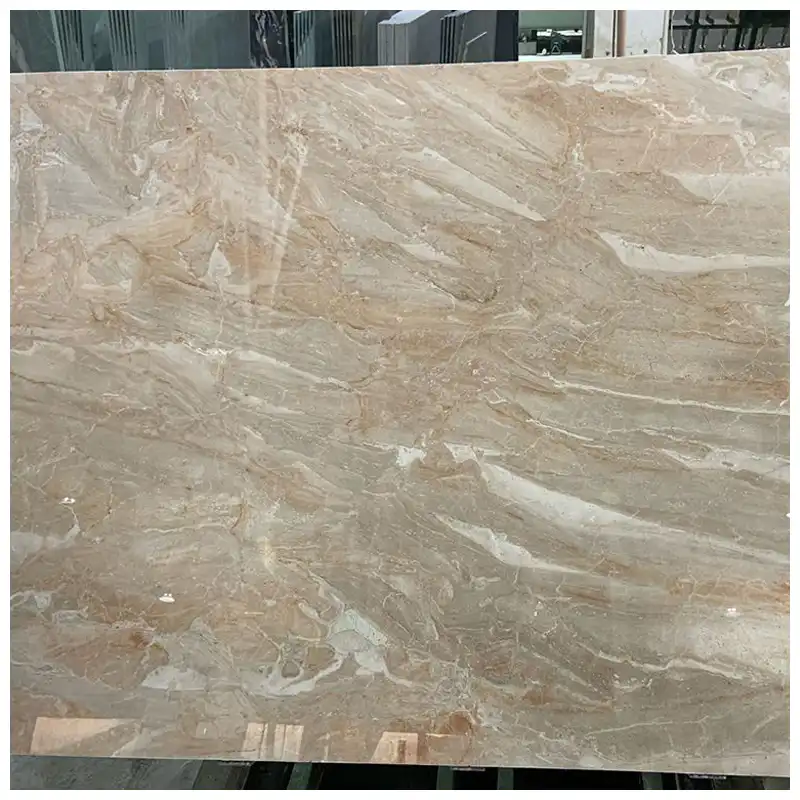
Breccia Oniciata Damascata Marble
Warm layered breccia marble for interiors seeking cream, brown and rose tones with decorative mineral movement.
View Product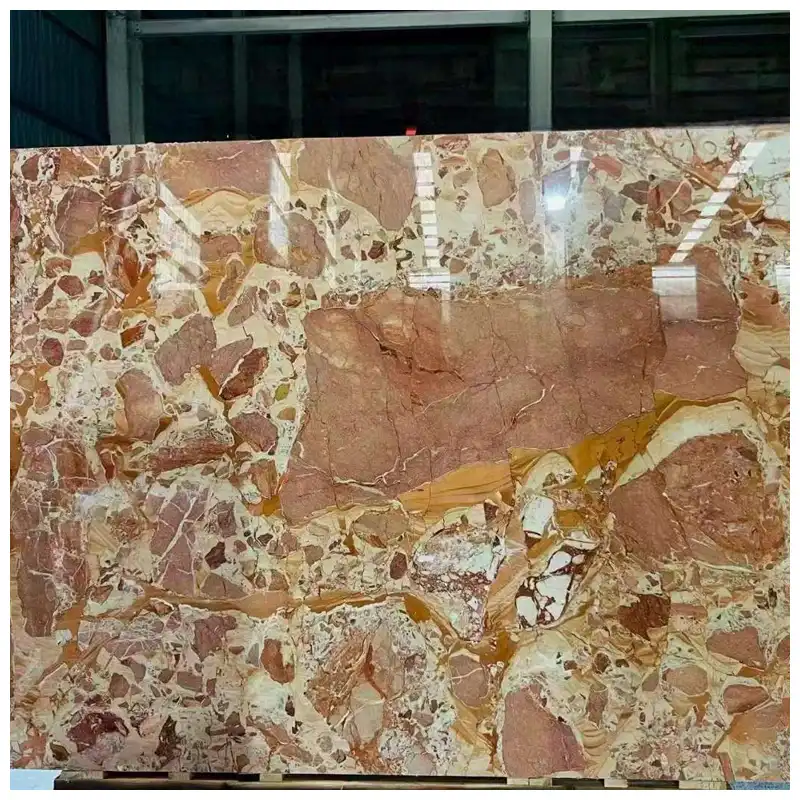
Breccia Pernice Marble
Rose-red Italian breccia marble with cream fragments for feature walls, furniture and distinctive interior stonework.
View Product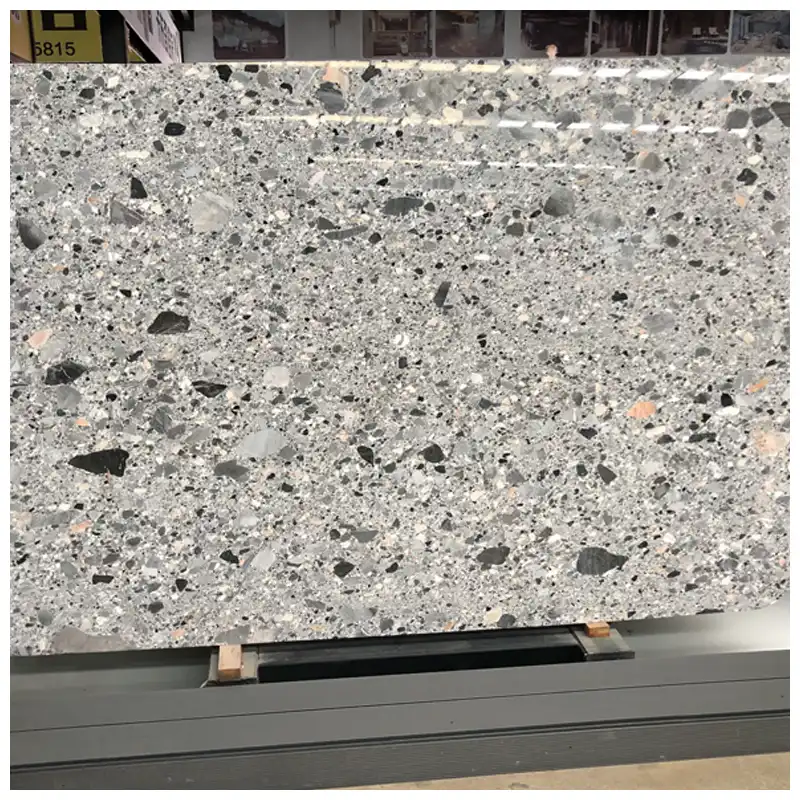
Ceppo Marble Slab
Grey natural breccia stone with aggregate-like fragments for modern flooring, walls and architectural cladding designs.
View Product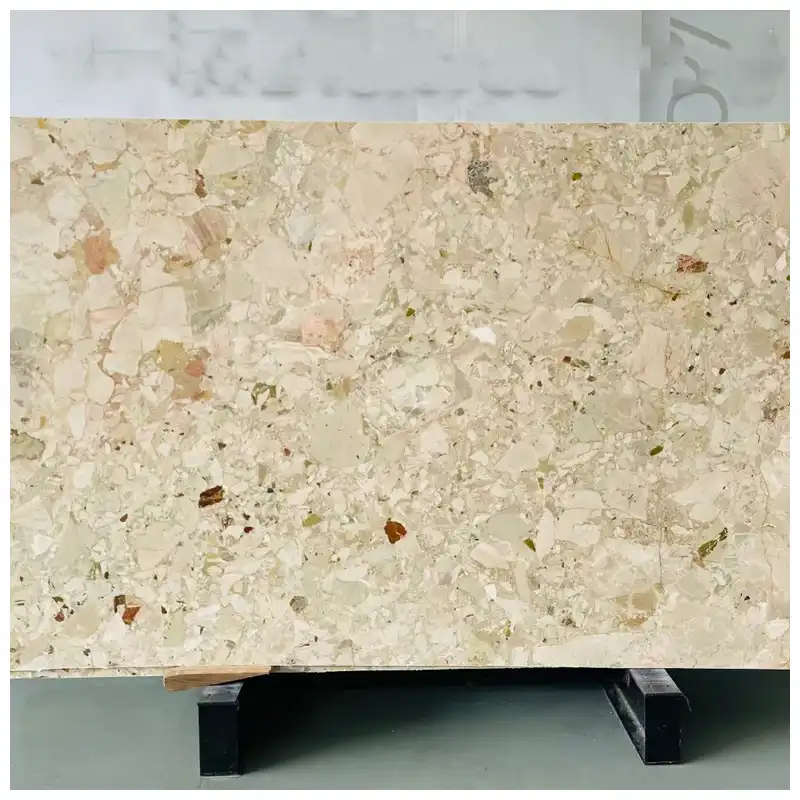
Monreale Marble Slab
Decorative multicolor marble for sophisticated feature walls and interiors needing expressive natural stone patterning.
View ProductFrequently Asked Questions About Breccia Pontificia Marble
1. Where is Breccia Pontificia Marble quarried?
Breccia Pontificia is an Italian natural breccia associated with the Custonaci quarry district in Sicily, in the province of Trapani. Material identification and provenance for a specific shipment should be confirmed through the supplying quarry or relevant batch documentation.
2. Is Breccia Pontificia a traditional veined marble?
It is sold commercially as marble, but its distinctive appearance comes from natural brecciation: irregular rock fragments joined within a surrounding matrix. Its pattern is therefore more fragmented and unpredictable than that of many conventional linearly veined marbles.
3. Can Breccia Pontificia Marble slabs be bookmatched?
Bookmatching can be considered when suitable consecutive slabs are available. The actual pair should be reviewed in the proposed cutting orientation before a mirrored wall composition is approved. A matched pattern cannot be guaranteed from the commercial material name alone.
4. Are natural fissures and resin-filled areas acceptable in Breccia Pontificia Marble?
Some natural fissures, veins and filled areas may occur because of the material's complex brecciated structure. Acceptance should be based on actual slab inspection, the proposed application and agreed fabrication criteria. Structural concerns should not be dismissed as merely decorative variation.
5. Can Breccia Pontificia Marble be used for exterior facades and paving?
Exterior use requires separate assessment of the selected stone, finish, fixing or laying system, drainage, climate and applicable testing requirements. Its commercial marble classification alone is not sufficient evidence of frost resistance, exterior durability or wet-slip performance.

Request Breccia Pontificia Marble Slabs for Your Villa or Commercial Interior Project
KA UNITED can review available Breccia Pontificia Marble Slabs for feature walls, vanity tops, countertops, flooring and custom architectural stone components. Slab selection should begin with the required appearance and the intended finished dimensions, particularly when large natural fragments must remain visible across an elevation.
For a quotation, send your preferred slab size, 20 mm thickness requirement, finish, quantity, application and delivery destination. If the project includes bookmatched walls, sink openings, stairs or multiple cut-to-size panels, provide drawings so the cutting layout, available material and fabrication requirements can be reviewed together.
Request Breccia Pontificia Marble Quotation
Hot Tags: breccia pontificia marble, China breccia pontificia marble suppliers, factory, Calacatta With Gold Veins, dark grey marble, extra large marble tiles, faux marble floor tile, marble per square feet, white marble metro tiles
You Might Also Like



Send Inquiry
