




Camouflage White Marble Tiles
Natural Camouflage White Marble tiles, polished finish, book‑matched available. Popular sizes: 600x1200mm, 800x1600mm, 1200x2400mm, custom cuts supported. Distinct grey‑green cloud‑like veining on white base. Suitable for flooring, wall cladding, lobby, hotel, villa and shopping mall projects. Strict pre‑layout inspection before packing. OEM & custom thickness service for builders, interior designers and stone wholesalers.
Luxury Marble: Natural Camouflage White Marble Tiles Book‑matched Wall Floor Slabs For Luxury Residential & Commercial Building
Natural Marble: Camouflage White Marble, White Camouflage Marble
Marble Factory: KA UNITED
Marble Slab Size: 2400upx600, 2400upx800, 2500upx1200up, etc.
Marble Tiles: 24''x24'', 12''x24'', 12''x12'', 18''x18''
Thickness: 20,30mm
Surface: Polished, Honed, Brushed
MOQ: 300 SQM
Application: KA UNITED Supplies A full Range of natural Black Marbles For Floor, Wall Tiles, Kitchen and Bathroom Countertops, and other Commercial Projects
Product Introduction
Quick Summary
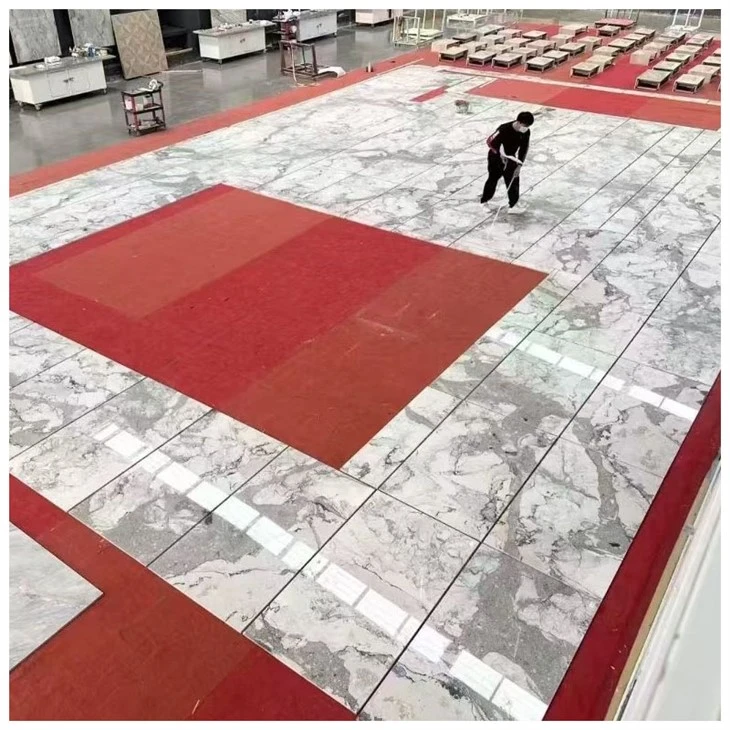
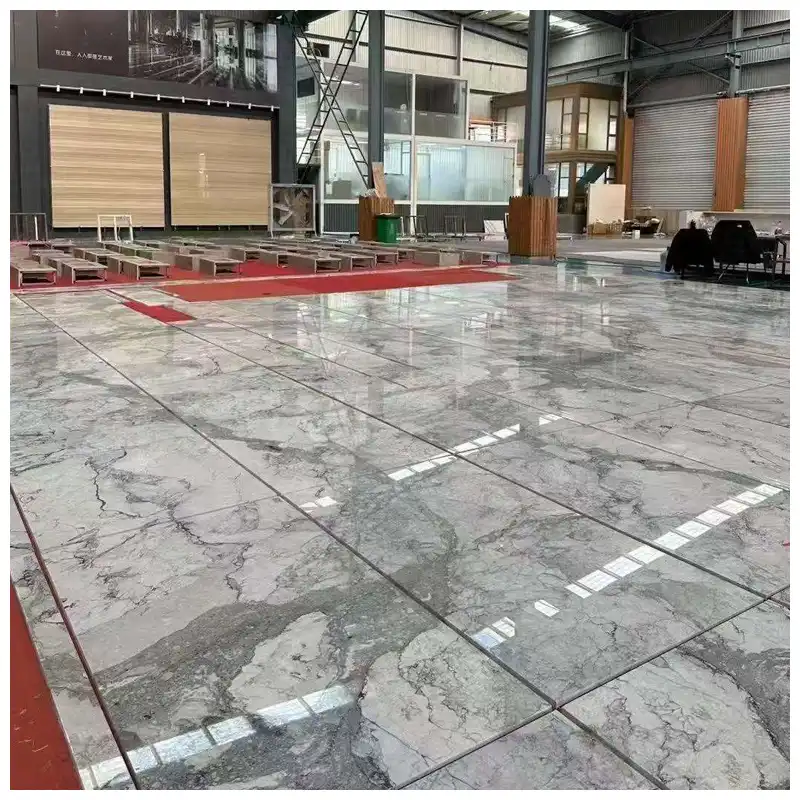
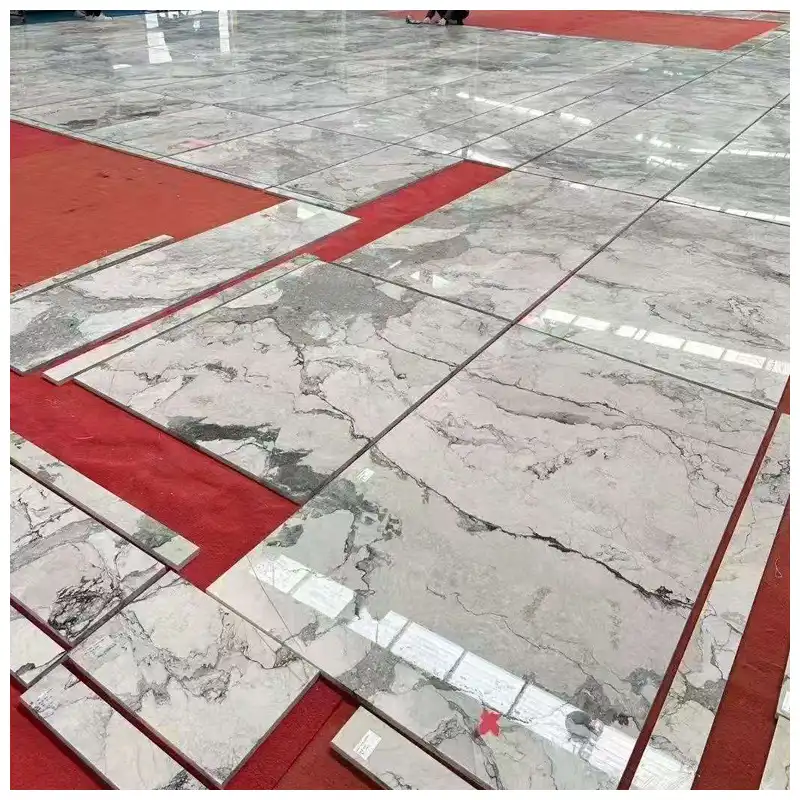
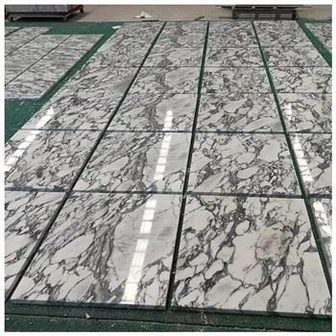
Camouflage White Marble Tiles are natural white-marble floor and wall panels distinguished by irregular smoky-grey, charcoal and soft green mineral movement rather than repetitive linear veining. The supplied factory image shows polished rectangular cut-to-size pieces dry-laid in large groups so tone, pattern direction, joint relationships and project sequencing can be reviewed before packing. Standard references include 300 × 300, 600 × 300, 600 × 600 and 900 × 600mm with 10–30mm thickness options and a supplied MOQ of 300m²; final thickness, tile module, bookmatch strategy and installation system should be selected for the actual wall or floor condition.
|
|
Natural White Marble for Sequenced Floors, Walls and Cut-to-Size Interior Panels Camouflage White Marble Floor and Wall Tiles with Factory Dry-Lay Pattern ControlWhite Camouflage Marble Tiles combine a pale white-to-soft-grey stone field with fragmented cloud-like grey areas, darker mineral lines and occasional muted green movement. The visual effect is more abstract and landscape-like than a conventional white marble with one repeated vein direction. For large lobby floors, feature walls and public-area cladding, the material should be treated as a coordinated natural-stone composition. Individual pieces are important, but the appearance of the entire dry-laid field, joint grid and transition between adjacent tiles determines the finished result. View Marble Tile Collection |

What Does the Supplied Camouflage White Marble Dry-Lay Image Show?
The supplied photograph shows a large quantity of polished rectangular marble pieces positioned together on the factory floor before shipment. This is useful evidence of the production stage because the project team can evaluate complete-area appearance rather than judging the order from one attractive slab photograph.
Across the dry-lay field, some pieces are predominantly pale white and grey, while others carry broader smoky areas, darker branching lines and subtle green-toned mineral zones. The pattern density is not uniform from tile to tile, which is expected with natural marble and should be controlled through selection and sequencing rather than hidden.
The long rectangular pieces also show why direction matters. Rotating one tile by 90 degrees can change the way broad mineral movement travels across the floor or wall. For corridors, lobby axes and feature walls, orientation should therefore be included in the approved dry-lay plan.
The polished surface in the reference image reflects overhead lighting strongly. That reflection increases perceived depth and brightness, but it also makes inconsistent polishing, scratches and unwanted surface damage easier to identify during final inspection.
Camouflage White Marble Tile Sizes, Thickness and MOQ
| Specification | Supplied Reference | Project Decision |
|---|---|---|
| Standard Tile Size | 300 × 300mm | Compact module for smaller wall fields, borders or projects requiring a denser joint grid. |
| Rectangular Tile | 600 × 300mm | Useful where directional marble movement and staggered or aligned joint layouts are required. |
| Large Square Tile | 600 × 600mm | Reduces the number of joints and exposes more of the natural marble pattern within each piece. |
| Large Rectangular Panel | 900 × 600mm | Suitable for larger floor or wall fields where fewer joints and stronger pattern continuity are desired. |
| Thickness Options | 10 / 12 / 18 / 20 / 30mm | Final thickness should follow panel dimensions, substrate, wall or floor use, fixing method, handling and project engineering requirements. |
| Surface Reference | High-gloss polished | Confirm appearance, reflectivity and intended use before production, particularly for floor areas exposed to water. |
| Custom Cutting | Camouflage White Marble Cut-to-Size Tiles | Can be developed from architectural drawings, room dimensions and approved joint layouts. |
| MOQ Reference | 300m² | Final size mix, quantity allocation and current order terms should be confirmed before production release. |
Book-Matched, Vein-Matched or Dry-Laid: Which Layout Is Correct?
|
Show numbered tiles, mirrored or continuous pattern relationships, joint positions and approved installation sequence. |
"Book-matched" should be used precisely. A true mirrored bookmatch requires suitable sequential stone pieces to be cut and opened so corresponding faces create a mirrored pattern. It should not be promised for every standard tile simply because several pieces have similar color. For many floor projects, vein matching or visual sequencing is more appropriate. Adjacent pieces are arranged so grey and green movement travels naturally through the field without requiring a strict mirror image at every joint. The factory dry-lay method visible in the supplied image is especially useful for this material. Tiles can be rotated, moved or regrouped before coding until abrupt tone changes and visually disruptive transitions are reduced. For a feature wall where symmetry is an explicit design requirement, bookmatched panel sets should be identified separately on the elevation and produced from stone suitable for that specific mirrored composition. |

How Should Cut-to-Size Marble Be Planned from Architectural Drawings?
Camouflage White Marble Cut-to-Size Tiles should be developed from a coordinated setting-out drawing rather than from room dimensions alone. The drawing should establish the joint grid, centerlines, borders, door thresholds, wall returns, columns, movement joints and visible termination points before the factory begins final cutting.
For floors, the starting axis matters. A 600 × 600mm module centered incorrectly can leave narrow perimeter cuts at one wall even when the overall room quantity is correct. Hotels and large commercial halls benefit from reviewing full-room tile distribution before manufacturing begins.
For walls, cut-to-size planning should coordinate panel heights with sockets, niches, doors, mirrors, trims and other architectural elements so major marble joints do not collide awkwardly with fittings.
Piece numbering should correspond to the approved drawing. A practical code can identify area, elevation or room, row and tile position so installers do not need to recreate the factory dry-lay arrangement from memory.
Where several stone batches are required for a large project, allocation should also be planned by zone. Mixing visually different lots randomly across one uninterrupted lobby floor can create a patchwork effect even when every individual tile meets the approved quality standard.
What Should Be Checked at Tile Edges, Joints and Thickness Transitions?Large-format polished marble depends on accurate calibration because even small thickness differences can create lippage at the finished surface. Pieces belonging to one continuous floor or wall field should therefore be checked for dimensional consistency before packing. Edge squareness and straightness matter equally. A visually attractive tile with inaccurate dimensions can force inconsistent grout joints and break a carefully planned vein sequence. Where different thicknesses are used within one project, transitions should be resolved through substrate levels, setting-bed design or approved build-up details rather than compensated for randomly during installation. Very thin stone should not automatically be substituted for thicker flooring simply to reduce weight. Panel size, stone condition, substrate flatness, full bedding, handling and expected service conditions all affect the appropriate specification. Perimeter movement joints and structural joints should follow the project system. Decorative stone pattern continuity should not be used as a reason to bridge movement locations that need to remain functional. |
Show calibrated thickness, cut edge, joint width, corner squareness, dimensional checking and numbered installation sequence. |

Where Should Polished Camouflage White Marble Be Used?
Camouflage White Marble Floor Tiles are particularly effective in large interior areas where the irregular natural pattern can be read across several adjoining pieces. Wall applications can use the same material differently, emphasizing bookmatch symmetry, large panels or continuous vertical movement.
Hotel Lobby FloorsLarge polished modules can create a bright continuous stone field where factory sequencing helps manage grey and green pattern distribution. |
Feature WallsSelected panels can emphasize mirrored, vein-matched or intentionally asymmetric natural compositions depending on the elevation design. |
Villa and Apartment FloorsThe pale background works with timber, warm metal, soft grey finishes and restrained furniture while retaining natural variation underfoot. |
Commercial Halls and CorridorsRectangular cut-to-size panels can be aligned with primary circulation axes and coded for installation across long public areas. |
Polished-Floor Note
A high-gloss polished finish should not automatically be described as slip-resistant. For entrances, bathrooms, wet circulation areas or other locations where water may be present, the required slip-performance criteria, test method and alternative surface specification should be confirmed for the actual project before the floor finish is approved.
Camouflage White Marble vs. Four KA UNITED Marble Tile Alternatives
Camouflage White occupies the softest abstract white-grey position in this comparison, with cloudy mineral movement rather than one dominant linear vein. Bolivian Blue moves toward an intense blue feature-stone direction, Castle Grey uses a more uniform grey marble language with grooved wet-area options, Calacatta Fluted Tile adds pronounced three-dimensional ribbing to white marble, and White Marble Subway Tiles use a smaller repeating rectangular module. The most useful selection criteria are therefore pattern scale, color intensity, tile geometry, surface texture and whether the project needs a continuous large-area field or a more rhythmic architectural treatment.
| Selection Factor | Camouflage White Marble | Bolivian Blue Marble | Castle Grey Marble | Calacatta Marble Fluted Tile | White Marble Subway Tile |
|---|---|---|---|---|---|
| Visual Character | White and pale-grey marble with smoky, charcoal and muted green cloud-like movement. | Strong cobalt-to-deep-blue decorative stone with contrasting pale and warm mineral movement. | Grey marble direction with a quieter neutral palette and project-specific textured options. | White Calacatta marble transformed by vertical fluting and pronounced shadow lines. | Light marble in a smaller rectangular module that creates a regular repeated joint rhythm. |
| Primary Design Use | Large floors, lobby walls and broad cut-to-size fields where natural pattern sequencing is important. | Feature walls and statement surfaces where intense blue stone should dominate the interior. | Neutral bathroom and architectural tile schemes requiring grey stone and optional texture. | Feature walls, vanity backgrounds and decorative surfaces requiring strong three-dimensional texture. | Smaller-scale walls, backsplashes and decorative fields where modular repetition is desired. |
| Fabrication Priority | Dry-lay sequence, tone range, tile calibration, cut-to-size drawing and bookmatch feasibility. | Color approval, strong pattern positioning and coordination of flat or curved feature panels. | Surface texture, groove geometry, tile size and wet-area detailing where applicable. | Flute width, depth, alignment and transition between neighboring ribbed panels. | Module consistency, joint rhythm, edge calibration and installation layout. |
| Pattern Strategy | Bookmatch selected sets, vein-match larger areas or dry-lay for controlled natural variation. | Use selected feature pieces and approve the strongest blue-gold areas intentionally. | Prioritize consistent grey range and texture rather than dramatic bookmatching. | Prioritize continuous flute alignment across adjacent wall panels. | Pattern comes mainly from modular placement and joint layout rather than large-slab composition. |
| Best Selection Reason | Choose when a bright marble field needs organic grey-green movement without aggressive color dominance. | Choose when blue stone should become the focal architectural material. | Choose for a cooler neutral grey tile palette and texture-led applications. | Choose when white marble needs sculptural depth and directional ribbing. | Choose for compact modular white-marble layouts rather than broad slab-scale movement. |
Production-Release Controls for Camouflage White Marble Cut-to-Size Tiles
Production should begin only after the tile schedule and visual-selection criteria are agreed. The objective is to control the complete installed field before hundreds of square metres are cut, numbered and packed.
- Confirm the final mix of 300 × 300, 600 × 300, 600 × 600, 900 × 600mm or custom dimensions.
- Assign the correct 10, 12, 18, 20 or 30mm thickness to each wall or floor condition.
- Approve the actual white, grey and soft-green material range from current production stone.
- Define which elevations require true bookmatching and which areas require vein matching or controlled dry-lay sequencing.
- Issue architectural setting-out drawings with tile codes, joint grid, borders, openings and termination points.
- Confirm polished finish only where appropriate for the intended floor or wall environment.
- Allocate visually compatible stone batches by room, elevation or floor zone for larger projects.
- Approve the factory dry-lay photographs before the numbered pieces are packed.
- Confirm installation direction so coded pieces are not rotated accidentally on site.
- Include an agreed spare-piece strategy for projects where future replacement matching may be difficult.
What Should Factory QC Check Before Tile Packing?QC should first confirm dimensional accuracy: length, width, thickness, squareness and edge condition. This protects the specified joint grid and reduces avoidable lippage or inconsistent joint width during installation. The complete dry-laid field should then be reviewed for the approved color and pattern range. Extremely abrupt transitions can be repositioned before coding, while acceptable natural variation should remain part of the finished design. Polished surfaces should be checked under reflected light for scratches, edge chips, dull processing zones and other fabrication damage. These should be distinguished from natural mineral lines, fissures or stone features accepted during material approval. Once the layout is accepted, each piece should retain a durable installation code that corresponds to the project drawing. Coding is especially important for bookmatched walls, long corridors and large lobby floors. Tile crates should provide face separation, edge protection and rigid internal restraint appropriate to the selected sizes and thicknesses. Crate identification should show the room, elevation or sequence group where project coding is required. |
Show dry-lay approval, dimensions, polishing inspection, sequence coding, edge protection and wooden-crate packing. |

Care and Maintenance for Polished Camouflage White Marble
Clean polished marble with a soft mop or cloth and a pH-neutral cleaner suitable for calcite-based natural stone. Loose dust and grit should be removed regularly because abrasive particles can dull high-traffic polished floors over time.
Avoid acidic cleaners, vinegar, citrus products and aggressive descaling chemicals. Marble can react with acids even when a penetrating sealer has been applied.
Spills from wine, coffee, food, cosmetics and strongly colored liquids should be removed promptly. A compatible stone sealer may reduce absorption where appropriate, but it does not make marble completely stain-proof, acid-proof or scratch-proof.
For large commercial floors, maintenance procedures should also protect joints and movement locations. Heavy furniture, temporary construction equipment and abrasive entry dirt should be managed so the polished finish is not unnecessarily damaged after installation.
How Should Camouflage White Marble Be Shown in a Completed Project?```A useful project image should show a complete lobby floor, corridor, feature wall, hotel public area, villa or apartment rather than another close-up of one polished tile. For flooring, the photograph should reveal how the grey-green movement travels across multiple joints and how the marble relates to doors, columns, furniture and the primary circulation axis. For feature walls, a front-facing image should demonstrate whether the project uses mirrored bookmatching, directional vein matching or a freer natural composition. Wide-angle project photographs are particularly valuable for this marble because its main design strength is the relationship between many individually different pieces rather than one isolated tile. |
Use a completed hotel lobby, villa, apartment, corridor, feature wall or commercial hall showing the full marble layout. |

Recommended Marble Tiles from KA UNITED
Compare four KA UNITED marble tile directions by color intensity, surface geometry, pattern scale and architectural application.
Bolivian Blue Marble TilesIntense blue decorative stone panels for luxury feature walls, villas and hotel interiors. |
Castle Grey Marble TilesGrey marble tiles with project-specific grooved options for contemporary bathroom and architectural surfaces. |
Calacatta Marble Fluted TilesWhite Calacatta marble panels with ribbed texture for sculptural feature walls and interiors. |
White Marble Subway TilesCompact white marble modules for bathrooms, backsplashes and repeating architectural wall layouts. |


FAQ About Camouflage White Marble Tiles
1. Can 10mm or 12mm Camouflage White Marble be used for every wall project?
Not automatically. Thin marble can be suitable for selected wall applications, but the final thickness should be checked against panel dimensions, stone condition, substrate, installation height, fixing system, handling and project requirements. Larger or elevated panels may require a different thickness or engineered fixing approach.
2. Can different tile sizes be combined within the 300m² MOQ?
The supplied MOQ reference is 300m². Whether several tile dimensions can be combined within one order should be confirmed for the current production plan because size allocation, cutting yield, material selection and packing requirements can affect the final order arrangement.
3. Should installers keep the factory numbering sequence?
Yes when the order has been dry-laid and coded for a specific project layout. The installation team should follow the approved setting-out drawing and piece numbers so the factory-selected tone and pattern relationships are not lost by random on-site placement.
4. Are polished Camouflage White Marble tiles suitable for wet bathroom floors?
A polished finish should not be assumed to provide adequate wet slip resistance. For shower floors, bathroom circulation areas or other wet locations, the required slip-performance criteria and test method should be established for the project, and a suitable alternative finish should be considered where necessary.
5. Can a replacement tile purchased later exactly match the original installation?
An exact future match cannot be guaranteed because natural marble varies between blocks and production lots. Projects should consider retaining appropriately coded spare pieces from the original order, especially for large bookmatched, vein-matched or visually sequenced floors and walls.
Why Camouflage White Marble Works for Large Sequenced Floor and Wall Fields
Camouflage White Marble is particularly effective at architectural scale because its pale background keeps large interiors bright while irregular grey and muted green movement prevents the surface from looking mechanically repetitive. Its strongest project value appears when individual tiles are treated as parts of one coordinated field through dry-lay selection, controlled orientation and project-specific cutting rather than installed as unrelated pieces.

Submit Camouflage White Marble Tile Schedule, Dry-Lay and Cut-to-Size Drawings for Production
Provide the required tile dimensions, thickness by application, polished-surface areas, bookmatch or vein-match zones, architectural setting-out drawings, quantity by room or elevation, installation sequence and spare-piece requirement before production release.
Request Project Quote
Hot Tags: camouflage white marble tiles, China camouflage white marble tiles suppliers, factory, blue marble tile flooring, floating marble vanity, marble granite, marble pieces, textured marble tile, the marble
You Might Also Like



Send Inquiry
