


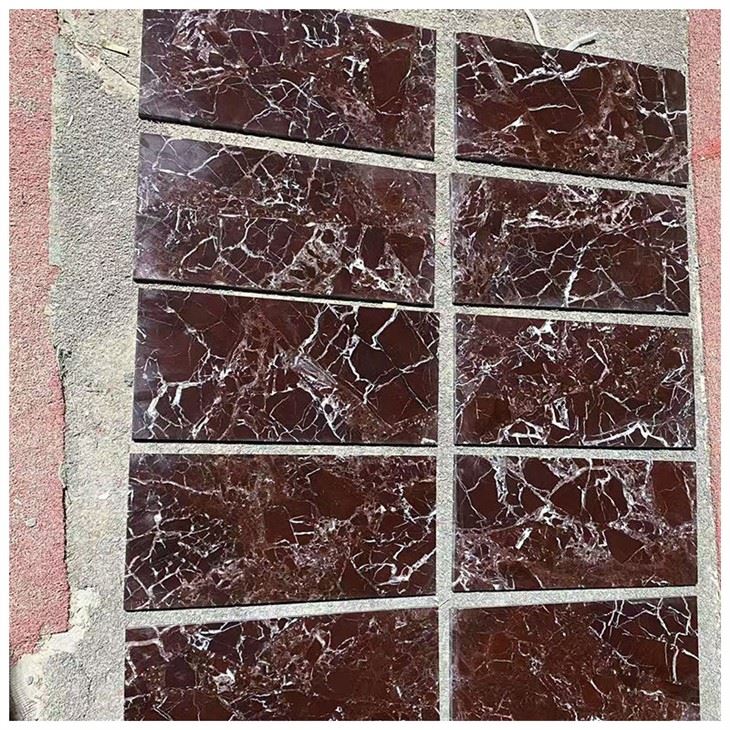

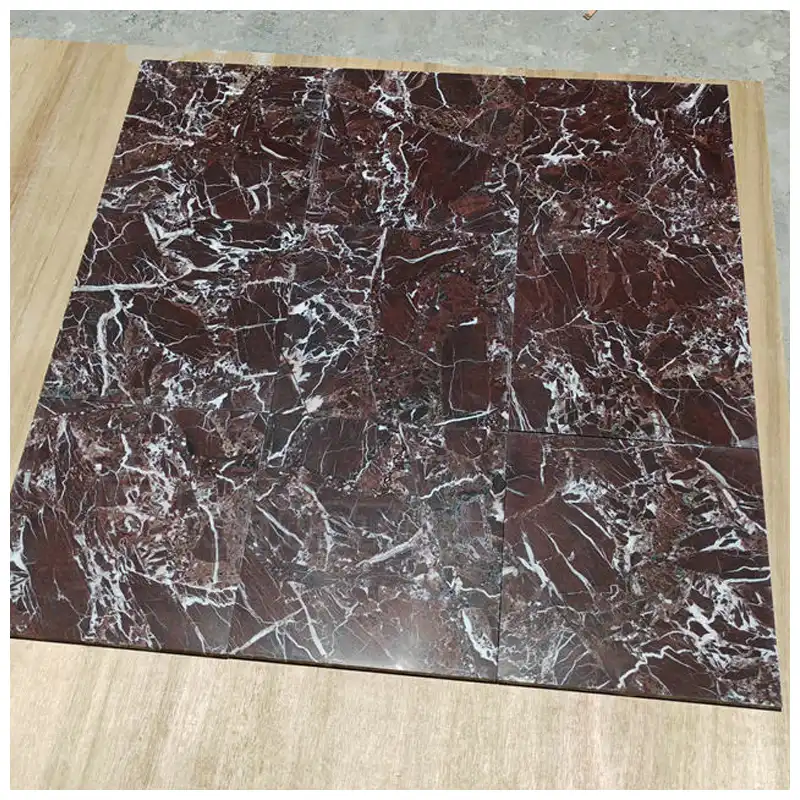
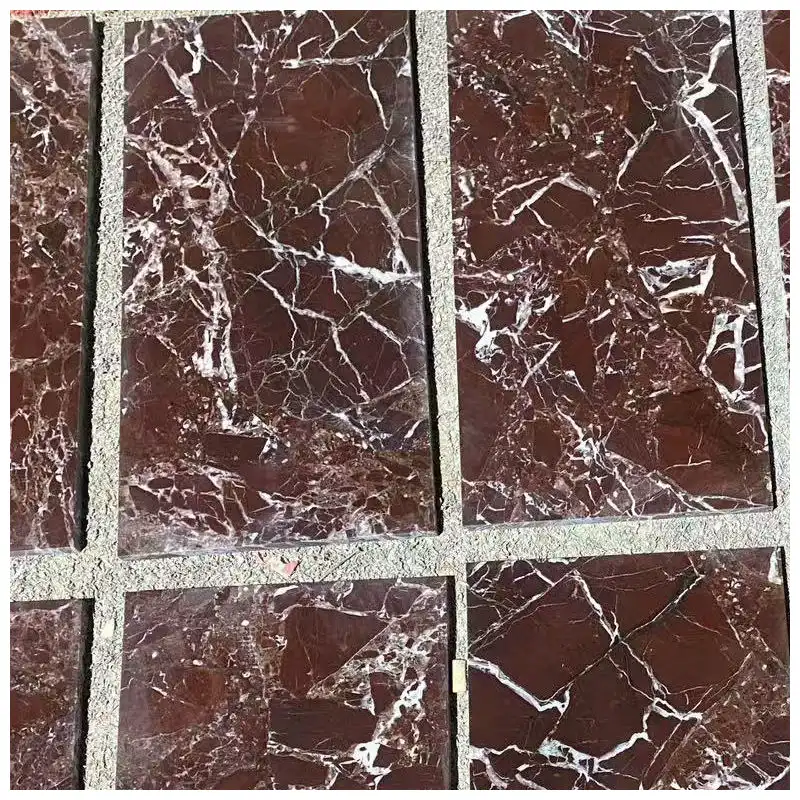
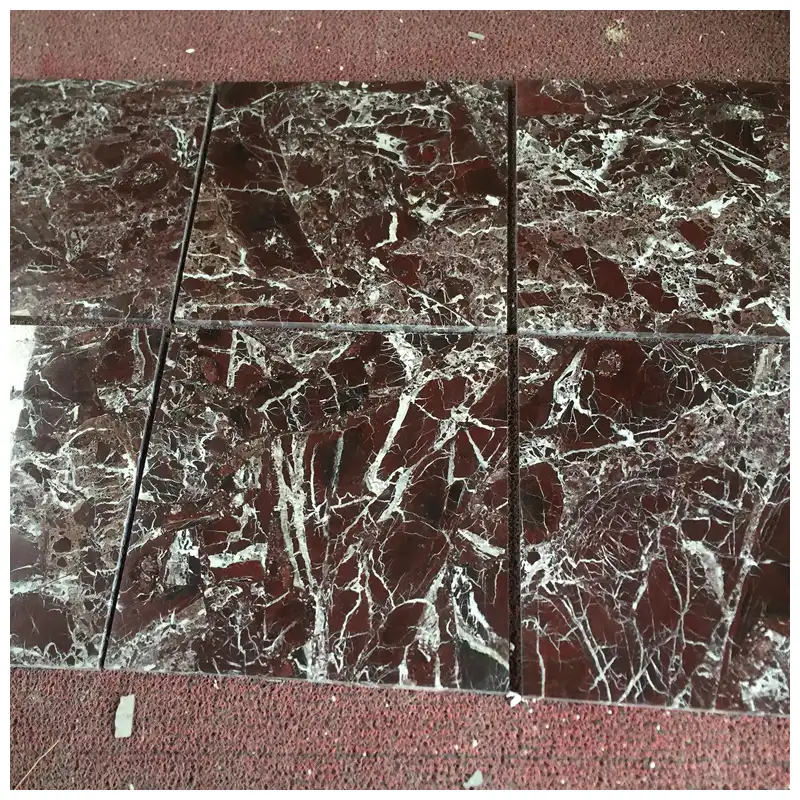
Rosso Levanto Marble Tiles
Rosso Levanto marble tiles feature deep burgundy‑red background with striking bright white veining, polished high‑gloss surface. Custom sizes and thickness available for wall & floor installation. Suitable for feature walls, bathroom, lobby, villa and hotel interior projects. Strict selection for consistent vein patterns. Suited for interior designers, building contractors and stone wholesalers. OEM cutting service available, fumigated wooden crate export packing.
Luxury Marble:Rosso Levanto Marble Tiles Polished Dark Red Marble With White Veins For Interior Wall Floor Luxury Hotel Villa Decoration
Natural Marble: Rosso Levanto Marble, Dark Red Marble
Marble Factory: KA UNITED
Marble Slab Size: 2400upx600, 2400upx800, 2500upx1200up, etc.
Marble Tiles: 24''x24'', 12''x24'', 12''x12'', 18''x18''
Thickness: 20,30mm
Surface: Polished, Honed, Brushed
MOQ: 300 SQM
Application: KA UNITED Supplies A full Range of natural Black Marbles For Floor, Wall Tiles, Kitchen and Bathroom Countertops, and other Commercial Projects
Product Introduction
Quick Summary
Rosso Levanto Marble Tiles are dark burgundy natural-marble floor and wall pieces cut through with irregular white mineral veining, giving large interior surfaces a much stronger graphic character than neutral beige or grey marble. KA UNITED supplies 12″ × 12″, 24″ × 12″ and 24″ × 24″ references with 10–30mm thickness options, plus project-specific cutting, polished or honed finishes, mosaics, skirting and shaped components. For commercial and residential projects, the main controls are actual red tone, white-vein distribution, finish by application, thickness, dry-lay sequence, substrate condition and piece coding before shipment.
|
|
Burgundy Marble for Floors, Feature Walls and Custom Interior Stonework Rosso Levanto Burgundy Marble Tiles with Polished or Honed Project FinishesRosso Levanto has a wine-red to deep burgundy field broken by sharp white lines, wider calcite-like branches and irregular fractured movement. That contrast is the reason the material works well as a statement floor or wall: even relatively simple rectangular modules retain a distinctive natural pattern. Unlike manufactured red surfaces, the proportion of burgundy background to white veining changes from piece to piece. Large projects should therefore control the complete tile field before packing rather than judge the order from one sample or one particularly clean slab. View Marble Collection |

How Much Color and Vein Variation Should Be Expected in Rosso Levanto?
The defining color is not a uniform bright red. Rosso Levanto normally reads closer to dark wine, burgundy, oxblood or red-purple, with white mineral movement cutting through the darker field. Some pieces may contain broad uninterrupted red areas; others can carry dense branching veins across much of the tile.
That variation changes the visual rhythm of an installed floor. A group of heavily veined pieces clustered in one corner can appear much lighter than adjacent pieces containing mostly dark red background, even when all of them belong to the same approved material range.
For a feature wall, stronger pieces can be positioned deliberately around the visual center, reception desk, fireplace, mirror or other architectural focal point. Flooring usually benefits from a more even distribution of light and dark pieces across the complete area.
dark red marble tiles are often selected precisely because the material has more depth than a neutral marble, but natural variation still needs a project rule. Buyers should define an acceptable burgundy range and white-vein intensity rather than request an unrealistic identical pattern from every tile.
Rosso Levanto Tile Sizes and Thickness Options
| Specification | Supplied Reference | Project Use / Control |
|---|---|---|
| Square Tile | 12″ × 12″ | Useful for compact rooms, borders, checkerboard concepts and layouts requiring a denser joint grid. |
| Rectangular Tile | 24″ × 12″ | Can be installed in aligned, staggered or project-specific patterns; vein orientation should be decided before coding. |
| Large Square Tile | 24″ × 24″ | Shows more natural red-white movement per piece and reduces the number of joints across large interiors. |
| Thickness Range | 10 / 12 / 16 / 18 / 20 / 30mm | Select according to tile format, floor or wall position, substrate, fixing method, handling and project requirements. |
| Surface Finish | Polished / Honed | Finish should be selected by appearance and application rather than treated as an interchangeable cosmetic detail. |
| Custom Cutting | Project-specific dimensions supported | Cut-to-size production should follow the architectural setting-out drawing and joint schedule. |
| Additional Fabrication | Mosaics, skirting and special shapes | Coordinate module, thickness and finish with the main Rosso Levanto field tiles before processing. |
Polished or Honed Rosso Levanto: Which Finish Fits the Project?
|
Show the same or closely matched Rosso Levanto material in polished and honed finishes under comparable lighting. |
rosso levanto polished marble tiles show the strongest color saturation. Polishing deepens the burgundy background, sharpens the contrast with white veins and produces reflected light across the surface, which is useful for lobby walls, feature floors and decorative interiors where the stone should read as a focal material. rosso levanto honed marble tiles have a quieter, more diffuse appearance. The same red and white structure remains visible, but lower reflectivity reduces glare and gives the material a softer architectural character. Honed does not automatically mean slip-proof, and polished should not automatically be rejected from every floor. The correct finish depends on the location, wet or dry exposure, maintenance plan and the slip-performance criteria required for that project. Finish samples should be reviewed on actual Rosso Levanto because gloss level changes perceived color. A honed piece may look lighter and slightly less saturated than the same material after polishing. |

Why Dry-Lay Selection Matters on Burgundy-and-White Marble Floors
rosso levanto marble floor tiles should be reviewed as one field before export when the project covers a large lobby, corridor or residential floor. The issue is not simply whether each piece is individually acceptable; it is whether white-vein density and dark-red background are distributed intentionally across the area.
A dry-lay allows the factory to move individual pieces before they receive permanent installation codes. Heavily veined tiles can be separated, rotated or grouped according to the intended design instead of arriving on site in random crate order.
Rectangular 24″ × 12″ pieces need special attention because a 90-degree rotation changes the direction in which the white movement travels. For long corridors or entrance axes, this can make the floor appear either coordinated or visually fragmented.
Dry-lay photographs should include enough tiles to judge the real field-not only four or six attractive pieces selected for approval. Large commercial orders benefit from zone-by-zone photographs when several stone batches are involved.
Once approved, piece numbers should correspond with the installation layout so the site team can reproduce the factory arrangement without guessing vein direction.
What Should Be Controlled at Tile Edges, Joints and Substrate Level?Dark polished marble makes joint inconsistency easy to see. Tile length, width, squareness and calibrated thickness should therefore be checked before the pieces are grouped for packing. The substrate needs suitable flatness for the selected tile format. Trying to compensate for a badly uneven floor with inconsistent adhesive thickness can increase lippage and disturb the intended joint line. For pale or translucent stones, installers often focus heavily on adhesive color. Rosso Levanto is much darker, but adhesive compatibility still matters: it should be suitable for natural marble and the installation system rather than selected only by general-purpose tile practice. Movement joints in the building should remain functional. A visually continuous marble pattern is not a reason to bridge structural or movement locations that need to be respected by the installation system. Where 10 or 12mm tiles meet thicker 18, 20 or 30mm components such as stair pieces or skirting, the transition should be solved in the substrate and detailing before installation begins. |
Show calibrated thickness, straight edges, joint alignment, dry-lay numbering and surface inspection before packing. |

How Should Rosso Levanto Be Used in Bathrooms and Other Wet Interiors?
Rosso Levanto can create a striking bathroom wall, vanity backdrop or dry-zone floor, especially when the burgundy surface is balanced with cream, brass, dark timber or restrained white materials.
Wet-floor use requires more than choosing between polished and honed. The project should establish its required slip-performance criteria and test method for the specified finish. Neither a honed surface nor the presence of natural stone guarantees a particular wet slip result.
Shower and bathroom installations also need correct substrate preparation, waterproofing, slope, drainage and movement detailing. Those functions belong to the complete installation system rather than to the marble itself.
Marble is sensitive to acids. Bathroom descalers, acidic cleaners and aggressive chemical products can dull or etch the surface even when a sealer has been used.
Where direct water exposure is substantial, the selected finish, grout system, sealer and cleaning method should be approved together instead of treating maintenance as an afterthought.
Custom Skirting, Mosaics and Stair Pieces Should Match the Main Tile Field
Custom fabrication is most successful when accessory pieces are planned at the same time as the main floor or wall order. Skirting cut later from a different stone group can introduce a noticeably different red tone around the perimeter of an otherwise coordinated room.
Mosaics introduce more joints and smaller pieces, which can make white veining appear busier than it does on 24″ × 24″ tiles. The mosaic layout should therefore be reviewed at the intended scale rather than inferred from a large-format sample.
Stair treads and risers need separate dimensions, thicknesses, nosing details and vein orientation. A floor tile module should not simply be enlarged into a staircase specification without considering edge fabrication and support.
Where one project uses Rosso Levanto across floor tiles, skirting and stairs, allocating material by zone can help the red tone remain coordinated while still accepting normal natural variation.
Where Does Rosso Levanto Marble Work Best?
Rosso Levanto is most convincing where the project allows the stone to act as a deliberate color element rather than treating it as a generic background tile.
Hotel Lobby FloorsLarge polished fields can bring deep burgundy color into reception areas where dry-lay sequencing controls the white-vein distribution. |
Feature WallsThe red-white contrast can anchor reception walls, fireplace surrounds, elevator lobbies and boutique retail interiors. |
Villa and Apartment InteriorsSmaller areas can use the burgundy stone as a floor inset, bathroom feature or transition against quieter white and beige materials. |
Stairs and Custom DetailsMatching treads, risers, skirting and shaped pieces can continue the stone language beyond the main rectangular tile field. |
Rosso Levanto Marble Tiles vs. Four KA UNITED Marble Tile Alternatives
Rosso Levanto is the darkest warm-color option in this comparison. Bolivian Blue shifts the feature-stone effect toward saturated blue; Castle Grey is much quieter and more neutral; Calacatta Fluted Tile relies on sculptural ribbing rather than strong surface color; White Marble Subway Tiles create a smaller repeating light-marble module. Selection should therefore begin with the intended visual role-statement color, neutral field, three-dimensional wall texture or compact modular pattern-before individual marble names are compared.
| Selection Factor | Rosso Levanto Marble | Bolivian Blue Marble | Castle Grey Marble | Calacatta Marble Fluted Tile | White Marble Subway Tile |
|---|---|---|---|---|---|
| Color Identity | Deep burgundy and wine-red marble with sharp white natural veins. | Strong blue decorative stone with contrasting pale and warm mineral areas. | Cool grey marble for restrained neutral interiors. | White Calacatta marble with pronounced fluted relief and shadow lines. | Light white marble arranged in smaller rectangular modules. |
| Primary Design Role | Statement floor or wall where dark red stone is intended to anchor the room. | Blue focal wall or decorative panel where saturated color should dominate. | Neutral floor, wall or bathroom surface with less visual contrast. | Sculptural feature wall emphasizing depth and linear texture. | Modular bathroom, backsplash or wall layout with regular joint rhythm. |
| Main Layout Control | Balance dark background and white-vein density across the dry-laid field. | Position the strongest blue and contrasting mineral areas deliberately. | Maintain a controlled grey range and finish consistency. | Align flute direction, groove spacing and neighboring panel transitions. | Control module, grout grid and repeating rectangular pattern. |
| Finish Priority | Polished for maximum burgundy depth; honed for lower reflectivity. | Finish chosen to control color intensity and application. | Finish and groove treatment selected according to bathroom or architectural use. | Texture geometry is as important as surface sheen. | Finish should coordinate with grout, module and wall application. |
| Best Selection Reason | Choose when burgundy marble should become a deliberate architectural color. | Choose when blue stone should become the principal focal material. | Choose when a cooler neutral marble is easier to coordinate. | Choose when three-dimensional white marble is more important than strong color. | Choose for smaller-scale modular white-marble wall layouts. |
Production-Release Checks for Rosso Levanto Floor and Wall Tile Orders
A Rosso Levanto order should be released from a tile schedule and approved visual range, not from a generic material name. Large color contrast means errors in batch allocation, rotation or finish are more obvious after installation.
- Confirm the final quantity of 12″ × 12″, 24″ × 12″, 24″ × 24″ and any custom dimensions.
- Assign the correct 10, 12, 16, 18, 20 or 30mm thickness to each floor, wall, stair or special component.
- Approve the actual burgundy background range and acceptable white-vein density.
- Identify polished and honed areas clearly on the finish schedule.
- Confirm wet-area performance requirements separately where flooring may become wet.
- Issue the setting-out drawing for large floors, corridors, walls and staircase layouts.
- Define vein direction where rectangular tiles should follow an architectural axis.
- Dry-lay representative project areas and approve the distribution before coding.
- Coordinate mosaic, skirting and special-shape pieces with the same material and finish range where required.
- Keep building movement-joint locations visible on the installation documentation.
- Assign crate and piece codes by room, elevation or installation zone for larger projects.
- Confirm spare-tile requirements from the original production lot where future replacement matching matters.
Factory QC for Burgundy Tone, Surface Finish and Tile CalibrationFinished tiles should first be checked for length, width, thickness, squareness and edge quality. Calibration is particularly important on polished floors because uneven neighboring pieces create visible lippage under reflected light. Color sorting should then be done across a meaningful quantity. The aim is not to remove natural variation but to prevent one part of the project from becoming unexpectedly pale and vein-heavy while another area contains almost entirely dark burgundy material. Polished pieces need reflected-light inspection for scratches, dull areas and edge chips. Honed material should be reviewed for consistent texture rather than judged against the gloss of the polished sample. After dry-lay approval, tiles should retain durable installation codes. Skirting, mosaics or stair pieces belonging to a specific room or zone should be packed so that related components remain identifiable. The supplied packing requirement is fumigated export wooden crates. Internal separation and edge restraint should prevent polished faces and corners from rubbing or shifting during long-distance sea transport. |
Show tile measurement, finish inspection, burgundy-range sorting, project coding and protected wooden-crate packing. |

Care and Sealing Guidance for Rosso Levanto Marble
Use a pH-neutral cleaner formulated for natural marble. Acidic products such as vinegar-based cleaners, strong bathroom descalers and citrus cleaners can etch calcite-based marble surfaces.
On floors, remove abrasive dust and grit regularly so traffic does not gradually dull the polished surface. Entrance protection is particularly useful in commercial interiors where outside particles are carried onto the marble.
A compatible penetrating sealer may be used where appropriate for the chosen material, finish and application. Sealing can reduce absorption; it does not make Rosso Levanto completely stain-proof, acid-proof or maintenance-free.
Spills from wine, cosmetics, food, coffee and strongly colored liquids should be cleaned promptly. The dark red background can visually disguise some contamination, but that does not mean the stone is unaffected.
Care instructions should distinguish polished and honed areas where both finishes are used in the same project, because surface appearance and restoration methods are not identical.
How Should Rosso Levanto Be Shown in a Completed Project?A useful project photograph should show enough floor or wall area to explain how the burgundy field is distributed. One close-up tile cannot demonstrate whether vein sorting and dry-lay sequencing worked across a hotel lobby or residential room. Rosso Levanto pairs naturally with warm brass, bronze, cream stone, off-white plaster, dark timber and restrained black details. These surrounding materials allow the red marble to remain the focal point without introducing another competing vein pattern. For floors, a wider photograph should include thresholds, columns or major furniture so the scale of the 12″, 24″ or custom tile grid is understandable. For feature walls, a front-facing view helps evaluate joint alignment while an angled photograph reveals polished reflection, wall depth and the relationship with neighboring finishes. |
Use a completed hotel, villa, apartment, retail or commercial project showing the full Rosso Levanto tile field. |

Recommended Marble Tiles from KA UNITED
Compare four related marble tile directions by color strength, surface geometry and architectural role.
Bolivian Blue Marble TilesSaturated blue decorative stone for feature walls, villas and statement hospitality interiors. |
Castle Grey Marble TilesCool grey marble tiles for quieter bathroom, wall and contemporary architectural schemes. |
Calacatta Marble Fluted TilesWhite Calacatta marble with sculptural fluting for textured interior feature walls. |
White Marble Subway TilesCompact white marble modules for bathrooms, backsplashes and repeated wall patterns. |


FAQ About Rosso Levanto Marble Tiles
1. What Rosso Levanto tile sizes and thicknesses are available?
The supplied references are 12″ × 12″, 24″ × 12″ and 24″ × 24″, with 10, 12, 16, 18, 20 and 30mm thickness options. Custom dimensions, mosaics, skirting and special-shape fabrication can also be discussed according to the project drawing.
2. What is the difference between polished and honed Rosso Levanto?
Polishing gives the burgundy marble stronger color depth, sharper white-vein contrast and higher reflectivity. Honing produces a lower-sheen surface with a softer visual effect. The correct finish should be selected for the actual floor or wall application, and neither finish should be assumed to provide a specific wet slip result without the required project testing.
3. Will every Rosso Levanto tile have the same burgundy color and white veins?
No. Natural Rosso Levanto varies in red-to-burgundy background tone, white-vein width, vein density and mineral pattern. Large projects should approve an acceptable range and use dry-lay sorting where the distribution of lighter and darker pieces is important.
4. Can Rosso Levanto marble be used on bathroom floors?
Rosso Levanto can be specified for appropriate interior bathroom applications, but wet-floor suitability should be established through the project's required finish, slip-performance criteria, waterproofing, drainage, substrate and installation system. Polished or honed appearance alone does not determine wet-floor safety.
5. Should Rosso Levanto tiles be sealed?
A compatible penetrating sealer may be specified according to the selected marble, finish and application. Sealing can help reduce absorption and simplify maintenance, but it does not make natural marble stain-proof, acid-proof or maintenance-free.
6. Can Rosso Levanto be fabricated as mosaics, skirting and staircase pieces?
Yes. The supplied fabrication direction includes custom mosaics, skirting and special shapes. Stair components can also be developed when final tread, riser, thickness, edge and support details are supplied. Related pieces should be coordinated with the main tile order so tone and finish remain compatible.
7. What should be approved before a large Rosso Levanto tile order enters production?
Approve the tile schedule, thickness by application, polished and honed areas, actual burgundy color range, acceptable white-vein density, dry-lay strategy, installation direction, custom accessory pieces, project coding, packing groups and spare-tile requirement before production release.
Rosso Levanto Dark Red Marble Works Best When the Burgundy Field Is Treated as an Architectural Color
Rosso Levanto does not need complicated tile geometry to make an interior memorable. Its strength is already present in the material: a dense burgundy field broken by irregular white mineral lines. Large-format pieces let that contrast read more continuously, while smaller modules, mosaics and skirting introduce a tighter rhythm. The best projects decide where the red marble should dominate, where it should stop, and how its natural variation will be distributed before the first crate reaches site.

Submit Rosso Levanto Marble Tile Schedule, Finish Map and Dry-Lay Requirements for Production
Provide the required tile dimensions, thickness by application, polished or honed finish, approved burgundy range, floor or wall setting-out drawing, vein-direction requirements, mosaic or skirting details, quantity by project zone and packing sequence before cutting begins.
Request Project Quote
Hot Tags: rosso levanto marble tiles, China rosso levanto marble tiles suppliers, factory, calacatta viola slab, carrera marble backsplash, Extra Calacatta Marble Tile, grey marble tiles, marble and stone, rojo alicante marble tile
You Might Also Like




Send Inquiry
