


Petrified Wood Gemstone Tables
Premium petrified wood gemstone tables feature round tabletops crafted from hand-selected natural petrified wood slices, reinforced with transparent resin and finished in high-gloss polish. Each piece displays unique fossilized wood grain and warm earthy tones, paired with a sleek brushed gold metal X-base for modern luxury appeal. Custom sizes, table shapes and base finishes available. Ideal statement pieces for luxury villas, boutique hotels, clubhouses and high-end commercial interiors, supplied directly to interior designers and hospitality project contractors.
Stone Furniture Item: Petrified Wood Gemstone Side Tables | Round Natural Petrified Wood End Table with Brass Base for Luxury Interiors
Table Material: Petrified Wood Gemstone,Luxury Semi-Precious Gemstone
Dimensions: Dia 30-80 cm Or Customized
Table Thickness: 18mm, 20mm
Surface: high polished, Crystallized Polished, High Glossy
MOQ: 5 sets
Luxury Stone Table Factory: KA UNITED
Table Usages: Luxury Exotic Quartzite, Onyx, and Natural Marble Table Sets are suitable for any interior display in Hotels, VIP room, Villas, Office, Mansion, Coffee Shops, restaurants, and Boutique Stores.
Product Introduction
Quick Summary
Petrified Wood Gemstone Tables combine fossil-like natural wood-ring patterns with a polished stone surface and a contemporary metal furniture base. This round side-table format is available in approximately 30–80cm diameters, with custom height, edge treatment and base finish developed for residential, hospitality and retail interiors. The supplied table pairs a warm brown, amber, cream and charcoal petrified-wood composition with a brushed-gold X-shaped metal base. Because every tabletop has different mineralized growth rings, cavities and color concentrations, buyers should approve the actual tabletop layout rather than expect identical production pieces.
|
|
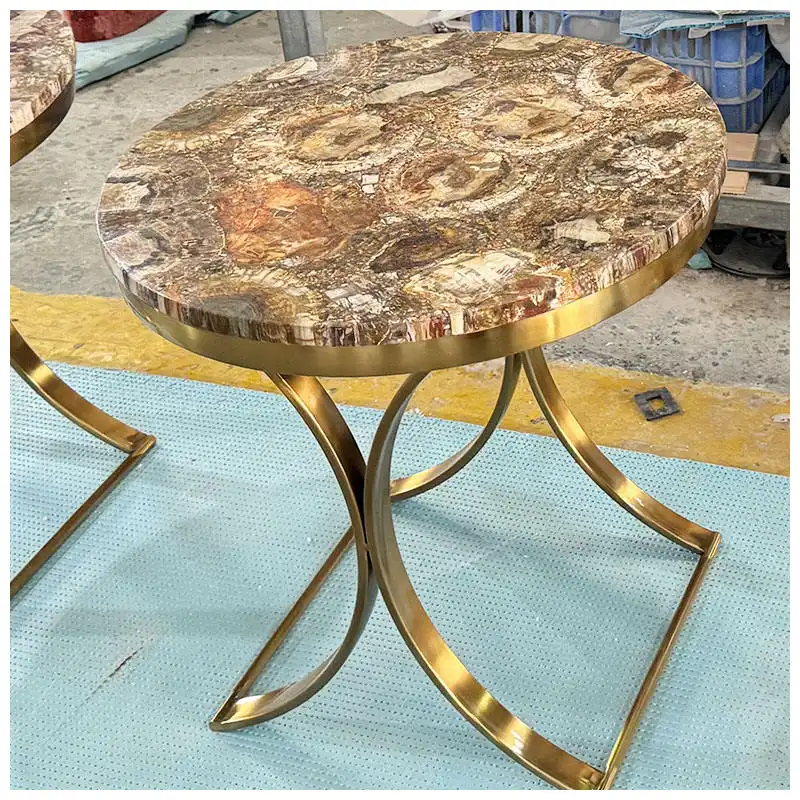
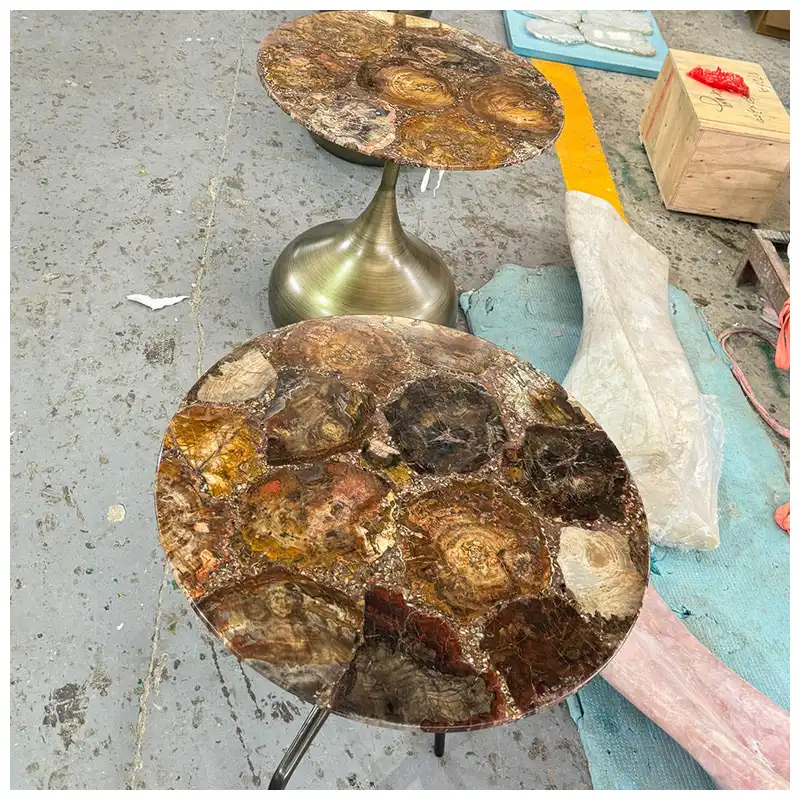
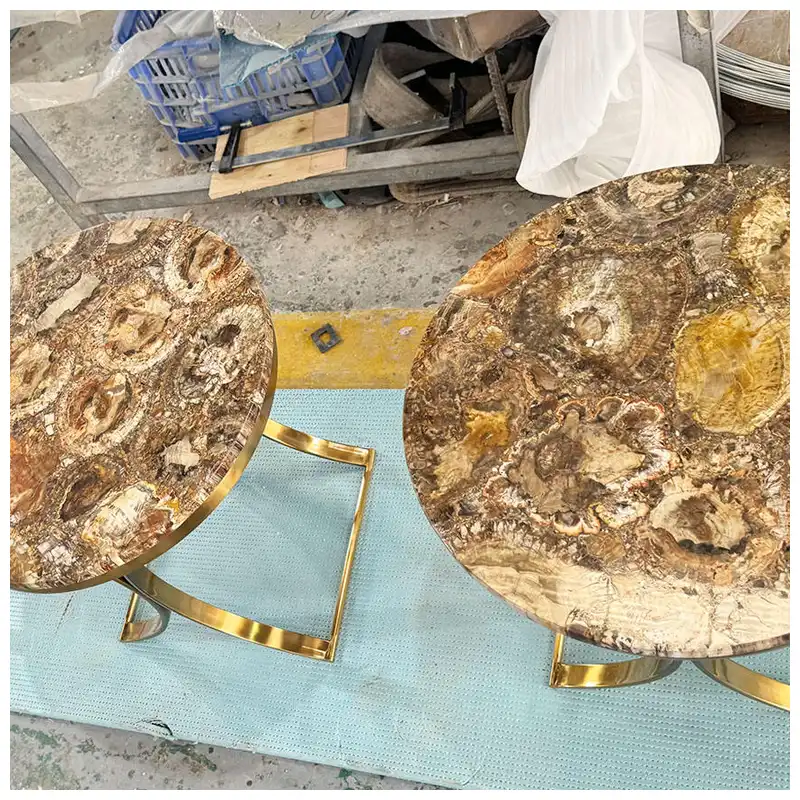
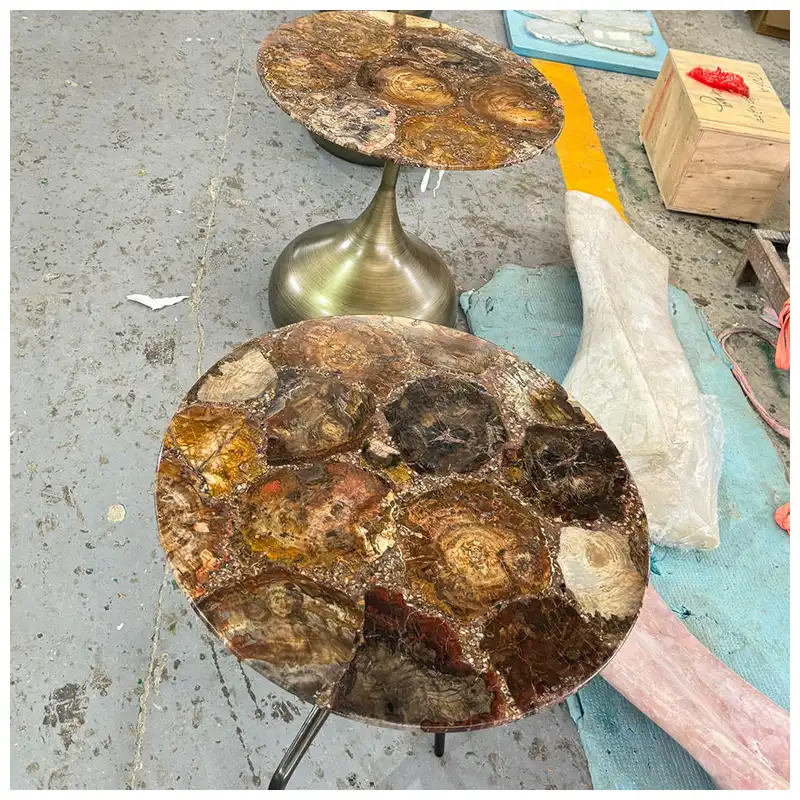
Petrified Wood · Polished Round Top · Brushed-Gold Metal Base Round Petrified Wood Side Tables for Luxury Living Rooms, Hotel Suites and Reception InteriorsThe supplied factory image shows a compact round tabletop with clearly visible circular fossil-like sections, irregular mineral boundaries and layered brown-to-amber coloration. Rather than reading as ordinary timber, the top has the depth and polish of a decorative stone surface while retaining recognizable organic growth structures. Petrified Wood Gemstone Coffee Tables work particularly well where designers want natural texture without introducing another strongly veined marble or quartzite. The gold-tone metal base keeps the furniture visually lighter and gives the organic tabletop a sharper contemporary outline. View Stone Furniture Collection |
Petrified Wood Preserves Organic Ring Patterns in a Stone-Like Furniture Surface
The visual identity of petrified wood comes from mineralized structures that still resemble the rings, cellular forms and growth patterns of the original wood. Once cut and polished for furniture, these structures become easier to read across the tabletop.
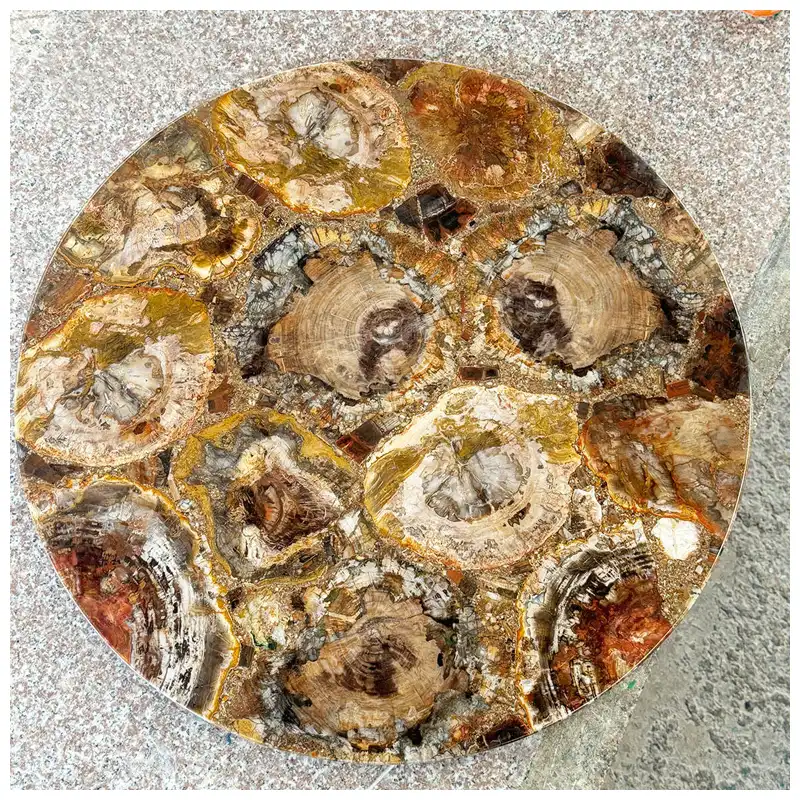
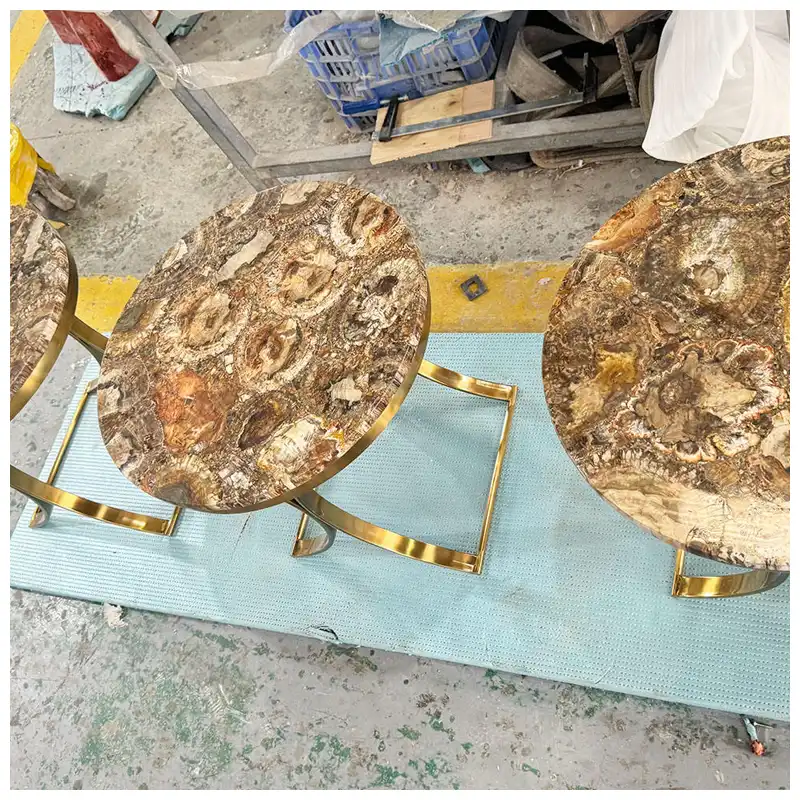
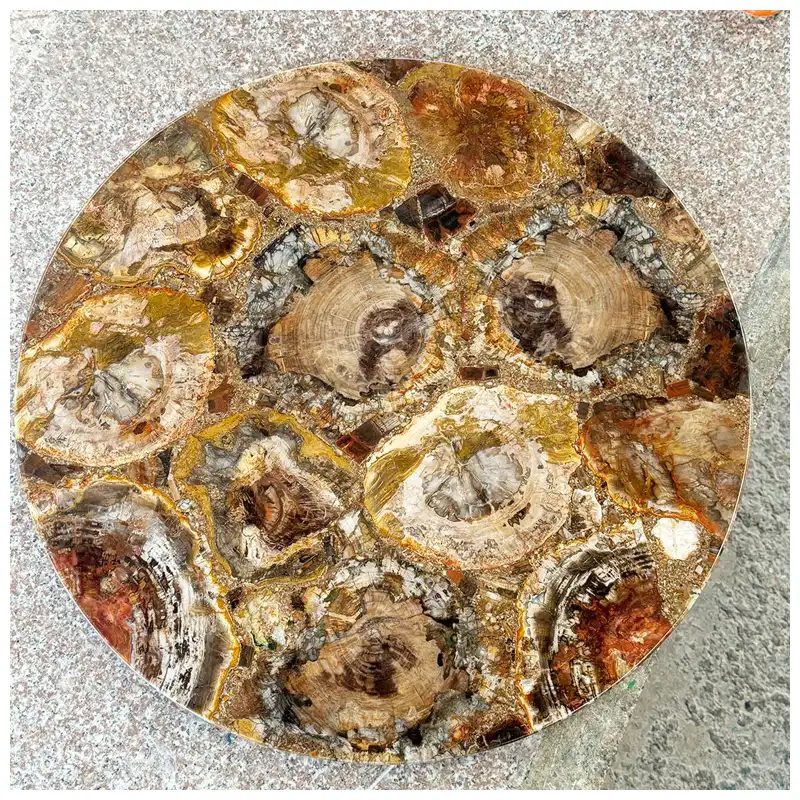
The reference piece is dominated by warm medium brown, dark brown, cream, amber and small orange-red areas. Circular fossil-like formations vary significantly in scale, while lighter mineral zones interrupt the darker background and prevent the surface from appearing flat.
For Petrified Wood Coffee Tables, this natural irregularity is part of the buying decision. Two tables made to the same diameter can still look noticeably different because the cut position and material selection change the pattern.
Projects that require several matching tables should therefore approve an acceptable color family and overall pattern character rather than specify identical rings or mineral placement.
|
Show circular fossil structures, mineral boundaries, natural cavities, warm color variation and polished reflection. |
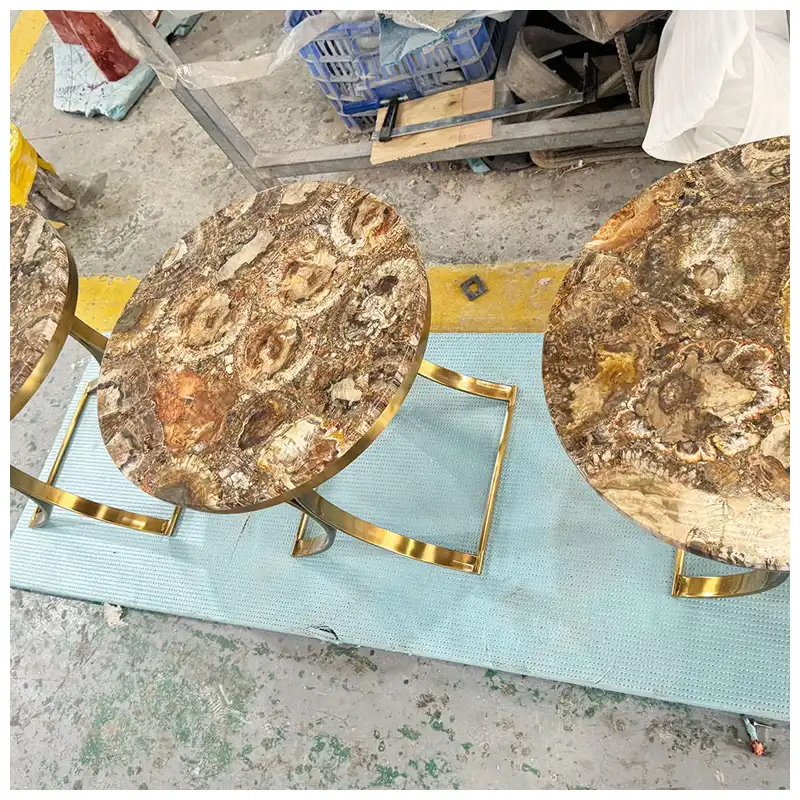
What Variation Should Be Expected from a Petrified Wood Tabletop?Variation is more complex than simple light-versus-dark color. One tabletop may show large circular wood structures, while another contains finer fragments, elongated mineral movement or stronger cream-colored areas. Small natural voids, mineralized cracks and irregular boundaries can also occur. These should be assessed against the agreed furniture finish rather than automatically treated as faults. For a pair of bedside or lounge tables, visual coordination usually matters more than perfect duplication. The factory can sort tops for comparable tone and pattern density before the base is fitted. Full-face photographs of the actual finished tops are the most practical approval method for projects where furniture pieces will be installed together. |
Petrified Wood Round Table Size, Finish and Customization References
| Specification | Product Reference | What to Confirm Before Production |
|---|---|---|
| Product Form | Round side table / end table / small coffee table | Confirm intended use because table height and base proportions change between side-table and coffee-table applications. |
| Diameter | Approximately 30–80cm | Select diameter together with sofa height, circulation clearance and base footprint. |
| Tabletop Thickness | 18 / 20 / 30mm reference | Final thickness should match the approved tabletop, edge detail, support plate and furniture drawing. |
| Surface | Polished | Approve gloss level, repaired areas, natural cavities and edge appearance on the actual top. |
| Base Reference | X-shaped metal base with brushed-gold appearance shown in reference image | Confirm metal material, finish sample, tube or plate dimensions, top fixing and floor-contact detail. |
| Alternative Shapes | Project-specific where suitable material is available | Final shape should be nested on the actual petrified-wood panel before cutting. |
| Backlighting | Project-specific only | Light transmission can vary substantially; test the actual tabletop construction before specifying an illuminated table. |
| MOQ | 10 sets | For multi-table orders, define the acceptable color range and whether tables are supplied as coordinated pairs or mixed individual pieces. |
Thickness note: the pictured tabletop visually reads as a conventional furniture top rather than a massive 18–30cm stone block. The production reference is therefore treated as 18/20/30mm and should be confirmed on the final furniture drawing before cutting.
How Should the Round Top Be Selected Before Cutting?
A round tabletop removes material from every corner of the original panel, so the cutting position has a major effect on the final pattern. Moving the circle even a short distance can change which fossil structures fall at the center, which colors appear near the perimeter and whether a natural cavity is retained or removed.
Round Gemstone Tables generally look more deliberate when one or two visually strong fossil formations remain inside the usable circle instead of being cut awkwardly through the edge.
For larger 60–80cm tops, the factory has more room to preserve a broad composition. Small 30–40cm side tables require tighter material allocation, particularly when several pieces are intended to form a coordinated set.
The practical approval method is to mark the proposed circle directly on a photograph of the selected panel before cutting.
Round Tabletop Layout Should Protect the Best Fossil PatternThe most interesting mineralized growth rings should be treated as part of the furniture composition, not as random leftover detail. Before the CNC or waterjet cutting stage, the finished diameter can be overlaid on the selected material so the designer sees exactly what will remain inside the circle. Edge position matters too. A large natural cavity or abrupt color change located directly on the rim may require repair or a different nesting position. For sets of two or more tables, the tops can be arranged by similar visual weight rather than trying to force identical patterns. This selection step has more impact on the finished furniture than simply specifying a nominal diameter. |
Show the proposed circle marked on the selected material before cutting, including major fossil rings and natural cavities. |
The Brass-Tone Base Should Be Sized Around Table Diameter and Furniture Height
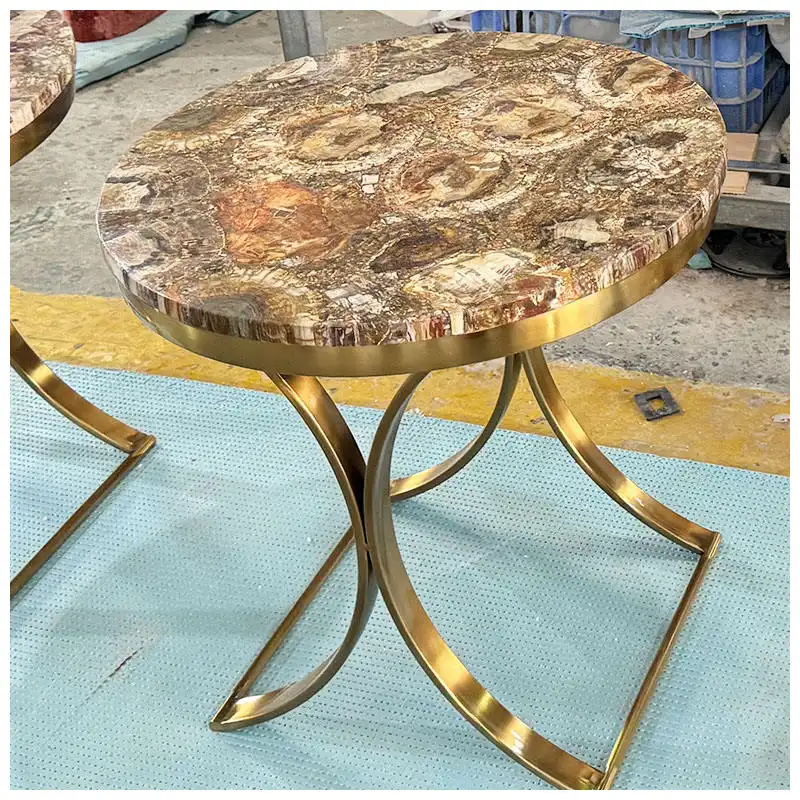
The reference table uses an open X-shaped metal structure finished in a warm gold tone. Its narrow visual profile is useful because it leaves the decorative tabletop as the dominant material while still giving the piece a contemporary furniture character.
Base geometry should change as tabletop diameter increases. A footprint that feels stable under a 35cm side table may be too narrow beneath an 80cm coffee table. The fixing plate, base spread and final center of gravity should be reviewed together.
For hotel guestrooms and public lounges, the finished base also needs practical floor contact. Adjustable feet or protective pads may be preferable where flooring is uneven or easily scratched.
The gold appearance should be approved from a physical metal sample where color coordination matters. Brushed brass, champagne gold, polished gold and coated stainless steel can look noticeably different beside warm brown stone.
A base drawing should therefore define dimensions, metal finish, attachment method and floor-contact detail instead of specifying only "gold base."
|
Show tabletop edge, underside support plate, gold-tone finish, attachment points and floor-contact detail. |
What Should Be Checked at the Stone-to-Metal Connection?The tabletop should not rely on a small concentrated fixing point that places unnecessary stress into the stone-like surface. A properly sized support plate or connection system helps distribute the load and keeps the table level. Fastener depth should be coordinated with the actual tabletop construction before drilling or bonding. The polished face must remain protected throughout assembly. Where the table is supplied knocked-down, the assembly sequence should be simple enough for the installer to complete without turning or dragging the polished top directly on the floor. Finished-table stability should be checked after assembly rather than evaluating the tabletop and base as separate components. |
Can Petrified Wood Tables Be Backlit?
Backlighting should be treated as an optional project feature rather than a standard performance claim. Petrified wood itself can contain mineralized areas with very different opacity, and a tabletop assembled with resin may transmit light mainly through selected crystal, void or bonding zones.
That means one top can respond very differently from another even when both use the same general material family. An illuminated sample or test section is more reliable than assuming that the entire tabletop will glow evenly.
If lighting is requested, the base must also leave sufficient space for LEDs, wiring and a diffuser without creating obvious shadows through translucent areas.
For this furniture type, polished non-illuminated use remains the most straightforward specification; backlighting should be developed only after the selected tabletop has been tested.
Where Petrified Wood Side and Coffee Tables Work Best
Villa Living RoomsA single table adds organic pattern beside plain sofas, timber cabinetry and restrained natural-stone flooring. |
Hotel Guest SuitesCompact paired tables can provide individual natural variation while keeping a coordinated furniture silhouette. |
Lobby & Club LoungesGrouped tables at different diameters create a richer furniture arrangement than one oversized decorative top. |
Boutique Retail DisplaysThe fossil pattern works as a display surface where customers can view the material closely from several angles. |
Petrified Wood Pairs Naturally with Brass, Dark Timber, Leather and Quiet Stone
Warm metal finishes work well because amber and caramel mineral sections already exist within the tabletop. The brushed-gold base shown in the reference image picks up those warmer areas without repeating the fossil pattern.
Dark walnut, smoked oak and leather create a deeper residential palette. Warm-white upholstery and pale plaster provide stronger contrast and make the circular mineral structures easier to see.
Round Semi-Precious Stone Tables generally benefit from quieter surrounding surfaces. Pairing the tabletop with another highly graphic marble directly underneath or behind it can make both materials compete for attention.
For hospitality schemes using several furniture materials, repeating the same metal finish across lamps, side tables and joinery can connect the petrified wood to the broader interior without forcing the stone pattern to match other surfaces.
Petrified Wood vs. Four KA UNITED Stone Furniture Alternatives
Petrified wood has a distinctly fossil-like visual language. The related KA UNITED tables below offer different material expressions-from translucent pink onyx to veined Carrara marble-so the choice should be based on the interior palette and furniture scale rather than treating every stone table as interchangeable.
| Selection Factor | Petrified Wood Gemstone Table | Pink Onyx Coffee Table | Red Travertine Dining Table | Carrara Marble Round Coffee Table | Fior Di Bosco Round Coffee Table |
|---|---|---|---|---|---|
| Visual Character | Brown, amber and cream fossil-ring pattern with strong organic variation. | Soft pink translucent onyx direction with layered natural movement. | Warm red travertine direction with broader architectural stone character. | Classic white marble with grey veining and a lighter interior palette. | Cool grey marble with white movement and fine reddish accents. |
| Furniture Scale | Side tables, end tables and compact coffee tables. | Decorative coffee-table direction. | Larger dining-furniture direction rather than a direct side-table substitute. | Round coffee-table and occasional-table direction. | Round coffee and side-table applications. |
| Best Interior Fit | Organic-modern, collected luxury and warm contemporary interiors. | Soft luxury interiors where translucency and pink tone are important. | Dining areas needing a stronger warm stone statement. | Classic-modern interiors requiring a lighter neutral marble. | Grey-toned contemporary interiors with controlled marble movement. |
| Buyer Approval Priority | Actual fossil pattern, diameter, edge, base finish and furniture stability. | Onyx tone, translucency, table dimensions and base coordination. | Dining dimensions, travertine selection, support and overall furniture proportions. | Marble vein layout, diameter, pedestal design and finish. | Grey marble pattern, top diameter, base pairing and polished or honed finish. |
Factory QC Should Inspect the Top and Metal Base as One Finished Furniture Piece
The stone-like top can be visually attractive but the table is not finished until the base, fixing and level have also been checked. Furniture QC should therefore go beyond polishing inspection.
First review the tabletop face for scratches, unwanted repair marks, edge chips and the approved fossil pattern. Measure diameter and thickness before the base is fitted.
Next inspect the metal base for finish consistency, weld quality, visible distortion and correct support geometry. Gold-tone surfaces are particularly sensitive to handling marks and should be protected during assembly.
Finally place the finished table on a level surface and check rocking, top alignment and base contact. This is also the right stage to photograph each completed piece for project approval.
For sets, the factory can review all tops together to avoid placing one unusually dark or highly fragmented table into an otherwise lighter coordinated group.
What Should Be Checked Before Petrified Wood Tables Are Packed?Confirm the approved tabletop diameter, height, edge profile and metal finish against the furniture schedule. Inspect the polished top in direct light and photograph major natural cavities or mineralized cracks that form part of the accepted material character. Check the assembled table for level and stability before removing the base for shipment, where knock-down packing is used. Protect the polished tabletop separately from metal components so movement during transport cannot scratch the face or damage the edge. Pairs and sets should carry matching identification numbers so the approved top and base combination remains together after unpacking. |
Show tabletop inspection, metal-finish review, stability checking, numbering and protected packing. |

Risk-Control Checklist for Custom Petrified Wood Furniture Orders
- Approve the actual brown, amber, cream and dark mineral range rather than ordering by material name alone.
- Review full tabletop photographs before cutting when fossil-ring placement matters.
- Confirm finished diameter and table height according to the intended side-table, end-table or coffee-table use.
- Confirm the 18/20/30mm thickness reference on the final drawing before production.
- Mark natural cavities, repaired zones and mineralized cracks that are acceptable within the selected tabletop.
- For multiple tables, establish an acceptable color range and grouping method before material allocation.
- Approve the metal base finish from a representative sample where brass or gold tone is design-critical.
- Coordinate base spread, tabletop diameter and final center of gravity for stable furniture proportions.
- Use a suitable support or connection detail rather than concentrating the tabletop load around one small fixing point.
- Test actual material before specifying backlighting; do not assume uniform translucency.
- Protect polished faces from metal hardware during assembly and shipping.
- Use protective feet where the table will stand on marble, timber or other easily marked flooring.
- Check finished furniture for rocking and level before packing.
- Number top-and-base sets so components are not mixed during installation.
- Retain approval photographs with the packing list for hospitality or multi-room furniture schedules.
Care Guidance for a Polished Petrified Wood Tabletop
Daily care should be simple and conservative. Dust with a clean soft cloth, and use a slightly damp cloth when the surface needs more than dry dusting. Dry the top after cleaning instead of leaving water sitting on the polish.
Spills should be removed promptly. Coasters and placemats are useful for drinks, oils and other items that may remain on the table for long periods.
Avoid abrasive pads, harsh solvents and aggressive cleaners that can dull the polished finish or affect repaired and resin-containing areas.
Do not drag heavy decorative objects across the top. The mineralized material is hard, but polished edges can still chip from concentrated impact.
When moving the furniture, lift the complete table or remove the top according to the approved assembly method instead of dragging the base across the floor.
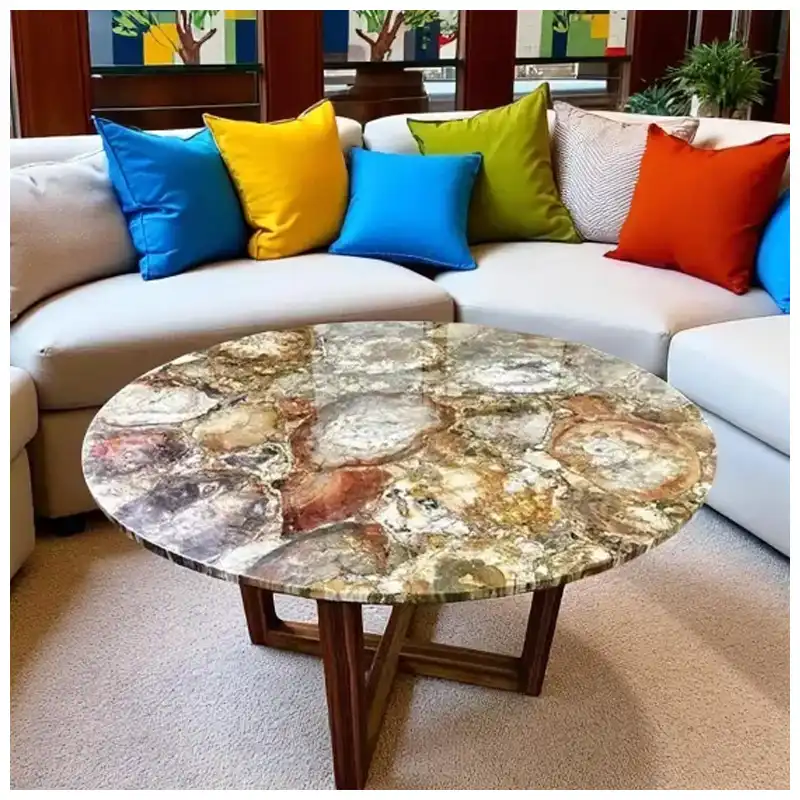
Petrified Wood Works Best as a Furniture Focal Point Rather Than a Repeating Background MaterialThe round format concentrates the fossil pattern into a small area that can be appreciated from close range. That makes it particularly suitable for side tables and occasional furniture. A brass-tone open base gives the heavy visual texture of the tabletop enough space and keeps the overall piece from feeling bulky. Petrified Wood Round Coffee Tables can also be grouped in different diameters, allowing several unique tops to read as one coordinated furniture composition. For hotels and residences, the best result usually comes from limiting the material to selected furniture pieces rather than repeating its strong fossil pattern throughout the room. The completed table should feel balanced as furniture first; the geological story becomes the detail that rewards closer inspection. |
Use a finished villa, hotel suite or lounge image showing scale, furniture pairing and final base finish. |
Recommended Luxury Stone Coffee Tables from KA UNITED
Compare petrified wood with translucent onyx, warm travertine and two contrasting marble directions for different furniture schemes.
Pink Onyx Coffee TablesSoft pink translucent stone furniture for villas, lounges and decorative hospitality interiors. |
Red Travertine Dining TablesWarm red travertine furniture for larger dining spaces requiring stronger architectural stone presence. |
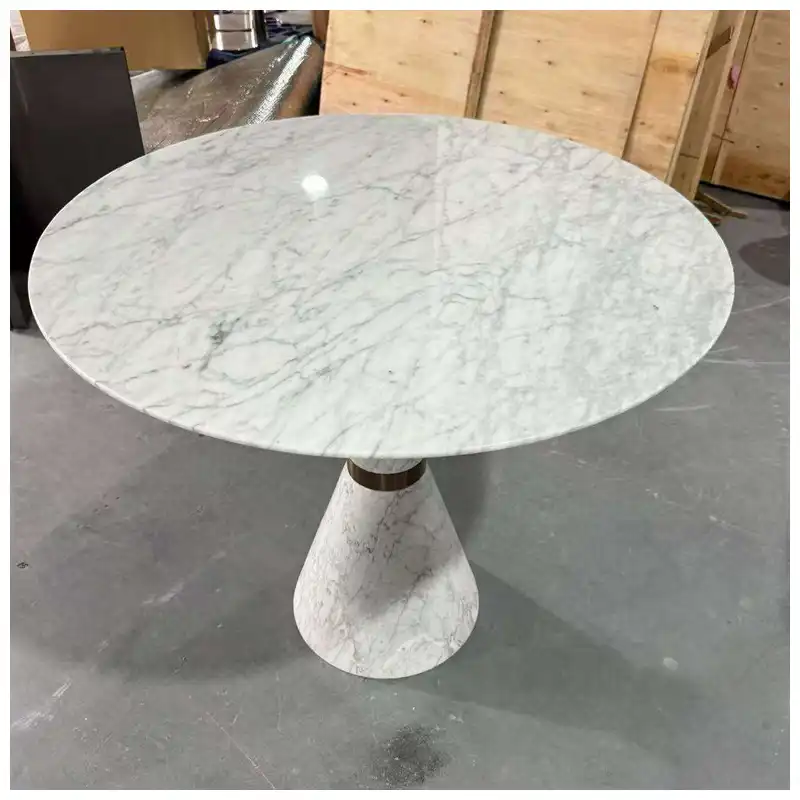
Carrara Marble Round Coffee TableClassic white Carrara marble furniture for lighter modern, transitional and hotel lounge schemes. |
Fior Di Bosco Marble Round Coffee TablesGrey marble round tables for contemporary interiors needing controlled veining and neutral color. |



FAQ About Petrified Wood Gemstone Tables
1. What sizes are available for Petrified Wood Gemstone Tables?
The supplied diameter reference is approximately 30–80cm. Final table diameter, height, edge detail and base footprint can be adjusted according to the intended side-table, end-table or coffee-table application and the approved furniture drawing.
2. Will every petrified wood tabletop have the same pattern?
No. Fossil-like rings, mineralized structures, cream and amber areas, darker brown sections, natural cavities and repaired zones vary from piece to piece. For paired or multi-room orders, buyers should approve an acceptable visual range rather than expect identical tabletops.
3. What tabletop thicknesses are available?
The production reference is 18mm, 20mm and 30mm. Final thickness should be confirmed with the selected material, edge treatment, support plate and furniture drawing before cutting begins.
4. Can the metal base finish be customized?
Yes. Base geometry, furniture height and metal finish can be developed for the project. The reference table uses an open X-shaped base with a brushed-gold appearance. Final metal material, color sample, connection method and floor-contact detail should be approved before production.
5. Can petrified wood tables be backlit?
Backlighting can be considered for selected tabletop constructions, but light transmission is not uniform across petrified wood. Mineralized areas, resin zones and natural structures can vary significantly, so the actual selected top should be tested before an illuminated furniture design is approved.
6. Are natural cracks and cavities defects in petrified wood furniture?
Not automatically. Mineralized cracks, fossil structures, natural voids and repaired areas can form part of the material's character. Their location and finish should be reviewed during tabletop approval so acceptable natural features are distinguished from fabrication damage.
7. How should a polished petrified wood table be cleaned?
Use a clean soft cloth for dusting and a slightly damp cloth when necessary, then dry the surface. Remove spills promptly and avoid abrasive pads, strong solvents and harsh cleaners that may dull the polish or affect repaired and resin-containing areas.
8. Can Petrified Wood Round Coffee Tables be supplied as coordinated sets?
Yes. Sets can be grouped by diameter, height, fossil-pattern density and overall brown-to-amber color range. Because the material is naturally variable, coordinated selection is more realistic than trying to produce visually identical tops.
9. What is the MOQ for this petrified wood table product?
The supplied MOQ reference is 10 sets. For project quantities, the furniture schedule should identify diameter, height, base finish and any required grouping so material selection can be coordinated before production.
10. What should be approved before custom petrified wood tables enter production?
Approve the actual tabletop material, acceptable color and fossil-pattern range, finished diameter, confirmed thickness, table height, edge treatment, base dimensions, metal finish sample, top-to-base connection, natural cavities or repaired areas, grouping for multi-table orders, finished-table stability, packing method and installation or assembly instructions before production begins.
Petrified Wood Tables Gain Their Value from the Actual Fossil Pattern, Not from Repeating a Standard Furniture Surface
The strongest specification for Petrified Wood Gemstone Tables begins with the real tabletop material. Diameter is then positioned around the most useful fossil structures, the edge is reviewed for natural cavities, and the base is proportioned to the finished top rather than selected independently. For paired hotel or residential tables, visual grouping should happen before fabrication so the pieces share a similar color weight without losing the individual mineral patterns that make petrified wood distinctive.

Planning a Custom Petrified Wood Side Table or Coffee Table for a Villa, Hotel or Retail Project
Start with the furniture schedule: required diameter, finished height, quantity, installation room and the surrounding sofa, bedside furniture or lounge layout. For grouped tables, note whether the pieces should share one height, step across several heights or use different diameters.
Next review the available petrified-wood tops and identify the fossil patterns that suit those positions. Once the tabletop selection is fixed, the metal base footprint, gold-tone finish, support detail and packaging method can be developed around the actual material. This sequence gives designers control over appearance while giving the factory a practical basis for stable furniture construction and repeatable project delivery.
Hot Tags: petrified wood gemstone tables, China petrified wood gemstone tables suppliers, factory
You Might Also Like


Send Inquiry
