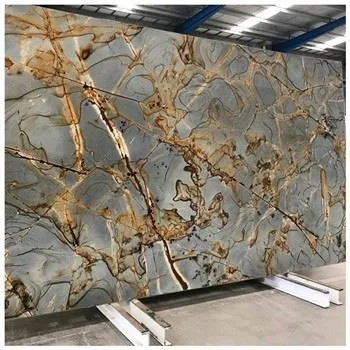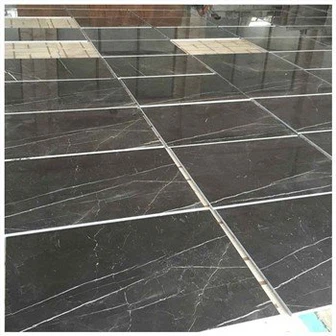
Does natural marble have radiation? Is it harmful to human body?
Does Natural Marble Have Radiation? A Practical, Honest Answer
I get this question a lot, and I understand why. When people hear the word "radiation," they picture something dangerous, and the idea of a stone countertop quietly emitting anything at all can feel unsettling. Let me start with the straight answer so the rest of this makes sense: yes, natural marble contains tiny amounts of naturally occurring radioactive elements, but at levels so low that they are classified as safe for unrestricted indoor use. The honest science behind that statement is what I want to walk you through here, without panic and without marketing spin.
I have spent years working with natural marble and other stone, and I have answered this question for homeowners, architects, and contractors across many countries. The worry is almost always the same, and it usually comes from a half-remembered headline or a rumor passed along from a neighbor. What surprises most people is how little of that worry survives contact with actual measurements. My job in this article is to replace the rumor with numbers you can check, and to explain exactly what those numbers mean for your home.
What Marble Actually Is
Before we talk about radiation, we have to talk about what marble is made of, because the chemistry is the whole story. Marble is a metamorphic rock. It begins as limestone or dolomite, laid down on ancient seabeds, and then gets buried, heated, and compressed over hundreds of millions of years. That slow transformation recrystallizes the original carbonate minerals into the interlocking crystal structure that gives marble its soft, workable, luminous surface.
Calcium carbonate is the dominant ingredient
The main component of marble is calcium carbonate, with the chemical formula CaCO3. In most commercial marble, calcium carbonate makes up more than 90 percent of the stone, with the remainder being magnesium carbonate and small amounts of other minerals such as quartz, mica, and iron oxides that produce the veining we prize. Calcium carbonate is a stable substance. It is insoluble in water, it does not react readily with other materials under normal conditions, and it does not carry the kind of heavy radioactive minerals that some other rocks do.
Why marble is different from granite
This is the single most important distinction in the whole radiation conversation. Marble and granite are often lumped together in people's minds because both are "natural stone," but they are geologically very different. Granite is an igneous rock that forms from slowly cooled magma, and it commonly contains minerals like feldspar, quartz, and mica, along with trace amounts of uranium, thorium, and potassium-40. Those three elements are the primary sources of natural radioactivity in stone, and they are far more concentrated in many granites than in marble. Marble, by contrast, is almost pure carbonate. It simply does not have much uranium or thorium in it to begin with, which is why its measured radiation is consistently low.
Understanding What "Radiation" in Stone Means
Here is where a little context changes everything. Every material around you contains some natural radioactive elements. The soil in your garden, the water you drink, and even the air you breathe all contain trace amounts of radionuclides. You live inside a constant, low-level background of natural radiation, and your body has been dealing with it for the entire history of the human species.
Natural radioactivity is everywhere
The average person on Earth receives a background radiation dose of about 2.4 millisieverts per year, a figure established by the United Nations Scientific Committee on the Effects of Atomic Radiation. Roughly half of that, around 1.2 millisieverts, comes from radon gas, which seeps out of the ground and into buildings. The rest comes from cosmic rays, food, and the natural radioactivity in the earth's crust. Against that baseline, the contribution of a marble floor or countertop is vanishingly small. A single chest X-ray, for comparison, delivers around 0.1 millisieverts, and nobody thinks twice about that.
The three elements responsible for nearly all natural radioactivity in rock are uranium-238, thorium-232, and potassium-40. These are primordial isotopes that have been decaying since the earth first formed, each following a long chain that eventually settles into stable lead. Uranium and thorium are the ones that can decay into radon, which is exactly why the internal irradiation index exists in the first place. Marble contains so little uranium and thorium that its contribution to that chain is negligible, and that is the underlying reason its test results are so consistently, boringly low. A stone's radiation is not a matter of opinion or reputation; it is a direct function of how much of these three isotopes the rock happens to contain.
Internal and external irradiation indices
When regulators measure the radiation of a building material, they look at two separate values. The internal irradiation index, often written as IRa, relates mainly to radon and its decay products, which you could inhale. The external irradiation index, written as Iγ, relates to the gamma radiation the material emits outward. Together these two numbers determine whether a material is safe to use indoors, and in what quantity. For natural marble, the internal irradiation index measures below 1.0, and the external irradiation index measures below 1.3. Those two numbers are the dividing line for the safest category, and marble sits comfortably on the safe side of it.
The Numbers: Marble's Actual Radiation Levels
Numbers without context are just noise, so let me put marble's readings next to other common materials. The table below shows the classification thresholds from China's national standard for the limits of radionuclides in building materials, and where typical natural stones fall in relation to them.
| Material | Internal index (IRa) | External index (Iγ) | Classification and typical use |
|---|---|---|---|
| Natural marble | Below 1.0 | Below 1.3 | Class A - unrestricted indoor use |
| Typical natural granite | Varies, often below 1.3 | Varies, some above 1.3 | Class A or B depending on source |
| Ceramic tile | Varies by glaze and zirconium | Some batches above marble | Class A or B depending on raw clay |
| Concrete and cement | Low to moderate | Low to moderate | Widely used, regulated |
| Clay brick | Varies with clay source | Varies with clay source | Regulated, generally low |
What Class A actually means
Under the standard, building materials are divided into three classes based on those two indices. Class A materials, with an internal index of 1.0 or below and an external index of 1.3 or below, can be used anywhere without restriction. Class B materials, with an internal index up to 1.3 and an external index up to 1.9, may only be used for surfaces other than the interior walls of living spaces. Class C materials, with an external index up to 2.8, are restricted to exterior applications only. Natural marble falls into Class A, which is the reason it is approved for kitchen counters, bathroom walls, flooring, and every other indoor surface you can think of.
Why marble testing is often exempted
There is a telling detail buried in the standards. The Chinese national standards for natural marble building blocks and natural marble building slabs do not require radioactivity testing for marble products at all. This is not an oversight; it is a recognition that marble's radiation is so reliably low that mandatory testing would be redundant. Regulators do not exempt a material from testing because it is dangerous. They exempt it because decades of measurement have shown there is nothing meaningful to detect.
Other Building Materials Are Radioactive Too
One of the most persistent misconceptions is that stone is somehow unique in being radioactive. It is not. The view that "stone has radiation and other materials do not" is simply incorrect, and understanding why will probably put your mind at ease more than anything else in this article.
Clay, cement, and brick all contain radionuclides
Consider a brick. Bricks are fired from clay, and clay is formed by the weathering of rock. Because clay inherits its mineral content from the rock it came from, a brick carries the same natural radionuclides as the stone in that region. If the local clay happens to be high in radioactive elements, the finished brick will be too. The same logic applies to cement, which is produced from limestone and other raw materials, and to ceramic tile, which sometimes contains zirconium compounds in its glaze that can raise its measured radioactivity above that of marble. None of this is a reason to fear your walls; it is simply proof that natural radioactivity is a background feature of all mineral-based building materials.
The Ministry of Health standard
Because these trace elements are unavoidable, authorities have long established safety standards to keep them in check. China's Ministry of Health issued a health protection standard for building materials that limits the activity of natural radioactive elements in construction products, precisely so that safe use can be guaranteed. The system works on the principle that the dose matters, not the mere presence of an element. A material that stays within the limits is safe, full stop, and marble stays well within them.
Is Marble Safe to Use Indoors?
The short answer is yes, and the longer answer is that marble is not just safe but among the lowest-radiation natural stones you can buy. I want to address this directly because it is the question most people are really asking when they raise the topic.
Marble as a Class A decorative material
Natural marble is classified as a Class A decorative material, which means it can be used for indoor decoration without affecting human health. That classification is not a marketing claim; it is the conclusion of standardized testing across the industry. When I help a client choose stone for a kitchen island or a bathroom wall, the radiation question rarely even comes up among professionals, because the answer has been settled for years. What we discuss instead is color, veining, finish, sealing, and installation, which tells you where the real attention belongs.
When to pay closer attention to granite
If you want to be extra careful about natural radiation, the material to scrutinize is not marble but granite. Because granite can contain higher levels of uranium and thorium, a small number of granites from specific quarries can push into the Class B range, and extremely rarely beyond. This does not mean granite is dangerous either; most granite is perfectly safe. It only means that, between the two, marble is the one with the more predictably low numbers. If you are sourcing a large quantity of granite, asking your supplier for the test report is a reasonable due-diligence step. For marble, that step is essentially unnecessary.
Practical Guidance for Homeowners and Buyers
Now let me turn this into something you can actually use, because theory is only helpful if it changes how you make decisions.
What to check when you buy stone
If you want peace of mind, there are three simple things you can do. First, buy from a reputable supplier who can provide material certificates and origin information. Second, if you are specifying granite or any stone with unusual mineral content, ask for the radioactivity test report; any serious supplier will have one. Third, remember that for marble the report is a formality, because the stone is classified as Class A and is exempt from mandatory radiation testing under Chinese standards. These three steps cover the practical side completely.
Radon, ventilation, and the real indoor concern
Here is something worth knowing that often gets mixed into this conversation. The most significant radiation-related indoor concern is not your countertop at all; it is radon gas rising from the ground beneath your home. Radon contributes roughly half of your total background dose, and it enters through foundations and cracks in the floor. The practical takeaway is that good ventilation matters far more to your indoor radiation exposure than your choice of countertop ever will. If you live in a radon-prone area, testing your basement air is a genuinely useful step. Worrying about a marble kitchen top is not.
Frequently Asked Questions
Does natural marble emit dangerous radiation?
No. Natural marble contains trace amounts of natural radioactive elements, but its internal irradiation index measures below 1.0 and its external irradiation index below 1.3, placing it in the safest classification for indoor materials. Its radiation is far lower than that of many ceramics and cements and poses no harm to the human body.
Is granite more radioactive than marble?
Generally, yes. Granite is an igneous rock that can contain higher concentrations of uranium, thorium, and potassium-40, while marble is almost pure calcium carbonate with very little radioactive mineral content. Most granite is still safe, but a small number of granites can reach higher classifications, whereas marble's readings are consistently low.
Do I need to test marble before installing it indoors?
No, you do not. Under the Chinese national standards for natural marble building blocks and building slabs, radioactivity testing of marble products is not required, because marble is a Class A material whose radiation is reliably below the safety limits. It can be used for indoor decoration without any special precautions.
How does marble's radiation compare to everyday background radiation?
It is negligible by comparison. The average person receives about 2.4 millisieverts of natural background radiation per year, about half of it from radon gas. The additional dose from a marble floor or countertop is so small that it is effectively unmeasurable in everyday terms, far below a single chest X-ray of roughly 0.1 millisieverts.
Can marble increase radon levels in my home?
Not in any meaningful way. Radon indoors comes overwhelmingly from the soil and rock beneath a building, entering through the foundation, rather than from polished stone surfaces inside it. If you are concerned about indoor radon, ventilation and foundation sealing are the effective measures, not avoiding marble.
Final Conclusion
Natural marble has been forming deep in the earth for hundreds of millions of years, and its chemistry is the reason this question has such a reassuring answer. Composed almost entirely of stable calcium carbonate, marble carries only the faintest trace of the natural radioactive elements that exist in every soil, every brick, and every breath of air around us. Its internal irradiation index stays below 1.0 and its external index below 1.3, comfortably within the Class A limits for unrestricted indoor use, and it is lower in radiation than many ceramics, cements, and granites. It has no radiation harm to the human body and can be used safely in kitchens, bathrooms, flooring, and wall cladding without any special testing or precautions. The worry is understandable, but the evidence is clear: of all the things to think about when choosing natural stone, marble's radiation is not one of them. If you are planning a project and want guidance on selecting the right stone for your space, the team at KA UNITED is always here to help.