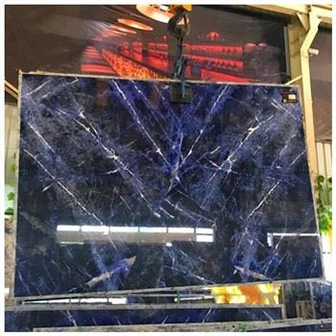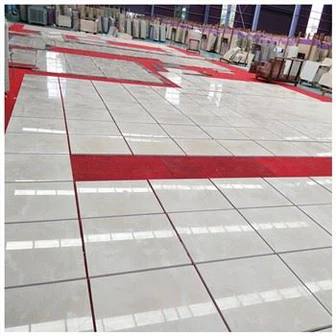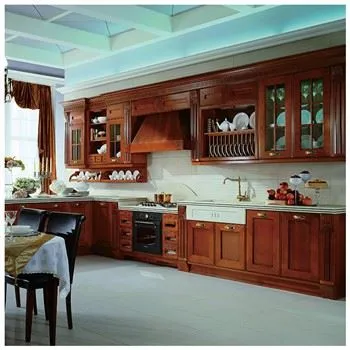
Classification of decorative stones and five characteristics of natural stones
Four Families of Decorative Stone, and Why the Differences Matter
When I started fitting countertops, I assumed stone was stone. It only took a few jobs to learn otherwise. Two slabs can look similar under showroom lighting and behave completely differently once a hot pan, a spilled bottle of wine, or a freezing winter is thrown at them. The single most useful thing you can do before choosing a surface is understand which family a stone belongs to and what that family is actually good at.
In the decorative stone trade, the material on the market generally falls into four categories: marble, granite, terrazzo, and engineered stone. The first two are natural - quarried from the earth and cut into slabs. The second two are manufactured - assembled in a factory from raw ingredients and pressed, cast, or polished into shape. That one distinction, natural versus man-made, explains a surprising amount of the behavior we will cover below.
It is worth saying up front that none of these is universally "better." Each has a job it does well and a set of conditions it does not enjoy. My goal here is to give you the honest version of both, so you can match the stone to the space instead of fighting the stone later.
The Four Categories in Detail
Before we get into physical properties, let me be precise about what each family actually is, because a fair amount of confusion comes from loose terminology.
Marble
Marble is a natural metamorphic rock. It starts life as limestone or dolomite - sedimentary carbonate rock - and is transformed deep underground by heat and pressure, which recrystallizes the carbonate minerals into a dense, interlocking structure. That recrystallization is what gives marble its soft, luminous surface and its signature veining. The veins are mineral impurities that were present in the original limestone and got stretched and swirled as the rock recrystallized.
In everyday trade language, "marble" is often used more loosely to cover a range of carbonate and related decorative rocks, including dolomite, some limestones, and even certain polished sedimentary stones that look similar. Strictly speaking, geologists would not group all of those under marble, but on a supplier's price list you will often see them lumped together. When it matters - for a stain-prone kitchen, say - it is worth asking exactly which rock you are looking at.
Granite
Granite is an igneous rock, formed from slowly cooled magma deep in the earth's crust. It is made mostly of quartz, feldspar, and mica, which grow into visible interlocking crystals as the magma cools. That coarse, crystalline structure is what gives granite its speckled, granular look and its hardness. As a rule, granite is harder and more scratch-resistant than marble, which is one reason it has long been the default choice for busy kitchen worktops.
Granite is dense and, once sealed, resists stains well. It also handles heat better than many alternatives - though, as we will see, "better" is not the same as "invincible." Because it is natural, every slab is unique; if you want a uniform, repeatable surface, that is a point in favor of engineered stone instead.
Terrazzo
Terrazzo is a composite material rather than a single rock. It is made by embedding chips of marble, granite, quartz, or glass in a binder - traditionally cement, and more often today a resin or epoxy - then grinding and polishing the surface until it is smooth and the chips are exposed. The result is that classic flecked, confetti-like surface you see in older public buildings and, increasingly, in contemporary homes.
Because the binder is poured and the chips are chosen, terrazzo can be cast in almost any color and pattern, including large seamless runs of flooring. Its strength depends heavily on the binder and how well it is cured, which is why it is generally considered less structurally strong than a solid natural slab. As a decorative surface, though, it is durable, easy to repair in place, and endlessly customizable.
Engineered (Synthetic) Stone
Engineered stone, sometimes called synthetic or artificial stone, is manufactured rather than quarried. The most common form is quartz countertops, which are made by crushing natural quartz - typically around 90 percent of the slab by weight - and binding the particles with polymer resin and pigment under vacuum and pressure, then polishing the result. The resin fills the spaces between the quartz grains, which is why a quality quartz surface is non-porous and does not need the periodic sealing that marble and granite do.
Because the recipe is controlled, engineered stone offers consistent color, predictable pattern, and uniform thickness - qualities natural stone cannot match. Its strength is generally very good for countertop use, though it is not a natural rock and does not have the exact same character as a quarried slab. There are also acrylic-based solid-surface products in this same "synthetic" family, which share the man-made label but differ in composition and feel.
Comparing the Four at a Glance
| Type | What it is | Main strength | Main limitation |
|---|---|---|---|
| Marble | Metamorphic carbonate rock (from limestone/dolomite) | Luminous beauty, veining | Softer; etches and stains if not sealed |
| Granite | Igneous rock (quartz, feldspar, mica) | Hard, heat- and scratch-resistant | Needs sealing; unique, non-repeatable look |
| Terrazzo | Stone chips set in cement or resin binder | Endless colors, seamless large areas | Strength depends on binder quality |
| Engineered stone | Crushed quartz bound with resin, pressed and polished | Non-porous, consistent, low maintenance | Not a natural rock; resin limits extreme heat |
Physical Properties That Decide Real-World Performance
Classification is only the first half of the story. The second half is how a stone behaves under the conditions it will actually meet - heat, cold, moisture, and weight. These properties explain most of the "surprises" I have seen on job sites, so it is worth understanding them even if you never run a single test yourself.
Fire Resistance
Not all stone responds to heat the same way, and some stones will actually break down chemically at high temperature rather than simply getting hot. Gypsum is the most sensitive of the common decorative materials: it begins to decompose at temperatures above roughly 107 °C, which is why it is rarely used anywhere heat is a factor. Limestone and marble are far more tolerant - they do not decompose until temperatures climb above roughly 910 °C, well beyond anything a normal kitchen produces. Granite sits in an interesting middle position: it does not decompose chemically, but it can crack at around 600 °C because its constituent minerals - quartz, feldspar, and mica - expand at different rates and pull against each other under uneven heating.
The practical takeaway is that none of these stones should be treated as a substitute for a trivet. Marble tolerates ordinary heat well but can be dulled by prolonged direct contact, while granite's risk is thermal shock - a hot pan on a cold slab - rather than ordinary cooking temperatures.
Hardness, Density, and Water Absorption
Beyond how a stone responds to heat and cold, three measurable figures come up repeatedly when materials are compared side by side: hardness, density, and water absorption. Hardness is usually quoted on the Mohs scale, which runs from 1 (talc) to 10 (diamond). Marble, being largely calcite, sits around 3 to 4 on that scale, which is why an ordinary steel knife - around 5.5 - will scratch it. Granite ranges from 6 to 7 because it is rich in quartz and feldspar, and it turns aside most kitchen knives. Engineered quartz is comparable to granite at about 7, since it is mostly crushed quartz. Terrazzo has no single figure: its hardness depends on which chips are used and how thoroughly the binder cures, although marble-chip terrazzo behaves much like the marble it contains.
Density tracks closely with durability and resistance to staining. Marble typically runs from 2.5 to 2.7 grams per cubic centimetre, and granite from 2.6 to 2.8. Engineered quartz is a little lighter, usually 2.3 to 2.5 grams per cubic centimetre, because the resin binder is less dense than the quartz it holds together. Terrazzo sits in the middle, commonly 2.4 to 2.6 grams per cubic centimetre depending on the chips and binder. For kitchens and bathrooms, water absorption is the figure I check first. Marble absorbs roughly 0.2 to 0.5 percent of its own weight in water, which is why it asks for sealing; granite is lower at about 0.1 to 0.4 percent; and a well-made engineered quartz is effectively non-porous at under 0.05 percent, which is why it never needs sealing. Cement-based terrazzo can absorb noticeably more - often 0.5 to 2 percent - unless it is sealed, while resin-based terrazzo is far tighter.
| Property | Marble | Granite | Terrazzo | Engineered quartz |
|---|---|---|---|---|
| Mohs hardness | 3–4 | 6–7 | Varies with chips | ≈ 7 |
| Density (g/cm³) | 2.5–2.7 | 2.6–2.8 | 2.4–2.6 | 2.3–2.5 |
| Water absorption | 0.2–0.5% | 0.1–0.4% | 0.5–2% (cement) | <0.05% |
| Heat limit | ≈ 910 °C (decomposes) | Cracks ≈ 600 °C | Binder-dependent | Resin degrades ≈ 150–200 °C |
Expansion and Contraction
Stone expands as it warms and contracts as it cools, just like most materials. What surprises people is that stone does not always return to its original dimensions afterward. When a stone is heated and then cooled, a small part of the expansion can become permanent - the material has grown slightly and stays that way. This is a genuine, measurable effect: tests in which stone was heated from 0 °C up to 1000 °C and then cooled back to 0 °C recorded a permanent expansion of roughly 0.02 to 0.045 percent.
That number sounds tiny, and on a small tile it is. Across a long run of flooring or a large facade, though, it is enough to matter - which is why expansion joints and flexible bedding are used in large stone installations. It is also one reason installers pay close attention to temperature swings during and after fitting.
Frost Resistance
Water is the enemy of outdoor stone, and the mechanism is simple. When water freezes, it expands - roughly one tenth larger than its original volume. If that water is sitting inside the pores of a stone at temperatures around minus 20 °C, the expanding ice pushes outward against the pore walls. If the stone cannot resist that force, it cracks or spalls. A stone with very low water absorption - below about 0.5 percent - generally will not be damaged this way, because there simply is not enough water inside it to freeze and do harm. That is the figure to look at if you are specifying stone for an exterior in a cold climate.
Compressive Strength
How much weight a stone can bear depends on several things at once: its mineral composition, the size and shape of its crystals or grains, how uniformly the material is bonded together, the area the load is applied to, the angle of the load, and any natural cleavage planes in the rock. All else being equal, dense stone made of fine, tightly interlocked crystals tends to be stronger than coarse or loosely cemented material.
Water content matters here too. Dense rocks with extremely low water absorption - many volcanic stones, for example - show almost no difference in compressive strength whether they are tested dry or fully saturated. Porous, water-absorbent cemented rocks are a different story: their strength can drop noticeably when wet, which is why a material that performs well in a dry interior may need careful thought before it goes somewhere damp.
As a rough guide, marble typically tests between 70 and 140 MPa in compression, granite between 100 and 250 MPa, and engineered quartz is comparable to granite, generally above 150 MPa. Cement-based terrazzo is considerably lower - often 20 to 50 MPa - because its strength comes mainly from the binder rather than from interlocked mineral crystals. These are laboratory figures for freshly prepared material, and real-world performance also depends on thickness, veining, and how well the slab is supported on its substrate.
Choosing the Right Stone for Your Project
If I had to compress all of this into a few practical rules, they would be these. For a high-traffic kitchen where you want low maintenance and predictable color, engineered quartz is hard to beat - it is non-porous, consistent, and needs no sealing. For natural character and a surface that tolerates heat and scratching, granite remains a dependable workhorse. For pure elegance on a surface that will be treated gently, marble is unmatched, provided you accept that it needs sealing and will develop a patina over time. And for a statement floor or a large seamless area where color freedom matters more than raw structural strength, terrazzo is an excellent fit.
Match the stone to how you actually live, not to how a showroom looks. A surface that fights your routine - that needs sealing you will forget, or that scratches the first time you slide a pan - will frustrate you for years.
Frequently Asked Questions
What is the difference between marble and granite?
Marble is a metamorphic rock formed from limestone or dolomite, while granite is an igneous rock formed from slowly cooled magma. That difference in origin shows up in the surface: marble is generally softer, more porous, and prized for its flowing veins, while granite is harder, denser, and more resistant to scratches and heat. In a kitchen, granite is the more forgiving daily driver; marble rewards you with looks but asks for more care.
Is engineered stone stronger than natural stone?
It depends on what you mean by stronger. Engineered quartz is very hard and, because the resin fills the gaps between the quartz grains, it is non-porous and less likely to crack along natural veins than some quarried stone. Natural granite is also extremely hard, however, and natural marble is softer than both. For countertop use, a well-made engineered slab is more than strong enough - the bigger difference is that it is uniform and low maintenance rather than dramatically stronger.
Can stone countertops withstand high heat?
Within reason, yes, but not unconditionally. Marble and limestone do not decompose until around 910 °C, and granite does not decompose at all - but granite can crack near 600 °C when its minerals expand unevenly. The real-world rule is simpler: treat every stone surface as heat-tolerant, not heat-proof, and use a trivet under hot pans. Thermal shock from a sudden temperature change is a more common cause of damage than steady heat.
Is marble suitable for a busy kitchen?
It can be, if you go in with your eyes open. Marble etches when it meets acidic liquids like lemon juice or vinegar, and it stains if it is not sealed and spills are not wiped up promptly. Many people choose marble in the kitchen precisely because they love how it looks and are willing to seal it and accept the patina. If a flawless, low-effort surface is the priority, engineered quartz is usually the more practical choice.
How do I choose between terrazzo and engineered stone?
Start with where the surface is going. Terrazzo shines on floors and large seamless areas where you want bold color and can tolerate a composite material whose strength depends on its binder. Engineered stone - quartz countertops in particular - is the better fit for worktops, where you want a non-porous, consistent, easy-to-clean surface. If the surface will meet heat, spills, and heavy daily use, lean engineered; if it is a design statement underfoot, terrazzo is hard to beat.
Final Conclusion
Decorative stone is not one material but a family of four - marble, granite, terrazzo, and engineered stone - each with its own origin, strengths, and limits. Once you understand the classification and the physical properties behind it, choosing the right surface stops being guesswork and becomes a simple matter of matching the stone to the space. I have fitted enough kitchens to know that the best countertop is the one you never have to think about. If you are still weighing options for your next project, the team at KA UNITED is happy to help you sort through the choices and find the stone that fits the way you actually live.
Related Reading
- varieties of black natural marble
- varieties of white stone
- kinds of white natural marble
- physical properties of marble
- how to judge marble quality
- identifying stone quality quickly
- differences between marble tiles
- marble vs rock slab
- stone advantages and disadvantages
- whether marble has radiation
- marble radioactivity testing