Taj Mahal Quartzite vs. Engineered Quartz: The Ultimate Durability Test
Quick Summary
Taj Mahal Quartzite vs. Engineered Quartz: The Ultimate Durability Test
The 2026 debate around Taj Mahal Quartzite vs. Engineered Quartz is no longer a simple style conversation. It is a real durability test, a safety question, and a long-term ownership decision. Buyers who once chose engineered quartz for convenience are now asking harder questions about heat resistance, UV stability, repairability, and whether a silica-free surface alternative should be favored in high-end kitchens and commercial spaces. In that context, KA UNITED's The Best Building Stone-Taj Mahal Quartzite has become one of the strongest arguments for natural stone in the modern luxury market.
KA UNITED works with architects, contractors, distributors, and homeowners who want a material that performs well under real use, not just under showroom lighting. That is why this guide compares Taj Mahal Quartzite with engineered quartz across composition, laboratory data, installation, maintenance, and procurement strategy. The conclusion is not that engineered quartz has no place. It does. But the more demanding the project, the more often quartzite wins.
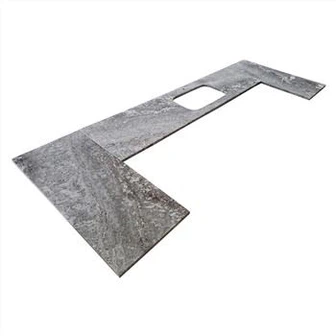
For buyers researching product formats, the key references include Taj Mahal Quartzite, Taj Mahal Quartzite Slab, and Taj Mahal Quartzite Countertops. These formats matter because the performance and value of the stone are shaped by how it is fabricated and installed.
1. Composition and Origin: The Earth's Forge vs. The Factory Floor
1.1 Taj Mahal Quartzite
Taj Mahal Quartzite is formed from quartz-rich sandstone that has undergone extreme metamorphism under tectonic pressure in the Brazilian Shield. Over geological time, the sandstone recrystallizes into a dense, stable quartzite with a naturally elegant appearance. Its soft beige and cream palette, subtle movement, and mineral depth make it one of the most desirable Brazilian Quartzite materials on the market.
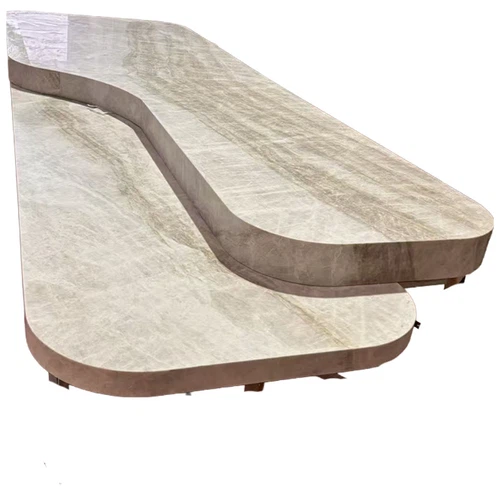
This is not a manufactured look. It is a geological record. The stone carries the visual character of natural formation rather than printed repetition. That gives it both aesthetic value and long-term prestige. When a project uses Luxury Quartzite, it is not merely buying a surface. It is buying a natural mineral story that cannot be duplicated by a machine.
1.2 Engineered quartz
Engineered quartz is a composite product made from roughly 90–93% crushed mineral and 7–10% polyester resin binders with pigments. It offers consistency, predictable patterning, and a uniform supply chain. Those strengths matter, especially for mass production and standardized interior packages. But the resin content also creates limitations that become obvious in real kitchens, under UV light, or in spaces exposed to very high heat.
This is one reason many buyers now compare natural quartzite not just to marble, but also to the best engineered quartz brands when looking for silica-free surface alternatives or lower-maintenance luxury finishes. The market is becoming more technical, and the differences matter more than they did a few years ago.
1.3 The role of the exporter
A serious direct quartzite exporter is essential in selecting raw blocks with the highest crystalline purity. In quartzite, the quality of the block determines the quality of the slab. The exporter must identify whether a block is suitable for countertops, wall panels, or furniture-grade pieces. That is especially important for wholesale Taj Mahal Quartzite slabs, where inconsistency can create major waste during fabrication.
Buyers who want to understand product families can also review Taj Mahal Quartzite Tiles and Taj Mahal Granite Slab. The legacy granite naming route still appears in some catalogs, but the quartzite family remains the main reference for luxury procurement.
2. Technical Durability Matrix: The 2026 Laboratory Test
The following laboratory-style comparison explains why Taj Mahal Quartzite often wins in durability-driven applications. The data is the clearest way to evaluate Taj Mahal Quartzite vs. Engineered Quartz under real use conditions.
| Performance Metric | Taj Mahal Quartzite | Engineered Quartz (High-End) | Testing Standard |
|---|---|---|---|
| Mohs Hardness | 7.0 – 7.5 | 6.0 – 7.0 | Scratch Resistance |
| Heat Resistance | Up to 1,000°F (Thermal Stable) | ~300°F (Resin Scorch Risk) | Thermal Shock Test |
| UV Stability | 100% UV Resistant (Indoor/Outdoor) | Low (Yellowing/Fading) | ASTM G154 |
| Chemical Composition | 100% Natural Mineral | Mineral + Resin + Pigment | Material Safety |
| Water Absorption | 0.02% – 0.08% | ~0.01% – 0.05% | ASTM C97 |
| Repairability | High | Moderate to Low | Restoration Test |
The most important number is the heat threshold. The 1,000°F level makes Taj Mahal Quartzite the premium stone supplier choice for professional chef kitchens, high-use family kitchens, and hospitality settings where hot cookware is routine. Engineered quartz, by contrast, can begin to suffer resin scorch risk around much lower temperatures.
The UV distinction is equally important. Quartzite remains stable in bright sunrooms, outdoor transitions, and heavily lit interiors. Engineered quartz can yellow or fade over time in ultraviolet exposure. That means quartzite is often the safer long-term choice for high-light environments and open-plan spaces.
Buyers comparing slab routes can also review Taj Mahal Quartzite Slab and Taj Mahal Quartzite Countertops to see how the stone is translated into project-ready formats.
3. The Aesthetic Gap: Natural Translucency vs. Printed Veining
3.1 Depth of field
The visual reason people keep choosing Taj Mahal Quartzite is its natural translucency and crystalline depth. Light penetrates the surface and bounces back through the mineral body, creating a softness that looks more alive than printed veining. That depth is difficult to fake. It is the reason quartzite can feel quiet, warm, and expensive at the same time.
Many designers place this stone inside the category of Beige Exotic Quartzite because it offers warmth without heaviness. It works well with warm modernism, oak cabinetry, brushed brass, and soft plaster finishes.
3.2 The repetition problem
Engineered quartz often struggles with repetition. Even when the print quality is strong, the visual loops become apparent at larger scale. That can be acceptable in some commercial layouts, but it often undermines the unique soul of natural stone. By contrast, wholesale Taj Mahal Quartzite slabs can be selected for variation, balance, and sequence, which creates a more organic and premium result.

This matters especially for book-matching, waterfall islands, and long countertop runs, where repeated veining can quickly reveal the product's manufactured nature. Quartzite does not need to simulate randomness because it already has it.
3.3 Grading softness
A Brazilian quartzite factory will usually grade Taj Mahal based on the softness of the background tone and the movement of its vein families. Common visual descriptors include Pearl, Gold, and Smoke variations. Pearl reads cleaner and brighter. Gold has warmer mineral shadowing. Smoke carries a slightly more dramatic, atmospheric look. Each one fits a different kind of luxury interior.
The same stone family can be transformed into Taj Mahal Quartzite Vanity Top applications or into furniture pieces such as Taj Mahal Quartzite Low Plinth Tables, depending on how the slab is read and selected.
2026 Performance Scorecard: Natural Quartzite vs. Engineered Quartz
| Durability Factor | Taj Mahal Quartzite | Engineered Quartz |
|---|---|---|
| Heat Resistance | Up to 1000°C+ (Thermal Stable) | Approx. 150°C (Resin Damage Risk) |
| Mohs Hardness | 7.0 - 7.5 (Gemstone Grade) | 6.0 - 7.0 (Aggregate Hardness) |
| UV Resistance | 100% UV Stable (No Yellowing) | Poor (Resin yellows in sunlight) |
| Repairability | High (Professional Polish) | Limited (Difficult to blend resin) |
*Data derived from KA UNITED QC testing and ASTM industry standards 2026.
4. 2026 Safety and Regulatory Compliance: The Silica Shift
4.1 The global perspective
In 2026, high-silica engineered stone is under increased scrutiny in several markets. The concern is not aesthetic. It is occupational safety during fabrication, especially where dry cutting and poor dust control can create respirable crystalline silica risks. Australia and some U.S. markets have already tightened their expectations, and more buyers now prefer alternative materials with lower perceived exposure risk.
This shift has boosted interest in natural Taj Mahal Quartzite as a compliant and safer alternative for fabrication shops that want to reduce the regulatory burden associated with resin-heavy materials. It is not that quartzite is risk-free during processing; all stone fabrication requires dust control. But quartzite avoids the additional resin and pigment concerns of engineered quartz.
4.2 Why natural quartzite remains compliant
Natural quartzite does not rely on polymer binders. That makes it a cleaner choice for projects that want a pure mineral profile. When buyers ask whether quartzite is a silica-free surface alternative, the answer depends on the exact interpretation. Quartzite is not silica-free in the literal mineral sense because it is quartz-rich, but it is free from the resin-and-pigment matrix used in engineered quartz. That distinction matters to specifiers and fabricators.
For buyers concerned about production ethics and traceability, a direct quartzite exporter can also document block origin and labor practices. That ESG transparency has become a serious factor in premium procurement.
4.3 Factory and compliance coordination
A competent Taj Mahal Quartzite manufacturer should understand the fabrication implications of these regulatory changes. That includes dust management, wet cutting, tool selection, and edge finishing. In a modern stone shop, compliance is now part of the value proposition.
Buyers comparing product routes can also review Taj Mahal Quartzite Wash Basin, where the stone is used in a more integrated and controlled form.

4.4 Beyond Durability: The 2026 Health & Sustainability Standard
In 2026, the conversation around surfaces has shifted from "looks" to "health." While engineered quartz often contains high levels of crystalline silica and petroleum-based resins, Taj Mahal Quartzite is a 100% natural, mineral-pure material.
- Resin-Free Purity: Unlike engineered stone, quartzite does not off-gas volatile organic compounds (VOCs) when heated.
- Ethical Sourcing: As a pioneer in the industry, KA UNITED ensures that our Taj Mahal slabs are sourced from quarries with audited safety protocols, offering a safer alternative for both fabricators and homeowners.
- Circular Longevity: Natural stone is a "lifetime material" that can be repurposed or refinished, contributing to a lower carbon footprint over the building's lifecycle.
5. Real-World Scenarios: Kitchen, Bath, and Beyond
5.1 The gourmet island
In a gourmet kitchen, the question Can you put a hot pan on Taj Mahal Quartzite? has a clear practical answer: yes, far more safely than on engineered quartz. Quartzite's thermal mass and heat stability make it ideal for active cooking environments. That does not mean careless treatment is wise, but it does mean the surface can handle real kitchen use in a way resin-based materials cannot.
The same durability helps when sharp knives, mixing bowls, and daily prep activity are involved. For homeowners and chefs who want a "work hard, look beautiful" surface, quartzite is often the better fit.
5.2 The sun-drenched sunroom
One of the strongest advantages of quartzite is its UV resistance. In high-light spaces, engineered quartz can discolor, yellow, or fade because of the resin content. Taj Mahal Quartzite stays visually stable. That makes it ideal for sunrooms, windowside kitchens, bright open-plan living spaces, and luxury villas with strong daylight exposure.
This is one reason Taj Mahal Quartzite Floor Tiles and Taj Mahal Quartzite Wall Cladding Tiles are gaining traction in projects that need consistent performance in well-lit interiors.
5.3 Commercial hospitality
A wholesale exotic stone distributor often prioritizes quartzite for 5-star hotel lobbies because it combines visual prestige with fewer long-term liabilities. Hotels need materials that look expensive on day one and still look expensive after thousands of guests. Quartzite has the edge because it resists heat, UV exposure, and ordinary wear more effectively than most engineered alternatives.
For hospitality buyers, this often extends to custom work such as Taj Mahal Quartzite Tables, Taj Mahal Quartzite Cosole Tables, and statement lobby features that reinforce the brand image.
6. Comparative Pricing and Long-Term ROI Analysis
6.1 Initial investment
Engineered quartz is usually cheaper upfront because it is mass-produced and uniform. Taj Mahal Quartzite, especially in cleaner grades, carries a premium because it is natural, rarer, and more visually distinctive. That higher initial cost is not a weakness. It is a reflection of material quality and sourcing complexity.
The question is not which product is cheaper today. The question is which one remains attractive, functional, and valuable over the long run.
6.2 Resale value
Natural stone often ages through patina. Engineered quartz tends to degrade through visible surface wear, heat damage, or fading. In 2026, that difference matters a great deal in luxury resale analysis. Buyers often perceive natural stone as more prestigious because it feels permanent and authentic. That is why natural stone resale value 2026 remains one of the strongest arguments for quartzite.
A home with Taj Mahal Quartzite Countertops or coordinated quartzite features can often project a stronger luxury narrative than a home relying on common engineered surfaces.
6.3 Factory-direct value
A Taj Mahal Quartzite manufacturer with factory-direct procurement can offer better value by reducing middleman markups and improving control over slab selection. That is especially useful for commercial projects and large residential developments where consistency matters.
KA UNITED works with this logic by helping buyers evaluate Taj Mahal Quartzite Slabs and Taj Mahal Quartzite Countertops as part of a full project budget rather than as isolated products.

7. Installation & Engineering Requirements
7.1 Tooling and fabrication
Quartzite requires specialized diamond blades and disciplined cutting practices. It is harder than engineered quartz and significantly harder on tools. That means the fabrication shop must know what it is doing. A poor cut can lead to chipping, waste, or seam issues. A competent custom quartzite fabrication team will plan the cut sequence and finish approach before the slab even reaches the saw.
This is where factory capability becomes part of the value proposition. The better the factory and the better the contractor coordination, the cleaner the final result.
7.2 Weight and cabinet structure
Quartzite's density is around 2.7 g/cm³ in many commercial references, which means cabinets and supports must be engineered correctly. This matters for large islands, thick countertops, vanity tops, and integrated sinks. If the support system is weak, even the best stone will fail visually or structurally.
That is why wholesale Taj Mahal Quartzite slabs should always be matched with proper substrate planning. The slab is only one part of the system. The structure below it matters just as much.
7.3 The sealing protocol
A 2026-grade nano-sealer helps preserve the low porosity and makes the surface easier to maintain. It does not make quartzite invincible, but it can create a "set and forget" lifecycle for many projects when combined with proper installation. This is especially valuable for bulk stone tiles and large-format kitchens where maintenance simplicity matters.
For buyers looking at integrated bathroom formats, the product route includes Taj Mahal Quartzite Vanity Top and Taj Mahal Quartzite Wash Basin.
8. Maintenance Comparison: The Myth of Maintenance Free
8.1 Engineered quartz vulnerabilities
Engineered quartz is often marketed as maintenance free, but that claim is overstated. Harsh cleaners can cause chemical clouding. Resin surfaces can be damaged by heat. UV exposure can degrade color. The material is convenient, but it is not immune to wear or failure.
Buyers who expect a flawless long-term surface should understand those vulnerabilities before choosing engineered quartz for sunrooms, kitchens with extreme heat exposure, or commercial installations.
8.2 Quartzite maintenance
Taj Mahal Quartzite requires maintenance, but it is straightforward. A premium stone supplier often recommends the simple water bead test: place a few drops of water on the surface and observe whether the stone still repels moisture effectively. If the beading weakens, resealing may be due. This is a practical, low-stress maintenance method that helps preserve performance.
In most homes, this routine is minimal compared with the upkeep required by materials that are more chemically sensitive or more prone to heat damage.
8.3 Repairability
Quartzite has another major advantage: repairability. Minor chips can often be addressed through custom quartzite fabrication or local stone restoration. Engineered quartz is much harder to patch invisibly because resin and pigment repair rarely blend perfectly. This matters in long-term ownership because the ability to repair the surface can reduce replacement costs.
That is why many developers and homeowners now see quartzite not as fragile luxury, but as durable luxury.
9. 2026 Design Trends: The Rise of Quiet Luxury
9.1 Warm modernism
The 2026 design trend that fits Taj Mahal Quartzite best is warm modernism. Neutral palette, soft contrast, and tactile calm are in high demand. Taj Mahal's creamy beige body and subtle mineral movement fit this trend naturally. It is one of the reasons the stone keeps gaining traction in kitchens, bathrooms, and living spaces that want to feel elevated without being cold.
Designers are pairing the stone with oak cabinetry, linen textures, brushed metals, and matte finishes. The result is quiet luxury rather than loud marble drama.
9.2 Leathered and silk finishes
Leathered and silk finishes are becoming more popular than standard high-gloss because they soften the light and deepen the tactile experience. These finishes work especially well with Beige Exotic Quartzite and can make the slab feel more contemporary.
They are also useful in Taj Mahal Quartzite Countertops because they reduce glare and make the surface feel more architectural. A well-finished slab can elevate the entire room.
9.3 Integrated stone sinks
A Taj Mahal Quartzite wholesaler is seeing stronger demand for integrated stone sinks and matching wash basins because buyers want continuity. That is a strong sign of the market's move toward seamless, built-in luxury. The more integrated the material feels, the more premium the room appears.
For related products, buyers can explore Taj Mahal Quartzite Vanity Top and Taj Mahal Quartzite Wash Basin.

10. Procurement Strategy: Sourcing the Extra Grade
10.1 Slab selection with digital tools
The best buyers use high-definition photography and VR to select slabs remotely from a Brazilian quartzite factory. This helps them inspect background clarity, mineral movement, and face consistency before committing. The process is especially important when ordering large runs of wholesale Taj Mahal Quartzite slabs for a commercial project.
10.2 Direct vs. local
Working directly with a direct quartzite exporter can reduce cost, improve quality control, and shorten approval cycles. Local showrooms are useful for inspiration, but they rarely offer the same level of quarry access or block traceability. For large projects, direct sourcing is usually the better business decision.
10.3 Logistics 2026
Global supply chain conditions still influence lead times for bulk stone tiles and slabs. Buyers planning a 2026 project should allow time for quarry selection, cutting, polishing, packaging, freight, and customs. The procurement window is shorter when the supplier is experienced and the project is well specified, but the stone still needs proper lead time.
For buyers who want a direct product view, the slab and tile family includes Taj Mahal Quartzite Tiles, Taj Mahal Quartzite Slab, and Taj Mahal Quartzite.
11 . High-Intent Comparison FAQ
Can you put hot pans directly on Taj Mahal Quartzite?
Yes. Quartzite has excellent thermal stability and can handle high heat far better than engineered quartz. That is one of its strongest practical advantages in kitchen use. While it is still wise to use sensible care habits, the material itself is much more forgiving under hot cookware. This is part of why Taj Mahal Quartzite Countertops are preferred in serious chef kitchens and luxury family kitchens alike.
Is engineered quartz cheaper than Taj Mahal?
Typically yes, especially at the entry level. Engineered quartz benefits from mass production and standardized supply. But lower upfront price does not always equal lower total cost. When a buyer considers UV stability, heat resistance, repairability, and long-term property value, Taj Mahal Quartzite often becomes the more valuable asset.

Does Taj Mahal Quartzite require sealing?
Yes, but not excessively. A nano-sealer applied properly can help preserve the stone's 0.02%–0.08% porosity profile and simplify maintenance. Many suppliers recommend rechecking the surface annually and resealing when the water bead test suggests the protection is weakening. Compared with marble, quartzite maintenance is generally easier and less frequent.
Who is the best Taj Mahal Quartzite manufacturer for commercial projects?
The best Taj Mahal Quartzite manufacturer is the one that can provide slab transparency, batch consistency, reliable packing, and export-ready project management. Commercial projects require more than nice photos; they require approval control and predictable logistics. KA UNITED supports this kind of sourcing because consistency matters more than a low initial quote when the order is large.
12. Conclusion: The Final Verdict of the Durability Test
The final verdict is straightforward. Engineered quartz offers consistency, but Taj Mahal Quartzite offers permanence and prestige. It performs better under heat, resists UV better, repairs more naturally, and supports a stronger long-term resale story. For luxury kitchens, sunrooms, hospitality interiors, and premium commercial spaces, quartzite has the stronger durability profile.
That does not make engineered quartz irrelevant. It remains useful in standardized, cost-sensitive, and low-exposure applications. But when the project asks for a material that feels natural, luxurious, and technically resilient, Taj Mahal Quartzite wins the durability test.
KA UNITED is positioned to support 2026 inventory planning, slab selection, and custom quartzite fabrication quotes for both residential and commercial buyers. For the most granular details on grading and origin, revisit: 2026 The Ultimate Guide To Taj Mahal Quartzite.
Related Taj Mahal Quartzite Blogs Reading
2026 The Ultimate Guide To Taj Mahal Quartzite
The primary reference for grading, origin, and market positioning.
Is Taj Mahal Quartzite Value to Buy?
Value and ROI analysis for premium buyers.
Why Choose Taj Mahal Quartzite
Core selection logic for designers and developers.
60 Pcs Taj Mahal Quartzite Blocks One the Way
Block-level sourcing and shipment context.
Art Flow Luxury Stone Taj Mahal Quartzite
Design inspiration for visual application and styling.
Top 5 FAQs of Taj Mahal Quartzite
Quick answers for procurement teams and homeowners.
Taj Mahal Quartzite vs Macaubas Fantasy 2026: Which Brazilian Quartzite is Better?
Direct comparison between two major Brazilian quartzites.
Taj Mahal Quartzite vs Granite vs Marble 2026: Why Quartzite Wins for Durability?
Comparison guide for durability-focused buyers.
How to Grade Taj Mahal Quartzite Blocks: A Guide from Direct Brazilian Importers
Sourcing and block-grading reference for procurement teams.
Taj Mahal Quartzite Fabrication Guide 2026: Cutting, Polishing & Edging Solutions
Fabrication advice for contractors and installers.
Why Sourcing Taj Mahal Quartzite Slabs from China Delivers the Best ROI in 2026?
Procurement and logistics strategy for international buyers.
Best Kitchen Cabinet Colors to Pair with Taj Mahal Quartzite Countertops 2026
Style guidance for kitchen design coordination.
Taj Mahal Quartzite Beyond Countertops: Backsplashes, Feature Walls & Floors 2026
Broader use cases beyond the kitchen island.
Top 2026 Kitchen Design Trends Featuring Taj Mahal Quartzite Countertops
Trend analysis for modern luxury kitchens.
The Complete Guide to Sealing & Cleaning Taj Mahal Quartzite (2026 Expert Tips)
Care and maintenance strategies for long-term performance.
Semantic Closure Content Block
Why does Taj Mahal Quartzite win the durability test?
Because it combines the elegance buyers want with the performance they need. It is hard, heat resistant, UV stable, and less chemically vulnerable than marble. In practical terms, that means it can survive real kitchen use, bright daylight, and long ownership cycles with fewer compromises. That is why it has become one of the most persuasive materials in 2026 luxury design.
How should a buyer compare Taj Mahal Quartzite vs. Engineered Quartz?
The buyer should compare them by heat resistance, repairability, UV behavior, maintenance, and resale value rather than by showroom appearance alone. Engineered quartz is uniform and convenient. Quartzite is natural, more heat stable, and often better suited to demanding spaces. If the project prioritizes permanence, authenticity, and a higher-end resale story, quartzite is usually the stronger choice.
What should a project team consider before choosing slabs or tiles?
Slabs are best for islands, waterfall edges, integrated counters, and large continuous surfaces. Tiles are better for floors, walls, and coordinated layouts where modularity matters. The team should always match format to function and not assume one format can solve every design problem. In quartzite, the slab or tile choice is part of the technical specification, not just the visual one.
Option: when should a designer choose quartzite over engineered quartz?
Quartzite should be chosen when the project needs better heat resistance, stronger UV stability, and a natural material story that supports long-term value. It is especially strong in gourmet kitchens, sunrooms, luxury villas, hospitality spaces, and high-end resale environments. Engineered quartz still has a place, but quartzite is usually the better option when permanence and prestige matter more than uniformity.
Consideration: what makes a reliable supplier valuable?
A reliable supplier helps the buyer select the right slab grade, manage fabrication risk, confirm project timelines, and coordinate international logistics. The supplier should understand the difference between a retail surface and a commercial-grade specification. That is why KA UNITED is relevant to buyers who want direct sourcing, project support, and a stone partner that can help translate material choice into real-world performance.
FAQ
1. Can you put hot pans directly on Taj Mahal Quartzite?
Yes, and that is one of the stone's biggest advantages over engineered quartz. Taj Mahal Quartzite can tolerate significantly higher temperatures because it is a natural crystalline stone rather than a resin-bound composite. While good kitchen habits still matter, the material itself is far more forgiving around hot cookware. That makes it a strong choice for gourmet islands and heavy-use family kitchens where heat exposure is routine.
2. Why is engineered quartz being restricted in 2026?
The main issue is occupational safety during fabrication, especially in markets where high-silica engineered stone has drawn stronger regulatory attention. The concern is not the countertop after installation. It is the dust risk during cutting and finishing. Several regions have tightened their rules, and more fabricators are looking for lower-risk alternatives. Natural quartzite remains attractive because it avoids the resin-heavy composition of engineered surfaces, even though proper dust control is still necessary when cutting any stone.
3. Does Taj Mahal Quartzite stain easier than engineered quartz?
In most practical kitchen scenarios, no. Taj Mahal Quartzite is highly resistant to staining when properly sealed and maintained. Engineered quartz may appear more stain resistant in some lab tests because of its low absorption, but it can be vulnerable to heat, UV exposure, and chemical clouding. Quartzite generally offers a better balance for real-world cooking environments because it performs well without relying on a resin matrix.
4. What is the maintenance for Taj Mahal Quartzite in 2026?
Maintenance is simple and manageable. A pH-neutral cleaner, a soft cloth, and periodic sealing are usually sufficient. Many premium stone suppliers recommend a quick water bead test once in a while to confirm whether the sealer is still performing. If water stops beading, resealing may be due. Compared with marble, quartzite maintenance is easier and far less stressful for most owners.
5. Who is the best Taj Mahal Quartzite manufacturer for commercial projects?
The best Taj Mahal Quartzite manufacturer is the one that can provide consistent slab grading, reliable export logistics, real slab photography, and fabrication support for large orders. Commercial projects need more than a nice sample; they need coordinated sourcing, stable batch quality, and project timing discipline. KA UNITED is suited to this kind of procurement because it supports direct project planning, slab selection, and custom quartzite fabrication for commercial and residential buyers.
Final Verdict: The Natural Victory of Taj Mahal Quartzite
The 2026 durability test confirms that while engineered surfaces were built for convenience, Taj Mahal Quartzite was built for legacy. It remains the only material that successfully bridges the gap between the soft aesthetic of Italian marble and the indestructible nature of granite.
Choosing a supplier for such a critical material requires more than just a price check-it requires an understanding of the stone's pedigree. KA UNITED stands as one of China's original pioneers, being among the first to import Taj Mahal Quartzite directly from the Brazilian heartlands. This early entry into the market has allowed us to develop an unmatched "eye" for block selection, ensuring that our inventory contains the most structurally sound and visually pure slabs available today.
Why Professional Buyers Partner with the Pioneer:
✓ First-Pick Quarry Access | ✓ Decades of Technical Grading Expertise | ✓ Zero-Resin Natural Integrity
Experience the difference that two decades of quartzite expertise makes.
Request Batch-Specific Photos & Expert Consultation
References
- ASTM International. ASTM C97/C97M Standard Test Methods for Absorption and Bulk Specific Gravity of Dimension Stone. ASTM International.
- ASTM International. ASTM C170/C170M Standard Test Method for Compressive Strength of Dimension Stone. ASTM International.
- ASTM International. ASTM G154 Standard Practice for Operating Fluorescent Ultraviolet (UV) Lamp Apparatus for Exposure of Nonmetallic Materials. ASTM International.
- Natural Stone Institute. Dimension Stone Design Manual. Natural Stone Institute.
- Natural Stone Institute. Stone Care and Cleaning Guidance. Natural Stone Institute.
- U.S. Geological Survey. Mineral Commodity Summaries: Stone (Dimension Stone). USGS.
- Stone Federation Great Britain. Natural Stone Specification and Maintenance Guidance. Stone Federation GB.
- Tile Council of North America. Installation Guidance for Natural Stone Surfaces. TCNA.