2026 The Ultimate Guide To Taj Mahal Quartzite
From Brazilian Quarries to Global Landmarks: Mastering the Timeless Elegance of Taj Mahal Quartzite

As global architectural trends shift toward "Quiet Luxury," KA UNITED's Most Popular Building Stone-Taj Mahal Quartzite has emerged as the undisputed sovereign of natural surfaces. This comprehensive 1,800-word guide serves as the definitive resource for designers, developers, and homeowners seeking to master the application of this Brazilian masterpiece. From its superior 7.0 Mohs hardness to its ethereal creamy palette, we explore why Taj Mahal outperforms traditional marble in high-traffic environments.

At KA UNITED, we bridge the gap between South American quarries and world-class interiors. With a 5,000 sqm sales hub in Shuitou and a standing inventory of 8,000 sqm of 20mm slabs, we provide the world's most demanding designers and contractors with consistent, high-purity Taj Mahal Quartzite. Whether for waterfall kitchen islands, luxury bathroom vanities, or commercial facades, our massive stock and global supply capacity ensure your project is built on a foundation of quality and elegance.
I. Introduction: The Reign of the "Royal Natural"
In the hierarchy of natural stone, Taj Mahal Quartzite has emerged as the definitive material of refined luxury. Once overshadowed by marble, it now dominates high-end interior design due to its ability to merge elegance with performance. Designers and architects increasingly view it as the "Holy Grail" of surfaces-delivering the soft aesthetic of marble while offering superior durability.

The 2026 design direction is heavily influenced by "Quiet Luxury," where warm neutrals, subtle textures, and understated sophistication take precedence over bold contrasts. This is precisely where taj mahal countertops excel. Their creamy tones and gentle veining create calming environments, ideal for residential sanctuaries and hospitality spaces.
KA UNITED plays a critical role in this global movement by connecting Brazilian quarries to international projects. Through direct sourcing and advanced fabrication, the company ensures that each taj mahal quartzite slab meets the highest standards. Explore premium collections at Taj Mahal Quartzite Collection.
II. The Geological "Secrets" of Taj Mahal Quartzite
Understanding Taj Mahal quartzite begins with its geological origin. Unlike marble, which forms from limestone, quartzite is a metamorphic rock created when sandstone undergoes extreme heat and pressure. This process results in a dense structure rich in quartz, giving the stone its signature strength and subtle translucency.
The high quartz content contributes to a Mohs hardness rating of approximately 7, making taj mahal quartzite countertops significantly more resistant to scratches and etching compared to traditional marble surfaces. This durability is a key factor in its widespread adoption across kitchens, bathrooms, and commercial applications.

Additionally, the stone's mineral composition produces its iconic palette-soft whites interwoven with gold and beige tones. These natural variations ensure that every taj mahal quartzite slab is unique, reinforcing its value as a luxury material.
Technical Specifications: Taj Mahal Quartzite vs. Italian Carrara
For professional specifiers, the technical superiority of Taj Mahal Quartzite is quantified through its resistance to mechanical wear and chemical etching.
| Physical Property | Taj Mahal Quartzite | Carrara Marble |
|---|---|---|
| Mohs Hardness | 6.5 - 7.0 | 3.0 |
| Water Absorption | < 0.2% (Extremely Low) | 0.5% - 0.6% |
| Acid Resistance | High (Non-reactive) | Low (Etches easily) |
| Density (kg/m³) | 2,650 - 2,750 | 2,600 - 2,700 |
III. The KA UNITED Advantage: Industrial Scale & Precision of Brazilian Trending Exotic Quartzite
As a leading Taj Mahal quartzite supplier and taj mahal quartzite factory, KA UNITED distinguishes itself through scale and precision. The company imports over 300 containers of raw blocks annually from Brazil, ensuring consistent access to premium-grade materials.

Its 5,000-square-meter sales center in Shuitou-recognized as the global hub of stone trade-serves as a strategic platform for international buyers. With more than 8,000 square meters of 20mm slabs in stock, clients can select from a wide range of patterns and finishes, including Taj Mahal Quartzite Slabs.
In addition, KA UNITED maintains over 600 cubic meters of block inventory, enabling large-scale projects to achieve color consistency across multiple installations. This capability is essential for luxury hotels and commercial developments requiring uniform aesthetics.

The journey from quarry to finished product is documented in detail at Quartzite Block Supply Chain, highlighting the transparency and reliability of the sourcing process.
Our operational philosophy centers on eliminating the 'scarcity risk' for large-scale developments. By maintaining a permanent inventory of 8,000 sqm of 20mm Taj Mahal Quartzite Slabs, KA UNITED allows architects to personally select bundles that match their specific grain and tone requirements. This volume, coupled with our 600 cubic meters of raw block stock, ensures that even the most expansive commercial projects maintain visual consistency from the ground floor lobby to the penthouse suites."
IV. Aesthetic Profile: Decoding the Patterns of Taj Mahal
The visual appeal of taj mahal quartzite lies in its subtle complexity. Its base ranges from soft white to creamy beige, often accented with delicate gold or gray veining. This understated elegance makes it highly adaptable to both modern and classic interiors.
Designers categorize its patterns into two primary styles: linear flow and cloudy diffusion. Linear slabs emphasize directional movement, ideal for waterfall islands and feature walls, while cloudy patterns create a softer, more organic visual effect.

Finish options further enhance its versatility. Polished surfaces amplify the stone's reflective qualities, while honed finishes offer a matte, contemporary look. taj mahal leathered quartzite introduces texture, providing a tactile experience that complements rustic or transitional designs. Browse tile options at Taj Mahal Quartzite Tiles.
V. 2026 Application Trends: Where Taj Mahal Dominates
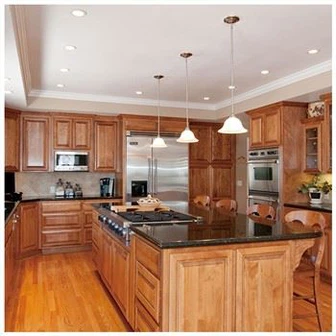
The adaptability of taj mahal quartzite kitchen countertops makes them a cornerstone of modern interior design. In kitchens, large-format slabs are used to create seamless islands and backsplashes, delivering both functionality and visual impact.
Bathrooms benefit equally from this material. From Vanity Tops to integrated sinks such as Quartzite Wash Basins, the stone transforms everyday spaces into spa-like retreats.
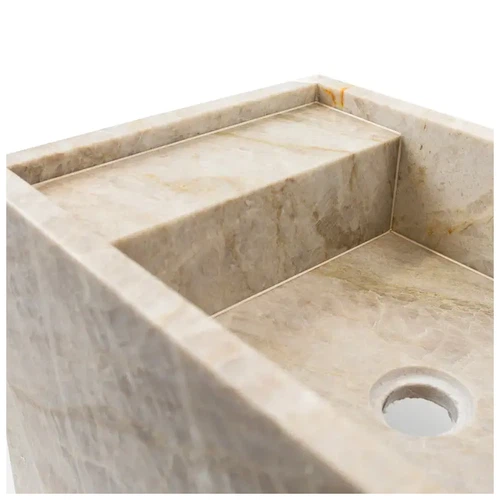
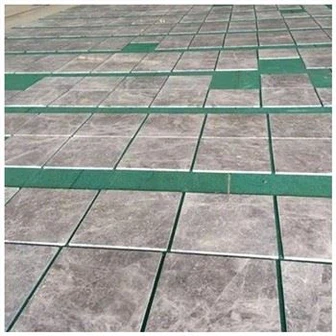
Beyond interiors, taj mahal quartzite floor tiles are increasingly used in luxury resorts, retail spaces, and office lobbies. Their durability and neutral palette make them suitable for high-traffic environments.
Custom furniture is another growing trend. Designers are incorporating Taj Mahal Quartzite Tables into living spaces, creating functional art pieces that elevate interior design.
For further inspiration, refer to Art Flow Design Concepts.
VI. Selection & Buying Guide: Choosing Your Masterpiece
Selecting the right taj mahal quartzite slab requires attention to detail. The 20mm thickness is widely considered the optimal choice, balancing structural integrity with design flexibility.
For large-scale installations, it is essential to select slabs from the same block to ensure visual continuity. This is particularly important for feature walls and expansive flooring projects.

Lighting also plays a critical role. Natural light enhances the stone's warm tones, while artificial lighting can highlight its subtle veining. Learn more about its value at Is Taj Mahal Quartzite Worth It?.
VII. Maintenance & Preservation for Decades
Maintaining taj mahal quartzite countertops is straightforward. Regular cleaning with pH-neutral solutions and periodic sealing will preserve the stone's natural beauty. Its low porosity and high density make it resistant to stains and moisture.
With proper care, taj mahal quartzite tiles and slabs can retain their appearance for decades, making them a long-term investment for both residential and commercial projects.
VIII. Trending 2026 FAQs: The Expert's Guide to Taj Mahal Quartzite
Q: Is Taj Mahal Quartzite a marble or a granite?
A: Geologically, it is neither. It is a metamorphic quartzite formed from quartz-rich sandstone. However, it offers the "best of both worlds": the sophisticated, soft aesthetic of high-end Italian marble combined with the extreme hardness and acid resistance typically associated with premium granite.
Q: Does Taj Mahal Quartzite etch with lemon or wine?
A: No. High-purity Taj Mahal Quartzite is chemically inert to household acids. Unlike marble, which is calcium-based and etches upon contact with citrus or vinegar, Taj Mahal will not lose its polish or develop dull spots from common kitchen spills, making it the ultimate choice for functional luxury kitchens.

Q: Why is Taj Mahal Quartzite more expensive than other stones?
A: Its price reflects its rarity and technical difficulty. Sourced almost exclusively from specific regions in Brazil, the stone's extreme hardness (7.0 Mohs) requires diamond-tipped tools and slower processing speeds at the Taj Mahal Quartzite Factory. Furthermore, the global demand for its unique "creamy-gold" palette often exceeds the supply of premium-grade blocks.
Q: How do I distinguish "Premium" Taj Mahal from "Standard" slabs?
A: At KA UNITED, we categorize "Premium" slabs by the clarity of their base color and the distribution of veining. Premium slabs feature a consistent, luminous creamy background without dark mineral clusters (black spots) or excessive "fissures." Our 8,000 sqm standing stock in Shuitou allows designers to hand-select the most pristine bundles for high-visibility projects.
Q: Can I use Taj Mahal Quartzite for an integrated sink or waterfall island?
A: Absolutely. Due to its superior structural integrity, it is the ideal candidate for waterfall kitchen islands and custom-fabricated quartzite wash basins. Its dense matrix allows for clean, mitered edges that appear seamless, aligning with the 2026 trend of monolithic stone furniture.
Q: Does it require a specific type of sealer?
A: While Taj Mahal has very low porosity, we recommend a high-quality, solvent-based impregnating sealer to protect against oil-based stains. Because the stone is so dense, a "small-molecule" sealer is necessary to penetrate the surface effectively. One professional application every 2-3 years is typically sufficient for residential use.
IX. Conclusion: A Timeless Architectural Investment
From its origins in Brazilian quarries to its presence in global landmarks, taj mahal quartzite represents the perfect fusion of beauty and strength. Its versatility across taj mahal quartzite countertops, flooring, and furniture ensures its continued relevance in luxury design.
With KA UNITED's expertise in sourcing and fabrication, clients gain access to premium materials and reliable supply chains. Discover more about its advantages at Why Choose Taj Mahal Quartzite.