



Blue Agate Bar Countertops
Blue agate bar countertops are made of premium natural blue agate gemstone, with translucent backlit feature. Full‑body agate mosaic layout, polished glossy finish. Custom size, shape and backlight solution available. Widely used for hotel lobby bar, villa home bar, restaurant counter and reception desk. Target for interior designers, contractors and luxury stone buyers. Reinforced fumigated wooden crate export packaging, OEM custom fabrication supported.
Quartzite Item: Luxury Natural Blue Agate Slab Backlit Countertop Custom Size Kitchen Island Counter for Hotel Villa Project
Quartzite Stone: Blue Agate, Blue Semi Precious Stone, Blue Gemstone
Slab Size: 2300x1900, 3180x1890mm, etc.
Thickness: 20, 30 mm
Surface: Polished, Honed, and brushed
MOQ: 300 SQM
Quartzite Slabs And Countertop Factory: KA UNITED
Application: 60+ luxury exotic Quartzite/Quartz Stones in KA UNITED Factory For Private Home, hotels, villas, apartments, and other commercial estate properties
Product Introduction
Quick Summary
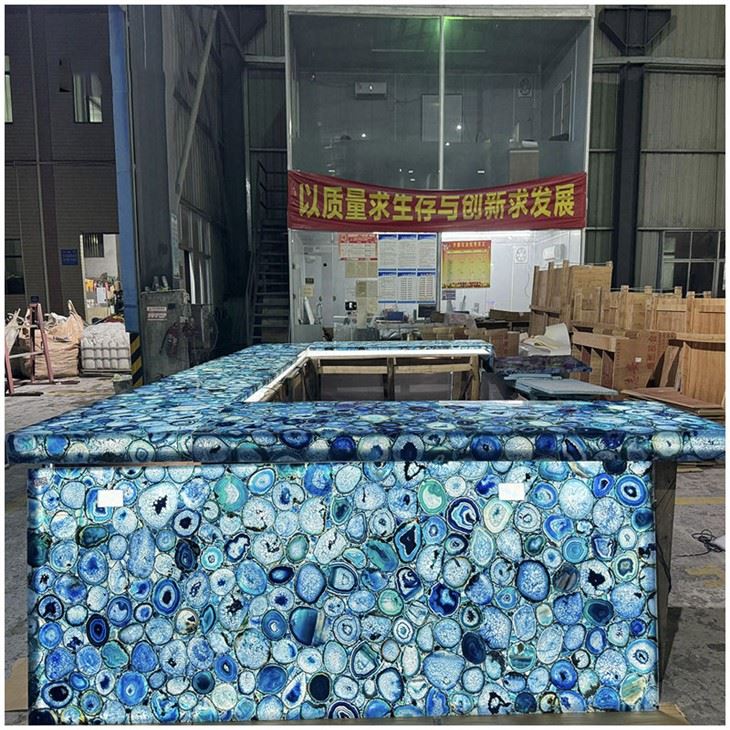
Blue Agate Bar Countertops are custom semi-precious gemstone surfaces assembled from selected agate sections to create vivid blue, cyan, turquoise, white and deep navy circular patterns across bar tops and vertical counter faces. The supplied factory image shows a large U-shaped bar package with matching gemstone surfaces wrapping the horizontal worktop and multiple front and side elevations. Because the finished appearance depends on both gemstone arrangement and transmitted light, the bar drawing, panel divisions, edge construction, structural support, backlighting cavity, electrical access and actual illuminated sample should be approved before fabrication.
|
|
Semi-Precious Agate Surface for Illuminated Hospitality and Residential Bar Counters Blue Agate Gemstone Bar Tops with Coordinated Counter Fronts and Project-Specific BacklightingBlue Agate Gemstone Bar Countertops are fundamentally different from a conventional granite or marble bartop. Their surface is composed around repeated agate eyes, concentric bands and crystalline centers, so color distribution is intentionally arranged across a larger architectural panel rather than being read as one continuous quarried vein. That construction gives designers more control over color rhythm, but it also makes sample approval more important. Cobalt, turquoise, pale blue, white and dark navy sections can be distributed very differently from one finished slab or panel group to another. View Luxury Stone Collection |

What Does the Factory Image Show About This Blue Agate Bar Package?
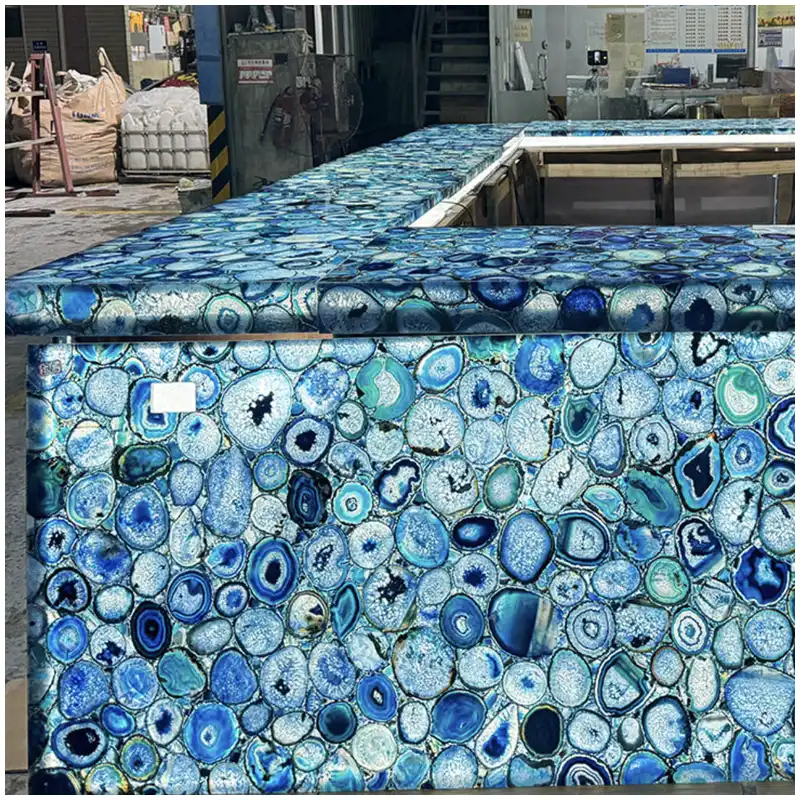
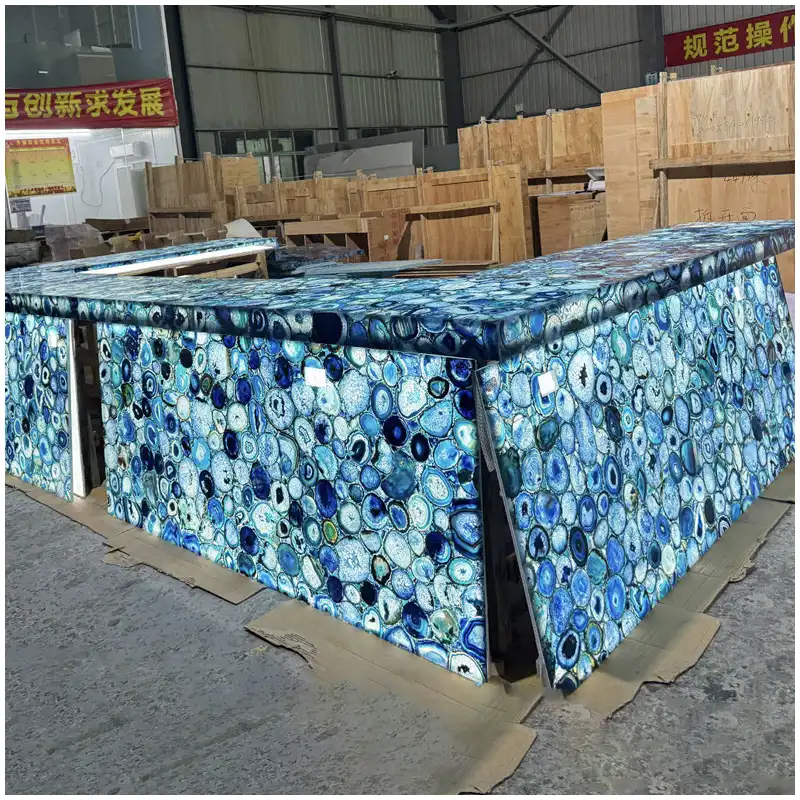
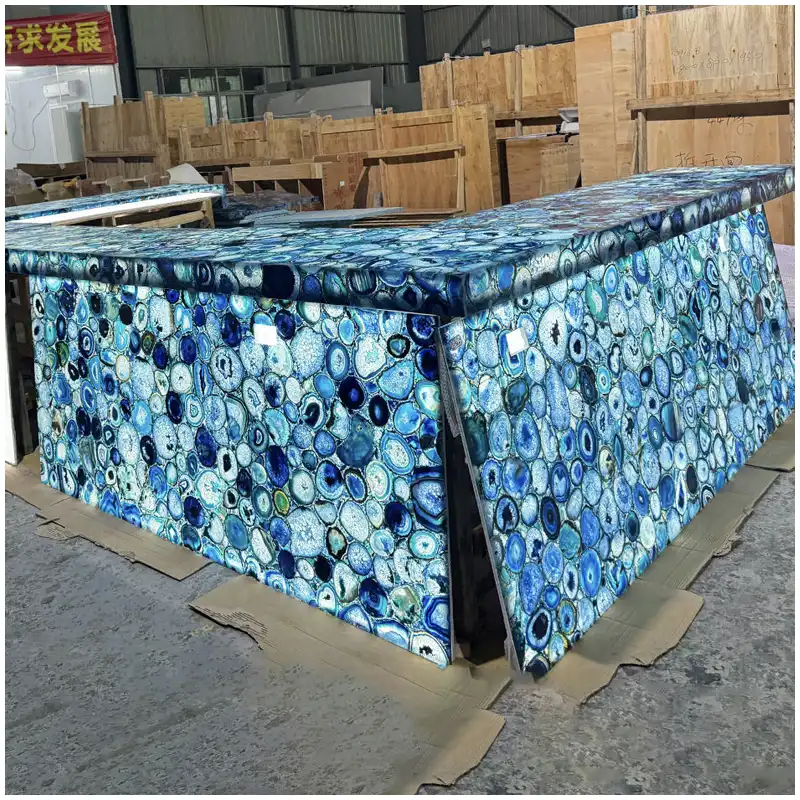
The supplied photograph shows a large U-shaped or return-style bar being assembled in the workshop. Blue agate appears across the main horizontal countertop and continues onto broad vertical counter fronts, giving the unit a much stronger gemstone presence than a project using agate only as a narrow top surface.
The color field is highly varied. Pale icy blue, turquoise, cyan, cobalt and almost black-blue circular agate sections sit beside white crystalline rings and occasional greenish accents. Large and small gemstone sections are mixed rather than repeated at one fixed scale.
At several corners and panel transitions, darker structural or backing elements are visible behind the decorative surfaces. The image therefore should not be interpreted as proof that the complete counter is a solid block of agate. Final panel backing, frame construction, fixing and edge build-up need to be confirmed from the fabrication drawing.
This type of project is best treated as a coordinated counter system: gemstone top, vertical cladding, supporting structure, lighting space and service access are designed together rather than ordered as unrelated slabs.
Blue Agate Architectural Slabs Are Assembled Gemstone Surfaces, Not Monolithic Quarry Slabs
Blue Agate Gemstone Countertops are typically produced by selecting natural agate sections, arranging them into a larger decorative composition and bonding or reinforcing the assembly to create an architectural panel. That is what makes it possible to fabricate bar counters far larger than an individual natural agate specimen.
The gemstone remains the visible design material, but backing and bonding are part of the fabricated slab system. The project should therefore confirm the actual panel construction rather than specify the material as though it were a conventional solid-granite slab.
This distinction affects edge work, cut-outs, support and illumination. A polished decorative face, bonding layer and backing system do not behave exactly like one homogeneous piece of stone when they are cut through or illuminated from behind.
For Semi-Precious Blue Agate Countertops, shop drawings should identify finished panel thickness, backing, exposed edge construction, joint treatment and the areas intended to transmit light.
No Fixed Bar Size Was Supplied - These Dimensions Should Be Defined on the Project Drawing
This product is presented as a custom bar-counter system rather than a fixed-stock countertop size. The U-shaped factory reference reinforces that approach: each horizontal and vertical component needs to relate to the actual room, equipment and supporting frame.
| Drawing Item | Required Project Information | Why It Affects Fabrication |
|---|---|---|
| Overall Counter Length | Straight runs, returns and U-shaped sections from approved plan. | Controls slab allocation, joint positions, frame modules and packing size. |
| Counter Depth | Finished guest-side and working-side depths. | Affects overhang, support, equipment clearance and lighting cavity below the top. |
| Finished Height | Bar, reception or home-bar elevation according to interior drawing. | Determines front-panel height, footrest coordination and surrounding furniture relationships. |
| Panel Thickness | To be confirmed for the actual agate slab and backing system. | Influences weight, edge treatment, translucency, support and joinery. |
| Front Cladding | Panel widths, heights, corners, returns and removable service areas. | Visible joints should align with the architectural design rather than follow random slab limits. |
| Equipment Cut-Outs | Sink, tap, beer tower, power module, POS, ice well or project-specific equipment. | Cut-outs affect the decorative composition, structural support and service routing. |
| Corner Construction | Mitred, returned, framed or other approved detail. | The visible gemstone pattern and illuminated edge depend strongly on this junction. |
| Backlight Zone | Countertop only, vertical fronts only, full counter package or selected areas. | Determines diffuser area, frame shadows, wiring and electrical access. |
Why the Agate Slice Layout Should Be Approved Before Countertop Cutting
|
Show countertop outlines, vertical-panel divisions, corner returns and equipment cut-outs over the approved blue agate slab layout. |
Agate composition is more granular than natural marble veining. A single slab can contain hundreds of circular gemstone sections, and large dark-blue clusters can sit directly beside pale translucent areas. The bar cutting outline should be placed over the actual slab or panel image before fabrication. This shows where the strongest blue areas will remain after sinks, corners, service openings and joint cuts are removed. For the vertical fronts, the project can either pursue similar blue density across all elevations or deliberately create a gradient from pale cyan to deeper cobalt. Either direction is valid when it is intentional. Corners deserve specific attention. A dark agate cluster ending abruptly on one side of a mitre while the return begins with pale white slices can make the joint more conspicuous than the physical seam itself. For large hospitality counters, numbered elevation drawings are more reliable than asking the installation team to decide panel order after the crates arrive. |

Backlighting Changes Both the Color and the Perceived Pattern of Blue Agate
Backlit Blue Agate Gemstone Countertops can look substantially different with the lighting system switched on. Pale crystalline zones transmit more light, darker cobalt areas remain denser, and internal rings that look subtle under workshop light can become much more pronounced.
The LED color temperature also changes the reading of the material. Cooler illumination emphasizes icy cyan and blue-white sections; warmer light can introduce a greener or softer tone into areas that look crisp blue under daylight.
That makes a representative illuminated mock-up more useful than approving the gemstone only from a front-lit photograph. The mock-up should include the real backing, diffuser concept, light-to-panel distance and at least one typical structural member.
Hot spots are usually a lighting-design problem rather than a reason to reject every naturally pale agate section. Individual LED points, uneven spacing or insufficient diffusion can become visible through the gemstone if the lightbox is too shallow.
The correct objective is not mathematically identical brightness across every agate eye. It is a controlled luminous field that still preserves the natural variation of the gemstone.
How Should the LED Cavity, Diffuser and Structural Frame Be Coordinated?
A backlit bar is a layered construction. The visible gemstone is only the outer surface; behind it sit support members, lighting, wiring, diffusers and service space. Designing those components after the agate panels are finished is one of the easiest ways to create avoidable shadows.
Frame members should be mapped against the illuminated elevations. A wide opaque rail directly behind a translucent front can produce a dark vertical band even when the structure itself is perfectly adequate.
Lighting distance matters too. LED modules positioned close to the panel need stronger diffusion than a system with more cavity depth. The actual distance available in the counter should therefore be established before the lighting layout is selected.
Drivers and control equipment need service access. A hotel bar should not require removal of a large gemstone panel simply to replace an electrical component. Access doors can often be placed on the working side where they do not interrupt the guest-facing agate elevation.
Where plumbing and electrical services occupy the same counter, the service-zone drawing should separate water connections from lighting equipment according to the project's electrical and plumbing requirements.
How Should Agate Corners, Overhangs and Visible Edges Be Fabricated?The supplied counter has several prominent outside corners. On an opaque stone these junctions are mainly judged by alignment and polish; on translucent agate they can also reveal backing, bonding or internal construction through the edge. The desired edge appearance should therefore be shown in section. A simple exposed slab edge, laminated edge, mitred return or separately fabricated edge strip can create very different visual results when illuminated. Bar overhangs require structural review independently of the decorative material. The agate panel should not be expected to cantilever simply because a visually similar granite countertop could do so at the same depth. Equipment openings also need local support planning. A sink or ice-well cut-out can interrupt the frame beneath the countertop and reduce the bearing area available around a relatively brittle decorative panel. Final edge, corner and support construction should follow the actual panel assembly, span, backing system, equipment schedule and approved shop drawing. |
Show countertop edge build-up, corner return, structural frame, diffuser, LED zone, panel backing and service access. |

Countertop and Vertical Front Panels Need Different Approval Criteria
Translucent Agate Gemstone Countertops on the horizontal working surface are viewed from close range and must accommodate equipment, glasses, accessories and cleaning. The top therefore needs special attention around cut-outs, joints, exposed edges and support zones.
Vertical agate fronts are less exposed to direct working loads but far more visible as illuminated architectural surfaces. On those panels, joint position, color distribution and frame shadows can matter more than the edge detail used on the working side.
The same slab group can be used across both planes, but the most translucent pieces do not automatically need to be placed on the top. In some designs, reserving them for large uninterrupted front panels creates a stronger luminous effect.
Corner returns should be allocated as pairs where possible so the change from horizontal top to vertical face does not feel like two unrelated gemstone batches.
This approach treats the complete bar as one elevation package instead of pricing and fabricating each surface independently.
Where Do Blue Agate Bar Counters Make the Most Design Sense?
Blue agate is strongest where the counter is meant to carry part of the interior identity. It is less convincing when the gemstone is hidden behind equipment or used in a location where the lighting effect cannot be seen.
Hotel Lobby BarsLarge guest-facing elevations can use the blue gemstone as both a counter finish and an evening lighting feature. |
Villa Home BarsSmaller custom bars can concentrate the gemstone on the guest side while keeping appliances and storage on the working elevation. |
Restaurant and Lounge CountersBacklit fronts can remain visually active under lower evening lighting without relying on an additional decorative wall behind the bar. |
Spa and Retail ReceptionA simplified reception counter can use agate color and translucency as the main visual signal rather than complicated millwork. |
Blue Agate Bar Countertops vs. Four KA UNITED Gemstone Alternatives
Blue Agate is the strongest circular-pattern surface in this group and is particularly suited to illuminated bar and reception elevations. Green Fluorite changes both the color and product form toward translucent integrated sinks; Green Agate keeps the assembled agate language but moves into a green illuminated palette; Lapis Lazuli is a deeper blue gemstone direction used for vanity surfaces rather than relying on the same agate-eye pattern; Clear Quartz offers a much lighter crystalline counter where transparency and white light take priority over saturated color.
| Selection Factor | Blue Agate Bar Counter | Green Crystal Fluorite Sink | Illuminated Green Agate Counter | Lapis Lazuli Vanity Top | Clear Quartz Countertop |
|---|---|---|---|---|---|
| Visual Identity | Cobalt, cyan, turquoise and white concentric agate circles with strong pattern repetition. | Translucent vivid green crystal character with internal fracture-like mineral structure. | Green assembled agate with banded and circular gemstone pattern. | Deep blue gemstone direction with a denser, more continuous visual field. | Clear-to-milky crystalline quartz with much less saturated color. |
| Primary Product Form | Bar top plus coordinated vertical counter fronts and returns. | Integrated vanity or long commercial washbasin direction. | Illuminated bar and reception countertop direction. | Gemstone bathroom vanity-top direction. | Custom translucent countertop, vanity and illuminated surface direction. |
| Backlight Role | Reveals concentric rings, translucent centers and blue color variation. | Can emphasize green crystalline structure where backlighting is specified. | Core design feature for bringing green agate banding into the illuminated counter. | Lighting approach should be confirmed from the actual vanity and material specification. | Used to emphasize clear and milky crystalline zones with a much lighter visual effect. |
| Main Fabrication Control | Agate layout, panel joints, edge build-up, frame shadows and LED diffusion. | Basin geometry, drain position, support and illumination where specified. | Green agate color balance, panel divisions, lightbox and counter detailing. | Vanity dimensions, gemstone pattern and sink/faucet fabrication. | Crystal allocation, translucent backing, cut-outs and light diffusion. |
| Best Selection Reason | Choose when a saturated blue illuminated counter should become the room's focal architecture. | Choose when the project requires a luminous green integrated basin rather than a bar surface. | Choose for the agate look in a warmer green gemstone palette. | Choose when a deep-blue gemstone vanity is more appropriate than a circular agate counter. | Choose when the project wants crystalline light with a neutral white-clear palette. |
Production-Release Checks for a Custom Blue Agate Bar Counter
The most expensive problems on an illuminated gemstone bar are usually interface problems. The agate may be visually excellent while a misplaced frame rail, undocumented equipment cut-out or inaccessible LED driver compromises the finished installation. These points should be closed before panel cutting begins.
- Issue the final plan and elevations with every straight run, return, corner and finished bar height.
- Approve the actual blue agate slab or panel group for cyan, cobalt, turquoise, white and dark-blue distribution.
- Confirm finished panel thickness, backing and resin or bonding construction for the supplied material.
- Mark countertop, front-panel and side-return cutting outlines over the approved gemstone layout.
- Define all sinks, taps, beer towers, power modules, ice wells and other equipment openings before machining.
- Approve exposed edge, corner and mitre construction with an actual section detail.
- Confirm which surfaces are illuminated and which remain front-lit only.
- Coordinate frame members with the translucent areas so structural shadows are understood before production.
- Approve LED color temperature, module spacing, diffuser and available lightbox depth on a representative mock-up.
- Provide accessible positions for LED drivers, wiring connections and future lighting service.
- Assign panel codes that correspond directly to the bar elevations and installation sequence.
- Check finished component size, crate dimensions, lifting points and site access before the completed panels are packed.
Factory QC for Agate Color Layout, Illuminated Mock-Up and Bar AssemblyVisual inspection should begin with the approved slab or panel layout, not only with individual components after cutting. Large cobalt clusters, pale translucent zones and panel joints need to remain where the elevation drawing expects them. Finished dimensions, cut-outs and corner interfaces should then be checked against the current shop drawing. A return panel that is only a few millimeters wrong can disturb both the seam alignment and the supporting frame behind it. For illuminated work, the factory mock-up should be switched on under controlled conditions. Uneven lighting caused by a frame shadow or LED gap should be separated from natural differences in gemstone translucency before the project is approved. Trial assembly is especially useful for U-shaped bars. It confirms that top joints, front panels, side returns and corner lines belong to the same geometry before they are split into shipping crates. The supplied specification calls for reinforced fumigated wooden-crate packing. Polished faces, translucent edges and fabricated corners should be immobilized and separated from hardware so movement during sea freight does not damage the gemstone surface. |
Show illuminated panel testing, corner alignment, counter dry assembly, panel coding and protected export-crate packing. |

Care Requirements for a Polished Semi-Precious Agate Bar Surface
Use a soft cloth with a mild pH-neutral cleaner suitable for the finished gemstone surface. Abrasive powders and rough pads can reduce the clarity of the polish and should not be used as routine bar-cleaning tools.
Liquids should be wiped rather than left around joints, equipment cut-outs and edge interfaces. The finished assembly may contain bonding, resin and backing materials as well as natural agate, so cleaning products should be compatible with the complete fabricated panel-not just the mineral itself.
Protect the surface from concentrated impact. Agate itself is a hard quartz-family mineral, but a decorative assembled slab can still chip at exposed edges or around unsupported cut-outs if struck.
Very hot equipment should not be placed directly on the gemstone counter unless the fabricated system has been reviewed for that use. Bar appliances should have their own suitable supports or protective interfaces where required.
For illuminated counters, maintenance extends behind the stone. LED drivers, wiring, ventilation and removable access panels need to remain serviceable throughout the installation life.
How Should a Completed Blue Agate Bar Be Photographed for Project Review?The most useful completed-project photography shows the full counter rather than only an agate close-up. A wide view explains the bar shape, corner transitions, countertop overhang and relationship with stools, wall finishes and overhead lighting. For an illuminated project, photograph the counter with the backlighting both switched on and switched off. The comparison reveals the natural blue pattern under room light and the additional crystalline depth created by transmitted light. One closer image should include the meeting point between countertop and vertical front. That area demonstrates whether color allocation, edge construction and panel joints were handled as one coordinated detail. For hotel bars, evening photography is particularly informative because that is often when the illuminated gemstone becomes most prominent in the interior. |
Use a completed hotel lobby bar, villa home bar, restaurant, spa or reception counter showing the full illuminated installation. |

Recommended Gemstone Countertops and Sinks from KA UNITED
Compare four related gemstone surfaces by color, translucency and finished architectural use.
Green Crystal Fluorite SinksTranslucent green gemstone sinks for illuminated hotel, spa and statement bathroom projects. |
Illuminated Green Agate Bar CountertopsGreen translucent agate counters for backlit bars, reception areas and luxury interiors. |
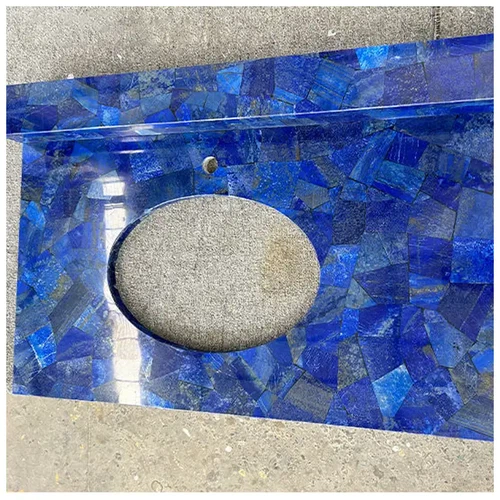
Lapis Lazuli Blue Gemstone Vanity TopsDeep blue gemstone vanity surfaces for bold hotel, villa and luxury bathroom interiors. |
Clear Quartz CountertopsLight crystalline quartz countertops for illuminated bars, vanities and custom interior surfaces. |



FAQ About Blue Agate Bar Countertops
1. Are Blue Agate Bar Countertops cut from one solid natural agate block?
Large architectural blue agate surfaces are normally assembled from selected natural agate sections rather than quarried as one countertop-sized monolithic block. The gemstone pieces are arranged into larger decorative panels and used with a project-specific bonding, reinforcement or backing system. The actual KA UNITED panel construction should be confirmed for the final order.
2. Can the Blue Agate countertop and vertical bar front both be backlit?
Yes, both horizontal and vertical surfaces can be developed as illuminated features when the selected agate, backing, structural frame and lighting cavity allow it. The exact illuminated areas, LED arrangement, diffuser, service access and support locations should be resolved before panel fabrication.
3. Will every Blue Agate bar have the same cobalt and turquoise pattern?
No. Natural agate sections differ in diameter, banding, crystal centers, blue saturation and translucency. The larger assembled panel can also be arranged in different color distributions. Approve the actual panel layout or an agreed color range before the bar components are cut.
4. Why is a backlit sample important before full production?
Backlighting reveals differences that are much less visible under ordinary front light, including pale translucent zones, denser blue sections and shadows from structural members. A representative sample using the selected gemstone, intended LED color temperature, diffuser and cavity depth helps the project team approve the actual illuminated effect before full fabrication.
5. Can sink, tap and bar-equipment openings be fabricated before shipment?
Yes. Project-specific cut-outs can be incorporated when final equipment data is supplied. Each opening should be coordinated with the gemstone layout, backing, structural support and service space so the factory is not cutting from assumed dimensions.
6. Is a Blue Agate gemstone bar suitable for heavy impact and unrestricted commercial use?
It should be treated as a premium decorative countertop system rather than an indestructible heavy-duty work surface. The natural agate is hard, but assembled gemstone panels, exposed edges, resin areas and cut-outs can still be damaged by concentrated impact or inadequate support. Commercial bar design should include appropriate protection and structural detailing.
7. What cleaner should be used on a polished Blue Agate bar top?
Use a soft cloth and a mild pH-neutral cleaner compatible with the completed gemstone panel. Avoid abrasive pads, aggressive powders and unverified chemicals that may affect the polish, resin, joints or backing system. Liquids should be removed promptly around seams and equipment openings.
8. What should be approved before a custom Blue Agate bar enters production?
Approve the final bar plan and elevations, actual agate panel layout, panel thickness and backing, countertop and front-panel divisions, corners, exposed edges, equipment cut-outs, structural frame, illuminated zones, LED specification, diffuser and cavity depth, driver access, trial-assembly requirement, panel coding, packing plan and site-access route before production release.
A Blue Agate Bar Succeeds When the Gemstone Layout, Counter Structure and Lighting Read as One Surface
The strongest feature in this bar is not simply its blue color. Hundreds of individual agate rings have been composed across the horizontal top and large vertical faces, turning the entire counter into a continuous gemstone field. Once light is added, every change in backing, frame position, corner construction and panel sequence becomes easier to see. The fabrication should therefore begin with the finished elevations and illuminated mock-up, then work backward into panel cutting and support-not treat the lighting as something added after the stone is finished.

Submit Blue Agate Bar Countertop Elevations, Panel Layout and Backlighting Details for Fabrication
Provide the final counter plan, finished heights and depths, approved blue agate panel selection, top and front-panel divisions, edge and corner details, equipment cut-outs, structural frame, LED and diffuser arrangement, lighting access, quantity and installation sequence before production begins.
Request Project Quote
Hot Tags: blue agate bar countertops, China blue agate bar countertops suppliers, factory, Azul Boquira Quartzite Slab, Calacatta Macaubas Quartzite Stone, Gold Macaubas Quartzite, Super White Quartzite Countertop, Tanzania Onyx Slabs, Vanilla Onyx Slab
You Might Also Like


Send Inquiry
