


Purple Agate Tile
Premium semi-precious purple agate gemstone tiles, hand-fabricated from selected natural purple agate slices bonded with high-strength transparent resin. Features unique concentric banding patterns, deep violet tones and high-gloss polished finish. Naturally translucent, fully compatible with LED backlighting for feature walls. Custom sizes, thicknesses and layout designs available. Ideal for luxury residences, five-star hotels and premium commercial interiors, specified by interior designers and luxury building contractors.
Semiprecious Stone Products: Custom Purple Agate Gemstone Tiles | Polished Resin-Bonded Agate for High-End Villa Feature Wall & Flooring
Material: Purple Agate, Purple Semi-Precious Stone
Slab Size: 1200*2400mm or customized.
Tiles: 24''x24'', 12''x24'',12''x12'', 18''x18''
Thickness: 20,30mm
Surface: Polished, Honed, With Backlit Effects
MOQ: 100 SQM
Semi Precious Stone Factory: KA UNITED
Application: KA UNITED Supplies A full Range of Semiprecious backlit Agate Stone For Floor, Wall Tiles, Kitchen and Bathroom Countertops, and other Commercial Projects
Product Introduction
Quick Summary
Purple Agate Tile is a polished semi-precious architectural surface made from selected natural agate slices assembled into decorative tiles for illuminated walls, floors and interior feature panels. Standard references include 12″ × 12″, 12″ × 24″, 18″ × 24″ and 24″ × 24″, with custom layouts available for larger hospitality and residential projects. Its violet, lavender, magenta, cream and crystal-ring pattern becomes significantly more pronounced under backlighting, so tile sequencing, joint locations, structural support, slip requirements and the LED system should be coordinated before installation rather than treated as separate site decisions.
 |
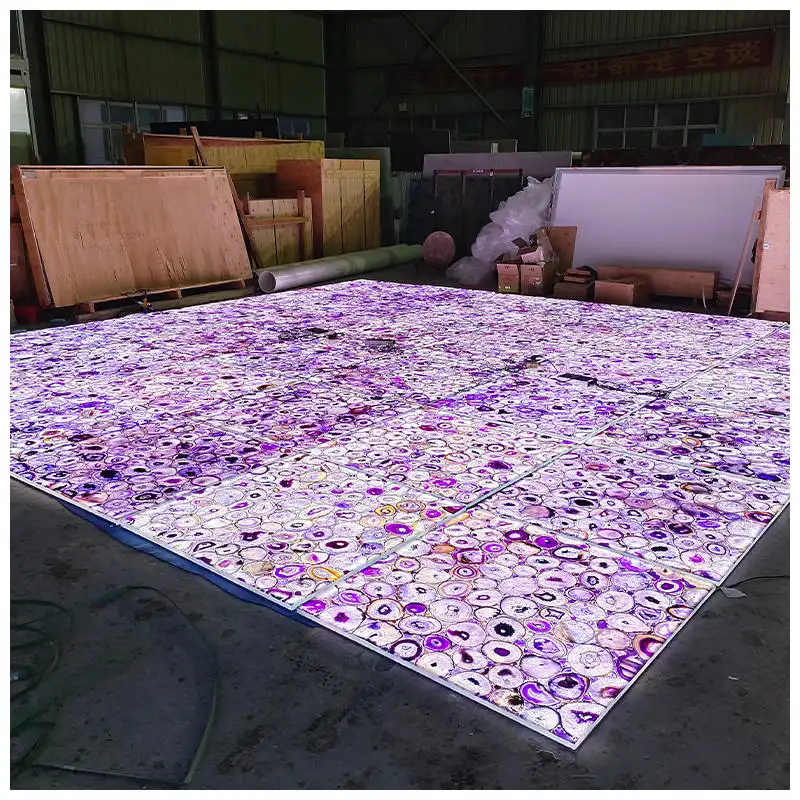
Semi-Precious Agate · Illuminated Interior Tile · Custom Floor & Wall Layouts Purple Agate Gemstone Tiles for Backlit Hotel Floors, Feature Walls and Luxury InteriorsThe supplied factory image shows a large illuminated layout assembled from multiple agate panels. Circular and irregular mineral sections move through violet, lavender, pink-purple, white, amber and darker outlines, while the LED light underneath exposes differences in translucency from one agate slice to another. This is the main reason Purple Agate Gemstone Tiles work best in projects where the material is allowed to remain visually dominant. The surface is already highly decorative; surrounding finishes can usually stay quieter. View Luxury Stone Collection |
Purple Agate Tiles Are Built from Individual Natural Agate Sections
Unlike marble, quartzite or granite, an architectural agate panel is not cut from one uniform geological block at finished tile scale. Natural agate sections are selected for color and pattern, arranged into a larger composition and bonded into a workable semi-precious surface before calibration and polishing.
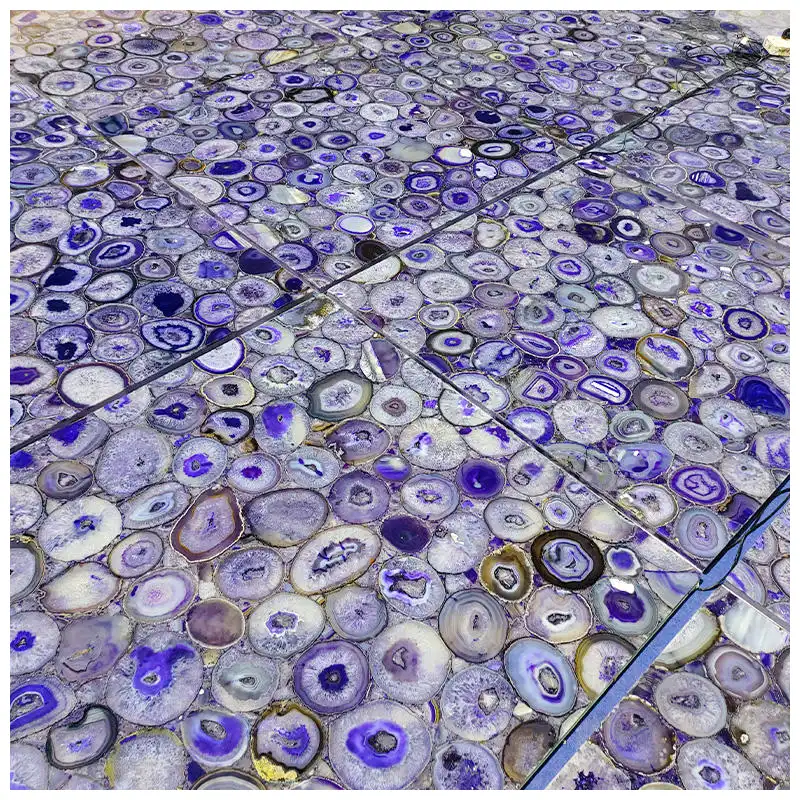
That construction explains the distinctive appearance of Purple Agate Semi-Precious Gemstone Tiles. Each agate slice contributes its own ring structure, crystal center, opacity and edge color. One area may be almost white and translucent; another may carry dense violet rings, golden outlines or a dark mineral core.
The pattern can be balanced during production, but it should not be expected to repeat perfectly from tile to tile. For large floors and walls, the important step is approving the overall visual distribution and tile sequence rather than comparing isolated individual pieces.
This natural variation is especially important once the project is illuminated, because different mineral sections transmit light at different intensities.
|
Show violet rings, white crystalline centers, darker mineral outlines, bonded transitions and the polished surface at close range. |
What Color Variation Should Buyers Expect from Purple Agate?Purple agate should be specified as a color family, not as one exact solid violet. The reference material contains pale lavender, saturated purple, magenta, cream, white and occasional warmer mineral accents. Some slices have clear concentric bands. Others are more crystalline or irregular, which gives a large installation its depth. For a single statement wall, strong variation can be desirable. For hotel corridors, lobby floors or repeated guest-area applications, the factory should sort the production into an agreed overall color range before final layout. Approving a full dry-layout photograph is more informative than approving one loose tile when pattern balance matters to the finished interior. |
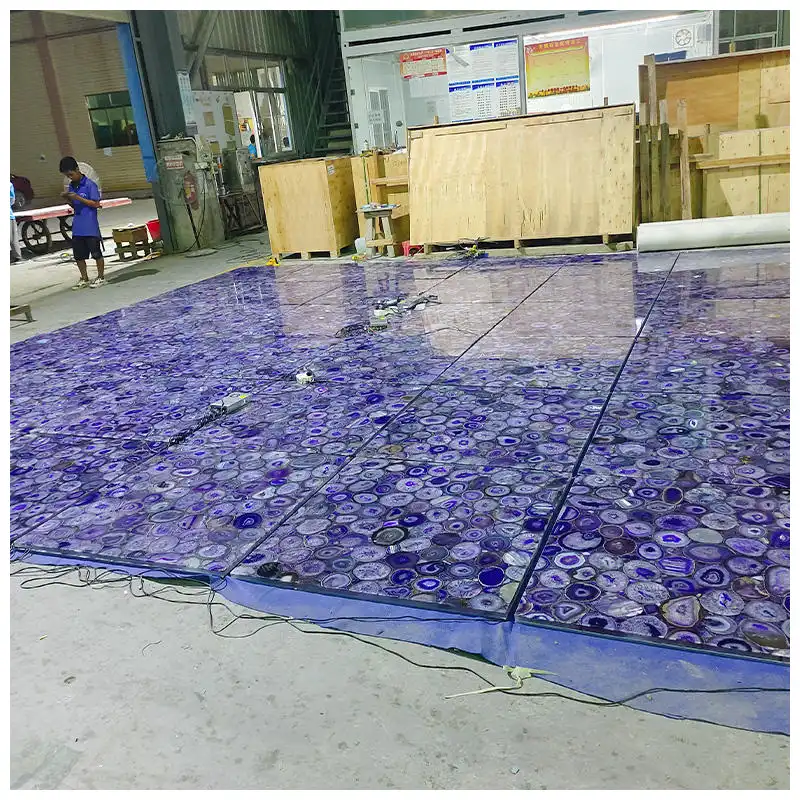
Purple Agate Tile Sizes, Finish and Project Supply Information
| Specification | Supplied Reference | Project Approval Point |
|---|---|---|
| Product Type | Semi-precious purple agate tile | Confirm whether the project uses individual tiles, larger pre-assembled panels or a combination of both. |
| Standard Size | 12″ × 12″ / 305 × 305mm | Useful for smaller wall modules, floor fields and layout accents. |
| Standard Size | 12″ × 24″ / approximately 305 × 610mm | Check tile direction and joint alignment before production. |
| Standard Size | 18″ × 24″ | Suitable where a larger visual field is preferred with fewer joints. |
| Standard Size | 24″ × 24″ / approximately 610 × 610mm | A practical reference for large floor and wall grids where support conditions allow. |
| Surface Finish | Polished | For flooring, polished appearance must be evaluated separately from required slip performance. |
| MOQ | 100 SQM | Confirm final quantity after allowing for cutting, sorting, pattern sequencing and replacement material. |
| Customization | Custom sizes and project-specific panel layouts | Provide finished elevation or floor-setting-out drawings before cutting. |
| Lighting | Suitable for project-specific backlighting | LED source, diffuser, cavity depth, support and service access should be tested together with the actual material. |
Flooring note: a glossy polished agate tile should not automatically be described as anti-slip. Wet and dry slip performance depends on the finished surface, footwear, contaminants, joint arrangement and project requirements. Areas subject to formal slip criteria should use the applicable project test rather than relying on the appearance of the tile.
How Should a Backlit Purple Agate Floor Be Designed?
A backlit floor is more demanding than a decorative wall because the illuminated surface must also support people, furniture and normal service loads. The gemstone tile cannot be treated as the structural floor by itself.
The supporting assembly should provide an even load path under every panel while leaving enough space for the lighting system. Large unsupported voids can place unnecessary stress on a brittle decorative surface.
A diffuser or light-guide layer can help reduce individual LED points, but its location has to work with the structural grid. Opaque framing placed beneath a highly translucent tile can become visible as a dark line after illumination.
The supplied factory photograph is useful because it shows the material in a large illuminated horizontal layout rather than as a single sample. It also makes clear that every tile transmits light differently.
For Backlit Agate Tiles used on floors, the final build-up should therefore be reviewed as one system: substrate, support, tile, joints, diffuser, LEDs, wiring and maintenance access.
Test the LED Layout with the Actual Purple Agate Before Site InstallationThe same LED system can look very different behind two agate panels because the stone itself is variable. A representative test should reveal whether LED dots are visible, whether structural members create dark bands and whether the selected color temperature makes the violet tones too warm or too cool. For a large floor, test more than one tile. A mock-up containing several different crystal densities gives a better indication of the finished installation. Electrical components also need realistic maintenance access. A luxury floor becomes difficult to service when drivers or connections can only be reached by removing finished gemstone panels. The objective is controlled variation, not perfectly identical brightness across every natural agate section. |
Show several tiles illuminated together, including LED diffusion, support positions and differences in light transmission. |
Feature Walls Allow More Freedom in Pattern Placement Than Backlit Floors
A wall installation does not receive the same walking loads as a floor, so the designer can focus more heavily on visual composition, joint rhythm and the illuminated pattern.
Translucent Agate Gemstone Tiles can be arranged as a regular grid, combined into larger decorative panels or developed around architectural features such as reception desks, columns, niches and bar fronts.
The strongest purple sections do not necessarily need to be spread evenly. A feature wall can deliberately create a darker focal zone and transition into lighter crystal areas toward the perimeter.
Joint locations should still be planned. Bright backlighting can make inconsistent gaps, adhesive shadows or badly aligned panel edges more noticeable than they would be on an opaque stone wall.
Large wall projects benefit from a numbered dry layout before packing so the intended composition can be reconstructed on site.
Tile Sequencing Matters More Than Traditional Marble Bookmatching
Agate does not carry long geological veins across multiple slabs in the same way as marble. Its visual language comes from many concentric and crystalline sections distributed across the panel.
For that reason, the key design task is sequencing rather than forcing a conventional mirror-bookmatch effect. Adjacent tiles should be reviewed for color density, ring scale and overall balance.
A floor can use a relatively even distribution so one area does not become unexpectedly dark. A feature wall may intentionally concentrate the richer purple tiles in the central viewing zone.
Where a designer requests a mirrored or symmetrical composition, that arrangement should be confirmed from the actual production panels rather than assumed from the product name.
Numbering the tiles after factory dry-lay is the simplest way to protect an approved pattern during packing and installation.
|
Show full layout review, tile numbering, color balancing, joint checking and polished-surface inspection. |
What Should the Factory Check Before Purple Agate Tiles Are Packed?Begin with size and squareness so the site installer is not forced to correct irregular joints across an illuminated grid. Inspect the polished face from several angles for scratches, local gloss differences and obvious surface defects. Lay out the production quantity by color before packing. A tile can be individually acceptable but still disrupt the full floor if its tone is significantly different from its neighbors. For illuminated projects, representative pieces should also be checked with light behind them because internal shadows are not always visible from the face. Once the layout is approved, piece numbering should remain consistent from factory floor to crate and final installation drawing. |
Purple Agate Floors Need a Different Specification from Purple Agate Walls
| Design Issue | Floor Installation | Wall Installation |
|---|---|---|
| Primary Engineering Concern | Load support, deflection control, walking surface and lighting cavity. | Panel support, fixing, joint alignment and backlight depth. |
| Surface Consideration | Polished appearance must be checked against project-specific slip requirements. | Polish can be selected primarily for visual effect and cleaning requirements. |
| Pattern Planning | Balanced color distribution helps prevent one walking zone appearing visually heavier than another. | Pattern can be intentionally concentrated around the main viewing or feature area. |
| Backlight Access | Access must be planned carefully because removing finished floor panels for maintenance is disruptive. | Service cavities may be easier to locate behind removable wall sections or adjacent millwork. |
| Installation Reference | Floor setting-out plan with numbered tiles and support grid. | Elevation drawing with panel sequence, joints, lighting zones and fixing details. |
Where Purple Agate Tiles Make the Most Sense
Hotel Lobby FeaturesLarge wall or controlled floor installations can use the illuminated purple crystal as a destination feature rather than a general background finish. |
Private Villa InteriorsEntry halls, entertainment rooms and statement walls can use agate selectively without repeating the material across the entire residence. |
Bar & Reception FrontsVertical illuminated surfaces show the crystal rings clearly and are easier to coordinate with concealed LED cavities. |
Boutique Retail & ClubsThe purple palette can support highly atmospheric interiors where lighting forms part of the customer experience. |
Design Purple Agate with Quiet Materials Rather Than More Competing Patterns
Purple Gemstone Tiles already contain many individual rings, crystal centers and shifts in color. They generally read more clearly beside simple surrounding materials than beside another strongly veined decorative stone.
Warm brass or champagne metal can pick up the occasional amber tones within the agate. Black metal creates a cleaner edge around illuminated panels and works well in contemporary hospitality spaces.
Warm-white plaster, dark timber, neutral porcelain and restrained stone surfaces allow the purple gemstone to remain the focal point. Mirror and glass can also work, but reflected light should be checked so the overall room does not become visually overloaded.
Luxury Agate Tiles are most effective when they are given a clear architectural role-feature floor, feature wall, reception front or illuminated panel-rather than applied everywhere simply because the material is expensive.
Lighting temperature is part of this decision. Warmer light can push violet toward magenta and amber, while a more neutral source generally preserves cooler purple and white crystal areas.
Purple Agate vs. Blue Agate, Pink Onyx, Patagonia Quartzite and Malachite Green Tiles
The four related KA UNITED products solve different design problems. Purple and blue agate are selected largely for semi-precious pattern and translucency; light pink onyx offers a softer cloudy stone character; Patagonia quartzite provides natural geological movement with a more conventional stone construction; and malachite-style green surfaces move toward a much stronger green decorative statement.
| Selection Factor | Purple Agate Tile | Blue Agate Tiles | Light Pink Onyx Tile | Patagonia Quartzite Wall Tiles | Malachite Green Tiles |
|---|---|---|---|---|---|
| Visual Identity | Violet, lavender, magenta and white concentric gemstone rings. | Blue and cyan agate rings with a cooler visual direction. | Soft blush-pink, milky-white and cloud-like translucent movement. | Large-scale geological quartzite movement rather than circular gemstone slices. | Strong green decorative pattern for statement interiors. |
| Backlight Direction | Purple and magenta luminous effect with variable crystal transmission. | Cool blue illuminated effect. | Soft warm-pink glow where the onyx is translucent. | Backlighting should only be considered where the actual selected quartzite allows meaningful transmission. | Confirm the construction and lighting suitability of the current green decorative tile specification. |
| Best Visual Use | Feature floors, lobby walls, bar fronts and illuminated panels. | Cool-tone illuminated walls, floors and hospitality features. | Bathrooms, soft feature walls and elegant backlit panels. | Large architectural walls where natural stone movement is preferred. | Decorative walls and interiors requiring saturated green character. |
| Main Approval Priority | Purple distribution, tile sequencing, translucency, support and LED layout. | Blue color range, ring balance and lighting result. | Pink tone, natural cloud variation and transmitted-light effect. | Actual slab movement, cutting direction, joint layout and fixing. | Green pattern balance, finished dimensions and installation method. |
| Buyer Decision | Best where a vivid semi-precious illuminated surface is the design focal point. | Alternative for projects preferring a cooler blue gemstone palette. | Alternative when the interior needs softer and less graphic translucency. | Alternative where natural quartzite rather than assembled gemstone is preferred. | Alternative when saturated green is more important than violet translucency. |
Quality Control for Purple Agate Tiles Should Include a Full Layout Review
Individual tile inspection is not enough for a material with this much variation. A project can contain many technically acceptable pieces and still look poorly balanced if all darker violet tiles are packed into one section of the installation.
Factory QC should first verify finished dimensions, corner condition, surface polish and obvious defects. Tiles then need to be reviewed together for color distribution and pattern scale.
For backlit projects, representative panels should be illuminated during inspection. Unexpected dark areas, strong resin shadows or obvious differences in light transmission are easier to assess before the tiles leave the factory.
The final approved layout should be photographed and numbered. That visual record is useful to the installer and prevents the intended arrangement from being lost during unpacking.
This approach separates acceptable natural variation from avoidable layout mistakes.
Risk-Control Checklist for Purple Agate Floor and Wall Projects
- Approve the actual purple, lavender, white and magenta color range before bulk cutting.
- Use full-layout photographs for major projects rather than approving only one loose tile.
- Confirm final tile size, joint width, orientation and setting-out from the architectural drawing.
- Do not assume every agate tile transmits the same amount of light.
- For backlit areas, test the actual material with the specified LED and diffuser system.
- Coordinate structural supports so they do not create unintended dark lines through translucent areas.
- For floors, engineer the supporting assembly for expected loads and allowable deflection.
- Treat polished appearance and slip performance as separate specification issues.
- Where wet conditions are expected, obtain the required slip-performance information for the finished system.
- Keep LED drivers and serviceable electrical components accessible without unnecessary removal of finished gemstone panels.
- Number each tile after dry-lay so the approved color and pattern sequence can be reproduced on site.
- Confirm the adhesive, backing and installation method against the supplied agate panel construction.
- Avoid assuming a traditional marble bookmatch unless matched production panels have actually been prepared.
- Protect polished faces and corners individually during packing.
- Keep replacement tiles from the same approved production batch for projects where future color matching may be difficult.
Cleaning and Maintenance Should Protect Both the Agate and the Bonded Tile System
The visible agate pieces are natural quartz-family minerals, but the finished architectural tile also contains bonded sections. Maintenance guidance should therefore address the complete supplied product rather than only the mineral hardness of agate.
Use a soft cloth or non-abrasive cleaning pad with a mild cleaner compatible with the polished surface. Aggressive solvents and harsh abrasive compounds can damage the gloss or affect resin-containing areas.
Floor installations should be protected from abrasive grit because repeated foot traffic can gradually change the appearance of a polished finish even when the underlying mineral is comparatively hard.
Avoid dragging heavy furniture directly across the surface. Protective pads and controlled moving procedures reduce the chance of chipping tile edges or scratching the polished face.
Project-specific care instructions supplied with the final tile system should take precedence over generic natural-stone maintenance advice.
Packing and Installation Sequencing Are Part of the Visual Quality Control
A numbered dry layout loses its value if the installation sequence disappears during packing. Tile codes should remain visible on packaging and correspond with the approved floor plan or wall elevation.
Polished faces need separation from abrasive contact. Corners and edges require particular protection because an illuminated installation makes small chips easier to notice.
For large projects, crates can be organized by floor zone, wall elevation or room number. This reduces handling on site and makes it less likely that a tile intended for one color group is installed in another.
Spare pieces should also be identified rather than mixed randomly with the main sequence.
Good packing therefore preserves both the physical condition of the tile and the factory-approved visual arrangement.
A Completed Purple Agate Installation Should Work with the LEDs On and OffBacklighting is the dramatic part of the design, but the tiles still need to look intentional during normal daytime operation. Without illumination, the polished rings, crystal centers, joints and overall purple distribution should remain balanced. With the LEDs switched on, translucency adds depth instead of hiding a weak layout. Hotels and private clubs may also benefit from dimming so the same surface can move from a brighter public setting to a softer evening atmosphere. For a floor, surrounding lighting should still provide safe visibility when the decorative backlight is reduced. A strong completed project is therefore judged as an interior finish first and an illuminated feature second. |
Use a wide architectural image showing the installed agate, joints, surrounding finishes and final lighting condition. |

Recommended Luxury Stone Tiles from KA UNITED
These four related surfaces provide different color, translucency and geological character for designers comparing illuminated feature tiles and statement wall materials.
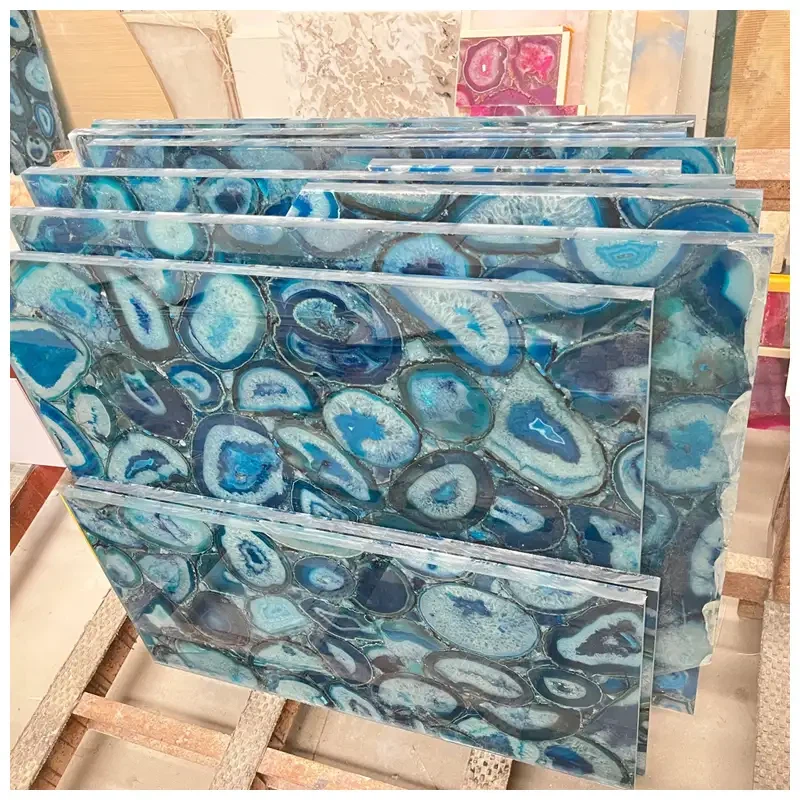
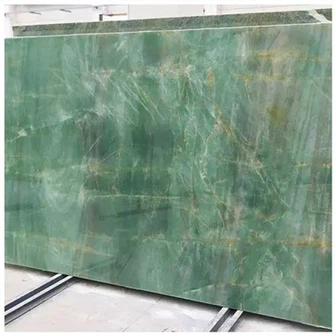
Blue Agate TilesCool blue semi-precious tiles for luminous walls, floors and hospitality feature surfaces. |
Light Pink Onyx TileSoft blush translucent onyx for refined bathroom walls, villas and backlit interior panels. |
Patagonia Quartzite Wall Cladding TilesNatural exotic quartzite panels for large feature walls requiring geological movement and contrast. |
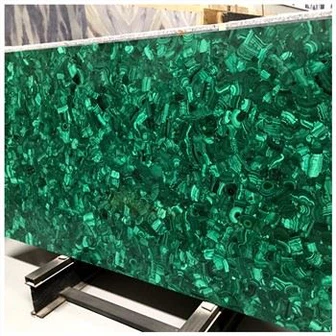
Malachite Green TilesStrong green decorative surfaces for bold hospitality, residential and statement-wall interiors. |


FAQ About Purple Agate Tile
1. What sizes are available for Purple Agate Tile?
The supplied standard references are 12″ × 12″, 12″ × 24″, 18″ × 24″ and 24″ × 24″. Custom tile dimensions and project-specific panel layouts can also be developed from approved architectural drawings.
2. Are Purple Agate Gemstone Tiles made from natural stone?
The visible decorative material uses selected natural agate sections. These pieces are arranged and bonded into an architectural semi-precious surface so they can be calibrated, polished and fabricated into larger tiles or panels. The finished product should therefore be evaluated as a complete gemstone-and-bonded panel system rather than as one solid quarried block.
3. Can purple agate tiles be installed with LED backlighting?
Yes. Suitable agate sections are translucent and can produce a strong illuminated effect. Final brightness depends on the actual tile, LED source, diffuser, cavity depth and support layout, so representative production material should be tested before a major backlit installation is approved.
4. Can polished Purple Agate Tile be used for flooring?
Purple agate can be developed for interior floor applications when the tile construction, substrate, structural support and installation system are appropriate. A polished finish should not automatically be treated as slip-resistant, so projects with defined wet or dry slip requirements should confirm the required performance for the finished installation.
5. Will every purple agate tile have the same violet pattern?
No. Natural agate sections vary in violet, lavender, magenta, cream, white, darker mineral outlines, ring structure and translucency. For large projects, approve an acceptable overall color range and use a factory dry layout instead of expecting identical individual tiles.
6. Can Purple Agate Tiles be bookmatched?
Agate is usually better planned through panel sequencing and balanced composition than through conventional marble-style bookmatching. A mirrored or symmetrical layout can be considered when suitable production panels are intentionally prepared, but it should be approved from the actual material rather than assumed automatically.
7. How should Purple Agate Tile be cleaned?
Use a soft cloth or non-abrasive cleaning pad with a mild cleaner compatible with the supplied polished agate panel. Avoid aggressive solvents and harsh abrasive products that may affect the polish or bonded areas. For floors, remove abrasive grit regularly to reduce surface wear.
8. Is the color of backlit purple agate affected by the LED temperature?
Yes. Warmer lighting can make violet areas appear more magenta or amber, while a more neutral source generally retains cooler purple and white crystal tones. The final LED color temperature should be tested with the actual production material and surrounding interior finishes.
9. What is the MOQ for Purple Agate Semi-Precious Gemstone Tiles?
The supplied MOQ reference is 100 SQM. Final order quantity should also include the material required for cutting, color sorting, approved layout sequencing and any project-specific spare pieces.
10. What should be approved before a custom purple agate project enters production?
Approve the tile dimensions, acceptable purple color range, production material, floor or wall setting-out, joint width, tile sequence, support and fixing method, illuminated zones, LED and diffuser concept, maintenance access, slip requirements where applicable, surface finish, QC layout, numbering system, packing sequence and installation drawing before bulk cutting begins.
Purple Agate Tiles Need Color Layout, Structural Support and Lighting to Be Planned as One Interior System
The distinctive value of Purple Agate Tile comes from the relationship between natural mineral variation and architectural lighting. A strong installation starts with the actual agate color range, then develops the floor or wall grid around that material. Support and joint locations are coordinated next so they do not interrupt important translucent zones, and the LED system is tested before the final tile sequence is released. This approach preserves the irregular purple crystal character while giving contractors a clear setting-out plan and giving designers better control over the finished illuminated surface.

Planning a Backlit Purple Agate Floor, Hotel Feature Wall or Reception Area
Begin with the architectural setting-out drawing rather than ordering tiles only by square-meter quantity. Define the finished floor or wall dimensions, preferred tile module, joint width, circulation zones, viewing direction and any borders, columns, furniture or reception counters that interrupt the layout.
For backlit Translucent Agate Gemstone Tiles, add the support grid, diffuser, LED layout and electrical access before the factory sequence is approved. The production tiles can then be dry-laid and numbered around the actual purple color distribution instead of leaving the installer to solve pattern balance, structural support and lighting independently after the material reaches the site.
Hot Tags: purple agate tile, China purple agate tile suppliers, factory
You Might Also Like



Send Inquiry
