



Palissandro White Marble Tiles
Palissandro White marble tiles with soft linear beige-white veining and polished glossy finish. Factory dry-lay service ensures consistent veining flow for seamless large-area installation. Reliable wear resistance for high-traffic commercial spaces. Custom sizes and surface finishes available. Ideal for shopping malls, office lobbies, hotels and retail projects.
Luxury Marble: Custom Cut Palissandro White Marble Wall & Floor Tiles Uniform Veining for Large-Scale Retail Projects
Natural Marble: Palissandro Classico Marble, Palissandro White Marble
Marble Factory: KA UNITED
Marble Slab Size: 2400upx600, 2400upx800, 2500upx1200up, etc.
Marble Tiles: 24''x24'', 12''x24'', 12''x12'', 18''x18''
Thickness: 20,30mm
Surface: Polished, Honed, Brushed
MOQ: 300 SQM
Application: KA UNITED Supplies A full Range of natural Marbles For Floor, Wall Tiles, Kitchen and Bathroom Countertops, and other Commercial Projects
Product Introduction
Quick Summary: Palissandro White Marble Tiles are natural Italian-style marble tiles distinguished by closely spaced linear veins across a cream-white and pale-beige background. Available in six nominal formats from 12″ × 12″ to 24″ × 24″, with 10, 18 and 20 mm thickness options, they are intended for architectural wall cladding and appropriately specified interior floors. Polished surfaces emphasize the directional mineral bands. For shopping malls, hotel lobbies and other large projects, factory dry-lay arrangements help assess vein direction, color distribution and tile sequencing before shipment. Floor performance, actual material allocation and installation details require project approval.
Palissandro White Marble Tiles for Shopping Mall Floors, Hotel Lobbies and Wall Cladding

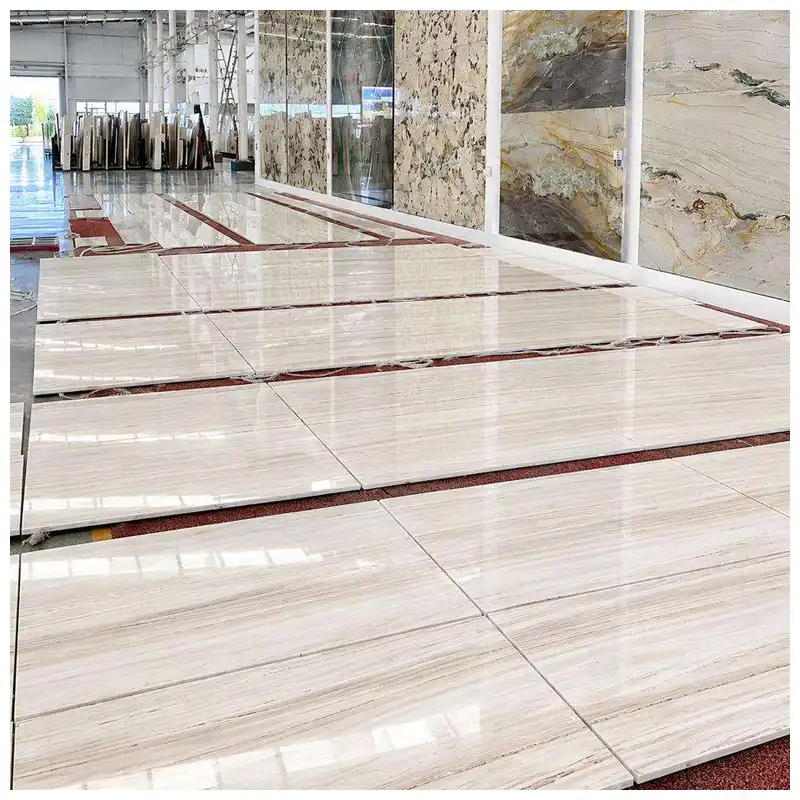
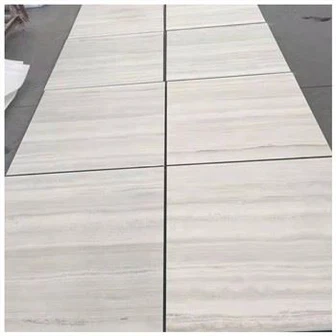
Polished Palissandro White marble tiles arranged in a factory layout, showing fine horizontal beige-grey veining across rectangular stone pieces.
Palissandro White Marble Tiles are distinguished by their directional mineral bands. Fine grey, beige and light brown lines travel across a cream-white surface, creating the appearance of natural wood grain without introducing a strongly contrasting stone color.
This visual character is useful in commercial interiors where the floor or wall covers a considerable area. From a distance, the stone reads as a light neutral surface. At closer range, its parallel mineral lines introduce a recognizable horizontal or longitudinal pattern.
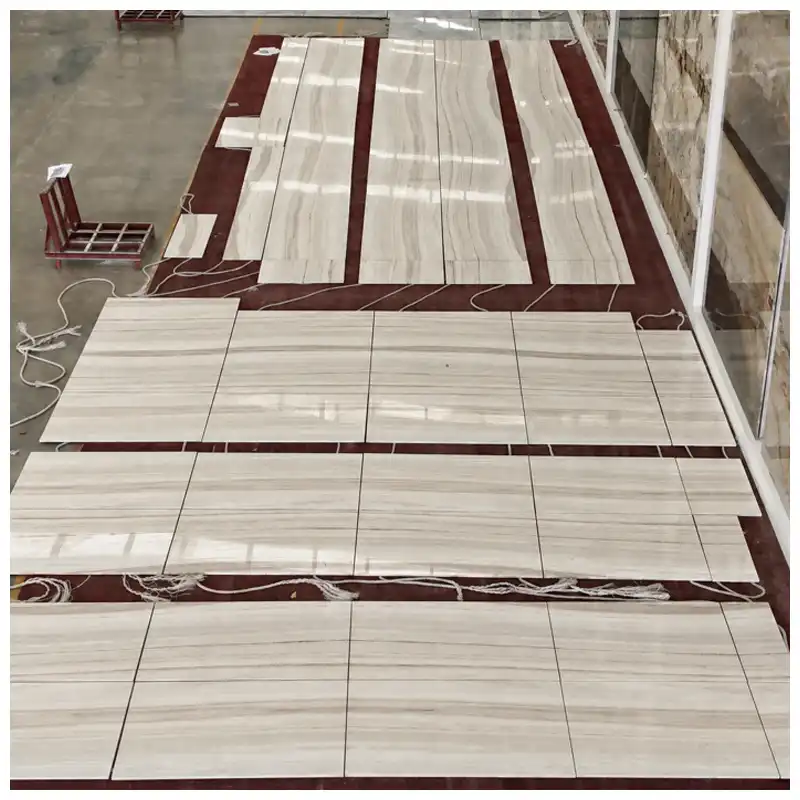
The supplied factory photographs show polished marble pieces laid in coordinated groups. Several rows maintain a relatively consistent vein direction, while other pieces reveal natural differences in band spacing and color intensity.
For shopping mall corridors, rectangular pieces can be aligned with the main circulation route. A longitudinal arrangement emphasizes the floor's direction, whereas transverse positioning gives a broad entrance hall a different visual rhythm.
On hotel lobby walls and reception elevations, the same stone can be installed with the bands running horizontally or vertically. The selected orientation changes how the wall proportions are perceived, especially around lift entrances, wall niches and architectural columns.
The value of this material lies in coordinating its natural linear pattern with the architectural drawing. Tile direction, visible joints and batch variation matter more than attempting to make every individual marble piece appear identical.
Palissandro White Marble Tile Dimensions, Thicknesses and Factory Specifications
The product range includes six square and rectangular tile formats. These dimensions allow contractors to develop regular floor grids, directional running patterns and coordinated wall elevations without relying on one tile proportion throughout the project.
| Material | Natural Palissandro White Marble |
| Material Origin Reference | Palissandro marble family associated with Piedmont, northern Italy; shipment provenance requires confirmation |
| Tile Size A | 12″ × 24″ / approximately 305 × 610 mm |
| Tile Size B | 24″ × 24″ / approximately 610 × 610 mm |
| Tile Size C | 12″ × 12″ / approximately 305 × 305 mm |
| Tile Size D | 18″ × 12″ / approximately 457 × 305 mm |
| Tile Size E | 24″ × 18″ / approximately 610 × 457 mm |
| Tile Size F | 18″ × 18″ / approximately 457 × 457 mm |
| Thickness Options | 10 mm, 18 mm and 20 mm; application and availability subject to approval |
| Photographed Surface | Polished |
| Alternative Finish Options | Honed and brushed finishes subject to production sample and suitability review |
| Color and Pattern | Cream-white, light beige and pale grey with fine linear mineral bands |
| Custom Processing | Floor tiles, wall panels, skirting, border pieces, cut-to-size architectural tiles and special corner components |
| Project Preparation | Factory dry-lay arrangement, vein-orientation planning, color grouping, dimensional inspection and panel identification |
| Primary Applications | Shopping mall interiors, hotel lobbies, office reception areas, commercial feature walls, retail interiors and approved natural stone flooring |
All sizes are nominal references. Actual cutting dimensions, finished thickness, edge treatment, joint allowances and required tolerances must be established from the approved shop drawings. Different thicknesses should not be considered interchangeable for floor and wall installations.
White Palissandro Marble Tiles with Fine Linear Veining and Natural Wood-Grain Movement
The pattern of Palissandro White differs from the broad, irregular veins seen in many conventional white marbles. Its mineral bands tend to follow a more directional structure, although individual lines can curve, fade or become darker as they travel through the stone.
White Palissandro Marble Tiles generally display a lighter selection of the Palissandro color family. In the supplied photographs, the background ranges from cream-white to pale beige, with fine parallel veins in warm grey and light brown.
This structure becomes especially apparent when rectangular pieces are placed side by side. Some sections show closely spaced mineral lines, while others contain wider pale areas between the bands.
The Palissandro family is known for its wood-like linear character. Buyers may also encounter the name Palissandro Classico Marble Tiles when comparing related Italian marble selections. However, Classico and lighter White grades can differ in color balance and vein intensity; their commercial names should not replace actual batch approval.
A small hand sample cannot show the complete distribution of these lines. For a large mall floor or wall elevation, the overall appearance depends on the chosen pieces, their orientation and the relationship between adjacent joints.
A representative dry-laid group provides a more useful selection reference than a single polished tile photographed in isolation.

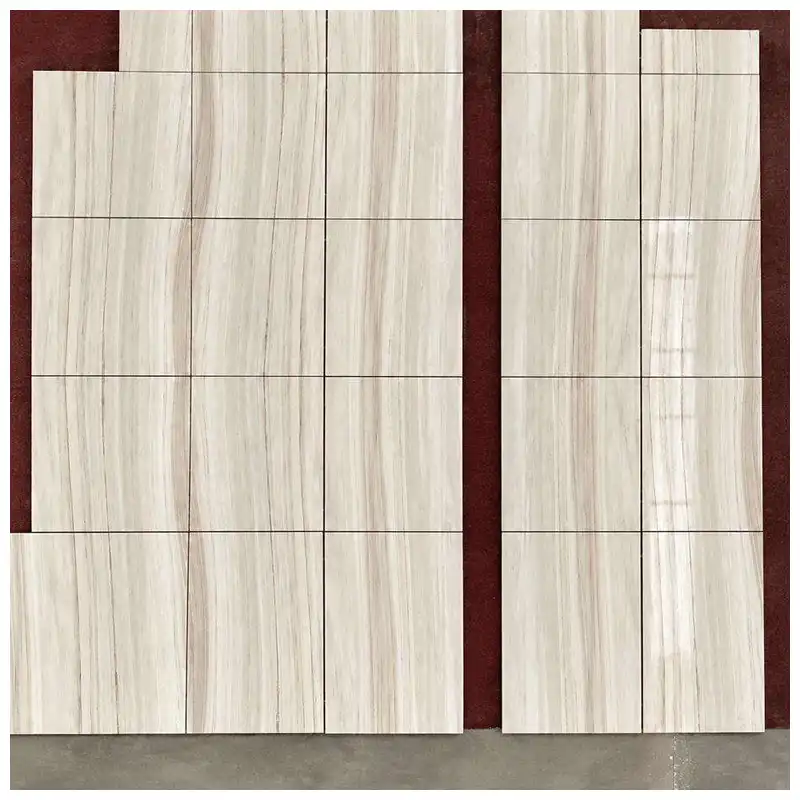
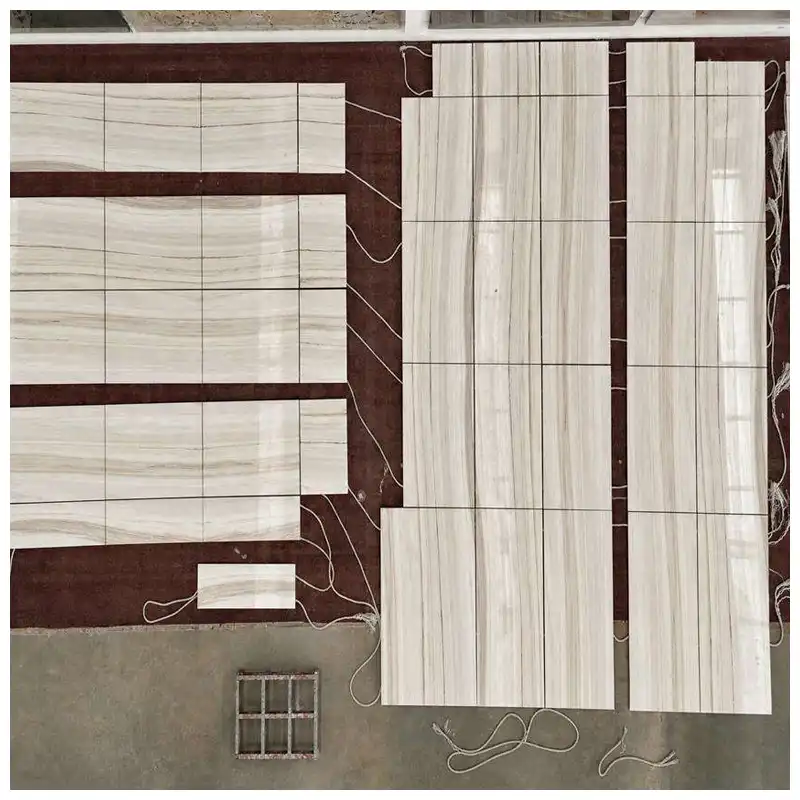
Factory layout of Palissandro White marble showing longitudinal and transverse vein arrangements across polished cut-to-size tiles.
Factory Dry-Lay Planning for Continuous Palissandro Marble Floor Patterns
The supplied production images show marble tiles arranged across a workshop floor, with several pieces positioned in coordinated rows. This layout is especially valuable for a strongly directional stone because the relationship between adjoining pieces becomes visible before final packing.
Unlike a randomly distributed marble pattern, Palissandro's parallel mineral bands can create an abrupt visual interruption when neighboring tiles are rotated in unrelated directions. A dry layout allows the project team to compare those transitions and revise the arrangement where necessary.
Controlling Vein Direction Across Large Floor Areas
For a shopping mall corridor, the linear pattern may follow the main walking direction. In a square entrance hall, horizontal bands may be preferable if the design calls for a wider visual effect.
The direction should be established in the floor setting-out drawing. Once approved, a directional arrow or agreed panel reference can be used to identify the intended orientation of individual pieces.
Grouping Natural Color Variation
The factory layout also allows lighter and darker marble pieces to be reviewed as a group. A batch with stronger beige bands may be distributed through the floor rather than concentrated unexpectedly in one visible area.
The purpose is controlled natural variation, not an impossible guarantee that every vein will continue uninterrupted across tile joints.
Preserving the Approved Arrangement
After approval, the project can specify identification marks and a corresponding installation diagram. These references are useful when different sections of the building require separate tile groups.
Dry laying establishes the intended appearance before shipment. It does not eliminate site tolerances, substrate movement or the need for an accurate installation grid, but it gives contractors a defined visual reference.
Palissandro White Marble Floor Tiles for Commercial Mall Corridors and Public Interiors
Palissandro White Marble Floor Tiles are a possible specification for shopping malls, hotel reception areas, office lobbies and other commercial interiors where a light natural-stone finish is desired.
Large-format pieces can establish broad floor fields, while smaller rectangular modules may be more suitable near columns, lift entrances and perimeter walls. The correct tile format depends on the architectural dimensions and intended joint arrangement.
A polished surface reflects overhead lighting and emphasizes the marble's pale background. In commercial spaces with strong lighting, that reflection may become part of the intended design; it can also make surface scratches, residue and differences in gloss more noticeable.
Floor Traffic and Wear Requirements
A marble floor in a retail corridor is exposed to more frequent pedestrian contact than a private residential floor. Tracked-in grit, wheeled equipment, cleaning machinery and occasional moisture can affect its long-term appearance.
The actual Palissandro selection, surface finish and maintenance system should therefore be evaluated against the project's abrasion and service requirements. The fact that a marble is polished does not establish its suitability for unrestricted heavy pedestrian traffic.
Polished Floors and Slip Resistance
Bianco Palissandro Marble Floor Tiles may be considered for appropriate dry interior locations, but wet walking surfaces require a separate decision.
A high-gloss marble finish should not be advertised as inherently slip-resistant. For entrances, wet transition zones, washrooms or other locations with defined traction requirements, the actual finished stone must meet the applicable testing and project criteria.
Substrate Flatness and Installation Joints
Large marble tiles require appropriate substrate flatness and an approved setting method. Uneven support can increase the risk of lippage, cracking or incomplete bonding.
The finished layout must also respect structural and movement joints. These joints should not be removed merely to preserve the continuous appearance of the marble bands.
Palissandro Marble Tiles for Hotel Lobby Walls and Commercial Interior Cladding
Palissandro Marble Tiles can be used as decorative wall cladding in hotel lobbies, office receptions, commercial corridors, boutique retail interiors and selected architectural feature areas.
The direction of the linear mineral bands determines how the wall reads. Horizontal installation creates a layered appearance, while vertical placement can emphasize the height of a lift lobby or reception wall.
Unlike flooring, wall cladding is usually viewed at several angles and under changing lighting conditions. The contrast between polished stone, grout joints and nearby materials therefore deserves particular attention.
Wall elevations should show the intended tile direction, panel dimensions, corner returns, door frames, lighting openings and visible joints. A drawing that specifies only the total square meters does not provide sufficient control for directional marble.
The installation system must be suitable for the selected marble dimensions, thickness, substrate and loading conditions. Larger or heavier wall pieces may require an engineered fixing method instead of relying on assumptions from small-format wall tile installation.
Where a wall includes matching side returns or recessed sections, vein orientation should be considered before cutting. An otherwise acceptable tile can look misplaced if its bands run against the approved direction of the adjoining wall.
12×24 and 24×24 Marble Tile Layouts for Different Commercial Floor Grids
Tile size changes both the appearance of Palissandro White and the practical requirements of installation. The six available references allow several approaches to floor and wall planning.
| Tile Format | Layout Direction | Suitable Architectural Use | Key Approval Point |
|---|---|---|---|
| 12″ × 24″ | Directional rectangular grid or approved running bond | Commercial corridors, lift lobbies and wall cladding | Longitudinal vein direction and joint offset |
| 24″ × 24″ | Large square modular layout | Lobby floor fields and broad interior areas | Tile rotation, flatness and handling |
| 12″ × 12″ | Smaller square grid | Perimeter areas and smaller architectural spaces | Joint density and natural pattern distribution |
| 18″ × 12″ | Medium rectangular arrangement | Corridors and coordinated wall modules | Cutting orientation and border alignment |
| 24″ × 18″ | Broad rectangular module | Reception floors and feature-wall fields | Net cutting dimensions and vein continuity |
| 18″ × 18″ | Balanced square grid | Hotel floors, residential lobbies and wall panels | Perimeter cuts and consistent joint alignment |
A final setting-out plan should be prepared before cutting begins. Changing tile format after the marble batch has been allocated can alter material yield, vein direction and the number of specially cut pieces required.
Polished Marble Tiles: Surface Reflection, Alternative Finishes and Maintenance Requirements
Polished Marble Tiles bring out the natural contrast between Palissandro White's light background and its fine grey-beige mineral bands. The factory photographs show a reflective surface with clear highlights from overhead lighting.
This finish suits interior walls and selected floors where the design calls for visible reflection. For broad commercial elevations, polished marble can also make the banding pattern more prominent under directional lighting.
Honed and brushed finishes can be considered as project-specific alternatives. Honing reduces gloss and produces a quieter appearance, while brushing introduces a different tactile surface character.
Neither finish should be described as automatically suitable for wet flooring. Surface slip performance depends on the actual finished stone and intended service conditions.
Finish selection also affects cleaning. A heavily textured surface may collect residue differently from a polished tile, while polished stone can show scratches and surface etching more clearly under strong lighting.
For a project using both wall and floor tiles, the finish schedule should identify each installation zone separately rather than assuming one treatment is suitable for every location.
Palissandro White Marble Physical Properties and Project Testing Requirements
Natural Marble Tiles do not have identical engineering properties across every quarry block or production batch. Mineral composition, natural banding, processing orientation and moisture conditions can influence the finished stone's behavior.
Published technical references for the Palissandro marble family provide indicative material ranges. These figures help explain the material category but must not be interpreted as certified laboratory results for the tiles shown in the factory photographs.
| Physical Property | Indicative Published Range | Relevant Testing Standard | Project Importance |
|---|---|---|---|
| Apparent Density | 2,650–2,750 kg/m³ | EN 1936 | Material weight and installation load planning |
| Water Absorption | 0.1–0.3% | EN 13755 | Moisture behavior and staining-risk evaluation |
| Compressive Strength | 80–150 MPa | EN 1926 | Mechanical property reference for engineering review |
| Flexural Strength | 8–18 MPa | EN 12372 | Tile and panel support assessment |
| Abrasion Resistance | Batch-specific test required | EN 14157 or applicable project standard | Commercial floor wear assessment |
| Slip Resistance | Finish-specific test required | Applicable local slip-testing standard | Suitability of pedestrian walking surfaces |
The published ranges are indicative values for the stone type, not product certification or guaranteed specification limits. The listed test standards identify appropriate testing methods; they do not establish that the supplied production batch has passed those tests.
For commercial mall floors, confirm the required abrasion performance, wet-slip classification, finish and relevant material properties before approval. For larger wall panels, support conditions, fixing design and stone strength may require separate evaluation.

Reserved product image for Palissandro marble tile thickness calibration, polished edges and dimensional inspection.
10, 18 and 20 mm Palissandro Marble Tiles: Choosing Thickness by Installation
The supplied product specification includes three nominal thickness options. The correct choice depends on the proposed application, tile size, supporting construction and engineering requirements.
A 10 mm tile may be considered for suitable supported installations where the substrate and specified setting system can accommodate a thinner natural stone piece. It should not be assumed appropriate for every commercial floor simply because it is included in the product range.
The 18 mm and 20 mm formats may be reviewed for other floor or wall configurations. Increasing thickness changes the piece weight, handling requirements and finished construction build-up, but it does not independently establish suitability for a particular load.
Thickness also affects transitions at lift thresholds, entrance doors, other floor finishes and skirting details. These interfaces should be resolved before the stone is fabricated.
For larger projects, a thickness schedule can identify each floor and wall zone. This prevents tiles of similar appearance but different dimensions from being mixed during packing and installation.
Factory Fabrication, Marble Quality Control and Project-Based Packing
For a directional marble such as Palissandro White, factory inspection should consider both visual selection and dimensional accuracy. The approved stone pattern and the fabricated tile geometry are separate acceptance requirements.
Visual Selection and Finish Consistency
Factory inspection should compare the cream-white background, vein density and surface gloss against the approved material group. Strongly different pieces may need reassignment where the specification requires a controlled visual range.
Natural mineral lines are part of the marble's character. They should be distinguished from actual fabrication damage, unacceptable cracks or surface defects under the agreed inspection criteria.
Dimensional Accuracy and Edge Condition
Length, width, thickness, squareness and finished edge quality should be checked against the approved fabrication drawings. Particular attention is required for rectangular pieces that will form long continuous joint lines.
For polished tiles, surface scratching, chipped corners and inconsistent edge treatment can remain visible after installation even when the natural color selection is acceptable.
Packing by Installation Zone
The finished tiles should be separated and identified according to the approved project schedule. Main floor areas, perimeter cuts, wall panels and special components may require different packaging groups.
Suitable face protection and edge separation reduce the risk of surface damage during handling. Large polished tiles also need support appropriate to their dimensions and thickness.
Where a dry-lay arrangement has been approved, corresponding panel identification can help the site team reproduce the intended orientation without sorting unrelated tile groups after delivery.
Commercial Mall Floor Layout Review Before Palissandro Marble Installation
The factory arrangement is an important preparation stage, but the final installation must also account for the geometry of the building.
A shopping mall floor may contain lift openings, columns, escalator landings, reception counters, shopfront thresholds and changes in circulation direction. These elements influence where tile joints should begin and end.
A coordinated grid can reduce unwanted narrow perimeter pieces and maintain a consistent relationship between the marble bands and the architectural layout.
Construction and movement joints need their own detailing. The marble pattern should be coordinated around these locations rather than installed continuously across joints that must remain functional.
The contractor should verify substrate conditions, finished floor levels, setting materials, grout compatibility and protection of completed work during subsequent construction.
For public interiors, the final flooring specification should also include an appropriate entrance-matting strategy and maintenance plan. Abrasive particles brought in from outside can affect the appearance of polished marble over time.

Reserved fourth product image for factory inspection, direction marking, tile identification or packing of Palissandro White marble.
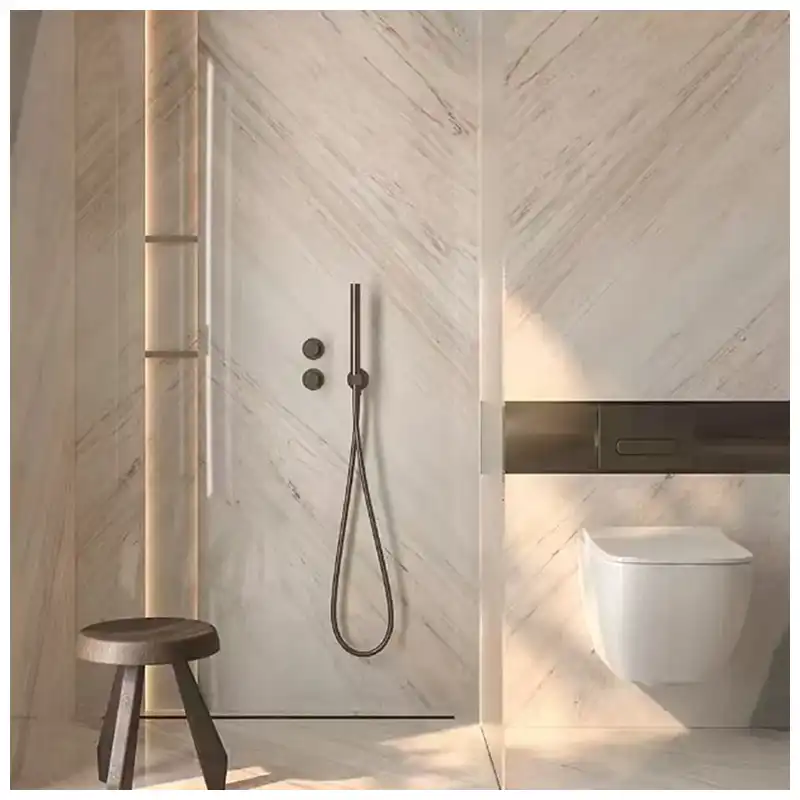
Reserved verified project photograph showing Palissandro White marble installed in a commercial floor or architectural wall-cladding application.
Palissandro White Marble in Shopping Malls, Hotel Lobbies and Retail Interiors
A large commercial interior benefits from a material palette that remains coherent across several architectural zones. Palissandro White's pale background and linear movement can complement glass partitions, stainless steel, warm timber and darker decorative stone.
In shopping mall corridors, a longitudinal floor layout may reinforce the circulation direction. The repeated natural bands create a visual connection between individual pieces without depending on a single dramatic marble vein.
For hotel reception walls, horizontal installation can create a layered background behind a desk or seating area. A vertical arrangement may be more suitable around lift banks or taller wall surfaces.
Boutique retail spaces can use smaller areas of the same marble for display-wall cladding or entrance features. This allows the material's linear pattern to remain visible without competing with merchandise and signage.
The supplied photographs document factory tile arrangement, not a completed commercial installation. Any project image used on the finished product page should show a verified Palissandro White installation rather than an unrelated marble floor.
Cleaning and Maintenance of Polished Palissandro White Marble Floors
Palissandro White is natural carbonate marble and requires a maintenance program appropriate for acid-sensitive stone. Acidic cleaners, strong descaling chemicals and unsuitable polishing products may damage its finished surface.
Routine cleaning should use non-abrasive equipment and a pH-neutral product formulated for natural marble. Grit and dirt should be removed before they are dragged across the polished surface during daily cleaning.
In commercial environments, entrance matting can reduce the amount of abrasive material carried onto the floor. Cleaning schedules should reflect actual pedestrian use rather than assuming that polished marble is maintenance-free.
A compatible penetrating sealer may help reduce certain absorption-related staining risks where appropriate. It does not make marble stain-proof, scratch-proof or resistant to acid etching.
Wall installations have different maintenance demands, but the same stone-safe cleaning principle applies. Any repair or restoration procedure should be compatible with the original finish and the selected marble.
Palissandro White Marble Compared with Four Decorative Marble Tile Alternatives
Palissandro White is primarily a directional linear marble. The four related KA UNITED products offer different visual characters for buyers comparing natural stone flooring and wall-cladding options.
| Selection Factor | Palissandro White | Babylon Grey | Ceppo Grey | White Magnolia | Verde Ming |
|---|---|---|---|---|---|
| Color Direction | Cream-white with fine beige-grey bands | Medium warm grey | Grey with contrasting stone fragments | Cream and light beige | Pale green to grey-green |
| Natural Pattern | Closely spaced linear mineral bands | Fine irregular pale veins | Brecciated aggregate-like formations | Subtle beige mineral movement | Cloudy green-grey variation |
| Design Positioning | Directional floors and linear wall compositions | Neutral grey commercial floor fields | Textured modern architectural interiors | Warm neutral lobby floors and walls | Green-toned decorative walls and bathroom interiors |
| Layout Priority | Parallel vein alignment and tile orientation | Grey-tone grouping and modular grids | Fragment distribution and tile pattern | Beige-tone balance and joint arrangement | Green color grouping and pattern distribution |
| Buyer Approval Focus | Vein direction, finish, batch and floor performance | Grey consistency and surface requirements | Natural fragment scale and stone selection | Approved beige range and floor module | Green shade, finish and intended installation |
The comparison addresses visual character and layout planning. The materials should not be ranked by strength, wear or slip resistance without relevant product-specific test data.
Explore More Popular Marble Tiles from KA UNITED
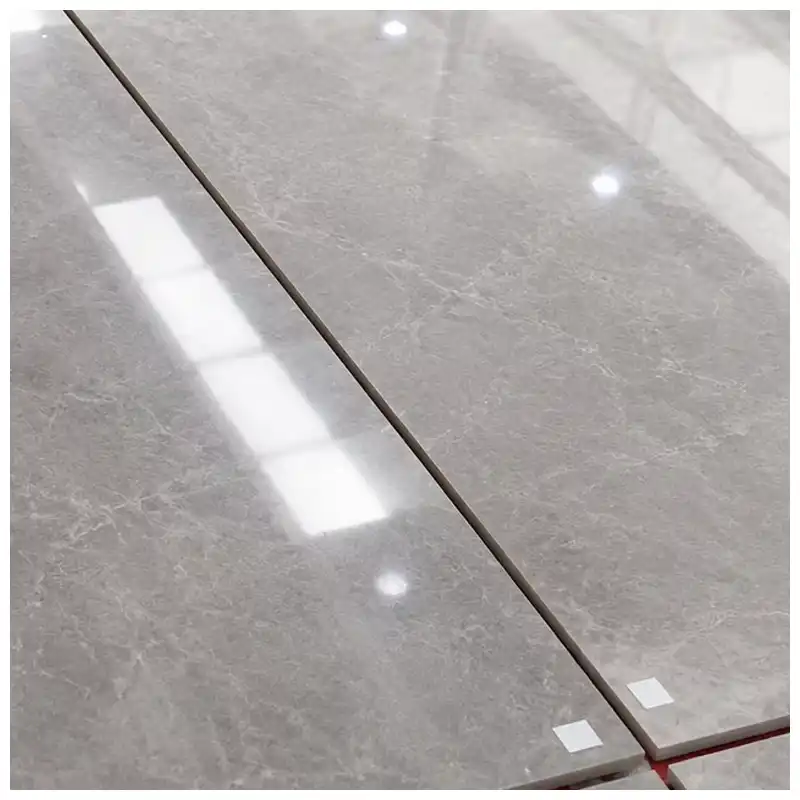
Babylon Grey Marble Tiles
Omani grey marble with fine pale veins for coordinated shopping mall floors and commercial lobbies.
View Product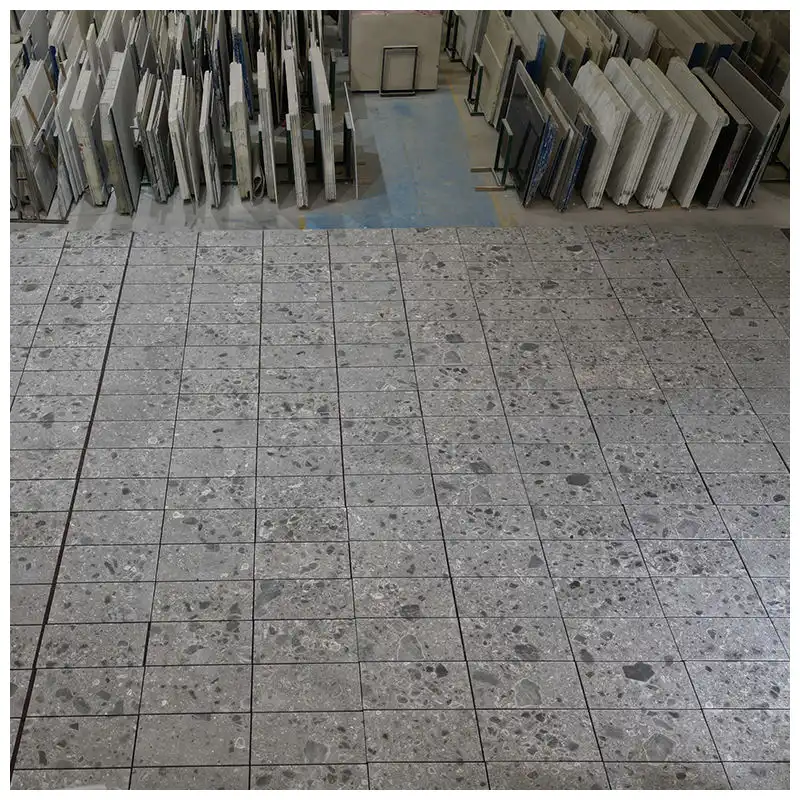
Ceppo Grey Marble Tiles
Grey brecciated natural stone tiles with prominent mineral fragments for contemporary floors and architectural walls.
View Product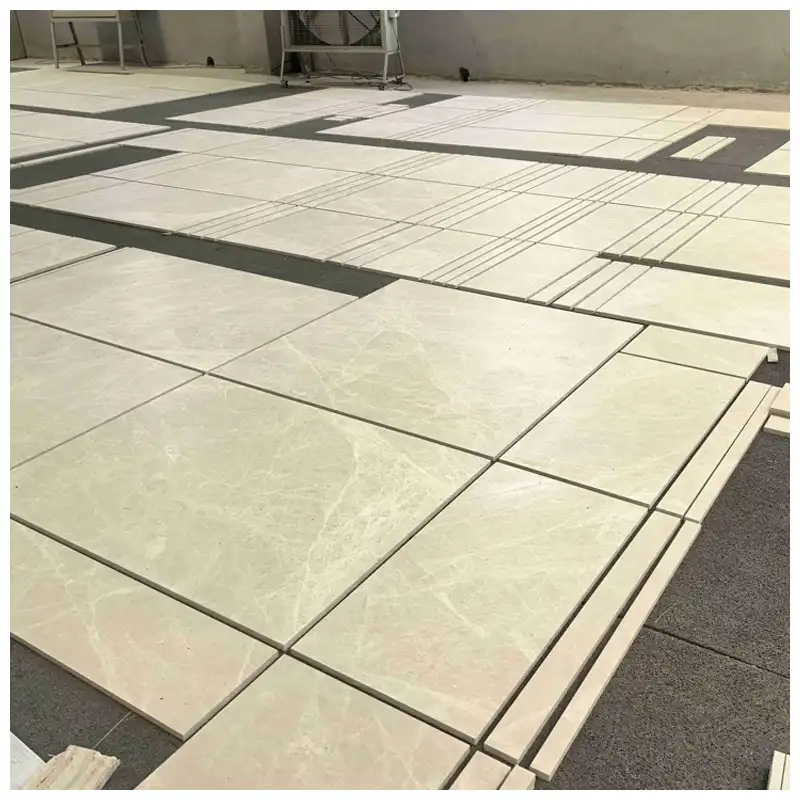
White Magnolia Marble Tiles
Soft cream-beige marble tiles with restrained mineral movement for hotel reception floors and neutral wall finishes.
View Product
Verde Ming Marble Tiles
Pale green marble with soft cloudy veining for hotel bathrooms and coordinated decorative interior surfaces.
View ProductPalissandro White Marble Commercial Project Specification Checklist
- Approved cream-white background, beige-grey vein range and actual marble batch
- Confirmed project quantity and allocation by installation area
- Selected square, rectangular or custom cut-to-size tile dimensions
- Specified 10, 18 or 20 mm nominal thickness by application
- Approved polished surface or separately reviewed alternative finish
- Floor or wall setting-out drawings with intended vein direction
- Applicable slip, abrasion and other material testing for the proposed environment
- Substrate, installation system, movement joints and finished floor levels
- Factory dry-lay approval, component identification and packing schedule
Frequently Asked Questions About Palissandro White Marble Tiles
1. What sizes and thicknesses are available for Palissandro White Marble Tiles?
The supplied size references are 12″ × 24″, 24″ × 24″, 12″ × 12″, 18″ × 12″, 24″ × 18″ and 18″ × 18″. Nominal thickness options are 10 mm, 18 mm and 20 mm. The appropriate thickness, finished dimensions and tolerances must be confirmed for each floor or wall application.
2. How can the linear veining of Palissandro White marble be aligned across a commercial floor?
The tiles can be arranged in a factory dry layout to assess vein direction, natural color distribution and adjoining joints. Once the pattern is approved, an installation drawing and suitable tile identification can help contractors reproduce the intended orientation on site.
3. Are polished Palissandro White Marble Tiles suitable for high-traffic shopping mall floors?
They may be considered for suitable commercial interior locations, but approval depends on the actual marble's abrasion performance, slip resistance, tile thickness, substrate, installation system and maintenance conditions. A polished finish alone does not demonstrate suitability for high pedestrian traffic or wet walking surfaces.
4. What is the difference between Palissandro White and Palissandro Classico Marble Tiles?
Both names are associated with the Palissandro marble family, but commercial selections can differ in background color and vein intensity. Palissandro White generally describes a lighter white-to-cream appearance, while Classico grades may show stronger mineral bands. The actual batch should be reviewed rather than assuming the names identify identical material.
5. Can Palissandro White marble tiles be customized for hotel lobby wall cladding?
Yes. Cut-to-size dimensions, selected thicknesses, edge details and vein orientation can be developed from an approved wall elevation. The installation method, substrate and fixing requirements should be established for the actual panel dimensions and project conditions.
6. What should contractors confirm before bulk production of Palissandro White Marble Tiles?
Confirm the actual marble batch, acceptable vein and color range, tile sizes, thicknesses, surface finish, floor or wall setting-out drawings, required technical testing and installation conditions. The factory dry-lay arrangement, inspection criteria and packing identification should also be agreed before shipment.
Selecting Palissandro White Marble for Directional Commercial Floor and Wall Designs
Palissandro White is best specified when its fine, parallel mineral bands contribute to the architecture. The stone can create a light commercial interior with recognizable directional movement, but that effect depends on the relationship between the selected batch and the installation grid.
For shopping mall floors, hotel lobbies and large wall elevations, the decisive approvals are the actual material appearance, vein direction, tile format, finish and service performance. Factory dry laying provides a useful visual reference, while the technical specification and site installation details determine whether the selected marble is appropriate for the finished project.

Request Palissandro White Marble Tiles for Commercial Flooring and Wall Cladding Projects
KA UNITED supplies Palissandro White Marble Tiles for commercial interiors requiring coordinated natural marble floors, architectural wall panels and cut-to-size stone components. The supplied formats include six square and rectangular sizes with project-specific thickness and finish selection.
For a quotation, provide the required tile dimensions, thickness, finish, estimated area, installation location and delivery destination. For large shopping mall floors or hotel wall elevations, include the setting-out drawings and intended vein direction so material allocation, factory dry laying, fabrication and packing can follow one approved specification.
Hot Tags: palissandro white marble tiles, China palissandro white marble tiles suppliers, factory
You Might Also Like


Send Inquiry
