



Titanium Travertine Tile
Premium titanium travertine tiles with polished surface and holes-filled treatment. Silver-grey to light brown layered veining, smooth glossy finish, improved density and stain resistance. Factory dry-lay service ensures consistent veining flow for seamless large-area installation. Ideal for luxury villas, hotels, lobbies and high-end residential projects.
Item: Factory Supply Dry-Laid Titanium Travertine Floor Tiles for Bulk Hotel & Residential Projects
Material: Titanium Travertine, Iran Silver Grey Travertine
Travertine Factory/Brand: KA UNITED STONE
Travertine Slab Size: 2400upx600, 2400upx800, 2500upx1200up, etc.
Travertine Tiles: 24''x24'', 12''x24'',12''x12'', 18''x18''
Thickness: 20,30mm
Surface: Polished, Honed, Brushed
MOQ: 100 SQM
Application: KA UNITED Supplies A full Range of travertine For Floor, Wall Tiles, Kitchen and Bathroom Countertops, and other Commercial Projects
Product Introduction
Quick Summary: Titanium Travertine Tile is a natural Iranian silver-grey travertine distinguished by closely layered grey, taupe and smoky brown mineral bands. KA UNITED supplies polished and holes-filled tiles in 300 × 300, 457 × 457, 600 × 600 and 900 × 900 mm reference formats, with 10, 18 and 20 mm thickness options. The stone can be fabricated for interior floors, decorative walls and custom architectural cladding. Vein-cut selection emphasizes its directional pattern, while exterior use, wet-area flooring and mechanical fixing require separate project-specific assessment.
Titanium Travertine Tiles for Villa Flooring, Interior Wall Cladding and Architectural Facades
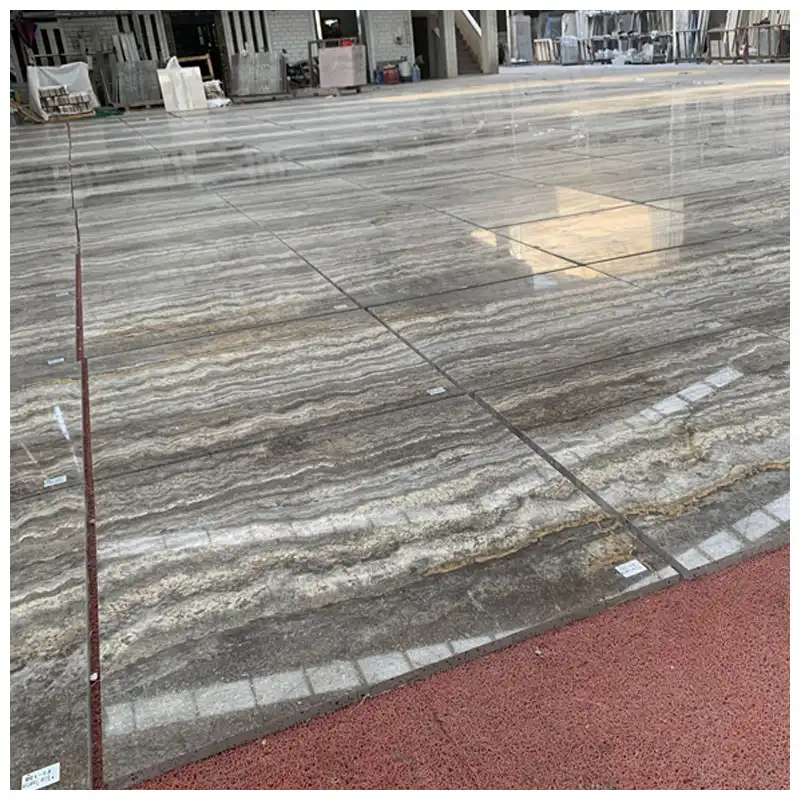
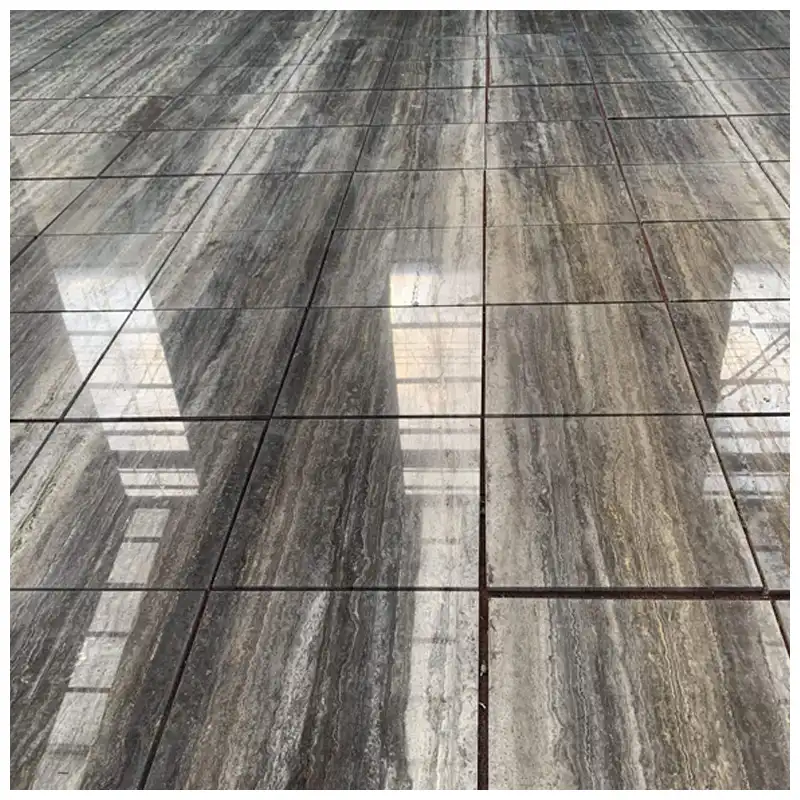
Polished Titanium Travertine floor tiles with directional silver-grey and smoky brown mineral layers.
Titanium travertine introduces a distinctly layered natural stone surface to residential and architectural interiors. Unlike marble with scattered veins or granite with granular mineral patterns, its appearance is organized around sedimentary bands that run through the stone in varying shades of silver grey, warm taupe and deep brown.
For residential projects, Travertine Floor Tiles can be considered for living rooms, corridors, entrance halls and other dry interior spaces where natural stone is part of the overall design. The directional pattern creates visual movement even when tiles are installed in a conventional square grid.
On vertical surfaces, Travertine Wall Cladding Tiles can be arranged with their mineral bands running horizontally or vertically. This makes the material useful for reception walls, living room features, hotel interiors, corridor cladding and architectural columns.
Exterior applications are also possible with an appropriately specified material and fixing system. However, the polished and filled product shown here must not automatically be treated as suitable for every exposed facade or wet walking surface. The selected finish, filler, stone thickness and installation environment need to be assessed together.
Natural Titanium Travertine: Silver Grey Bands and Earth-Toned Geological Texture
Titanium Travertine is a natural carbonate stone associated with Iranian travertine deposits. It is commercially recognized for its darker interpretation of traditional travertine: silver-grey, ash-brown and beige mineral layers rather than the pale cream tones commonly associated with Roman travertine.
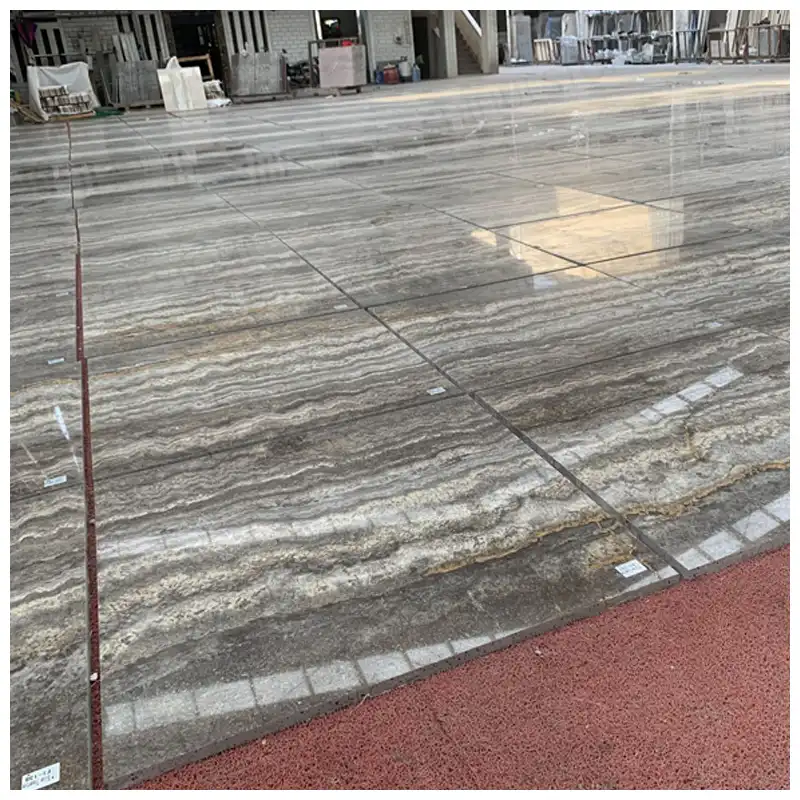
The material shown in the product photographs contains closely spaced, undulating bands. Darker grey-brown sections alternate with pale silvery lines and occasional warm ochre streaks. Some veins remain nearly parallel for extended distances; others bend or widen into irregular mineral formations.
These variations are part of the stone itself. They are not printed patterns, and individual tiles from different sections of a block will not repeat exactly. The intensity of the dark and light layers can change across a single production selection.
Silver Grey Travertine Tiles are especially dependent on the orientation of their mineral bands. A group of tiles cut and arranged in the same direction can create a flowing linear field. Rotating selected pieces introduces a deliberate change of direction, creating a more fragmented or geometric arrangement.
When choosing this material, buyers should review the actual grey-brown balance, band spacing and direction. A small sample can confirm surface treatment and color, but larger photographs or physical tile layouts are more useful for understanding how its pattern will appear across an entire floor or wall.
Titanium Travertine Stone Tiles: Standard Sizes, Thicknesses and Finishes
KA UNITED supplies Titanium Travertine Stone Tiles in four reference square formats. The selected dimensions affect joint frequency, pattern continuity, tile handling and the relationship between the stone and the surrounding architectural grid.
| Titanium Travertine Floor and Wall Tile Specification | |
|---|---|
| Product Name | Titanium Travertine Tile |
| Stone Type | Natural Travertine |
| Origin | Iran |
| Color | Silver Grey / Smoky Brown / Taupe / Beige |
| Tile Size 1 | 300 × 300 mm |
| Tile Size 2 | 457 × 457 mm |
| Tile Size 3 | 600 × 600 mm |
| Tile Size 4 | 900 × 900 mm |
| Nominal Thickness | 10 / 18 / 20 mm |
| Primary Surface | Polished and Holes-Filled |
| Alternative Finishes | Honed / Brushed, subject to production confirmation |
| Cut Orientation | Vein Cut; Cross Cut subject to block selection |
| Product Forms | Square Tiles / Cut-to-Size Tiles / Custom Wall Panels |
| Primary Use | Interior Floors, Walls and Architectural Cladding |
Selecting Tile Formats for Different Architectural Layouts
The 300 × 300 mm format provides flexibility where the installation includes smaller rooms, narrow corridors or frequent perimeter cuts. The 457 × 457 mm format offers an intermediate modular option.
The 600 × 600 mm format balances a larger stone face with a conventional square tile grid. At 900 × 900 mm, fewer joints interrupt the layered pattern, but substrate flatness, stone thickness, transportation and handling become more important.
These dimensions and thicknesses are reference options. Availability of a particular combination must be checked against raw slab dimensions, production yield and the specified installation system. Custom rectangular pieces and additional cut-to-size work can be reviewed against project drawings.
Polished and Holes-Filled Travertine Tiles: Surface Treatment and Maintenance
Polished and Holes Filled Travertine Tiles undergo two distinct processing operations. Filling addresses accessible natural cavities in the stone face, while polishing develops the smooth reflective surface associated with the finished product.
Travertine forms through carbonate mineral deposition and naturally contains pores and voids of different sizes. During production, suitable filling compounds are introduced into selected cavities. The treated surface is then finished to the required level of smoothness.
The resulting tile is easier to wipe clean than an equivalent heavily open-pored surface, since fewer accessible cavities remain available to collect dust and everyday residue. Filling does not transform the stone into a completely non-porous material, nor does it guarantee that no cavities will become visible over time.
Polishing accentuates the contrast between the silver-grey and darker brown mineral bands. It also creates stronger light reflections, which are visible in the supplied factory product photograph.
The type of filler matters. Cementitious and resin-based systems may differ in color, ultraviolet resistance, weathering behavior and maintenance requirements. Buyers specifying exposed exterior surfaces should approve the filling material as well as the stone finish.
Routine care should use pH-neutral cleaning products compatible with calcareous natural stone. Acidic cleaners can etch the travertine, while abrasive cleaning methods may alter the polished sheen. Any damaged filler should be evaluated before local repair or refilling.
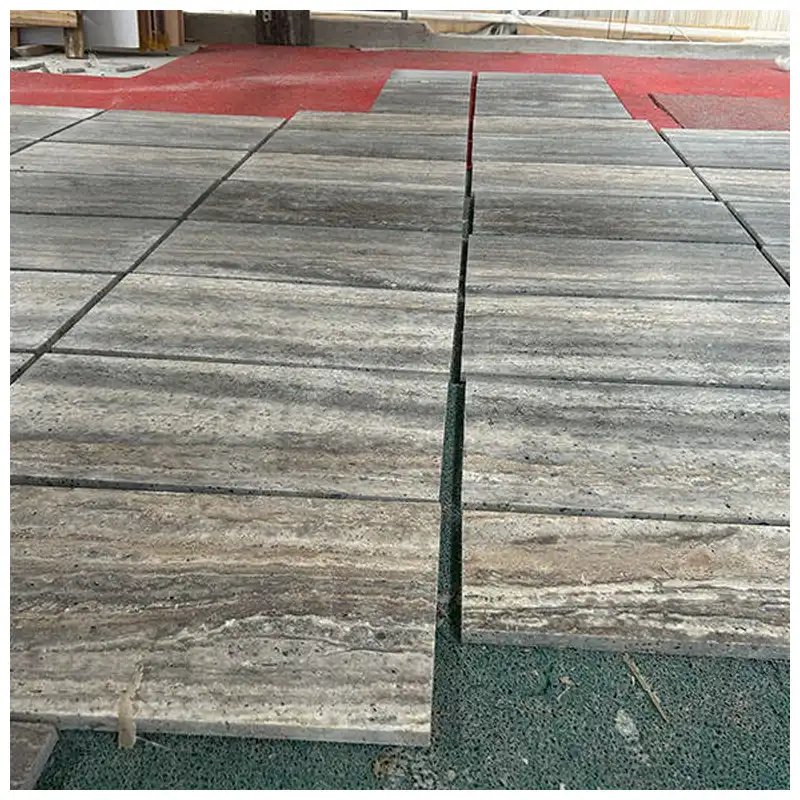
Close-up reference for filled travertine pores, polished mineral layers and natural surface variation.
Travertine Vein Cut Tiles: Controlling the Direction of Natural Stone Layers
The appearance of Travertine Vein Cut Tiles depends on how the raw travertine block is sliced relative to its natural bedding. A cut that reveals the sedimentary layers produces the long bands associated with Titanium travertine's directional character.
On a floor, running the veins parallel to a principal circulation direction can visually lengthen the space. Across a broad wall, horizontal bands can establish a continuous layered composition. Vertical orientation introduces a different architectural rhythm, particularly on tall wall panels or columns.
Cross-cut material, where available from suitable blocks, displays a different arrangement of mineral deposits. It should not be treated as visually interchangeable with vein-cut material simply because both come from the same stone type.
For projects with a defined directional pattern, the cutting schedule and tile layout must use the same orientation references. This is particularly important where square tiles can easily be rotated during installation.
Exact band continuation between adjacent pieces cannot be assumed. Natural sedimentary layers vary through the block, and a deliberate vein-matched installation requires advance review of the selected material and production layout.
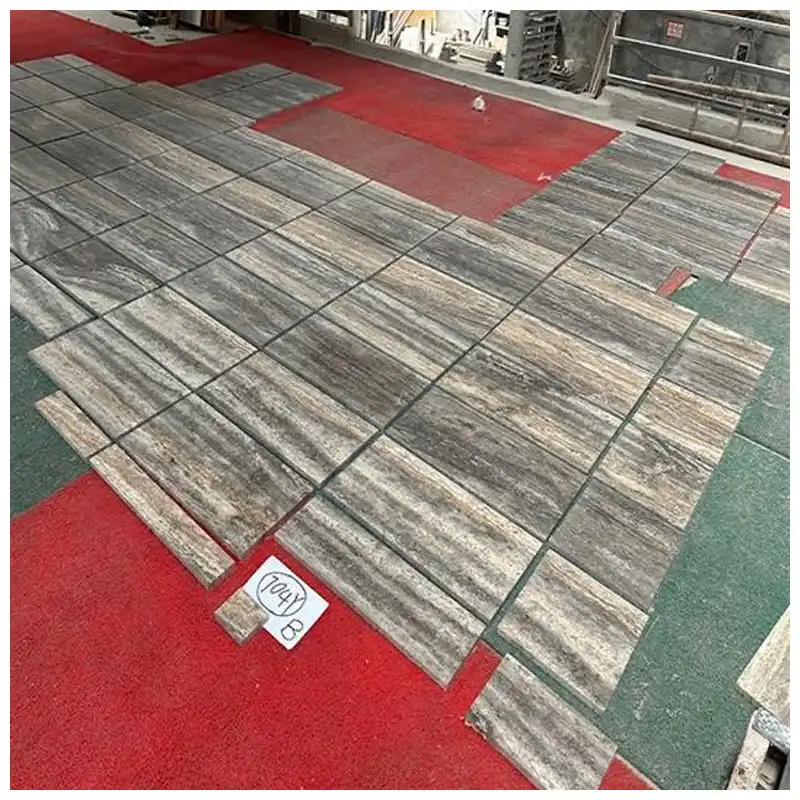
Reference position for Titanium travertine tile cutting direction, finished edges and layered stone pattern.
Titanium Travertine Physical Properties and Technical Selection
Natural travertine is a calcareous sedimentary stone with a porous structure influenced by mineral deposition and the presence of natural cavities. Its technical performance is determined by the selected quarry material, cutting direction, pore distribution, specimen condition and test method.
The following figures are indicative Titanium travertine material references published in a KA UNITED travertine comparison. The underlying test methods and current batch laboratory reports have not been supplied, so these values are for preliminary material assessment rather than contractual performance certification.
| Material Property | Published Reference | Technical Relevance |
|---|---|---|
| Density | 2,467 kg/m³ | Stone weight and preliminary support calculations |
| Water Absorption | 0.86% | Moisture behavior and exposure assessment |
| Compressive Strength | 44.9 MPa | Preliminary assessment of material strength |
| Flexural Strength | Current batch test required | Panel bending and anchorage design |
| Slip Resistance | Finish-specific test required | Floor traffic and wet-area acceptance |
| Freeze-Thaw Resistance | Project-specific verification required | Exposed exterior use in freezing climates |
Technical limitation: The published numerical figures are not certified test results for the tiles offered on this page. They must not be used by themselves to demonstrate compliance with a particular building code or exterior stone standard. Formal specification requires suitable testing of representative material under the applicable project requirements.
For demanding architectural applications, the technical review should also consider abrasion behavior, stone orientation, surface treatment, cavity filling and the relationship between panel thickness and fixing arrangement.
Installation Requirements for Titanium Travertine Flooring
Substrate Preparation and Tile Support
A natural travertine floor requires an appropriate substrate and compatible setting materials. Large-format tiles are especially sensitive to uneven support and variations in surface flatness, which can contribute to lippage or localized stress after installation.
Before selecting the tile thickness, the contractor should establish the expected loads, substrate movement, installation method and applicable stone flooring standard. The nominal thickness of a tile does not independently determine its suitability for a specific floor.
Joint Width and Movement Accommodation
A coordinated layout can make the travertine bands appear continuous, but an installed stone floor must still incorporate the required joints. Their width and placement should reflect dimensional tolerance, movement requirements, installation materials and the architectural setting-out plan.
The visible joints in a dry-lay arrangement are not necessarily the final installed grout width. The approved installation specification remains the governing reference.
Polished Floors and Slip Performance
Polished travertine can become slippery when wet. It should not be presented as inherently slip-resistant because the stone has natural pores or a filled surface. Bathroom floors, entrances, commercial circulation areas and other locations with defined safety requirements need a suitable finish and verified slip performance.
Titanium Travertine Wall Cladding Tiles and Exterior Facade Design
Titanium Travertine Wall Cladding Tiles can create broad decorative surfaces in which the natural mineral bands become a prominent part of the architecture. Vertical cladding also allows the stone to be presented without the abrasion and walking-traffic requirements associated with floor installations.
For interior walls, the design may use square tiles, rectangular cut-to-size elements or larger custom panels. The layout should establish the direction of the veins, the position of visible joints and the relationship between stone edges, corners and adjacent materials.
The use of Travertine Facade Tiles on building exteriors introduces additional technical obligations. Wind loading, stone thickness, anchor strength, cavity structure, thermal movement, drainage and weather exposure become part of the material selection process.
Filled and polished travertine is not automatically equivalent to a purpose-specified exterior cladding product. Filling compounds may respond differently to ultraviolet radiation, temperature changes and prolonged moisture exposure. Exterior finish selection must therefore include the filler specification.
The stone's sedimentary structure must also be considered during panel engineering. The selected cutting orientation, support arrangement and fixing locations should be reviewed together, especially where natural cavities intersect a panel edge or potential anchorage area.
Where the facade is exposed to freezing conditions, current freeze-thaw and moisture-related test evidence may be required. A project engineer should approve the complete cladding assembly rather than relying solely on the general trade name or an illustrative installation photograph.
Factory Tile Layout, Vein Alignment and Production Inspection
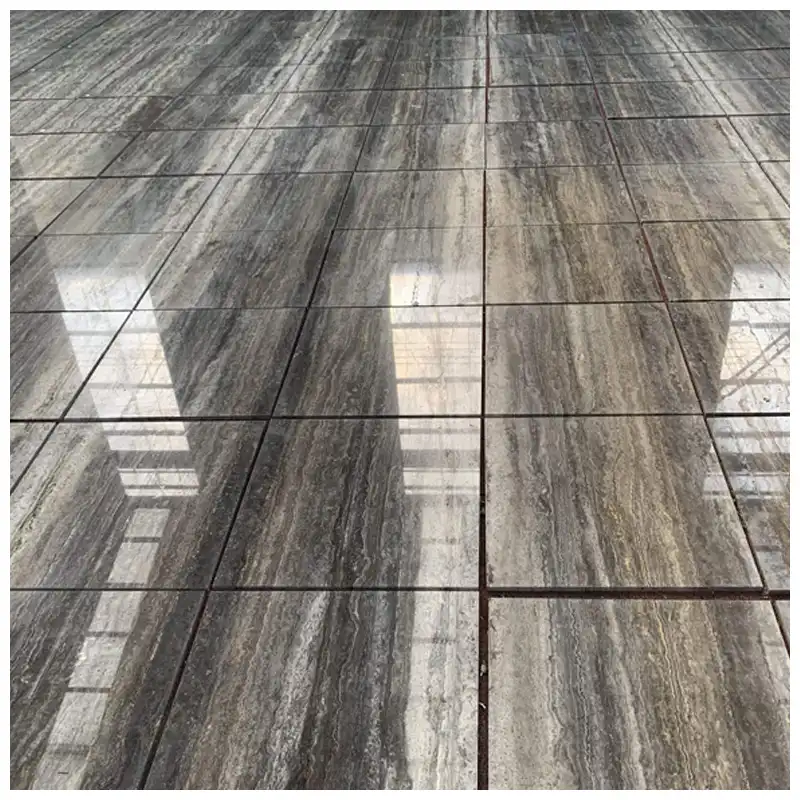
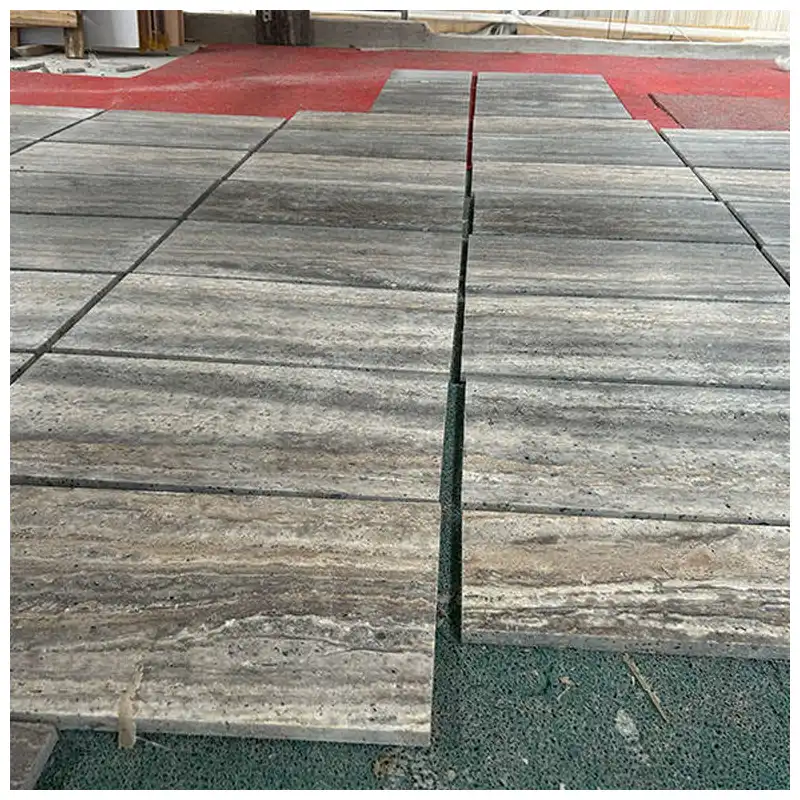
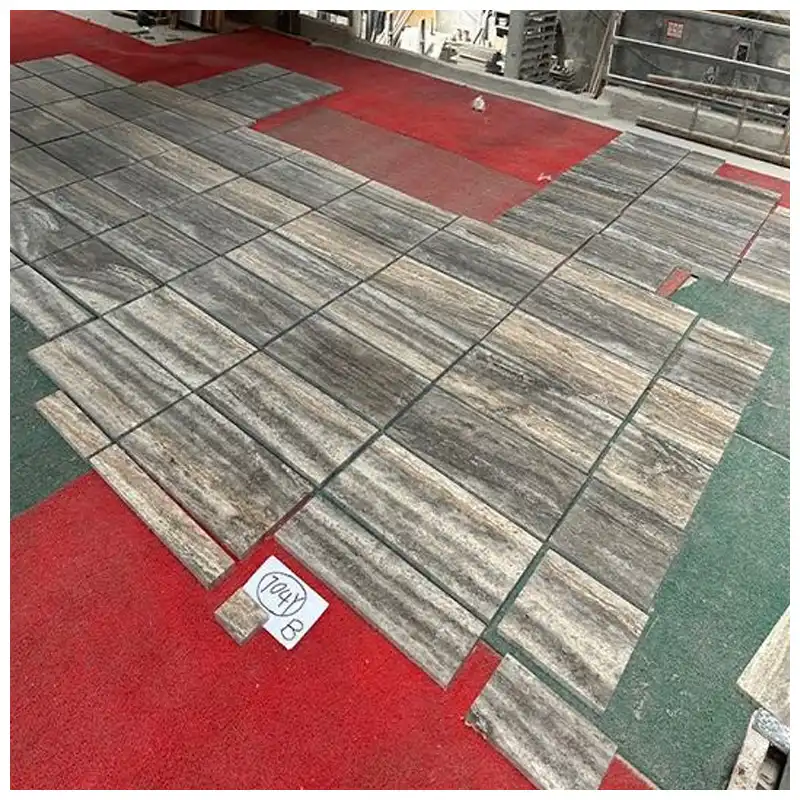
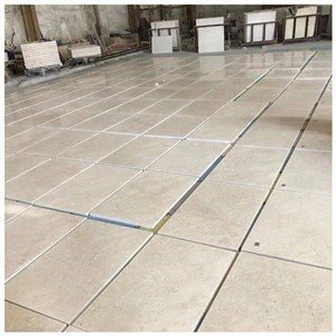
Factory dry-lay arrangement of polished Titanium travertine tiles showing silver-grey linear bands and individual piece identification.
The supplied factory photograph shows multiple polished Titanium travertine tiles arranged together before installation. Individual pieces carry identification labels, and the vein-cut bands run through the layout in a broadly coordinated direction.
This arrangement is useful when reviewing the material's actual color distribution. Silver-grey and brown sections can occupy different proportions of adjoining tiles, and some mineral bands change direction or width as they pass through the stone.
For projects requiring controlled visual movement, factory dry laying allows the selected pieces to be viewed together before packing. The layout can be compared with an approved drawing, and any agreed piece numbering can be carried into the packing records.
A dry-lay layout does not reproduce the final installed grout joints, substrate conditions or site lighting. It is a production review measure, not proof that every band will align perfectly after installation.
The completed floor or wall still depends on the installer's setting-out procedures, available joint tolerances and the exact pieces delivered to site.
Quality Control and Export Packing for Titanium Travertine Tiles
For filled travertine, inspection involves more than checking the dimensions of the finished tile. The surface should be reviewed for incomplete cavity filling, visible cracks, chipped corners, inconsistent polish and defects around the cut edges.
Where a project specifies a narrow range of grey and brown tones, the stone selection should be checked against approved reference material. Natural veins and mineral concentrations will vary, so the accepted range should be defined before production.
Cutting accuracy, finished thickness and edge squareness must be evaluated against the order tolerances. Larger tiles require careful handling to prevent impact damage or bending stress, especially when stone cavities are present near edges.
Finished tiles should be separated and protected during packing to reduce surface abrasion and edge contact. Crate loading must suit the tile format, weight and transport conditions, with additional protection where fragile cut-to-size pieces are included.
KA UNITED can coordinate project-specific inspection, piece identification and export packing requirements against the confirmed order. Any additional testing or acceptance documentation should be agreed before production begins.
Titanium Travertine Architectural Wall Cladding: Application Reference
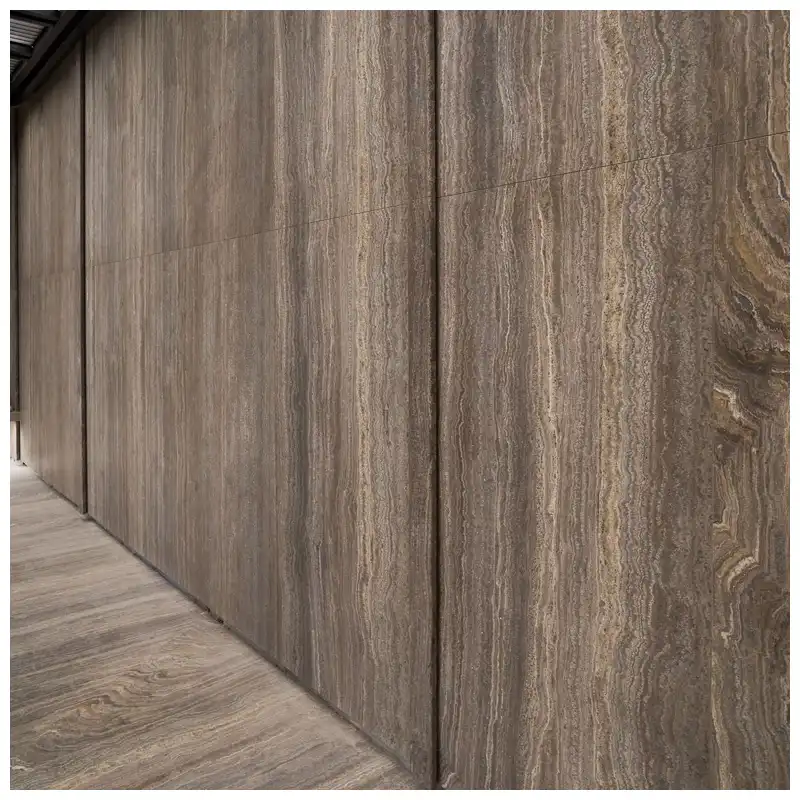
Titanium travertine architectural wall application showing vertically oriented sedimentary bands and coordinated stone surfaces.
The accompanying architectural photograph illustrates Titanium travertine installed as large wall cladding panels, with the natural mineral bands arranged vertically. The floor beneath carries a related layered stone pattern in a different orientation.
The visual contrast between horizontal and vertical mineral lines creates depth without adding a separate decorative pattern. Narrow joints divide the wall into panels while allowing the sedimentary texture to remain the primary feature.
This design direction can inform material selection for entrance walls, hotel circulation spaces, interior feature walls and covered architectural transitions. It is only one of several possible arrangements for the material.
The photograph should be treated as an application reference. It does not establish a certified external facade system, a particular anchorage method or a completed KA UNITED contract.
For a comparable project, panel dimensions, fixing details, exposure conditions and the selected stone finish must be specified independently of the photograph.
Choosing Titanium Travertine Against Other Natural Travertine Tiles
Titanium travertine is distinguished by its darker silver-grey and smoky brown layering. Other travertine selections may be preferable where a warmer stone palette, lighter surface color or more restrained mineral movement is required.
| Stone Collection | Visual Character | Design Direction |
|---|---|---|
| Titanium Travertine | Dark silver-grey and smoky brown bands | Directional neutral stone floors and architectural walls |
| Red Travertine | Deep red with contrasting natural mineral layers | Warm-colored focal areas and expressive wall compositions |
| Roman Travertine | Cream and light beige sedimentary patterns | Light neutral interiors and coordinated architectural surfaces |
| Yellow Travertine | Golden yellow and warm cream tones | Warmer stone schemes and decorative accents |
| Silver Travertine | Silver-grey tones with softer mineral variation | Light-to-medium grey architectural stone surfaces |
Color and pattern are only the first part of the decision. Different selections may have different pore structures and surface treatments, so technical approval should be completed for the exact stone and finish being purchased.
Popular Travertine Floor and Wall Tiles from KA UNITED

Red Travertine Tile
Rich red travertine with cream mineral bands for expressive interior walls and coordinated decorative stone surfaces.
View Product
Roman Travertine Tile
Cream-beige layered travertine for light-toned residential floors, architectural walls and classic stone interior schemes.
View Product
Yellow Travertine Tile
Golden yellow travertine brings warmer color variation to interior cladding, feature walls and custom stone details.
View Product
Silver Travertine Tiles
Silver-grey travertine with subtle mineral movement for contemporary surfaces and lighter architectural material palettes.
View ProductFrequently Asked Questions About Titanium Travertine Tile
1. What is Titanium Travertine Tile made from?
Titanium Travertine Tile is made from natural travertine, a carbonate sedimentary stone formed through mineral deposition. The Iranian material is characterized by silver-grey, smoky brown and beige layers, along with natural cavities that can be filled during fabrication.
2. What does polished and holes-filled travertine mean?
Holes-filled travertine has selected natural surface cavities filled with a compatible compound before finishing. Polishing creates a smoother, more reflective face. Filling improves surface continuity but does not make the stone completely non-porous or immune to acid etching.
3. What sizes are available for Titanium Travertine floor and wall tiles?
Reference sizes are 300 × 300, 457 × 457, 600 × 600 and 900 × 900 mm, with nominal thickness options of 10, 18 and 20 mm. Specific size-thickness combinations and custom cut-to-size requirements must be confirmed against production availability and project drawings.
4. Can Titanium Travertine Tiles be installed on exterior facades?
Titanium travertine can be evaluated for exterior facade cladding, but suitability depends on the actual stone properties, panel thickness, filling material, anchorage system and exposure conditions. Exterior projects require the relevant structural, moisture and weathering assessments before approval.
5. Are polished Titanium Travertine Tiles suitable for wet floors?
Polished travertine is not automatically suitable for wet walking surfaces. Bathroom floors, entrances and other moisture-exposed locations require an appropriate slip-performance assessment and installation specification. Alternative finishes can be reviewed when traction requirements make polished stone unsuitable.
6. How can buyers maintain consistent vein direction across a project?
Buyers should approve the cutting orientation and a representative stone selection before production. Factory dry laying and piece identification can assist with layout coordination, but natural variation means that exact vein continuation must be reviewed separately where required.
What to Confirm Before Ordering Titanium Travertine Floor or Wall Tiles
The first decision is the stone selection. Titanium travertine has a broad range of silver-grey and brown mineral bands, so the approved sample should establish the acceptable color range and the desired intensity of its directional pattern.
The second decision concerns surface construction. The specified filling compound, polished or alternative finish and intended exposure must be compatible. An indoor polished floor and an exposed exterior wall may require materially different technical approvals.
Finally, the buyer should connect the tile schedule to the project drawings. This includes the selected sizes and thicknesses, cutting direction, perimeter details, fixing method and any performance documentation required by the architect or contractor.
Approving these details before fabrication establishes a clear technical basis for producing and inspecting the finished stone.

Request Titanium Travertine Tiles for Your Architectural Project
KA UNITED can review Titanium Travertine Tile specifications for interior flooring, wall cladding and selected architectural applications, including custom dimensions and project-based cutting requirements.
For a quotation, provide the required dimensions, thickness, preferred finish, application area and destination. Include architectural drawings and technical requirements for wall fixing, wet floors or exposed facade installations where applicable.
Hot Tags: titanium travertine tile, China titanium travertine tile suppliers, factory, 4 inch hexagon marble tile, carrera marble backsplash, marble and mother of pearl tile, panda marble tile, Pietra Grey Polished Marble, small marble slabs
You Might Also Like


Send Inquiry
