Kitchen Cabinet Color Matching for Bulk Projects
Choosing cabinet colors from a phone screen is how repeat orders drift. In hotel, apartment and villa programs, the safer route is to lock one physical finish sample, judge it under a defined light source, and tie every run to a recorded batch. The guide covers sample size, light temperature, door material sensitivity and phase rules that keep delivered doors on the approved color. At KA UNITED we review doors, stone countertop, sink and finish notes as one package before production, and that is where consistent kitchen cabinet colors begin for us.
Kitchen Cabinet Colors: How Finish Samples, Light Sources, and Batch Control Keep Bulk Orders Consistent
When I hand a project buyer a set of door samples, I watch the hands first. If the panel goes to a window, then under a ceiling lamp, then next to a laptop screen, we already have a matching problem. The eye adapts, and a warm grey door can look neutral in one light and cold in another. For one kitchen that is a design conversation; for three hundred hotel kitchens it is quality control, because the kitchen cabinet colors approved in week one face doors produced in week nine.
I came to this work from the cabinet shop floor before moving into stone, and I still judge surfaces the same way: each panel carries its own variation and is judged against its neighbors. A bulk program repeats one design hundreds of times, so the tolerance must be set before the first run.
Where Bulk Cabinet Color Decisions Come Apart
Most color trouble in a bulk cabinet order starts with a weak reference, which then gets copied across hundreds of doors. In my experience the failures repeat: color approved from a rendering, cabinet and stone approved separately, no fixed lamp for the final comparison. That is when kitchen cabinet colors begin to drift.
A photo is not a reference
Every screen renders color differently, and room lighting and viewing angle shift the result. If the approved color exists only in a screenshot, the factory works from its own reading. A finish sample carries the real film, grain direction and gloss production must reproduce.
The door and the countertop get approved separately
The stone is usually chosen from slab photos while the cabinet comes from a color card, and they never meet until installation. Quartz and sintered stone repeat well; natural marble and granite move in their own range; a painted door is another process again. I treat cabinet color as a pairing question with the worktop.

Build the Reference Pack: What a Proper Finish Sample Includes
A finish sample is useful only when it represents production, so I ask for panels on the same substrate, coating system and texture the production doors will use. If you are still comparing door styles rather than locking a color, What Are Popular Kitchen Cabinet Colors covers the range; this guide starts where that one ends.
Panel size and surface direction
I ask for a sample large enough to show the true surface. A full drawer front or a panel several hundred millimeters across reveals grain flow, gloss uniformity and edge behavior that small chips hide. Keep it oriented the way the installed door will be.
Sample the paint stage, not the concept stage
Painted MDF doors carry PU or UV-cured lacquer in matte, satin or high-gloss versions, and skin-feel super-matte finishes behave differently from standard lacquer. Melamine and thermofoil doors depend on the decorative paper fused to the board, so a sample from another line or foil lot is a sample of another product.
Sign, date and protect the master sample
We choose one panel as the master, have both sides sign and date it, and store it away from direct sun. Note the color code, finish and gloss level on it, and ask the factory to archive an identical panel from the same run. Every later comparison goes back to this one physical object.
Kitchen Cabinet Colors Change with the Light Source
Two surfaces can match under one lamp and separate under another. Metamerism is the name for that effect, which happens when different pigment or coating formulations reflect differently across the spectrum. Two grey doors from different batches can look identical under a warm factory lamp and different in daylight. That is why I make buyers fix one light source for approval and write it down.
| Light source | Correlated color temperature | Where it shows up | What to check under it |
|---|---|---|---|
| CIE D65 (simulated daylight) | About 6500 K | Light booths; north-window daylight | First hue judgment; grey casts show here |
| CIE illuminant A (tungsten) | About 2856 K | Old incandescent lamps, warm accent lighting | Whether a neutral shifts yellow |
| Warm-white LED | About 3000 K | Hotel kitchens, under-cabinet strips, downlights | Final approval under the light guests cook under |
| Tri-phosphor fluorescent (TL84) | About 4000 K | Retail showrooms, prep areas | Metameric pairs separating; pattern shifts |
I work in two steps: compare first under D65 in a light booth, because daylight is the hardest test for a neutral or slightly grey tone, then approve under 3000 K, what most hotel and residential kitchens use; a warm white door glows there while a cool one looks flat. If a sample passes both and still matches at the window, metameric risk on site drops sharply.
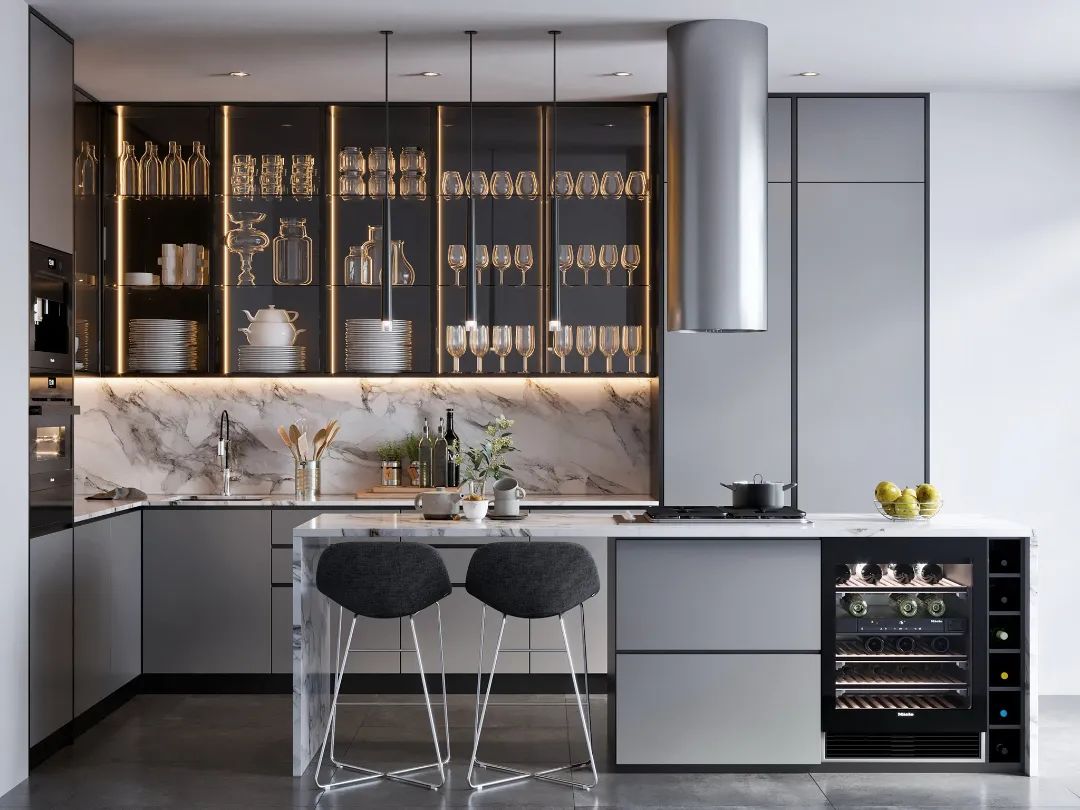
Sheen differences read like color differences: two panels can measure nearly the same tone yet refuse to sit together when one reflects light and the other swallows it. Practice follows the geometry rules below.
| Measurement geometry | When to use it | Cabinet door finish it reads best |
|---|---|---|
| 60 degrees | Default; used first to choose the right geometry | Satin and semi-gloss painted doors, standard melamine |
| 20 degrees | For panels whose 60-degree gloss reads above roughly 70 gloss units | High-gloss lacquer and acrylic doors |
| 85 degrees | For panels whose 60-degree gloss reads below roughly 10 gloss units | Matte, super-matte and skin-feel painted doors |
The geometry rules come from ISO 2813 and ASTM D523, the standards most finishing shops use. For a grey or white painted program, we ask for the 60-degree gloss reading of the master and set a band around it.
Door Material Determines How Much a Shade Shift Shows
The same half-step in production is invisible on one material and obvious on another, so the tolerance decision starts with the door. Kitchen cabinet colors on large flat painted surfaces tolerate the least variation, with no pattern to hide behind.
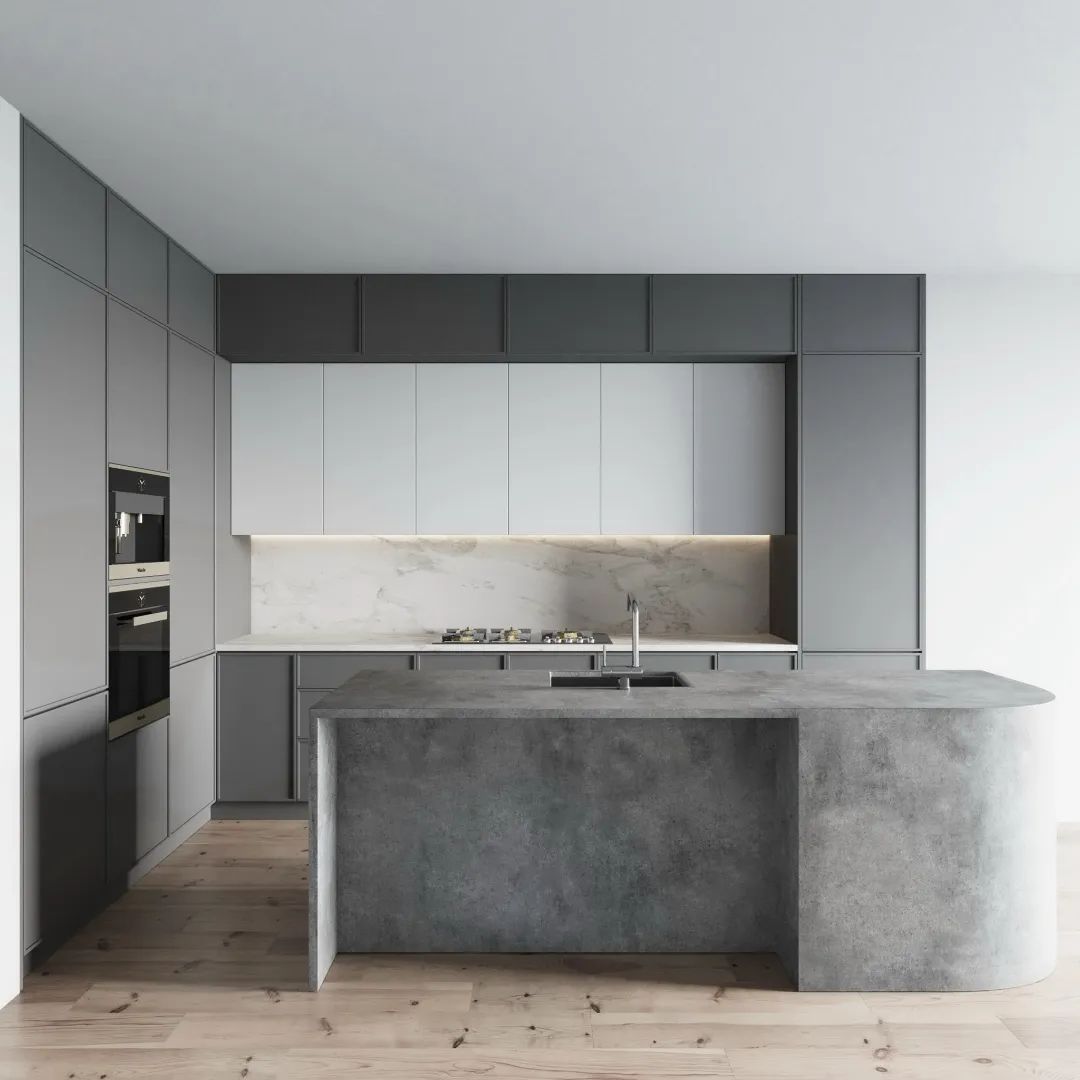
Solid-color painted doors, matte and super-matte
A flat painted face is a uniform field, so any shift in tint, lightness or gloss shows across the whole door. Skin-feel super-matte finishes are the strictest case, and a batch mixed a day apart can read warmer or cooler on the wall. Grey, greige and light neutrals are the most sensitive range, which is why we measure grey doors here instead of eyeballing them.
Wood-grain and foil-wrapped doors
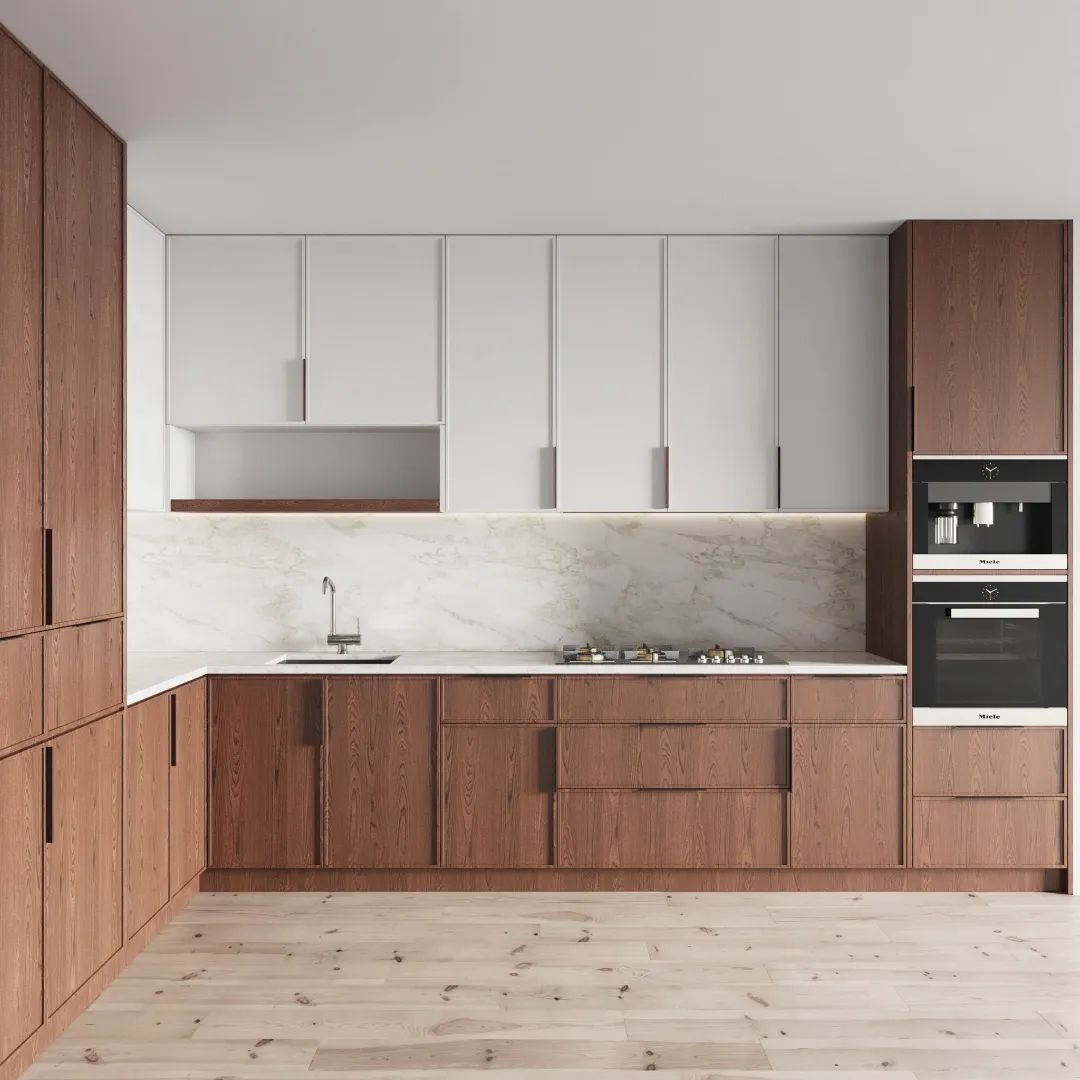
Wood-grain melamine and thermofoil doors hide tonal shifts because the pattern breaks the surface into highlights and shadow. Their risk sits in the decorative paper or foil, which is produced in lots. We confirm the whole program draws from one foil lot and check a sample from each lot if the run splits.
Stained solid wood
Solid wood carries natural variation no color code removes: boards differ within a species and stain reacts differently to each piece. If the design demands near-identical color across hundreds of doors, painted or foil-wrapped engineered doors repeat better; real wood needs a spec that accepts variation up to the master board.
Batch Control: Same Color Number, Different Production Day
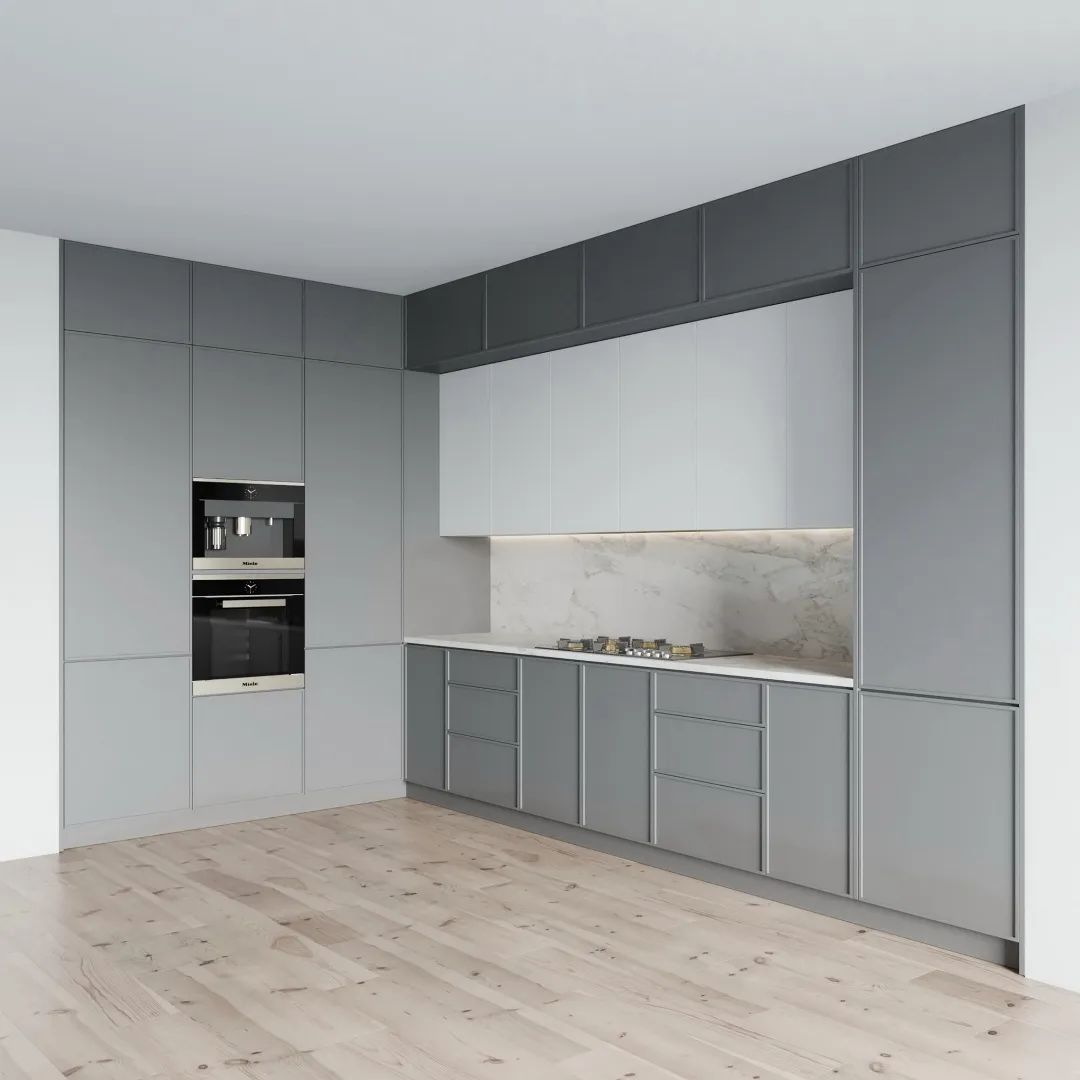
A batch is the group of doors made together from the same paint mix, substrate lot and machine settings, and doors inside one batch match each other far better than across two. A RAL code or one of the C-series numbers on our factory card tells you which kitchen cabinet colors you ordered; it does not tell you whether the paint paste, the foil roll or the coating line changed between runs.
Why batch differences happen
Paint is mixed to a formula, but every mix is a new batch with small meter tolerances and pigment that can settle, while foil arrives in lots and coating lines are cleaned between runs.
Lock one batch for the whole program
We schedule the full quantity in one run wherever possible so every door shares a batch, ask for the batch or lot number on the cartons and packing list, and order spare doors and touch-up panels from the same run.
Phased orders need a new sample round
If a second phase arrives months later, my advice is not to order from the old code and assume the match. Ask for a fresh sample from the new run and compare it with your master panel under D65 before cutting. If the color cannot be held, pause production while the formulation is corrected.

The Hard-Won Lesson: A Top-Up Order Is a New Color Approval
When a grey door program comes back to us with a complaint, the sequence is usually the same: the first run matched the approved panel under showroom lamps, a later top-up shipped without a fresh comparison against the master, and on site, next to white quartz and in daylight, the two sets no longer sat together because the second batch carried a faint cast the warm lamp had flattened.
The Lesson: any top-up or phase-two run counts as a new color approval, made under the light the kitchen will actually get.
Check Doors and Stone in the Same Frame before Release
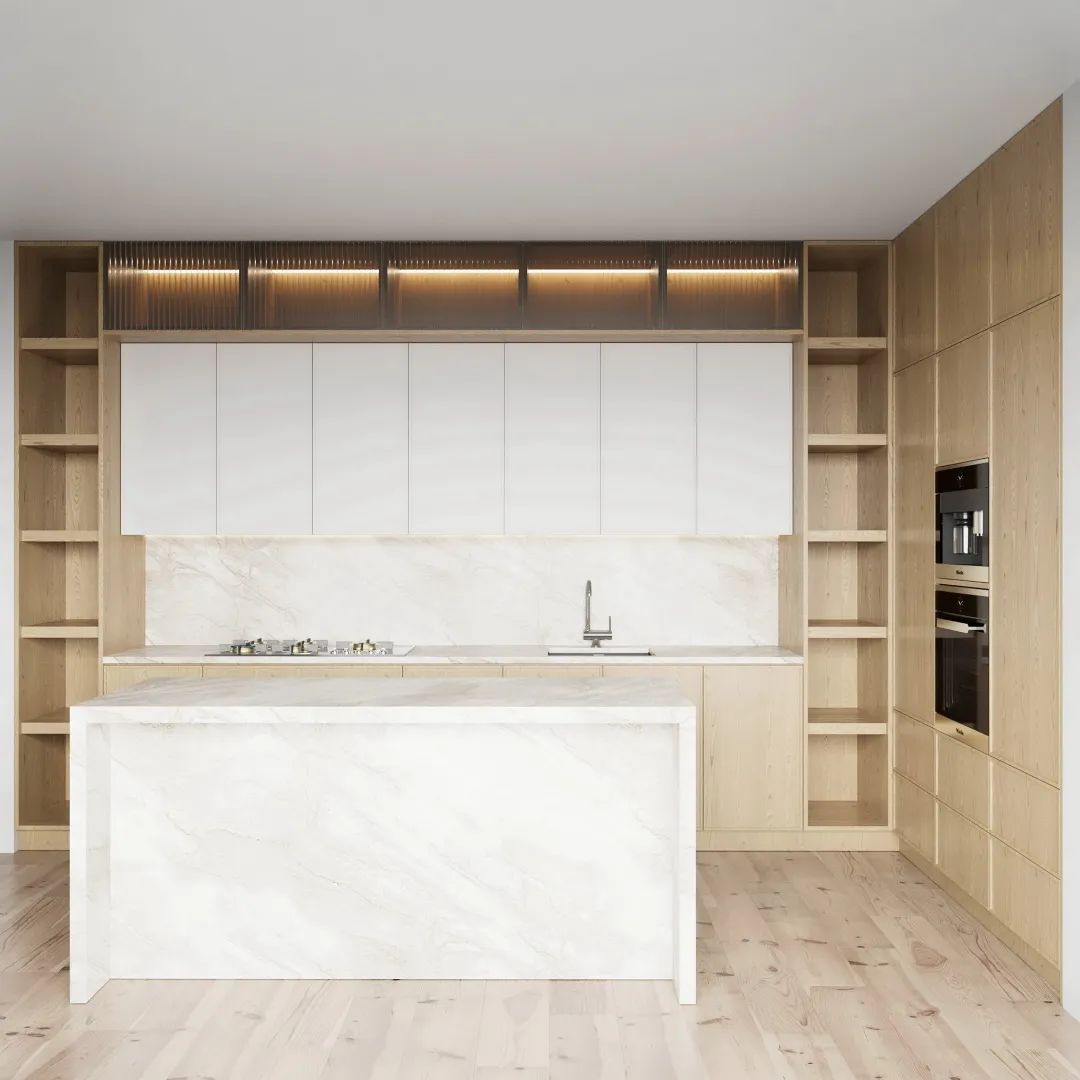
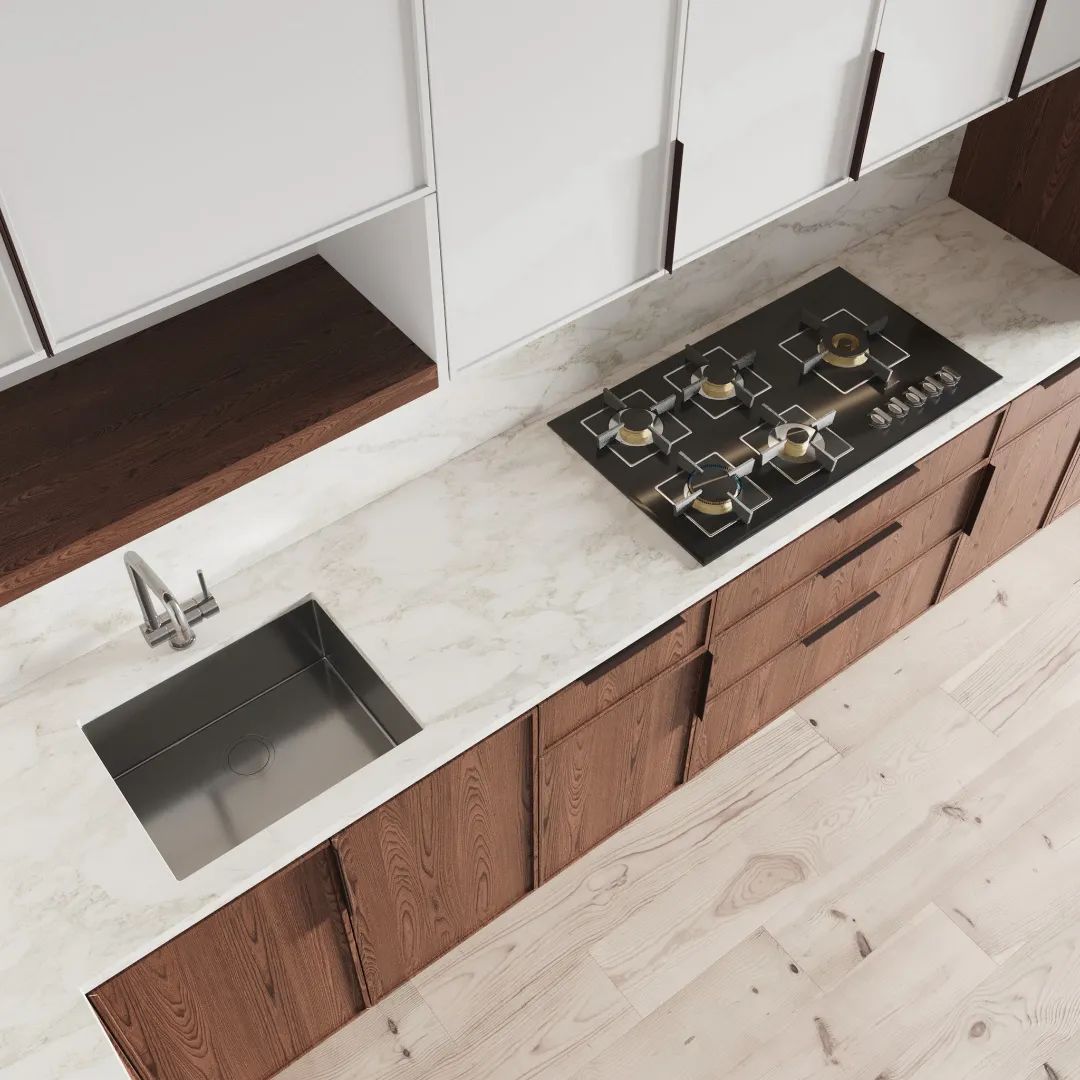
Cabinet doors are judged against the largest surface in the room, which is usually stone, so we do not release a kitchen program until the door color has been viewed with the actual countertop material. A warm wood-grain door next to cool white quartz is a design decision when intentional and a defect when accidental. That early pairing is what keeps kitchen cabinet colors honest against veined marble or plain quartz.
Assemble a mini mock-up before production
I prop the approved door beside a sample of the selected stone, add a backsplash strip and a handle, and photograph the group in daylight and under 3000 K. Send both photos to the supplier, and change the door or the stone now if the undertones fight, while both are still samples.
What to look for in the pair
Check undertone direction first: warm brown doors against cool grey quartz look disjointed unless the design calls for it, while warm white and greige doors accept a wider stone range. Check contrast for dark doors, since charcoal reads sharply against white quartz, and with natural stone judge against the dominant tone.

The on-site arrival check
When our shipment lands, we open one door from each carton batch and compare it with the master sample under the kitchen lighting and at a window before anything is mounted. Confirm the batch numbers against the packing list, and photograph the comparison with the stone in frame. That single image tells you whether production held the color.
Write the Color Agreement into the Order File
Everything above collapses into a few lines on my order file, which survives staff changes and second phases. If the color terms are not written down, they do not exist when a dispute arrives, so the file answers three questions per carton: which kitchen cabinet colors, which finish and gloss level, and which batch number.
Put measurable terms in the purchase order
Reference the signed master sample by ID and date, name the color system used, such as RAL or NCS, and record the gloss geometry and target range. Suppliers commonly quote pass or fail against the master at a Delta E around 1.5 to 2.0 under D65; the number does not capture gloss or texture, so keep visual sign-off binding.
Keep the record chain alive
Photograph the approved sample with a neutral grey card and ruler in frame, keep the batch numbers from the packing list in the project file, and label cartons by unit, floor and room. That is the coordination our kitchen cabinet range and kitchen countertop program are built around.
Review the inspection photos before loading
Before the container is sealed, ask for inspection photos that show finished doors with a stone offcut in the same frame, under known light, with the carton label visible, and compare them with the approval mock-up. If the color has drifted, the fix happens at the factory.

Frequently Asked Questions for Bulk Cabinet Color Approvals
1. Why do kitchen cabinet colors with the same code differ between production batches?
Each batch is a new mix of paint or a new lot of foil, made with slightly different raw material, machine settings and conditions. The code names the intended color; only a physical master sample carries the real film and gloss, so doors from one run match while doors made weeks apart need a fresh comparison.
2. Which light source should I use when judging kitchen cabinet colors on a finish sample?
Use D65 simulated daylight for the first hue judgment, then check under the 3000 K warm-white light most hotel kitchens use. If the sample holds under both and still matches at a window, metamerism risk is low. Keep the viewing angle constant and note the light source on the approval.
3. Can a RAL or factory card number replace the physical sample when I reorder?
No. A card code names the color family but will not reproduce kitchen cabinet colors exactly, because gloss, texture and grain direction live only in the physical panel. Keep the signed master panel as the reference, order spares from the same batch, and treat any reorder outside it as a new approval.
4. Are wood-grain doors more tolerant of batch differences than painted doors?
They are in tone, because the grain breaks a flat field into highlights and shadow, so a small cast hides inside the pattern. The risk only moves to the decorative paper or foil, which is produced in lots, so when a run splits across lots we sample a door from each and stand them together before production. Solid-color painted and super-matte doors give no such cover and carry the strictest tolerance.
5. What should a buyer do when delivered doors do not match the approved sample?
Photograph the delivered door beside the master sample and the stone under a fixed light, stop installation of the affected units, and keep the panels separate. Send the photos with the approval record, sample ID and batch numbers to the supplier before any rework.
Final Conclusion
Color consistency on a bulk kitchen order rests on three habits: approve a physical sample, judge it under the light the kitchen will actually get, and tie every run to a recorded batch. None add cost; each prevents rework after doors are on site. When the kitchen cabinet colors approved in week one are still the colors received in month six, the job stays finished. That is how I run color approvals, and it is the standard we build into cabinet and countertop packages at KA UNITED for hotel, developer and apartment projects.
References
- ISO 2813:2014 Paints and varnishes - Determination of gloss value at 20, 60 and 85 degrees, International Organization for Standardization.
- ASTM D523 Standard Test Method for Specular Gloss, ASTM International.
- ANSI/KCMA A161.1 Performance and Construction Standard for Kitchen and Vanity Cabinets, Kitchen Cabinet Manufacturers Association.
- CIE Publication 15 Colorimetry and standard illuminant definitions (D65, illuminant A), International Commission on Illumination.
- RAL CLASSIC colour system, RAL gGmbH.
- NCS - Natural Colour System, NCS Colour AB.
- Metamerism (color), Wikipedia.