Low-Silica And Silica-Aware Kitchen Surfaces: What Homeowners Should Ask Before Fabrication
Quick Summary
Quick Summary: low silica kitchen surfaces should be selected by application, finish, size, lighting, and product format, not by a single photo or name. Compare engineered stone alternative, silica-aware countertop, edge details, maintenance expectations, and available product pages before confirming the final surface.
Low-Silica And Silica-Aware Kitchen Surfaces: What Homeowners Should Ask Before Fabrication
This article looks at low silica kitchen surfaces as a practical product decision, not only a visual preference. A good result depends on the exact surface, room use, slab or panel size, edge detail, lighting, and the way the material will be fabricated or installed. The goal is to review the choice with enough detail to support a serious inquiry.
KA UNITED connects this topic with quartz stone, quartz countertops, luxury stone, sintered stones, kitchen cabinets. Product pages should be reviewed with the article because the surface decision is not only a style decision. The selected surface has to match size, thickness, finish, lighting, edge detail, room use, and the way the material will be ordered or fabricated.
The surface should be reviewed together with cabinet color, backsplash height, appliance openings, island size, and daily cleaning expectations. A countertop that looks strong in a slab photo can read very differently beside warm wood, white shaker doors, or dark flat-panel cabinets.

Why this surface decision matters for the next project
The strongest surface choice usually solves more than one problem. It should create the right visual tone, fit the available sizes, allow clean fabrication, and still make sense after daily use begins. A surface that works for a feature wall may not be the same surface that works for a floor, vanity, island, stair, or table.
The first question often starts with a broad phrase such as low silica kitchen surfaces, but real project decisions become narrower. The useful questions are more specific. Which material format is available? How much movement is acceptable? Can the selected finish handle the room? Will the edge detail look balanced? Is the surface easy to explain when requesting a quote?
Silica and fabrication questions should be handled through qualified fabricators and local requirements. This article does not give legal or medical advice. It explains what a project team can ask, record, and compare before approving a surface or a production step.
For a clean first review, separate the decision into appearance, product format, fabrication, installation, and care. That structure keeps the discussion grounded. It also helps the sales or project team understand whether the inquiry is about visual inspiration, product availability, technical feasibility, or final order confirmation.
Where this surface works best
This choice works best when the surface is matched to a specific room or object. Walls, floors, islands, vanity tops, shower panels, tables, reception counters, and stair pieces each expose the material in a different way. A pattern that feels elegant on a small sample can feel too active across a full wall.
For vertical areas, review the surface from standing distance. Veins, color blocks, panel joints, and bookmatch lines become more important than hand-touch performance. For horizontal areas, review daily use, staining risk, support, edge comfort, and cleaning. For furniture pieces, the table shape and edge thickness can matter as much as the stone pattern.

Large projects should also compare the visible area with the available slab or panel size. If the design needs a long vanity, a tall shower wall, a wide kitchen island, or a continuous reception counter, the order should begin with the maximum required size. The layout should not be forced after the material has been chosen.
Lighting should be tested early. Warm lighting can soften white and beige surfaces. Cool lighting can make gray veins sharper. Strong directional lights can reveal texture, polish, resin lines, or small surface variation. A product that looks calm in a warehouse image may feel stronger under bathroom mirrors or kitchen pendants.
Product format, finish, and layout questions to confirm
The product format decides many later details. Slabs give stronger visual continuity, especially on feature walls, shower walls, islands, and stone furniture. Tiles can be easier to handle in smaller rooms, but grout lines become part of the design. Sintered or porcelain panels can give a controlled pattern, but edges, supports, and fabrication limits still need review.
The finish changes both appearance and use. A polished finish can deepen color and make veining clearer. A honed or matte finish can reduce glare and make a room feel softer. A textured finish can suit selected floors or outdoor areas, but it needs more cleaning review. The right finish is the one that suits the surface location.
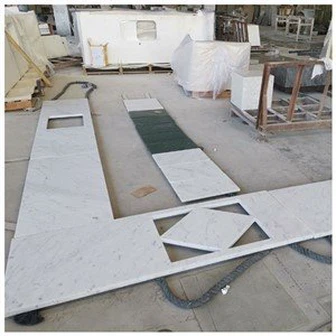
Layout should be discussed before fabrication. For slabs, the team should mark which area becomes the most visible surface. For tiles, the team should confirm size, grout color, pattern direction, and batch consistency. For vanity tops, islands, and tables, the layout should consider holes, sinks, cooktops, edge build-ups, and overhangs.
| Check | What to confirm |
|---|---|
| Application | What area will use the material, and how visible will it be? |
| Format | Will the project use slabs, tiles, panels, cut-to-size pieces, or tops? |
| Finish | Should the surface be polished, honed, matte, textured, or leathered? |
| Lighting | Will daylight, downlights, wall washers, or backlighting change the color? |
| Details | Which edges, seams, holes, returns, and supports need approval? |
| Care | What cleaning routine and maintenance expectation should be accepted? |
How to compare low silica kitchen surfaces with nearby alternatives
Comparison should not start with which material is the most expensive or the most dramatic. It should start with what the surface has to do. If the project needs natural depth, actual stone variation, and one-of-a-kind movement, marble or quartzite may lead the discussion. If it needs a very controlled pattern, sintered stone or porcelain may be more practical.
A related option such as engineered stone alternative should be compared with the actual project conditions. A high-traffic floor, wet bathroom, hotel lobby, kitchen island, and decorative wall do not ask the same things from a surface. The correct answer may change by room, even inside one project.
Another nearby direction, such as silica-aware countertop, can be useful when the desired look is known but the exact product is still open. Compare finish, size range, visual movement, edge options, maintenance, lead time, and available photos. This prevents the project from choosing a surface only because the first image looked attractive.
When a project uses more than one material, define the main surface first. The secondary surface should support that choice. For example, a dramatic wall can pair with a quieter floor. A bold island can sit beside simple perimeter counters. A patterned vanity can work better with plain wall panels. Balance is usually more useful than repeating the loudest material everywhere.
Photos, samples, and approval records
Photos should show the whole material, not only the best corner. Ask for full-slab or full-panel images when the product is natural stone or a large-format surface. Ask for close-up photos only after the overall movement, background color, and usable size have been reviewed. Close-ups cannot replace layout planning.
Samples are useful, but they are not the whole decision. A small sample can confirm finish, tone, and touch. It cannot always show vein movement, bookmatch options, batch range, or how the product reads across a wall. Use samples together with current photos, product links, and room drawings.
Approval records matter because stone decisions involve many small details. Save the selected product name, photos, size, finish, thickness, edge, drawing, sink or hole positions, packing notes, and any special request. If a question appears later, a clear record reduces confusion between sales, production, and installation teams.
- Ask for current photos of the actual low silica kitchen surfaces option, not only catalog images.
- Confirm the room, elevation, countertop, wall, floor, or furniture location before comparing prices.
- Check finish and thickness together because both affect edge detail and visual weight.
- Review seam, joint, cutout, and support positions before any material is cut.
- Save approval records, product links, drawings, photos, and special notes in one project folder.
- Confirm cleaning and maintenance expectations before the final order is approved.
Order details that affect the final result
The final order should include more than a surface name. It should include quantities, dimensions, finish, thickness, edge profile, drawing numbers, installation area, packing request, and contact details for clarification. This is especially important when the article topic connects to custom pieces, panels, large walls, or high-visibility surfaces.

For wall panels and slab areas, confirm elevation drawings, panel joints, bookmatch direction, anchor or backing method, and site tolerance. For countertops and vanity tops, confirm sink cutouts, faucet holes, edge profiles, backsplash pieces, cabinet support, and finished side returns. For stone tables, confirm table shape, base support, edge thickness, and underside treatment.
Project teams should also decide what must be photographed before shipment or installation. Photos can show the finished face, edge, thickness, cutouts, back side, labels, and packing condition. The more custom the order is, the more useful these records become.
Good communication saves time. Instead of asking only for a price, send room photos, drawings, preferred materials, size targets, finish preference, quantity, project country, and intended use. A clear inquiry lets the supplier answer with realistic options instead of guessing from a short product name.
What to avoid before confirming low silica kitchen surfaces
Do not approve a material from a single mood image. Mood images are useful for direction, but they rarely show the actual slab, tile, panel, or finish that will be supplied. The final approval should be based on current product information and practical project details.
Do not treat every white, gray, green, blue, or beige surface as interchangeable. Materials with similar color names can behave very differently. Natural stone can vary by slab. Manufactured surfaces can vary by finish, thickness, pattern scale, and edge treatment. Color is only one part of the decision.
Do not leave seams, edges, holes, and support details until the last step. Those details can decide whether the chosen surface looks clean after installation. They can also affect cost, production time, packing, and the need for additional pieces.
Finally, do not ignore maintenance. Every material needs a realistic care plan. A product can be beautiful and still be wrong for a room if cleaning expectations, water exposure, staining risk, or traffic have not been discussed honestly before ordering.
How this guide should be used before choosing a surface
What should be decided first? Start with the application area, because low silica kitchen surfaces means different things on a wall, floor, countertop, vanity, island, table, or project panel. The room use decides the level of movement, finish, size, edge, and care that makes sense.
Why does product format matter? Slabs, tiles, panels, tops, and cut-to-size pieces create different seams, installation details, and visual effects. The product format should be chosen before final price comparison, otherwise two quotes may describe very different results.
How should alternatives be compared? Compare engineered stone alternative, finish, thickness, layout, maintenance, and fabrication details side by side. The best option is the one that fits the project, not the one with the strongest single photo.
Which information helps an inquiry move faster? Send dimensions, drawings, room photos, surface use, preferred finish, quantity, target color, and any edge or cutout details. Clear information makes product recommendation, quotation, and production review more accurate.
Frequently Asked Questions
1. Is low silica kitchen surfaces a good choice for modern projects?
low silica kitchen surfaces can be a good choice when the surface matches the room, product format, finish, and maintenance plan. It should be reviewed with actual photos, available sizes, edge details, and the intended application instead of being chosen from a single inspiration image.
2. What should I check before ordering low silica kitchen surfaces?
Check the actual product photos, finish, thickness, dimensions, layout, seams, edges, holes, support details, and cleaning expectations. If the surface is part of a custom order, also confirm drawings, labels, packing photos, and the final approval record.
3. How does engineered stone alternative compare with low silica kitchen surfaces?
The comparison depends on the room and product format. engineered stone alternative may solve a different problem than low silica kitchen surfaces, especially when size, pattern control, edge detail, water exposure, or fabrication method changes the final result.
4. Should I choose slabs, tiles, or panels?
Slabs are useful when visual continuity matters, tiles can work well in smaller or modular areas, and large panels can reduce joint lines. The right format depends on wall height, floor area, transport, installation access, pattern direction, and budget.
5. What information should I send for a quote?
Send drawings or approximate sizes, photos of the space, preferred material, finish, thickness, quantity, application area, country or project location, and any edge, sink, hole, or packing requirements. Better information usually leads to a more useful quotation.
Final Conclusion
low silica kitchen surfaces should be confirmed through a practical review of product format, visual movement, finish, dimensions, edge details, installation needs, and care expectations. A strong choice is not just the most attractive image. It is the surface that works with the room, the product pages, the order details, and the way the project will actually be built.
Before confirming the final material, review current product links, request updated photos where needed, and prepare the project details clearly. That gives the supplier enough context to recommend a surface, check feasibility, and return a more useful quotation.

References
- Kitchen Trends Report. Research Team. National Kitchen and Bath Association. NKBA.
- Dimension Stone Design Manual. Technical Committee. Natural Stone Institute. Natural Stone Institute.
- Respirable Crystalline Silica Standard. Agency Staff. Occupational Safety and Health Administration. OSHA.
- Control of Silica Dust in Stone Countertop Fabrication. NIOSH Staff. National Institute for Occupational Safety and Health. CDC NIOSH.
- Sintered Stone and Porcelain Panel Installation Guidance. Technical Staff. Tile Council of North America. TCNA Handbook.
- Kitchen Planning Guidelines. Research Team. National Kitchen and Bath Association. NKBA.
- Engineered Stone Prohibition Guidance. Agency Staff. Safe Work Australia. Safe Work Australia.
- Countertop Surface Care Guidance. Technical Staff. Natural Stone Institute. Natural Stone Institute.