


Metalicus Granite Round Tables
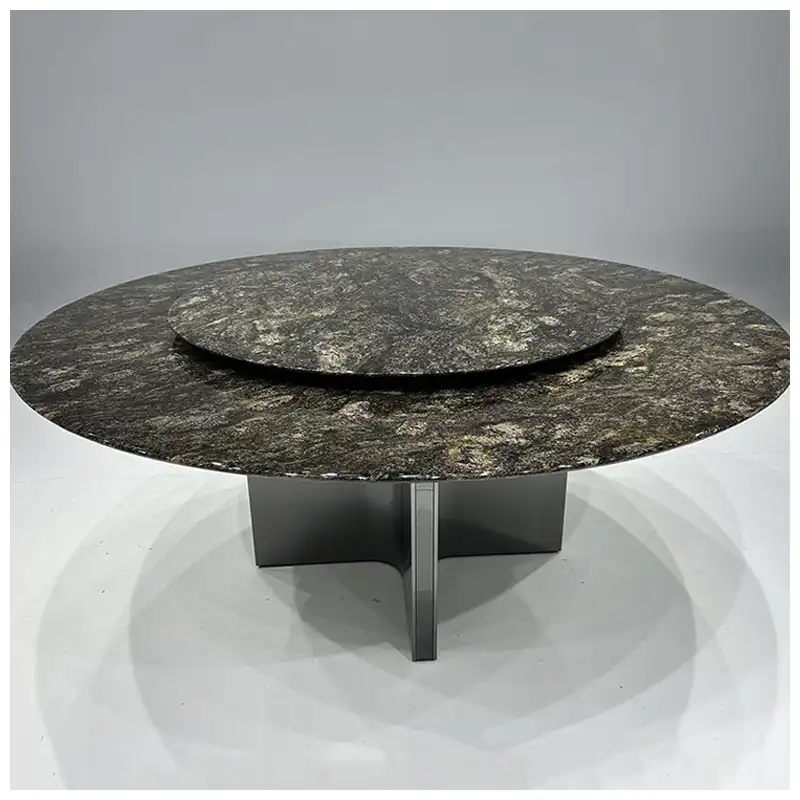
Metalicus Granite round tables come with integrated rotating lazy‑susan center tray. Polished granite top features dark metallic‑speckled gold‑silver veined texture. Custom diameters 150‑220cm, 20‑30mm thickness. Stable cross‑shaped metal base. Hard, scratch‑resistant natural granite. Ideal for villa dining rooms, hotel restaurants, high‑end residential projects for designers and contractors.
Stone Furniture Item: Natural Metalicus Granite Round Table Glossy Granite Tabletop With Lazy Susan For Hotel Dining Space
Table Material:Metalicus Granite
Dimensions: 11.81'' H X 39.4'' L X 23.6'' W. Or Customized
Table Thickness: 18mm, 20mm
Surface: high polished, Crystallized Polished, High Glossy
MOQ: 5 sets
Luxury Stone Table Factory: KA UNITED
Table Usages: Luxury Exotic Quartzite, Onyx, and Natural Marble Table Sets are suitable for any interior display in Hotels, VIP room, Villas, Office, Mansion, Coffee Shops, restaurants, and Boutique Stores.
Product Introduction
Quick Summary
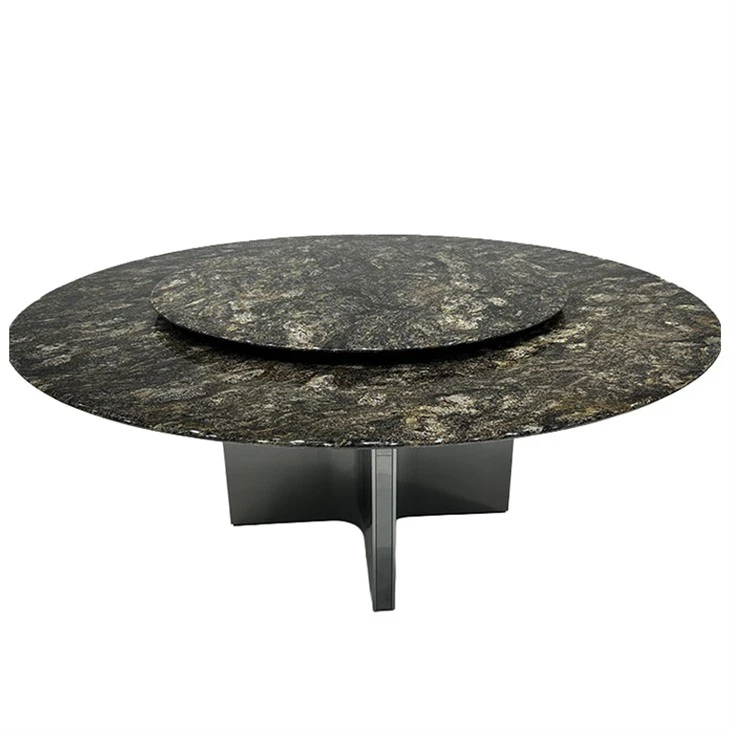
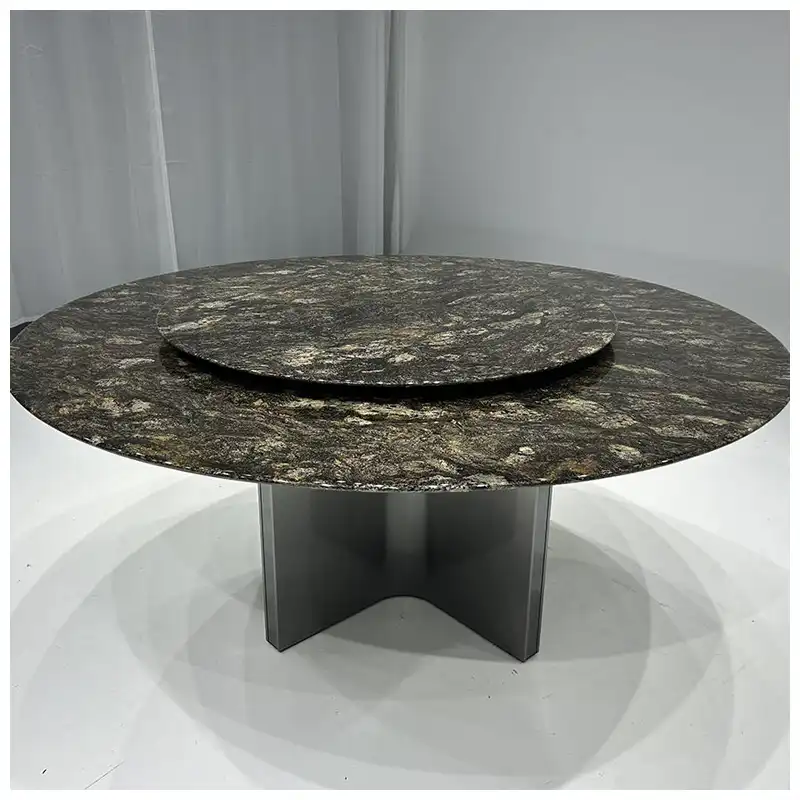
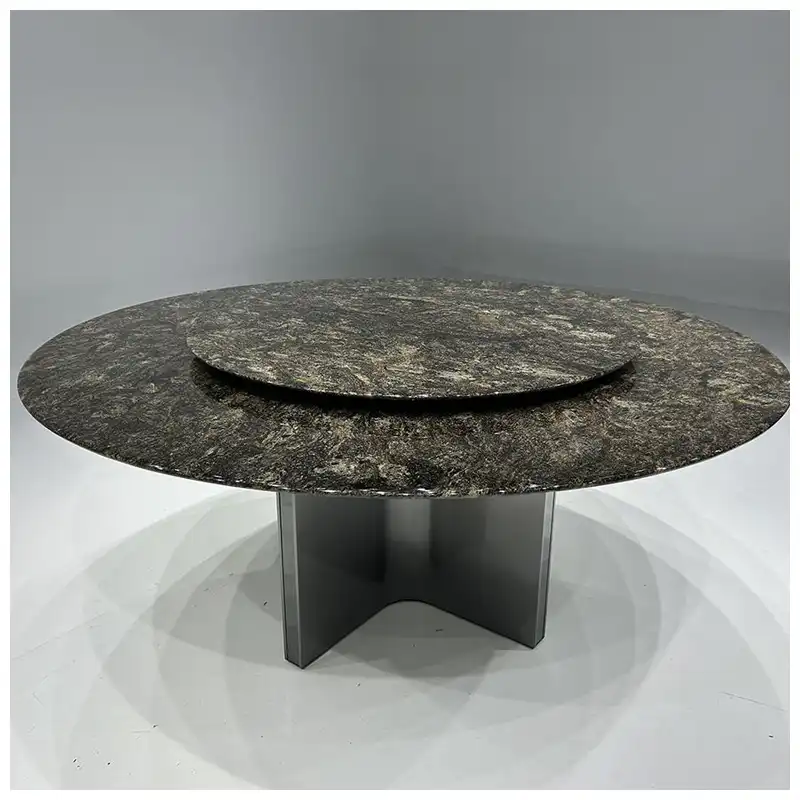
Metalicus Granite Round Tables are custom natural-stone dining tables designed around a 150cm / 59.05-inch round polished granite tabletop, a 75cm / 29.52-inch overall height, and a centrally integrated 70cm / 27.55-inch rotating Lazy Susan. The supplied product image shows a dark grey-to-black tabletop with complex gold, bronze, silver-grey, cream, and lighter mineral movement supported by a contemporary cross-shaped metal base. For a custom Metalicus granite round dining table, the tabletop diameter and thickness, rotating-tray clearance, bearing mechanism, base geometry, finished weight, stone selection, edge profile, packing, delivery route, and site assembly should be confirmed before fabrication.
|
|
Custom Round Granite Dining Furniture with Rotating Center Tray Luxury Metalicus Granite Round Dining Table with Built-In Lazy Susan and Metal BaseMetalicus Granite Dining Tables combine a large circular natural-stone surface with a dedicated rotating center tray for shared dining. The 150cm table diameter creates a substantial visual centerpiece while the 70cm Lazy Susan keeps the central stone pattern coordinated with the surrounding tabletop. The reference image also shows a dark contemporary cross-shaped metal support positioned beneath the tabletop. Final metal section dimensions, finish, connection plates, leveling feet, bearing location, stone support area, and assembly sequence should be confirmed on the production drawing.
|

What Defines This Metalicus Granite Round Dining Table?
Metalicus Granite Round Dining Tables are defined by three coordinated elements: a broad circular natural-stone tabletop, a smaller rotating stone disc at the center, and a metal base designed to carry the complete assembly without visually overpowering the granite.
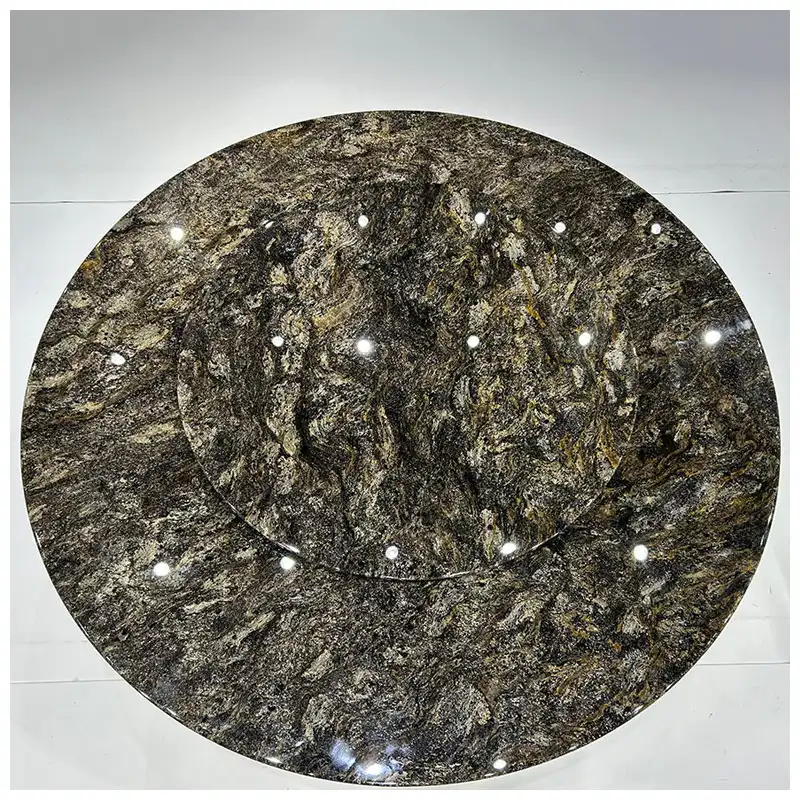
The supplied image shows a polished dark stone surface with dense multidirectional mineral movement rather than a simple linear vein. Gold and bronze highlights appear throughout the grey-black field, while cream and silver-grey areas add contrast under reflected lighting.
Metalicus Granite Lazy Susan Tables are particularly suitable for shared dining because dishes can be positioned on the central rotating tray while place settings remain on the stationary outer tabletop.
The 150cm diameter provides enough visual area for the natural granite pattern to remain visible around the 70cm rotating center. The approximately 40cm radial difference between the table edge and Lazy Susan edge also creates a stationary dining zone around the rotating disc.
Metalicus Granite Home Tables can be used in villa dining rooms, premium apartments, large private residences, club-style interiors, and selected hospitality dining environments where dark natural stone and modern metal furniture are part of the design language.
Natural stone variation is unavoidable. The exact concentration of gold, bronze, cream, grey, and dark mineral areas will differ between slabs, so the complete tabletop and rotating-disc cutting layout should be approved from the actual selected material.
What Are the Verified Table and Lazy Susan Dimensions?
The supplied table reference is 150cm in diameter × 75cm high, equivalent to approximately 59.05 × 29.52 inches. The integrated rotating tray is 70cm / 27.55 inches in diameter. These dimensions establish the basic furniture geometry, but tabletop thickness, Lazy Susan elevation, bearing depth, base footprint, and finished weight still require project confirmation.
| Specification | Supplied Reference | Buyer Value | What Must Be Confirmed |
|---|---|---|---|
| Table Diameter | 150cm / 59.05 inches | Defines seating layout, room footprint, granite yield, outer dining zone, and base support requirement | Chair count, circulation, edge clearance, slab size, base footprint, lifting, and delivery access |
| Overall Height | 75cm / 29.52 inches | Establishes dining ergonomics and relationship between tabletop, Lazy Susan, base, and chairs | Finished tabletop thickness, bearing assembly, metal-base height, leveling feet, and floor condition |
| Lazy Susan Diameter | 70cm / 27.55 inches | Provides a central rotating serving area while retaining approximately 40cm of stationary tabletop around it | Bearing size, rotation clearance, stone thickness, edge finish, center alignment, weight, and removable access |
| Tabletop Thickness | Custom | Changes visual proportion, finished weight, edge treatment, base loading, and Lazy Susan integration | Actual stone condition, table span, base support area, underside fabrication, reinforcement if required, and handling method |
The Rotating Tray Must Be Engineered as Part of the Table, Not Added Afterward
The 70cm stone Lazy Susan introduces its own weight, bearing load, clearance, rotation tolerance, center alignment, and maintenance requirements. The bearing assembly, stone thickness, support plate, gap around the rotating disc, finished elevation, removal method, and connection to the metal base should therefore be resolved before the main tabletop is fabricated.
Verified Product Specifications of Granite Dining Tables
| Product Type | Custom round natural granite dining table with integrated rotating center tray |
| Material | Natural Metalicus Granite according to the supplied product specification |
| Reference Table Size | Ø150 × H75cm / D59.05 × H29.52 inches |
| Lazy Susan Diameter | Ø70cm / 27.55 inches |
| Tabletop Shape | Round |
| Reference Surface | High-gloss polished granite surface as shown in the supplied image |
| Color Character | Dark grey to black base with complex gold, bronze, silver-grey, cream, and lighter natural mineral movement |
| Reference Base | Cross-shaped metal base visible in the supplied product image; final section, finish, dimensions, and connection method subject to approved drawing |
| Customization | Table diameter, height, tabletop thickness, Lazy Susan diameter, edge profile, stone layout, metal-base geometry, metal finish, bearing system, packing, and assembly method |
| Applications | Private villas, luxury apartments, high-end residential dining rooms, hotel restaurants, clubhouse dining spaces, private dining rooms, and hospitality interiors |
| View Category | KA UNITED Stone Furniture |
|
Show dark granite background, gold and bronze mineral movement, silver-grey highlights, polished reflection, natural fissures, repaired areas, edge quality, and actual slab variation. |
How Should the Metalicus Granite Pattern Be Selected?A 150cm circular tabletop uses a large visual area, so the stone should be approved from the full round cutting layout rather than from a small sample. Some areas may appear predominantly dark, while others can contain stronger gold, bronze, cream, or silver-grey mineral concentrations. The balance of these zones determines the final visual character of the table. The rotating center tray should ideally be planned from compatible stone so it does not look disconnected from the surrounding outer top. Depending on available material, the tray can either continue the general pattern direction or deliberately create a centered contrast. Natural fissures, repaired features, and mineral boundaries should be reviewed before the circular top, rotating disc, edge, or underside support zones are finalized. |

How Should the 70cm Lazy Susan Be Designed?
The central rotating tray must turn smoothly while remaining level with, or intentionally raised above, the surrounding tabletop according to the approved furniture design.
The production drawing should define the Lazy Susan stone thickness, bearing diameter, bearing load capacity, metal support plate, center point, clearance gap, finished elevation, anti-rattle details, removal method, and maximum intended service load.
The circular gap between the rotating disc and main tabletop should be consistent enough to avoid rubbing but not unnecessarily wide. Tolerance should account for stone machining, bearing movement, installation, and normal cleaning access.
A removable system can simplify bearing inspection and cleaning beneath the stone disc. The method of lifting or removing the rotating tray should be established before final fabrication because a heavy polished stone disc is not practical to handle without a defined procedure.
Before shipment, the completed assembly should be rotation-tested to check smooth movement, centering, level, clearance, noise, wobble, and contact between the stone tray and surrounding top.
What Should Be Checked in the Lazy Susan Mechanism?The rotating mechanism is a mechanical component beneath a heavy natural-stone disc, so it should be selected according to the actual disc weight and intended dining use rather than by diameter alone. The bearing should sit on a stable support plate connected to the table structure. Uneven bearing support can produce wobble, noise, resistance, or unwanted point loading beneath the granite. The stone disc must remain centered during rotation. The bearing center, stone center, metal support center, and overall table center should therefore share the same approved reference axis. Where the design uses a raised rotating tray, the exposed edge should be finished carefully because it becomes a visible and frequently handled detail. Final bearing specification, service load, material, corrosion protection, and maintenance requirements should be confirmed from the selected hardware rather than assumed. |
Show the 70cm stone rotating tray, bearing, center axis, support plate, clearance gap, finished elevation, underside hardware, and factory rotation testing. |

How Does the Cross-Shaped Metal Base Support the Granite Top?
The reference table uses a central cross-shaped metal base that keeps the support concentrated below the tabletop while leaving more open space around the dining perimeter.
The metal structure should distribute the weight of both the 150cm granite top and the 70cm rotating stone tray without creating excessive point loads at the underside of the stone.
The production drawing should show the metal section dimensions, cross-arm geometry, support plates, welds, fasteners, bearing support, stone-contact pads, leveling feet, finished base height, and tabletop connection method.
Metal finish should be selected according to the project interior and maintenance requirements. Dark metal, brushed metal, bronze-tone, or another approved finish can create different visual relationships with the gold and silver mineral movement in the granite.
The final base footprint must also leave practical leg and chair clearance for diners rather than being designed only around structural support.
|
Show granite thickness, polished edge, underside support plates, cross-shaped metal base, stone-contact pads, connection hardware, leveling feet, and chair-clearance relationship. |
Why Must the Tabletop and Base Be Engineered Together?A 150cm stone dining top has substantial mass, and the central rotating tray adds another concentrated load. The granite and metal base therefore function as one furniture system rather than independent decorative components. A larger support plate can distribute load more effectively but may increase metal visibility from seated positions. A smaller support area may look cleaner but must still provide adequate structural support. Underside reinforcement, stone-contact pads, or additional support may be required depending on the actual granite thickness, natural features, base geometry, and engineering review. Final load capacity and structural performance should be based on the completed design and actual components rather than generic statements about granite hardness. |

What Can Be Customized for High-End Dining Projects?
| Custom Item | Available Direction | Decision Factors |
|---|---|---|
| Table Diameter | 150cm reference or custom round diameter | Chair quantity, room circulation, stone yield, base footprint, finished weight, and installation access |
| Table Height | 75cm reference or project-specific dining height | Chair seat height, tabletop thickness, bearing assembly, base height, floor finish, and ergonomic requirement |
| Lazy Susan Diameter | 70cm reference or custom diameter subject to table geometry | Outer dining zone, dish capacity, stone weight, bearing, rotation clearance, and visual proportion |
| Tabletop Thickness | Project specific | Diameter, stone condition, support plate, edge treatment, weight, bearing integration, handling, and engineering |
| Edge Profile | Straight polished, eased, bevelled, softly rounded, or approved custom profile | Stone thickness, user comfort, design language, polishing, natural fissures, and edge durability |
| Stone Layout | Dark-dominant, stronger gold movement, balanced metallic appearance, or buyer-selected round cutting area | Actual slab, Lazy Susan matching, fissures, repairs, edge location, base support, and project color palette |
| Metal Base | Custom section, cross geometry, height, support plate, metal finish, leveling feet, and connection details | Stone weight, stability, leg clearance, visual style, bearing support, floor protection, and on-site assembly |
Where Are Metalicus Granite Round Tables Best Used?
This table is best suited to dining environments that require both a strong dark-stone focal point and practical shared-table service. The rotating center tray makes the concept especially appropriate for large residential dining rooms, private hospitality areas, and club-style interiors.
Luxury Villa Dining RoomsThe 150cm circular form can anchor a dedicated dining zone while metallic mineral movement coordinates naturally with bronze, dark timber, neutral upholstery, and contemporary lighting. |
High-End ApartmentsA custom diameter can adapt the same design language to premium apartment dining rooms where circulation and lift access must be considered carefully. |
Hotel and Private Dining RoomsThe central rotating tray supports shared dining service while the granite provides a premium architectural furniture identity for hospitality environments. |
Clubhouse InteriorsDark polished granite, metallic mineral movement, and a contemporary metal base can suit private clubs, reception dining zones, and upscale communal interior spaces. |
How Does Metalicus Compare with Four Recommended KA UNITED Stone Tables?
Metalicus is the most function-led option in this comparison because the round dining top incorporates a dedicated rotating center tray and a visible contemporary metal base. Grand Antique shifts toward graphic black-and-white marble coffee furniture, Amazonite emphasizes turquoise-green quartzite, Fuchsite Crystal provides another expressive green quartzite direction, and Oval Travertine Dining Tables offer a warmer, quieter stone palette. Buyers should compare table function, natural stone appearance, shape, base construction, customization, seating relationship, maintenance, transport, and project positioning before selecting the final furniture concept.
| Selection Factor | Metalicus Granite Round Table | Grand Antique Marble Round Coffee Table | Amazonite Turquoise Quartzite Table | Fuchsite Crystal Quartzite Table | Oval Travertine Dining Table |
|---|---|---|---|---|---|
| Appearance | Dark grey-black granite with gold, bronze, silver-grey, and cream natural mineral movement. | Graphic black brecciated marble with dramatic fragmented white bands. | Turquoise-green quartzite with cream, beige-gold, grey, and dark mineral areas. | Green crystal quartzite direction with distinctive natural mineral movement. | Warm beige travertine direction with quieter tonal movement and natural pore character. |
| Product Form | Round dining table with integrated rotating stone tray and cross-shaped metal base. | Round coffee-table format with customizable diameter and stone or metal base direction. | Rectangular dining-table format with broad quartzite top and stone support elements in the supplied reference. | Quartzite dining-table direction; final tabletop geometry and base style subject to product specification. | Oval dining-table format for softer circulation and a warmer sculptural furniture profile. |
| Functional Focus | Shared dining with 70cm rotating Lazy Susan, circular seating, metal support, and custom engineering. | Lounge and coffee-table use with strong visual impact rather than shared dining rotation. | Long-axis residential dining with strong turquoise stone character. | Statement green-quartzite dining furniture with project-specific geometry and stone selection. | Conventional shared dining with an oval footprint and warmer neutral natural-stone character. |
| Customization Priority | Table diameter, Lazy Susan diameter, bearing system, granite pattern, thickness, edge, metal base, and finished height. | Diameter, black-white stone pattern, thickness, edge, base design, and coffee-table height. | Rectangular size, turquoise stone layout, thickness, edge, base position, and support design. | Actual quartzite selection, tabletop dimensions, edge profile, base geometry, and finish. | Oval proportions, travertine selection, tabletop thickness, edge, base geometry, and dining height. |
| Project Positioning | Best where a dark luxury dining table must combine natural stone, shared-table functionality, and contemporary metal engineering. | Best where graphic black-and-white marble should dominate a lounge or reception seating arrangement. | Best where turquoise-green natural stone should define the dining room's color identity. | Best where green crystal quartzite becomes the primary luxury furniture statement. | Best where warm beige natural texture and softer oval geometry suit the project better than dark stone. |
What Should Be Approved Before Metalicus Granite Table Production?
The tabletop, Lazy Susan, bearing, metal base, and connection system should be treated as one coordinated furniture assembly. Production should begin only after the actual stone and mechanical details have been approved together.
- Approve the actual Metalicus granite slab and the circular cutting area for the 150cm tabletop.
- Approve the stone area used for the 70cm rotating tray and its visual relationship with the outer top.
- Confirm final table diameter, overall height, tabletop thickness, edge profile, and Lazy Susan elevation.
- Confirm the rotating tray diameter, thickness, finished weight, center axis, clearance gap, and removal method.
- Select the bearing according to the actual rotating-disc weight and intended service load.
- Approve the metal support plate beneath the Lazy Susan and its connection to the main base.
- Confirm cross-shaped metal-base dimensions, section size, welds, finish, stone-contact pads, leveling feet, and connection hardware.
- Review natural fissures, mineral boundaries, repaired areas, and potential weak zones before cutting the round tabletop and center disc.
- Confirm seating quantity and chair clearance around the final base footprint.
- Confirm the finished table and component weights where required for floor loading, lifting, delivery, or installation planning.
- Measure doors, corridors, stairs, elevators, turning areas, and room entrances before approving component dimensions.
- Complete factory trial assembly and rotation testing before packing.
- Code the outer tabletop, rotating tray, bearing, metal base, hardware, pads, and installation accessories separately.
- Do not describe the natural granite as scratch-proof, stain-proof, heat-proof, or indestructible without verified testing for the actual material and finish.
How Should Factory QC, Rotation Testing, and Packing Be Managed?The main tabletop should be inspected for diameter, circularity, thickness, polished surface, edge profile, actual stone pattern, underside support area, natural fissures, repaired features, and compatibility with the metal support system. The 70cm rotating tray should be checked for diameter, thickness, edge finish, balance, center alignment, underside bearing connection, clearance, and compatibility with the selected bearing. After full trial assembly, the Lazy Susan should rotate through multiple complete cycles to check smooth movement, wobble, rubbing, noise, clearance, bearing stability, and level. The metal base should be checked for dimensions, weld quality, support-plate position, finished coating, connection points, leveling, and compatibility with the stone components. The tabletop, rotating stone disc, metal base, bearing, and hardware should be protected and packed as controlled components rather than allowing heavy metal parts to contact polished stone surfaces during transport. Pre-shipment records can document dimensions, stone appearance, trial assembly, rotation testing, table level, component coding, packing arrangement, and crate condition. |
Show completed table assembly, Lazy Susan rotation test, diameter checking, table level, bearing inspection, metal-base QC, component coding, and protective packing. |

How Should a Metalicus Granite Dining Table Be Maintained?
Use a soft cloth and a pH-neutral cleaner formulated for natural stone for routine tabletop cleaning. Remove loose grit before wiping so abrasive particles are not dragged across the polished surface.
Granite is generally selected for comparatively hard natural-stone surfaces, but the finished table should not be described as completely scratch-proof, stain-proof, heat-proof, or maintenance-free without verified testing of the actual stone and finish.
Use trivets or protective pads under very hot cookware and avoid dragging rough ceramic, metal, or stone objects directly across the polished top.
Wine, oil, sauces, coffee, pigments, and other spills should be removed promptly. A compatible penetrating sealer may reduce absorption and provide additional cleaning time, but it does not create an impermeable or damage-proof surface.
The rotating tray requires additional care. Food debris or liquids should not be allowed to accumulate inside the clearance gap or bearing area, and the mechanism should be inspected if rotation becomes uneven, noisy, or resistant.
The metal base, leveling feet, fixing hardware, stone-contact pads, and bearing should also be inspected periodically according to actual use and the selected hardware manufacturer's maintenance requirements.
What Does the Table Look Like in a Completed Dining Interior?This image position should show the completed Metalicus granite table inside a villa dining room, luxury apartment, private dining room, hotel restaurant, clubhouse, or premium hospitality interior. A useful application photograph should show the entire 150cm round table, central Lazy Susan, dining chairs, pendant light, floor finish, surrounding cabinetry or wall finishes, and the relationship between chair positions and the metal-base footprint. The completed installation should demonstrate both the metallic natural-stone appearance and the practical shared-dining function of the rotating center tray. |
Use a completed villa dining room, apartment, hotel restaurant, private dining room, clubhouse, or hospitality project showing the table, chairs, lighting, and full interior context. |

Recommended Stone Tables from KA UNITED
KA UNITED offers four related stone-table directions for buyers comparing Metalicus with alternative luxury furniture concepts. Grand Antique Marble Round Coffee Tables use bold black-and-white brecciated marble for lounges and reception spaces where graphic contrast is the priority. Amazonite Turquoise Quartzite Tables introduce turquoise-green, cream, and beige-gold movement for color-led dining interiors. Fuchsite Crystal Quartzite Tables provide another expressive green quartzite direction for luxury residential and hospitality projects. Oval Travertine Dining Tables shift toward a warmer beige palette and softer furniture geometry for understated interiors. Together with Metalicus, these products allow designers, contractors, hospitality buyers, and homeowners to compare table function, natural-stone color, tabletop shape, base system, customization, maintenance, handling, and project positioning before final selection.
Grand Antique Marble Round Coffee TablesGraphic black-and-white marble round tables for hotel lounges, villas, reception areas, apartments, showrooms, and statement seating interiors. View More |
Amazonite Turquoise Quartzite TablesTurquoise-green quartzite dining furniture for villas, luxury apartments, display residences, and interiors requiring distinctive natural color. View More |
Fuchsite Crystal Quartzite TablesGreen crystal quartzite furniture for luxury dining spaces, villas, hospitality interiors, private residences, and statement stone projects. View More |
Oval Travertine Dining TablesWarm beige travertine dining tables for villas, minimalist interiors, hospitality projects, luxury residences, and softer neutral design schemes. View More |


FAQ About Metalicus Granite Round Tables
1. What are the reference dimensions of the Metalicus granite dining table?
The supplied reference table measures 150cm / 59.05 inches in diameter and 75cm / 29.52 inches high. The central rotating Lazy Susan measures 70cm / 27.55 inches in diameter. Final tabletop thickness, bearing height, metal-base dimensions, and component weights should be confirmed on the fabrication drawing.
2. Can the table diameter and Lazy Susan size be customized?
Yes. The main tabletop diameter, overall height, tabletop thickness, rotating-tray diameter, edge profile, granite selection, metal-base design, and finish can be customized. The final Lazy Susan size should remain proportional to the table while providing sufficient stationary dining space, suitable bearing capacity, rotation clearance, and stable structural support.
3. How is the stone Lazy Susan supported and rotated?
The rotating stone disc requires a suitable bearing and support assembly centered beneath the tray. Final bearing diameter, load capacity, support plate, stone thickness, clearance gap, finished height, service load, removal method, and connection to the table base should be confirmed from the actual hardware and approved furniture drawing.
4. Will every Metalicus granite table have the same metallic pattern?
No. Natural stone varies in dark background tone, gold and bronze mineral concentration, silver-grey and cream areas, fissures, and repaired features. Buyers should approve the actual selected stone and circular cutting layout when the relationship between the main tabletop and rotating center tray is important.
5. Is Metalicus granite scratch-proof and stain-proof for daily dining?
No natural-stone tabletop should be described as completely scratch-proof, stain-proof, heat-proof, or maintenance-free without verified testing for the actual material and finish. Use pH-neutral stone cleaners, remove spills promptly, avoid dragging abrasive objects, use protection beneath very hot cookware, and follow the selected sealer and maintenance recommendations.
6. What should be approved before custom table production begins?
Approve the actual Metalicus granite, 150cm tabletop cutting area, 70cm Lazy Susan stone selection, final table diameter and height, tabletop and tray thicknesses, edge profiles, bearing specification, rotation clearance, metal-base dimensions and finish, support plates, connection method, finished weights where required, chair clearance, trial-assembly and rotation-testing requirements, component coding, packing plan, delivery route, destination, and site assembly method.
Final Product Overview
Metalicus granite round dining tables combine a dark metallic natural-stone surface, circular shared-dining geometry, a 70cm rotating center tray, and a contemporary metal support system. Successful execution depends on actual stone approval, coordinated tabletop and Lazy Susan geometry, appropriate bearing selection, structurally suitable metal support, adequate chair clearance, factory rotation testing, protected component packing, verified delivery access, and professional assembly.

Request a Custom Metalicus Granite Dining Table ProposalSend KA UNITED the required table diameter and height, tabletop thickness, Lazy Susan diameter, granite pattern preference, edge profile, metal-base design and finish, seating plan, quantity, room access information, destination, and project schedule.
|
Inquiry Checklist1. Confirm table diameter and height. 2. Confirm tabletop thickness. 3. Confirm Lazy Susan diameter and bearing. 4. Select the Metalicus granite range. 5. Confirm edge and metal-base design. 6. Confirm seating and delivery access. 7. Provide quantity, destination, and schedule. |
Hot Tags: metalicus granite round tables, China metalicus granite round tables suppliers, factory
You Might Also Like



Send Inquiry
