



African Black Granite Tiles
Premium natural Africa Black granite tiles with natural split rough surface. Solid deep black tone with raw stone texture, excellent anti-slip performance, extreme weather & freeze-thaw resistance, high density and ultra-low water absorption. Ideal for outdoor landscape paving, building external wall cladding, villa patios and public plaza projects. Factory dry-lay service ensures consistent color for large-area installation.
Natural Granite: Custom Natural Split African Black Granite Tiles Weatherproof for Exterior Wall Cladding & Patio Paving
Granite Colors:African Black Granite, Pure Black Granite
Granite Tile Size: 24’’x24’’,24’’x12’’,12’’x12’’ etc.
Thickness: 20,30mm
Surface: Polished, Honed, Brushed
MOQ: 300 SQM
Granite Tiles Factory: KA UNITED
Application: High Quality and Good Prices Blue Granite Stone in KA UNITED Factory For Indoor and Outdoor Floors, Walls, Countertops, and other Commercial Projects
Product Introduction
Quick Summary: African Black Granite Tiles are natural stone tiles with a rugged split-face surface and a dark charcoal-to-black crystalline appearance. The collection includes square and rectangular cut-to-size formats, with nominal 20 mm and 30 mm thickness options. These tiles are intended for consideration in outdoor paving, landscape pathways, terraces, architectural walls and exterior facade cladding. Their fractured surface introduces irregular relief that affects walking comfort, joint detailing and installation thickness. Wet slip resistance, frost durability, traffic loading and facade fixing must be verified for the intended project rather than assumed from the granite name or textured finish alone.
African Black Granite Split Face Tiles for Outdoor Paving, Landscapes and Exterior Wall Cladding
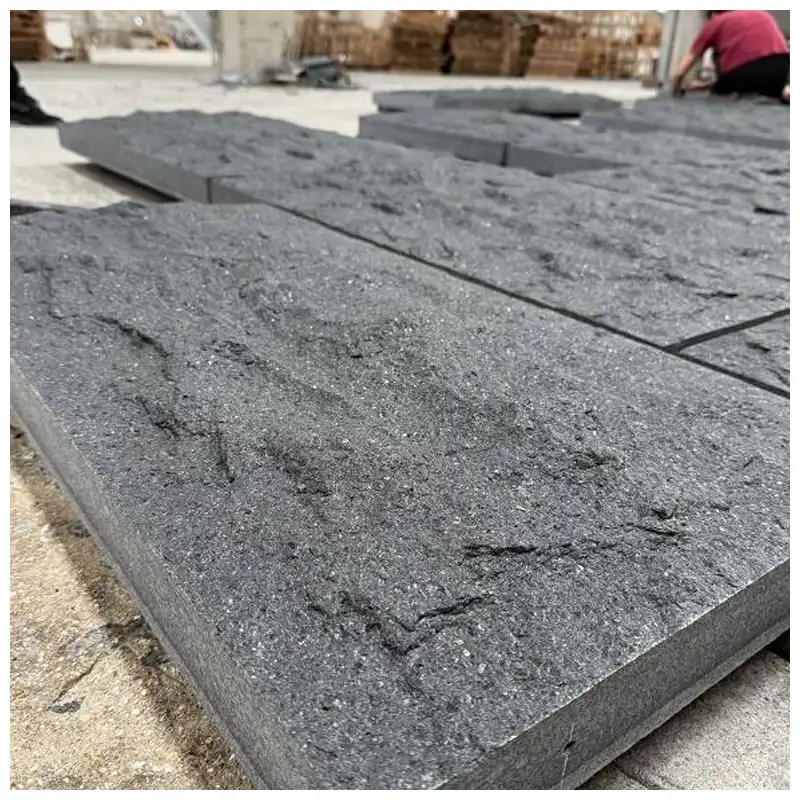
Natural split-face granite is selected when the stone surface itself needs to introduce pronounced texture. The fractured face creates small ridges, shallow depressions and irregular mineral planes that remain visible across individual tiles and larger paved areas.
African Black Granite Paving Tiles can be incorporated into residential entrance paths, garden walkways, landscaped courtyards, pedestrian terraces and public-space paving layouts. Their dark mineral color works alongside planting, concrete edging, timber, weathered metal and lighter paving materials.
For vertical construction, African Black Granite Wall Tiles introduce a dimensional finish to boundary walls, exterior entrance features, landscape retaining-wall facing and other appropriately supported wall assemblies.
The selected application determines how the stone must be processed and installed. A pedestrian paving tile, driveway paver and mechanically anchored facade panel cannot be treated as interchangeable components merely because they share the same natural stone.
Where the Split-Face Finish Works Best
Garden Pathways
Textured black granite establishes defined routes through planted gardens and landscape courtyards, subject to comfortable walking relief and drainage.
Terraces and Patios
Outdoor sitting areas can use split-face stone where the selected finish meets the required walking-surface performance.
Landscape Walls
Dark fractured surfaces create a strong textural contrast with planting beds, rendered walls and architectural lighting.
Building Facades
Cut-to-size granite facing may be used within properly designed exterior cladding systems after structural and fixing assessment.
Natural Split Face: Surface Relief, Mineral Color and Stone Character
African Black Granite is a commercial name used for dark natural stone. Different sources may be marketed under similar names, so the actual quarry material should be established through current samples and supply documentation.
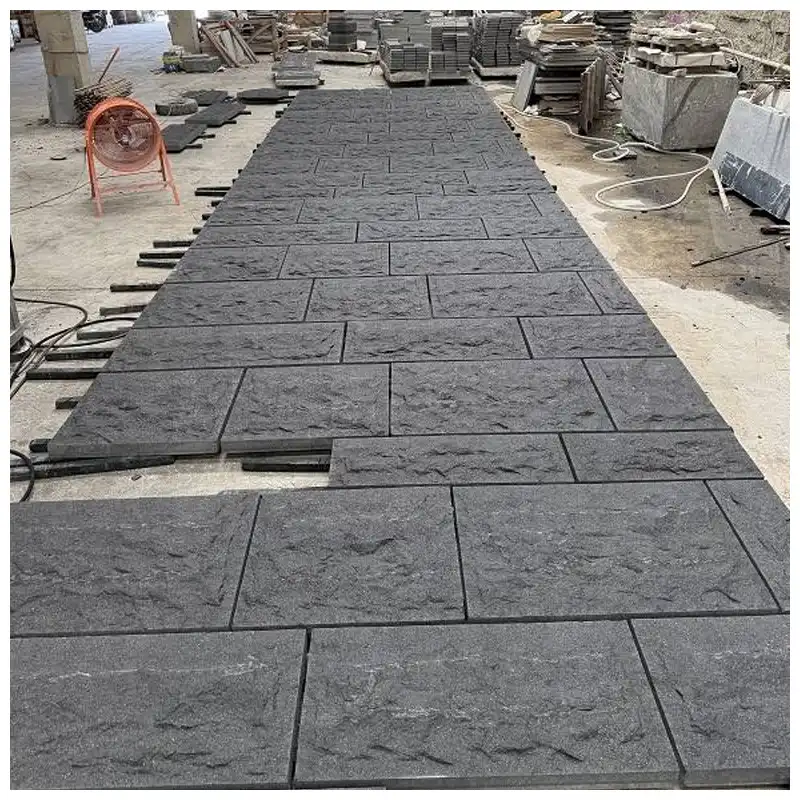
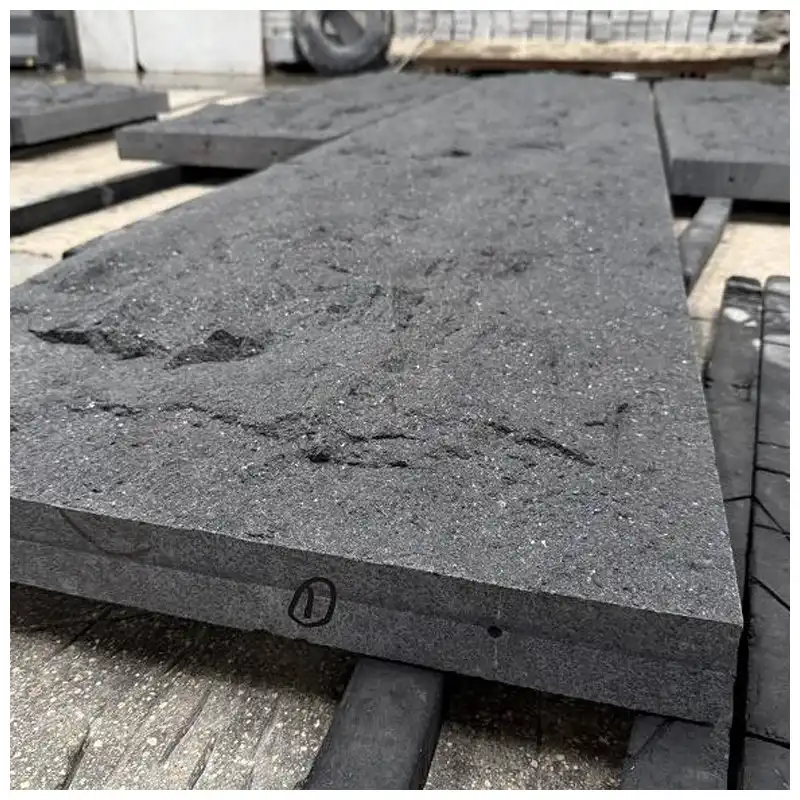
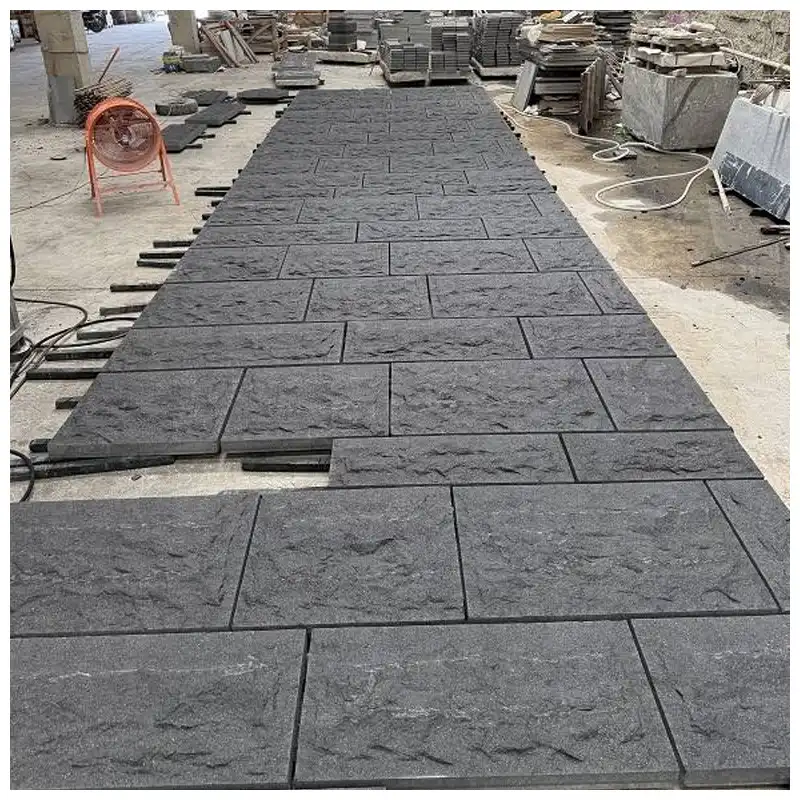
The supplied product image shows a charcoal-black surface with a fine granular background and locally pronounced fracture markings. Rather than a smooth factory-polished face, individual tiles display variations in surface elevation, mineral exposure and fractured outlines.
This finish is produced by mechanically splitting the stone to expose a naturally broken face. The result is intentionally irregular. Differences in relief between neighboring tiles are part of the visual character, although excessive projections may be unacceptable in certain pedestrian locations.
Lighting changes the apparent color. Direct sunlight can expose lighter mineral grains, while rain may temporarily deepen the black appearance. Buyers should inspect both dry and wet sample surfaces before approving the finish for exposed architectural work.
The surface character is more pronounced at close range than on a distant facade. For that reason, the acceptable relief depth and surface appearance should be established against a physical control sample rather than judged from a small catalog photograph.
Split-Face Naming and Material Approval
The product is also requested as Africa Black Granite Tiles or simply Africa Black Granite. Both names should refer to the approved stone sample and finish rather than being used to assume a particular geological source.
Purchasing searches sometimes use the expressions Black Granite Splited Face Tiles and Natural Splited Granite Tiles. The correct fabrication term is natural split-face granite tiles. The important selection details are the stone identity, fracture profile, thickness tolerance and usable installation face.
African Black Granite Tile Sizes, Thickness and Edge Preparation
The product is available for specification in square and rectangular formats. These dimensions can support regular courses, staggered paving patterns and modular wall layouts. Actual manufacturing tolerances and the dimensional effect of the split surface must be agreed before production.
| Natural Split African Black Granite Specifications | |
|---|---|
| Material | Natural Black Granite |
| Commercial Name | African Black / Africa Black |
| Color | Dark Charcoal to Black |
| Surface | Natural Split Face |
| Size 1 | 12" × 12" / Approx. 305 × 305 mm |
| Size 2 | 24" × 24" / Approx. 610 × 610 mm |
| Size 3 | 24" × 12" / Approx. 610 × 305 mm |
| Size 4 | 18" × 24" / Approx. 457 × 610 mm |
| Nominal Thickness | 20 mm / 30 mm |
| Edge Form | Sawn / Cut-to-Size |
| Alternative Finishes | Flamed, Bush-Hammered or Polished, Subject to Confirmation |
| Custom Processing | Project Drawing-Based Dimensions |

Why Nominal Thickness and Surface Relief Must Be Considered Separately
A naturally split tile is not necessarily flat across its entire exposed face. The nominal 20 mm or 30 mm specification needs a clear measurement convention, including whether thickness refers to the body, the minimum section or another agreed reference.
The highest surface projections should be considered when setting finished floor elevations and transitions to doors, thresholds, drains and adjoining paving materials. For vertical applications, the overall projection also affects the designed cladding depth.
Regular sawn edges can create a controlled modular grid, but they do not eliminate the need for movement joints or adjustment of the bedding beneath uneven stone surfaces. Custom border pieces, returns and paving transitions should be identified in the approved cutting schedule.
Split-Face Granite vs. Flamed and Bush-Hammered Surface Finishes
A split face is not the same as a flamed or bush-hammered surface. Each treatment modifies the stone differently, and the resulting topography affects both the visual appearance and the way a pedestrian interacts with the surface.
| Surface Finish | Physical Appearance | Project Consideration |
|---|---|---|
| Natural Split Face | Irregular fractured planes and varying raised sections | Relief depth, walking comfort, bedding and cleaning |
| Flamed | Thermally textured, granular surface | Exterior paving finish to assess through slip testing |
| Bush-Hammered | Repeated mechanical impact texture | Controlled surface roughness and visual texture |
| Polished | Smooth, reflective face | Decorative applications and separately assessed floors |
Does a Naturally Split Surface Guarantee Anti-Slip Performance?
No. Split-face stone has greater visible relief than a polished surface, but its actual slip performance must be tested. Surface roughness, irregular projections, water, footwear and contaminants can affect traction. A rough finish may also be uncomfortable for wheeled equipment or certain pedestrian routes.
For accessible routes, wet entrances, public walkways and other regulated areas, the surface must meet the relevant project performance requirements. The chosen test method and acceptance criterion should reflect the governing local specification.
If a natural split face is too uneven for the intended walking area, an alternative granite finish may be considered rather than assuming that a more heavily fractured surface is always safer.
General Granite Physical Properties and Required Project Testing
Natural granite is generally selected for its mineral hardness, abrasion resistance and structural strength. However, the commercial designation African Black can cover different source materials, and published figures cannot be transferred automatically to this product batch.
The values below are commonly cited screening benchmarks for granite dimension stone, not laboratory measurements or a certificate for the supplied African Black granite.
| Property | General Granite Reference | Project Interpretation |
|---|---|---|
| Bulk Density | ≥ 2,560 kg/m³ | Reference minimum for granite dimension stone; actual density required for design |
| Water Absorption | ≤ 0.40% by mass | Reference maximum, not a measured absorption value for this batch |
| Compressive Strength | ≥ 131 MPa | Reference minimum; requires applicable laboratory testing |
| Flexural Strength | ≥ 8.3 MPa | Reference minimum; actual panel performance depends on stone and geometry |
| Mineral Hardness | Typical granite mineral reference: Mohs 6–7 | Mineral hardness reference, not a complete product scratch-resistance test |
| Wet Slip Resistance | No product-specific result supplied | Test the finished split-face surface for the intended pedestrian conditions |
| Freeze-Thaw Resistance | No product-specific result supplied | Required where exterior stone faces freezing exposure |
The numerical benchmarks summarize general granite dimension-stone acceptance references, not test reports for this product. Actual acceptance must follow the applicable project specification, current test standard and laboratory results for the selected material. Split-face surface irregularity must also be considered in finished-component evaluation.
Landscape Paving Design: Bedding, Joints, Drainage and Surface Levels
African Black Granite Landscaping Tiles can be integrated into garden paths, courtyard surfaces and exterior pedestrian layouts. Their dark surface contrasts with light aggregates, pale edging stones and surrounding greenery. The main construction decisions involve more than selecting the paving pattern.
Managing Surface Height Variation
Split-face tiles should be inspected for both thickness and maximum surface projection. Individual pieces may need careful bedding adjustment to control abrupt changes in level between adjacent tiles.
Where paving meets drainage channels, door thresholds, stairs or accessible paths, finished elevations must be coordinated with the actual high points of the stone surface. Surface projections and joints should not create an unacceptable trip hazard.
Drainage and Joint Planning
Exterior stone paving requires a drainage arrangement suited to the substrate and climatic exposure. Standing water increases maintenance demands and may introduce additional hazards in freezing conditions.
Joint width should account for the cut edge tolerances, the surface character and movement requirements. Small decorative joints are not always appropriate for larger exterior paving modules.
Pedestrian Areas Versus Driveways
Pedestrian paving and vehicle-access surfaces require different load assessments. A 20 mm or 30 mm nominal thickness does not establish suitability for driveway loads, wheel contact or concentrated mechanical loading.
The structural design must determine the appropriate paving thickness, installation system and support conditions. Vehicle-bearing surfaces may need a different component specification from the standard tile formats described here.
African Black Granite Exterior Wall Tiles and Facade Installation
For building elevations, African Black Granite Facade Tiles create a dark surface with pronounced shadow lines. The three-dimensional relief can become especially visible when lighting strikes the wall at a shallow angle.
Compared with polished granite, a fractured face produces more variation in reflected light. The visual result depends on the projection depth, panel size, joint spacing and lighting position. Material samples should be viewed both nearby and from the intended building approach distance.
Wall Fixing and Structural Requirements
External facade panels must be evaluated for their self-weight, wind load, substrate capacity, attachment method and thermal movement. Large pieces may require a mechanically supported stone cladding system rather than a conventional tile adhesive arrangement.
The contractor should confirm minimum stone thickness at fixing locations, edge distances and the suitability of any drilled or kerfed sections. The fractured face does not establish the load-bearing strength of the panel.
Water Management Behind External Cladding
The external wall assembly must address water penetration, drainage, ventilation where applicable and the movement of the supporting structure. These requirements are independent of whether the exposed face is polished, flamed or split.
Wall corners, parapets, window returns and transitions to other facade materials should be detailed before fabrication. Coordinated cut-to-size drawings help prevent incorrect returns and inconsistent visible joint positions during installation.
Natural Split Granite Sorting, Factory Inspection and Export Packing
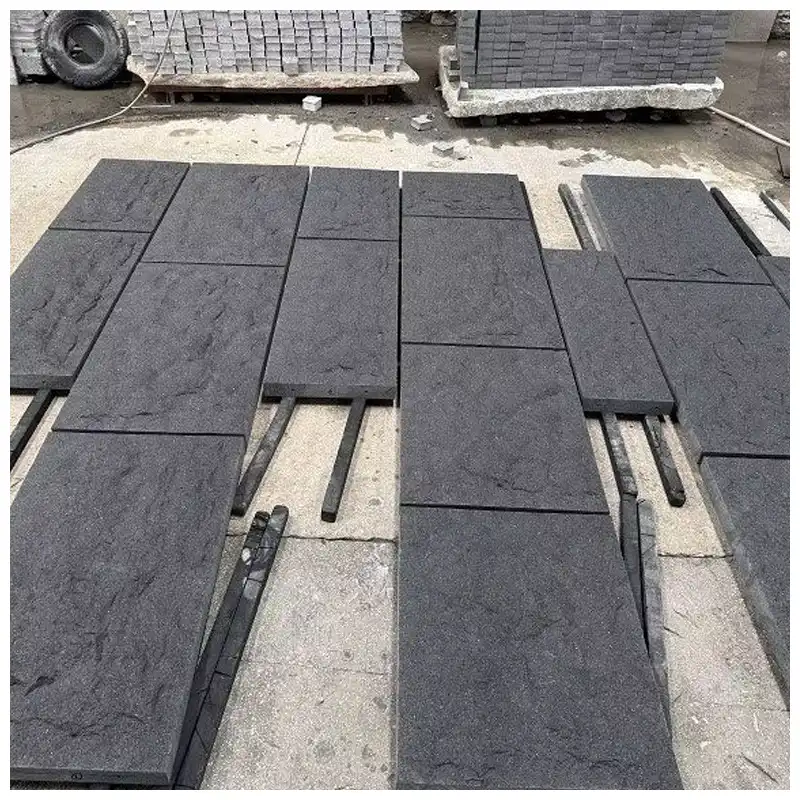
Inspection of split-face granite differs from inspection of a smooth polished tile. The natural fractures are intentional, but unstable flakes, loose corners, damage extending through the body and excessive variations outside the approved sample range require attention.
Dimensional checks should cover length, width, squareness, thickness and the condition of sawn edges. For exterior paving, it is also useful to assess representative assembled areas for unacceptable surface-level changes.
Stone color should be sorted against the approved reference range. A large architectural order may include natural differences between pieces, but an agreed distribution helps prevent visibly separated dark and light groups.
Packing must protect edges and corners from impact. Irregular faces should not be placed under damaging concentrated loads during stacking or shipment. Crate loading should be designed around the actual dimensions and weight of the finished stone.
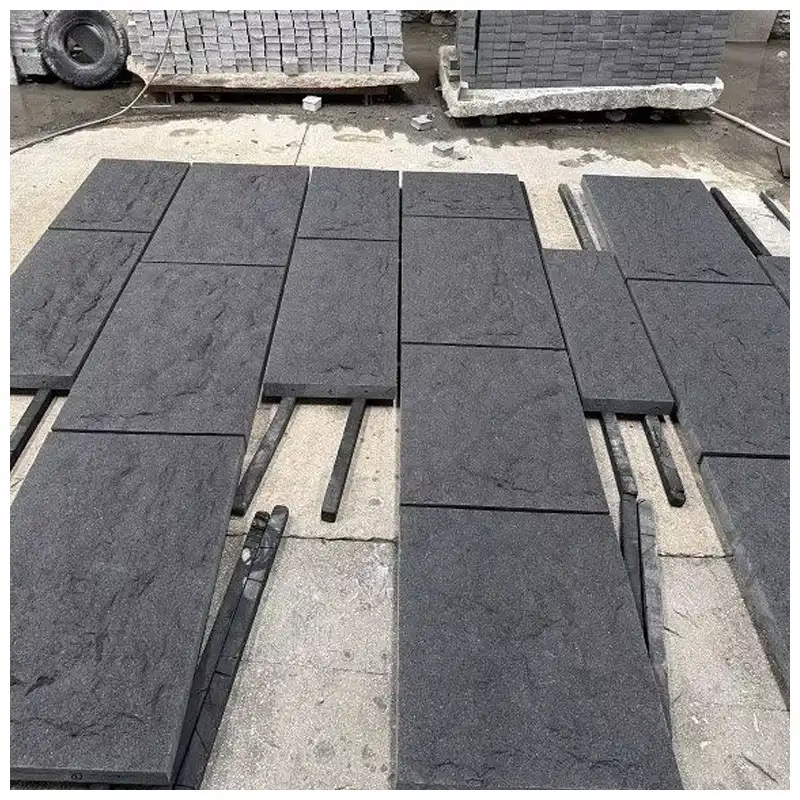
Factory sample layouts can assist with visual review and dimensional inspection. Numbered layouts are most useful where a project has specific borders, detailed installation zones or a prescribed stone distribution. They are not a substitute for site measurements or final installation checks.
Architectural Application Reference: Dark Split-Face Granite Paving

A regular modular layout can give rough split-face stone an orderly architectural rhythm. The sawn tile edges form a defined joint pattern, while the individual fractured faces prevent the paved area from appearing completely flat.
For landscaping projects, the dark granite can be paired with lighter paving bands or planting borders to separate pedestrian routes from adjacent outdoor areas.
Application photographs are helpful for assessing joint scale and surface appearance. They do not replace approval of the actual paving construction, wet slip resistance, drainage details or stone performance.
African Black Split-Face Granite Compared with Other Granite Tile Options
The selection below distinguishes architectural appearance and the type of finish being considered. Each alternative requires its own product specification and performance verification.
| Granite | Main Visual Character | Design Consideration |
|---|---|---|
| African Black Split-Face Granite | Dark charcoal-black field with pronounced fractured relief | Landscape surfaces and textured wall cladding |
| Viscount White Granite | Light background with flowing grey and black veins | Directional patterned walls and cladding |
| Splendor White Granite | Light natural mineral background | Brighter floor and wall compositions |
| Jet Mist Granite | Dark grey field with lighter linear markings | Dark stone designs with understated veining |
| Steel Grey Granite Leathered | Steel-grey crystalline texture with a brushed, low-sheen finish | More restrained surface relief than natural split face |
Recommended Granite Tiles from KA UNITED
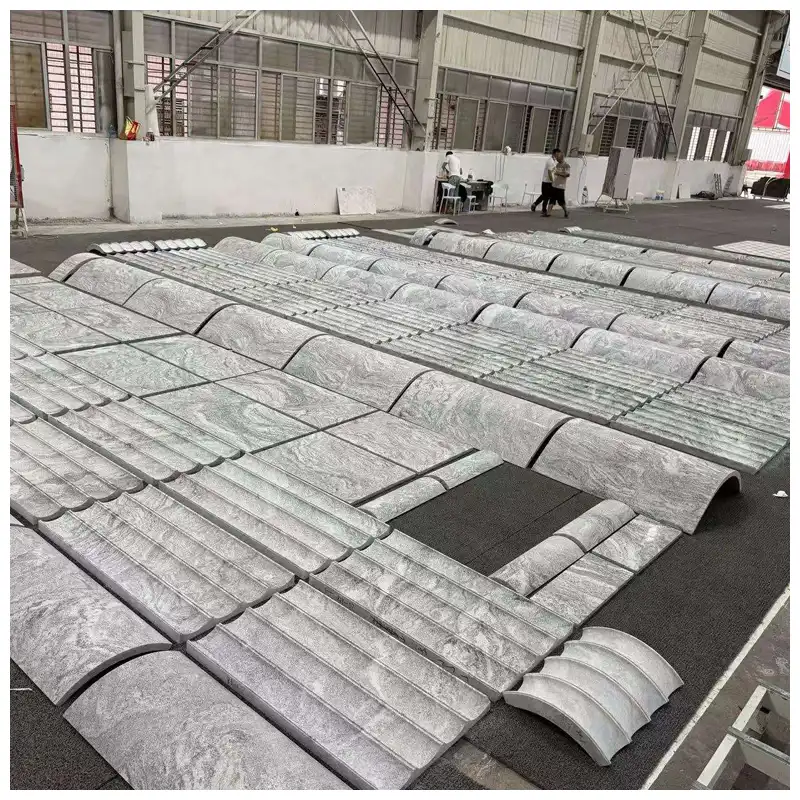
Viscount White Granite Wall Cladding Tiles
Broad grey and black veining creates architectural movement across light-colored granite wall and facade surfaces.
View More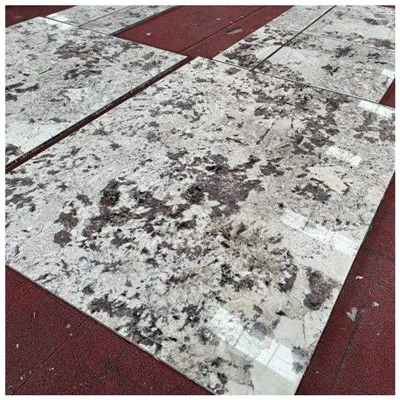
Splendor White Granite Tiles
A lighter granite palette for flooring and walls where bright mineral coloring is preferred over dark stone.
View More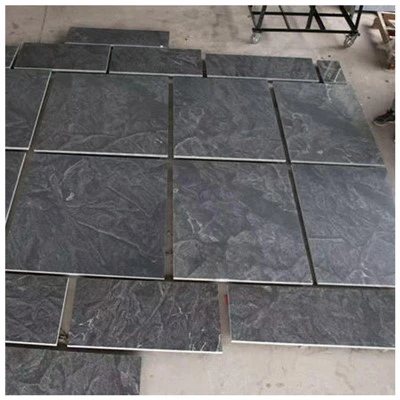
Jet Mist Granite Tile
Fine pale veining against dark charcoal stone introduces subtle directional detail to architectural surfaces and feature areas.
View More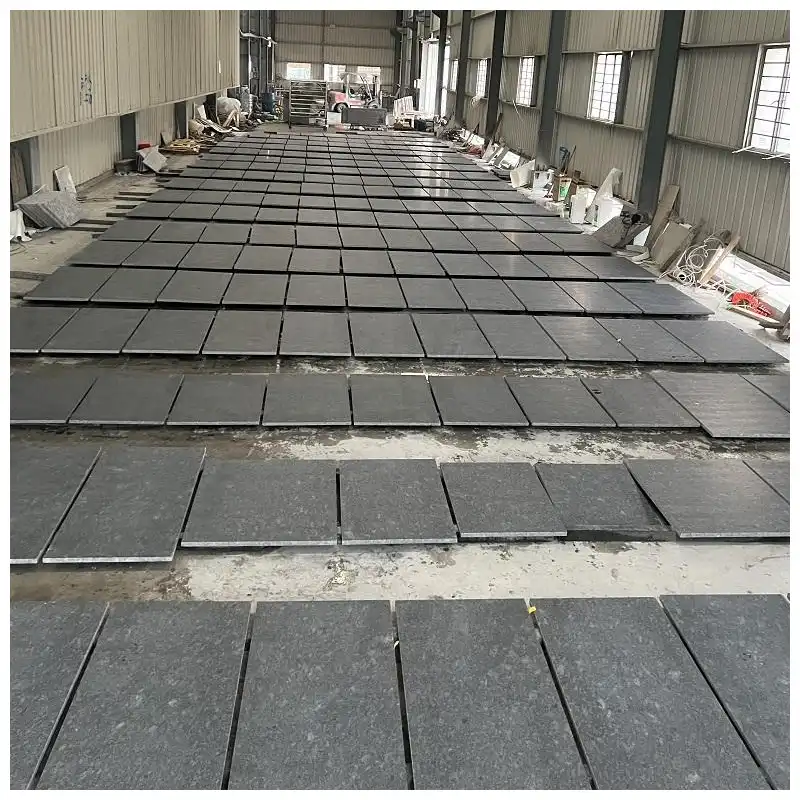
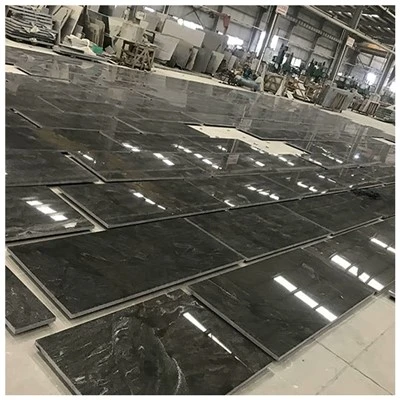
Steel Grey Granite Leathered Tiles
A brushed steel-grey granite surface with gentler relief for projects seeking texture without a heavily fractured face.
View MoreFrequently Asked Questions About African Black Granite Split-Face Tiles
1. Are African Black Granite Split-Face Tiles suitable for wet outdoor paving?
They can be considered for wet exterior pedestrian areas, but the actual split-face finish must meet the applicable slip-resistance requirements. Drainage, surface projections, joint levels and the intended pedestrian use also need review. A rough texture alone does not prove anti-slip compliance.
2. How consistent is the natural split-face texture between tiles?
The fractured surface naturally varies in relief, grain exposure and local projections. An approved sample range should define acceptable differences, especially for walking surfaces that require controlled changes in elevation.
3. Can 20 mm or 30 mm African Black Granite Tiles be used for driveway paving?
Neither nominal thickness automatically qualifies a tile for vehicle loading. The correct specification depends on wheel loads, stone strength, dimensions, bedding support and the pavement design. Vehicle-bearing applications require separate engineering assessment.
4. Can natural split-face granite be used on building exterior walls?
Yes, it may be specified as exterior cladding within a suitable wall system. Panel dimensions, stone strength, fixing locations, structural loads, drainage and movement requirements must be reviewed before installation.
5. Will African Black Granite retain exactly the same black color outdoors?
No natural stone surface is guaranteed to look identical in every condition. Lighting, moisture, mineral variation, weathering and surface deposits can affect the visible color. Approval samples should be reviewed under representative exterior conditions.
6. How should split-face African Black Granite be cleaned and maintained?
Remove loose debris with a suitable brush and wash with a pH-neutral natural stone cleaner. Rinse dirt from surface recesses and avoid untested acidic treatments or aggressive cleaning methods. Any sealer should be tested for compatibility and possible color changes.
Final Specification Checks Before Ordering African Black Granite Tiles
Before approving a production order, establish which components are intended for walking surfaces and which are intended for vertical cladding. Each use may require a different thickness, acceptable surface relief and installation system.
For exterior floors, the specification must establish drainage, wet slip performance, finished levels and applicable traffic loads. For wall cladding, the drawing package must identify the panel arrangement, support system, movement joints and fixing conditions.
A representative natural split-face sample should be approved for color, fracture profile and the permitted variation between pieces. These physical references are especially important when a project requires several adjoining paving areas or long facade elevations.
Practical Takeaway: The essential decisions for African Black Granite split-face tiles are the approved stone source, acceptable surface relief, dimensional specification and required installation performance. Confirm the actual material and construction details before committing to floor or facade fabrication.

Request African Black Granite Tiles for Landscape Paving and Exterior Wall Specifications
KA UNITED can review natural split-face granite requirements for landscape paving, outdoor architectural flooring and exterior wall cladding. The proposed fabrication should be matched to the intended surface exposure, installation method and construction drawings.
For a quotation, provide the required tile formats, nominal thickness, surface finish, application area, total project requirement and delivery destination. Where the work involves wet pedestrian areas, vehicle traffic or exterior facade fixing, include the relevant technical criteria and drawings for review.
Hot Tags: african black granite tiles, China african black granite tiles suppliers, factory, azul platino granite, granite and stone, Nero Santiago Granite Tile, outdoor granite countertops, raw granite, sri vinayaga tiles granites
You Might Also Like


Send Inquiry
