


Quick Summary: Fior Di Pesco Marble Tile is a polished Italian marble product with a silver-grey and ivory background interrupted by peach-pink, reddish-brown and white mineral veins. KA UNITED lists four tile sizes: 300 × 300, 600 × 600, 600 × 900 and 600 × 300 mm, with nominal 16, 18 and 20 mm thicknesses. The tiles are intended for interior floors, decorative walls and selected residential or commercial spaces. The supplied factory photograph shows completed stone pieces arranged in parallel rows for visual review. Buyers should pay particular attention to the distribution of lighter marble fields, warmer mineral bands and the relationship between the selected tile format and installation layout.
Fior Di Pesco Marble Tiles for Residential Floors and Italian Grey-Pink Interior Stonework

Full product reference showing the grey-white marble background, natural pinkish mineral bands and polished surface.
Fior Di Pesco is a grey marble with an unusual warmth to its veining. The material photographed for this product contains silver-grey patches, broad ivory areas and fine reddish mineral lines. Several pieces also have cloudy transitions that make the background appear almost layered.
On an interior floor, these variations create more visual activity than a uniformly colored grey stone. The appearance changes with the number of tiles installed together. A single piece may contain a pronounced white band, while the adjacent piece may be largely grey with narrow peach-colored markings.
The material can be selected for villa floors, interior corridors, decorative walls and areas within hospitality buildings where the installation requirements are suitable. Its combination of grey and warmer mineral tones can be coordinated with both light architectural finishes and darker timber or metal details.
The product is supplied as finished square or rectangular tiles. This page therefore focuses on tile format, color distribution, surface preparation and installation coordination rather than the purchase of uncut marble slabs.
Grey and Peach Veining
Natural warm-toned mineral lines distinguish the stone from conventional neutral grey flooring marble.
Square and Rectangular Tiles
Four listed formats give designers different module proportions for coordinated floors and walls.
Factory Layout Reference
The photographed parallel-row arrangement makes color variation across finished pieces easier to evaluate.
Silver-Grey Clouds, White Bands and Peach-Colored Veins in Fior Di Pesco Marble
The supplied image shows more than one type of natural mineral marking. Some tile faces contain broad, pale grey areas with soft boundaries. Others are crossed by white veins that separate darker marble fields. Thin peach and reddish-brown markings appear within the lighter sections and around portions of the grey background.
The white formations are often wider and less sharply defined than the reddish lines. This creates a layered effect: the grey background supplies most of the surface color, the white mineral bands establish broader movement, and the warmer veins introduce finer contrast.
How the Grey Background Changes Between Tiles
Not every finished piece has the same proportion of grey and ivory marble. In the photograph, a few tiles are noticeably lighter, while others carry more concentrated grey mineral patches. The warmer reddish details are also unevenly distributed.
This matters when selecting Italian Grey Marble Tiles for large rooms. A floor assembled from pieces containing mostly pale backgrounds will look different from one with a greater proportion of darker grey tiles, even if both use the same named material.
The Role of the Pink and Rust-Colored Lines
The fine pinkish lines do not follow one consistent direction across the photographed pieces. Some curve around grey mineral areas, while others form short irregular streaks. Their warmer color becomes more noticeable when the marble is viewed beside plain white or cool grey finishes.
A large wall panel made from related tiles may emphasize these warmer areas. On a floor, distributing them across several rows can create a more balanced composition than concentrating every strongly colored piece into one section.
Natural mineral variation should be agreed using representative finished tiles. A small chip displaying one pale grey section is not sufficient to establish the full acceptable appearance of a multi-room installation.

Material detail reference for reviewing the relationship between grey, white and peach-pink mineral markings.
Four Fior Di Pesco Tile Formats and Three Thickness Options
The listed finished tile sizes are 300 × 300 mm, 600 × 600 mm, 600 × 900 mm and 600 × 300 mm. Nominal thickness options are 16, 18 and 20 mm. These references cover compact square tiles, larger squares and two rectangular proportions. The selected format influences the visible pattern scale, joint layout and handling requirements.
| Specification | Product Details |
|---|---|
| Product Name | Fior Di Pesco Marble Tiles |
| Stone | Natural Italian Fior Di Pesco Marble |
| Color Range | Silver Grey, Ivory White, Peach Pink and Reddish-Brown Mineral Accents |
| Tile Size A | 300 × 300 mm / 11.81 × 11.81 inches |
| Tile Size B | 600 × 600 mm / 23.62 × 23.62 inches |
| Tile Size C | 600 × 900 mm / 23.62 × 35.43 inches |
| Tile Size D | 600 × 300 mm / 23.62 × 11.81 inches |
| Nominal Thickness | 16 mm / 18 mm / 20 mm |
| Finish | Polished |
| Edge Configuration | Straight-Cut Tile Edges; Special Details by Approved Drawing |
| Product Forms | Square Tiles, Rectangular Tiles and Custom Cut-to-Size Components |
| Surface Selection | Approved Grey Background Range and Distribution of White and Pink Veins |
What Changes Between the Four Tile Sizes?
The 300 × 300 mm option divides the marble into smaller units. The individual grey and pink veins may appear as short mineral fragments. It is relevant where a finer joint grid or smaller components are required.
The 600 × 600 mm format retains more of the natural white and grey formations within each piece. It can be used in a regular square layout, subject to the required thickness and installation support.
The 600 × 900 mm format has the largest uninterrupted face in this selection. A broad grey or ivory mineral zone can remain visible without being divided by as many joints. The longer edge also makes handling, substrate flatness and installation alignment more important.
The 600 × 300 mm rectangular format can introduce a directional laying pattern. It may be used in parallel courses or other approved arrangements where the longer side of each tile helps establish the visual movement of the floor or wall.
Thickness Selection for Floor and Wall Applications
The listed 16 mm, 18 mm and 20 mm thicknesses should be chosen according to the tile dimensions, stone soundness, supporting construction and intended loading. The availability of a nominal thickness does not establish that every format is suitable for every project condition.
The selected thickness affects finished floor height, handling weight and the design of adjoining transitions. For large-format pieces, the setting materials and substrate must support the stone appropriately. Wall cladding requires separate consideration of the approved fixing or bonding method.
When ordering Grey Marble Cut-to-Size Tiles, each distinct size-and-thickness combination should be identified in the cutting schedule. Special perimeter pieces or wall returns may require separate dimensions even when they are produced from the same stone.

Finished-tile detail position for the polished face, straight-cut edge and selected nominal thickness.
Dimensional and Edge Review
Cutting approval should establish the finished length, width, thickness, squareness and permissible dimensional variation. These values should be agreed through the project specification rather than assumed from the presence of precision-cut stone in a photograph.
Visible edges should also be examined for chips and natural discontinuities. Their condition can affect both the appearance of the installed joint and the risk of damage during handling.
Where a floor contains multiple tile formats, the final setting-out arrangement must allow for the actual joint widths and perimeter cuts. A geometric relationship between nominal sizes is not a substitute for a finished layout drawing.
What the Parallel-Row Factory Layout Reveals About Fior Di Pesco Tiles
The supplied production photograph is distinctive because the finished tiles are positioned in several long parallel groups rather than arranged as a completed room floor. Dark sections of the workshop surface separate these groups, making the edges of individual tiles and their sequence easier to observe.
Within the rows, individual pieces show different combinations of grey, white and peach-colored mineral markings. Some contain cloudy grey formations with relatively little warm veining; others show broader white areas crossed by delicate reddish lines. The arrangement makes those changes visible across more than one piece.
Compare Color Distribution Across the Rows
The long-row presentation allows buyers to assess whether heavily grey pieces and lighter ivory pieces are distributed in an acceptable manner. A floor may contain both, but the final arrangement should reflect the intended visual balance.
The photograph does not show every piece having a continuous matching vein. Instead, the natural patterns vary from tile to tile. This is important when deciding whether the project requires an organized tonal layout or specifically matched stone faces.
Pre-Layout Review Is Not the Same as Final Installation
The workshop arrangement shows tiles before installation, with open gaps between pieces. It cannot establish the final grout-joint width, substrate condition, room dimensions or completed floor performance.
Where an approved sequence is required, the buyer should obtain a layout reference identifying the intended groups and orientations. The exact final arrangement must still be compatible with site dimensions and the installation design.
A photo of arranged stone is useful visual evidence. It should not be described as proof that pattern continuity is guaranteed or that the completed project will require no on-site adjustment.

Factory dry-lay reference. Insert the supplied photograph of the long parallel tile rows in this fourth product-image position.
Fior Di Pesco Carnico Marble: Italian Origin and Commercial Naming
Fior di Pesco Carnico is a recognized Italian marble name associated with stone displaying grey, white and pale pink coloration. The name is used for material from the Carnic Alps region in northeastern Italy, where its distinctive mixture of cool and warm mineral tones has become commercially established.
KA UNITED also lists Fior Di Pesco Marble slabs and Fior Di Pesco Carnico Marble slabs as separate catalog entries. The existing slab pages concern raw material selection and larger natural stone formats. This tile listing addresses the finished product supplied to project dimensions.
The terms Fior Di Pesco Carnico Marble Tiles and Pesco Carnico Marble Tiles may appear in sourcing inquiries. Such wording should be tied to the actual selected stone and production batch rather than assuming that every similarly named product will display identical color and veining.
For projects specifying a particular Italian origin or quarry selection, the relevant supply documentation should be checked separately. A trade name and a photograph are useful for identifying the requested appearance, but they do not replace material traceability when it is part of the purchase specification.
Fior Di Pesco Marble Floor Tiles: Choosing the Right Installation Conditions
Fior Di Pesco Marble Floor Tiles can be evaluated for residential rooms, interior circulation areas and selected commercial floors. The suitability of a particular installation depends on the natural stone, finished tile thickness, support and expected service conditions, not solely on the fact that the marble has been polished.
Polished Marble and Pedestrian Traction
Polished marble reflects light and makes natural mineral details more visible, but this finish must be assessed for slip resistance where pedestrian use is intended. A dry private living room may present different conditions from a hotel entrance where moisture, footwear and abrasive dirt are common.
The project specification should establish the required traction and wear performance. Polished Fior Di Pesco should not automatically be approved for wet entrances, stairs or other locations with demanding slip-resistance requirements.
Adhesive Selection and the Appearance of Light Marble
Because some Fior Di Pesco sections contain pale ivory and white mineral areas, the setting material deserves attention. Unsuitable adhesives, excessive installation moisture or inconsistent bedding conditions may cause appearance issues in susceptible natural stone installations.
The installer should select a system compatible with the actual marble and intended substrate. A representative installation sample can help assess any interaction between the stone, adhesive and grout before full-area work begins.
Substrate and Floor-Level Coordination
The finished floor elevation depends on the stone thickness and the approved bedding arrangement. Door thresholds, adjoining flooring and fixed architectural features should be coordinated before the installation begins.
The substrate must be stable, suitably prepared and appropriate for the selected tile format. Larger rectangular pieces may require particularly careful control of flatness and bedding coverage. Required movement joints must be incorporated into the floor design regardless of the desired marble pattern.
Fior Di Pesco Marble Wall Tiles for Corridors, Feature Surfaces and Interior Details
The material's mixture of grey and pale pink tones can also be used on interior walls. Unlike a floor, a wall is often viewed from a shorter distance, where the finer mineral markings and changes between grey and ivory areas become more noticeable.
Fior Di Pesco Marble Wall Tiles can be planned around vanity areas, decorative reception walls, internal corridors and selected architectural features. The choice of square or rectangular pieces affects the proportions of the visible surface and the locations of joints.
Wall Elevations and Edge Terminations
Wall drawings should identify the height and width of the cladding, the location of openings and the proposed treatment of exposed ends. A rectangular tile laid horizontally creates a different mineral movement from the same piece installed vertically.
Corner returns, mirror boundaries, electrical outlets and other fittings should be reflected in the cutting schedule. It is preferable to resolve the sizes of these pieces before production rather than making unplanned changes to prominent stone surfaces during installation.
The fixing system must suit the actual marble thickness, component dimensions and supporting wall. Decorative appearance does not replace the structural and installation requirements for stone cladding.
Polished Fior Di Pesco Surface Care and Technical Acceptance
The polished face highlights the stone's white and grey mineral formations. Under direct light, brighter areas may appear more reflective than sections with concentrated veining. This surface finish is decorative, but it should not be described as completely non-porous or resistant to every stain and chemical.
Marble may be sensitive to acidic liquids. Compatible sealing can reduce the absorption of certain substances, but it cannot prevent acid etching. Routine cleaning should use non-abrasive equipment and products appropriate for natural marble. Abrasive grit should be removed from floors before wet cleaning.
No traceable batch-specific testing results were provided for the pictured material. The table below identifies the most relevant checks for a finished floor or wall specification without assigning unverified performance values.
| Acceptance Item | Required Verification | Project Relevance |
|---|---|---|
| Surface Wear | Representative material evidence for intended pedestrian traffic | Polished flooring in residential and commercial interiors |
| Slip Resistance | Finish-specific assessment for the expected dry or wet conditions | Pedestrian safety and acceptable floor locations |
| Water Absorption | Material-specific information where required | Treatment choice and installation-material compatibility |
| Stone Soundness | Inspection of selected pieces for relevant natural discontinuities | Cutting, handling and finished-edge integrity |
Where the contract requires a defined test standard, approval should rely on appropriate material documentation and the relevant project criteria. Values for other Italian grey marble selections should not be treated as test results for this specific batch.
Finished Tile Inspection and Protection During Export Delivery
The finished pieces should be inspected against their approved cutting schedule, including dimensions, thickness and edge condition. For this multicolored marble, the visual acceptance also needs to cover the overall proportion of grey and ivory areas and the acceptable distribution of pink or reddish mineral markings.
Inspection should distinguish natural mineral veins from any open discontinuity that could affect handling or installation. Polished surfaces should be checked for scratches and unwanted processing marks, while exposed corners require attention because they can be damaged during movement.
Where the order involves related tile groups for different rooms, the packing identification should correspond with the approved project schedule. This is more useful than relying solely on natural veining to distinguish pieces intended for separate areas.
The shipping arrangement should provide stable support, surface separation and edge protection appropriate for the actual finished tiles. Larger rectangular pieces and thinner sections may have different handling requirements. The agreed packing method should protect the polished stone and maintain the organization needed for site receipt.
Interior Application Reference: Fior Di Pesco Grey and Peach Marble Flooring

Application reference: use an actual installed project or clearly identified design rendering.
Fior Di Pesco can be coordinated with light plaster walls, warm timber, muted bronze finishes and soft grey furnishings. Its peach-colored mineral details introduce warmth without requiring the entire floor to have a pronounced pink background.
For a residential entrance or living area, the material may be arranged as a relatively continuous grey-and-white field. In a more compact room, the individual tile format and its visible joints become a larger part of the composition.
Commercial interiors may use the marble on selected walls or decorative floor areas where the finish and installation requirements are appropriate. The stone should be specified according to its actual service conditions rather than relying on a general luxury-design description.
The supplied factory photograph documents the material before installation. It should not be labeled as a completed hotel or residence. A separate application photograph or design visualization belongs in this module.
Fior Di Pesco Marble Compared with Four KA UNITED Marble Tile Selections
Fior Di Pesco occupies a different visual position from plain grey or strongly geometric marble flooring. Its combination of silver-grey, white and peach-pink mineral features creates a warmer pattern than a neutral grey field, without using the strong black-and-white contrast of a checkerboard design. The comparison below concerns visual selection and product form; performance must be assessed for each stone independently.
| Marble Tile Product | Appearance | Design Direction | Principal Selection Difference |
|---|---|---|---|
| Fior Di Pesco Marble | Grey-white marble with peach-pink and reddish mineral veins | Warm-grey residential floors and coordinated interior walls | Balance of cool grey patches, broad ivory areas and warmer mineral lines |
| Ondulato White Marble | Ivory-white background with broad flowing grey and beige veins | Light interior floors and architectural wall cladding | Predominantly white appearance with softer directional waves |
| Blue Crystal Marble Tiles | Blue-toned natural mineral and crystalline-looking patterns | Cool-colored decorative surfaces and interior accents | Blue color concentration rather than warm grey and peach veining |
| Black White Marble Checkerboard | Alternating black and white marble tiles | Defined geometric flooring and patterned architectural interiors | Regular black-white sequence instead of an irregular natural mineral field |
| Pietra Grigio Marble Tiles | Dark graphite-grey background with fine pale veins | Darker architectural floors and contemporary wall surfaces | Deep grey stone body with higher contrast against lighter veins |
Recommended Natural Marble Tiles from KA UNITED
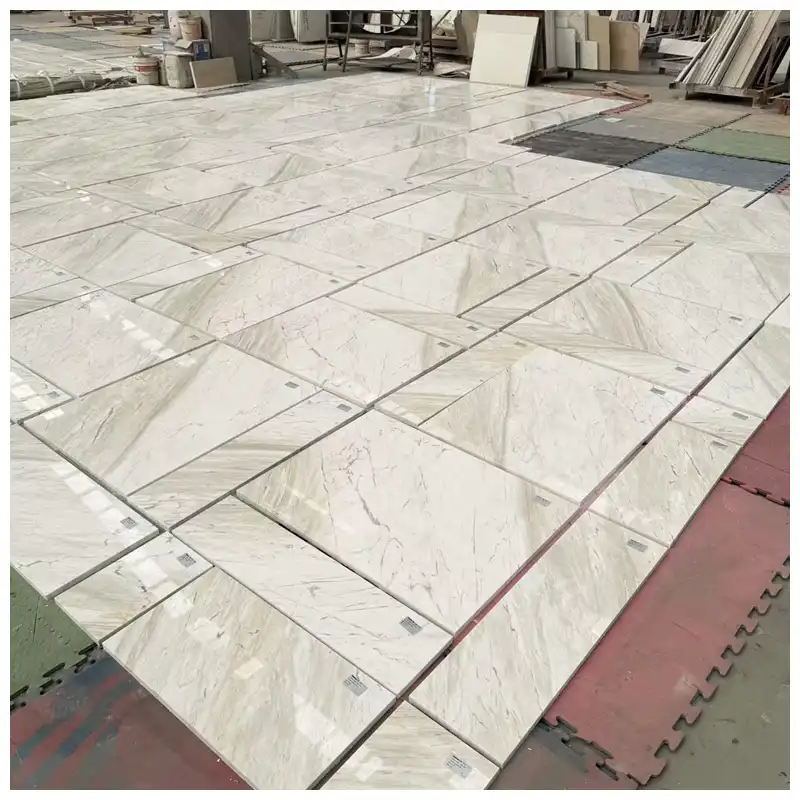
Ondulato White Marble Tiles
Greek white marble tiles with soft grey diagonal waves for bright residential floors and interior wall layouts.
View Product
Blue Crystal Marble Tiles
Blue-toned marble tiles for interiors requiring a cooler stone palette and distinctive mineral appearance.
View Product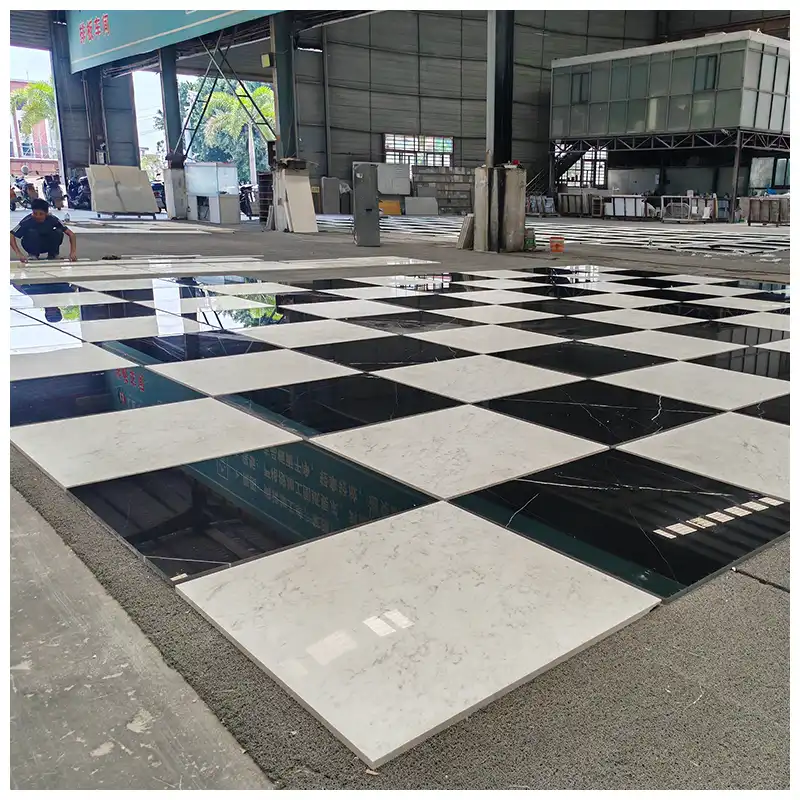
Black White Marble Checkerboard Tiles
Alternating black and white marble for geometric floors and patterned interior architectural surfaces.
View Product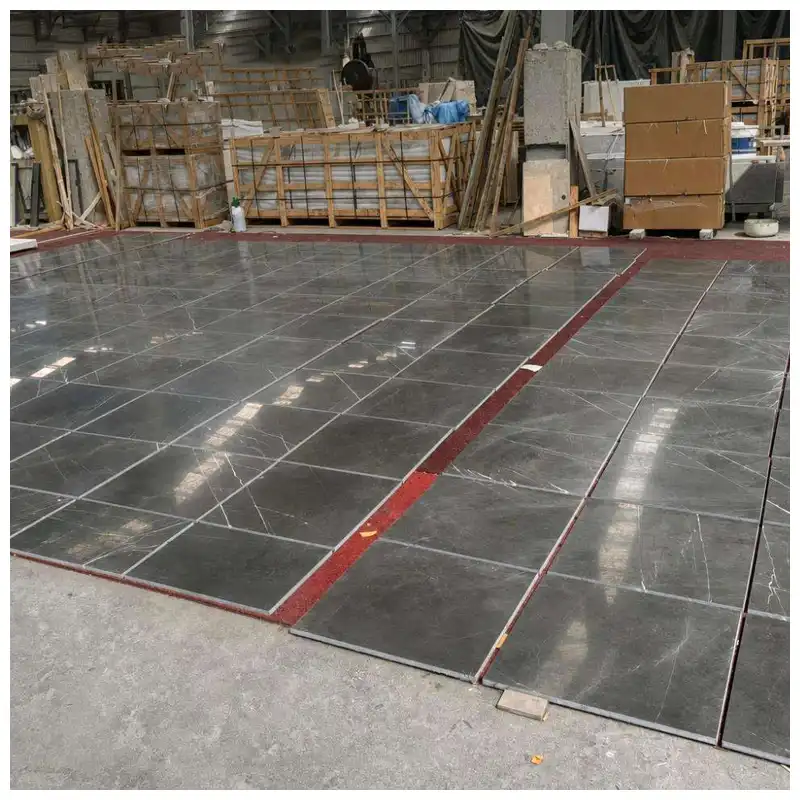
Pietra Grigio Marble Tiles
Dark grey marble with pale contrasting veins for architectural flooring and coordinated wall cladding.
View ProductFrequently Asked Questions About Fior Di Pesco Marble Tiles
1. Why do Fior Di Pesco Marble Tiles contain different amounts of grey, white and pink?
The color differences come from the natural mineral formations within the marble. Some tiles contain broad ivory and pale grey areas, while others show denser grey patches and more visible peach or reddish-brown veins. The acceptable distribution should be established from representative finished pieces before approving a multi-tile installation.
2. What tile sizes and thicknesses are listed for Fior Di Pesco Marble?
The listed tile formats are 300 × 300 mm, 600 × 600 mm, 600 × 900 mm and 600 × 300 mm. Nominal thickness options are 16 mm, 18 mm and 20 mm. The selected combination must be checked for the intended floor or wall installation and against actual production availability.
3. Does the factory photograph show a completed Fior Di Pesco floor?
No. It shows polished marble tiles arranged in parallel rows inside a workshop, with visible gaps between the pieces. The photograph is useful for reviewing the stone's appearance and variation, but it does not establish the final installed joint width, substrate or finished project location.
4. Is Fior Di Pesco Marble suitable for polished hotel flooring?
It can be evaluated for selected hotel interior floors when the actual stone, surface finish, thickness and installation system meet the project's requirements. Slip resistance, surface wear, pedestrian traffic and cleaning conditions must be considered. A polished finish should not be assumed suitable for every public or wet floor.
5. What is the difference between Fior Di Pesco marble slabs and finished tiles?
Slabs are larger stone pieces from which finished components can be selected and fabricated. Fior Di Pesco marble tiles are supplied to defined dimensions for floor or wall installation. Tile orders require confirmation of module sizes, thickness, finished edges, visual range and the intended setting-out arrangement.
Confirm the Grey-to-Pink Color Balance Before Fior Di Pesco Tile Production
For a Fior Di Pesco floor, the distribution of warm and cool mineral colors deserves specific approval. A batch can contain lighter ivory pieces, denser grey pieces and tiles with more noticeable reddish veins. Those differences are part of the natural stone, but their location across the intended area should reflect the approved design.
The buyer should establish the required tile sizes, thicknesses and acceptable color range before the cutting schedule is finalized. Where several interior zones use the same material, the allocation of finished pieces should be coordinated with the installation drawings.
The parallel-row factory image helps illustrate the actual color variation across multiple pieces. Final approval still depends on the identified material and the specified construction requirements, not on the appearance of one photograph alone.
Final Note: Fior Di Pesco is distinguished by the interaction between silver-grey marble, pale ivory areas and subtle peach-colored mineral veins. The principal purchasing decision is how that color range will appear after the chosen tile formats are distributed across the finished interior.

Request Fior Di Pesco Marble Tiles for Residential and Commercial Interior Projects
KA UNITED can review Fior Di Pesco marble selections for square and rectangular floor tiles, interior wall cladding and drawing-based cut-to-size stone components. The material's combination of grey, white and peach-colored veins is particularly relevant when a project requires a specified balance of cool and warm natural stone tones.
For a quotation, send the selected tile dimensions, thickness, polished finish, required installation area and project destination. If the project includes several rooms or related wall surfaces, provide the setting-out drawings and preferred color distribution. Any special perimeter cuts, wall edges or threshold details should also be identified.


