Is it really good to use granite countertops in the kitchen?
Is Granite Really a Good Choice for Kitchen Countertops?
I get this question constantly. Homeowners who are about to spend real money on a kitchen renovation want to know whether granite is actually worth it, or whether it is just a surface people choose because it sounds impressive. After years of working with natural stone, my honest answer is simple: yes, granite is genuinely good, but only if you understand what you are signing up for. No material is perfect, and granite is no exception. What it offers, though, is a combination of durability, character, and long-term value that very few other surfaces can match.
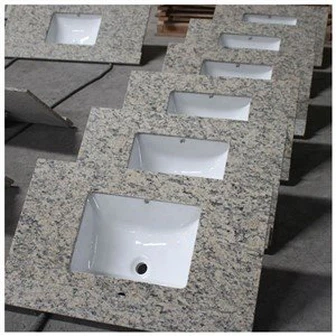
The appeal starts with something basic. There are no two identical pieces of granite on this planet. When you install a granite countertop, you are getting a surface that literally cannot be reproduced, because it was formed deep underground over millions of years through the slow cooling of molten rock. That is a real geological process, not a marketing slogan. The minerals that crystallized during that cooling give each slab its color, its pattern, and its movement. A manufacturer can print a granite look onto a ceramic tile or engineer a composite to imitate it, but the imitation always stops at the surface layer. With granite, the pattern runs all the way through the stone.
There is also a reassurance factor that matters more than people expect. As long as you take reasonable care of a granite countertop, its appearance will not fade with time. Paint peels, laminate scratches and delaminates, and even some engineered surfaces dull after years of wiping. Granite, when it is sealed and cleaned the right way, looks essentially the same ten years in as it did on installation day. That is the reason so many buyers treat it as a once-in-a-lifetime purchase rather than something they will replace when the next trend arrives.
Why Granite Has Stayed Popular for So Long
Granite is not a passing fashion. It has been quarried and used in building for centuries, and it has been a mainstream choice for home decoration for roughly forty years. Other surfaces have risen and faded in that window, but granite has held its position. I think there is a simple explanation: it combines practical performance with a look that feels permanent. A kitchen countertop takes a beating every single day, from hot pans to dropped utensils to spilled wine. Granite handles that punishment without looking worn, and it does so while looking genuinely expensive rather than merely clean.
It Adds Value to the Home
One of the most practical reasons to choose granite is that it adds value to a house. A kitchen is often the room that sells a home, and buyers notice the countertop immediately. A well-chosen granite surface adds a sense of elegance and permanence that a laminate or tile top simply does not provide. When you eventually sell, a granite countertop tends to work in your favor, because it signals that the kitchen was finished with care rather than built to a budget. I would not call it a guaranteed return on every dollar you spend, but it is one of the few upgrades that a future buyer will actually value rather than overlook.
There is a related point that people often miss. Because granite is so durable, its higher upfront cost spreads out over a very long lifespan. A cheaper surface that must be replaced after eight or ten years can end up costing more in the long run than a granite top that lasts for decades. When you look at it that way, granite is not an indulgence. It is often the most affordable choice over the full life of the kitchen.
It Is Genuinely Beautiful
Granite is a natural stone found all over the world, and that global reach is part of why it offers such variety. Stones from different regions carry their own distinct qualities, which means the color range is enormous. You can find light, subtle grains in soft tones, and you can find rich, warm, dark slabs with dramatic movement. Whatever style your kitchen leans toward, there is almost certainly a granite that fits it.
This variety also extends to how well granite pairs with other materials. A granite countertop works alongside ceramic sinks, copper fixtures, stainless steel appliances, and natural wood cabinetry without clashing. It is not a surface that demands a single design language. That flexibility is one of the reasons it has stayed relevant for so long, and why it works in both a traditional farmhouse kitchen and a sleek modern one.
No Two Slabs Are Alike
The uniqueness of granite deserves its own mention, because it is the feature no engineered product can truly copy. Granite shows subtle color changes that shift as the light in the room changes. Look closely at a slab in morning light and again in the evening, and you will see a slightly different stone. The color, the spots, and the veining run through the entire thickness of the material, whereas a man-made surface only carries its pattern on the top layer. This is why two kitchens with the same granite name can still look completely different, and why your kitchen ends up with its own personality instead of a catalog-copy look. Each piece of stone is, in a very real sense, one of a kind.
The Practical Advantages You Will Notice Every Day
Beauty is nice, but a countertop has to perform. This is where granite earns its reputation, and it is worth going through the practical advantages one by one so you can see exactly what you are getting.
Resistance to Bacteria
Granite is one of the most hygienic countertop materials you can put in a kitchen. Because its surface is dense and, once sealed, largely non-porous, it does not easily harbor bacteria or trap kitchen grime. Mold and mildew do not take hold the way they can on more absorbent surfaces. There is one honest caveat here: if you use granite tiles rather than a full slab, the grout lines between the tiles can still trap moisture and staining, so a solid slab is the cleaner choice for a busy kitchen. But with a properly sealed slab, bacteria have very little to cling to, which matters a great deal in a room where raw food is handled every day.
Easy to Clean
Daily care for granite is refreshingly simple. For everyday cleaning, a soft cloth or paper towel with ordinary soapy water is all you need. There is no special arsenal of products required, and no complicated routine to memorize. Because the stone is dense and low in porosity, staining is not the constant worry it is with some other natural surfaces. Once the granite is sealed or polished, it resists moisture well, and the general rule is to reseal it every one to three years depending on use and the specific stone. That is a small maintenance task compared to the value it protects. When a spill does happen, wiping it up promptly is simple and safe, and that is really the whole job.
A Family-Friendly Kitchen
If you cook with children in the house, granite is a forgiving surface. Kids can help at the counter without you hovering over every move, because the stone is not easily damaged by normal activity. The only real caution I would pass along is the edge: a thin, overhanging edge can chip if someone hangs on it repeatedly, so it is worth teaching children not to swing from the counter. Beyond that, granite lets you relax and actually enjoy the kitchen as a family space, which is what the room is supposed to be for.
It Can Be Repaired
One of the quieter advantages of granite is that it is repairable. If a chip or crack does happen, it does not mean the whole countertop is ruined. The damage can often be filled, glued, and polished so that it becomes nearly invisible. The key is not to attempt the repair yourself. This is a case where you should explain the situation to your supplier or a stone professional and let them handle it, because a clumsy DIY repair can make a small problem worse. The fact that the material can be restored rather than replaced is a big part of why granite is such a long-term value.
An Exceptionally Hard Surface
Granite is hard in a way you will appreciate the first time you drop something heavy on it. Its surface will not scratch under normal use, and in practice the only things that can scratch it are another piece of granite or a diamond. That is exactly what you want in a kitchen. Nobody enjoys a countertop they have to tiptoe around, always worried about leaving a mark. Granite removes that worry. And this scratch resistance is not just about avoiding ugly marks, it is also one of the main reasons the stone keeps its polish for so long. A surface that cannot easily be scratched is a surface that keeps reflecting light beautifully year after year.
High Temperature Resistance
Granite handles heat better than almost any other common countertop material. It dissipates heat well, and it will not blister or crack when a hot pan touches it. In fact, it can withstand the high temperature of a frying pan straight off the burner without leaving a mark. I still recommend using a trivet or a cushion, not because the granite needs it, but because good habits protect any surface, and a heat pad also protects your pans. Still, the peace of mind is real: you will never panic because someone set a hot dish down in the wrong place.
A Better Kitchen Environment
There is a reason professional chefs enjoy working on granite. The surface is stable, cool, and sturdy enough to work directly on, which means you can roll pastry or knead dough right on the counter. The naturally cool surface is particularly well suited to pastry work, where keeping dough cold is part of the technique. I have seen the same thing happen in home kitchens: once a granite countertop goes in, people cook more, and they enjoy it more. A surface that invites you to use it, rather than one you are afraid to damage, quietly makes everyone in the house a better cook.
The Honest Downsides You Should Know
I would be doing you a disservice if I only listed the positives. Granite is an excellent material, but it is not without drawbacks, and knowing them ahead of time is what makes the difference between a happy purchase and a frustrating one.
The first thing to understand is that granite is a natural, porous stone. It is far less porous than marble or limestone, but it is not completely sealed by nature. That means it does need periodic sealing to keep liquids and oils from soaking in. The typical guidance is to reseal every one to three years, depending on the stone and how heavily the kitchen is used. If you skip this, dark liquids like red wine or coffee can eventually leave stains, especially on lighter-colored slabs. The maintenance is not difficult, but it is real, and you should factor it into your decision.
Weight is another practical consideration. Granite is heavy, often weighing around 12 to 15 kilograms per square meter for a standard two-centimeter-thick slab, and more for the three-centimeter thickness many fabricators prefer. Your cabinets need to be sturdy enough to support it, and installation is not a weekend DIY project. A professional crew with the right equipment is essentially required, which adds to the overall cost. None of this is a reason to avoid granite, but it is a reason to plan for it properly.
Cost is the third honest point. Quality granite is not the cheapest option on the market. You can find budget stone, but the beautiful, consistent slabs that make granite famous come at a premium, and fabrication, edge work, and installation all add up. What you get in return is a surface that can last the life of the home, so the value is there, but the upfront number is real. Finally, while granite is heat and scratch resistant, it is not indestructible, and dropping a heavy cast-iron pan squarely on an edge can still chip it. The difference is that these issues are repairable and largely preventable, which is more than can be said for many alternatives.
Granite Versus Quartzite: A Closer Look
One of the most common questions I hear is how granite compares to quartzite, since the two names sound similar and both are natural stones. They are actually formed in completely different ways. Granite is an igneous rock, created when magma cooled and crystallized slowly beneath the earth's surface. Quartzite is a metamorphic rock, formed when sandstone was subjected to intense heat and pressure over geological time. Both are hard and beautiful, but they have different characteristics. The table below lays out the main parameters side by side so you can compare them directly.
| Parameter | Granite | Quartzite |
|---|---|---|
| Rock type | Igneous (cooled magma) | Metamorphic (transformed sandstone) |
| Mohs hardness | 6 to 7 | About 7 |
| Typical water absorption | About 0.2% to 0.4% | About 0.1% to 0.5% |
| Density | Roughly 2.65 to 2.75 g/cm³ | Roughly 2.6 to 2.8 g/cm³ |
| Porosity | Low, needs periodic sealing | Very low, still benefits from sealing |
| Sealing schedule | Every 1 to 3 years | Generally every 1 to 5 years |
| Heat resistance | Excellent | Excellent, slightly higher threshold |
| Scratch resistance | High | Very high |
| Color range | Very wide, varied grain | Wider veining, often marble-like |
| Best use | High-traffic countertops, islands | Countertops, feature surfaces |
What this comparison really tells you is that both stones are excellent, and the choice usually comes down to looks and the exact demands of your kitchen. Granite offers an enormous color range and a proven track record in busy, everyday kitchens. Quartzite tends to be slightly harder and even more heat tolerant, often with a more marble-like appearance, but it is generally more expensive and a bit more particular about fabrication. If you are still weighing engineered options as well, it is worth understanding how quartz countertops compare, because engineered quartz is non-porous and needs no sealing, which appeals to some buyers who want zero maintenance. Every material involves a trade, and the right answer depends on how you actually use your kitchen.
Frequently Asked Questions
How often does granite need to be sealed?
Most granite countertops should be resealed every one to three years, though the exact interval depends on the specific stone and how heavily the kitchen is used. A simple water test can tell you when it is time: place a few drops of water on the surface, and if the water beads up, the seal is still working. If it soaks in and darkens the stone, it is time to reseal.
Can I place a hot pan directly on granite?
Technically, yes. Granite dissipates heat well and will not blister or crack from a hot pan, and it can withstand the temperature of a frying pan fresh from the burner. I still recommend using a trivet or hot pad, because it protects the sealer and simply makes good sense for any surface. The granite itself will be fine either way.
Is granite more expensive than other countertop materials?
Quality granite often carries a higher upfront price than laminate, tile, or budget solid surfaces, but it tends to be comparable to or less expensive than premium engineered quartz and significantly less than many marbles. Because granite can last the life of the home, its cost per year of use is frequently lower than materials that must be replaced sooner.
Will granite stain easily?
Granite is a low-porosity stone, so it is far more stain resistant than marble or limestone, but it is not completely stain proof. With a proper seal in place and prompt cleanup of spills, staining is rare. Dark, oily, or acidic liquids are the main things to watch, so wiping up red wine, coffee, or cooking oil quickly will keep the surface looking new.
Does every granite slab look different?
Yes, and this is one of granite's greatest strengths. Because it is a natural stone formed over millions of years, no two slabs are identical. The color, spots, and veining run through the entire thickness of the stone and vary from slab to slab, which means your countertop will be genuinely unique rather than a reproduced pattern.
Final Conclusion
So, is it really good to use granite countertops? My answer, after working with stone for years, is a confident yes for most kitchens. Granite gives you a surface that is uniquely yours, that resists heat, scratches, and bacteria, that is easy to clean and genuinely repairable, and that adds lasting value to your home. The trade-offs are honest and manageable: it needs sealing every one to three years, it is heavy enough to require professional installation, and quality stone is a real investment. But when you weigh those small costs against a countertop that can serve your family for decades without losing its beauty, granite stands out as one of the smartest choices you can make. If you are ready to explore your options, you can browse the full granite range and compare it with quartz countertops to find the surface that fits your kitchen, your budget, and your life, and KA UNITED is here to help you make that decision with confidence.