Do you know the secret of choosing quartz countertop?
Quartz Has Quietly Taken Over the Kitchen
If you have spent any time looking at kitchen countertops over the last few years, you have probably noticed the same thing I have: quartz is everywhere. Among all the cabinet countertop materials on the market, quartz stone has quietly become the preferred surface for homeowners, designers, and builders alike. I think there is a good reason for that, and it is worth understanding before you spend a single dollar.
Here is the first thing that surprises most people. The quartz countertop you are admiring is not a slab of natural stone pulled out of a mountain. It is an engineered surface. Quartz stone manufacturers produce it in a factory using die-casting equipment, combining crushed natural quartz with resin and pigment under high pressure and heat. That raw slab is then handed to stone processors, who cut, edge, and finish it into the final countertop that gets installed in your kitchen. This two-stage process matters, because it means quality depends on two separate sets of hands: the factory that makes the slab, and the fabricator who finishes it.
The challenge for a buyer is that the quartz market right now is, frankly, chaotic. Quality is uneven from one supplier to the next, and the price of quartz varies far more than most people expect. Two slabs that look nearly identical in a showroom can be built from completely different raw materials and sold at very different prices. So the question I hear most often is a fair one: how do you choose a quartz countertop of genuinely acceptable quality in a market like this? Let me walk you through the two secrets that actually make a difference.
The First Secret: Know Your Real Needs Before You Spend
The single most useful piece of advice I can give you has nothing to do with the stone itself. Before buying, make a good positioning for yourself. In plain terms, clarify your real needs and resist the urge to follow the trend just because quartz is popular right now. This one habit will save you more money and more regret than any amount of showroom browsing.
Trend-following is how people end up unhappy with their kitchens. They see quartz on a design blog or in a friend's renovated home, decide they want it, and only afterward ask whether it actually fits their budget and their cooking habits. That sequence is backwards. The countertop is one of the most used surfaces in your home, so the decision should start with how you live, not with what is fashionable.
Set Your Position Before You Walk Into a Showroom
Think about three things before you look at a single sample. First, how much can you realistically spend on the finished, installed countertop? Second, how do you actually use your kitchen? Do you cook daily with heavy pots, or is the kitchen mostly for looks? Third, how long do you expect to live with this surface? A countertop is not a cushion cover you swap out every season; it is a semi-permanent part of the room.
Answering these three questions honestly will tell you whether quartz is even the right material for you. I have told more than one client to slow down at this exact point, because the answer is sometimes no. And that is completely fine. Choosing the material that fits your real situation is a much better outcome than forcing quartz into a space where it does not belong.
If the Budget Is Tight, Step Back
Here is the truth that a lot of salespeople will not volunteer: quartz is considerably more expensive than most other surface materials. Because the price sits so much higher than options like laminate or standard solid surface, a limited budget can easily push you toward the cheapest quartz you can find, and that is precisely where the problems begin.
If your budget is tight, it is genuinely better to give up buying quartz and choose a different material altogether than to buy an inferior slab. A well-made laminate or a decent solid-surface top will serve you honestly within its limits. A cheap, poorly made slab of "quartz" will not. You are not losing anything by stepping back from quartz; you are protecting yourself from buying a problem. I would rather see a client buy a good quality material they can afford than a bad version of a material they cannot.
Why the Cheapest Slab Is the Riskiest One
This is the part I want you to read slowly, because it affects your family's health, not just your kitchen's looks. A proper quartz countertop is made of roughly 93% quartz sand bonded with resin, pressed together under vacuum and pressure. The ratio is important: the high mineral content is what gives the surface its hardness and its non-porous, stain-resistant character.
Inferior plates cut corners on exactly this formula. Instead of clean quartz sand, some manufacturers add cheaper fillers. Instead of a proper resin binder, some use other binders of uncertain origin. These substitutions lower the price, but they can also introduce materials that are harmful to the human body, and the risk is not something you can see on the surface. A slab that smells sharp, looks flat, or costs suspiciously little is often telling you something about what is inside it. Buy such plates carefully, or better yet, do not buy them at all.
The Second Secret: Buy the Brand, Not Just the Slab
The second secret is short, but it carries most of the weight in this whole decision: choose brand quartz stone, because a brand represents quality. That is not brand snobbery. In a market as uneven as the quartz trade, a known name is one of the few reliable signals you have that the slab was made to a consistent standard, with real quality control behind it. An anonymous, no-name slab might be excellent, or it might be a gamble. A brand with a reputation to protect has an incentive to get it right every time.
What a Reputable Brand Actually Guarantees
When I say a brand "represents quality," I mean something concrete. A serious quartz manufacturer controls its raw materials, so you can trust that the slab really is the roughly 93% quartz it claims to be, rather than a filler-heavy imitation. It tests its slabs for hardness, stain resistance, and consistency before they ship. And it stands behind the product if something goes wrong. None of those assurances exist when you buy a mystery slab from an unknown source.
This is also where the price difference finally makes sense. When two slabs look alike but cost very different amounts, the gap is usually not markup. It is the difference between a controlled, tested manufacturing process and a shortcut. Paying for a brand is not paying for a logo; it is paying for the process that produced the slab.
Match Color and Pattern to Your Cabinets
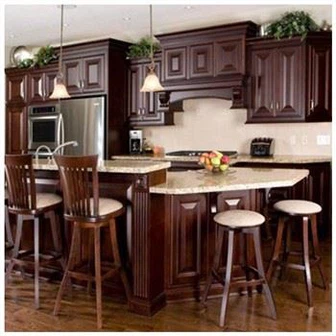
Once you have chosen a quality manufacturer, the fun part begins: picking the actual color. My rule of thumb here is simple. Choose the color of the quartz according to the color of your cabinet panels, not according to a picture you saw online. The countertop and the cabinets sit right next to each other all day, so they need to work as a pair.
The texture on a quartz countertop is mostly monochrome, and I recommend you keep it that way. Simple patterns are better. A clean, single-tone surface gives the kitchen a calm, ordered feel and lets the space breathe. If the pattern is too fancy, it is easy to dazzle the eye and lose the primary and secondary points of the room. In other words, the countertop should support the room, not shout over it. When in doubt, choose the quieter option. You will live with it every day, and calm ages better than loud.
Four Physical Checks That Reveal Real Quality
No matter what the label says, I always recommend checking the quality of the plate with your own hands and eyes. There are four specific things to look at, and together they tell you more than any sales pitch.
Hardness. Quartz should feel dense and solid. A genuine quartz surface ranks about 7 on the Mohs scale of mineral hardness, which is harder than most natural stones used for counters and far harder than plastic-based surfaces. You can do a simple, careful scratch test on a sample or an offcut to feel how the material resists.
Odor. Bring the slab close and smell it. A well-made quartz slab should have little to no chemical smell. A sharp, persistent odor often points to cheap resin or unregulated binders, which is the same red flag I mentioned earlier about harmful fillers. Your nose is a surprisingly good quality-control instrument.
Penetration. Quartz is prized for being nearly non-porous. A quick water or oil drop test on a sample will show you whether liquid beads on the surface or soaks in. A good slab will shrug liquids off, which is exactly what protects you from stains later. If a liquid sinks in, walk away.
Acid resistance. Finally, test how the surface responds to something acidic, like lemon juice or vinegar. Real quartz should resist acid without etching or dulling. This matters because a kitchen countertop meets citrus, vinegar, and tomato on a regular basis, and you do not want a surface that permanently marks the first time a lemon crosses it.
Quartz Next to the Alternatives
To make the positioning step concrete, it helps to see quartz lined up against the other common countertop materials. The table below is the same comparison I use when I sit down with a client who is still deciding. Reading it honestly usually clarifies whether quartz is the right call for a particular kitchen.
| Material | Hardness (Mohs) | Stain Resistance | Heat Tolerance | Maintenance | Best Suited For |
|---|---|---|---|---|---|
| Quartz (engineered) | 7 | Excellent, near non-porous | Moderate (brief contact up to about 150°C) | Wipe clean, no sealing | Busy family kitchens |
| Granite (natural) | 6–7 | Good, needs periodic sealing | High | Reseal roughly yearly | Heavy, heat-focused cooking |
| Marble (natural) | 3–5 | Poor, etches with acid | Moderate | Seal and use gentle cleaners | Baking, low-traffic areas |
| Laminate | About 3 | Fair, scorches easily | Low, damaged by heat | Easy but not repairable | Tight budgets |
| Solid surface | 3–4 | Good, repairable | Low, scorches | Repairable, can be sanded | Seamless, integrated looks |
How to Read That Table for Your Kitchen
The pattern I want you to notice is the trade-off between hardness and heat. Quartz gives you the best stain resistance of the group and a hardness of 7 on the Mohs scale, which is why it shrugs off scratches and spills so well. What it does not give you is unlimited heat tolerance. The resin that binds the quartz softens under sustained or very high heat, so a hot pan should still land on a trivet, not directly on the stone. A natural granite top will take heat better but asks more of you in sealing and upkeep. Marble is beautiful and soft in every sense, and it will etch the moment acid touches it. Knowing your own cooking habits tells you which of these compromises you can actually live with.
A Practical Checklist Before You Pay
If you have read this far, you already know more than most buyers standing in a showroom. Let me compress everything into a short checklist you can run through before you sign anything. I have kept it practical, because that is how a decision this expensive should be made.
- Confirm your budget first, and be honest about whether quartz fits it without forcing you toward the cheapest slab available.
- Verify the quartz content. A genuine slab is about 93% quartz sand; the remaining roughly 7% is resin and pigment. Be wary of anything vague about the formula.
- Choose a recognized brand with a real manufacturing process, not an anonymous, unbranded slab.
- Pick a mostly monochrome, simple pattern that matches your cabinet panel color, so the countertop supports the room instead of fighting it.
- Run the four physical checks on a sample: hardness, odor, stain penetration, and acid resistance.
- Decide on thickness and slab size with your fabricator, since a standard slab is commonly around 3050 by 1440 millimeters and thicknesses of 20 or 30 millimeters change both price and installation.
- Confirm how seams, edges, and cutouts will be handled before fabrication begins.
A quartz countertop is a long-term purchase, so treat the decision with the same care you would give any investment you will live with for a decade or more. The checks above take a few minutes and can save you from years of regret.
Frequently Asked Questions
Is quartz the same as natural stone?
No, and the difference matters. Natural stones like granite and marble are cut directly from quarried rock. Quartz is an engineered surface made in a factory, where roughly 93% crushed quartz sand is bonded with resin and pigment under vacuum and pressure before being pressed into slabs. That engineered process is exactly what gives quartz its consistent color and its excellent, near non-porous stain resistance.
Is quartz more expensive than other countertop materials?
Generally yes. Quartz sits at a higher price point than laminate and most standard solid-surface options, which is why I always tell buyers to check their budget before committing. If the budget is limited, choosing a good quality material in a lower price range is a better move than stretching to buy the cheapest quartz on the shelf, because very cheap quartz often cuts corners on raw materials.
How can I tell a low-quality quartz slab apart from a good one?
Use your senses. Check hardness by feeling the density and, carefully, testing a sample for scratch resistance. Smell the slab for any sharp chemical odor, which can signal cheap resin or unregulated binders. Drop a little water or oil on the surface to see whether it beads up or soaks in, and test how the surface reacts to something acidic like lemon juice. A genuine, well-made slab is hard, nearly odorless, and resists both penetration and acid.
Does quartz need to be sealed like granite?
No, this is one of quartz's biggest advantages. Because the resin binds the mineral particles tightly together, quartz is nearly non-porous and does not require the periodic sealing that natural granite asks for. Day-to-day care is mostly wiping the surface clean. That low-maintenance quality is a big part of why quartz has become the preferred surface in busy kitchens.
Can I put a hot pan directly on a quartz countertop?
I recommend against it. Quartz handles brief contact with moderate heat, up to roughly 150 degrees Celsius, but sustained or very high heat can damage the resin that holds the slab together. To be safe, use a trivet or a heat pad for hot pans and dishes. Treat quartz as hard and stain-proof, but not heat-proof, and it will serve you for a very long time.
Final Conclusion
Choosing a quartz countertop does not have to be a gamble, even in a market as uneven as today's. The whole decision comes down to two secrets that most buyers skip. First, position yourself before you spend: know your real needs, respect your budget, and be willing to step back from quartz rather than reach for a harmful, filler-heavy imitation. Second, buy the brand, not just the slab: a recognized manufacturer gives you the consistent 93% quartz content, the quality checks, and the backing that an anonymous cheap slab cannot. Pair those two with a calm, monochrome color choice and the four physical checks of hardness, odor, penetration, and acid resistance, and you will walk into the decision with your eyes open. If you want to see what a properly made, factory-controlled quartz surface should look and feel like, the quartz countertops range from KA UNITED is a good place to start your comparison.