The Complete Guide to Sealing and Cleaning Taj Mahal Quartzite
The Complete Guide to Sealing and Cleaning Taj Mahal Quartzite
I have spent years helping homeowners, designers, and fabricators figure out the difference between a stone that looks good on day one and a stone that still looks good ten years later. Taj Mahal Quartzite sits firmly in the second group, but only when it is sealed and cleaned with a little intention. The stone does most of the heavy lifting on its own. My job is to make sure nobody accidentally undoes that.
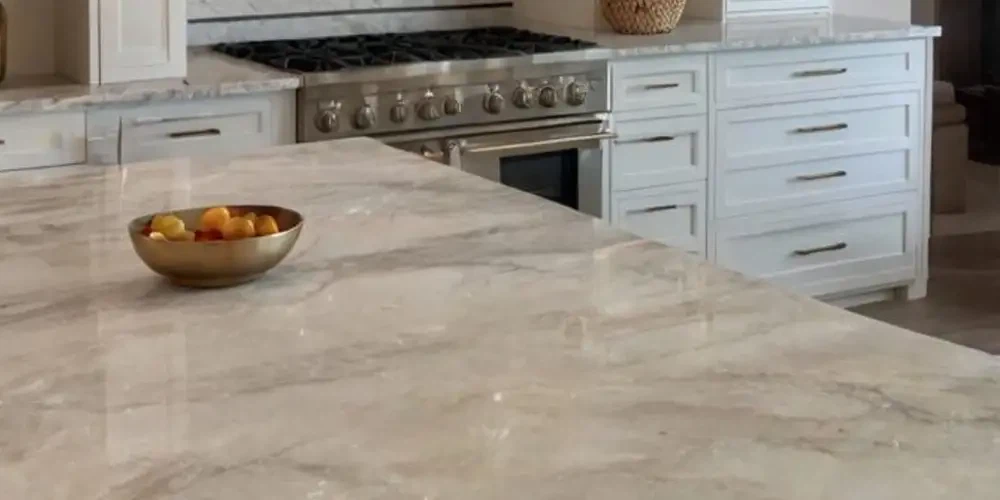
The surface reads like soft marble, with warm cream and champagne movement that settles easily into almost any kitchen. Underneath, it behaves more like granite. That combination is exactly why it has become such a common choice for busy kitchens and bathrooms, and it is also why the care routine is a little different from what people expect. You are not maintaining a fragile surface. You are protecting a naturally dense one so it keeps its edge for decades.
In the sections below I will cover the mineral background that makes this stone behave the way it does, how it compares to marble and engineered quartz, the practical steps of sealing, the daily cleaning habits that matter most, and the stain-removal and installation details that prevent problems before they start. Everything here is written for a real person with a real countertop, not for a lab bench.
Understanding Taj Mahal Quartzite Before You Clean It
Where the stone comes from and why it matters
Every maintenance conversation about this material should start with where it was born, because the origin is the single biggest predictor of how it will behave over time. Taj Mahal Quartzite comes out of Brazil, largely from the metamorphic formations of the Ceará region, where intense heat and pressure transformed quartz-rich sandstone into a dense, tightly bonded stone. The result is a slab with unusually high quartz purity, and that purity shows up directly in the way the surface resists staining.
When I explain this to a client, I keep it simple: a stone that was compressed harder and longer has fewer open pathways for liquid to travel through. That does not mean the stone is maintenance-free. It means the maintenance has a head start. You are protecting a surface that is already fairly reluctant to absorb anything, which is a much better starting position than a soft, porous stone that drinks spills the moment they land.
This is also why I tell buyers to ask about block origin before they ask about cleaner brands. A well-quarried slab and a poorly handled one can look similar on a showroom wall but behave very differently under daily use. The geological background is not a trivia detail. It is the foundation the whole care plan sits on.
Why low porosity is not zero maintenance
It is easy to hear the word quartzite and assume the surface can simply be ignored. I would gently push back on that. Low porosity reduces the risk of staining; it does not remove it. Oil can still sit in the very small surface pores, hard water can still leave mineral film, and acidic spills can still affect the finish if they are allowed to sit. The difference between quartzite and a softer stone is margin for error, not a free pass.
Think of it like a good raincoat. A well-made coat repels most water, but you still hang it up and brush it off after a storm. Taj Mahal Quartzite is the raincoat, and sealing plus daily cleaning is the hanging-up and brushing. The routine is short, but skipping it entirely is how a premium surface quietly loses its polish over the course of a few years.
How Taj Mahal Quartzite Compares to Marble and Quartz
Most of my conversations with clients eventually arrive at a comparison, because almost everyone choosing a kitchen surface is weighing natural stone against the alternatives. It helps to put the numbers side by side so the care plan makes sense. The table below shows the physical properties that drive maintenance behavior for three common choices.
| Physical Property | Taj Mahal Quartzite | Premium Granite | Calacatta Marble |
|---|---|---|---|
| Mohs Hardness | 7.0 – 7.5 | 6.0 – 6.5 | 3.0 |
| Water Absorption Rate | 0.02% – 0.05% | 0.15% | 0.50% |
| Acid Sensitivity | Extremely Low | Low | Very High (Etching) |
| Density (kg/m³) | 2,650 – 2,680 | 2,630 | 2,710 |
| Flexural Strength | High | Moderate | Low |
The water absorption number is the one I point to first, because it tells the whole story in a single line. A rate between 0.02% and 0.05% means the stone is naturally resistant to liquid migration, which lowers the burden on whatever sealer you apply. Traditional marble absorbs roughly ten times more, which is why marble demands such a fast response to spills and such a careful choice of cleaners. Engineered quartz countertops are essentially non-porous on the surface, so they sit at the other end of the spectrum, but they trade away the natural one-of-a-kind movement that quartzite provides.
Hardness and scratch resistance
At a Mohs rating of 7.0 to 7.5, Taj Mahal Quartzite is genuinely hard. Kitchen life involves knives, pans, and a steady stream of cookware sliding across the surface, and this stone handles that far better than marble, which sits around 3.0 on the same scale. That hardness is not just about scratches, either. It means the surface is less likely to develop the dull patches and micro-abrasions that softer stones pick up over years of daily wiping.
Acid sensitivity and etching
The acid question is where quartzite earns its reputation in a kitchen. Marble etches on contact with lemon juice, vinegar, and wine because it is calcium-based and reacts readily with acid. Quartzite is silica-based and shows extremely low acid sensitivity, which means a spilled glass of orange juice is an inconvenience rather than a permanent mark. For anyone who actually cooks, that single difference is worth more than any aesthetic argument.
Sealing Taj Mahal Quartzite the Right Way
Choosing a sealer that works with the stone
The first thing to understand about sealing this material is that the sealer is a support system, not a transformation. A good impregnating sealer does not coat the stone like varnish on wood. It fills the tiny surface pores so that liquids bead on top instead of sinking in. Because the stone is already dense, you do not need an aggressive product; you need a quality one applied correctly.
I generally steer clients toward a fluorocarbon-based or high-performance penetrating sealer rather than a cheap topical wax or acrylic. The fluorocarbon systems introduced for natural stone in recent years hold up longer between applications, and crucially, they do not leave the surface feeling plastic or over-treated. In a luxury kitchen, the finish should still look and feel like natural stone. The sealer works invisibly, which is exactly what you want.
The water bead test
You do not need any special equipment to know whether your seal is still doing its job. Pour a small splash of clean water onto the surface and watch what happens. If the water beads up and stays on top, the seal is holding. If it spreads, darkens the stone, or soaks in within a minute or two, the seal has worn thin and it is time to reapply. I recommend doing this test every few months in a high-use kitchen, because it tells you the truth faster than any schedule can.
Factory-side protection matters
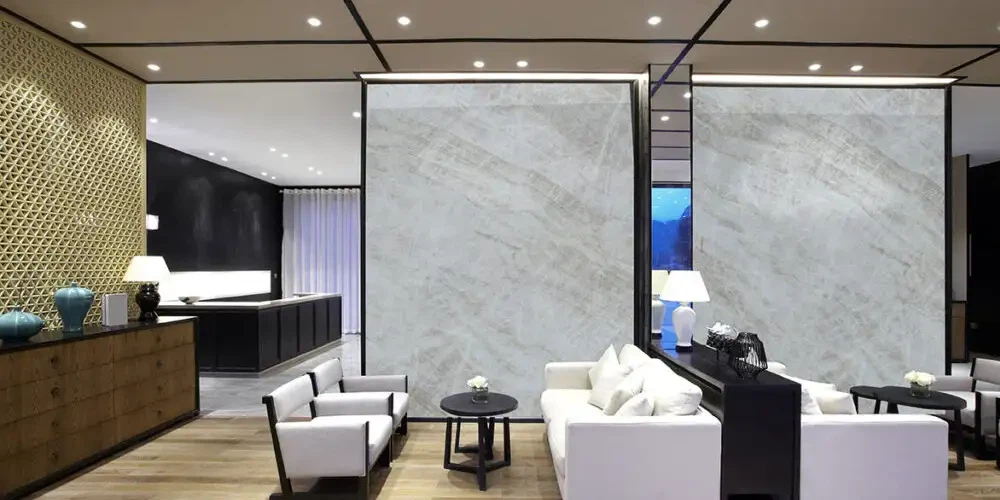
One of the most useful things I have learned is that the best maintenance starts before the slab is ever installed. A slab that has been resin-treated and vacuum-sealed during polishing is already less porous when it arrives, which means the on-site sealing burden is smaller and the final result is more predictable. This is one of the quieter reasons to buy from a source that treats every slab consistently, rather than a source that ships raw material and hopes for the best.
Daily Cleaning Habits That Actually Matter
pH-neutral cleaning
The safest daily cleaner for this stone is a pH-neutral cleaner made for natural stone. The word neutral is the whole point. A cleaner that is too acidic or too alkaline will slowly eat away at the sealer and dull the finish over time, even if the countertop looks fine after each wipe. The goal of a daily routine is not to strip the surface down. It is to lift the everyday film and leave the protective layer intact.
For most households, warm water with a few drops of mild dish soap is perfectly fine for routine wiping, followed by a dry microfiber cloth. A dedicated stone cleaner is worth keeping on hand for the heavier days. Both work because they clean without attacking the chemistry of the stone or the seal.
What to avoid
There is a short list of common household products that do more harm than good on natural stone, and I repeat it often because the products are so familiar that people assume they are safe. Vinegar, bleach, and citric-acid cleaners are the main offenders. They can dull the finish, weaken the sealer, and in some cases etch the surface over repeated use. If the countertop is a premium surface, the cleaning chemistry should be equally deliberate.
| Cleaner Type | Safe for Taj Mahal Quartzite? | Notes |
|---|---|---|
| pH-neutral stone cleaner | Yes | Best daily option |
| Dish soap + warm water | Yes | Fine for light routine cleaning |
| Vinegar | No | Can damage sealer and finish |
| Bleach | No | Too harsh for stone care |
| Citric acid cleaners | No | Risk of surface dulling |
Spill response for oil, wine, and coffee
When oil, wine, or coffee lands on the surface, the single most important move is to blot rather than rub. Rubbing spreads the spill across a wider area and pushes it deeper. Blotting lifts it before it has a chance to penetrate. After blotting, clean the spot with a stone-safe neutral cleaner and dry the area with a clean cloth. That ten-second habit is the difference between a surface that stays bright and one that slowly collects avoidable marks.
Removing Stains When Prevention Is Not Enough
The poultice method
For a stain that has already set in, the most effective home approach is a poultice. A poultice combines an absorbent material with a compatible cleaner to draw the stain back out of the stone over time. You spread it over the spot, cover it, and let it work. The key ingredient is patience. A poultice is a controlled extraction process, not a quick wipe, and it is often far more effective than aggressive scrubbing, which only grinds the stain deeper and dulls the polish.
Organic versus inorganic stains
Not all stains respond to the same treatment. Organic stains from coffee, tea, and wine usually lift with a mild poultice and the right cleaner. Inorganic stains, such as rust or metal transfer from a can left on the surface, often need a more technical approach and a specific product. The first step in any stain situation is to figure out what you are dealing with before reaching for a cleaner. Treating a rust mark like a coffee spill is a reliable way to make the problem worse.
When to call a professional
If a stain is deep, has spread across a seam, or has changed the finish itself, it is time to bring in a stone restoration professional. There is no shame in that call. Routine care is a homeowner job, but re-honing, re-polishing, and chemical correction are specialist work, especially on a surface where visual consistency matters across a large island or a long run of countertop. Spending a little on a professional now usually costs far less than living with a visible flaw or attempting a repair that goes wrong.
Installation Details That Prevent Future Problems
Six-side sealing for wet zones
In bathrooms and other moisture-heavy areas, I recommend six-side protection, which simply means the slab or tile is sealed on all faces before installation, not just the top. This prevents moisture from migrating up through the underside and causing edge discoloration. It is a small extra step at the fabrication stage that saves a great deal of trouble after the vanity is already installed and hard to reach.
Substrate preparation and the shadow effect
Trapped moisture under a slab can create what installers call the shadow effect, where the stone looks darker or inconsistent from beneath the surface. The way to avoid this is a dry, stable, and level substrate. The stone should never be set onto a base that is still curing or holding water. Getting the substrate right is boring work, but it is exactly the kind of boring work that keeps a finished wall or countertop looking clean for years.
Adhesive discipline
With a light natural stone like this, the adhesive choice matters more than most people realize. A non-staining epoxy is mandatory, because the wrong adhesive can telegraph up through the slab and permanently change the visible appearance. This is one of the reasons fabrication is about more than cutting. Every hidden layer under the stone, from the adhesive to the underlayment, plays a role in what the final surface looks like.
Budget, Longevity, and What Care Really Costs
People sometimes assume a premium stone comes with a punishing maintenance bill. In practice, the annual budget for Taj Mahal Quartzite is moderate: a quality sealer, pH-neutral cleaners, the occasional restoration call if the surface sees heavy use, and that is about it. Compared to the cost of repairing etched or stained marble, the numbers are comfortable. The real cost of ownership is not the routine; it is the neglect that builds up when the routine is skipped.
There is also a resale angle worth keeping in mind. A bright, well-kept quartzite kitchen reads as an asset to a future buyer in a way that a dulled or stained surface never will. The difference between cared-for and neglected stone is visible from across the room, and in a high-end home, that difference translates into real value. Maintenance is not an expense against the stone. It is the thing that keeps the stone worth what you paid for it.
Consistency is the quieter half of this story. When a large project pulls slabs from many different block batches, the surfaces can age and respond to sealers unevenly, which is why volume buyers care so much about a consistent source. For a hotel lobby or a multi-unit residential build, the goal is that every surface reacts the same way to the same care, year after year. That only happens when the stone is sourced and processed with discipline from the start.
Frequently Asked Questions
Does Taj Mahal Quartzite need to be sealed?
Yes, I recommend sealing it even though the absorption rate is very low. Sealing improves stain resistance and makes daily cleanup easier, especially in kitchens and bathrooms where spills and moisture are constant. The point is not to make the stone waterproof. It is to preserve the finish and keep the surface easy to maintain over the long run.
How often should Taj Mahal Quartzite be sealed?
There is no fixed number that works for every home, because use, location, and sealer type all change the answer. Many projects do well with an annual or biennial check rather than automatic resealing. The water bead test is the practical guide: if water no longer beads or the surface starts to darken under moisture, it is time to reapply. High-use kitchens and bathrooms should be checked more often than lightly used surfaces.
What is the best way to remove water spots from quartzite?
Start by identifying whether the spots are mineral deposits or simple surface moisture marks. If they are just residue, a stone-safe cleaner and a soft microfiber cloth are usually enough. If the spots are mixed with soap film or have altered the finish, a professional stone care product may be required. Avoid acidic cleaners here, because they can create a new problem while you are trying to solve the first one.
Can I use regular glass cleaner on Taj Mahal Quartzite?
I would not make it the daily habit. Most standard glass cleaners are not formulated for natural stone and may contain ingredients that are less than ideal for the sealer and the finish. The safest routine is a pH-neutral stone cleaner or mild soap and water. That approach protects the seal and preserves the surface over time.
How do I keep a large installation looking uniform over time?
Uniformity starts at sourcing. When slabs come from consistent block batches, they age and respond to sealers and cleaners in a predictable, even way across the whole project. Beyond that, the same care rules apply everywhere: seal on schedule, clean with pH-neutral products, blot spills quickly, and check high-touch areas more frequently than the rest of the surface.
Final Conclusion
The most important thing to remember about Taj Mahal Quartzite is that it rewards calm, consistent care far more than it demands perfection. A simple routine built on the right sealer, pH-neutral cleaning, quick spill response, and proper installation keeps the surface bright, durable, and genuinely beautiful for decades. The stone does the difficult work by nature; your job is simply not to work against it. Treat the care plan as part of the original specification rather than an afterthought, and the surface will hold its value and its look for as long as you own the home. That is the whole promise of a well-maintained natural stone, and it is a promise KA UNITED stands behind on every project we support.