What are the varieties of black natural marble?
What Are the Varieties of Black Natural Marble?
If you have spent any time in a stone yard looking at slabs, you have probably noticed something about black marble: there is not very much of it. Walk through a showroom and you will see dozens of whites, beiges, and greys, but the black section is usually small. That is not an accident. The number of commercially traded black marble varieties really is smaller than the number of white or beige ones, and that shortage is one of the main reasons black marble tends to carry a higher price tag.
I work with this material every day, and I still find black marble a little more demanding than the light stones. It shows every fingerprint, every streak of dust, and every mistake in fabrication. But when it is done right, a black marble hall wall, desktop, countertop, or floor has a depth that lighter stones simply cannot match. In this article I want to walk you through the main varieties, explain how to tell them apart, and give you the practical advice I would give a friend before they buy.
Before I list the varieties, though, we have to clear up one confusion that comes up constantly. A lot of people are sold "black marble" that is actually black granite. The two are completely different materials, and the difference matters because marble sells at a noticeably higher price than granite. If you do not know how to read the two stones, you can end up paying a marble price for a granite board.
First, Sort Out Marble from Granite
The cleanest way to separate marble from granite is to look at how the pattern behaves. Marble is a metamorphic rock that started out as limestone or dolomite and was recrystallized under heat and pressure over a very long time. That process is what creates its veining, and the veins are not regular. A marble board is textured and irregular: the mineral lines wander, change thickness, and never repeat in a predictable grid. Granite, by contrast, is an igneous rock that cooled slowly from magma, and its mineral grains are distributed much more evenly. A granite board is dotted and granular, and the texture of the whole board stays consistent from one corner to the other.
The two-second rule I use in the yard
Here is the shortcut I rely on when I am checking an unfamiliar slab. If the surface looks like someone dragged a brush through wet paint and let the lines dry wherever they wanted, you are looking at marble. If it looks like a field of small speckles with roughly the same density everywhere, you are looking at granite. The difference is not about color at all. Both stones come in black, and that is exactly where people get confused. A deep black stone with an even, fine grain is very often granite, not marble.
Why the price difference exists
The two materials also behave differently, which explains the price gap. Marble is softer. On the Mohs scale of mineral hardness, marble sits around 3 to 4, which means it scratches more easily and responds beautifully to polishing but needs more care. Granite sits much higher, around 6 to 7 on the same scale, which is why it shrugs off knives and heavy traffic the way marble does not. Marble also has a typical density of roughly 2.5 to 2.7 grams per cubic centimetre, while granite runs a bit heavier at around 2.6 to 2.8 grams per cubic centimetre. Neither of those numbers is something you need to memorize, but they explain why a granite board feels denser and less "soft" under a polisher than a marble board of the same size.
The practical takeaway is simple: marble is the interior stone. Granite is often pushed toward outdoor use because it is cheaper, harder, and better at handling direct sun and weather. I will come back to this point at the end, because confusing the two is one of the most common ways buyers overpay.
The Main Varieties of Black Natural Marble
With that distinction clear, let me walk through the varieties themselves. The list I use with clients covers eight names that show up most often in the market. I have grouped the key facts in the table below, then I will go through each one in a bit more detail so you know what to look for on the slab.
| Variety | Origin | Typical Pattern | Typical Price (RMB/m²) | Common Uses |
|---|---|---|---|---|
| Black Golden Marble | Multiple sources, domestic and imported | Golden veins on a black ground | Varies widely | TV feature walls, windowsills, door jambs, stone columns |
| Black and White Root Marble | Guangxi and Hubei, China | Black ground with white veins | 80–120 | Floors, walls, general interior cladding |
| Castle Black Marble | Turkey | Deep, uniform dark tone | Varies widely | Countertops, desktops |
| Night Snow Marble | Hezhou, Guangxi, China | Black ground with fine light veining | 100–150 | Floors, walls |
| Lauren Black Gold Marble | Imported | Black ground with gold-toned veining | Varies widely | High-end countertops, feature panels |
| Tulip Marble | Fujian, China | Black ground with distinctive veining | Varies widely | Decorative panels, accent surfaces |
| Black Yubinghua (Black Queen) | Guizhou, China | Black ground with crystalline detail | 90–130 | Floors, walls, desktops |
| Silver White Dragon Marble | Guangxi, China | White straight grain on a black ground | Varies widely | Feature walls, cladding |
A quick note on those prices before we go further. The figures I am quoting here are the domestic Chinese market ranges I see quoted for these stones, and they shift with grade, slab thickness, finish, and the specific quarry a batch comes from. Treat them as a starting point for comparison, not as a fixed quote. Where a variety has no widely published range, I have marked it as varying so I do not invent a number that would mislead you.
Black Golden Marble
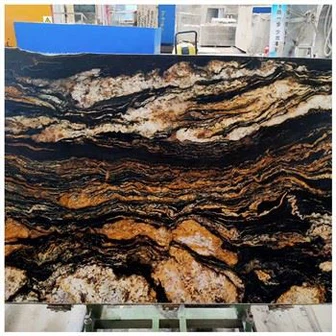
This is probably the most recognizable name in the group. Most Black Golden slabs show golden veins running across a black background, and the contrast is what makes the stone read as formal and a little opulent. You will most often see it on TV feature walls, windowsills, door jambs, and stone columns, where the golden movement can carry a room on its own. The color balance matters here: some boards lean warm and gold, while others are closer to a muted bronze, so I always tell buyers to select the actual slab rather than rely on a photo.
Black and White Root Marble
Quarried in Guangxi and Hubei, this stone has a black ground crossed by white veins that look a bit like root systems, which is where the name comes from. It is one of the more affordable black marbles, with a typical domestic price around 80 to 120 RMB per square metre, and that price point is why it appears in so many mid-range projects. It is a good workhorse stone for floors and walls when you want the drama of black without the price of the imported names.
Castle Black Marble
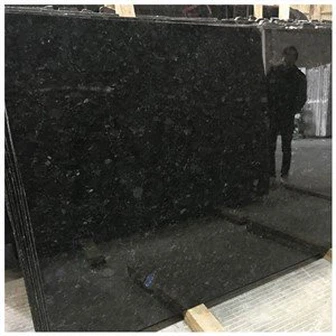
Castle Black comes from Turkey, and it is known for a deeper, more uniform dark tone rather than loud veining. Because the surface reads as calm and continuous, it suits countertops and desktops where you do not want the pattern to compete with everything else in the room. Turkish stones in general are worth looking at closely, because the finish from one factory to the next can change how black the stone actually appears.
Night Snow Marble
This one is quarried in Hezhou in Guangxi, and its name describes the look well: a dark ground scattered with fine, light veining that resembles snow at night. The typical domestic price sits around 100 to 150 RMB per square metre. It is a popular choice for floors and walls, and because the veining is relatively fine, it books and matches more forgivingly than a stone with bold, directional veins.
Lauren Black Gold Marble
Lauren Black Gold is an imported stone, and the "black gold" in the name refers to gold-toned veining on a black ground. Because it is imported, its price depends heavily on the slab grade and the current supply situation, so I will not quote a fixed number here. It tends to land in higher-end countertops and feature panels where the buyer wants that warm metallic thread running through the black.
Tulip Marble
Quarried in Fujian, Tulip marble carries distinctive veining on a black ground. It is less about a single signature look and more about the individual slab, so I usually recommend reviewing several boards before committing. It is commonly used for decorative panels and accent surfaces where the stone is meant to be looked at rather than walked on.
Black Yubinghua, Also Known as Black Queen
This stone comes from Guizhou and goes by two names in the market: Black Yubinghua and Black Queen. It has a black ground with a crystalline quality that gives it a little more sparkle than a matte black board. The typical price runs around 90 to 130 RMB per square metre, which puts it in the accessible middle of the black marble range. It works well on floors, walls, and desktops where you want a bit of life in the surface without strong directional veining.
Silver White Dragon Marble
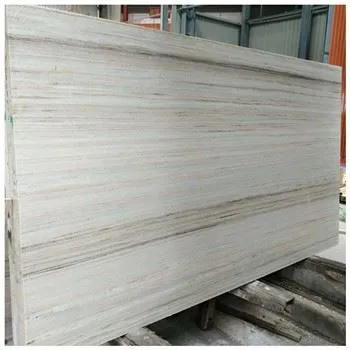
Quarried in Guangxi, Silver White Dragon is defined by white, straight grain running across a black background. The straight grain is what separates it from Black and White Root, whose white lines wander more. That directionality is a design asset when you want a wall to feel taller or longer, and it is a favorite for feature walls and vertical cladding.
Why the Same Variety Can Look Different
One thing that surprises first-time buyers is that two slabs with the same name can look almost unrelated. The reason is the quarry. Even within a single variety, different mine mouths - the specific extraction points in a quarry or across different quarries in a region - can produce noticeably different veining, color depth, and even background tone. This is not a sign of fakery; it is just how natural stone works.
A good example is the material known in the market as Black Sands, which arrives from several different places at once, including Afghanistan, Russia, Iran, and local sources. Depending on where a particular batch was pulled from, the grain and color can shift enough that you would guess they were different stones. That is why the advice to always select the actual slab, and to buy from a supplier who can tell you which quarry a batch came from, is not fussy - it is the only reliable way to know what you are really getting.
How to Choose Black Marble Without Getting Burned
Black marble is expensive enough that a bad purchase hurts, so I want to give you the three cautions I repeat most often with clients.
Watch out for dyed boards
The most important warning is about stained or dyed boards. A dyed board is one where a black dye has been used to deepen the color of a stone that was not dark enough on its own. This usually happens when the stone delivered does not match what the client approved, so the contractor tries to fix the color with dye rather than replacing the material. The problem is that the dye is invisible early on. After a year or two of light and cleaning, the color starts to degrade, and you end up with a wall or floor that is no longer a consistent black. By the time you notice, the installation is already done and fixing it means tearing it out. The only real protection is to buy from a supplier you can hold accountable for the material, and to inspect the slab in person under good light.
Buy from a manufacturer you can actually talk to
If you need a large quantity of black marble, it is worth finding a domestic manufacturer you can deal with directly rather than buying blind through several layers of middlemen. A manufacturer who processes the stone themselves can confirm the quality and the batch origin, and will usually be willing to put the board quality discussion on the record with you before money changes hands. That direct line of accountability is worth more than a slightly lower sticker price, because it is what lets you push back if a board arrives wrong.
Do not confuse black marble with granite
Finally, keep the marble-versus-granite distinction in your pocket when you negotiate. The price difference between the two is significant, so paying a marble price for a granite board is a real and common loss. Granite is still used far less often for interior decoration, and it is generally recommended for outdoor applications instead, because it is cheaper and better at standing up to sun and weather. Indoors, marble is the choice when you want that soft, veined, polished depth. Knowing which one you are actually being shown is the difference between a fair deal and an expensive mistake.
Frequently Asked Questions
Is black marble more expensive than white or beige marble?
Often, yes. Black marble has far fewer commercially traded varieties than white or beige stone, so the supply is thinner and the price tends to sit higher. That said, there is a wide range within black marble itself. A domestic stone like Black and White Root or Night Snow can be quite accessible, while imported names like Lauren Black Gold climb quickly depending on grade and availability.
How can I tell black marble from black granite?
Look at the pattern rather than the color. Marble is textured and irregular, with veins that wander and change thickness. Granite is dotted and granular, with a texture that stays consistent across the whole board. If the surface is an even field of small speckles, you are almost certainly looking at granite. The two also differ in hardness, with marble around 3 to 4 on the Mohs scale and granite around 6 to 7.
What is a dyed black marble board, and why should I avoid it?
A dyed board is one that has been treated with black dye to deepen a color that was not dark enough on its own, usually to cover a mismatch between the delivered stone and the approved sample. The dye looks fine at first but fades after exposure to light and cleaning over time, leaving the surface uneven in color. Because the flaw only appears after installation, the safest defense is to inspect slabs yourself and buy from a supplier who stands behind the material.
Do different quarries of the same black marble really look different?
Yes. Different mine mouths within the same variety can produce visibly different veining and color depth. Black Sands, for instance, is supplied from places including Afghanistan, Russia, and Iran, and a batch from one source can look noticeably different from a batch from another. This is normal for natural stone, which is why selecting the actual slab matters so much.
How should I clean and maintain black marble surfaces?
Use a soft cloth and a pH-neutral cleaner, and wipe up spills promptly so nothing has time to sit on the surface. Avoid acidic cleaners, which can etch marble. Because black shows dust, streaks, and fingerprints more than lighter stone, a quick daily wipe keeps it looking its best, and occasional professional repolishing restores the depth of the finish.
Final Conclusion
Black natural marble is a small family with a big presence. The main varieties you will meet in the market - Black Golden, Black and White Root, Castle Black, Night Snow, Lauren Black Gold, Tulip, Black Yubinghua, and Silver White Dragon - each bring a different balance of veining, origin, and price, from the accessible 80 to 120 RMB per square metre of Black and White Root to the imported, grade-driven pricing of Lauren Black Gold. The keys to buying well are simple: learn to separate marble from granite so you never overpay, remember that two slabs with the same name can look different because of the quarry, and stay clear of dyed boards that will fade on you after installation. If you take those cautions with you, black marble rewards the effort with a depth that few other stones can touch. For a closer look at the range we carry and how the different finishes actually perform, you are always welcome to review our marble selection and talk it through with the team at KA UNITED.