


Calacatta Grey Quartzite Tiles
Brazilian Calacatta Grey quartzite tiles for floor and wall applications. Light grey base with delicate natural veining mimicking luxury Calacatta marble, high-gloss polished finish. High-density quartzite delivers superior wear resistance, low water absorption and stain resistance. Factory dry-lay service ensures consistent veining flow for seamless large-area installation. Ideal for hotels, villas, office buildings and commercial spaces. Custom sizes and finishes available.
Quartzite Item:Factory Supply Polished Calacatta Grey Quartzite Tiles Dry Laid for Bulk Commercial & Residential Projects
Quartzite Stone: Super White Quartzite, Calacatta Grey Quartzite
Slab Size: 2900x1600, 2400x1200, etc.
Sizes:12''x12'',24''x24'',18''x18'',24''x12''
Thickness: 20,30mm
Surface: Polished, Honed, and brushed
MOQ: 300 SQM
Quartzite Slabs And Countertop Factory: KA UNITED
Application: 60+ luxury exotic Quartzite Stones in KA UNITED Factory For Private Home, hotels, villas, apartments, and other commercial estate properties
Product Introduction
Quick Summary: Calacatta Grey Quartzite Tiles are Brazilian natural stone tiles commercially associated with the Super White stone family, featuring a pale grey-white background, cloudy mineral formations and irregular charcoal-grey veining. KA UNITED supplies 300 × 300, 600 × 600 and 900 × 900 mm formats in nominal 10, 18 and 20 mm thicknesses for interior floors, walls and custom architectural applications. Polished, honed and brushed finishes can be reviewed according to project requirements. Buyers should verify the actual stone classification, finish performance, tile calibration and batch appearance before approving high-traffic or moisture-exposed installations.
Calacatta Grey Quartzite Tiles for Hotel and Villa Floors, Bathroom Walls and Commercial Interiors
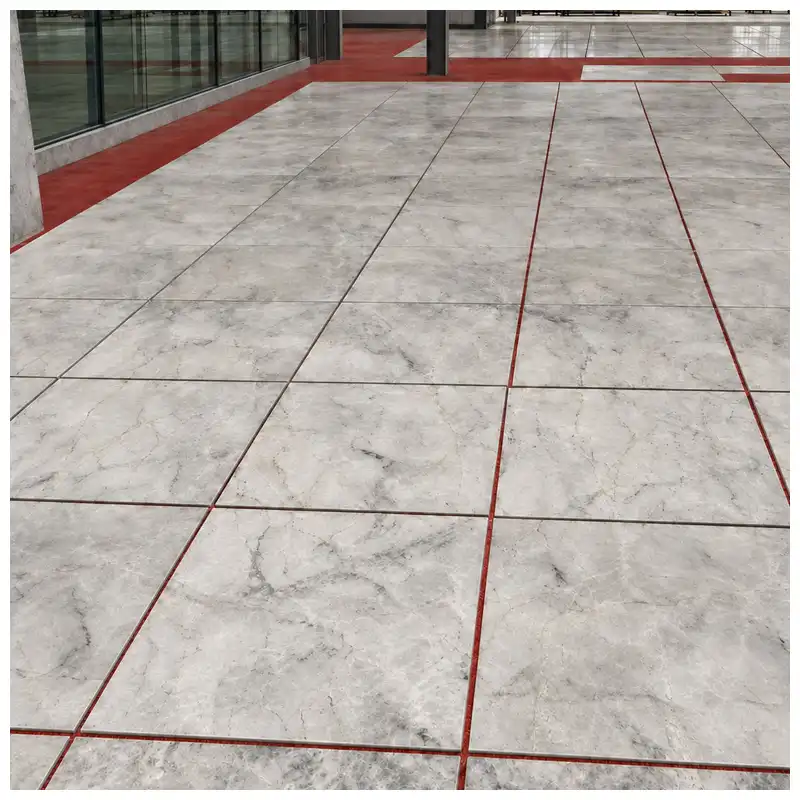
Calacatta Grey natural stone tiles in a white-grey crystalline palette with irregular darker mineral formations.
Calacatta Grey Quartzite Floor Tiles are selected for interiors requiring the visual movement of natural stone within a restrained white and grey color scheme. The commercial material, also associated with Brazilian Super White stone, has irregular cloud-like mineral formations rather than the repetitive straight veins found in some other decorative stones.
For residential projects, the tiles can form coordinated floors across living rooms, entrance halls, internal corridors and bedrooms. Their pale background works with timber cabinetry, neutral plaster, dark metal detailing and both warm and cool furniture palettes.
In hospitality developments, the same product may be considered for guest-room floors, interior reception areas, decorative corridors and feature walls. Selection for heavily used public floors requires technical evaluation of the specific stone and surface finish.
Wall applications introduce another design direction. Larger square tiles can create broad mineral fields behind reception desks, in lift lobbies or across residential feature walls. Smaller modules accommodate more detailed wall elevations and confined spaces.
The product is supplied as fabricated tiles rather than only raw slabs. This gives architects, stone contractors and project buyers a defined starting point for tile layout, thickness selection, edge finishing and installation coordination.
Calacatta Grey Quartzite Tile Sizes, Thicknesses and Surface Finish Options
Tile dimensions affect more than the visible grid. They influence installation handling, the proportion of stone-to-joint area, the size of perimeter cuts and the amount of natural mineral movement visible within each individual piece.
| Product | Calacatta Grey Quartzite Tiles |
| Commercial Stone Names | Calacatta Grey, Super White Quartzite; geological classification subject to verification |
| Country of Origin | Brazil, according to supplied product identification |
| Size 1 | 300 × 300 mm / approximately 11.81 × 11.81 inches |
| Size 2 | 600 × 600 mm / approximately 23.62 × 23.62 inches |
| Size 3 | 900 × 900 mm / approximately 35.43 × 35.43 inches |
| Nominal Thickness | 10 mm / 18 mm / 20 mm |
| Surface Finishes | Polished, Honed, Brushed; final availability and samples require confirmation |
| Color Character | Soft white, pale silver-grey, cloudy medium-grey mineral patterns and variable darker veins |
| Tile Processing | Square tile cutting, calibration, edge finishing and project-specific cut-to-size processing |
| Installation Categories | Interior flooring, interior wall cladding and conditionally approved specialty applications |
These are nominal product dimensions. Finished calibration tolerances, usable cutting dimensions, edge treatment and the suitability of each thickness must be established from the approved production specification. Different tile sizes should not automatically be assumed to share the same installation requirements.
Brazilian Calacatta Grey Quartzite: Cloudy White Minerals, Grey Veining and Natural Batch Variation
Calacatta Grey Quartzite is commercially recognized for its varied grey-on-white mineral appearance. Pale crystalline sections alternate with cloudy grey formations, thin dark lines and occasional concentrated grey patches.
The stone does not have a uniformly white background. Some pieces contain broad soft-grey areas, while others show more noticeable fractured mineral movement. These differences remain visible even when the same nominal tile size and surface finish are used.
Unlike engineered surfaces with controlled printed patterns, natural stone does not repeat an identical design from piece to piece. A single 300 mm tile may show only part of a larger mineral formation, while a 900 mm tile can retain more of the original stone's tonal transitions.
Buyers comparing Grey Quartzite Tiles should examine the balance between lighter and darker areas. A project requiring a nearly uniform pale floor may need tighter visual selection than one intentionally using dramatic natural variation.
The name Grey Exotic Quartzite Tiles is a broad commercial search category, not a geological classification or a guarantee of performance. The material should be selected from photographs of the actual production lot with an agreed acceptable color range.
For wall elevations, the position of prominent grey mineral areas may be intentionally planned around openings and corners. On floors, a more distributed arrangement can help prevent a few noticeably dark tiles from appearing visually isolated.
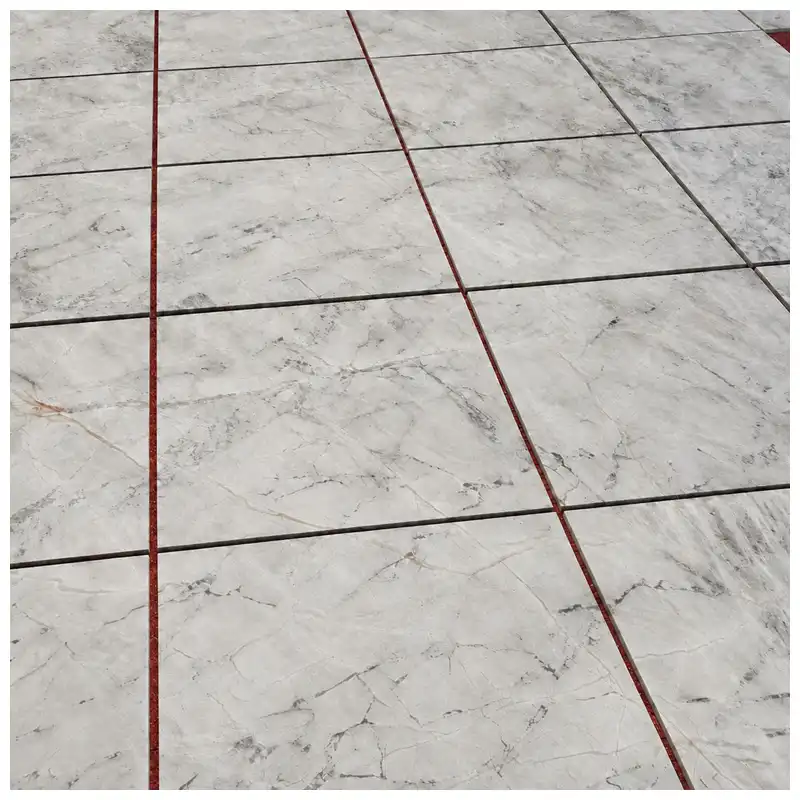
Grey crystalline clouds, white mineral areas and natural irregular veining in Calacatta Grey stone.
Choosing Polished, Honed and Brushed Calacatta Grey Tile Finishes
A surface finish changes the reflection and texture of the same stone. For a floor or wall specification, finish selection should follow the required appearance, cleaning method and exposure conditions rather than appearance alone.
| Finish | Appearance | Design Consideration | Technical Approval |
|---|---|---|---|
| Polished | Reflective surface with more visible crystalline depth | Decorative floors, interior walls and dry residential spaces | Confirm slip performance, abrasion conditions and maintenance requirements |
| Honed | Matte, lower-reflection appearance | Contemporary interior walls and selected floor designs | Approve actual surface texture and applicable wet-slip requirements |
| Brushed | Textured finish with possible variation across mineral areas | Lower-glare interiors and projects requiring a tactile finish | Review representative finish, cleaning characteristics and performance tests |
Neither a honed nor brushed surface is automatically certified as slip-resistant. For public areas, wet entrances and bathrooms, the selected finished product must satisfy the project's applicable walking-surface requirements.
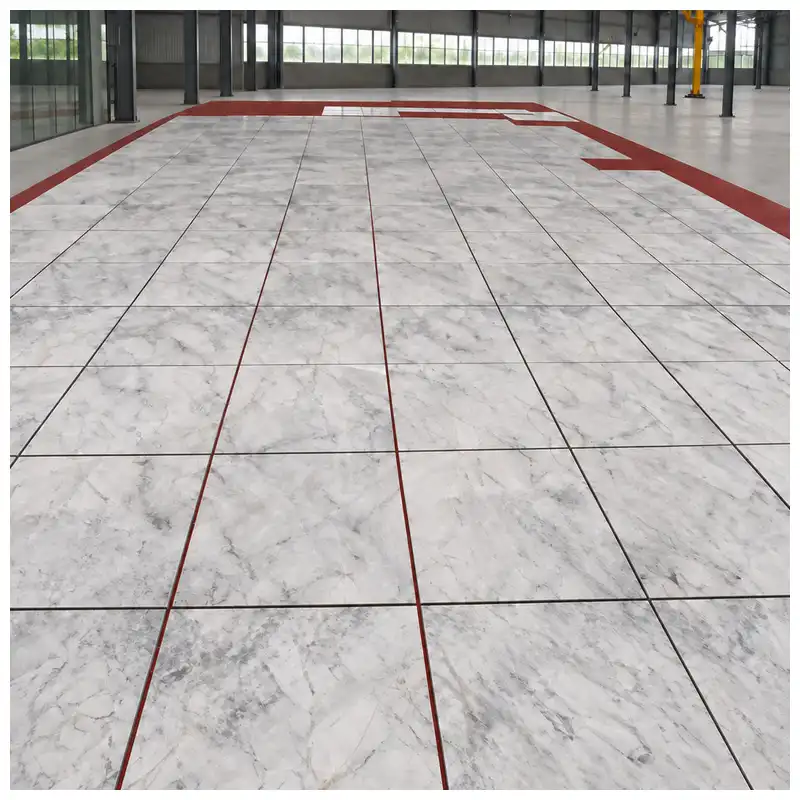
Calacatta Grey cut-to-size tile formats, calibrated edges and matching stone components.
Calacatta Grey Quartzite Cut-to-Size Tiles for Coordinated Floor and Wall Layouts
Calacatta Grey Quartzite Cut-to-Size Tiles can be prepared according to a defined architectural cutting schedule rather than only a standard square-tile order. The project drawings should establish finished dimensions, edge details and the position of special pieces before fabrication.
For large square floor tiles, cutting layouts need to account for the dimensions of adjoining rooms, doorway alignments and the width of perimeter pieces. A symmetrical starting grid may reduce visually awkward narrow cuts at opposite walls.
Custom border strips, thresholds or other transition pieces may require different lengths and edge profiles from the main floor field. Their final geometry should be indicated separately in the cutting list.
Wall cladding introduces additional requirements around electrical outlets, niches, door openings, corners and ceiling junctions. Narrow pieces at exposed edges should be checked for handling strength and suitable support.
The natural grey patterns may change direction when a large slab is divided into smaller pieces. Where coordinated visual movement is required, cutting orientation should be marked and approved before the stone is separated.
A confirmed cutting schedule helps the fabricator distinguish standard tiles from special components while keeping the finished installation consistent with the architect's layout.
Material Identification and Representative Super White Stone Technical Data
The names Calacatta Grey Quartzite and Super White Quartzite are used commercially for Brazilian white-grey natural stone. However, some materials sold under the Super White name are petrographically classified as brecciated dolomitic marble rather than true quartzite.
This distinction matters in specification work. A dolomite-rich material can respond to acidic liquids and cleaners differently from a quartz-rich metamorphic stone. Commercial stone terminology alone does not establish hardness, chemical resistance or suitability for demanding floor conditions.
Published technical information for one Brazilian Super White reference reports the following values. They are representative of that identified reference material only, not laboratory results for the Calacatta Grey tiles offered on this page.
| Technical Property | Published Super White Reference | Relevance to Project Selection |
|---|---|---|
| Water Absorption | 0.2% for the published reference material | Selected batch requires confirmation where moisture exposure is important |
| Abrasion Wear | 2.1 mm per 1,000 m for the published reference | Floor suitability depends on the required traffic and wear criteria |
| Geological Composition | Dolomite-dominant composition reported for that Brazilian Super White reference | Petrographic identification is required before specifying quartzite-specific performance |
| Compressive Strength | Not reported in the selected reference | Obtain a relevant test report where structural performance is specified |
| Flexural Strength | Not reported in the selected reference | Important for appropriate wall-panel and stone-component design |
| Wet Slip Resistance | No batch-specific result supplied | Test the actual finish against local project criteria |
The numerical references above are associated with a published Brazilian Super White stone technical profile and an NBR 15845:2015 reference. They are not a substitute for a current, traceable test report on the supplied material.
For procurement, the approved specimen, commercial name, quarry documentation and geological identification should remain connected to the same material batch. Where the stone is identified as dolomitic marble, stone-care and chemical-exposure requirements should reflect that composition rather than generic quartzite marketing claims.
Calacatta Grey Quartzite Wall Tiles for Feature Walls, Corridors and Interior Cladding
Calacatta Grey Quartzite Wall Tiles can form large decorative surfaces without the pronounced color contrasts of some black, green or multicolored exotic stones. Their grey-white mineral pattern allows wall elevations to remain visually detailed while working alongside timber panels, plaster finishes and metallic architectural elements.
For hotel corridors, the choice between smaller and larger tile formats affects the number of visible horizontal and vertical joints. A coordinated layout can align grout lines with door openings, wall panels or other architectural features.
Bathroom wall installations introduce waterproofing and cleaning considerations. The stone and its joints do not replace a properly specified waterproofing system behind the cladding. Adhesives, grout and sealers should be compatible with the actual mineral composition and any stone reinforcement.
Large wall tiles also require suitable substrate preparation and fixing methods. The installer must consider panel size, stone weight, substrate movement and the relevant installation standard. Additional mechanical restraint may be necessary depending on the panel arrangement and project conditions.
Exterior cladding should be treated as a separate engineering specification. Neither the commercial quartzite name nor the interior product photographs establish adequate frost resistance, facade fixing performance or long-term weather durability.
Quartzite Flooring Tiles: Substrate Preparation, Joint Design and Floor Performance
Quartzite Flooring Tiles are often specified for their natural mineral appearance, but a successful installation depends on the performance of both the selected stone and the completed floor assembly.
The substrate should meet the flatness, stability and moisture requirements of the selected installation system. Larger tiles are particularly sensitive to substrate irregularities because even small variations can create visible lippage across adjacent pieces.
The joint design must account for finished tile calibration, installation tolerances and the required movement joints. Natural stone should not be installed without appropriate movement accommodation, even when the desired appearance is a relatively uninterrupted floor.
Light-colored stone can be sensitive to discoloration caused by unsuitable setting materials or excessive moisture. Mortar selection should consider the actual material, any resin or mesh treatment and the setting manufacturer's instructions. A representative installation mockup is advisable where appearance is critical.
For hotel entrances or other wet-prone areas, slip assessment must reflect foreseeable use conditions. Polished natural stone may create a slipping hazard when wet, regardless of its mineral hardness. Finish performance should be tested before the flooring is approved for those locations.
Maintenance access, replacement-tile allocation and future cleaning procedures should be considered during specification, especially where the same floor is expected to remain visually coordinated across multiple rooms or construction phases.
Factory Tile Calibration, Surface Inspection and Batch Identification
The grey-white character of Calacatta Grey makes consistency within an approved stone selection especially important. Factory inspection should establish acceptable tonal differences, visible fissures, fill quality and any damage that may affect the finished surface.
Dimensional checks need to cover finished length, width, thickness and edge straightness. For calibrated square formats, the relationship between neighboring pieces matters as much as the nominal size shown on a specification sheet.
Surface evaluation should consider finish uniformity, scratches, visible processing marks and edge chipping. Differences caused by natural minerals must be distinguished from avoidable fabrication defects under the approved acceptance criteria.
When a project requires visual sequencing, tiles may be arranged in a factory dry layout before packing. This can help identify color clusters or unexpected changes in mineral movement. The final sequence should be recorded through photographs and piece identification where applicable.
Export packing should protect polished faces, edges and corners from direct impact. Special cut-to-size pieces need identification that corresponds to the relevant project drawings and installation zones.
Inspection and preparation reduce avoidable discrepancies, but they do not remove the need for incoming inspection or accurate installation on site.
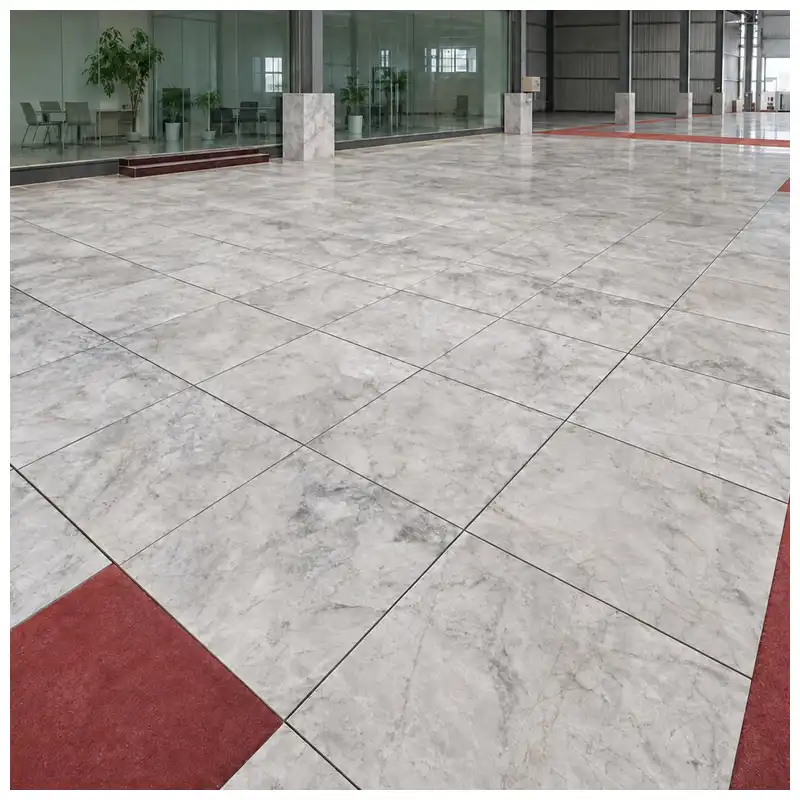
Factory-arranged Calacatta Grey tiles allowing visual review of calibration, grey mineral distribution and batch grouping.
Care and Cleaning of Calacatta Grey Natural Stone Tile Surfaces
Routine care should use a suitable pH-neutral natural-stone cleaner and non-abrasive cleaning equipment. Loose abrasive particles should be removed before wet cleaning, particularly on polished floors where repeated traffic can affect surface gloss.
Because Super White commercial stone may contain carbonate minerals, acidic cleaners and descaling agents should not be assumed safe. A penetrating sealer may help manage certain staining risks when compatible with the material, but it does not prevent chemical etching or make the installation waterproof.
Maintenance procedures should be confirmed after the actual stone composition and finish have been established. Public-area cleaning equipment, detergent concentration and any restoration treatments need to be appropriate for the installed surface.
Application reference showing Calacatta Grey stone tiles arranged across a broad interior floor with visible rectangular joints.
Calacatta Grey Natural Stone Flooring - Interior Installation Reference
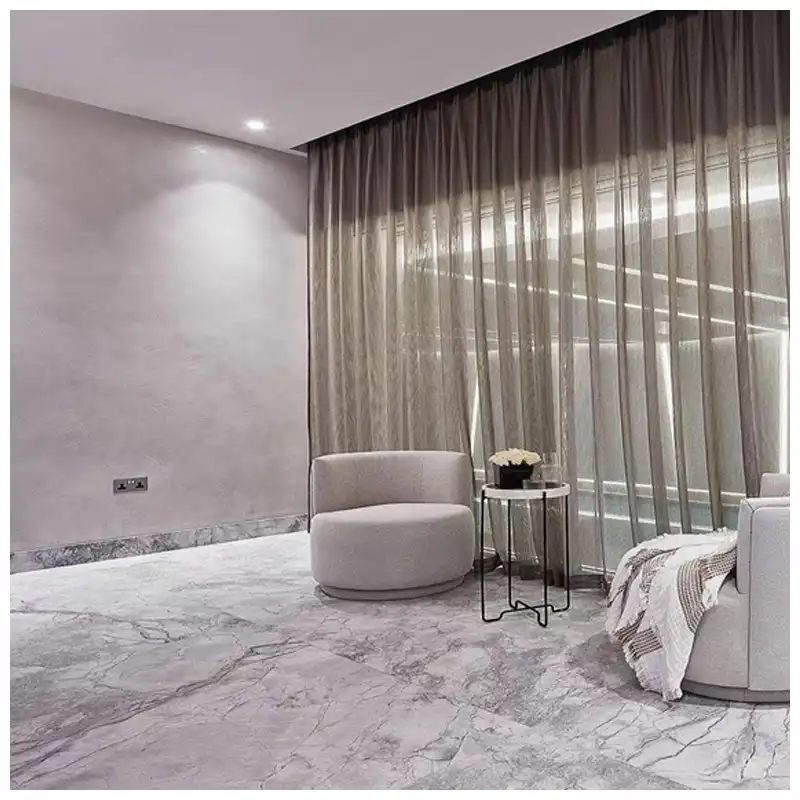
The supplied flooring photograph illustrates how a pale grey-white natural stone can appear when installed across a wide interior area. The individual tile boundaries remain clearly visible, while the cloudy grey mineral patterns vary across neighboring pieces.
The image also shows how surrounding architectural details and contrasting floor accents change the overall presentation of a neutral stone. This is one possible layout approach rather than a restriction on the product's other applications.
The photograph is a visual application reference. Specific project location, installation performance, stone thickness and long-term service conditions cannot be established from the image alone.
Compare Calacatta Grey with Four Decorative Quartzite Tile Alternatives
The following KA UNITED materials offer distinct visual directions. The comparison is intended to help architects and buyers choose between neutral grey stone, green mineral patterns and stronger contrasting natural surfaces.
| Selection Factor | Calacatta Grey | Verde Patagonia | Atlantic Quartzite | Patagonia Cladding | Panda Quartzite |
|---|---|---|---|---|---|
| Appearance | Pale grey-white with cloudy charcoal mineral movement | Muted green-grey with broad pale mineral bands | Neutral grey with restrained natural movement | Black, amber and cream fragmented mineral patterns | White background with strong dark veining |
| Product Form | Square floor and wall tiles, custom components | Architectural wall tiles and curved components | Rectangular and square floor and wall tiles | Decorative wall cladding panels | Patterned interior stone tiles |
| Main Design Direction | Neutral residential floors and coordinated interior walls | Green-toned feature walls and architectural details | Restrained modern flooring and wall surfaces | High-contrast statement wall elevations | Black-white decorative wall and floor schemes |
| Layout Priority | Grey tone grouping and tile calibration | Light mineral-band position and panel alignment | Finish selection and consistent neutral tone | Fragment placement and panel sequence | Directional black vein distribution |
This is a visual and product-form comparison, not a mechanical-performance ranking. Actual material specifications should be reviewed independently for each product.
Popular Quartzite Tiles from KA UNITED
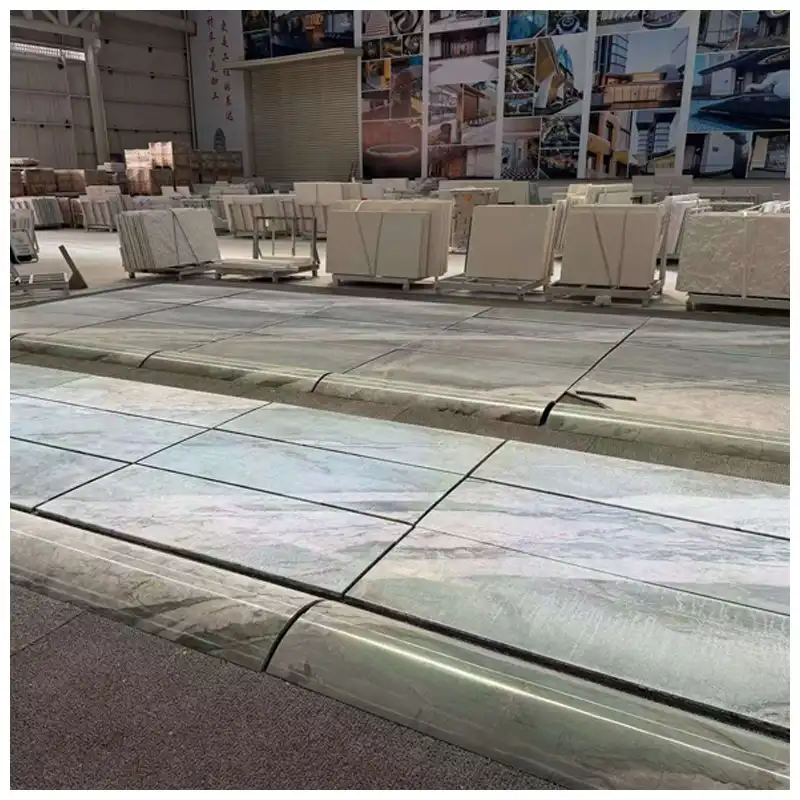
Verde Patagonia Quartzite Tiles
Green-grey mineral formations and pale crystalline bands suit decorative walls and custom architectural cladding.
View Product
Atlantic Quartzite Tiles
Neutral grey rectangular tiles create restrained natural-stone backgrounds for residential floors and contemporary interior walls.
View Product
Patagonia Quartzite Wall Cladding Tiles
Bold black, amber and cream mineral contrasts establish distinctive architectural feature walls and reception backdrops.
View Product
Panda Quartzite Tiles
Expressive charcoal veining against a pale background introduces stronger monochrome movement to decorative stone installations.
View ProductFrequently Asked Questions About Calacatta Grey Quartzite Tiles
1. Is Calacatta Grey Quartzite the same as Super White Quartzite?
Calacatta Grey and Super White are commercially associated names for Brazilian white-grey natural stone. However, some Super White material has been geologically identified as dolomitic marble rather than true quartzite. Buyers should confirm the actual stone composition and approved sample instead of relying only on the trade name.
2. What are the standard sizes and thicknesses of Calacatta Grey tiles?
The listed tile sizes are 300 × 300 mm, 600 × 600 mm and 900 × 900 mm, with nominal thicknesses of 10, 18 and 20 mm. Final dimensions, surface finish and thickness suitability should be confirmed against the approved project specification.
3. Can polished Calacatta Grey Quartzite Tiles be installed on hotel lobby floors?
They may be considered for appropriately specified indoor flooring, but commercial floor approval depends on the actual stone, pedestrian traffic, expected moisture exposure, abrasion performance and verified slip resistance. A polished finish alone does not demonstrate safe performance on wet walking surfaces.
4. Can Calacatta Grey Quartzite Wall Tiles be used in bathrooms?
Interior bathroom wall use can be considered when the stone, backing materials, adhesive, grout and waterproofing system are compatible. The actual geological composition should be verified because dolomite-rich Super White material can be sensitive to acidic cleaning products.
5. Can the stone tiles be cut to custom dimensions?
Custom cut-to-size formats and matching architectural components can be reviewed from project drawings. Final availability depends on the selected material, finished dimensions, thickness, edge profile and fabrication feasibility.
6. Are published Super White technical values sufficient for project approval?
No. Published Super White technical values can provide preliminary material references, but they may represent a different quarry or geological composition. Project approval should use relevant reports for the actual supplied batch and the performance requirements of the intended installation.
Confirming Calacatta Grey Tile Selection Before Project Fabrication
Architects and purchasing teams should establish a written material specification before authorizing production. Particular attention is required where a commercial stone name could refer to more than one geological material.
- Confirmed commercial name, material provenance and geological identification
- Approved full-size stone appearance and acceptable grey-white color range
- Selected tile formats and nominal thickness
- Final polished, honed or brushed surface sample
- Required floor slip and abrasion performance for the intended location
- Cutting drawings, joint layout and special architectural pieces
- Agreed dimensional tolerances and installation substrate conditions
- Batch identification, finished-piece acceptance and delivery documentation

Request Calacatta Grey Quartzite Tiles for Your Floor and Wall Specification
KA UNITED can review Calacatta Grey Quartzite Tiles for residential and commercial interiors according to the required tile format, finish and architectural drawings. The material selection should establish the desired grey-white appearance together with its verified physical characteristics and installation requirements.
For a quotation, provide your required tile sizes, thickness, surface finish, application area and destination. Where the project includes cut-to-size borders, wall openings or specific performance criteria, submit the corresponding drawings and technical requirements for review.1234
Request Calacatta Grey Quartzite Tiles for Your Floor and Wall Specification
KA UNITED can review Calacatta Grey Quartzite Tiles for residential and commercial interiors according to the required tile format, finish and architectural drawings. The material selection should establish the desired grey-white appearance together with its verified physical characteristics and installation requirements.
For a quotation, provide your required tile sizes, thickness, surface finish, application area and destination. Where the project includes cut-to-size borders, wall openings or specific performance criteria, submit the corresponding drawings and technical requirements for review.
Hot Tags: calacatta grey quartzite tiles, China calacatta grey quartzite tiles suppliers, factory
You Might Also Like



Send Inquiry
