


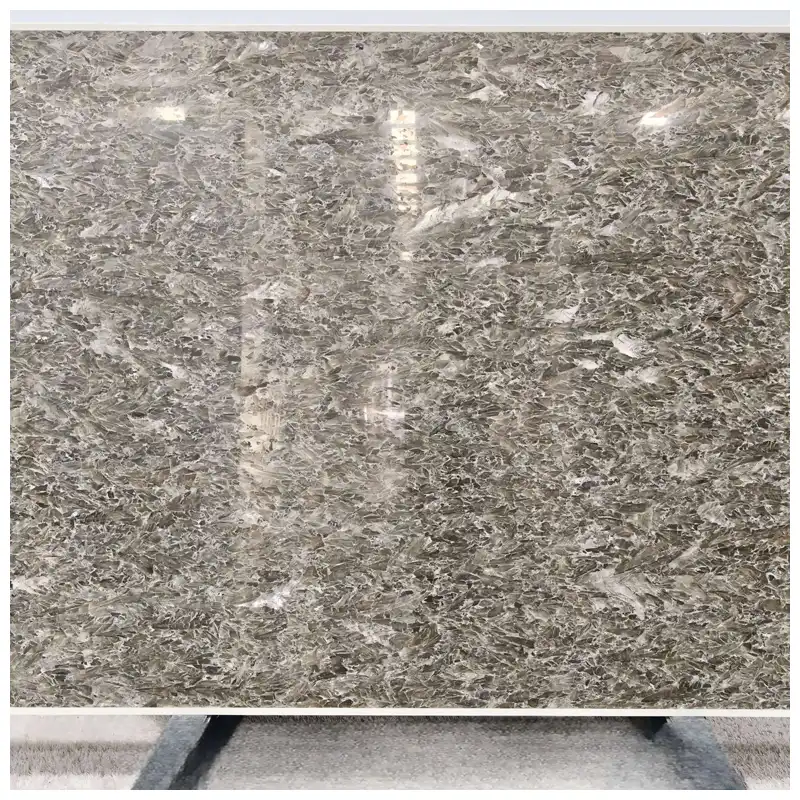


Quick Summary: Selenite Argento Marble is a polished natural stone distinguished by densely packed silver-grey, smoky-taupe and pale crystal-like formations. Its fragmented mineral structure creates changing reflections across the surface, with a more intricate appearance at close range than at full-slab scale. KA UNITED lists Selenite Argento Marble Slabs in 332 × 199 cm and 332 × 190 cm formats, with nominal 18, 20 and 30 mm thickness options for residential floor tiles, kitchen countertops, bathroom vanities and interior wall panels. Natural mineral variation, cutout placement and surface-care requirements should be reviewed before fabrication.
Selenite Argento Marble Slabs for Residential Floors, Kitchen Countertops and Interior Wall Panels

Full-slab reference showing the overall distribution of silver-grey and warm smoky mineral formations.
Selenite Argento has a distinctive visual scale. From across a room, the stone appears predominantly grey with a warm metallic undertone. Closer inspection reveals densely interlocking mineral fragments separated by fine white boundaries, creating a much more intricate surface than its overall color suggests.
This balance makes it relevant to residential projects that need a neutral stone without relying on long, dramatic marble veins. Across a large interior floor, the fragmented pattern forms a relatively continuous textured field. On countertops and islands, the individual crystalline shapes become much more noticeable because the surface is viewed at close range.
Full-height wall panels reveal a third aspect of the material. Directional light can create reflective accents across different mineral sections, while the surrounding grey and taupe areas retain a quieter appearance.
The slab can be considered for residential flooring, custom kitchen counters, bathroom vanity tops, interior wall cladding and selected decorative furniture components. Each application calls for different cutting, support and surface-performance decisions; the polished showroom appearance alone does not establish suitability for every use.
Residential Floor Tiles
Cut-to-size flooring for supported living areas, corridors and selected dry interior circulation spaces.
Kitchen Countertops
Custom islands, worktops and decorative counters where natural-stone maintenance is accepted.
Bathroom Vanity Tops
Polished stone surfaces with custom basin openings, exposed edges and matching backsplash options.
Interior Feature Walls
Large decorative panels for residences, reception spaces and selected hospitality interiors.
What Makes Selenite Argento Different from Conventional Grey Marble?
Most grey marble selections are judged by their background color and the direction of their principal veins. Selenite Argento requires a closer examination of its fragmented crystalline-looking structure. The photographed slab contains numerous angular and elongated mineral shapes rather than one dominant linear pattern.
Its background moves between warm silver-grey, taupe and darker smoke-colored areas. White mineral boundaries run around individual fragments, while some larger sections appear translucent or reflective under the available lighting. These visual differences are especially clear in the supplied close-up photograph.
A particularly noticeable feature is the combination of small, tightly grouped fragments and larger plate-like formations. On the full slab, the pattern appears relatively fine and continuous. At countertop viewing distance, individual mineral shapes can become prominent enough to influence the placement of sink openings and exposed edges.
This is why a single close-up image should not be used to approve the entire stone selection. Buyers need both an overall slab view and representative surface details to understand the actual density, scale and distribution of the mineral formations.

Close-range reference showing angular mineral formations and their relationship to the polished stone surface.
How Lighting Changes the Silver-Grey Appearance
The polished finish introduces reflections from overhead lighting, windows and adjacent surfaces. Some mineral areas appear brighter when viewed at an angle, while others remain comparatively dark. The resulting effect depends on both the natural pattern and the lighting environment.
A bright reflection across a photographed slab should not be mistaken for evidence that every crystal is independently luminous or that the stone has a verified level of translucency. Surface gloss and internal light transmission are different material characteristics.
For interiors with strong directional lighting, examine an actual polished sample under representative conditions. Warm lighting may emphasize the taupe portions, while cooler lighting can make the silver-grey areas appear more prominent. A sample review is more reliable than assuming the photographed color will remain identical in every room.
Selenite Argento Marble, Granite and Quartzite: Confirming the Material Identity
Selenite Argento is commercially identified as marble in established natural-stone collections. However, international stone trading names are not always consistent, particularly when a material has an unusually crystalline appearance.
Some purchasing searches use Selenite Argento Granite Slabs or Selenite Argento Quartzite Slabs. These terms may refer to commercially similar material listings, but they do not establish that the actual slab is geological granite or quartzite. Stone classification should be supported by material documentation when performance or project compliance depends on it.
The commercial name Selenite Argento also does not prove that every visible reflective mineral is the mineral selenite. Mineralogical selenite is a form of gypsum, whereas the stone's exact crystalline components cannot be identified reliably from photographs alone.
The alternative phrase Brazilian Siliver Marble appears in the supplied keyword list. Its spelling and geographical reference should not be interpreted as a verified quarry origin. Buyers who need country-of-origin documentation or a particular mineral composition should request records for the selected material.
For practical procurement, the approved stone photographs, actual dimensions, surface samples and applicable test data are more useful than relying on several interchangeable commercial labels. KA UNITED's product is listed here as Selenite Argento Marble, with the material's precise technical identity subject to verification.
Selenite Argento Marble Slab Sizes, Thicknesses and Fabrication Specifications
The two listed slab formats are 332 × 199 cm and 332 × 190 cm. Both can be evaluated for larger architectural components, but their nominal dimensions should not be treated as fully usable finished cutting areas. Edge trimming, natural discontinuities, repairs and the intended pattern placement may reduce the available cutting field.
| Specification | Product Reference and Selection Requirements |
|---|---|
| Product Name | Selenite Argento Marble Slabs |
| Commercial Classification | Natural Marble; specific mineralogical classification to be confirmed if required |
| Primary Color | Silver Grey, Warm Grey and Smoky Taupe |
| Secondary Pattern | White mineral boundaries and irregular crystalline-looking fragments |
| Slab Size A | 332 × 199 cm / 3320 × 1990 mm |
| Slab Size B | 332 × 190 cm / 3320 × 1900 mm |
| Nominal Thickness | 18 mm / 20 mm / 30 mm |
| Surface Finish | Polished; other finishes subject to production review |
| Cut-to-Size Options | Floor tiles, wall panels, countertop pieces, vanity surfaces and decorative components by approved drawing |
| Edge Preparation | Eased, straight, rounded or other project-specific exposed edges, subject to fabrication review |
| Project Documentation | Actual slab photographs, cutting list, thickness, finish, finished dimensions and installation requirements |
Selecting the Right Stone Thickness
The listed 18 mm and 20 mm options may be evaluated for properly supported interior panels, tiles and countertop components. The 30 mm option creates a thicker visible stone section where the design calls for greater material depth. None of these nominal thicknesses is an independent guarantee of safe span or structural capacity.
Countertops require particular attention to cabinet support and cutouts, while larger wall panels need a suitable fixing arrangement. For floors, thickness selection must be coordinated with the substrate, fixing method and expected use. The final component specification should be based on the actual design rather than on slab thickness alone.
Planning Selenite Argento Marble Tiles for Residential Flooring
Selenite Argento Marble Tiles can be cut from selected slabs for supported residential floors where a complex grey mineral texture is preferred over strongly directional veins. The smaller pieces retain the irregular crystalline pattern, but their overall appearance depends on how the original slab is divided.
A tile cut from a pale silver-grey area may appear noticeably lighter than one taken from a darker smoky section. The variation is less about keeping one large vein continuous and more about distributing mineral density, tonal differences and reflective areas across the floor.

Tile fabrication reference for evaluating finished module size, exposed edges and consistent surface appearance.
Tile Format and Setting-Out
Tile dimensions should be determined from the architectural floor plan and the available cutting area. Room geometry, movement joints, perimeter cuts and transitions to adjacent finishes can influence the appropriate module size.
For a large residential installation, the layout should establish where darker and lighter pieces will be placed. Factory pre-layout can be useful when the project requires an approved distribution of different mineral tones.
Surface Finish and Foot Traffic
A polished marble tile is not automatically suitable for wet floors, stair landings or high-traffic commercial areas. Required slip resistance, abrasion performance and maintenance expectations must be assessed separately for the intended use.
Installation Details That Affect the Finished Floor
The substrate should be stable, appropriately prepared and compatible with the selected natural-stone installation system. The installer must address bedding coverage, required joints, movement accommodation and the finished elevation relative to surrounding materials.
Before general installation, an actual stone mock-up can help establish whether the selected adhesive, grout and cleaning method are compatible with the material. This is especially important when light and dark mineral fragments respond differently to moisture or processing treatments.
For wet bathrooms or other moisture-exposed floors, appropriate waterproofing and traction requirements are separate from the decorative stone selection. Where those conditions cannot be satisfied with the proposed polished finish, an alternative floor material or approved finish should be considered.
Fabricating Selenite Argento Marble Countertops and Bathroom Vanity Tops
Selenite Argento Marble Countertops bring the material's crystal-like pattern into close view. Kitchen islands, residential worktops and bathroom vanity surfaces display individual mineral fragments more prominently than a large wall or floor. Fabrication planning should therefore consider both structural openings and the placement of the most visually distinctive stone areas.
For kitchen projects, the overall countertop dimensions must be coordinated with the cabinetry, appliance locations, sink configuration and finished joint positions. The stone's polished appearance is decorative; it does not remove the usual maintenance limitations associated with natural marble.

Custom countertop reference for checking cutting geometry, polished edges and vulnerable areas around sink openings.
Sink Openings and Cabinet Support
Sink cutouts create narrow sections of stone at the front and rear of a countertop. These areas require adequate remaining material, suitable support and careful handling during fabrication and installation.
Undermount sinks also require a coordinated attachment and sealing arrangement. The sink's operating loads should be carried by an appropriately designed support system rather than relying on unsupported stone edges.
Visible Edges and Joint Position
Eased or rounded edges may be considered according to the project design. Where a thicker-looking mitered edge is specified, the joint construction and the relationship between the mineral patterns should be reviewed before cutting.
Kitchen Countertop Suitability and Daily Use
Natural marble may be used for residential kitchen countertops where the owner accepts its maintenance requirements. Acidic foods, wine, citrus juice and some household cleaners can etch susceptible mineral surfaces. A suitable sealer may help reduce staining from certain liquids, but it cannot make the material acid-proof or completely non-porous.
Hot cookware should not be placed directly on an unverified polished or treated surface. Use appropriate trivets and chopping boards, and avoid dragging abrasive objects across the stone. These precautions are particularly relevant where maintaining a consistent high-gloss appearance is important.
Bathroom vanity tops need an equally clear plumbing plan. Faucet holes, basin dimensions, backsplash connections, wall interfaces and drainage clearances should be established before fabrication. Cleaning products must be suitable for the actual stone and any surface treatment applied to it.
Bookmatching, Crystal Distribution and Slab Layout for Larger Interiors
Selenite Argento does not rely on broad continuous veins to create its appearance. Its densely fragmented mineral structure can make a large installation appear visually unified even when individual pieces contain different crystalline formations. Nevertheless, adjacent slabs should still be reviewed for overall tonal balance and concentration of brighter mineral sections.
Bookmatching is possible only when suitable paired slabs with the required mirrored relationship are available. The commercial material name alone does not confirm that a mirrored pair exists. For this stone, a balanced arrangement of related fragments may be more appropriate than forcing a symmetrical composition from unrelated slabs.
Large Wall Panels
Coordinate the overall silver-grey tone, visible panel joints and distribution of larger light mineral formations.
Kitchen Islands
Review whether adjacent slab areas can create acceptable visual relationships between the top, waterfall sides and backsplash.
Coordinated Tile Floors
Group lighter and darker pieces to establish an agreed distribution rather than expecting identical patterns across each tile.
Where project sequencing is important, a cutting map should identify the selected slab, finished-piece position and intended visible face. An approved dry-lay reference helps establish how separate pieces will relate visually once installed.
Factory layout approval does not eliminate natural variation or replace accurate site measurement. Installation teams must still confirm the final substrate, joint allowances and actual construction dimensions before placing the stone.
Technical Performance and Material Verification for Selenite Argento Marble
The appearance of a densely crystalline stone is not sufficient to establish its hardness, water absorption, mechanical strength or chemical resistance. The commercial marble classification should be supported by material-specific documentation when the project requires quantified performance criteria.
No verified laboratory values have been provided for the actual KA UNITED Selenite Argento batch. The following table identifies the technical characteristics that should be checked before specifying the stone for functional floors, countertops or large architectural panels.
| Technical Item | Verification Status | Project Significance |
|---|---|---|
| Mineral Composition | Petrographic identification required where specified | Confirm actual mineral structure and appropriate material classification |
| Bulk Density | Lot-specific value not supplied | Finished component weight, handling and support requirements |
| Water Absorption | Representative test report required | Moisture behavior, staining risk and surface treatment selection |
| Flexural Strength | Material-specific test result not supplied | Countertop spans, narrow sections, wall panels and handling stresses |
| Compressive Strength | Material-specific test result not supplied | Material qualification for the intended support and installation system |
| Abrasion Resistance | Floor-use verification required | Wear expectations for polished residential and commercial flooring |
| Slip Resistance | Finish-specific testing required | Floor safety under anticipated dry and wet conditions |
| Acid Sensitivity | Confirm actual mineral composition and treatment | Kitchen cleaning, food contact, polishing and long-term surface appearance |
| Stone Soundness | Inspect selected slabs and any treated areas | Natural fissures, repaired sections, edges and usable cutting areas |
The final technical specification should identify the relevant material, testing methods and acceptance limits. Values from unrelated marble, granite or quartzite products should not be substituted for the selected Selenite Argento batch.
Maintaining the Polished Crystal Appearance in Daily Use
A highly polished Selenite Argento surface can show variations in reflection from one mineral area to another. Keeping that appearance consistent requires appropriate cleaning and realistic expectations about how the stone will respond to contact, moisture and everyday use.
Use a soft cloth or suitable non-abrasive cleaning equipment with a pH-neutral product approved for natural stone. Remove abrasive particles before wiping or mopping. Acidic descalers, vinegar, harsh chemical cleaners and abrasive pads should not be used on an unverified polished marble surface.
A compatible impregnating sealer may reduce the absorption of certain liquids, depending on the stone's characteristics and the selected treatment. Sealing does not make marble entirely non-porous and cannot guarantee resistance to chemical etching.
For countertops, clean spills promptly and protect the surface from direct cutting and hot cookware. For floors, include suitable entrance matting where abrasive grit is likely to be tracked inside. Any future repolishing or restoration should be assessed by a professional familiar with the material's actual mineral composition.
Selenite Argento Slab Inspection, Finished-Piece Control and Export Packing
Quality inspection should distinguish normal mineral variation from features that affect fabrication or installation. Differences in silver-grey tone, white mineral boundaries and reflective fragments are part of the stone's appearance. Open fissures, vulnerable edges, unintended repairs or unsuitable areas around planned cutouts require separate evaluation.
For polished slabs, inspection should check the selected surface, finished thickness, usable dimensions, edge condition and agreed appearance range. The presence of light reflections should not conceal surface scratches or areas with inconsistent finishing.
Cut-to-size tiles and countertops require dimensional inspection against approved drawings. Sink openings, exposed corners, edge profiles and any joined components should be checked before packing. Where the project has an approved layout, finished pieces should retain their corresponding installation references.
Transport protection should suit the completed product rather than relying on one generic packing arrangement. Polished stone faces need suitable separation, while countertop cutouts, narrow strips, projecting edges and large panels require stable support and impact protection. Crate identification should allow receiving teams to match the stone to its intended installation location.
Interior Design Reference: Selenite Argento Marble in Contemporary Residential Spaces

Selenite Argento's silver-grey and smoky-taupe palette can be coordinated with warm wood cabinetry, brushed metal, pale plaster and darker architectural finishes. Its pattern contains enough visual detail to become a material feature without relying on strongly colored veins.
In contemporary kitchens, a broad stone island surface places the crystalline details at eye level and encourages closer examination. In bathrooms, the same polished stone can be paired with neutral walls and simple fittings to keep the focus on the mineral texture.
Larger feature walls give a different result. From a distance, the many small fragments form a coherent grey field; at close range, the individual mineral shapes become apparent. The surrounding lighting affects how much of this detail is visible.
An application photograph can demonstrate color relationships, lighting and scale, but it should not be treated as evidence of a completed KA UNITED project or as a substitute for approved production slabs.
Selenite Argento Marble Compared with Four KA UNITED Natural Marble Slab Options
Selenite Argento differs from conventional marble selections mainly through its densely fragmented, reflective mineral structure. The following alternatives represent different color and pattern directions for buyers comparing natural stone surfaces. Actual finishes, technical suitability and fabrication dimensions must be confirmed for each product independently.
| Natural Marble | Appearance | Design Direction | Main Selection Consideration |
|---|---|---|---|
| Selenite Argento Marble | Silver-grey, taupe and white angular crystal-like formations | Residential floors, countertops, vanity tops and decorative interior panels | Crystal distribution, surface reflection, cutout placement and material verification |
| Giallo Reale Marble | Golden ochre, cream and reddish-brown natural mineral patches | Warm decorative floors, staircases and classical interior stonework | Golden color range and arrangement of reddish mineral areas |
| Cipollino Verde Luana Marble | Cream, green-grey and charcoal folded mineral bands | Directional feature walls and expressive architectural stone panels | Vein orientation and matching possibilities |
| Oman Beige Marble | Ivory, cream and honey-beige natural layering | Neutral interior floors, walls and coordinated architectural surfaces | Beige tone consistency and layer distribution |
| Calacatta Wave Marble | Pale ground with flowing grey and taupe mineral waves | Bright decorative panels and visually flowing interior surfaces | Wave direction, visual continuity and slab matching |
Recommended Natural Marble Slabs from KA UNITED
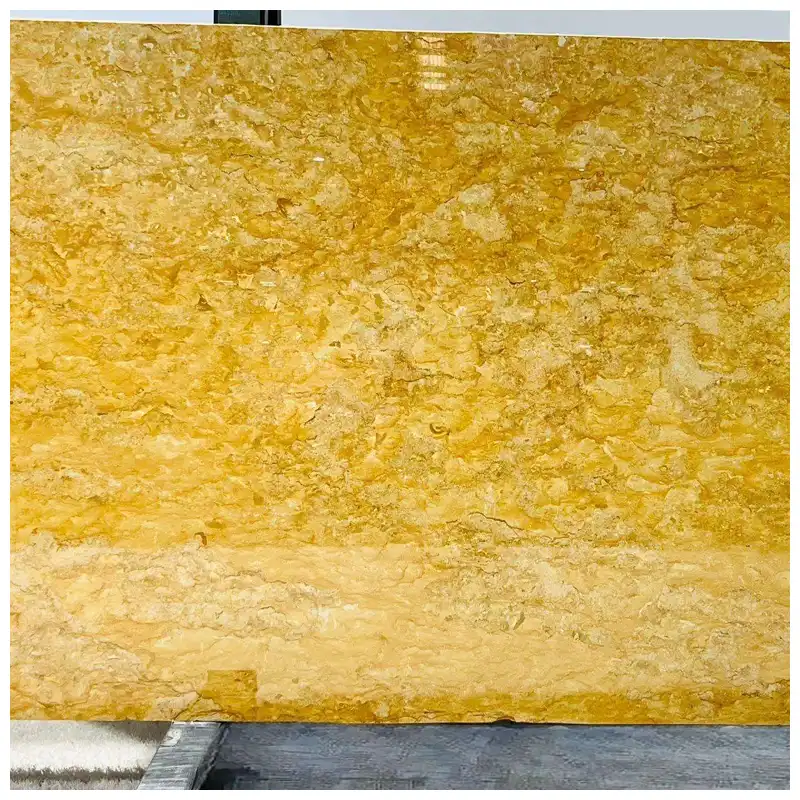
Giallo Reale Marble Slab
Golden Italian marble with ochre and reddish mineral patterns for warm floors, staircases and decorative interior walls.
View Product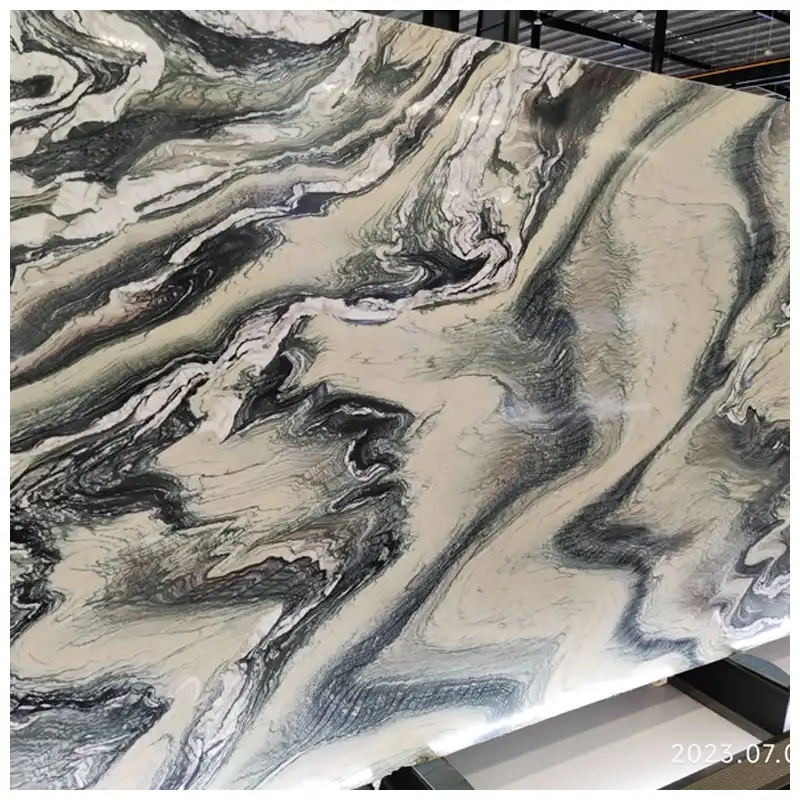
Cipollino Verde Luana Marble Slabs
Green-grey Italian marble with folded cream mineral bands for directional wall panels and architectural features.
View Product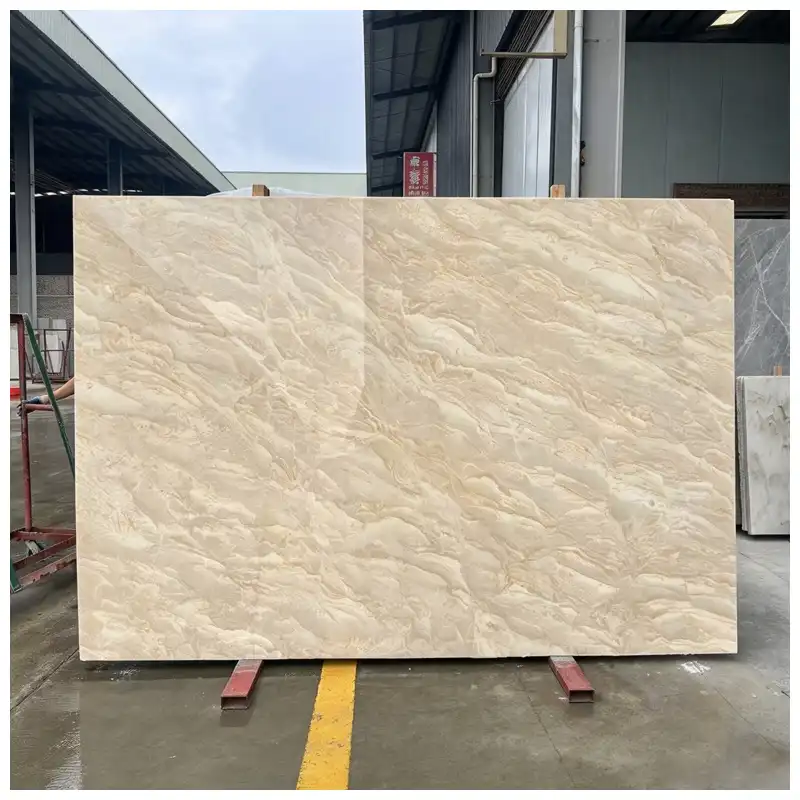
Oman Beige Marble Slabs
Ivory and honey-beige natural marble for coordinated residential floors, walls and warm neutral interiors.
View Product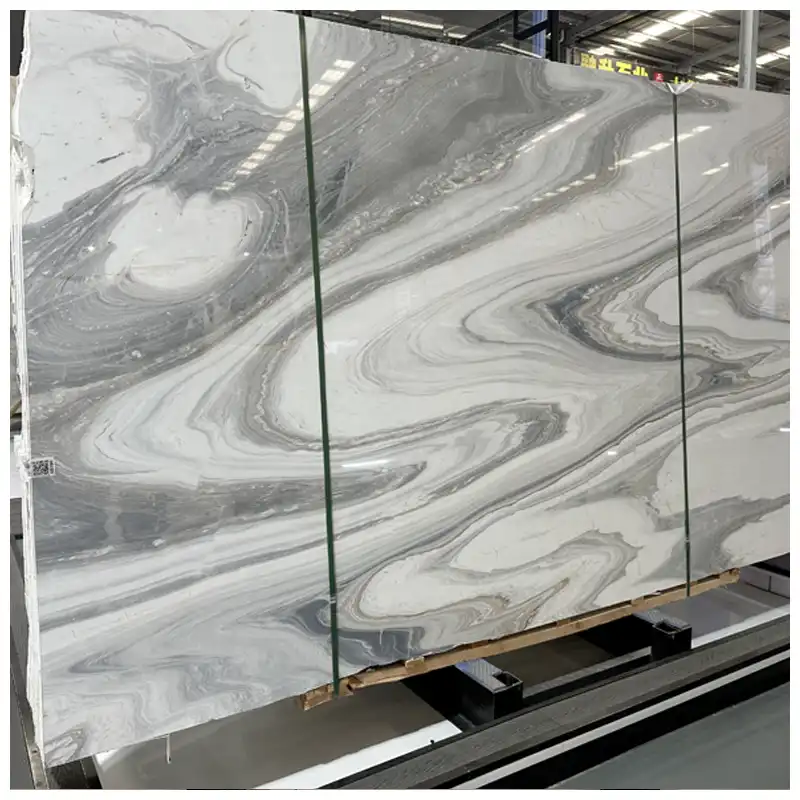
Calacatta Wave Marble
Pale natural marble with expressive grey-taupe waves for bright feature walls and decorative stone panels.
View ProductFrequently Asked Questions About Selenite Argento Marble Slabs
1. Is Selenite Argento a marble, granite or quartzite?
Selenite Argento is commercially classified as marble in established stone collections, although similar commercial listings may use granite or quartzite terminology. The trade name alone cannot establish the exact mineral composition of a supplied slab. Material-specific documentation should be reviewed where geological classification affects the project specification.
2. What sizes and thicknesses are available for Selenite Argento Marble Slabs?
The listed slab sizes are 332 × 199 cm and 332 × 190 cm, with nominal thickness options of 18 mm, 20 mm and 30 mm. Actual usable dimensions, thickness availability and cutting requirements should be confirmed from the selected slabs before fabrication.
3. Can Selenite Argento Marble be used for residential flooring?
It can be evaluated for supported interior floor tiles, provided the stone's relevant performance, selected thickness, substrate and installation system meet the project requirements. Polished flooring also needs appropriate slip-resistance assessment, particularly in wet or high-traffic locations.
4. Is polished Selenite Argento Marble suitable for kitchen countertops?
Yes, it can be considered for custom kitchen countertops where the owner accepts natural-marble maintenance requirements. Sink cutouts, cabinet support, edge details and joint positions need approval. Compatible sealing may reduce certain staining risks but does not make the surface acid-proof, scratch-proof or completely non-porous.
5. Can Selenite Argento Marble slabs be bookmatched for feature walls or islands?
Bookmatching can be reviewed only when suitable paired slabs are available. The stone's fragmented crystalline pattern does not automatically create a mirrored image. Buyers should approve actual slab photographs and the proposed cutting layout before specifying matched wall panels or waterfall countertop components.
Approve the Selenite Argento Slab Selection and Finished-Piece Drawings
The first approval should establish the stone's actual appearance at both full-slab and close-up scale. The selected material must contain an acceptable distribution of silver-grey, taupe and lighter crystalline formations for the intended interior design. Reflective areas should be assessed under representative lighting rather than judged solely from bright showroom photographs.
The second approval concerns finished-piece geometry. Countertops require confirmed cabinet dimensions, sink cutouts, exposed edges and support details. Floor tiles need an approved setting-out plan and the required surface performance. Wall panels need coordinated joints, support and visible-face selection.
Where material classification or mechanical properties are important, obtain documentation appropriate to the selected batch. Do not release production drawings on the assumption that an unfamiliar crystalline appearance automatically means granite-level hardness or quartzite-level chemical resistance.
Final Note: Selenite Argento's main distinction is its dense, reflective crystal-like mineral texture rather than continuous directional veining. The purchasing decision should be based on the actual slab appearance, intended viewing distance, component dimensions, relevant material properties and acceptable maintenance conditions before fabrication begins.

Request Selenite Argento Marble Slabs and Custom Stone Fabrication from KA UNITED
KA UNITED can review polished Selenite Argento slabs for residential flooring, kitchen countertops, bathroom vanity tops, decorative wall panels and other custom interior stone components. The supplied slab and detail photographs provide initial references for assessing the material's silver-grey crystal-like appearance.
For a quotation, send the required slab size, thickness, finished component dimensions, polished finish requirements and project destination. Countertop inquiries should include sink and faucet details, edge profiles and supporting cabinet dimensions. Flooring and wall-panel inquiries should include setting-out drawings, visible-face requirements and any proposed matching or layout arrangement.


