


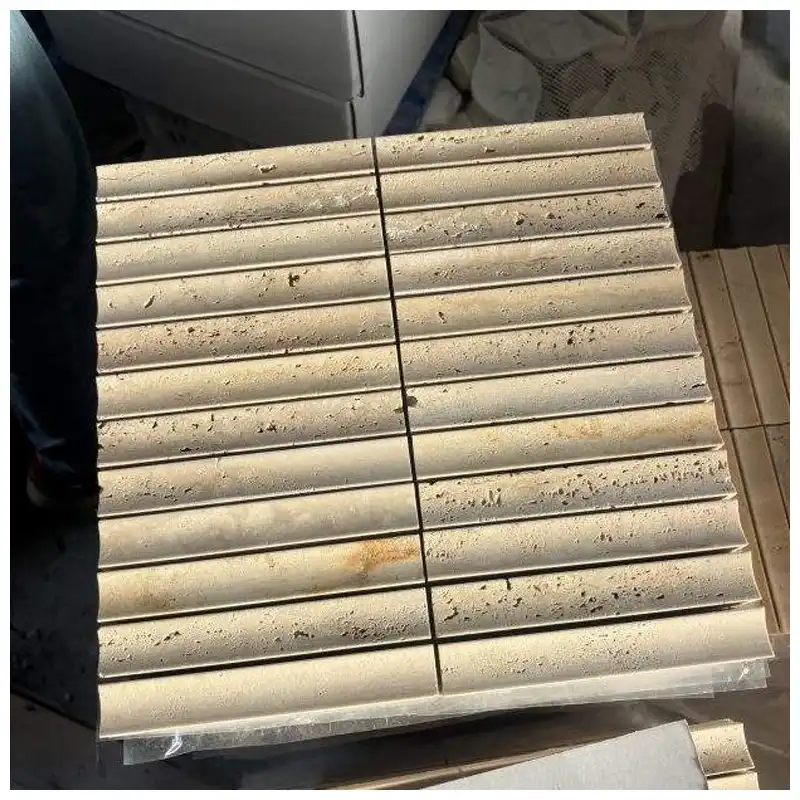

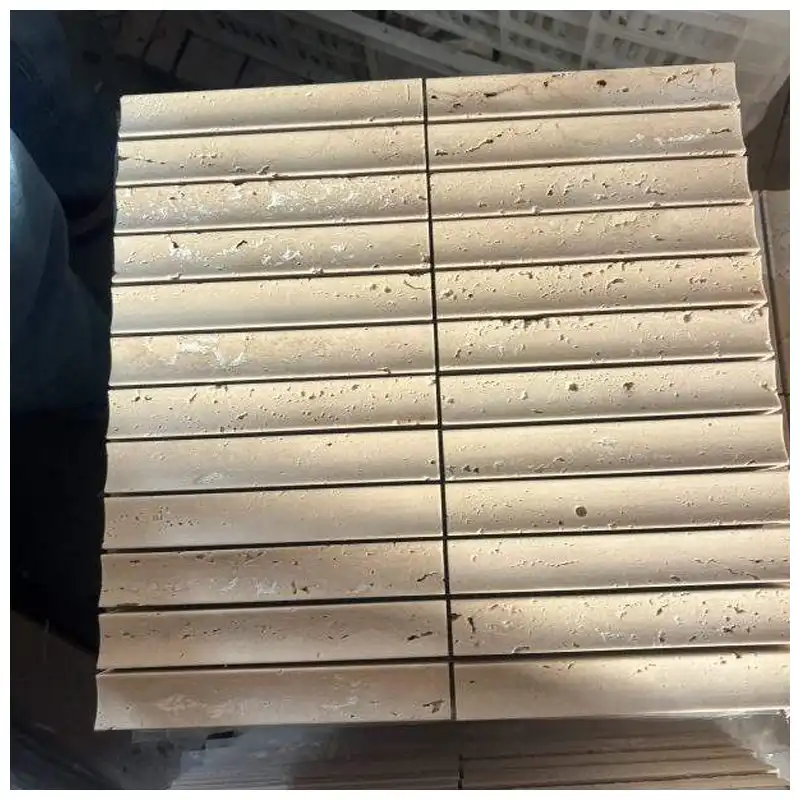


Travertine Concave Mosaic Tiles
Premium natural beige travertine concave fluted mosaic tiles, honed finish with authentic porous travertine texture. 3D ribbed concave design adds layered visual depth to wall surfaces, mesh-mounted for easy installation. Ideal for interior feature walls, bathroom backsplashes, hotel lobbies and villa accent walls.
1-Marble Mosaic Products:Factory Supply Natural Beige Travertine Mosaic Wall Tiles for Bulk Hotel Villa Interior Design Projects
2-Marble Colors: Beige Travertine, Travertine Stone
3-Shape: Hexagon,
4-Sheet Size: 12 x 9 3/8 (0.8 sq. ft.) x10mm, or Customized
5-Chip Size: to be customized
6-Surface: Polished, Honed, Tumbled, or Antique
7-Application: Natural marble mosaic tiles for floors and walls in restaurants, hotels, retail centers, homes, and apartments, as well as bar front and reception desk applications.
8-Mosaic Factory: KA United
9-MOQ: 300 SQM
Product Introduction
Quick Summary: Travertine Concave Mosaic Tiles are three-dimensional wall mosaics made from natural beige travertine, with inward-curving grooves that create continuous bands of light and shadow. The honed stone retains a warm cream-beige appearance and visible natural pores, giving each wall a subtly varied mineral texture. Supplied as mesh-mounted sheets measuring 304 × 298 mm, with nominal 20 mm and 30 mm thickness options, these mosaics are intended for residential feature walls, bathroom accents, kitchen backsplashes and hospitality interiors. Groove alignment, natural cavity treatment and the choice of wall installation system are important project considerations.
Travertine Concave Mosaic Tiles for Interior Feature Walls, Bathrooms and Architectural Cladding
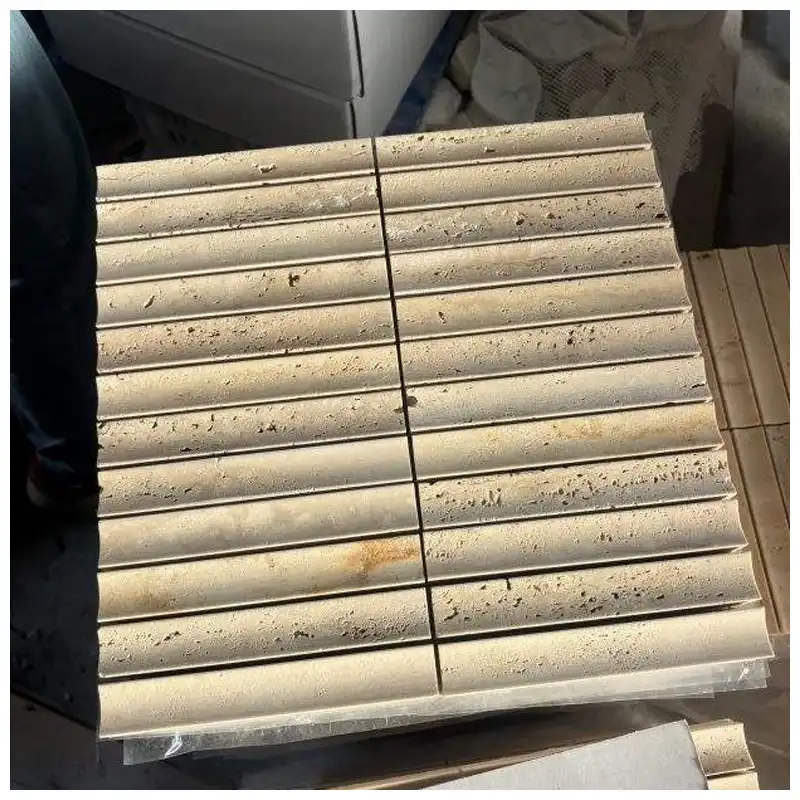
Concave travertine mosaics introduce depth to walls through the geometry of the stone itself. Rather than relying on a contrasting color pattern, their narrow recessed channels create a repeated architectural rhythm that changes with the direction of natural and artificial light.
The material works as continuous decorative cladding or as a smaller textured insert within a larger wall composition. It can sit behind a living-room console, frame a reception feature, line a residential entrance wall or create a tactile backdrop within a boutique hospitality interior.
Travertine Concave Wall Tiles are especially relevant where a designer wants a warm mineral surface with more relief than ordinary flat stone tiles. The pale beige tone allows the fluted texture to remain visible without making the wall visually heavy.
For bathrooms and kitchens, the application must also consider cleaning access, water exposure, edge termination and the fixing system. These details matter more for recessed stone than for a conventional flat tile surface.
Living-Room Feature Walls
A textured background for residential lounges, display walls and architectural alcoves.
Bathroom Accent Walls
Decorative surfaces behind vanities, beside mirrors and in properly specified wet-area wall assemblies.
Hospitality Interiors
Reception features, hotel suite accents, spa circulation walls and restaurant interiors.
Commercial Wall Details
Retail displays, decorative wall columns and interior architectural features.
What Makes the Concave Fluted Profile Different from Ordinary Travertine Wall Tiles?
The defining detail is the inward-curving groove. A conventional flat tile presents one main surface plane; this profile changes gradually from the raised edges of each flute into a shallow recessed center.
In a completed wall, the repeating curves create alternating bands of brightness and shade. Light arriving across the grooves makes the profile appear stronger. Frontal, diffuse lighting produces a quieter result.
The supplied product photograph shows regularly spaced horizontal flutes with relatively smooth transitions between grooves. Small travertine cavities remain visible in several areas. Those pores interrupt the otherwise regular geometry and distinguish natural stone from a uniformly cast imitation.
Concave Travertine Mosaic Tiles should not be confused with convex half-round fluted tiles. Convex profiles project outward, while concave versions are recessed into the face of the stone. Both can be sold as fluted wall products, but their shadow patterns, tactile character and edge transitions differ.
The concave design also needs careful alignment. A small shift between neighboring mosaic sheets can interrupt the visual line of a groove, even when the beige tones match closely.

Three Visual Characteristics of the Concave Surface
Profile depth: The relationship between the upper edges and recessed center determines how strongly the groove appears under directional lighting. A deeper channel generally creates a stronger relief effect but also requires more attention to cleaning and edge detailing.
Rhythm: Repeated parallel grooves establish an ordered architectural texture. They can visually extend a wall horizontally or reinforce vertical height, depending on the installation direction.
Stone texture: Natural pores, subtle sedimentary lines and small mineral variations remain visible within the machined surface. This combination of regular geometry and irregular natural detail gives the material its character.
Beige Travertine: Honed Surface, Natural Cavities and Optional Hole Filling
Travertine is a calcium-carbonate natural stone formed by mineral precipitation. Its recognizable pores and cavities occur naturally within the material, although their size and distribution vary between individual pieces and production batches.
The warm beige appearance of this product includes sandy cream tones, slightly deeper mineral bands and occasional darker cavities. Against the regular fluted geometry, these natural variations create a surface that is visually softer than a completely uniform manufactured wall covering.
Honed and Unfilled Travertine
Travertine Honed Mosaic Tiles retain a matte or low-sheen finish without the strong reflections associated with polished stone. Honing makes the sculpted concave channels easier to read under normal interior lighting.
An unfilled treatment preserves visible natural cavities. This appearance is appropriate for many decorative dry-area walls, where the texture itself contributes to the design. However, the open pores can collect dust and other deposits, particularly inside the recessed portions of the flutes.
Filled Travertine for Easier Maintenance
A hole-filled option can reduce the number of exposed surface cavities. Filling material should be assessed for its color, adhesion and compatibility with the stone. The finished appearance will differ from an intentionally unfilled, naturally porous surface.
For bathrooms, hospitality walls and locations requiring frequent cleaning, the selected cavity treatment should be agreed before production. Filling the holes does not eliminate the stone's natural porosity or make the assembly waterproof.
Beige Travertine Concave Tiles can be coordinated with flat beige travertine, natural timber, cream plaster, brushed bronze and other warm interior materials. Where multiple stone formats appear in one room, actual samples should be compared under the intended lighting before approving a matching color range.
304 × 298 mm Travertine Mosaic Sheets: Thickness and Custom Profile Selection
Sheet dimensions establish the basic setting-out module, but the complete wall layout also depends on joint spacing, groove direction, corner conditions and the approved panel orientation.
| Product Specification Summary | |
|---|---|
| Product Name | Travertine Concave Mosaic Tiles |
| Stone Type | Natural Beige Travertine |
| Color | Cream Beige / Sandy Beige |
| Sheet Size | 304 × 298 mm |
| Nominal Thickness | 20 mm / 30 mm |
| Profile | Inward-Curved / Concave Fluted |
| Surface | Honed Matte |
| Cavity Treatment | Unfilled / Filled Option |
| Mounting | Mesh-Backed Stone Mosaic |
| Customization | Sheet Layout, Groove Depth, Finish and Edge Details |
Why the Groove Geometry Must Be Confirmed
Nominal tile thickness is not the same as the remaining stone thickness at the deepest point of a concave channel. A deeply recessed profile leaves less material beneath the groove, which can affect handling, cutting and fixing decisions.
Before production, the drawing should identify the full sheet dimensions, flute width, groove depth, backing condition, edge geometry and nominal thickness. The dimensional limits should be assessed as a complete profile rather than as separate independent measurements.
Where the wall contains several connected elevations, a common groove profile should be approved for the complete installation. Custom profiles may be reviewed against tooling capability, minimum material sections and the proposed joint layout.
How to Align Mesh-Mounted Concave Travertine Mosaics Across Large Walls
Mesh backing helps keep individual pieces in their intended arrangement during handling and installation. It does not automatically remove the possibility of visible sheet boundaries. In a wall formed from parallel recessed channels, groove continuity is a separate finishing requirement.
Groove Direction and Sheet Orientation
The concave channels can be used to create either horizontal or vertical visual movement, subject to the chosen sheet construction. Horizontal grooves emphasize width and long wall elevations. Vertical grooves can create a taller, more column-like appearance.
The direction should be established before setting out the wall. Rotating some sheets inconsistently may change the perceived texture and make transitions more noticeable.
Sheet-to-Sheet Alignment
Joint spacing between neighboring mesh sheets should visually correspond with the spacing inside each sheet. The installer must check that the curved channels remain aligned as the setting material is applied and the panels are pressed into position.
A trial arrangement across several adjoining sheets can reveal small differences in flute spacing, profile depth and face level before the entire wall is installed.
Corners, Terminations and Openings
At outside corners, an exposed groove can leave an uneven termination. Depending on the architectural detail, the solution may involve an accurately cut stone return, a matching plain travertine border or a suitable finishing profile.
Switches, niches, mirrors, cabinet edges and door frames should be positioned on the setting-out drawing. A deliberately planned termination looks cleaner than an irregular section of flute cut at the edge of a finished wall.
Installing Travertine Concave Wall Tiles in Dry and Wet Interior Areas
Travertine Wall Tiles require an installation system compatible with natural stone, its backing material and the supporting substrate. For a sculpted mosaic, the exposed face geometry creates additional considerations beyond those of ordinary flat tiles.
Preparing the Wall Surface
The substrate must be sufficiently sound, stable and flat for the selected setting method. Surface irregularities behind mosaic sheets can produce visible changes in the level of adjacent flutes.
The adhesive should be approved for natural travertine and compatible with the mesh or mounting material. Its setting characteristics and required coverage must be checked against the weight and thickness of the chosen mosaic.
Bathroom and Shower Wall Requirements
Decorative bathroom walls and vanity surrounds can be practical applications when the wall assembly is properly specified. Direct-wet areas require additional care because water can enter natural stone pores, grout joints and the recessed profile.
A suitable waterproofing system must be installed behind the tile in wet areas. Stone, grout and impregnating sealers are not substitutes for a properly detailed waterproof substrate.
The concave channels may also hold residual water or cleaning deposits depending on their orientation. For frequently wet shower walls, profile direction, cavity filling, ventilation and cleaning access should be reviewed in advance.
Sealing and Daily Care
Travertine is sensitive to acidic cleaning products because of its calcium-carbonate composition. Acidic liquids can etch the stone surface, leaving marks that are not removed by ordinary wiping.
Use a suitable pH-neutral stone cleaner and a soft brush or cloth for the recessed channels. A compatible impregnating sealer may help reduce staining, but it does not make the material acid-proof or maintenance-free.
Technical Review for Beige Travertine Concave Mosaic Wall Specifications
The natural travertine substrate and the finished mesh-mounted mosaic are related but different items for technical approval. Stone property tests help evaluate the material. Installation suitability also depends on the sculpted profile, mounting mesh, adhesive and wall assembly.
The table identifies relevant project checks. Batch-specific laboratory results have not been supplied for this product, so no unverified numerical performance values are assigned.
| Technical Property | Evaluation Purpose | Current Product Status |
|---|---|---|
| Water Absorption | Assess stone moisture uptake and suitability for the specified exposure | Batch test value not supplied |
| Bulk Density | Support material weight assessment | Stone-specific measurement required |
| Compressive Strength | Review the base stone's mechanical characteristics | No verified product result supplied |
| Flexural Strength | Evaluate stone strength, especially where profiling reduces section thickness | Relevant specimen and test review required |
| Profile Dimensions | Confirm groove width, recess depth and remaining stone section | Production profile drawing required |
| Mesh Bond Compatibility | Check compatibility with the proposed adhesive and exposure conditions | System approval required |
| Installation Suitability | Confirm wall substrate, stone weight, fixing and movement details | Project-specific assessment required |
Natural travertine may be assessed against the applicable edition of ASTM C1527/C1527M for dimension stone. The completed wall mosaic assembly requires separate consideration of fixing materials, geometry, backing and exposure conditions.
Concave Travertine Mosaic Production, Visual Inspection and Export Protection

Fabrication begins with selecting travertine pieces appropriate for the intended channel profile. The grooves must be formed without leaving excessively fragile edges, while the honed surface needs consistent treatment across both the curved recesses and the raised portions.
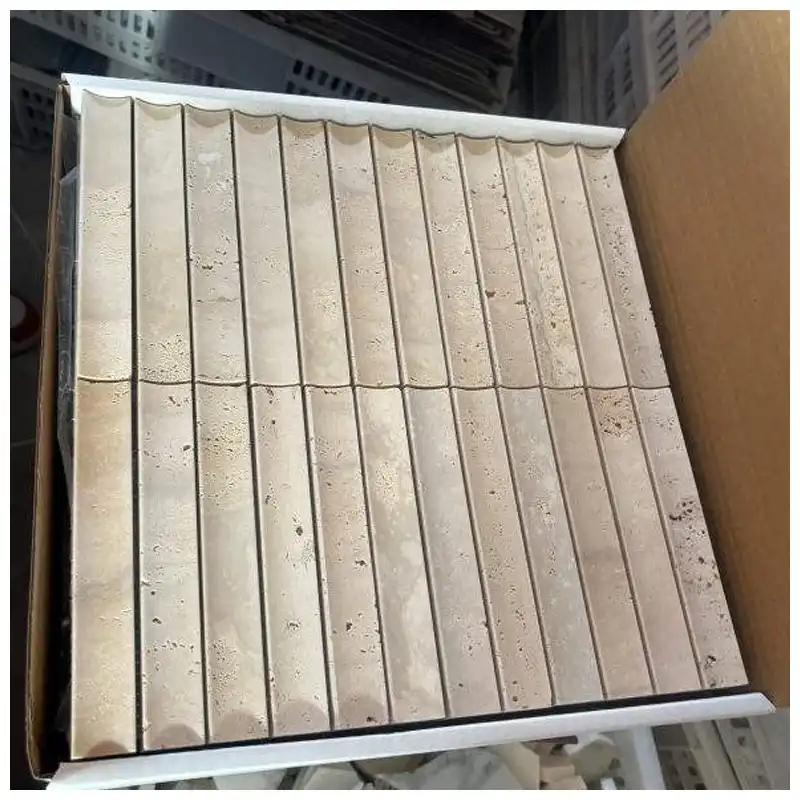
Quality inspection should focus on the uniformity of groove geometry, visible edge damage, surface finishing, natural cavity treatment and the relationship between adjoining sheets.
The supplied production photograph shows neighboring mosaic sections placed together. This makes the continuity of the recessed channels and the appearance of the joint areas visible for review. It does not, by itself, establish that the sections have completed all dimensional or bond-strength tests.
During packing, the profiled faces should be protected from direct contact and concentrated pressure. Suitable separation materials, supported sheet placement and secure export packaging help protect the groove edges during handling and transportation.
Application Reference: Warm Travertine Texture in Contemporary Interior Walls

A honed beige fluted wall can introduce texture into a room without the stronger pattern of multicolored decorative stone. Its surface changes gradually with the light, allowing the stone to remain noticeable while keeping the overall palette restrained.
In a residential setting, the material can be paired with plain plaster walls and timber cabinetry. For hotel interiors, it can form a textured reception backdrop or a decorative wall feature beside seating and circulation areas.
The final appearance depends on the selected stone batch, groove orientation, lighting position and joint treatment. Application photographs are design references; production samples and installation drawings remain the controlling information for an actual project.
Travertine Concave Mosaic Tiles Compared with Other Decorative Stone Mosaics
The key choice is not simply between different stone colors. Concave travertine is a relief-driven wall treatment, while the following mosaic options place greater emphasis on geometric outlines, material contrast or individual stone pieces.
| Product | Main Material | Visual Structure | Design Consideration |
|---|---|---|---|
| Travertine Concave Mosaic Tiles | Beige Travertine | Continuous inward-curved flutes | Groove continuity, depth and textured wall maintenance |
| Waterjet Floral Geometric Marble Mosaic | Contrasting Natural Marbles | Repeating floral geometry | Pattern alignment and decorative color contrast |
| White and Green Marble Maze Mosaic | White and Green Marble | Interlocking geometric pattern | Pattern direction and stone color distribution |
| Taj Mahal Quartzite Mosaic Tiles | Natural Taj Mahal Quartzite | Modular mosaic arrangement | Warm neutral quartzite appearance and format selection |
| Norwegian Rose Marble Rhombus Mosaic | Norwegian Rose Marble | Repeating diamond-shaped pieces | Geometric rhythm and pink-toned natural stone variation |
Recommended Stone Mosaic Tiles from KA UNITED
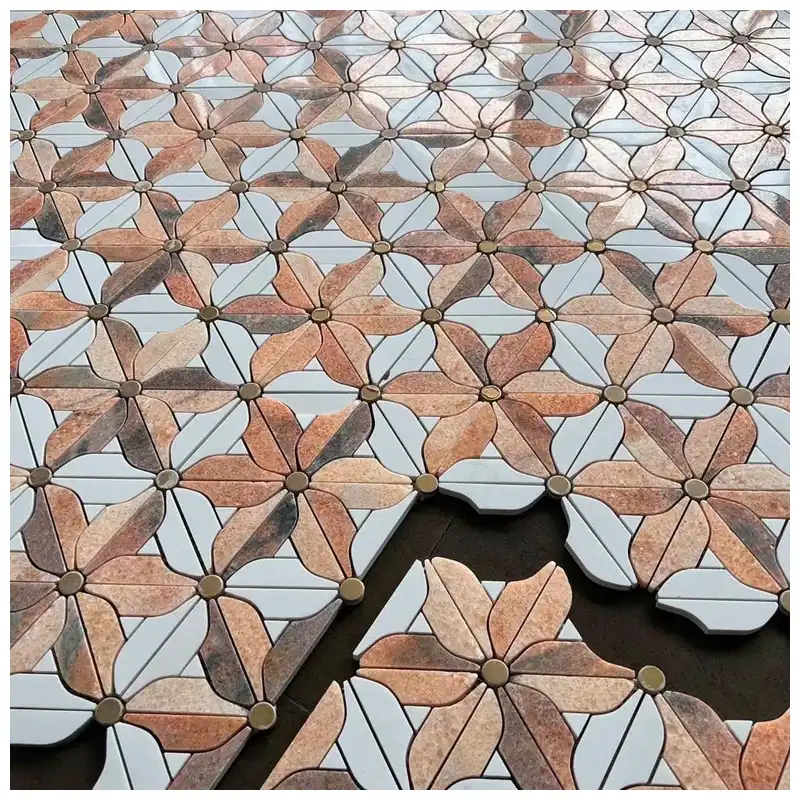
Waterjet Floral Geometric Marble Mosaic Tile
Precision-cut natural marble forms a repeating floral pattern with warm rose and white stone pieces.
View Product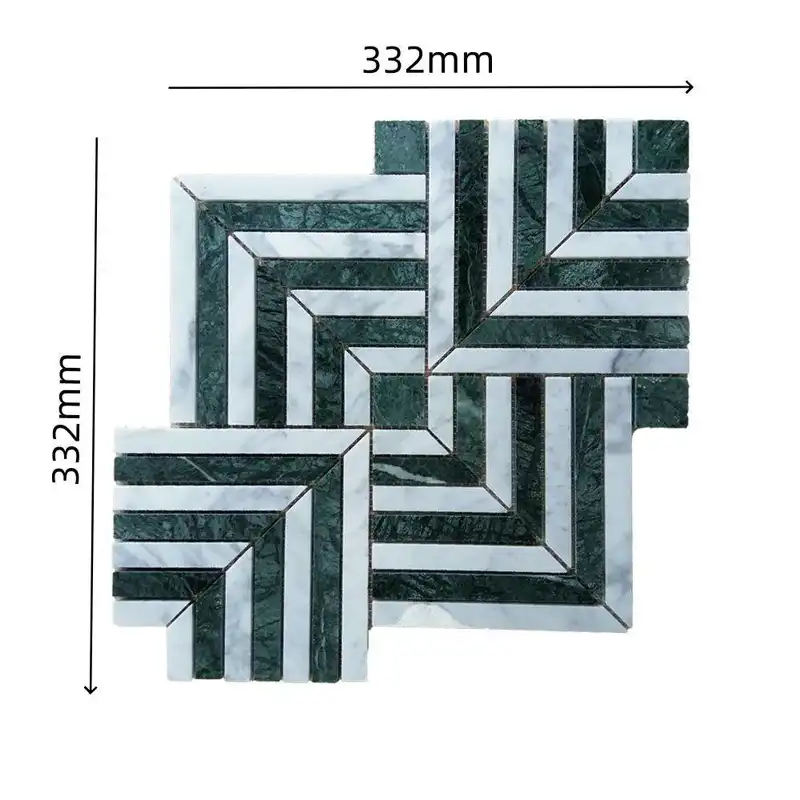
White and Green Marble Maze Mosaic Tile
Contrasting green and white marble creates interlocking lines for patterned backsplashes and decorative interior walls.
View Product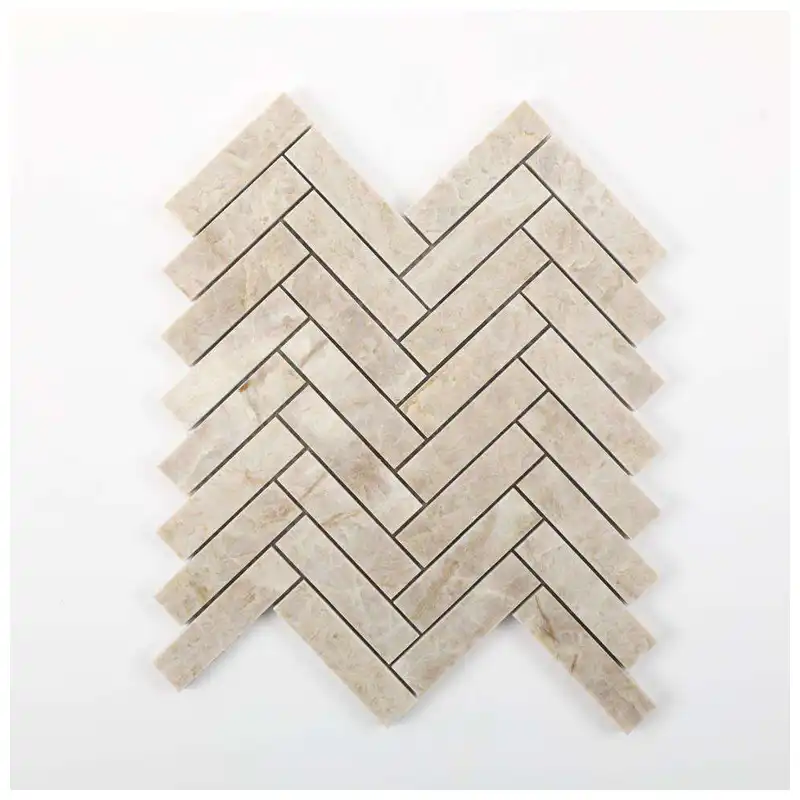
Taj Mahal Quartzite Mosaic Tiles
Cream-beige natural quartzite introduces restrained mineral movement to mosaic backsplashes, bathroom walls and decorative niches.
View Product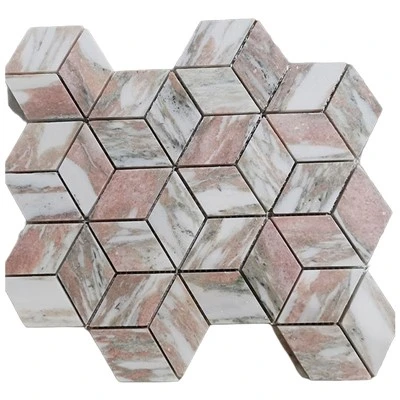
Norwegian Rose Marble Rhombus Mosaic Tiles
Pink-toned Norwegian Rose marble is arranged in repeating rhombus geometry for decorative wall and mosaic detailing.
View ProductFrequently Asked Questions About Travertine Concave Mosaic Tiles
1. What is the difference between concave and convex travertine fluted tiles?
Concave fluted tiles have channels recessed into the stone surface, while convex fluted tiles have rounded projections extending outward. The two profiles create different shadows, tactile effects and edge conditions. The concave design requires accurate groove alignment between adjacent mosaic sheets.
2. What size and thickness are available for the travertine concave mosaics?
The reference mosaic sheet measures 304 × 298 mm, with nominal 20 mm and 30 mm thickness options. The final groove depth, minimum remaining stone thickness and mounting configuration should be confirmed with the production drawing.
3. Can Travertine Concave Mosaic Tiles be used on shower walls?
They may be considered for shower walls when the complete installation system is approved for direct-wet conditions. Waterproofing, adhesive compatibility, stone cavity treatment, joint detailing and access for cleaning must be reviewed. The travertine and grout are not the waterproofing layer.
4. Can the natural holes in beige travertine mosaics be filled?
Yes, a filled surface can be reviewed as a customization option. Filling reduces exposed cavities and may simplify cleaning, while unfilled travertine retains a more visibly porous character. The selected filling material, color and finish should be approved on a sample.
5. Are concave travertine mosaic sheets suitable for floor installation?
This product is primarily intended for decorative wall applications. Its recessed channels create an uneven walking surface and complicate cleaning, making it unsuitable as a general-purpose floor tile. Flat travertine flooring products are more appropriate for conventional walking surfaces.
6. How can the fluted pattern remain aligned across a large wall?
The installation plan should establish the groove direction, sheet orientation, joint width and wall starting point. A trial layout across adjoining sheets can reveal differences before fixing. The installer must maintain the alignment of the recessed channels rather than relying on the mesh alone.
Approve the Concave Groove Profile Before Releasing Your Travertine Wall Mosaic Order
For this product, a flat stone sample cannot fully represent the finished result. The approval sample should include the actual concave geometry, honed surface and selected hole treatment. Adjacent sample sheets should also be examined together.
The architect or contractor should establish the profile depth, orientation and intended wall boundaries before fabrication. Where the mosaics meet mirrors, cabinets, door frames or other finishes, those junctions should be shown on the drawing.
In bathrooms and other moisture-exposed interiors, the wall assembly needs separate approval. Natural travertine, mesh mounting and the selected adhesive must all be compatible with the installation environment.
Final Note: The defining purchase decision for concave travertine mosaic is the completed stone profile, not the beige color alone. Approve the groove geometry, visible pore treatment, sample-sheet alignment and wall fixing arrangement together. This gives the production and installation teams a clearer reference for the finished surface.

Request Custom Beige Travertine Concave Mosaic Tiles for Your Wall Project
KA UNITED can review drawings and material requirements for concave travertine mosaic wall cladding, decorative interior panels and project-specific fluted stone designs.
For an accurate fabrication review, send the wall elevation, required sheet dimensions, nominal thickness, groove depth, surface finish, cavity treatment, installation area and destination. Include details of corners, openings and any wet-area conditions that affect the fixing method.
Hot Tags: travertine concave mosaic tiles, China travertine concave mosaic tiles suppliers, factory, Bianco Carrara Basketweave Marble Mosaic, Fish Scale Marble Mosaic Tile, Green Marble Mosaic Tile, Mosaic Tiles, Polished Marble Mosaic Tile, Thassos White Marble Diamond Lattice Mosaic
You Might Also Like


Send Inquiry
