Do you know several positions and reasons why quartz is easy to crack?
The Price Trap in the Quartz Countertop Market
When I talk to people shopping for a quartz countertop, the first number they quote me is always the price. They assume every seller is offering roughly the same product - quartz is quartz, so how different can two slabs really be? The gap between a high-grade slab from a large, established quartz manufacturer and a low-grade slab is real and wide, and it shows up later in the form of cracks, stains, and a top that fails long before it should.
I have learned to read the difference in the way a top behaves months after installation, not in the showroom. It is only after the cabinets settle, the kitchen heats up over a stove, and someone drops a heavy pot that the differences come out. When a quartz top cracks, the crack almost never appears at a random spot. It lands in one of a small set of predictable positions, and each one points back to a specific reason.
Where Quartz Is Installed, and Why Buyers Choose It
Quartz earns its place in the home because of where it can be installed. The two positions I see most often are the kitchen countertop and the bathroom vanity, and both are demanding, wet, high-traffic surfaces.
Kitchen countertops
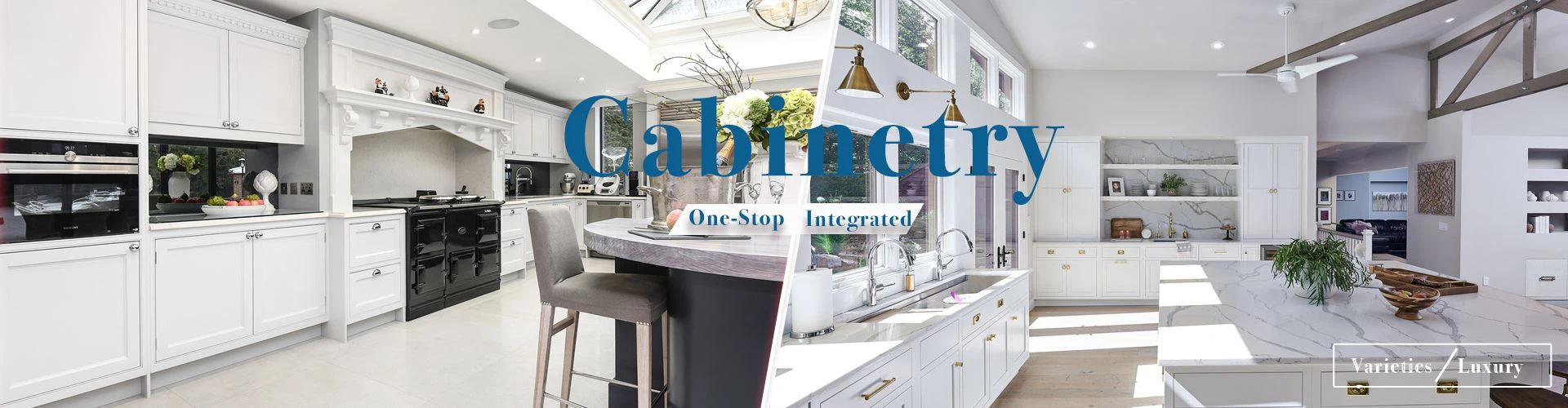
Kitchen countertops are the biggest single surface in most homes and the one that takes the most abuse. A kitchen top has to hold hot pans, survive knife work, stand up to spilled oil, wine, and coffee, and still look clean after years of daily use. Quartz fits because it is a non-porous engineered surface: unlike natural stone, it does not need annual sealing, and it resists the staining that would ruin a softer, more porous top in a busy kitchen. That is why, when a client asks me to help them pick a surface for a kitchen that actually gets cooked in, I usually start the conversation at our quartz countertops page rather than with a stone that needs more upkeep.
Bathroom vanities and other positions
The second position is the bathroom vanity, where the top sits beside a sink and is exposed to soap, water, and cosmetic stains every single day. Quartz handles the constant moisture without absorbing it, and it holds a polished edge around a basin cutout well when the hole is finished correctly. For a fuller comparison of how quartz measures up against the other materials on the market, our kitchen countertop material guide lays out the trade-offs in one place.
Eight Positions Where Quartz Tops Crack - and the Reason Behind Each
Most of the cracking I see on quartz countertops falls into eight positions, and the reasons are consistent enough that I can usually predict what went wrong from the shape and location of the crack alone.
| Position | The reason it cracks | What usually triggers it |
|---|---|---|
| 1. Seam (splicing joint) | Seam faces not aligned, adhesive applied unevenly, or the joint not clamped while it cured, leaving it brittle | Light impact during everyday use |
| 2. Front corner | Wall fitted too tight with no expansion joint, cabinets uneven or not leveled, corner cut at a sharp right angle | External force or a temperature change |
| 3. Around the sink cutout | No clearance between the basin and the hole, hole not polished smooth, corners not rounded or left with saw marks | External force or a temperature change |
| 4. Around the cooktop cutout | No clearance between the stove and the hole, hole not polished smooth, corners not rounded or left with saw marks | External force or a temperature change |
| 5. Front rail in front of the sink or cooktop | The cabinet or appliance cabinet carries weight; the narrow strip of stone in front of the cutout cracks under gravity load | Stepping or leaning on the front edge |
| 6. Backsplash (rear water retaining strip) | Cabinets uneven or the base panel not leveled | Settlement or uneven support |
| 7. Joint where the backsplash meets the top | Adhesive not bonded firmly | Movement or impact |
| 8. Center of the slab | High heat, external impact, uneven cabinet or base panel, or internal damage inside the slab | Hot pots or dropped objects |
The seam, or splicing joint
The seam is the most common crack position on a fabricated top, and it is almost always a workmanship problem. If the seam is not aligned and the opening ends up narrow at the top and wide at the bottom - the bell-mouth shape I see on rushed jobs - the two faces cannot meet properly. If the glue is then applied unevenly, and more importantly if no F-clamp is used to hold the joint closed while the adhesive cures, the seam never develops full strength. Adding too much curing agent or promotion agent to the glue leaves the joint brittle. The result is a seam that looks fine on day one and cracks under a light knock weeks later.
The front corners
Corners crack when the stone has no room to move and stress is allowed to concentrate at a single point. If the top is fitted too tight against the wall with no shrinkage joint, the slab cannot expand and contract with temperature, so the pressure builds at the corner. If the two cabinets underneath are uneven or were never leveled, the corner is not fully supported, and if the front corner is opened at a sharp right angle, the internal stress is concentrated right there.
The sink and cooktop cutouts
The sink and the cooktop cutouts fail for the same reasons, so I treat them together. When a basin or a gas stove is set into its hole with no gap between the fixture and the stone, the stone is pinched from the start. If the hole is not polished smooth, and the four corners of the hole are not rounded or are left with saw-tooth marks, those sharp notches act as starting points for a crack. Add the normal force of someone leaning on the sink or the temperature change around a hot stove, and the top cracks around the cutout.
The front rail strip
The strip of stone in front of the sink or the cooktop is one of the narrowest parts of the whole top, and it is often the most abused. When the cabinet, the sink cabinet, or the stove cabinet is laid out so that this front strip carries weight, the stone is doing work it was never sized to do. Every time someone steps or leans on that front edge, the narrow strip takes a gravity load it cannot spread out, and it cracks. A front rail that is too thin in front of a cutout is a weak point no amount of glue will fix.
The backsplash and its joints
The backsplash, or rear water retaining strip, cracks for two different reasons. The first is underneath it: if the cabinet is uneven or the base plate was not leveled, the strip is supported on one side and hanging on the other, so it cracks as the assembly settles. The second reason is at the joint itself: if the adhesive that bonds the backsplash to the countertop was not applied firmly, the two pieces separate and the joint cracks under movement or impact.
The center of the slab
A crack in the center of a slab is usually a sign that the stone took something it was not meant to take. The common causes are high temperature, an external impact, an uneven cabinet or base plate underneath, or internal damage already present inside the slab from the factory. A slab that spans a dip in an unleveled base is bending every day, and eventually the center gives way. A slab that catches a hot pot directly off the stove can also crack there, because the sudden heat shocks the resin that holds the quartz together.
The Common Thread Is Quality Control in Processing
Look back at the eight positions and you will notice the same words keep coming up: alignment, level, clearance, rounding, polish, bond. Almost none of the reasons involve the raw stone. The main factor that causes a quartz top to crack is lax quality control during processing - the fabrication and installation steps between the slab and the finished countertop.
An uneven seam, a bell-mouthed opening, glue applied without an F-clamp, corners cut sharp instead of rounded, holes left rough with saw marks, a cabinet base that was never leveled - every one of these is a process failure, not a material failure. That is why two slabs that look identical in the showroom can perform completely differently in a kitchen. Many inferior quartz countertops simply cannot stand the test of time, and the cracks they develop are the record of the shortcuts taken along the way.
Material Parameters that Separate a Good Slab from an Inferior One
Because so much of a top's life depends on processing, it also helps to know what a well-made slab looks like on paper. These are the parameters I ask about when I am comparing quartz from different manufacturers, with the values that are commonly cited for engineered quartz surfaces.
| Property | Typical value | Why it matters |
|---|---|---|
| Quartz content | About 90–93% crushed quartz | Higher quartz content is what gives the surface its hardness and scratch resistance; inferior slabs cut corners here |
| Resin and binder content | About 7–10% | The resin binds the quartz; too much resin or a poor-quality resin leaves the slab brittle and prone to staining |
| Hardness (Mohs) | About 7 | Close to the hardness of the quartz mineral itself, so it resists scratching from knives and everyday wear |
| Density | About 2.35–2.45 g/cm³ | A denser slab is more resistant to impact and less likely to chip at the edges |
| Flexural strength | Roughly 35–50 MPa | Measures how much bending the slab takes before it fails; matters at unsupported spans and over uneven cabinets |
| Water absorption | About 0.02–0.05% | Near-zero porosity is why quartz resists stains without sealing |
| Heat resistance | Withstands brief contact around 150 °C | Above that, sudden heat can scorch the resin and crack the surface |
Why these numbers matter at the eight crack positions
Connect the numbers to the crack positions and the picture gets clearer. A slab with weak flexural strength is the one that cracks at the center when the cabinets are even slightly out of level, because it cannot span a small dip without bending past its limit. A slab made with too little quartz or a brittle resin is the one that fails at the seam and the cutouts. When a manufacturer cannot tell me the quartz content or the flexural strength of its slab, I treat that silence as information in itself - and I keep looking.
Choosing a Brand and Living with a Quartz Top
None of this means you need to become a materials scientist to buy a countertop. It means you should buy from a brand that controls its own fabrication and is willing to stand behind it, and then treat the top with basic daily care once it is installed.
What daily maintenance actually looks like
Quartz is low-maintenance, not no-maintenance. The daily routine is simple: wipe spills with a soft cloth and a mild soap or a pH-neutral cleaner, avoid harsh abrasives that can dull the polish, and use a trivet or a hot pad under pans straight off the stove. Avoid standing on the counter to reach a high shelf,.
Cleaning without doing damage
For everyday cleaning, warm water and a gentle dish soap on a soft cloth is usually all a quartz top needs. What I tell clients to skip are the aggressive acid or alkaline cleaners, and anything with steel wool or a scouring pad, because they dull the polished finish over time. A quartz top that is wiped down after use and protected from sudden heat will hold its look for a very long time.
Frequently Asked Questions
Why does a quartz countertop crack at the seam?
The seam, or splicing joint, fails when the two edges are not aligned, the adhesive is applied unevenly, or the joint is not clamped with an F-clamp while the glue cures. If the glue is mixed with too much curing or promotion agent, the joint turns brittle and a light knock during daily use is enough to crack it. A seam that is clean, straight, and clamped until it sets stays intact for years.
Why do the corners crack when the wall is tight?
When a top is fitted hard against a wall with no expansion joint, the stone has no room to move as it expands and contracts with temperature. If the two cabinets underneath are uneven or not leveled, and the front corner is cut at a sharp right angle, the internal stress concentrates right at that point. Any external force or a temperature change then cracks the corner. Leaving a small wall gap and rounding the corner both relieve that stress.
Does a sink or cooktop cutout really need clearance around it?
Yes. If the basin or the stove is fitted with no gap between it and the hole, and the hole is not polished smooth or its four corners are left square with saw marks, the stone around the cutout cracks under external force or a temperature change. The cutout should be rounded, polished, and given a little clearance so the stone is not pinched.
What is the actual difference between a high-grade and a low-grade quartz slab?
The difference is mostly in the material composition and the processing. A high-grade slab is roughly 90 to 93 percent crushed quartz with about 7 to 10 percent resin, which gives it hardness, low water absorption, and flexural strength in the tens of megapascals. A low-grade slab may cut the quartz content, use a brittle or poor-quality resin, or skip steps during fabrication, and those shortcuts show up later as cracks at the seam, the corners, or the cutouts.
How should I clean and maintain a quartz countertop every day?
Wipe up spills with a soft cloth, warm water, and a mild or pH-neutral soap. Skip abrasive pads, steel wool, and strong acid or alkaline cleaners, which dull the polished finish over time. Use a trivet or hot pad under pans straight off the stove, and avoid standing on the top. A quartz surface cared for this way keeps its color and finish for years.
Final Conclusion
A cracked quartz countertop is almost never a mystery. The crack lands in one of eight predictable positions - the seam, the corners, the sink and cooktop cutouts, the front rail, the backsplash, or the center of the slab - and each position points to a reason you can name: an unclamped joint, a wall fitted too tight, a hole left rough and square, a cabinet that was never leveled, or heat and impact the stone was never meant to take. Nearly all of those reasons trace back to quality control during fabrication and installation, not to the quartz itself. So the practical conclusion is simple: buy from a manufacturer that controls its own processing and can tell you the material parameters of the slab, give the top the small clearances and rounded corners it needs, and then care for it with the same common sense you would apply to any good tool. Do that, and the eight positions stay just positions - not cracks. That is the standard we hold ourselves to on every top we fabricate at KA UNITED.