Kitchen Countertop Material Guide: Quartz, Quartzite, Marble, Granite, and Sintered Stone
Quick Summary
Kitchen Countertop Material Guide: Quartz, Quartzite, Marble, Granite, and Sintered Stone
A kitchen countertop is not a separate decoration added after the cabinet order. It is the working surface, the main horizontal color block, and often the material that decides how the backsplash, island, sink, and cabinet doors read together. A good countertop choice should make the kitchen easier to use and easier to approve before fabrication.

KA UNITED works across kitchen countertop, quartz stone, quartz countertops, luxury stone, marble, granite, sintered stones, and kitchen cabinets. That range is useful because the right answer changes by room type. A family kitchen, apartment renovation, villa island, cabinet showroom display, hotel pantry, and small rental unit should not all receive the same surface recommendation.
This guide compares the five main directions for KA UNITED kitchen projects: quartz, natural quartzite, marble, granite, and sintered stone. It also covers cabinet color coordination, full-height slab backsplashes, edge and thickness planning, bathroom vanity top extension, and fabrication safety questions that should be settled before a countertop is ordered.
1. Start with how the kitchen will be used
The first filter is use. A kitchen used every day faces oil, water, coffee, sauces, knives, cookware, cleaning products, and frequent wiping. A display kitchen may care more about veining, photography, and cabinet presentation. An apartment kitchen may need consistent color and easier replacement planning. A villa island may need one large slab that works as the visual center of the room.
Before choosing a material, write down the real conditions: daily cooking level, number of users, sink position, cooktop position, island size, cabinet door color, backsplash height, preferred edge, and tolerance for natural variation. Also decide whether the countertop needs to stay visually consistent or whether the owner accepts patina and stone movement.
This short list can remove the wrong materials early. A project that wants predictable color may lean toward quartz or sintered stone. A project that wants natural depth may compare quartzite, granite, or selected marble. A project that wants a strong island and slab backsplash may need current slab photos and layout images before any deposit or production approval.
2. Quartz countertops for controlled color and repeated kitchens
Quartz countertops are engineered surfaces often selected when a project needs controlled color, repeatable pattern, and a wide range of white, gray, beige, warm neutral, and marble-look options. This makes quartz useful for apartment projects, kitchen showrooms, cabinet packages, and remodels where several pieces need to match.
Quartz works well with many kitchen cabinets. Warm white quartz can soften walnut or oak doors. Gray-veined quartz can connect to stainless appliances and painted cabinets. Beige quartz can keep a kitchen warm without using a strongly patterned natural stone. Because the pattern is controlled, seam planning and color approval are usually easier than with dramatic natural slabs.
The fabrication side still matters. Cutting, grinding, and polishing engineered stone can create respirable crystalline silica exposure if the work is not controlled. OSHA and NIOSH workplace guidance treats silica exposure during countertop manufacturing, finishing, and installation as a serious occupational safety issue. That does not make quartz unusable, but it does mean professional fabrication controls should be part of the project conversation.
For a quartz kitchen, confirm slab size, color batch, thickness, edge profile, seam placement, sink support, cooktop cutouts, overhang support, and cleaning guidance. Also confirm whether the same material will continue as a backsplash. A predictable surface can still look wrong if the seam lands in a poor location or the cabinet color was never checked against the slab.
3. Quartzite for natural movement and stronger slab character
Natural quartzite is often considered when the kitchen needs marble-like movement with a stronger natural stone character. KA UNITED's luxury stone category includes quartzite options that can suit islands, counters, walls, and full-height backsplashes when the actual slabs are reviewed carefully.
Quartzite can work especially well with warm wood cabinets, cream doors, charcoal cabinet fronts, brushed metal hardware, and stone-look floors. A soft beige quartzite can make a kitchen island feel calm. A stronger Patagonia-style quartzite can become the focal surface. A warm quartzite backsplash can connect the countertop and wall without adding a separate tile pattern.
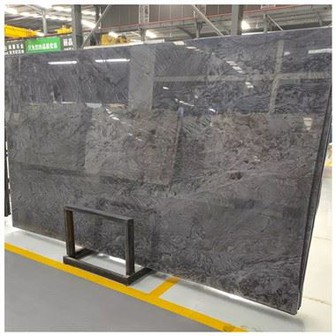
Quartzite still needs a practical review. Natural stone may vary by slab. Some quartzites need sealing. Some have fissures, resin, translucent areas, or reinforcement needs. Some are harder to fabricate than others. Do not approve quartzite by a small sample or product name alone. Ask for full-slab photos, close-ups, video, current size, thickness, finish, and layout advice.
If the kitchen uses a large island, waterfall end, or full-height backsplash, the slab layout should show how the veins move across each visible plane. This is where quartzite can either look planned or accidental. The beauty of the stone is not enough; the cut plan has to respect the movement.
4. Marble for selected kitchen statements
Marble remains attractive because of its veining, softness, and classic kitchen character. It can work well for a pastry counter, bar counter, backsplash wall, display island, or lower-use kitchen area where the owner accepts patina. It is less suitable when the user expects a surface to resist acid marks and daily wear without visible change.
Marble should be discussed plainly. Lemon juice, vinegar, wine, tomato, and some cleaners can affect the surface. Sealing can help with certain stains, but it does not stop acid etching. A polished finish shows depth and reflection. A honed finish may make wear less sharp in some kitchens, but it can still show oils or marks depending on the stone and care routine.
A practical strategy is to use marble where visual value is high and exposure is controlled. A dry bar wall, low-use island, pastry zone, backsplash, or feature panel may be a better fit than the entire heavy cooking surface. For active family kitchens, compare quartz, quartzite, granite, or sintered stone before final approval.
5. Granite for practical natural stone counters
Granite can still be a strong kitchen choice when the project wants natural stone with a practical daily-use direction. It comes in many colors and textures, from quiet black and gray stones to lighter or more active mineral patterns. Some granites feel architectural. Others can become the main contrast point in the room.
Granite should not be treated as one uniform product. The actual slab, finish, thickness, sealing guidance, edge profile, and seam placement all matter. Dark polished granite may show dust, water marks, or fingerprints. Light granite may need a closer stain review. A textured finish can fit some kitchens but may affect cleaning.
Granite can be useful for apartment kitchens, restaurant counters, practical home kitchens, and projects where the owner wants natural stone without the same care conversation as marble. It should still be compared with quartz and sintered stone when color consistency or repeated surfaces are important.
6. Sintered stone for large-format modern surfaces
Sintered stones can suit kitchens that need large-format wall panels, thin modern surfaces, marble-look designs, or a coordinated counter-to-wall appearance. They are often considered for full-height backsplashes, islands, cabinet-facing panels, and wall surfaces where the design wants fewer grout lines.

The advantage is panel scale and visual control. The questions are handling, edge design, thickness, substrate, cutouts, impact behavior, and installation skill. A full-height backsplash panel can look clean, but it needs accurate wall preparation, outlet planning, transport, and fitting. A countertop edge needs a proper solution because thin panels do not behave like thick natural slabs.
Sintered stone can be compared with quartz when the project wants engineered consistency. It can be compared with quartzite when the project wants a marble-like or stone-like visual but needs a different panel behavior. The final answer should come from the room drawing, not a general material ranking.
7. Match the countertop with cabinet color and door style
Cabinet color changes how every countertop reads. Warm wood cabinets often work with cream, beige, taupe, warm white, and soft gray surfaces. White cabinets can accept a wider range, but the kitchen may look flat if the countertop has no depth. Black or charcoal cabinets often need enough counter or backsplash contrast to keep the room usable.
Door style matters too. Flat-panel doors usually pair well with cleaner quartz, sintered stone, quiet granite, or controlled quartzite. Shaker doors can work with warmer veining and softer edges. Traditional cabinet doors may accept more shaped edges, but the edge should still fit the slab thickness and the kitchen's use.
Do not approve a countertop from a slab photo alone. Place the surface sample beside cabinet door samples, flooring, wall paint, hardware, sink finish, and lighting. A surface that looks neutral in a warehouse can turn yellow, gray, pink, or cold beside the wrong cabinet door.
8. Plan the backsplash before the countertop is cut
A full-height slab backsplash can make a kitchen feel cleaner and more architectural, but it needs early planning. The team should confirm wall height, hood position, outlet locations, window edges, upper cabinet line, seam position, slab size, vein direction, and installation access before cutting begins.
If the island and backsplash use the same surface, ask whether the material should feel continuous or simply coordinated. A quartz backsplash can keep the room calm. A quartzite backsplash can create a strong natural wall. A sintered stone backsplash can reduce grout lines and support a modern panel look. Marble and granite can also work, but they need the same layout and care discussion as the countertop.
Backsplash decisions affect the counter order. If the wall panel needs a large piece, the slab count may change. If the veins need to continue from counter to wall, the layout becomes more complex. If outlets interrupt the main pattern, their placement should be reviewed before production drawings are approved.
9. Edge, thickness, seams, and support details
Edge profile changes the kitchen's tone and affects fabrication. A simple eased edge fits many modern kitchens. A mitered edge can create a thicker visual line, but it requires precise fabrication. A bullnose or ogee edge may suit traditional cabinets, but it can look heavy beside flat doors. Thin sintered stone edges need different detailing from quartz, granite, marble, or quartzite.

Thickness should be chosen with material, cabinet support, edge profile, and handling in mind. A thicker-looking island can feel substantial, but weight and support need review. A thin modern surface can look clean, but the backing, substrate, and edge solution matter. A waterfall side adds visual weight and requires vein or pattern planning.
Seams should be placed before slabs are cut. Long islands, L-shaped counters, sink runs, cooktop runs, and backsplash panels may all need seams. The seam should avoid important veins when possible and should not land in a weak or awkward place. Cabinet support, overhangs, appliances, and cutouts should be confirmed before production drawings are released.
10. Bathroom vanity tops use many of the same decisions
Kitchen countertop planning also helps bathroom vanity top planning. A bathroom cabinet with a stone top needs the same basic checks: material, finish, thickness, sink cutout, faucet holes, edge profile, wall clearance, support, and cleaning routine. The wet area makes the finish and maintenance discussion even more important.
Quartz can be practical for repeated vanity tops and cabinet packages. Marble can work when the owner accepts patina and understands cosmetics and cleaners may affect the surface. Granite can be useful for practical stone tops. Quartzite can suit a premium vanity or feature wall when the slab is reviewed well. Sintered stone can help when large wall panels or thinner modern surfaces are needed.
Floating vanities need extra attention because the stone, sink, and cabinet support must work together. The surface should not be chosen only by color. Wall structure, bracket or cabinet support, sink type, faucet position, drawer clearance, and installation sequence should be confirmed before ordering.
11. Material comparison table
| Material | Best fit | What to confirm before approval |
|---|---|---|
| Quartz | Controlled color, repeated kitchens, cabinet showroom displays, apartment projects | Slab size, color batch, seams, edge profile, cutouts, heat guidance, and silica controls during fabrication |
| Quartzite | Natural veining, statement islands, counters, full-height backsplashes, premium vanities | Current slab photos, fissures, sealing needs, resin, reinforcement, vein layout, and fabrication difficulty |
| Marble | Selected statement areas, backsplashes, bars, pastry counters, lower-use kitchens | Acid exposure, patina expectations, finish, sealing, and care routine |
| Granite | Practical natural stone counters, apartments, restaurants, darker or high-contrast kitchens | Actual slab, finish, sealing, color variation, seam placement, and edge details |
| Sintered stone | Large-format backsplashes, modern counters, thin panels, wall and furniture surfaces | Thickness, edge build-up, cutouts, handling, substrate, panel size, and installation method |
12. Project approval checklist before ordering
Confirm room and use
List whether the surface is for a family kitchen, apartment kitchen, showroom, villa island, hotel pantry, bathroom vanity, or cabinet display. Also note the cooking level, wet areas, cleaning routine, and whether the surface is mainly functional or decorative.
Confirm material evidence
For quartz, confirm batch, slab size, finish, thickness, and fabrication requirements. For natural stone, request full-slab photos, close-ups, video, finish notes, and layout options. For sintered stone, confirm panel size, edge solution, substrate, cutout rules, and handling notes.
Confirm cabinet and layout details
Send cabinet drawings, door color, island size, sink position, cooktop position, appliance locations, backsplash height, and wall conditions. Countertop approval should happen with the cabinet layout, not after the cabinets are already fixed.
Confirm fabrication and safety controls
Make sure the fabricator understands the material, cutouts, edge profile, support requirements, and dust-control responsibilities. Cutting, grinding, and polishing hard surfaces should be handled with appropriate workplace controls and local compliance.
Final Conclusion
The best kitchen countertop material is the one that fits the room's use, cabinet color, backsplash plan, edge detail, fabrication method, and care expectations. Quartz gives controlled color and repeatability. Quartzite gives natural movement and stronger slab character. Marble gives classic depth when patina is acceptable. Granite remains useful for practical natural stone counters. Sintered stone helps when the project needs large-format panels or a clean modern surface system.
Before confirming a KA UNITED countertop or vanity top, prepare the cabinet style, countertop size, preferred color, room type, backsplash height, sink and cooktop positions, edge preference, and expected use. With that information, the material can be matched to the design and fabrication plan rather than chosen from a photo alone.

FAQ
1. Which kitchen countertop material is best for a busy family kitchen?
A busy family kitchen usually needs a surface with practical cleaning, clear fabrication details, and a finish that matches daily use. Quartz, granite, selected quartzite, and some sintered stone surfaces are often worth comparing. The final choice should consider cabinet color, sink cutouts, seam placement, edge profile, heat guidance, and the owner's care expectations.
2. Is quartzite better than quartz for kitchen countertops?
Quartzite is better when the project wants natural stone movement and accepts slab variation, sealing review, and stone-specific fabrication. Quartz is better when the project needs controlled color, repeatable pattern, and easier matching across several surfaces. Neither is automatically better. The cabinet layout, daily use, and approved slab or batch should guide the choice.
3. Can marble be used for kitchen countertops?
Marble can be used in kitchens when the owner understands patina, acid sensitivity, sealing limits, and care requirements. It may be a better fit for a backsplash, bar, pastry area, display island, or lower-use kitchen zone than for every heavy cooking surface. For active cooking, compare quartzite, quartz, granite, or sintered stone before approval.
4. Should the countertop and backsplash use the same slab material?
The countertop and backsplash can use the same slab material when the kitchen needs a continuous, clean, and architectural look. Before choosing this direction, confirm slab size, vein direction, outlet positions, hood height, seam locations, wall flatness, and installation access. A full-height slab backsplash should be planned before the countertop is cut.
5. What information should I send before requesting a countertop recommendation?
Send the cabinet drawing, room photos, countertop dimensions, island size, sink and cooktop positions, preferred color, backsplash height, edge preference, material ideas, and expected use. For bathroom vanity tops, also include sink type, faucet holes, cabinet support, wall condition, and whether the vanity is floor-mounted or floating.
References
- NKBA / KBIS 2026 Kitchen Trends Report. National Kitchen and Bath Association research team. NKBA. NKBA Research.
- NKBA / KBIS 2026 Bath Trends Report. National Kitchen and Bath Association research team. NKBA. NKBA Research.
- Dimension Stone Design Manual 2024. Natural Stone Institute technical committee. Natural Stone Institute. Natural Stone Institute Resource Library.
- Standards and Specifications for Natural Stone Products. Natural Stone Institute. Natural Stone Institute. Natural Stone Institute technical resources.
- ASTM C1528/C1528M Standard Guide for Selection of Dimension Stone. ASTM Committee C18 on Dimension Stone. ASTM International. ASTM Standards.
- ASTM C503/C503M Standard Specification for Marble Dimension Stone. ASTM Committee C18 on Dimension Stone. ASTM International. ASTM Standards.
- ASTM C616/C616M Standard Specification for Quartz-Based Dimension Stone. ASTM Committee C18 on Dimension Stone. ASTM International. ASTM Standards.
- OSHA/NIOSH Hazard Alert: Worker Exposure to Silica during Countertop Manufacturing, Finishing and Installation. Occupational Safety and Health Administration and National Institute for Occupational Safety and Health. Workplace safety publication.
To compare countertop and cabinet options for a kitchen, bathroom vanity, apartment renovation, showroom display, or hotel room, send KA UNITED the cabinet style, room dimensions, surface size, preferred material, backsplash plan, and edge idea. The team can help review quartz, quartzite, marble, granite, sintered stone, cabinet details, and fabrication questions before production.