What are the differences between marble tiles and natural marble?
What Are the Differences Between Marble Tiles and Natural Marble?
I get this question more often than almost any other when people start planning a renovation. They walk into a showroom, see a wall of beautiful veined surfaces, and assume every one of them is stone. The sales tag says "marble tile," the pattern looks like marble, so it must be marble, right? Not exactly. In most cases, what you are looking at is a porcelain or ceramic tile that has been printed to imitate marble. It is a completely different material with a completely different set of strengths and weaknesses.
I want to clear this up early because the confusion shapes real spending decisions. When I sit down with a homeowner who wants that soft grey veining in a bathroom, the first thing we sort out is whether they actually want natural stone or a convincing lookalike. Both are legitimate choices. Neither is universally better. The mistake is paying natural-marble money for a printed tile, or installing real stone in a place where it will frustrate you for years. My job in this article is to make the difference so clear that you can walk into any supplier and know exactly what you are buying.
Let me start with the single most important fact, because everything else flows from it. Natural marble belongs to the stone family. Marble tile, as the term is used in the market today, almost always belongs to the ceramic family. The two share a look, not a substance.
Two Materials That Only Share an Appearance
The phrase "marble tile" is one of the most misleading names in home improvement. It suggests a category of marble, when in reality it describes a category of tile. A marble ceramic tile is a ceramic tile product that carries marble lines and patterns on its board surface. It does not belong to the marble variety at all. The manufacturer has taken the better-looking marble veining, reproduced it as a printed design, and applied it to a fired clay body. What you see is a picture of marble, not marble itself.
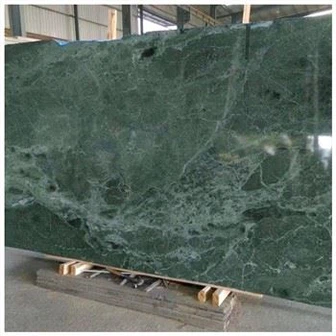
Natural marble is different in every structural way. Its complete surface texture is formed after millions of years of crustal movement. Heat and pressure deep underground transformed limestone into a crystalline stone whose veining runs all the way through the material. That is why a polished slab of real marble shows depth and movement that a printed surface can only approximate. When light hits natural stone, it travels a short distance into the mineral structure and reflects back, giving the surface a soft glow. A printed tile reflects light off its glaze instead. The difference is subtle in a photograph and obvious when you stand in front of both.
The practical takeaway is simple: natural marble is stone, and marble ceramic tile is ceramic. They are not the same variety of product, and treating them as interchangeable will lead you to the wrong specification. If your contractor quotes you for "marble tiles" without saying whether they mean stone or ceramic, that is the moment to pause and ask.
How Each Material Is Actually Made
The Natural Origin of Real Marble
Real marble begins as limestone or dolomite buried deep in the earth. Over millions of years, heat and pressure cause the carbonate minerals to recrystallize. Impurities in the original rock - iron oxides, clay minerals, silt, sand - become the veins and clouds that give each variety its character. No two slabs are identical because no two geological conditions were identical. This is the source of marble's appeal: every piece is a one-of-a-kind record of a particular place and time.
Once the stone is quarried, it is cut into blocks, then sliced into slabs or tiles, then ground, honed, and polished. The surface you see is the material itself, all the way through. If you chip a real marble tile, what is underneath looks like the top, because the veining is continuous. That depth is something a printed tile simply cannot offer.
The Industrial Process Behind Marble-Look Tile
A marble ceramic tile starts from very different raw materials. Ceramic tile is an acid- and alkali-resistant porcelain or stone product formed by grinding, mixing, pressing, glazing, and sintering refractory metal oxides and semi-metal oxides. The main ingredients are typically clay and quartz sand, which are compressed and fired at high temperature - commonly around 1,200 degrees Celsius for porcelain bodies - to produce a hard, dense tile. The marble pattern is applied as a glaze or digital ink layer on the surface before or during firing.
The result is a product with high hardness and a consistent, repeatable appearance. Because the design is printed, a manufacturer can reproduce the same veining across thousands of tiles, which makes it far easier to match and to keep uniform across a large floor. Real marble gives you uniqueness; printed tile gives you uniformity. Which one you want depends on the room and on your taste.
One more point worth making. Compared with natural marble, ceramic tiles carry real practical advantages in processing, transportation, and installation. They are lighter per square meter in many formats, they cut more predictably, and they do not demand the same specialized handling. The price is also generally much lower, which is why marble-look tile has spread so widely across the market.
What "Full-Body Marble Tile" Actually Means
Here is another term that trips people up: full-body marble tile, sometimes called through-body or whole-body tile. Many buyers assume "full body" means the tile is made of real marble all the way through. It does not. In fact, the whole-body marble products on the market are also ceramic tile. A tile in the full-body brick category simply has its marble lines and color carried into the body of the tile rather than sitting only on a thin surface glaze.
Full-body brick is essentially a wear-resistant brick. There are sub-varieties such as infiltrated full-body brick, where the color is pressed into the body material, but in terms of design and color richness, full-body brick is generally considered a step below glazed brick. The glazed varieties can print more vivid, high-resolution marble patterns because the decorative layer sits on top where the ink can be applied freely. Full-body tiles trade some of that visual sharpness for the practical benefit that a chip or scratch is less obvious, because the body underneath is colored to match the surface.
Where does full-body tile show up in real projects? It is widely used on the floors of halls, corridors, and outdoor walkways - places that take heavy foot traffic and where surface wear would quickly expose the plain clay color of an ordinary glazed tile. It is used less often on walls, where a glazed tile's finer pattern matters more than chip resistance. Most anti-slip tiles also belong to the full-body family, since their textured, slip-resistant surface works better when the color runs through the material.
So when a salesperson tells you a tile is "full-body marble," the accurate translation is: a ceramic tile whose marble-look color extends into the body, built for durability on floors. It is not a promise of natural stone.
The Differences Side by Side
Putting the two side by side makes the trade-offs easier to see. The table below summarizes the main points I have covered and a few more that matter when you are specifying a floor or wall.
| Characteristic | Natural Marble | Marble-Look Ceramic Tile |
|---|---|---|
| Material family | Natural stone | Ceramic or porcelain |
| Origin | Quarried, then cut and polished | Clay and quartz sand, pressed and fired |
| Pattern | Veining runs through the entire stone | Printed on the surface (or into the body for full-body tile) |
| Hardness | Around 3 to 4 on the Mohs scale | Harder, more scratch-resistant surface |
| Density | Roughly 2.7 grams per cubic centimeter | Typically about 2.3 to 2.4 grams per cubic centimeter |
| Water absorption | Porous; must be sealed regularly | Porcelain bodies below 0.5% water absorption |
| Uniqueness | Every slab is one of a kind | Patterns repeat across many tiles |
| Typical formats | Slabs of 18 to 20 mm thickness, large-format tiles | Standard sizes such as 600x600 mm, 800x800 mm, 600x1200 mm |
| Cost | Higher, often several times the price of tile | Lower, broadly affordable |
| Maintenance | Sealing and pH-neutral care | Simple cleaning, no sealing |
| Best use | Feature walls, countertops, low-traffic statement areas | High-traffic floors, wet rooms, budget projects |
The cost line deserves a little more explanation, because the gap is wider than most people expect. A printed marble-look tile can often be three to ten times less expensive per square meter than a comparable natural marble tile, depending on the stone variety and the tile's quality. That is not a small difference; it is the difference between a whole-room upgrade and a single feature wall. I always ask clients to look at the per-square-meter figure, not the per-tile figure, because tile sizes differ and comparing the wrong units hides the real gap.
Where Each Material Earns Its Place
High-Traffic Floors and Wet Rooms
For a hallway, an entryway, or a bathroom floor that sees water every single day, a good porcelain marble-look tile is usually the more sensible pick. Its surface resists scratching better than marble, it does not stain the way porous stone can, and it never needs resealing. A porcelain body with water absorption below 0.5 percent will shrug off spills that would slowly etch a polished marble floor. That practicality is the reason full-body tiles dominate halls, corridors, and outdoor walkways in commercial and residential work alike.
Statement Walls and Countertops
Real marble shines where you can actually enjoy its depth - a feature wall behind a bed, a fireplace surround, a reception desk, or a low-traffic bathroom wall. In these spots, the stone is not fighting daily wear, and its natural veining becomes the centerpiece of the room. This is also where the budget conversation changes, because a single wall of genuine marble can transform a space without the full cost of tiling an entire floor.
Outdoor and Anti-Slip Surfaces
Outdoors, safety and durability outweigh appearance. Most anti-slip products are full-body tiles, and for good reason: their textured surface needs the color to run through the body so that wear does not reveal an ugly white or grey under-layer. Natural marble outdoors is a more demanding choice. It needs the right finish, regular sealing, and an awareness that some varieties will weather and lose their polish over time. I rarely recommend polished natural marble for an exterior walking surface.
Cost, Value, and the Renovation Budget
Price is where most of my conversations eventually land, so let me be direct. Natural marble is the more expensive option, and the range is genuinely large. Some natural marble products reach very high prices per square meter, while the artificial and printed alternatives sit far lower. The exact numbers depend on the stone, the finish, the format, and where you buy, but the pattern is consistent: real stone costs more, sometimes many times more.
What does that extra money buy you? It buys a material that is truly unique, that reflects light in a way no print can match, and that carries a sense of permanence. It also buys you an ongoing commitment, because marble wants sealing and gentle, pH-neutral care. If you do not want that commitment, the money is better spent on a high-quality porcelain tile and saved for something else in the project.
There is a useful rule of thumb I have shared for years, and I will share it again because it keeps saving people from regret. If the budget is comfortable and the room is low-traffic, buy the stone. If the budget is ordinary and the room works hard, buy the tile. That single sentence resolves most of the "marble tile versus natural marble" questions I hear.
Maintenance and How Long Each Lasts
Natural marble is a durable material, but durable does not mean maintenance-free. Because it is porous, it should be sealed on a schedule, and it is sensitive to acids. Citrus juice, vinegar, wine, and many household cleaners will etch a polished marble surface, leaving dull spots that cannot simply be wiped away. With care, however, marble can serve for decades - it is a genuinely long-lived material when it is treated with respect.
Marble-look ceramic tile asks for almost nothing by comparison. Regular sweeping and a damp mop handle most situations. There is no sealing, no acid sensitivity, and no worry about etching. The trade-off is that a printed surface can chip or wear in very heavy use, and when the glaze is damaged, there is no repolishing it the way you can repolish stone. For most households, the tile's near-zero upkeep is a real advantage, and it is one of the main reasons the product has become so widespread.
Longevity is not just about the material either; it is about how it is installed and where it lives. A well-installed porcelain floor in a dry hallway can last the life of the house. A poorly sealed marble wall in a steamy shower will start showing problems within the first couple of years. When I talk about "how long it lasts," I am really talking about whether the material matches the room's demands.
Making the Right Choice for Your Project
So how do you decide? I would start with three questions. First, what is the room's traffic and moisture level? High traffic or wet conditions push you toward porcelain tile. Second, how much does the visual depth of real stone matter to you? If you love the way natural veining catches light, and you can place it somewhere protected, real marble rewards that attention. Third, what does the budget honestly allow, including the maintenance years down the line?
Once you answer those three questions, the material choice usually answers itself. The key is to stop reading "marble tile" as one thing. It is either natural stone cut into tile format, or a ceramic tile wearing a marble pattern. Knowing which one is in front of you - and which one belongs in your room - is the whole skill.
Frequently Asked Questions
Is a "marble tile" the same thing as natural marble?
No. In most of today's market, a marble tile is a ceramic or porcelain tile printed with marble-like veining. Natural marble is stone cut from a quarry, with veining that runs through the entire material. They share an appearance, not a substance.
What does "full-body marble tile" mean?
It means the marble-look color is carried into the body of a ceramic tile rather than sitting only on a thin surface glaze. It is still ceramic, not natural stone. Full-body tiles are valued for floors because chips and scratches are less visible when the color runs through.
Are marble-look ceramic tiles more durable than natural marble?
For everyday scratch and stain resistance, yes. Porcelain tile is harder on the surface and does not etch from acids, and its low water absorption makes it very practical in wet areas. Natural marble is more sensitive to acids and abrasion but can be repolished, which a printed tile cannot.
How much cheaper are marble-look tiles than natural marble?
The gap is wide. Printed marble-look tile can cost several times less per square meter than natural marble, often in the range of three to ten times depending on the stone variety and tile quality. Always compare cost per square meter, not per piece.
Which should I choose for a bathroom floor?
For a busy bathroom floor, a good porcelain marble-look tile is usually the safer choice because it resists water, stains, and slipping without sealing. Natural marble can work on low-traffic bathroom walls and feature areas, but it demands sealing and gentle care in wet conditions.
Final Conclusion
Marble tiles and natural marble are not the same thing, and once you understand that, choosing between them becomes much simpler. A marble ceramic tile is a practical, affordable ceramic product that borrows the look of stone, while natural marble is genuine stone shaped over millions of years, with a depth and uniqueness that no print can fully reproduce. The right answer depends on your room, your budget, and how much care you are willing to give the surface over the years. Use the tile where the room works hard, and save the stone for the places where you can truly enjoy it. Whatever you decide, knowing the difference up front is the surest way to spend wisely - and that is the honest guidance we have always believed in at KA UNITED.