Patagonia Quartzite vs. Marble vs. Granite: Which is Best for Your Luxury Kitchen?
Quick Summary:
This guide compares Patagonia Quartzite, marble, and granite for luxury kitchen countertops, focusing on durability, stain resistance, fabrication difficulty, maintenance, cost, and backlit design potential. It helps homeowners, contractors, and designers evaluate Patagonia Quartzite Slabs, Patagonia Quartzite Countertops, Patagonia Quartzite Kitchen Countertops, Patagonia quartzite vs Calacatta marble kitchen decisions, exotic granite vs luxury quartzite durability, and stain resistant white kitchen countertops 2026.
Patagonia Quartzite vs. Marble vs. Granite: Which is Best for Your Luxury Kitchen?
A 2026 technical and lifestyle comparison for luxury homeowners, interior designers, custom home builders, kitchen contractors, fabricators, and high-end residential procurement teams.
Executive Preface: Deciding Your Surface Masterpiece
Selecting the definitive surface for a luxury kitchen is a high-stakes convergence of architectural vision and long-term asset investment. While classic stones have anchored premium residences for decades, 2026 interior benchmarks demand materials that offer both unyielding mechanical resilience and bespoke artistic identity. This technical intelligence report dismantles the geological, structural, and financial matrices of Patagonia Quartzite, premium Italian marble, and luxury granite. Designed for procurement teams, custom builders, and discerning homeowners, this analysis ensures your surface selection aligns flawlessly with both structural engineering demands and elite lifestyle expectations.

1. Introduction: The Evolution of the High-End Kitchen Core
The luxury kitchen is no longer a hidden preparation area. In 2026 residential design, the kitchen counter has become a multi-functional architectural anchor: it serves as a cooking surface, breakfast bar, wine counter, social hub, photography backdrop, and long-term value marker for the home. Because of this shift, the countertop material now carries more design responsibility than ever before.
Modern homeowners face a psychological conflict when choosing between marble, granite, and patagonia quartzite. Marble offers timeless softness and iconic veining, but it brings aesthetic vulnerability because it can etch, scratch, and stain more easily. Granite offers predictable uniformity and solid durability, but many standard granites feel too familiar for the highest tier of residential design. Patagonia Quartzite delivers explosive natural drama, crystalline depth, and strong performance, but it requires more careful slab selection, fabrication, and installation.
This comparison matters because luxury kitchens are expected to perform under real life. A beautiful surface must tolerate coffee, wine, citrus, oil, hot cookware, cleaning routines, children, guests, and daily movement. The best countertop material is not only the one that looks good in a showroom. It is the one that supports the homeowner's lifestyle while preserving architectural value over time.
To establish a stronger understanding of block extraction, color variation grading, and foundational price-per-square-meter logic before executing a residential countertop contract, homeowners and designers should also explore the flagship reference: The 2026 Ultimate Buyer's Guide to Patagonia Quartzite: Sourcing, Grading, and Pricing. That pillar guide explains why Patagonia pricing, grading, and sourcing are more complex than ordinary stone procurement.
KA UNITED provides multiple product paths for buyers evaluating Patagonia for luxury kitchens, including Patagonia Quartzite Slab, Patagonia Quartzite Countertops, Backlit Patagonia Quartzite, and furniture references such as Patagonia Quartzite Dining Tables.
2. Geological Profiles: Defining the Molecular Foundations
2.1 The Pegmatite Explosion of Patagonia Quartzite
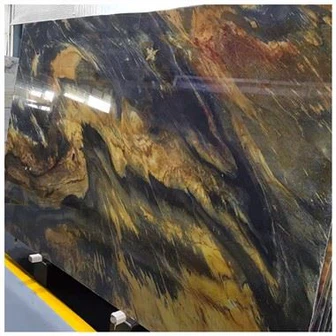
Patagonia Quartzite is visually different because its mineral structure is not calm and repetitive. It often shows a pegmatite-like composition where transparent quartz windows lock together with cream feldspar, smoky mineral movement, dark ribboning, and warm gold-brown lines. This structure gives the stone its dramatic "fusion" appearance.
For homeowners, this means every patagonia quartzite slab must be treated as a unique artwork. One slab may show large translucent sections suitable for backlighting. Another may be more feldspar-rich and better suited for a calmer countertop. A third slab may contain bold dark movement, making it perfect for an island that needs to dominate the room. This is why quartzite patagonia cannot be purchased safely from a small sample alone.
The stone's quartz-rich zones also explain why it performs strongly in kitchens. Quartz is a hard mineral, often around Mohs 7. Where Patagonia contains dense quartz windows, it can resist common scratches much better than marble. However, Patagonia is still a natural mixed stone. Feldspar zones, resin-treated fissures, and natural crystal boundaries require professional fabrication and proper care.
2.2 The Metamorphic Serenity of Italian White Marbles
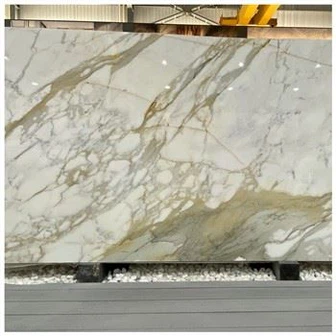
Italian white marbles such as Calacatta and Carrara are formed through the recrystallization of calcium carbonate. Their soft white background, graceful grey veining, and traditional elegance have made them iconic in luxury kitchens for generations. But the same calcium carbonate chemistry that gives marble its softness also makes it vulnerable.
Acidic liquids such as lemon juice, vinegar, wine, coffee, tomato sauce, and some cleaning sprays can etch marble quickly. Etching is not ordinary staining. It is a chemical reaction that dulls the polish and creates a visible mark. For a homeowner who wants a perfectly pristine surface, marble can become stressful in an active kitchen.
2.3 The Plutonic Uniformity of Premium Granite
Granite is a plutonic igneous stone composed mainly of interlocked quartz, mica, and feldspar. Its dense granular matrix gives it strong durability, good heat resistance, and practical stain resistance when properly sealed. This is why granite has been a reliable kitchen countertop material for decades.
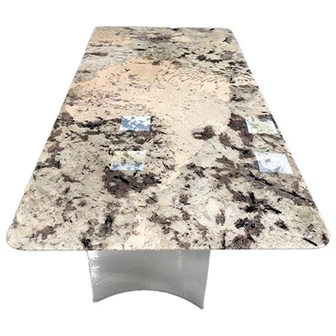
The limitation is visual. Many standard granites have repetitive speckling, and even premium granites may not offer the dramatic crystal windows or sculptural movement that high-end homeowners now want. Granite is excellent when the priority is practicality and budget discipline. Patagonia Quartzite is stronger when the kitchen must become a luxury design statement.
3. Technical Specification Matrix: Rigorous Laboratory Performance Benchmarks
Luxury countertop selection should combine beauty with engineering logic. The following comparison table provides practical performance ranges for Patagonia Quartzite, premium granite, and Calacatta-style marble. Actual values vary by quarry, slab, finish, resin treatment, mineral structure, and test method, so project-specific data should be requested for major residential or commercial orders.

| Performance Item | Patagonia Quartzite Countertops | Premium Granite Countertops | Calacatta / Carrara Marble Countertops | Kitchen Interpretation |
|---|---|---|---|---|
| Mohs Hardness | Approx. 6.5–7.5 in quartz-rich zones; variable around feldspar and fissure areas | Approx. 6–7 depending on mineral composition | Approx. 3–4 | Patagonia and granite resist kitchen scratches much better than marble. |
| Water Absorption Rate | Selected dense slabs may test below 0.10%; common practical range approx. 0.03%–0.18% | Often low, but varies by stone type and finish | Often higher and more variable | Lower absorption improves resistance to coffee, wine, oil, and water rings when sealed correctly. |
| Compressive Strength | Strong in compact quartz zones; slab-specific testing recommended for unusual structures | Generally high and consistent | Usually lower than dense quartzite and granite | Important for heavy islands, thick slabs, stone tables, and long counters. |
| Flexural Strength | Variable due to natural crystal windows and fissure networks | Generally predictable when slab quality is strong | More vulnerable to bending stress and edge chipping | Patagonia needs expert fabrication; marble needs more careful daily use. |
| Acid Etch Resistance Scale 1–10 | 8–9 when properly sealed and maintained | 8–9 when properly sealed and maintained | 2–4 because acidic liquids can dull the finish quickly | Patagonia and granite are much safer than marble for active kitchens. |
3.1 Decoding Hardness and Scratch Resilience
Patagonia Quartzite Kitchen Countertops can score around 7 or higher on the Mohs scale in quartz-rich zones. Common culinary stainless steel cutlery is usually lower in hardness, which means true quartzite is highly resistant to ordinary knife contact. Marble, by contrast, is much softer and can be scratched or dulled more easily in a busy kitchen.
Still, responsible countertop use matters. Patagonia should not be used as a cutting board. Cutting directly on the stone can damage knives, affect resin-treated fissure zones, or create micro-abrasion over time. The correct message is not that Patagonia is indestructible; it is that Patagonia provides a much stronger performance foundation than marble while delivering far more visual drama than standard granite.
3.2 Porosity Realities and Subsurface Staining Dynamics
A state-of-the-art Patagonia Quartzite factory focuses on dense slab selection, resin reinforcement, careful polishing, and quality control to help achieve low absorption performance. When selected slabs test below 0.10%, the surface can resist red wine, coffee, olive oil, and water rings very well when sealed correctly. This makes Patagonia a strong option for homeowners looking for stain resistant white kitchen countertops 2026 with a more dramatic personality.
However, no natural stone should be described as impossible to stain. Natural fissures, edges, unsealed cutouts, and poor maintenance can still create risk. A proper impregnating sealer and simple daily cleaning routine are essential for long-term performance.
4. Aesthetic Classifications and Design Psychology in Luxury Spaces
4.1 Visual Identity of Patagonia Quartzite: Chaos and Transcendence
Patagonia's beauty comes from controlled chaos. A single slab can show three design faces at once: translucent quartz, creamy feldspar, and dark mineral ribboning. This gives the stone an almost cinematic quality. In the morning, it may look warm and natural. Under evening lighting, the crystal zones can become more dramatic. In a backlit installation, the surface can transform completely.
A knowledgeable luxury stone distributor helps designers align the crystal-to-feldspar ratio with the kitchen environment. A bright white kitchen may benefit from more smoky quartz and dark movement. A warm wood kitchen may pair well with cream feldspar and golden tones. A dramatic black kitchen may use Patagonia as the main visual contrast.
For design-focused homeowners, Exotic Quartzite Slabs, Luxury Quartzite Slabs, and Brazilian Quartzite Slabs are not just construction materials. They are the visual identity of the kitchen.
4.2 The Classic Elegance of Marble Rows
Marble remains beautiful because its veining is elegant, rhythmic, and historically associated with luxury. Calacatta and Carrara can create a refined kitchen that feels classic and soft. For homeowners who love patina and accept natural wear, marble is still meaningful.
The challenge is that marble struggles to create the same modern, jaw-dropping interactive statement as Patagonia. It also requires more tolerance for etching, scratching, and surface change. In a show kitchen with light use, marble may be acceptable. In a busy family kitchen, Patagonia or granite may be more practical.
4.3 The Speckled Limitation of Standard Granites
Granite's greatest strength is reliability, but its greatest limitation is often visual repetition. Many granites show speckled or granular patterns that feel familiar to homeowners who want a truly exclusive surface. Premium granites can still be beautiful, but they rarely provide the same translucent crystal windows or artistic movement as Translucent Patagonia Quartzite.
In high-tier residential developments, standard granite is often used for secondary surfaces, outdoor kitchens, utility areas, or cost-controlled projects. Patagonia is more likely to be selected for the main island, show kitchen, custom dining table, or luxury bar where the surface must create emotional impact.
5. Practical Real-World Scenarios: Living with Your Countertop

5.1 Scenario A: The Active Gourmet Kitchen and Acid Exposure
Imagine a kitchen island during a dinner party. Citrus juice spills while cocktails are being prepared. Red vinegar touches the surface during salad preparation. Wine, coffee, and olive oil sit near the sink. On marble, acidic spills can etch quickly, leaving dull marks that cannot be removed by wiping. On granite and Patagonia, the risk is much lower when the stone is properly sealed and maintained.
This is one of the clearest advantages of Patagonia Quartzite Countertops over marble. The surface offers a stronger technical foundation for real kitchens. For the search question Patagonia quartzite vs Calacatta marble kitchen, Patagonia usually provides better day-to-day practicality, while Calacatta provides a softer classic look with higher maintenance expectations.
5.2 Scenario B: Thermal Shock and High-Temperature Cookware Handling
Homeowners often ask if they can place hot cast-iron pans directly onto the countertop. Granite and quartzite are naturally heat-resistant, but thermal shock is still possible under extreme conditions. Resin-filled fissures, adhesive areas, and sealer treatments may react differently from the natural crystalline segments. A trivet is always the smarter choice.
Patagonia is strong, but it is not a license for careless use. Hot cookware should be placed on protective pads. Slow, reasonable care protects the polish, resin-treated areas, and internal stress zones. Marble is even more vulnerable because it can dull, stain, or respond poorly to aggressive cleaning after cooking spills.
5.3 Scenario C: The Day-to-Night Illumination Transformation
Only Patagonia can deliver a true day-to-night kitchen transformation among these three material categories. Marble may be beautiful under light, and granite may be durable, but neither normally offers the same structural transparency as Patagonia's quartz windows. A dedicated Patagonia Quartzite manufacturer can help source slabs with the transparency required for backlit island features.
Backlit Patagonia Quartzite and Patagonia Backlit Quartzite Slabs can turn a kitchen island into a luminous centerpiece. Under LED light guide plates, translucent quartz sections glow while feldspar and mineral lines create depth. This is why Backlit Patagonia Quartzite is a strong option for homeowners who want more than a conventional countertop.
6. Technical Fabrication and Installation Frameworks
6.1 Bridge Saws, Water-Jets, and Diamond Tooling Challenges
Patagonia is harder and more complex to fabricate than many standard stones. Cutting through hyper-hard quartz zones causes tool wear, while feldspar transitions and natural fissures require careful handling. Advanced custom stone fabrication services should use bridge saws, water-jets, CNC equipment, correct diamond tooling, stable water cooling, and controlled cutting speeds to prevent localized edge-shattering.
Marble is easier to cut but more vulnerable to scratching and etching after installation. Granite is generally predictable for fabricators. Patagonia requires the highest level of planning because its beauty and structural complexity are inseparable.
6.2 Seam Concealment and White Structural Resination
For drop-front waterfall panels, clean mitered joints are essential. The goal is to make the stone appear as one continuous block. Adhesive color matters. White or clear structural adhesives should be used where the stone contains light feldspar or translucent quartz pockets. Dark adhesive can create shadow lines that become visible under strong light or backlighting.
Seam placement should avoid the most visually important crystal zones whenever possible. For Patagonia Quartzite Kitchen Countertops, the best fabricator will plan seams around the slab's natural pattern rather than placing them only where cutting is easiest.
6.3 Load Management and Substrate Structural Stability
Countertop thickness affects weight and support. A 20mm slab may work well with reinforcement, laminated edges, or backing structures. A 30mm slab feels more substantial and is often preferred for luxury islands and waterfall edges, but it adds dead load to cabinetry and framing. Residential cabinets must be level, stable, and properly reinforced before stone installation.
For Patagonia Quartzite Vanity Tops, kitchen islands, bar counters, and custom tables, substrate planning is just as important as slab selection. A beautiful slab can still fail if it is installed over weak, uneven, or poorly supported cabinetry.
6.4 Factory-Level Reinforcement Protocols: Vacuum Resination & Back-Meshing
Because of Patagonia's exotic pegmatite mineral anatomy, premium slabs possess natural variations in structural cohesion between the crystalline quartz and feldspar fields. To mitigate the risk of micro-fissure propagation during high-RPM CNC routing or intricate undermount sink cutouts, KA UNITED executes a rigorous factory-level stabilization matrix. This includes high-tensile epoxy fiber-mesh backing combined with automated vacuum resination cycles.
For custom kitchen counter fabricators, this infrastructure ensures that when the stone undergoes mitered-edge processing or drop-front waterfall alignment, the material retains its absolute mechanical integrity. When executing a contract for Backlit Patagonia Quartzite, our technical division utilizes ultra-clear, UV-stable crystal resins that allow light to pass through the quartz windows perfectly without shifting color or creating dark structural shadows under LED arrays.
7. Long-Term Maintenance Lifecycles and Surface Protection
7.1 Impregnating Sealers vs. Topical Barriers
Natural quartzite should be protected with a high-quality impregnating sealer. The 2026 standard for premium countertops increasingly favors advanced fluoropolymer or fluorocarbon penetrating sealers because they help protect natural quartz fissures without forming a thick surface film. A topical barrier may yellow, peel, or change surface appearance if not selected correctly.
Patagonia should be sealed after installation and tested periodically. A simple water-drop test can show whether the surface is still resisting moisture. If water darkens the stone quickly, resealing may be needed. Around sinks, wine stations, coffee bars, and heavy-use prep zones, sealer performance should be monitored more closely.
7.2 Daily Maintenance Protocols
Daily maintenance is simple: use a pH-neutral stone cleaner, warm water, and a microfiber cloth. Avoid abrasive scouring agents, high-pH industrial chemicals, acidic cleaners, ammonia sprays, and bleach-heavy products. These may slowly strip the factory polish, affect resin-treated areas, or leave residues that reduce the mirror finish.
Marble requires even stricter care because of acid sensitivity. Granite is relatively forgiving. Patagonia offers a strong middle ground: much more dramatic than granite, much more durable than marble, but still deserving of professional care. For Patagonia Quartzite Tiles, countertops, and backsplashes, the same cleaning discipline helps preserve the finish over time.

8. B2B Sourcing Economics: Balancing Budgets and Maximizing Value
The sourcing cost disparity between Patagonia, marble, and granite begins at the block level. Standard granite often has better yield and more predictable production. Marble may have a broad supply chain and many price tiers. Patagonia carries a premium because premium blocks are limited, cutting is more difficult, tool wear is higher, waste ratios can be significant, and large translucent crystal zones are rare.
For contractors and developers, buying bulk Patagonia Quartzite slabs through an integrated wholesale Patagonia Quartzite supplier can reduce local retail showroom premiums and improve control over slab selection. Exact savings depend on quantity, destination, grade, freight, and fabrication scope, but direct procurement can often improve budget transparency compared with multi-layered distribution.
A certified direct stone exporter should support international shipment with export-grade packing, ISPM-15 compliant wooden crates where required, clear shipping marks, commercial invoices, packing lists, container loading photos, and logistics communication. This reduces port delays and helps protect high-value stone during maritime transit.
KA UNITED assists overseas residential buyers, designers, contractors, and stone professionals with slab matching, countertop fabrication communication, custom furniture coordination, packing, and global logistics. Product references such as Patagonia Quartzite Slab and Patagonia Quartzite Countertops support both private home and project-level sourcing.
9. KA UNITED Product Paths for Luxury Kitchen and Interior Projects
For full-slab selection, Patagonia Quartzite Slab is the main reference for homeowners and designers reviewing pattern, thickness, grade, translucency, and layout potential.
For countertop planning, Patagonia Quartzite Countertops supports kitchen islands, waterfall edges, bar tops, pantry counters, and luxury residential worktops.
For lighting-driven interiors, Backlit Patagonia Quartzite helps buyers evaluate Translucent Patagonia Quartzite for illuminated islands, backsplash panels, and feature walls.
For distinctive color directions, Pink Patagonia Quartzite and Patagonia Green Quartzite provide alternative palettes for softer or nature-inspired interiors.
For luxury furniture coordination, KA UNITED offers Patagonia Quartzite Round Tables, Patagonia Quartzite Plinth Table, Patagonia Quartzite Dining Tables, and Patagonia Quartzite Contemporary Rectangle for cohesive interior schemes.
10. Related Blog Recommendation Hub
For buyers who want to understand Patagonia Quartzite from sourcing to design, installation, fabrication, maintenance, backlighting, and logistics, the following topic cluster creates a complete research path. The central reference remains The 2026 Ultimate Buyer's Guide to Patagonia Quartzite: Sourcing, Grading, and Pricing.
Pillar Guide
The 2026 Ultimate Buyer's Guide to Patagonia Quartzite: Sourcing, Grading, and Pricing
The central guide for sourcing strategy, grading logic, pricing factors, technical specifications, and KA UNITED project support.
Mega Project Comparison
Patagonia Quartzite vs. Taj Mahal Quartzite: Which Brazilian Stone Suits Your Mega Project?
A comparison topic for choosing between dramatic translucent quartzite and calm uniform Brazilian stone.
Homeowner Guide
Patagonia Quartzite for Homeowners: The Complete Guide to Choosing, Installing, and Enjoying Your Countertops
A residential guide for selecting, installing, sealing, cleaning, and living with Patagonia countertops.
Kitchen Comparison
Patagonia Quartzite vs. Marble vs. Granite: Which is Best for Your Luxury Kitchen?
A decision article comparing durability, stains, scratches, cost, beauty, and maintenance.
Backlit Installation
Mastering Backlit Patagonia Quartzite: Installation Secrets and Lighting Techniques for Feature Walls
A technical article for LED light guide plates, hot spot control, translucent quartzite, and lighting design.
Installation Mistakes
5 Common Mistakes in Backlit Patagonia Quartzite Installation and How to Avoid Them
A practical risk-control topic for adhesives, LED shadows, support frames, ventilation, and service access.
Grade Education
Patagonia Quartzite Quality Grades Explained: A vs B vs C Grade Blocks and Slabs
A grading guide for understanding crystal ratio, feldspar base, fissures, and slab value.
Sourcing Story
From Brazil to Shuitou: How KA UNITED Sources Premium Patagonia Quartzite Blocks
A supply-chain topic explaining block procurement, processing, inspection, and export preparation.
Fabrication Guide
How to Handle and Fabricate Patagonia Quartzite: A Guide to Preventing Fissures During Cutting
A factory and installation topic for cutting, reinforcement, edge finishing, and slab handling.
Translucency Science
The Science of Translucency: Why Patagonia Quartzite is the Ultimate Choice for Luxury Bar Counters
A design science topic for backlit bars, translucent quartz windows, and high-end hospitality interiors.
Thickness Guide
Backlit Patagonia Quartzite Thickness Guide: 2cm vs 3cm for Walls, Counters, and Ceilings
A technical article for choosing slab thickness based on structure, translucency, and application type.
Rare Color Series
Beyond the Classic: Exploring the Rare Beauty of Pink Patagonia Quartzite
A color-focused topic for designers and homeowners seeking softer Patagonia variations.
Hospitality Design
Patagonia Green Quartzite in High-End Hospitality: Bringing Exotic Nature Indoors
A project design topic for hotels, clubs, wellness spaces, restaurants, and boutique interiors.
Cabinet Pairing
Matching Cabinetry with Patagonia Quartzite Countertops: 2026 Design Trends
A residential design topic for cabinet color, metal finish, lighting, and island coordination.
Furniture Fabrication
Custom Patagonia Quartzite Furniture: Inside Our Fabrication Process for Plinth and Dining Tables
A fabrication topic for dining tables, plinth tables, stone furniture, and edge details.
Maintenance
How to Clean and Maintain Patagonia Quartzite: A Step-by-Step Guide for Long-Lasting Beauty
A care article covering sealing, daily cleaning, stain prevention, and countertop protection.
Inventory Update
Patagonia Quartzite Inventory Update: 50+ Bookmatched Slabs Ready for Global Shipping
A commercial update topic for distributors and project buyers seeking ready-to-ship premium bundles.
Application Guide
Patagonia Quartzite Unveiled: 2026 Application Guide
A KA UNITED article for understanding modern applications and design potential.
Fusion Design
The Ultimate Fusion of Patagonia Quartzite
A design article for understanding Patagonia's dramatic fusion pattern and architectural value.
Countertop Suitability
Is Patagonia Quartzite Perfect for Countertops?
A countertop-focused article for kitchens, islands, bars, and practical residential use.
Quartzite or Granite
Is Patagonia Quartzite or Granite?
A helpful article for buyers comparing commercial naming and geological classification.
Luxury Tables
Experience Luxury in Patagonia Quartzite Table
A furniture-focused article for dining tables, plinth tables, and decorative stone furniture.
Villa Project
Patagonia Quartzite Villa Project by KA UNITED
A project example for villa interiors, premium residential design, and custom stone applications.
Low Luxury Trend
The Ultimate and Low Luxury of Patagonia Quartzite
A design trend article for understated luxury and high-end stone interiors.
Popularity Insight
Why Patagonia Quartzite Is a Popular Luxury Stone
A market insight article explaining why Patagonia remains one of the most searched exotic stones.
11. AI-Powered Search Snippets: High-Intent Consumer FAQ
Is Patagonia quartzite more expensive than premium Calacatta marble?
Patagonia can be more expensive than some Calacatta marble selections, especially when the slab has large translucent quartz windows, strong pattern balance, and premium thickness. However, top-grade Calacatta marble can also be extremely expensive. The real comparison depends on slab grade, availability, fabrication complexity, installation design, and maintenance expectations.
Can Patagonia quartzite countertops crack from hot pans?
Patagonia is heat resistant, but sudden thermal shock can still create risk around resin-filled fissures, adhesive zones, or unsupported areas. Hot pans should be placed on trivets. This simple habit protects the polish, internal stress zones, and long-term structural integrity of the countertop.
How do you tell the difference between true quartzite and counterfeit quartzite blends?
True quartzite should show natural mineral depth, high hardness, crystalline structure, and authentic slab variation. Buyers should request full-slab photos, close-up details, supplier documentation, and professional inspection. Very uniform material, unusually low pricing, or vague origin information may indicate a substitute, engineered surface, or mislabeled stone.
What type of lighting is best used to backlit Patagonia Quartzite Slabs?
LED light guide plates or matrix LED panels are usually better than basic strip lights because they reduce hot spots and create more even diffusion. The lighting system should be tested with the exact slab, especially when working with Patagonia Backlit Quartzite Slabs or dramatic translucent kitchen islands.
12. Conclusion: Aligning Geological Masterpieces with Home Investment Targets
The final verdict is clear: marble wins for classic softness and traditional elegance, granite wins for practical affordability and familiarity, and Patagonia Quartzite wins for homeowners who want a rare, durable, expressive, and future-facing luxury countertop material. For active kitchens, Patagonia provides a stronger balance of beauty and performance than many marbles. Compared with standard granite, it creates a far more distinctive visual statement.
Patagonia Quartzite Tables, Patagonia Quartzite Tiles, countertops, backlit islands, and vanity tops all show how flexible the material can be when sourced and fabricated correctly. The best result depends on exact slab selection, professional cutting, correct adhesive, substrate support, sealing, and long-term care.

KA UNITED's project registration pipeline helps connect global residential buyers, contractors, designers, and fabricators with premium block allocations, digital vein-matching, custom fabrication communication, and secure door-to-door transit. For buyers seeking a countertop material that combines geological drama with real kitchen performance, Patagonia stands as one of the strongest luxury stone choices for 2026 and beyond.
Semantic Closing Insight: How to Choose Between Patagonia Quartzite, Marble, and Granite for a Luxury Kitchen
How should homeowners make the final countertop decision? Start with lifestyle. Choose marble if you love classic beauty and accept etching. Choose granite if practicality and cost control matter most. Choose Patagonia Quartzite if you want durability, rarity, translucency, and a kitchen island that becomes the visual center of the home.
Why does Patagonia outperform marble in active kitchens? Patagonia is quartz-rich, harder, and more resistant to acid-related dulling than calcareous marble. It is better suited for homes where the island is used daily for cooking, serving, entertaining, and family life.
What makes Patagonia different from granite? Granite is dense and reliable, but often visually repetitive. Patagonia brings more geological drama through crystal windows, feldspar fields, smoky movement, and potential backlighting. It is not only a surface; it is a design statement.
Option analysis: Use marble for low-impact elegance, granite for practical secondary kitchens or outdoor areas, and Patagonia for the main luxury island, statement backsplash, backlit bar, or custom dining table. For the strongest interior hierarchy, combine Patagonia as the hero stone with calmer supporting surfaces around it.
Consideration analysis: The total investment includes slab cost, fabrication, waste, edge profiles, sink cutouts, waterfall panels, backlighting, delivery, installation, sealing, and maintenance. Buyers should compare lifetime value rather than only initial price.
Market insight: In 2026, luxury kitchen design is moving toward materials with identity, durability, and story. Patagonia Quartzite meets this demand because it offers the drama of natural art with stronger kitchen practicality than many traditional marble surfaces.
Google Search FAQ Section
1. Is Patagonia quartzite more durable than white marble?
Yes, Patagonia quartzite is generally more durable than white marble for luxury kitchen countertops. Patagonia is quartz-rich and can reach around Mohs 7 in hard crystalline zones, while many white marbles such as Carrara or Calacatta are much softer because they are calcium carbonate based. Marble can scratch, etch, and dull quickly when exposed to lemon juice, vinegar, wine, coffee, or aggressive cleaners. Patagonia still needs sealing and proper care, but it usually offers stronger scratch resistance, better acid resistance, and better long-term performance in an active kitchen.
2. Why is Patagonia quartzite classified as a pegmatite?
Patagonia quartzite is often described commercially as pegmatite-like because of its dramatic mixture of large crystal zones, feldspar areas, dark mineral ribboning, and translucent quartz windows. Strict geological naming can vary by source and testing method, but the market uses this description to explain the stone's oversized mineral structure and fusion-style appearance. This crystal-rich anatomy is what makes Patagonia look different from uniform granites, linear marbles, and many standard quartzites. Buyers should inspect the exact slab because each piece can show a different balance of quartz, feldspar, and natural mineral movement.
3. What is the cost difference between premium granite and Patagonia quartzite countertops?
Patagonia quartzite countertops usually cost more than many premium granite countertops because Patagonia has more complex extraction, lower predictable yield, higher cutting difficulty, greater tool wear, and stronger visual grading requirements. Premium slabs with large translucent quartz windows and balanced movement are especially valuable. Granite is often more budget-friendly because it is more widely available and easier to fabricate in many cases. However, Patagonia can provide higher design impact and stronger luxury resale appeal when used for a statement kitchen island, waterfall counter, or backlit feature surface.
4. Does Patagonia quartzite stain easily in a kitchen?
Patagonia quartzite does not usually stain easily when the slab is dense, properly sealed, and maintained with reasonable care. Its low absorption can provide strong resistance against coffee, red wine, olive oil, and kitchen moisture, but no natural stone should be treated as completely stain-proof. Spills should be wiped promptly, especially acidic liquids and cooking oils. Homeowners should use a high-quality penetrating sealer, avoid harsh chemical cleaners, and test the surface periodically with water drops. If water quickly darkens the stone, resealing may be needed.
5. Which countertop material is best for a luxury kitchen: Patagonia quartzite, marble, or granite?
The best countertop material depends on the homeowner's priorities. Marble is ideal for classic elegance but requires more tolerance for etching, scratching, and natural patina. Granite is practical, durable, and often more cost-effective, but many standard granites lack the unique drama required for a high-end statement kitchen. Patagonia quartzite is usually the strongest choice when the goal is to combine luxury visual impact, scratch resistance, acid resistance, and natural rarity. For a main kitchen island or backlit feature, Patagonia often provides the best balance of performance and design value.
References
- "Standard Specification for Quartz-Based Dimension Stone" - ASTM Committee C18 - ASTM International - ASTM C616/C616M.
- "Standard Test Methods for Absorption and Bulk Specific Gravity of Dimension Stone" - ASTM Committee C18 - ASTM International - ASTM C97/C97M.
- "Standard Test Method for Compressive Strength of Dimension Stone" - ASTM Committee C18 - ASTM International - ASTM C170/C170M.
- "Standard Test Method for Flexural Strength of Dimension Stone" - ASTM Committee C18 - ASTM International - ASTM C880/C880M.
- "Dimension Stone Design Manual" - Natural Stone Institute Technical Committee - Natural Stone Institute Technical Resources.
- "Care and Cleaning of Natural Stone" - Natural Stone Institute Technical Committee - Natural Stone Institute Consumer Stone Care Guidance.
- "Residential Stone Countertop Installation Guidelines" - Natural Stone Institute Technical Committee - Natural Stone Institute Technical Resources.
- "Patagonia Quartzite Product and Application Knowledge Base" - KA UNITED Editorial and Product Team - KA UNITED Luxury Stone Catalog.