Patagonia Quartzite vs. Taj Mahal Quartzite: Which Brazilian Stone Suits Your Mega Project?
Quick Summary:
This guide compares Patagonia Quartzite and Taj Mahal Quartzite for 2026 mega projects by KA UNITED Factory, including cost, durability, translucency, grading, installation, freight, and specification logic. It is designed for project teams comparing Patagonia Quartzite Slabs, Taj Mahal vs Patagonia Quartzite cost, the best Brazilian quartzite for mega projects, and the design choice between luxury translucent stone vs uniform quartzite.
Patagonia Quartzite vs. Taj Mahal Quartzite: Engineering-Grade Procurement Guide for Mega Projects
2026 Technical Whitepaper & Comparative Analysis: A comprehensive cross-examination of structural density, resin topographies, backlighting diffusion physics, and logistics yield optimization. Formulated explicitly for commercial architects, sovereign developers, luxury hospitality procurement syndicates, and premium stone fabricators.
1. Introduction: The Battle of Brazilian Titans in Mega Project Architecture
Large-scale architecture in 2026 is moving toward stronger material identity. In hospitality lobbies, corporate headquarters, luxury retail spaces, airport lounges, private clubs, villa compounds, and premium residential developments, designers are no longer choosing stone only as a background finish. They are selecting materials that define the entire spatial emotion of a project.

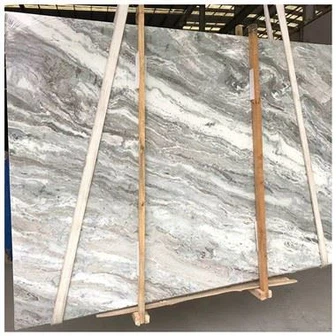
This is why the comparison between patagonia quartzite and Taj Mahal Quartzite has become increasingly important. Both stones come from Brazil. Both are associated with luxury interiors. Both are frequently specified for kitchens, walls, floors, counters, tables, and feature installations. Yet they communicate very different architectural messages. Patagonia is a visual statement: dramatic, fractured, crystalline, translucent, and artistic. Taj Mahal is sovereign serenity: warm, creamy, uniform, calm, elegant, and easier to integrate across very large surfaces.
For a mega project, this difference is not only aesthetic. It affects slab matching, procurement risk, installation cost, lighting strategy, maintenance expectation, and long-term visual fatigue. A hotel lobby may benefit from the explosive optical power of Patagonia, especially when backlighting is part of the design concept. A 2,000-square-meter commercial flooring plan may be better served by Taj Mahal because its uniform quartzite structure provides a calmer, more continuous surface.
Before analyzing the competitive nuances between these two stones, procurement managers should understand the baseline pricing, geological sorting standards, and primary grading frameworks of the pegmatite variety. Review the flagship research path: The 2026 Ultimate Buyer's Guide to Patagonia Quartzite: Sourcing, Grading, and Pricing. That guide provides the broader framework for understanding Patagonia before comparing it with Taj Mahal.
KA UNITED supplies Patagonia-related product options for luxury residential and commercial projects, including Patagonia Quartzite Slab, Backlit Patagonia Quartzite, Patagonia Quartzite Countertops, and custom furniture references such as Patagonia Quartzite Dining Tables.
2. Geological Provenance: Shield Geometries and Mineral Formations
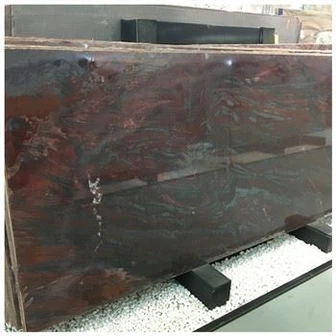
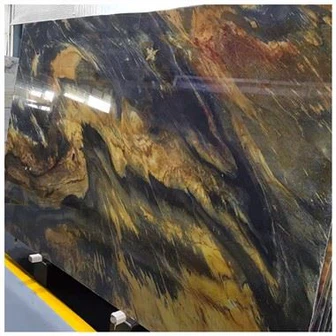
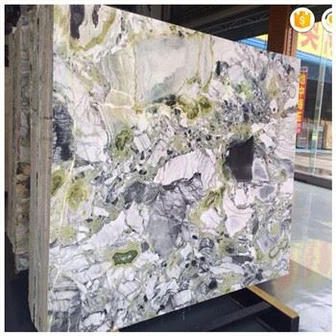
Patagonia Quartzite is valued for its pegmatite-like visual architecture. It often contains large irregular crystal masses, smoky quartz windows, feldspar fields, dark mineral lines, and natural fracture structures that create a highly expressive fusion pattern. The result is a stone that feels less like a conventional uniform slab and more like a geological artwork.
From a geophysical perspective, Patagonia's commercial appeal comes from erratic mineral growth. Slow-cooling mineral environments allowed large crystal sections to form, creating the translucent quartz windows that designers love for illuminated features. These windows may sit beside creamy feldspar backing, black or grey mineral movement, and gold-toned veins. This combination makes quartzite patagonia highly suitable for statement walls, backlit bar counters, one-of-a-kind dining tables, and dramatic kitchen islands.
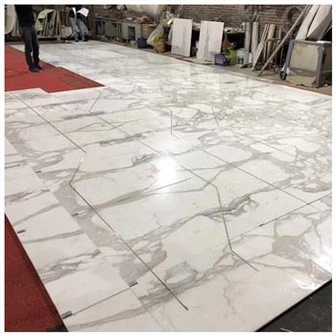
Taj Mahal Quartzite has a very different origin expression. It is commonly associated with highly metamorphosed quartz sandstone from Brazil, creating a more interlocked crystalline matrix. The surface is usually warm ivory, beige, taupe, cream, or soft gold, with subtle linear movement. It does not usually deliver the same dramatic translucent windows as Patagonia, but it offers calmer consistency and broad usability.
A global direct stone exporter should understand these differences at the block level. Patagonia blocks must be checked for fissure stability, crystal boundary strength, resin response, translucent zone size, and cutting yield. Taj Mahal blocks must be checked for color consistency, veining direction, surface compactness, and large-area matching. Both materials can support high-end projects, but their quarry sorting logic is different.
For Patagonia, a stable block must be able to yield visually strong slabs without localized structural collapse around the crystal boundaries. A qualified Patagonia Quartzite manufacturer should inspect block soundness before production, not after the slab has already been cut and polished. For Taj Mahal, the focus is more often on broad consistency, subtle movement, and reduced slab-to-slab variation for large floors or wall packages.
3. Technical Specification Matrix: Laboratory Performance Data
Both Patagonia and Taj Mahal are natural quartzite materials, but their internal structures behave differently. Patagonia's large quartz pockets may provide exceptional hardness in selected zones, while Taj Mahal's more homogeneous crystalline structure may provide smoother structural continuity across large panels. The following technical matrix offers a practical comparison for buyer education. Actual values vary by quarry batch, slab condition, resin treatment, finish, fissure structure, and laboratory testing method.
| Performance Item | Patagonia Quartzite Reference | Taj Mahal Quartzite Reference | Mega Project Interpretation |
|---|---|---|---|
| Mohs Hardness | Approx. 6.5–7 in quartz-rich zones; variable around feldspar and fissure areas | Approx. 6.5–7 where highly quartz-rich and compact | Both perform strongly against scratching compared with marble; Patagonia's massive quartz pockets can feel especially hard in selected areas. |
| Water Absorption Rate | Approx. 0.03%–0.18% for selected dense slabs; slab testing recommended | Often low and stable when premium-grade material is selected | Both are suitable for luxury kitchens and hospitality surfaces when sealed correctly. |
| Compressive Strength | Strong in compact quartz zones; variable near natural fissure boundaries | Often strong and more uniform across the slab | Taj Mahal may be easier for large repeated surfaces; Patagonia requires more careful slab inspection. |
| Flexural Strength | Variable due to crystal pockets, feldspar zones, and natural fracture networks | Often slightly more consistent because of its more homogeneous matrix | Taj Mahal may be preferable for very large floors; Patagonia needs tighter fabrication and handling control. |
| Bulk Density | Approx. 2.60–2.75 g/cm³ depending on mineral composition | Approx. 2.60–2.75 g/cm³ for many premium selections | Both require careful weight planning for slabs, wall anchors, furniture, and container loading. |
| Translucency Potential | High in crystalline quartz windows; excellent for selective backlighting | Usually opaque to semi-translucent; better for front lighting and wall washing | Patagonia has stronger luminous design value; Taj Mahal has stronger calm continuity. |
The data explains why these two stones should not be selected using the same design logic. Taj Mahal's ultra-homogeneous crystalline structure can provide slightly more predictable flexural behavior across repeated slabs, making it attractive for flooring, large countertops, and calm vertical installations. Patagonia's massive quartz pockets, by contrast, offer strong hardness and dramatic visual performance, but they also require closer inspection around fissure networks and crystal boundaries.
A modern Patagonia Quartzite factory must process Patagonia differently from standard Taj Mahal lines. Patagonia often requires controlled diamond wire speeds, careful water cooling, resin vacuum treatment, mesh reinforcement where appropriate, and slower handling around large crystal zones. Taj Mahal is still a premium quartzite, but its more uniform matrix often allows more predictable cutting and polishing behavior.

3.1 Structural Integrity and Slab Yield Control: Resin Topographies
For quantity surveyors and developers managing a mega project budget, material procurement cost is only one part of the equation; fabricator slab yield dictates the final financial expenditure. Because of its pegmatitic nature, Patagonia Quartzite inherently possesses complex structural variations across its geological topography. The interface where the hyper-hard translucent quartz windows meet the softer, opaque feldspar matrices represents a natural shear line.
To mitigate fracture propagation during diamond-wire sawing and edge profiling, premium global factories process Patagonia using advanced multi-stage vacuum resin reinforcement systems (typically incorporating premium UV-stable, high-penetration epoxies). Importers must budget for a slightly higher waste factor (often 15% to 25% depending on cut-to-size complexity) when engineering Patagonia for continuous linear applications.
Conversely, Taj Mahal Quartzite presents a highly integrated, recrystallized sandstone structure with uniform elasticity. This homogeneity yields a significantly more predictable fabrication phase, minimizing micro-cracking risks during under-mount sink cutouts or complex mitered apron profiling. For large-scale multi-unit hospitality bathrooms, Taj Mahal consistently secures a higher net slab utilization rate, optimizing the project's bottom line.
4. Grading, Clustering, and Pattern Classification for Large-Scale Spaces
Grading Patagonia begins with the balance between crystal ratio, ivory feldspar backing, smoky mineral movement, and gold-black vein dynamics. A high-grade patagonia quartzite slab often contains large translucent quartz windows, controlled feldspar areas, attractive fractured lines, and a composition that feels dramatic but intentional. Lower grades may contain muddy feldspar, excessive natural cracking, weak visual balance, or limited usable translucent zones.
Taj Mahal grading is more subtle. The buyer evaluates base color, vein softness, movement direction, gold intensity, smoke-grey undertone, and slab-to-slab consistency. Common visual categories may include Crystal White, Gold-Vein, and Smoke-Grey styles. These variations are not always obvious in a single sample, but they become important across a 2,000-square-meter floor or a large hospitality wall layout.
For Patagonia, the strategic necessity is to procure bulk Patagonia Quartzite slabs from a unified quarry layer or matched bundle whenever possible. If slabs from different blocks are mixed, the installation can suffer a catastrophic pattern disconnect. One slab may feature clear quartz windows, another may be feldspar-heavy, and another may contain dark dramatic clusters. This can look artistic in a single feature wall, but it may feel chaotic in a continuous multi-slab installation if not planned carefully.
A reliable wholesale Patagonia Quartzite supplier should provide high-resolution slab photos, bundle numbers, videos, backlighting tests where relevant, and dry-lay layout support. For very large projects, digital vein matching is essential. A buyer should not approve Patagonia based on small samples alone because samples rarely show the full pattern range, crystal ratio, or layout behavior.
For color variation within the Patagonia family, buyers can review Pink Patagonia Quartzite and Patagonia Green Quartzite. These options are useful when a project needs the Patagonia structure but a different emotional color direction.
5. The Ultimate Upgrade: Why True Quartzite Outperforms Premium Italian Marbles
Both Patagonia and Taj Mahal offer a major functional advantage over premium Italian marbles: they are quartz-rich materials rather than calcareous marble. Calacatta, Carrara, Statuario, and many other luxury marbles can be beautiful, but they are vulnerable to acid etching, dulling, scratching, and staining when used in high-traffic commercial environments.

In practical terms, citrus juice, alcohol, coffee, wine, vinegar, and harsh cleaners can quickly damage marble finishes. Quartzite does not behave the same way. High-quality quartzite generally resists common etching risks much better, although it should still be sealed and cleaned properly. This makes both Patagonia and Taj Mahal strong options for commercial kitchens, hospitality vanity zones, executive counters, luxury residential islands, and public-facing reception surfaces.
Porosity dynamics also matter. Dense quartzite with low water absorption reduces the risk of subsurface moisture movement, microbial tracking, and shadow staining in high-use bathrooms and bar areas. This does not mean the stone is maintenance-free. It means the surface has a stronger technical foundation than many marbles when specified, sealed, and installed correctly.
For a mega project, this performance difference can affect lifecycle cost. A marble surface may require more restoration, repolishing, and careful daily management. Quartzite can often maintain its finish longer under normal commercial conditions. The best choice depends on design intent, but for high-contact surfaces, quartzite usually provides a better balance between beauty and functional durability.
This is why Luxury Quartzite Slabs, Exotic Quartzite Slabs, and Brazilian Quartzite Slabs are increasingly specified in projects where marble aesthetics are desired but marble maintenance risk is too high.
6. Spatial Real-World Scenarios: Designing for the Mega Project
Scenario A: Commercial Grand Lobby Feature Wall
For a grand lobby feature wall, Patagonia has a strong advantage. Its explosive pattern, translucent quartz windows, smoky depth, and fractured composition create a landmark entrance experience. When installed as book-matched panels or backlit slabs, Patagonia can become the visual identity of a hotel, luxury office tower, private club, or flagship retail space.
A Backlit Patagonia Quartzite feature wall can create a dramatic day-to-night transformation. During the day, the stone appears as a bold natural artwork. At night, the crystalline zones can glow under controlled LED light guide plates. This is why Backlit Patagonia Quartzite is especially relevant for hospitality designers, casino interiors, wine bars, and premium reception areas.
Taj Mahal can also perform beautifully in lobbies, but its strength lies in elegance rather than drama. It is ideal for large wall areas where the design requires calm, warmth, and material continuity rather than a powerful focal point.
Scenario B: High-Traffic Commercial Flooring and Corporate Main Kitchens
For high-traffic commercial flooring, Taj Mahal may often be the safer visual choice because its uniform tone reduces fatigue and makes large surfaces easier to coordinate. A trusted premium Taj Mahal Quartzite supplier can help maintain consistency across repeated slabs, which is critical in broad floor layouts, office kitchens, hotel bathrooms, and public spaces.
Patagonia can be used for flooring, but it requires careful pattern control. Its dramatic structure may be visually overwhelming if used across very large continuous floor areas. It is usually more successful as a feature zone, central lobby insert, statement wall, island surface, bar front, table top, or luxury furniture piece.
For kitchen islands and counters, Patagonia offers stronger visual individuality. For high-volume floor areas, Taj Mahal offers calmer continuity. For corporate boardrooms, Patagonia can be spectacular when used for tables, counters, or focal walls, while Taj Mahal may be more suitable for surrounding architectural surfaces.
7. Engineering Advanced Light Diffusion: Backlighting vs. Front-Lighting
Backlighting is one of Patagonia's strongest advantages over Taj Mahal. The transparency index of selected Patagonia slabs is much higher because the smoky quartz and crystalline sections can transmit light. When paired with 2026 LED light guide plates, high-CRI lighting, diffuser layers, and a controlled cavity, Translucent Patagonia Quartzite can become a dynamic three-dimensional luminous surface.
Taj Mahal behaves differently. It is generally opaque to semi-translucent and does not usually contain the large clear quartz windows that define Patagonia. Rather than full backlighting, Taj Mahal often benefits from strategic front-lighting, high-angle wash lighting, under-cabinet lighting, or wall-grazing illumination that emphasizes its delicate gold veins and warm crystalline surface.
Professional custom stone fabrication services are essential for backlit features because support brackets, adhesive lines, framing, and LED components can cast shadows behind translucent stone. Hidden support systems must be planned carefully. If a bracket is placed behind a clear quartz window, it may become visible when the lights are on. This can ruin an otherwise expensive feature wall.
For Patagonia Backlit Quartzite Slabs, the lighting design should be tested using the exact slab, not a generic sample. LED color temperature, cavity depth, diffuser material, driver position, and maintenance access all affect the final result. For Taj Mahal, lighting should focus on enhancing surface warmth and veining rather than creating internal glow.
8. Installation Mandates and Technical Adhesive Protocols
Both stones are heavy natural materials, and installation must respect dead load, support structure, substrate condition, adhesive compatibility, and movement joints. A 20mm profile may be useful for wall panels or selected backlit applications, while a 30mm profile may be preferred for heavy countertops, islands, tables, and areas where mass and rigidity are important.

Patagonia's translucent quartz pockets create a special adhesive challenge. Low-grade grey thin-set, dark epoxy, or oil-rich adhesive can bleed visually through the quartz sections. For premium installations, pure white, non-staining, UV-stable structural epoxies or clear acrylic systems should be specified where transparency matters. The stone should be installed over a clean, dry, stable substrate.
Taj Mahal also benefits from clean adhesive selection, but the risk of visible backing shadow is generally lower because the material is less translucent. For large floors, the bigger concern is movement control. Expansion joints, substrate preparation, setting bed quality, and grout selection should follow local building codes and professional stone installation guidelines.
Working closely with a luxury stone distributor, project supplier, and qualified installer helps reduce technical risk. For large-scale floor layouts, expansion and movement joints should be planned before stone arrives on site. For backlit Patagonia features, electrical access panels and hidden supports must be coordinated before fabrication.
For furniture and specialized applications, KA UNITED product references include Patagonia Quartzite Round Tables, Patagonia Quartzite Plinth Table, and Patagonia Quartzite Contemporary Rectangle.
9. B2B Procurement Economics: Cost Structures, Freight, and Yield Optimization
When buyers compare Taj Mahal vs Patagonia Quartzite cost, they should understand the reasons behind the price gap. Patagonia is often more expensive than standard Taj Mahal grades because it has higher structural waste, more complex extraction behavior, stronger visual grading requirements, and lower predictable yield for premium slabs. The most desirable Patagonia slabs with large translucent quartz windows and balanced pattern movement are limited.
Taj Mahal is also a premium Brazilian quartzite, but its broader design acceptability and more uniform appearance often make it easier to apply across large surfaces. Depending on grade and market conditions, it can be more cost-efficient for large flooring, broad wall areas, and repeated commercial applications.
Supply-chain strategy matters. Ordering container loads directly from a factory-integrated wholesale Patagonia Quartzite supplier can reduce secondary broker fees and improve project coordination. In some procurement scenarios, direct sourcing may reduce material acquisition costs materially compared with multi-layered distribution, though exact savings depend on order quantity, grade, freight route, Incoterms, and fabrication scope.
Freight optimization is also essential. Stone is heavy, and maritime loading must respect container weight limits, commonly around 21 to 27 metric tons depending on destination rules, carrier restrictions, port regulations, and container condition. Slab yield mapping helps buyers determine how many slabs can be safely loaded without overloading the container or increasing breakage risk.
KA UNITED supports container-level sourcing coordination for overseas project buyers who need slabs, countertops, tables, backlit panels, or custom-cut pieces. For full-slab sourcing, Patagonia Quartzite Slab is the most direct product path. For countertop applications, Patagonia Quartzite Countertops is a practical reference for Patagonia Quartzite Kitchen Countertops, Patagonia Quartzite Vanity Tops, and commercial counter projects.
10.Related Blog Recommendation Hub
For buyers who want to understand Patagonia Quartzite from sourcing to design, installation, fabrication, maintenance, backlighting, and logistics, the following topic cluster creates a complete knowledge path. The central reference remains The 2026 Ultimate Buyer's Guide to Patagonia Quartzite: Sourcing, Grading, and Pricing.
Pillar Guide
The 2026 Ultimate Buyer's Guide to Patagonia Quartzite: Sourcing, Grading, and Pricing
The central guide for sourcing strategy, grading logic, pricing factors, technical specifications, and KA UNITED project support.
Mega Project Comparison
Patagonia Quartzite vs. Taj Mahal Quartzite: Which Brazilian Stone Suits Your Mega Project?
A comparison topic for developers deciding between dramatic translucent quartzite and calm uniform Brazilian stone.
Homeowner Guide
Patagonia Quartzite for Homeowners: The Complete Guide to Choosing, Installing, and Enjoying Your Countertops
A residential-focused topic for kitchen islands, worktops, maintenance, and lifestyle use.
Kitchen Comparison
Patagonia Quartzite vs. Marble vs. Granite: Which is Best for Your Luxury Kitchen?
A decision article for buyers comparing durability, maintenance, cost, and design value.
Backlit Installation
Mastering Backlit Patagonia Quartzite: Installation Secrets and Lighting Techniques for Feature Walls
A technical article for LED light guide plates, hot spot control, translucent quartzite, and wall engineering.
Installation Mistakes
5 Common Mistakes in Backlit Patagonia Quartzite Installation and How to Avoid Them
A practical risk-control topic for adhesives, LED hot spots, support frames, and service access.
Grade Education
Patagonia Quartzite Quality Grades Explained: A vs B vs C Grade Blocks and Slabs
A grading guide for importers, distributors, contractors, and designers comparing slab quality.
Sourcing Story
From Brazil to Shuitou: How KA UNITED Sources Premium Patagonia Quartzite Blocks
A supply-chain topic explaining block procurement, processing, inspection, and export preparation.
Fabrication Guide
How to Handle and Fabricate Patagonia Quartzite: A Guide to Preventing Fissures During Cutting
A factory and installation topic for cutting, reinforcement, edge finishing, and slab handling.
Translucency Science
The Science of Translucency: Why Patagonia Quartzite is the Ultimate Choice for Luxury Bar Counters
A design science topic for backlit bars, translucent quartz windows, and hospitality interiors.
Thickness Guide
Backlit Patagonia Quartzite Thickness Guide: 2cm vs 3cm for Walls, Counters, and Ceilings
A technical topic for selecting slab thickness based on structure, translucency, and application type.
Rare Color Series
Beyond the Classic: Exploring the Rare Beauty of Pink Patagonia Quartzite
A color-focused topic for designers seeking softer and more exclusive Patagonia variations.
Hospitality Design
Patagonia Green Quartzite in High-End Hospitality: Bringing Exotic Nature Indoors
A project-design topic for hotels, clubs, restaurants, wellness spaces, and boutique interiors.
Cabinet Pairing
Matching Cabinetry with Patagonia Quartzite Countertops: 2026 Design Trends
A kitchen design topic for cabinet color, metal finish, lighting, and island coordination.
Furniture Fabrication
Custom Patagonia Quartzite Furniture: Inside Our Fabrication Process for Plinth and Dining Tables
A fabrication topic for tables, plinths, statement furniture, edge detailing, and structural support.
Maintenance
How to Clean and Maintain Patagonia Quartzite: A Step-by-Step Guide for Long-Lasting Beauty
A care article covering sealing, daily cleaning, stain prevention, and countertop protection.
Inventory Update
Patagonia Quartzite Inventory Update: 50+ Bookmatched Slabs Ready for Global Shipping
A commercial update topic for distributors and project buyers seeking ready-to-ship premium bundles.
Application Guide
Patagonia Quartzite Unveiled: 2026 Application Guide
A KA UNITED article for understanding modern applications and design potential.
Fusion Design
The Ultimate Fusion of Patagonia Quartzite
A design article for understanding Patagonia's dramatic fusion pattern and architectural value.
Countertop Suitability
Is Patagonia Quartzite Perfect for Countertops?
A countertop-focused article for residential kitchens, islands, bars, and practical use.
Quartzite or Granite
Is Patagonia Quartzite or Granite?
A helpful article for buyers confused by commercial naming and geological classification.
Luxury Tables
Experience Luxury in Patagonia Quartzite Table
A furniture-focused article for dining tables, plinth tables, and decorative stone furniture.
Villa Project
Patagonia Quartzite Villa Project by KA UNITED
A project example for villa interiors, premium residential design, and custom stone applications.
Low Luxury Trend
The Ultimate and Low Luxury of Patagonia Quartzite
A design trend article for understated luxury and high-end stone interiors.
Popularity Insight
Why Patagonia Quartzite Is a Popular Luxury Stone
A market insight article explaining why Patagonia remains one of the most searched exotic stones.
SGE and AI Search Snippets: High-Intent B2B FAQ
Which stone is more scratch-resistant: Patagonia or Taj Mahal Quartzite?
Both stones are quartz-rich and much more scratch-resistant than marble. Patagonia can be especially hard in its large quartz pockets, while Taj Mahal often provides more consistent performance across the slab. The practical answer depends on the exact slab, but both materials are strong options for high-end countertops, walls, and commercial interiors when fabricated and maintained correctly.
What is the expected slab-to-slab color variation when ordering bulk Patagonia Quartzite slabs?
Variation can be significant. Patagonia may change from translucent quartz-rich zones to feldspar-heavy areas, smoky mineral patches, gold movement, and darker fractured sections. For this reason, buyers ordering bulk Patagonia Quartzite slabs should request exact slab photos, bundle numbers, dry-lay previews, and digital layout support before production.
Can Taj Mahal Quartzite be used for exterior cladding in extreme climate conditions?
Taj Mahal Quartzite may be used for exterior cladding in selected projects when the material, thickness, anchoring system, climate exposure, sealing plan, and local building requirements are properly reviewed. Freeze-thaw conditions, salt exposure, UV, wind load, and anchoring design should be evaluated by qualified project professionals before approval.
How do global procurement managers verify block consistency before container loading at a Chinese Patagonia Quartzite factory?
Procurement managers should request slab photos, bundle identification, videos, thickness checks, finish inspection, resin review, dry-lay layouts, packing photos, and container loading documentation. For high-value orders, third-party inspection can also be arranged before loading. KA UNITED supports digital review and container-level sourcing coordination for overseas project teams.
11. Conclusion: Aligning Geological Masterpieces with Architectural Vision
Patagonia Quartzite and Taj Mahal Quartzite are both premium Brazilian stones, but they solve different architectural problems. Patagonia is the choice for statement-making interiors, backlit feature walls, bar fronts, dramatic islands, dining tables, and high-impact focal zones. Taj Mahal is the choice for serene continuity, warm elegance, repeated flooring, broad countertops, and spaces that require a softer luxury mood.
The final decision should match aesthetic identity, technical constraints, and financial targets. If a project needs visual drama, translucency, and geological artistry, Patagonia is the stronger candidate. If a project needs calm consistency, lower visual fatigue, and easier large-area coordination, Taj Mahal may be more appropriate. In many mega projects, the best design strategy uses both: Patagonia as the hero stone and Taj Mahal as the supporting luxury surface.
KA UNITED supports formal RFQs, digital vein-matching layout consultations, direct wholesale sourcing, custom fabrication communication, and container-level project coordination. For buyers specifying Patagonia Quartzite Countertops, Patagonia Quartzite Tiles, Patagonia Quartzite Tables, Translucent Patagonia Quartzite, or full-size slab packages, the strongest result begins with exact material selection and early technical planning.
Semantic Closing Insight: How to Choose Between Patagonia Quartzite and Taj Mahal Quartzite
How should a mega project decide between Patagonia and Taj Mahal? Start with the spatial role. Use Patagonia when the stone must become the visual identity of the project. Use Taj Mahal when the surface must support the architecture with calm, continuous warmth.
Why does pattern control matter more with Patagonia? Patagonia's dramatic crystal windows, feldspar fields, and fractured movement can vary sharply from slab to slab. Large projects need bundle control, digital layout review, and dry-lay planning to prevent pattern disconnects.
What technical factor separates the two stones most clearly? Patagonia offers stronger translucency potential and more dramatic surface hardness in quartz-rich areas, while Taj Mahal often provides more uniform structural behavior and easier repeated application across floors and broad counters.
Option analysis: Patagonia is ideal for backlit walls, bar counters, feature islands, custom furniture, and landmark reception spaces. Taj Mahal is better for large floors, calm kitchen surfaces, spa interiors, hotel bathrooms, corporate pantries, and areas requiring visual continuity. A mixed-material strategy can create the strongest luxury hierarchy.
Consideration analysis: Buyers should compare not only price per square meter but also slab yield, fabrication risk, pattern matching cost, freight efficiency, replacement difficulty, installation complexity, and long-term maintenance. The more dramatic the stone, the more rigorous the procurement process must be.
Market insight: In 2026, luxury quartzite selection is no longer only about beauty. Developers want materials that perform, photograph well, resist daily wear, support brand identity, and remain serviceable over time. Patagonia and Taj Mahal both meet this demand, but they should be deployed with different design and procurement logic.
Google Search FAQ Section
1. Is Patagonia Quartzite more expensive than Taj Mahal Quartzite?
Patagonia Quartzite is often more expensive than standard Taj Mahal Quartzite grades because premium Patagonia slabs have lower predictable yield, more complex crystal structures, stronger grading variation, and higher fabrication risk. Slabs with large translucent quartz windows and balanced movement are especially valuable. Taj Mahal Quartzite can also be expensive in premium selections, but its more uniform structure often makes it more efficient for large floors and repeated surfaces. The final price depends on grade, slab size, thickness, finish, availability, freight, and project quantity.
2. Which quartzite is better for high-traffic commercial flooring?
Taj Mahal Quartzite is often the better choice for high-traffic commercial flooring because its calmer and more uniform appearance is easier to coordinate across large areas. It also creates less visual fatigue in offices, hotels, corridors, and public interiors. Patagonia Quartzite can be used for flooring, but it is usually more successful as a feature zone, lobby insert, wall panel, bar front, or island surface because its dramatic pattern may become overwhelming across very large floors. Both stones require correct thickness, substrate preparation, sealing, and installation planning.
3. How do you inspect block consistency for large-scale quartzite projects?
To inspect block consistency for large-scale quartzite projects, buyers should request exact slab photos, bundle numbers, videos, full-slab measurements, thickness checks, resin inspection, finish review, and digital layout previews. For Patagonia Quartzite, dry-lay mapping is especially important because the pattern can shift dramatically between slabs. For Taj Mahal Quartzite, color tone and veining direction should be checked across the full order. Serious commercial projects should approve slabs before container loading and may also use third-party inspection for additional risk control.
4. Can Patagonia Quartzite and Taj Mahal Quartzite be used together in one mega project?
Yes, Patagonia Quartzite and Taj Mahal Quartzite can work very well together when the design hierarchy is planned clearly. Patagonia can be used as the dramatic focal material for a reception wall, bar counter, private dining room, or luxury island, while Taj Mahal can support surrounding floors, walls, bathrooms, or countertops with a calmer and more continuous background. This combination allows a project to achieve both visual impact and long-term spatial balance. The key is to coordinate color temperature, lighting, metal finishes, cabinet tones, and surface transitions before installation.
5. Where can I source Patagonia Quartzite slabs for an international project?
International buyers should source Patagonia Quartzite slabs from a professional manufacturer, supplier, factory, distributor, or exporter that can provide exact slab photos, grade information, bundle numbers, fabrication support, packing documentation, and logistics coordination. KA UNITED supports overseas stone importers, hotel contractors, interior design studios, luxury developers, distributors, fabricators, and architectural material buyers with Patagonia Quartzite slabs, countertops, backlit applications, custom furniture, export packing, and container-level sourcing support.
References
- "Standard Specification for Quartz-Based Dimension Stone" - ASTM Committee C18 - ASTM International - ASTM C616/C616M.
- "Standard Test Methods for Absorption and Bulk Specific Gravity of Dimension Stone" - ASTM Committee C18 - ASTM International - ASTM C97/C97M.
- "Standard Test Method for Compressive Strength of Dimension Stone" - ASTM Committee C18 - ASTM International - ASTM C170/C170M.
- "Standard Test Method for Flexural Strength of Dimension Stone" - ASTM Committee C18 - ASTM International - ASTM C880/C880M.
- "Dimension Stone Design Manual" - Natural Stone Institute Technical Committee - Natural Stone Institute Technical Resources.
- "Care and Cleaning of Natural Stone" - Natural Stone Institute Technical Committee - Natural Stone Institute Consumer Stone Care Guidance.
- "Regulation of Wood Packaging Material in International Trade" - International Plant Protection Convention Secretariat - ISPM 15.
- "Patagonia Quartzite and Brazilian Quartzite Product Knowledge Base" - KA UNITED Editorial and Product Team - KA UNITED Luxury Stone Catalog.