What are the advantages and disadvantages of TV background wall marble?
Marble Background Walls: Weighing the Advantages and Disadvantages
When I talk with homeowners about their living rooms, the conversation almost always drifts to the same spot: the wall behind the television. It is the largest uninterrupted surface in the room, and it sets the tone for everything else. Paint is cheap but forgettable. Wallpaper is fast but rarely convincing up close. A marble background wall is different. It is a material decision you make once and live with for years, so it deserves a clear-eyed look at what it does well and where it falls short.
I want to be straight with you about both sides. Too many suppliers only tell you the good parts. The truth is that a marble background wall is a strong choice for many homes, but it is not the right choice for every budget or every wall. In this guide I will lay out the four main advantages, the two main disadvantages, and a few practical notes on color selection and installation that I have picked up from working with natural stone over the years.
Before we go further, it helps to define what I mean. When I say a marble background wall, I am talking about a decorative feature wall, most often behind the television in a living room, built from marble slabs or panels. Some people also use granite for the same purpose, and I will touch on that comparison later, but marble is the classic starting point because of its veins and its soft, high-end look.
The Four Advantages of a Marble Background Wall
Let me start with what marble does well. There are four reasons this material keeps showing up in homes across different styles and budgets, and they are worth understanding one by one.
1. Many Colors and Exquisite Natural Patterns
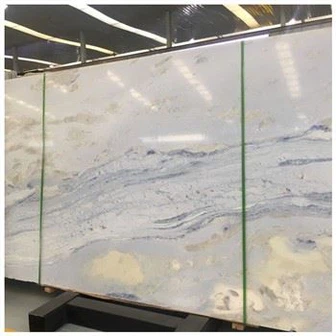
The first thing people notice about marble is that no two pieces are the same. Every slab carries its own veins, streaks, and color shifts, formed over millions of years under the earth. This is not a printed pattern that repeats every half meter. It is a genuine, one-of-a-kind surface, and that is a large part of why it reads as high-end.
The color range is genuinely wide. You can find near-white marble with faint grey veins, warm beige tones, deep charcoal, green, and even dramatic black with bold white movement. When you are selecting marble, you can choose a simple, fine pattern for a calmer, more elegant look, or you can go with a distinctive, prominent pattern that becomes the visual anchor of the room. The phrase I use with clients is that marble gives you a range from whisper-quiet to statement-piece, all within one material family.
Because the pattern is real and runs all the way through the stone, it also behaves differently from a printed surface. The way light lands on a polished marble wall changes through the day, and the veining stays legible from across the room. That depth is very hard to fake with man-made materials, and it is one of the strongest reasons a marble background wall feels more expensive than it sometimes costs.
2. Full Private Customization
The second advantage is flexibility. Marble is a high-grade decorative material, but it is not locked into one look. Because slabs can be cut, shaped, and finished to order, the same stone can serve a modern minimalist interior or a more traditional Chinese-style living room equally well.
What this means in practice is that you are not buying a fixed product off a shelf. You are choosing the stone, the size, the edge profile, the finish, and the layout. If you want a single full-height slab behind the television, that is possible. If you want book-matched panels where two slabs mirror each other across the center, that is possible too. If you want the same marble carried over to the television cabinet so the whole wall reads as one piece, that is a very common and very effective choice.
This level of control matters because the background wall is usually the first thing a guest sees when they walk in. A customized marble wall lets you shape that first impression rather than leaving it to a stock product. For a room you will look at every single day, that kind of personalization is worth more than most people expect.
3. Convenient Cleaning and Low Maintenance Cost
The third advantage is more practical. A marble background wall is a vertical surface, which means it does not take the same daily abuse as a kitchen countertop. There are no hot pans, no standing water, and no knives working against it. For a wall application, marble is genuinely easy to live with.
Cleaning is simple. A soft cloth or rag with a little mild detergent and warm water is usually all you need. There is no complicated routine, no special household maintenance knowledge, and no long list of products to buy. Because the wall sits out of the splash zone, it needs far less sealing and re-sealing than a marble countertop would. In my experience, the ongoing care cost of a marble background wall is one of the lowest of any premium wall finish, and that is something people rarely expect from a material that looks this expensive.
That said, marble is porous and mildly sensitive to acids, so I recommend wiping up any accidental spill rather than letting it sit. For a background wall this is a minor concern, but it is good practice, and I will return to it in the maintenance section below.
4. Durability That Outlasts Generations
The fourth advantage is the one that changes how people think about the price. Marble is durable in a way that most decorative surfaces simply are not. A well-installed marble wall can serve for hundreds of years, and the evidence is all around us. The Greek temples and the Roman Colosseum have stood for thousands of years, and much of that endurance comes down to stone.
Now, your living room is not a Roman amphitheater, and I will not pretend the conditions are the same. But the underlying property holds: marble does not peel, does not fade the way printed wallpaper does, and does not chip or crack under normal indoor conditions. It resists the small knocks and scuffs that a busy family room produces, and it holds its finish for a very long time. When you install a marble background wall, you are realistically making a one-time decision rather than something you will redo in five or ten years.
This longevity is also why the higher upfront cost can make financial sense. Spread over a few decades, a marble wall is often cheaper per year than replacing wallpaper or repainting every few years. It is one of the few wall treatments that genuinely improves with age, developing the kind of soft patina that people pay a premium to imitate.
The Two Disadvantages of a Marble Background Wall
Now the honest part. A marble background wall is not perfect, and there are two real drawbacks you should know about before you commit. Neither one has to be a deal-breaker, but you should go in with your eyes open.
1. A Higher Upfront Price
The first disadvantage is cost. Marble is more expensive than most wall finishes, and natural marble sits at the top of that range. To give you real numbers, natural marble can reach around 1,000 yuan per square meter at the higher end. Artificial marble, sometimes called engineered or cultured marble, is considerably more affordable, generally falling somewhere between 60 and 300 yuan per square meter.
That is a wide spread, and it matters because the two products look similar in a photo but perform and price very differently. Natural marble is the genuine stone, with real veins that run all the way through and the durability I described above. Artificial marble is a manufactured product, usually a mix of stone dust and resin, which keeps the marble look at a much lower price but does not carry the same uniqueness or longevity. Both have a place, and I will compare them in a table shortly, but the honest takeaway is this: if you want true natural marble, budget for it, because the price is what it is.
It is also worth remembering that the stone itself is only part of the cost. The heavier the slab, the more careful the handling, and the more labor goes into the installation. So the material price and the installation price tend to move together, and the total can add up faster than people expect.
2. Heavy Weight and a More Complex Installation
The second disadvantage follows directly from the first. Marble is heavy. A single square meter of 2-centimeter-thick marble weighs roughly 54 kilograms, because marble has a density of about 2.7 grams per cubic centimeter. That weight is not something a standard wall finish has to account for, and it changes the installation completely.
Unlike wallpaper or lightweight panels, a marble background wall usually needs to be fixed to a supporting frame, often a steel keel or metal structure anchored to the wall. This keeps the slabs secure and prevents any movement over time, but it also means the installation is more involved, takes longer, and needs a professional who knows stone. The frame and the stone together also add thickness, so the finished wall will project out from the original surface and take up a little more floor space than a painted wall would.
None of this is impossible, and in most homes the extra thickness is barely noticeable once the wall is finished. But it is a real consideration, especially if the wall is not load-bearing or if the subfloor needs to carry the extra weight. This is one of the reasons I always recommend having the wall checked and the installation handled by someone who works with stone regularly. Getting the support right is the difference between a wall that lasts decades and one that becomes a problem.
How to Choose the Right Marble for Your Background Wall
Once you accept the advantages and plan around the disadvantages, the fun part begins: choosing the stone. The color and pattern you pick will shape the entire room, so it is worth a few minutes of thought before you buy.
Light Marble for a Warm, Unified Look
Light-colored marble is the safe and beautiful default for most living rooms. A pale marble with soft veining reads as warm and calm, and it tends to make the whole home decoration feel more unified rather than competing with the furniture. If your room is on the smaller side or already busy with color, a light marble background wall will open the space up instead of closing it in. It is also the easiest choice to pair with a television cabinet in the same series, which creates a smooth, harmonious look across the whole wall.
Dark Marble for Depth and a Focal Point
Dark marble works differently. A deep charcoal or black slab with bold veining quickly raises the spatial texture of the home and becomes the visual focus of the entire living room. It reads almost like a natural work of art mounted on the wall. The trade-off is that dark marble is more dramatic and less forgiving in a small or dimly lit space, so it usually suits larger rooms or homes that want a strong statement. If you want the background wall to be the first thing anyone notices, dark marble is how you get there.
Texture, Granite, and Mixing Materials
One more option worth mentioning is texture. A textured marble or even a granite background wall can create a fresh, natural look that feels a step outside the usual polished finish. Granite is denser and harder than marble, which makes it an excellent alternative when you want a stone wall that shrugs off scratches and needs almost no sealing. Mixing marble and granite in the same wall, or using one for the wall and the other for the cabinet, is a novel and unconventional design that has become genuinely popular in recent years. It lets you enjoy marble's elegance where it shows most and granite's toughness where it works hardest.
Natural Marble vs. Artificial Marble: A Quick Comparison
The biggest practical decision most people face is whether to buy natural marble or artificial marble for the background wall. Both can look good from a distance, but they are very different products. Here is a simple side-by-side comparison based on the points above.
| Factor | Natural Marble | Artificial Marble |
|---|---|---|
| Typical price per square meter | Can reach around 1,000 yuan | Generally 60 to 300 yuan |
| Pattern and color | Unique, runs through the whole stone | Printed or molded, repeats and sits on the surface |
| Weight and installation | Heavy, usually needs a steel keel | Lighter and simpler to fix |
| Durability | Hundreds of years, develops a natural patina | Shorter lifespan, more prone to surface wear |
| Maintenance | Low for a wall, occasional sealing helps | Very low, mostly wipe-clean |
| Best fit | Homeowners wanting a permanent, one-of-a-kind feature | Budget-conscious projects that still want the marble look |
The table makes the trade-off clear. Natural marble costs more and weighs more, but it delivers a unique, lasting surface. Artificial marble costs far less and installs more easily, but it is a reproduction rather than the real thing. Which one is right depends on your budget and how long you plan to live with the wall. For a home you intend to keep, I lean toward natural marble. For a short-term renovation or a rental, artificial marble is a sensible compromise.
Planning the Installation So It Lasts
Because marble is heavy, the installation is where a good wall either succeeds or fails, and it is worth understanding even if you are hiring a professional. The basic sequence is straightforward: the wall surface is cleaned and leveled, a supporting frame such as a steel keel is anchored to the wall, and the marble slabs are then fixed to that frame. The frame does the real work of carrying the stone, which is why the weight of the marble does not simply pull the wall finish apart over time.
I always tell people to confirm a few things before the stone goes up. First, check that the wall itself is sound and can carry the load, since a square meter of stone can weigh around 54 kilograms. Second, make sure the surface behind the marble is dry and clean, because trapped moisture can work its way into the stone and cause staining. Third, agree on the exact layout, including where the television mount will sit, before the slabs are cut, because cutting marble twice is expensive and wasteful.
When the installation is done properly, a marble background wall needs almost nothing from you afterward. It will not sag, will not need repainting, and will keep its finish for decades. That is the payoff for getting the support right on day one.
Frequently Asked Questions
Is a marble background wall worth the higher price?
For most people who plan to stay in their home, yes. The higher upfront cost of natural marble is balanced by its durability, which can last for hundreds of years, and by the fact that it needs almost no ongoing spending. If you look at the cost spread over decades rather than over the first month, marble is often more economical than repainting or replacing wallpaper every few years. It also adds a genuine sense of quality to the room that cheaper finishes do not match.
How heavy is a marble background wall, and does it need special support?
Marble is dense, at roughly 2.7 grams per cubic centimeter, so a single square meter of 2-centimeter-thick slab weighs about 54 kilograms. That weight means a marble background wall normally needs to be fixed to a supporting frame, usually a steel keel anchored into the wall, rather than glued or hung like a lightweight panel. The support is standard practice and keeps the stone secure for decades, but it does add a little thickness to the finished wall.
What is the difference between natural marble and artificial marble?
Natural marble is genuine stone with veins that run all the way through each slab, and it can cost up to around 1,000 yuan per square meter. Artificial marble is a manufactured product that reproduces the marble look at a much lower price, generally 60 to 300 yuan per square meter. Natural marble is heavier, more durable, and completely unique; artificial marble is lighter, cheaper, and simpler to install but does not carry the same depth or lifespan.
How do I clean and maintain a marble TV background wall?
A marble background wall is very easy to care for. A soft cloth with mild detergent and warm water is usually enough, and there is no need for complicated products or routines. Because the wall is vertical and out of the splash zone, it needs far less sealing than a marble countertop. The main rule is to wipe up spills promptly, since marble is porous and acidic liquids can etch the surface if left to sit.
Can I use marble and granite together in a living room design?
Yes, and it has become a popular choice. Marble brings soft, elegant veining, while granite is harder, denser, and more resistant to scratching. Many homeowners use marble for the main background wall and granite for the television cabinet or a hard-working lower section. The combination gives you the best of both materials and creates a layered, natural look that stands out from a single-material finish.
Final Conclusion
A marble background wall is one of those rare decisions where the advantages and the disadvantages line up in a way you can actually plan around. On one side you have four solid strengths: a wide range of colors and natural patterns, full private customization, easy cleaning with low maintenance, and durability measured in centuries rather than years. On the other side you have two honest drawbacks: a higher price and a heavier installation that needs proper support. Neither drawback is a mystery, and both can be managed with the right planning and the right professional.
If your budget allows for natural stone and your wall can carry the weight, the payoff is a feature wall that becomes the centerpiece of your home and stays beautiful for as long as you live there. If you want the look at a gentler cost, artificial marble gets you most of the way for a fraction of the price. Whichever route you choose, take the time to pick the stone in person, check the installation support, and think about how the color will sit with your furniture. A marble background wall is a long-term decision, and when it is done well, it is one of the most rewarding surfaces a home can have. That is the balance I always walk my clients through, and it is the same honest advice I would give you when sourcing your stone with KA UNITED.