What kinds of white natural marble are commonly used
What Kinds of White Natural Marble Are Commonly Used?
When someone asks me for white marble, the first thing I do is ask a question back: what do you want it to do? White is not a single color in stone, and it is not a single material either. Two slabs that both read as white under a showroom light can come from different countries, cost very different amounts, and behave differently the first time a cup of coffee tips over on them.
Marble itself is a metamorphic rock, which is a way of saying it started as limestone and was changed by heat and pressure deep underground over millions of years. The main mineral in it is calcium carbonate. That single fact explains most of what people get wrong about marble. Calcium carbonate reacts with acid, which is why lemon juice and vinegar etch it, and it is soft enough that a kitchen knife can leave a mark if you try hard. On the Mohs scale of hardness, marble sits around 3 to 4, softer than granite and much softer than quartz. Its density runs about 2.5 to 2.7 grams per cubic centimeter, which is why a slab feels heavy and solid without being as hard as it looks.
None of that should scare you off. It should just tell you that choosing white marble is a matching exercise, not a beauty contest. I have spent years at KA UNITED helping people sort through this, and the pattern is always the same. The people who end up happy with their marble are the ones who picked the variety for the job it would actually do, not just the one they liked in a photo. That is what this guide is for.
The Four Italian Classics People Name First
If you ask a stone yard for white marble, four names come up before any others, and all four come out of Italy. People use them loosely, often as if they were the same thing, but they are not. Understanding the difference between Calacatta, Carrara, Statuario, and Sivec is the fastest way to stop overpaying or under-buying, so I will go through each one before we reach the table.
Carrara
Carrara is the workhorse of the group and the most affordable of the four. It comes from the Carrara region in Tuscany, where marble has been quarried for roughly two thousand years, going back to the Romans. Michelangelo's David was carved from Carrara marble, and that sculpture stands about 5.17 meters tall, which tells you how much stone a single good block can hold. The stone itself is a light grey-white base with soft, feathery grey veining. It is not a bright, pure white, and that is exactly why it is so practical: the grey hides wear better than a stark white would.
I usually steer clients toward Carrara for large areas and for anyone watching a budget. It suits bathroom vanities, kitchen counters, and floor tile, and because it is plentiful, it is easier to find matching pieces across a big job. The trade-off is that the veining is quiet, so if you want a dramatic statement piece, Carrara will feel understated.
Calacatta
Calacatta is the name people drop when they want the expensive look, and there is a reason for it. It also comes from the Carrara region of the Apuan Alps, but it is much rarer than Carrara. The background is a brighter, cleaner white, and the veining is bold, thick, and dark, sometimes with warm gold or beige running through it. That contrast between a near-white field and dramatic veins is what makes Calacatta read as high-end the moment you see it.
Because it is scarce, Calacatta generally costs several times more than standard Carrara. I tell people to use it where it will actually be seen and admired: a kitchen island, a feature wall, a fireplace surround, or a reception desk. Putting Calacatta on a floor where it gets walked on and covered by rugs is a waste of money. Save it for the hero surface.
Statuario
Statuario is the third Italian name, and it sits between the two above in price. It also comes from the Carrara area, and its signature is a brilliant white background crossed by strong, well-defined grey veins. The veining on Statuario tends to be bolder and more graphic than Carrara but lighter and cooler than Calacatta, which is why so many designers reach for it when they want white marble that is clean but not plain.
Historically, this grade of stone was used for sculpture, and the name reflects that. Today it turns up most often in premium countertops, bathroom walls, and bookmatched panels where two slabs are opened face to face to mirror each other's veins. It is a good middle choice when Calacatta feels too loud and Carrara feels too quiet.
Sivec
Sivec is the one name in this group that does not come from Italy. It is quarried near Prilep in North Macedonia, and it is prized for the opposite reason Calacatta is: Sivec is as uniform as white marble gets. The background is a consistent white with very little veining, which makes it the right call when you need a clean, even surface across a large area without the wild movement of the Italian stones.
Because it is so consistent, Sivec is a favorite for hotels, spas, and commercial lobbies where a project needs a lot of matching material that does not draw attention to itself. It is also less expensive than Calacatta and Statuario, so it lets you get a pure white look without paying for rare veining you may not even want.
Here is the four-way comparison at a glance, the way I keep it in my own notes:
| Marble | Origin | Background and Veining | Relative Price | Best Suited For |
|---|---|---|---|---|
| Carrara | Carrara, Tuscany, Italy | Light grey-white base with soft, fine grey veining | Lowest of the four | Large areas, floors, budget-conscious kitchens and bathrooms |
| Calacatta | Apuan Alps, Italy | Bright white base with bold, thick grey and gold veining | Highest of the four | Kitchen islands, feature walls, statement countertops |
| Statuario | Carrara region, Italy | Brilliant white base with strong, graphic grey veining | High | Premium countertops, bookmatched wall panels |
| Sivec | Prilep, North Macedonia | Uniform white with minimal veining | Lower than Calacatta and Statuario | Large consistent surfaces, hotels and commercial spaces |
Six More White Marbles Worth Knowing
The four Italian names dominate the conversation, but they are not the whole story. Over the years I have watched a second group of white marbles move through projects in hotels, villas, and offices, and most of them are cheaper than the Italian classics while still delivering a clean, bright look. These six are the ones I get asked about most after the big four, and the descriptions below come from how these stones actually behave on the job rather than from a catalog.
Jazz White
Jazz White is a Greek marble, quarried at several sites but all on Falakro Mountain. Its background is an ordinary white, but it carries veins in a wider range of colors than most white stones: grey, black, brown, pink, and even purple. That color variety is its calling card. Where Carrara stays in the grey family, Jazz White can shift warm and cool within a single slab.
In the past few years Jazz White has quietly taken over work that used to go to Italian marble, mostly because it delivers a similar look for less money. I reach for it when a client wants veined white marble with some personality but does not want to pay Calacatta prices. It shows up often in bathroom vanities and kitchen counters where the extra color keeps the surface from looking cold.
Fish Belly White
Fish Belly White is an Italian marble with one of the more memorable names in the trade. The color sits between white and a light pink, which is where the name comes from: it is said to match the pale underside of a fish. Designers and owners have favored it for years because of that warm blush, which reads softer and more inviting than a stark blue-white.
The stone holds up well outdoors and resists weathering, and it combines that durability with a genuinely pretty surface. That is why it appears so often in high-end hotels, high-end villas, and upscale leisure spaces. If you want white marble that does not feel clinical, the faint pink undertone of Fish Belly White is worth looking at before you commit to something cooler.
Snow White
Snow White marble is an Italian calcareous stone, and it is about as close to a pure white as natural marble gets. The whole body is snow-white, with a texture that shows crystal, snowflake, and translucent qualities rather than heavy veining. Because the surface is fine and consistent, it polishes to an unusually high gloss, reported up to 120 degrees, which is brighter than many of its cousins reach.
That shine is both a gift and a warning. A bright, tight surface looks expensive, but it also reveals every scratch and water spot. I have seen Snow White used well in hotel lobby spiral staircases, office walls, and other places people see but do not touch constantly. For a kitchen counter that gets real daily use, I would think twice, because the gloss that makes it beautiful is also the first thing to dull under wear.
Jasper White
Jasper White is a higher-grade marble and one of the more expensive names in this second group. It is a carbonate metamorphic rock, formed when lime mud on an ancient sea floor accumulated and slowly crystallized. The background is a milky white with only a few fine grey lines, and the finish is described as moist and jade-like, with fine particles and a calm, elegant look.
The catch is that Jasper White is soft and easily damaged, so it belongs on surfaces that do not take abuse. You will find it on stair railings, service counters, door facings, windowsills, and bar fronts, places where the eye lands but the wear is light. It is a good reminder that the more delicate a white marble looks, the more carefully you should place it.
Guangxi White
Guangxi White is a domestic Chinese marble, and it has long been the first choice for general architectural decoration precisely because of its price. The board is snow-white with yellow or grey lines running through it, and the texture is often compared to clouds and mist in a traditional ink painting. It is not a uniform stone; the thickness of the lines varies, which is part of its charm.
What Guangxi White gives you is volume for the money. It is used on interior and exterior walls, windowsills, floor surfaces, and trim lines, anywhere a project needs a lot of white stone without a luxury budget. I treat it as the practical, cost-conscious member of the family, and for many clients that is exactly what the job calls for.
Oriental White
Oriental White, sometimes written as Dongfang White, is another Chinese marble and a high-grade decorative material in its own right. It is milky white with a pattern that people describe as a snow mountain, and it is slightly translucent, which means a thin piece lets a little light through. That translucency opens up uses the denser white marbles cannot match.
You will see Oriental White in indoor high-grade decoration, architectural components, light-transmitting panels, washbasins, tabletops, and handicrafts. When a backlit feature is on the table, a slightly translucent white marble is the material you want, and Oriental White is one of the most accessible ways to get it. It is another reminder that white marble is a range, not a single look.
Imported or Domestic, and Why It Matters
The original question most people are really asking when they ask about white marble is simpler than they think: should I buy imported or domestic? The answer changes the price more than almost anything else, so it is worth being honest about it up front.
In broad terms, the Greek and Italian whites such as Jazz White, Fish Belly White, and Snow White are imported, while Guangxi White and Oriental White are domestic Chinese stones. Imported marble carries the cost of quarrying abroad and shipping it across an ocean, which shows up in the final number. Domestic marble skips much of that freight, which is why a stone like Guangxi White can offer a full white surface at a fraction of the price of an Italian slab.
That does not make one better than the other. It makes them different tools. I have seen domestic white marble do beautiful work in lobbies and homes, and I have seen imported marble wasted in places nobody ever looks. The honest way to think about it is this: the price difference is real, but the right choice depends on the surface and the room, not on where the stone was born.
How to Match a White Marble to Your Project
By now the pattern should be clear, so let me turn it into a way to decide. When I sit down with a client, I work through three things in order: the surface, the budget, and the finish. Most mistakes come from picking the marble first and asking the room to fit around it, which is backwards.
Match the Stone to the Surface
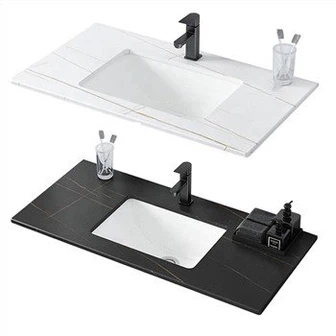
Start with where the marble will live. A kitchen counter takes spills, knives, and hot pans, so it needs a stone that hides wear, which usually means Carrara or a honed finish rather than a glossy Snow White. A bathroom vanity sees water and soap but little cutting, so a brighter, cleaner white like Statuario or Sivec works well. A feature wall or fireplace surround is pure display, and that is where Calacatta or a dramatic Jazz White earns its cost.
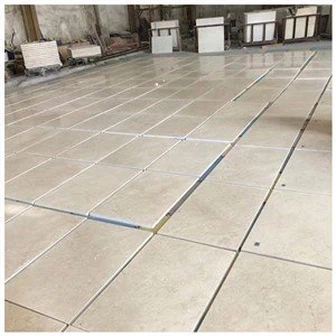
Floors are their own category. Soft, highly polished white marble on a busy floor will show scratches and lose its shine faster than most people expect. If you want white marble underfoot, lean toward a honed finish and a stone with enough veining to disguise the wear, and put mats at every entrance to catch the grit that does the scratching.
Think About Budget and Availability
Price between white marbles spans a wide range, with Carrara at the affordable end and Calacatta at the top. Between them, Sivec and the domestic whites such as Guangxi White offer ways to get a white surface without the Italian premium. The practical rule I use is simple: spend the money where the stone is the star, and save it where the stone is just the background.
Availability matters too. Rare marbles come in fewer slabs at any given time, which makes matching veins across a large project harder and slower. If you need thirty square meters of consistent white, Sivec or Guangxi White will be easier to pull together than Calacatta. If you only need one island top, that rarity is exactly what you are paying for and it is worth it.
Choose the Finish as Carefully as the Stone
The finish changes how a white marble behaves more than people expect. A polished finish gives the brightest, most reflective look, which suits walls, vanities, and display surfaces, but it shows etching and scratches quickly. A honed finish is matte and softer, and it hides daily wear far better, which is why I recommend it for kitchen counters and floors even though it gives up some of the shine.
The gloss number also matters. Some white marbles, like Snow White, can polish up to 120 degrees, which is a genuinely bright mirror-like surface. That level of shine is lovely on a wall and punishing on a counter. Decide how much reflection you can live with before you commit, because changing a finish after installation is a real job, not a quick fix.
Frequently Asked Questions
What is the difference between Carrara and Calacatta marble?
Both come from the Carrara region of Italy, but Calacatta is rarer and has a brighter white background with bold, thick veining, while Carrara has a light grey-white base with soft, fine grey veining. Calacatta generally costs several times more than Carrara. I suggest Carrara for large areas and Calacatta for statement pieces like an island or a feature wall.
Which white marble is the most affordable?
Among the well-known names, Carrara is the most affordable of the Italian classics, and domestic stones like Guangxi White are usually cheaper still. If you want a clean white surface on a budget, Sivec also costs less than Calacatta or Statuario. The savings come from how common and consistent the stone is, not from any loss of usefulness.
Is white marble too soft for a kitchen counter?
Marble sits around 3 to 4 on the Mohs hardness scale, so it is softer than granite or quartz and will etch from acid and scratch under a knife. That does not make it unusable in a kitchen, but I recommend a honed finish and a more forgiving stone like Carrara for counters, and sealing every six to twelve months. If you want a kitchen surface that shrugs off everything, a darker or engineered stone may serve you better.
What is Sivec marble best used for?
Sivec is a very uniform white marble from North Macedonia with minimal veining, which makes it ideal when a project needs a consistent, clean white across a large area. Hotels, spas, and commercial lobbies use it often because it is easy to match and less expensive than Calacatta. It is the right pick when you want white without busy movement.
How do I choose between so many white marbles?
Match the stone to the job rather than to a photo. Decide the surface first, then the budget, then the finish. Kitchen counters favor forgiving stones like Carrara in a honed finish, while feature walls can carry dramatic Calacatta or Jazz White. If you are unsure, ask a supplier to walk you through the options for your specific room, because the right white marble is the one that fits how you will actually live with it.
Final Conclusion
White natural marble is a family, not a single product, and the names in that family are not interchangeable. Carrara, Calacatta, Statuario, and Sivec each give you a different kind of white, while stones like Jazz White, Fish Belly White, Snow White, Jasper White, Guangxi White, and Oriental White stretch the range even further, from blush-pink warmth to snow-white purity to budget-friendly volume. The deciding factors are never mysterious: what surface the stone will sit on, how much you can spend, and whether you want a mirror gloss or a forgiving matte finish. Get those three answers straight and the marble almost chooses itself, because a stone that matches its job will look right for years while a stone bought for a photo will disappoint the first time life happens to it. White marble has earned its place over two thousand years of building, and it will earn a place in your project too if you treat the choice as a practical one rather than a wish. When you are ready to sort through the options for your own space, I am glad to walk you through them, slab by slab, here at KA UNITED.