


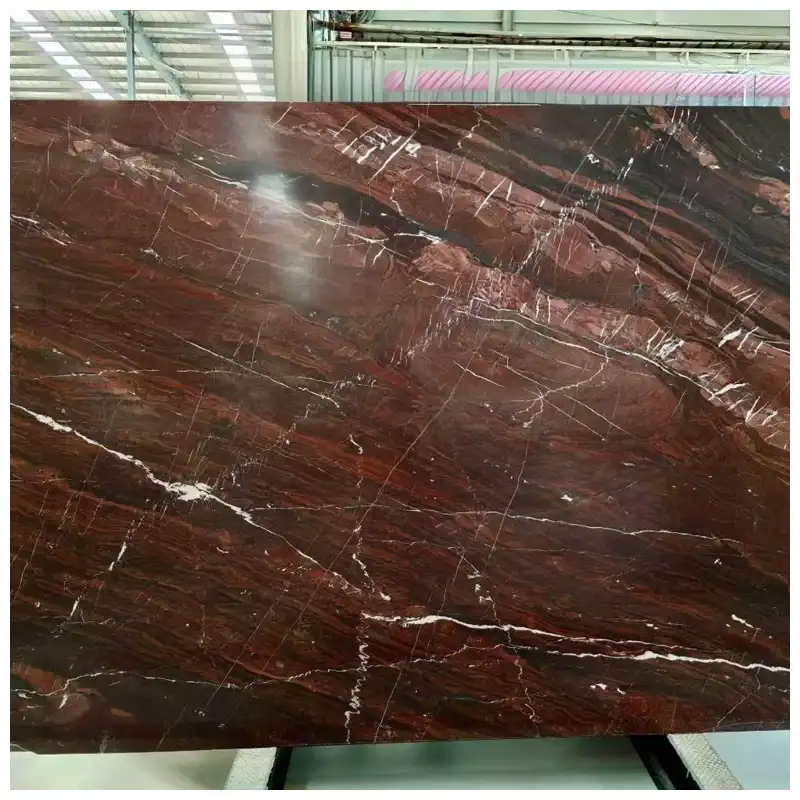


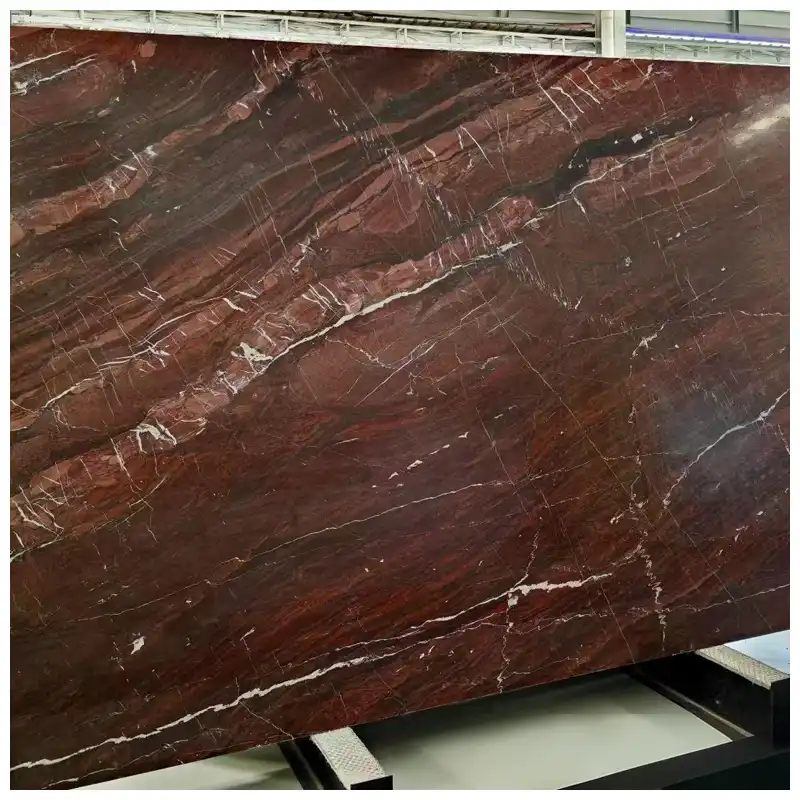

Breccia Vino Marble Slab
Breccia Vino marble slabs, also widely known as Red Jasper Marble / Red Jasper Quartzite. Features deep burgundy red brecciated base interwoven with crisp white natural veining, high-gloss polished finish with strong visual impact. Ideal for statement feature walls, kitchen islands, bar tops and luxury hotel villa interiors.
Luxury Marble:Red Jasper Breccia Marble Slabs Bulk for Villa Hotel Commercial Interior Designs
Natural Marble: Breccia Vino Marble, Red Jasper Marble(Quartzite)
Marble Factory: KA UNITED STONE
Marble Slab Size: 326x198,332x200cm, etc.
Marble Tiles: 24''x24'', 12''x24'', 12''x12'', 18''x18''
Thickness: 20,30mm
Surface: Polished, Honed, Brushed
MOQ: 300 SQM
Application: KA UNITED Supplies A full Range of natural Marbles For Floor, Wall Tiles, Kitchen and Bathroom Countertops, and other Commercial Projects
Product Introduction
Quick Summary: Breccia Vino Marble Slab is a polished natural marble characterized by deep wine-red and burgundy mineral fields, charcoal-brown diagonal bands and intersecting white veins. Its large-format pattern requires careful slab selection because the darker layers and prominent pale lines change position across each stone face. KA UNITED lists slabs in 326 × 198 cm and 332 × 200 cm formats, with nominal 18, 20 and 30 mm thickness options for interior feature walls, kitchen islands, countertops and decorative tiles. Buyers should confirm the usable cutting area, vein orientation and application-specific support requirements before fabrication.
Breccia Vino Marble Slabs for Feature Walls, Kitchen Islands and Decorative Interior Stonework
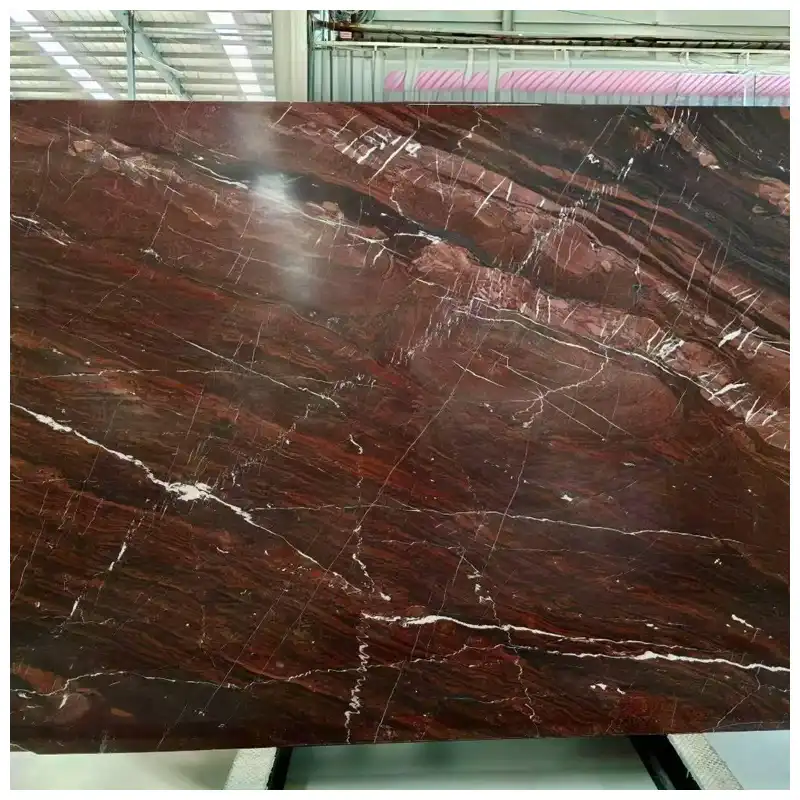
Full-slab reference showing the burgundy base, long diagonal mineral bands and contrasting white veins.
Breccia Vino has the depth of a dark red architectural stone, but its surface is far from uniform. Broad wine-colored areas are interrupted by darker brown and almost charcoal mineral layers. Fine white lines cross these formations at different angles, while several heavier pale veins form distinctive paths through the slab.
This makes the stone relevant to large interior surfaces where the pattern can remain visible. A full-height entrance wall, reception backdrop or decorative lobby panel can retain the relationship between the sweeping dark layers and the white veins, rather than reducing the material to small isolated fragments.
Kitchen islands and custom countertops offer a different way to use the same stone. Here, the designer can select a particular area of the slab for its mineral movement and position the stronger veins across the principal working surface. Sink openings, countertop joints and exposed sides must be considered before the selected pattern is cut.
Smaller stone tiles, bar surfaces, bathroom vanity tops and architectural details are also possible fabrication forms. Each requires an appropriate support system and acceptance of the maintenance characteristics of polished natural marble.
Feature Wall Panels
Large decorative stone faces for residential entrances, reception walls and hospitality interiors.
Kitchen Islands
Custom stone tops and waterfall components with deliberate vein placement and supported edges.
Bathroom Vanity Tops
Polished marble tops with coordinated basin openings, backsplashes and exposed profiles.
Decorative Stone Tiles
Cut-to-size interior panels and tiles for selected floors, wall sections and architectural insets.
Understanding Breccia Vino's Wine-Red Background and Cross-Cutting White Veins
The supplied photograph shows a highly directional red stone. Much of the slab is colored in deep burgundy, russet red and dark reddish brown. Long mineral bands travel diagonally across the surface, with some sections appearing nearly black where darker material is concentrated.
White veins introduce a separate movement. Several cut across the dominant red layers, creating a network of narrow branching lines. Others are broader, more irregular and more visible from a distance. A prominent pale vein runs across much of the lower part of the photographed slab.
In the upper and central areas, the red mineral layers bend and break into different widths. Some resemble broad folded bands; others form smaller angular transitions associated with the stone's brecciated appearance. The result has both long directional movement and localized mineral disruption.
Buyers looking for Dark Red Marble Slabs should consider these pattern differences carefully. Breccia Vino is not a flat wine-red material with evenly distributed veins. The location of the dark bands and white crossings can change the balance of an entire finished panel.
Polishing increases the contrast between the darker reddish fields and the pale mineral lines. Direct lighting can also produce reflections on the surface, so stone approval should consider both the full-slab photograph and a representative physical sample.

Material detail reference for reviewing dark band concentration, white vein boundaries and polished finish.
Breccia Vino and Red Jasper: Commercial Name Verification
The term Breccia Vino Red Marble identifies the stone's principal wine-red color and its commercial marble classification. It is useful for distinguishing this product from lighter terracotta-colored breccia marble and more uniformly colored red stones.
Some inquiries also compare Breccia Vino with Red Jasper Marble Slabs or materials marketed as Red Jasper Quartzite. These names cannot automatically be treated as identical. Red Jasper is used for different commercial stone selections, and the quartzite designation may refer to a different geological material.
For orders requiring a precise stone identity, the actual slab group, origin documentation and relevant material classification should be confirmed. Similar burgundy coloration is not sufficient evidence that two stone listings have the same mineral structure or performance.
Breccia Vino Marble Slab Dimensions, Thicknesses and Polished Finish
The listed slab formats are 326 × 198 cm and 332 × 200 cm. Their generous proportions allow several cutting arrangements, although actual usable dimensions depend on the inspected slab, irregular edges, any natural discontinuities and the selected orientation of the principal veins.
| Specification | Product Reference and Fabrication Requirements |
|---|---|
| Product | Breccia Vino Marble Slabs |
| Commercial Material | Natural Breccia Vino Red Marble |
| Primary Color | Burgundy Red and Deep Wine Red |
| Secondary Color | Charcoal Brown, Dark Red and White Mineral Veins |
| Slab Size A | 326 × 198 cm / 3260 × 1980 mm |
| Slab Size B | 332 × 200 cm / 3320 × 2000 mm |
| Nominal Thickness | 18 mm / 20 mm / 30 mm |
| Surface Finish | Polished |
| Natural Pattern | Diagonal Dark Mineral Bands, White Intersecting Veins and Localized Brecciated Structure |
| Fabrication Forms | Full Slabs, Wall Panels, Countertops, Kitchen Islands and Cut-to-Size Interior Tiles |
| Edge Options | Project-Specific Straight, Eased, Rounded or Mitered Profiles Subject to Approval |
| Selection Documentation | Actual Slab Photographs, Cutting Drawings, Visible-Face Orientation and Finish Approval |
Choosing a Slab Format for the Finished Component
Both listed formats are close in overall proportions, but the final usable area must be confirmed individually. A large wall panel may be positioned to retain a particular diagonal vein, while a kitchen island may need the slab rotated to accommodate the intended length and width.
Cutting yield should be assessed after identifying the finished component boundaries. A strong white vein may be an important design feature, but it is also necessary to inspect the stone around that line for any open discontinuity, repair or weakness relevant to machining.
Thickness and Support
The nominal 18 mm, 20 mm and 30 mm options allow different visual and fabrication profiles. The choice depends on the component dimensions, installation system, support and approved engineering requirements.
A thicker slab is not automatically suitable for an unsupported span. Large countertop projections, narrow cut sections and mechanically fixed wall panels require appropriate design and material verification.
Planning Breccia Vino Feature Walls Around the Diagonal White Veins
Feature walls are a particularly relevant use for Breccia Vino because they allow the natural mineral movement to remain visible across large surfaces. The photographed slab contains several vein directions, including long red-brown bands and white veins that cut across them. These patterns should be considered before the wall is divided into individual panels.
The intended visual result can follow the dominant diagonal movement or create a more balanced composition using selected pieces with compatible burgundy tones. Simply rotating unrelated slabs until their colors appear similar will not guarantee continuity of the prominent white lines.

Panel orientation reference for wall layout, prominent white vein placement and visible joint coordination.
Continuous Vein Flow
When a wall contains several related panels, a cutting map can identify the original slab positions and preferred vein orientation. A continuous-flow design requires actual material that supports the intended relationship between adjoining pieces.
Bookmatched Marble Panels
Bookmatching requires suitable consecutive slabs or paired faces that create an acceptable mirrored composition. The availability of such pairs cannot be established from a single slab photograph. The proposed center joint and reflection axis must be approved against the actual material.
Panel Joints and Installation
Wall panel dimensions need to be coordinated with substrate conditions, fixing method, panel weight, movement allowances and adjoining architectural finishes. The final joint locations should satisfy installation requirements even when a joint interrupts a natural vein.
For highly visible reception walls or residential entrance panels, a numbered layout can be reviewed before fabrication. Strong white veins may be positioned as focal elements, while darker slab areas can be allocated toward less visually prominent positions if suitable material is available.
Breccia Vino Marble Countertops: Island Cutting, Edge Details and Natural Stone Limitations
Breccia Vino Marble Countertops bring the stone's dark red color and contrasting white veins into a horizontal viewing plane. Large kitchen islands and bar counters can preserve selected mineral patterns, but they also introduce practical requirements that are less significant on decorative walls.
The countertop layout must account for the final length and width, supporting cabinetry, sink or appliance openings, edge projections and any necessary seams. A white vein placed through the principal island surface may create a strong visual feature, but its position should be reviewed against the sink and cooktop openings before cutting.
Island Top and Waterfall Sides
A waterfall island requires coordination between the horizontal top and the vertical return. Where a vein is intended to continue over the edge, the selected stone sections must support the proposed relationship after allowing for mitering, finishing and installation joints.
A visually convincing waterfall effect can be planned from related slab areas, but exact continuity cannot be assumed for unrelated pieces. The cutting drawing should show the face orientation of every visible component.
Sink Cutouts and Structural Support
Sink and appliance openings reduce the remaining stone width around the cut area. Narrow strips, projecting edges and unsupported sections require suitable reinforcement or support according to the design. Avoid positioning vulnerable details without reviewing the selected slab's natural discontinuities.
Exposed Edge Profiles
Straight eased, rounded and approved mitered edges can be evaluated for the project. The edge finish should be checked against the natural red and white mineral transitions because a cross-section may display a different pattern from the polished face.
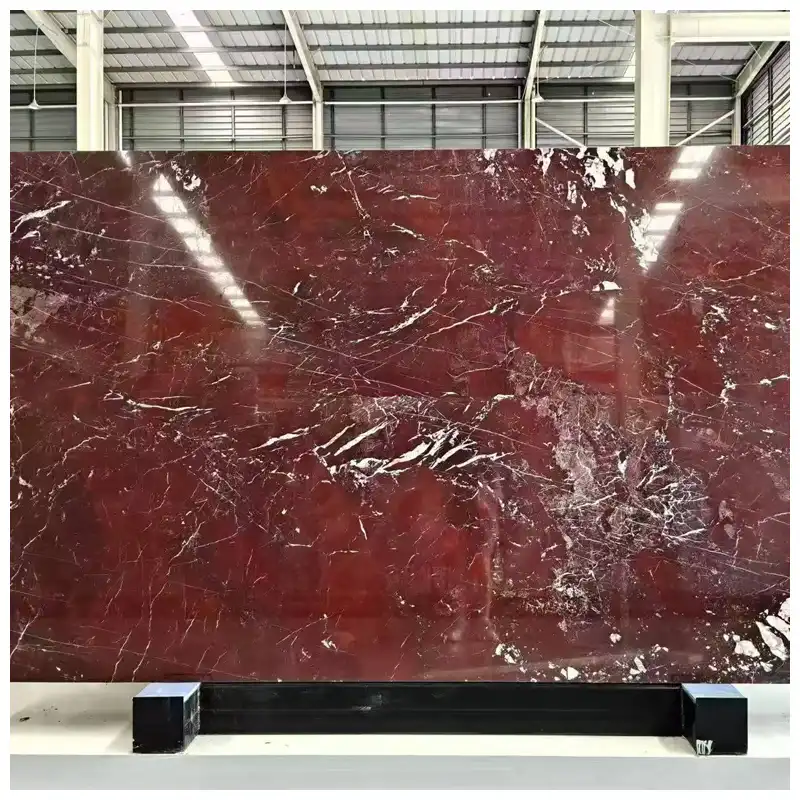
Countertop detail reference for reviewing slab thickness, edge profiles, cutouts and visible mineral direction.
Use in Kitchens and Bar Areas
Natural marble can be selected for kitchen islands, decorative bar tops and residential counters when the intended maintenance requirements are understood. Calcareous marble may react to acidic liquids, including citrus juice, vinegar and certain cleaning products. The resulting surface etching is different from an absorbed stain.
A compatible impregnating sealer can reduce the absorption of some liquids, but it does not make marble acid-proof. Use suitable cutting boards, trivets and non-abrasive cleaning products to help preserve the polished finish. High-use commercial counters may require a more demanding maintenance assessment than a decorative residential island.
Breccia Vino Marble Tiles and Smaller Interior Stone Components
Breccia Vino Marble Tiles can be cut from selected slabs for interior flooring, wall accents, decorative borders and architectural insets. Unlike a large feature panel, an individual tile may contain only a small part of the original white-vein network or a section dominated by dark wine-red mineral layers.
This change in pattern scale should guide the tile layout. A floor with many smaller modules may appear more fragmented than a full slab. For coordinated decorative sections, selected pieces can be grouped to distribute strong white lines and darker bands in an agreed arrangement.
The polished finish must be reviewed separately for floor use. A reflective surface does not demonstrate adequate slip resistance, especially in wet entrances, bathrooms or public circulation areas. Abrasion performance and the planned maintenance regime should also be considered where pedestrian traffic is significant.
For installation, the substrate, bedding system, joint widths and required movement accommodation must suit the finished pieces. Natural stone pattern matching should not override the construction joints or technical details required for the intended flooring system.
Breccia Vino Marble Performance: Technical Properties That Need Verification
The commercial marble designation and polished appearance do not establish a full set of technical properties for every Breccia Vino batch. Natural stone may contain mineral boundaries, veins, healed fissures or repaired areas that influence processing and the selection of finished components.
No traceable laboratory test report has been supplied for the actual KA UNITED material shown here. The table below identifies relevant verification requirements without attributing unverified numerical performance values to this product.
| Technical Property | Current Verification Status | Project Relevance |
|---|---|---|
| Petrographic Classification | Material-specific identification required where specified | Stone identity, mineral composition and commercial-name verification |
| Bulk Density | Batch-specific value not supplied | Finished-piece weight, handling and supporting construction |
| Water Absorption | Representative test report required | Moisture behavior and compatible surface treatment selection |
| Flexural Strength | Material-specific result not supplied | Wall panels, countertop spans and vulnerable cut sections |
| Compressive Strength | Material-specific result not supplied | Material qualification for the intended installation system |
| Abrasion Resistance | Floor-use verification required | Polished surface wear in areas with regular foot traffic |
| Slip Resistance | Finish-specific assessment required | Interior flooring and moisture-exposed pedestrian surfaces |
| Stone Soundness | Inspect selected slabs and any repaired areas | Usable cutting areas, natural veins, edges and countertop openings |
When structural or safety criteria apply, obtain representative material evidence and use the relevant project acceptance methods. General values from another red marble or quartzite should not be substituted for the selected Breccia Vino material.
Factory Slab Approval, Finished-Piece Inspection and Export Protection
Inspection should distinguish the normal white-vein network and natural mineral variation from discontinuities that affect fabrication. A pale mineral line is not automatically an open crack. Its actual condition must be examined, particularly when it crosses a planned sink opening, narrow strip or unsupported edge.
Full-slab inspection should cover usable dimensions, thickness, surface finish, visible repairs and the agreed color range. For cut-to-size components, the finished dimensions, exposed edge profiles, opening positions and visible-face orientation should match the approved drawings.
Where the project has a planned wall or island layout, a numbered dry-lay reference can help buyers review the intended vein arrangement before packing. The purpose is to confirm the visual sequence, not to promise identical natural patterns or eliminate all installation adjustment.
Polished slabs require stable transport support and appropriate surface separation. Cut-to-size wall panels and countertop components need protection suited to their final geometry, with additional attention to exposed corners, long narrow sections and stone around sink cutouts. Packing identification should link each component to its approved installation position.
Interior Application Reference: Wine-Red Breccia Vino Marble in Architectural Spaces
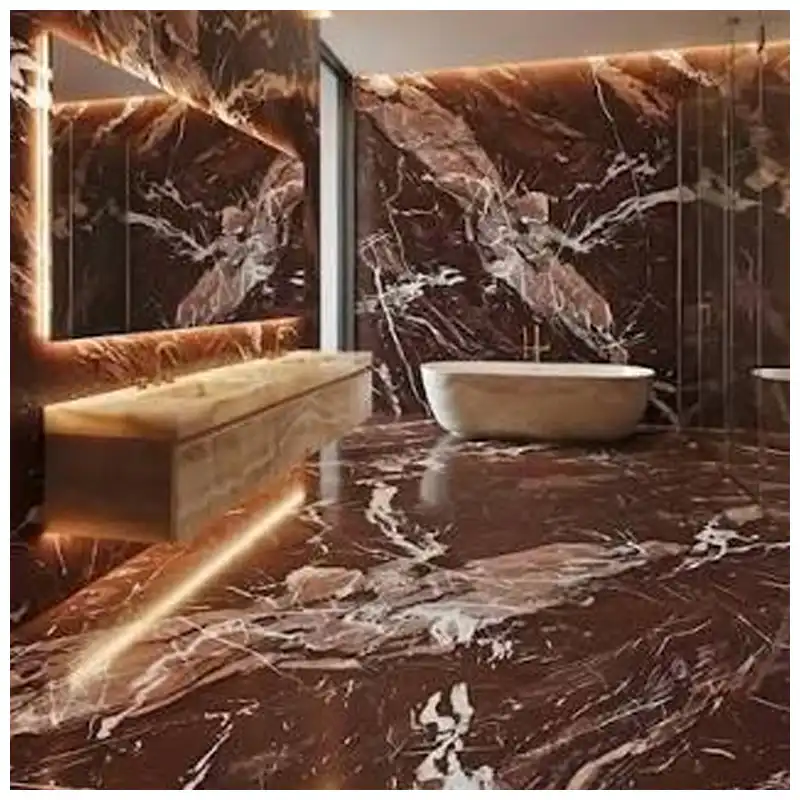
Breccia Vino can be paired with pale plaster, cream-colored stone, dark timber and restrained metallic finishes. These surrounding materials allow the red marble's natural bands and white veins to remain the main visual element.
On a residential entrance wall, large panels can emphasize the stone's diagonal movement. A contemporary kitchen island may instead use one selected slab section for the horizontal top, with related material continuing down the visible sides where suitable cutting arrangements are available.
In a hospitality interior, the material can be considered for a reception backdrop, decorative counter face or selected wall feature. The design should account for how lighting changes the appearance of polished dark red stone and highlights its contrasting pale veins.
Application imagery is a design reference only. It does not establish that the illustrated installation has been completed by KA UNITED or that the specific material has undergone project-related performance testing.
Breccia Vino Marble Compared with Four KA UNITED Decorative Marble Slabs
Breccia Vino is distinguished by its saturated burgundy base, dark diagonal layers and contrasting white veins. The following KA UNITED marble selections offer different color and pattern directions for projects comparing large decorative stone slabs. Each product requires its own technical and fabrication review.
| Marble Slab | Natural Appearance | Design Direction | Main Selection Difference |
|---|---|---|---|
| Breccia Vino Marble | Deep burgundy and wine-red layers crossed by white mineral veins | Feature walls, kitchen islands and decorative counters | Prominent white vein placement and dark mineral direction |
| Selenite Argento Marble | Silver-grey, taupe and densely fragmented crystal-like pattern | Contemporary countertops, vanities and decorative wall panels | Reflective mineral texture rather than long directional red veining |
| Giallo Reale Marble | Golden ochre, amber and reddish-brown mineral formations | Warm interior floors, staircases and architectural walls | Golden background and irregular mottled red areas |
| Rosa Perla Marble | Pale rose pink and beige with fine grey and reddish-brown lines | Light residential floors, wall panels and vanity surfaces | Soft pink-beige background with restrained natural movement |
| Bardiglio Grey Marble | Steel-grey and charcoal background with flowing silver-white veins | Grey interior floors, wall panels and custom countertops | Fine directional grey layering rather than saturated red color |
Recommended Natural Marble Slabs from KA UNITED
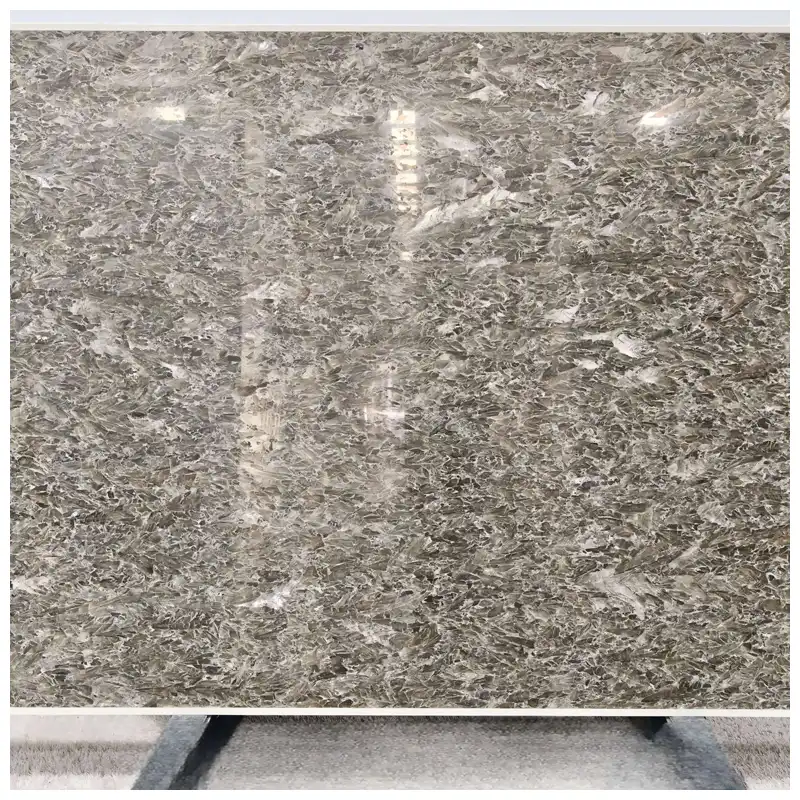
Selenite Argento Marble
Silver-grey marble with crystal-like mineral fragments for contemporary wall panels, vanity tops and decorative countertops.
View Product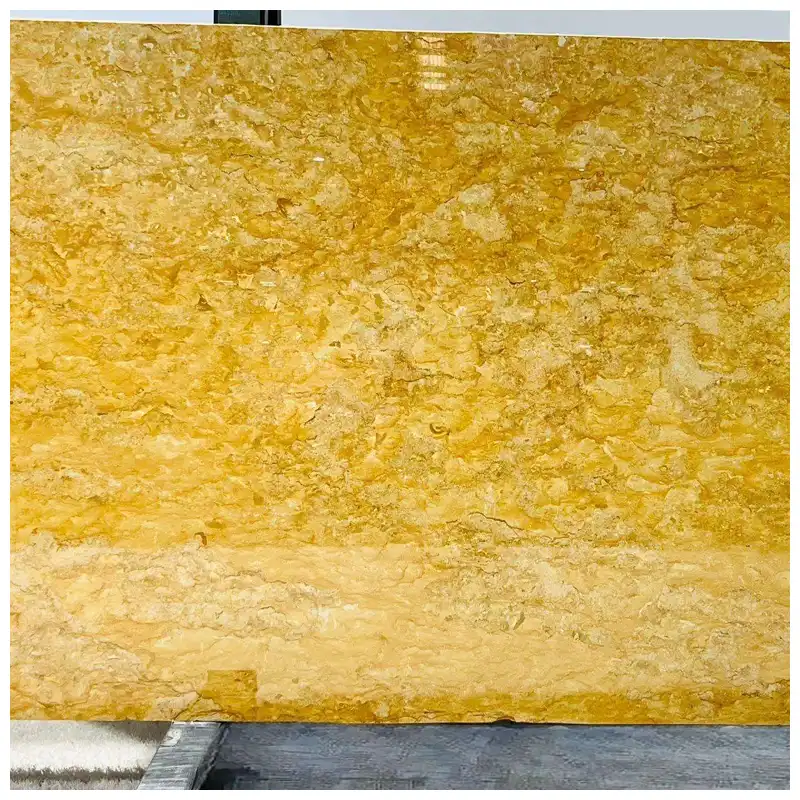
Giallo Reale Marble Slab
Golden Italian marble with ochre and reddish mineral patterns for warm floors, walls and staircase components.
View Product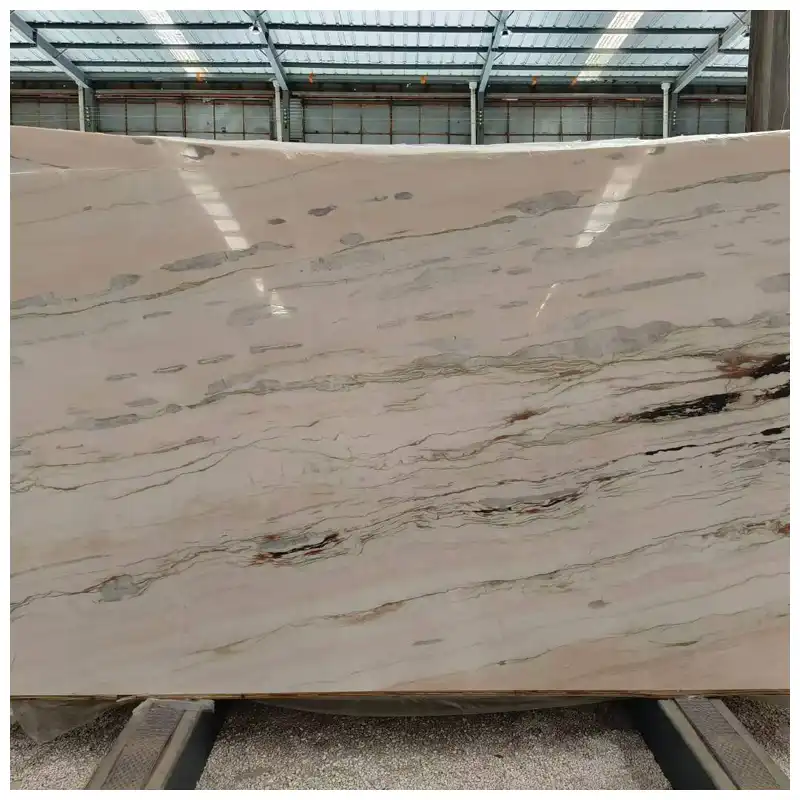
Rosa Perla Marble
Pearl-pink and beige natural marble with delicate veins for residential floors, walls and custom vanity surfaces.
View Product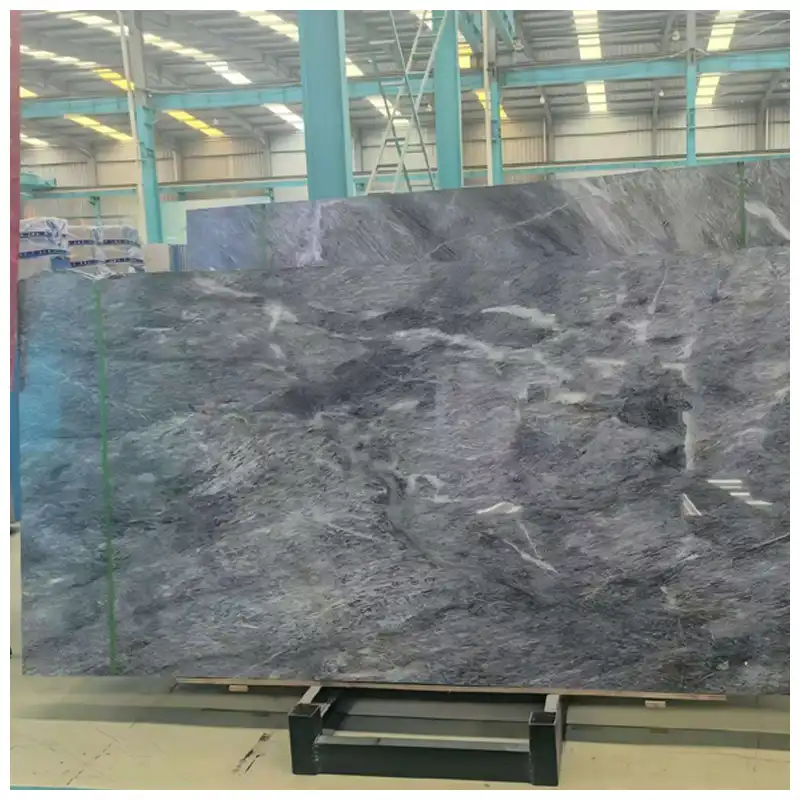
Bardiglio Grey Marble Slab
Italian grey marble with flowing silver-white veins for contemporary floors, walls and architectural stone counters.
View ProductFrequently Asked Questions About Breccia Vino Marble Slabs
1. Is Breccia Vino Marble the same material as Red Jasper Marble or Red Jasper Quartzite?
Not necessarily. Breccia Vino is commercially sold as a wine-red marble, while Red Jasper names are used for several natural stone selections. Similar coloration does not establish identical geological composition or quarry origin. Buyers should confirm the actual stone identity and selected slab photographs before treating these materials as interchangeable.
2. What slab sizes and thicknesses are listed for Breccia Vino Marble?
The listed reference dimensions are 326 × 198 cm and 332 × 200 cm, with nominal thickness options of 18 mm, 20 mm and 30 mm. Actual usable dimensions and thickness availability must be checked against the selected slabs before finalizing the cutting schedule.
3. Can Breccia Vino Marble Slabs be bookmatched for a large feature wall?
Bookmatching may be possible when suitable consecutive slabs with complementary faces are available. A single slab image does not confirm a matching pair. Buyers should review the actual paired material, mirror axis, panel dimensions and proposed joint arrangement before approving fabrication.
4. Is polished Breccia Vino Marble suitable for kitchen islands and bar countertops?
Breccia Vino can be considered for custom kitchen islands and bar counters where the owner accepts natural-marble maintenance requirements. The selected slab must accommodate the openings, support and edge details. Marble may be etched by acidic liquids, and sealing does not make the surface acid-proof.
5. How should buyers approve the white veins and natural fissures before cutting?
Request full-slab photographs and inspect the prominent white veins, darker mineral bands, repaired areas and any open discontinuities. The cutting drawing should identify which sections will remain visible and where structural openings or narrow edges occur. Visual vein selection and stone soundness must both be accepted before fabrication.
Approve the Breccia Vino Vein Map Before Cutting the Wall or Island
The largest purchasing risk with a strongly directional Breccia Vino slab is losing the intended white-vein composition when the stone is cut into separate pieces. The buyer should identify which veins are essential to the finished design and whether the available slab dimensions allow those features to be retained.
For a feature wall, an approved vein map should establish the position and orientation of the major pale lines across the intended panel grid. For a kitchen island, the map needs to account for the countertop face, openings and visible edge returns. These requirements should be resolved before a cutting program is released.
The final material acceptance should distinguish decorative white mineral veins from any open fractures or repairs that require further inspection. A visually striking vein must still be compatible with the finished component's structural and installation requirements.
Final Note: Breccia Vino should be purchased by reference to the actual full slabs and their vein positions, not from a small wine-red sample alone. The combination of dark layered movement and white mineral crossings is its defining visual feature. Preserving the desired pattern requires a cutting plan that also respects material soundness and finished installation geometry.

Request Breccia Vino Marble Slabs and Custom Stone Fabrication from KA UNITED
KA UNITED can review polished Breccia Vino marble selections for architectural feature walls, kitchen islands, custom countertops and cut-to-size interior stone components. The material's pronounced white veins and dark red bands make actual slab photographs important for purchasing and fabrication approval.
For a quotation, provide the preferred slab dimensions, thickness, polished finish requirements, project destination and intended application. For finished components, include the cutting schedule, wall elevation or countertop drawing, edge profiles, opening positions and preferred white-vein orientation. Where matching is requested, identify the intended panel relationship so suitable slabs can be reviewed before production.
Hot Tags: breccia vino marble slab, China breccia vino marble slab suppliers, factory, black marble ceramic tile, marble benchtops, nero marquina marble slab, Rosso Francia Marble, sahara carrara marble tile, white and grey marble
You Might Also Like


Send Inquiry
