


Modern Grey Marble Tiles
Premium modern grey marble cut-to-size tiles with soft light grey base and fine reticulated white veining, high-gloss polished finish. Factory full dry-lay inspection ensures consistent color tone and seamless layout for large-area flooring. Reliable density and wear resistance for daily residential and commercial use. Ideal for private residences, office buildings, hotels and commercial lobby flooring.
Item: Factory Supply Dry-Laid Modern Grey Marble Floor Tiles for Bulk Real Estate & Construction Projects
Material: Modern Grey Marble, Natural Grey Marble
Tile Size: 600x600,600x300, 300x300 mm, etc.
Thickness: 20,30mm
Surface: Polished, Honed, Brushed
MOQ: 100 SQM
Grey Marble Factory: KA UNITED
Application: Marble Tiles For Indoor and Outdoor Floor, Wall and other Commercial Projects
Product Introduction
Quick Summary: Modern Grey Marble Tiles are natural stone tiles with a warm light-grey background and fine, interconnected white mineral veins, intended for residential flooring, commercial interiors and architectural wall cladding. Available in four rectangular and square reference formats, with 20 mm and 30 mm nominal thicknesses, the material can be supplied with polished or honed surfaces. Its relatively restrained pattern works across connected rooms and larger architectural surfaces where pronounced color contrasts are undesirable. For multi-area projects, approval of the actual production color range is important, while floor traffic, moisture exposure and slip-resistance requirements determine the appropriate surface finish.
Modern Grey Marble Tiles for Residential Flooring, Commercial Buildings and Architectural Walls
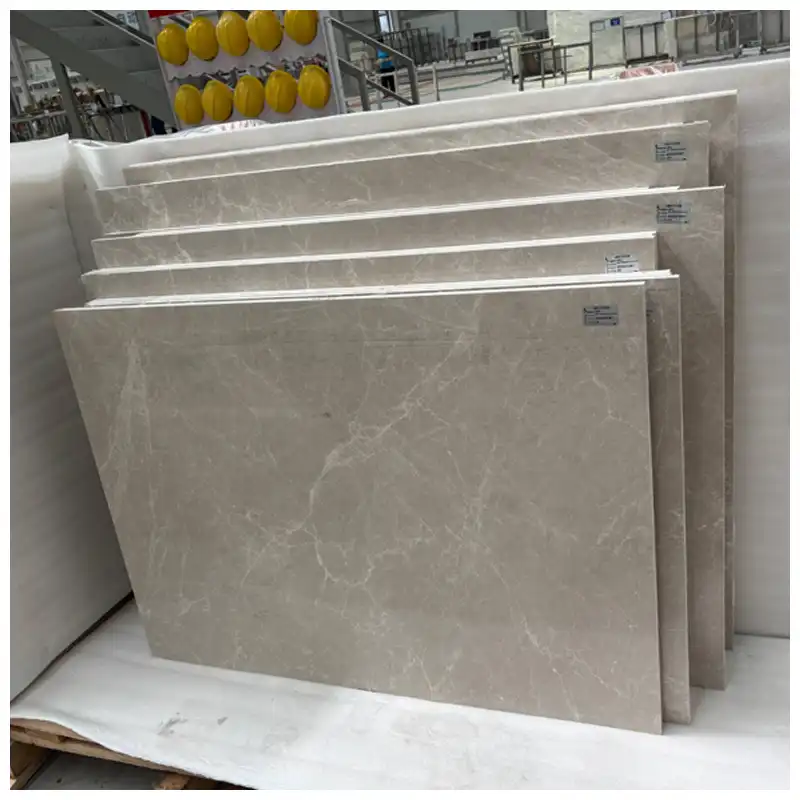
The understated pattern of Modern Grey Marble makes it a useful architectural material when the floor needs to connect different interior spaces without becoming the dominant decorative feature. Its warm grey background sits between cooler silver-grey marble and traditional beige stone, giving designers greater flexibility when coordinating timber, metal, plaster and architectural lighting.
For private houses, the material can extend from entrance halls into living rooms, dining areas and connecting corridors. Its restrained mineral contrast allows furniture arrangements and interior finishes to change without requiring a completely different flooring palette.
Commercial projects have another set of priorities. Office reception areas, hotel guest floors, retail interiors and shared residential lobbies require stone that can be ordered in repeatable dimensions and maintained within the building's operating schedule.
As finished marble tiles rather than unprocessed slabs, this collection can be specified directly against architectural floor plans, wall elevations and project cutting lists. The available rectangular and square formats allow the stone to serve both regular modular installations and individually fabricated building details.
Private Villas
Continuous warm-grey flooring for living areas, entrance halls, corridors and coordinated residential wall surfaces.
Office Buildings
Neutral architectural stone for reception floors, elevator lobbies, meeting areas and corporate interior elevations.
Hotels and Apartments
Coordinated floor and wall packages for guest rooms, residential units and selected shared circulation areas.
Retail and Commercial Interiors
Natural marble surfaces for shops, bars and shopping center interiors where traffic and maintenance conditions permit.
Warm Grey Marble with Fine White Reticulated Mineral Veins
Modern Grey Marble has a soft grey ground with subtle beige undertones. Thin white mineral lines branch across the surface, occasionally joining into irregular networks. Broader pale markings appear in some areas, but the overall visual effect remains less pronounced than that of marble with large, sharply contrasting veins.
This distinction becomes important when the material is installed across a substantial floor. Strongly directional marble can dominate a room through its pattern alone. Modern Grey creates a quieter field in which individual mineral markings remain visible without imposing one obvious visual direction throughout the installation.
Under warm artificial lighting, the stone may appear closer to taupe or greige. Daylight and cooler light sources can emphasize its grey background. Reviewing samples under the proposed interior lighting is more informative than selecting a color solely from a screen image.
The commercial product name may also appear as Moden Gray Marble Tiles in purchasing references. Regardless of naming variations, selection should be based on the approved natural marble samples and photographs of the production material.
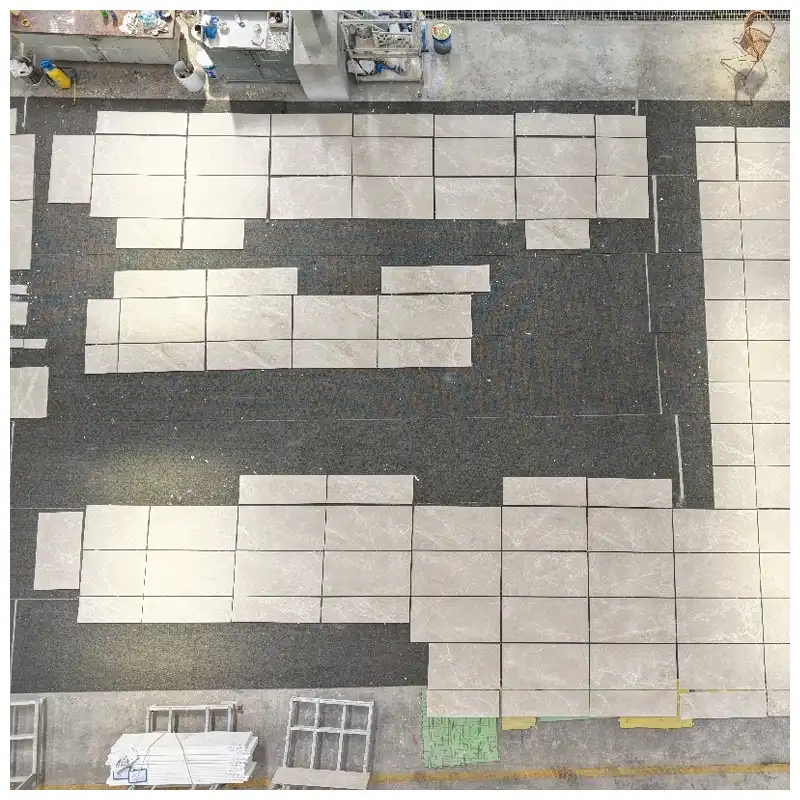
A Neutral Marble for Large Architectural Surfaces
The principal visual benefit is the relationship between background color and vein intensity. The pale mineral lines are distinct enough to retain the character of natural stone but generally do not divide the surface into strongly contrasting color blocks.
Natural variation remains present. Individual tiles may be warmer, cooler, lighter or slightly darker than neighboring pieces. Fine veins can become denser in one section of a slab and almost disappear in another. Buyers should approve an acceptable range of material rather than expecting every tile to reproduce the same sample.
Modern Grey Marble Tile Sizes, Thicknesses and Cut-to-Size Specifications
The standard product range includes rectangular and square formats suitable for different architectural grids. Larger rectangular tiles can reduce the number of joints across broad floor areas, while smaller square modules simplify the arrangement of compact rooms and irregular boundaries.
| Specification | Product Details |
|---|---|
| Product Name | Modern Grey Marble Tiles |
| Material Classification | Natural Marble |
| Background Color | Warm Light Grey to Grey-Beige |
| Natural Pattern | Fine White Branching and Reticulated Mineral Veins |
| Rectangular Tile Sizes | 600 × 900 mm / 1200 × 300 mm |
| Square Tile Sizes | 600 × 600 mm / 300 × 300 mm |
| Nominal Thickness | 20 mm / 30 mm |
| Main Surface Finish | Polished |
| Alternative Finish | Honed, Subject to Approved Surface Sample |
| Custom Dimensions | According to Architectural Cutting Lists and Approved Drawings |
| Edge Processing | Straight-Cut, Eased or Project-Specific Finished Edges |
| Additional Components | Floor Borders, Skirting, Thresholds and Custom Wall Panels |
| Dimensional Acceptance | According to Agreed Project Tolerances and Fabrication Requirements |
| Primary Applications | Residential and Commercial Flooring, Interior Wall Cladding and Architectural Stonework |
Selecting the Right Marble Tile Format
600 × 900 mm
A broad rectangular format for open-plan residences, reception floors and larger architectural surfaces. Its proportions retain a generous area of the original marble pattern.
1200 × 300 mm
An elongated format for corridors, linear floor arrangements and horizontal wall compositions. Substrate flatness and long-edge alignment require attention.
600 × 600 mm
A balanced square module for conventional floor grids, hotel rooms, apartments and building layouts that use recurring architectural dimensions.
300 × 300 mm
A compact format for smaller rooms, secondary areas and installations with multiple perimeter changes or architectural obstacles.
Planning Modern Grey Marble Flooring Tiles Across Multiple Rooms and Building Areas
The success of a large marble floor depends partly on how the tile grid interacts with the building. Door openings, structural columns, partitions, elevator entrances and circulation routes all influence the positions of visible joints.
For Modern Grey Marble Flooring Tiles, the fine mineral pattern allows a comparatively flexible layout. Unlike strongly directional wood-vein marble, the material does not necessarily require every piece to follow one dominant pattern axis. Nevertheless, changes in the background tone can become apparent when large groups of tiles are viewed together.
A residential floor covering several connected rooms should be treated as a coordinated layout rather than a series of independent tile installations. Establishing a common datum line and reviewing important doorway transitions before cutting can help avoid unnecessary narrow pieces and irregular joint positions.
| Project Area | Floor Layout Consideration |
|---|---|
| Entrance Hall | Align important joints with entrance centerlines, architectural openings and the primary viewing direction. |
| Living and Dining Areas | Review the continuous tile grid between adjoining spaces and avoid visually awkward cuts near prominent walls. |
| Long Corridors | Consider balanced side cuts, doorway alignment and the relationship between elongated tiles and the corridor width. |
| Elevator Lobbies | Coordinate stone joints with elevator thresholds, finished floor levels and adjoining wall panels. |
| Retail Interiors | Account for entrances, display fixtures, service access, pedestrian routes and future fit-out changes. |
| Repeated Hotel or Apartment Layouts | Separate standard room modules from individual dimensional exceptions so fabrication schedules remain manageable. |
Polished or Honed Grey Marble Tiles: Appearance, Traffic and Maintenance Requirements
Surface finish changes the way Modern Grey Marble responds to lighting, cleaning and pedestrian use. Polished and honed surfaces originate from the same natural material, yet they create noticeably different architectural results.
Polished Modern Grey Marble
Progressive surface grinding and polishing develop a smooth, reflective finish that emphasizes the grey background and fine mineral veins.
- Stronger apparent color depth and reflection.
- Distinctive appearance under indirect architectural lighting.
- Suitable for selected dry interior floors and decorative wall surfaces.
- Surface etching, abrasive scratches and gloss changes may become visible under directional light.
Honed Modern Grey Marble
A honed surface has a lower level of reflection, allowing the natural grey tone to remain visible without the pronounced gloss of polished marble.
- Reduced glare across broad floor areas.
- A more subdued appearance for contemporary interiors.
- Some superficial wear may be less visually noticeable than on high-gloss surfaces.
- Slip resistance and sealing requirements still need independent assessment.
For commercial buildings, finish selection must account for the expected cleaning methods and the frequency of pedestrian traffic. A polished lobby floor may require a maintenance program that includes regular removal of abrasive particles and periodic professional restoration.
Approval of a honed sample does not establish an anti-slip classification. Where floor traction is a contractual or regulatory requirement, the specified finish must be evaluated using the appropriate test method and installation conditions.
Cut-to-Size Marble Fabrication for Borders, Thresholds and Architectural Wall Panels
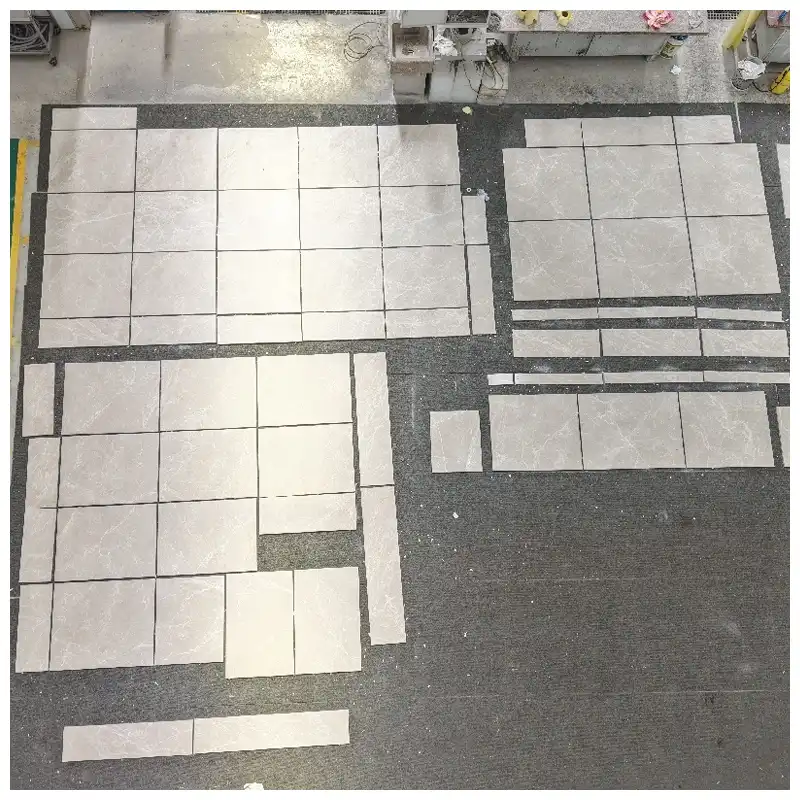
Standard rectangular tiles cover much of a regular floor, but building boundaries rarely correspond exactly to a single modular size. Doorway thresholds, recessed walls, structural columns and floor borders introduce components that require separate dimensions.
Modern Grey Marble Cut-to-Size Tiles can be fabricated to address these architectural conditions without forcing every special detail to be cut from standard tiles at the installation site.
The cutting schedule should distinguish full modules from individually sized components. Pieces with an exposed finished edge require different processing from ordinary floor tiles whose edges remain concealed within grouted joints.
For wall cladding, finished panel dimensions must also accommodate the fixing arrangement, corner details, service openings and the geometry of the supporting construction. Large marble panels are not simply oversized floor tiles installed vertically.
Architectural Components That Can Be Coordinated with the Main Tile Order
| Component | Required Fabrication Detail |
|---|---|
| Perimeter Floor Pieces | Individual dimensions, angular cuts and the approved room layout. |
| Door Thresholds | Finished opening width, transition height, exposed edges and adjoining floor materials. |
| Marble Skirting | Finished height, visible top edge, corner connections and wall interface. |
| Decorative Floor Borders | Border width, corner configuration, stone orientation and central floor alignment. |
| Custom Wall Panels | Elevation dimensions, fixing details, visible edges and coordinated openings. |
| Selected Stair Components | Tread and riser dimensions, nosing geometry, stone condition and supporting structure. |
Dimensional tolerances should be agreed before processing begins. Tile length, width, diagonal difference, thickness variation and edge geometry influence the completed installation. Accurate machine cutting helps control these factors, but final joint appearance also depends on substrate preparation and installation workmanship.
Factory Tone Grouping and Dry-Lay Review for Large Grey Marble Flooring Projects
Color consistency in natural marble requires a different approach from quality control for manufactured ceramic tiles. There is no repeating printed pattern, and variations in mineral concentration may produce noticeable differences between individual stone faces.
With Modern Grey Marble, the most important distinction is often the background temperature rather than the number of visible veins. A cooler grey piece placed among warmer grey-beige tiles may create a visible interruption even when the patterns are otherwise similar.
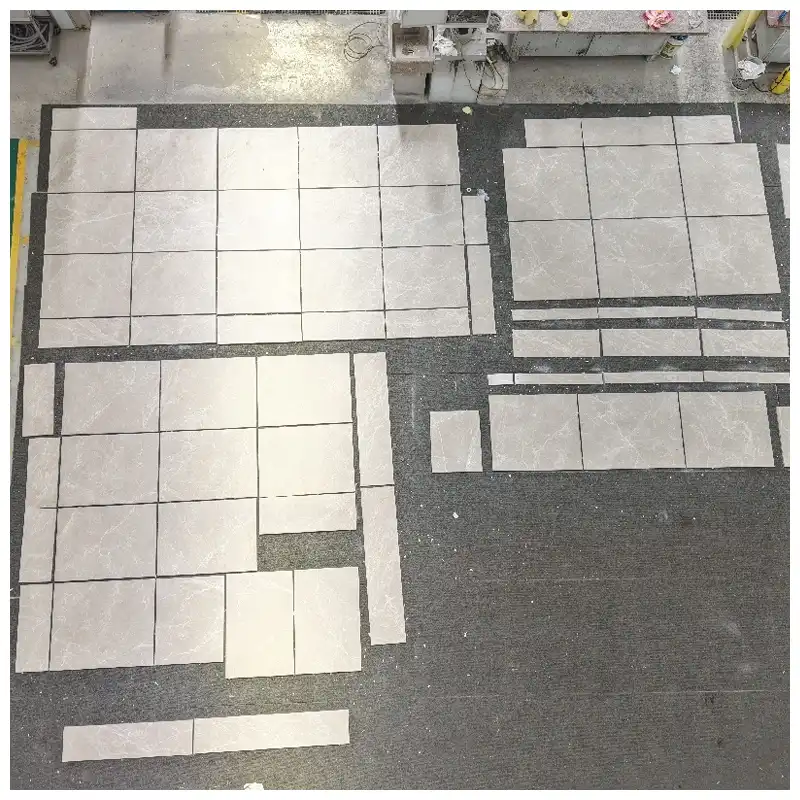
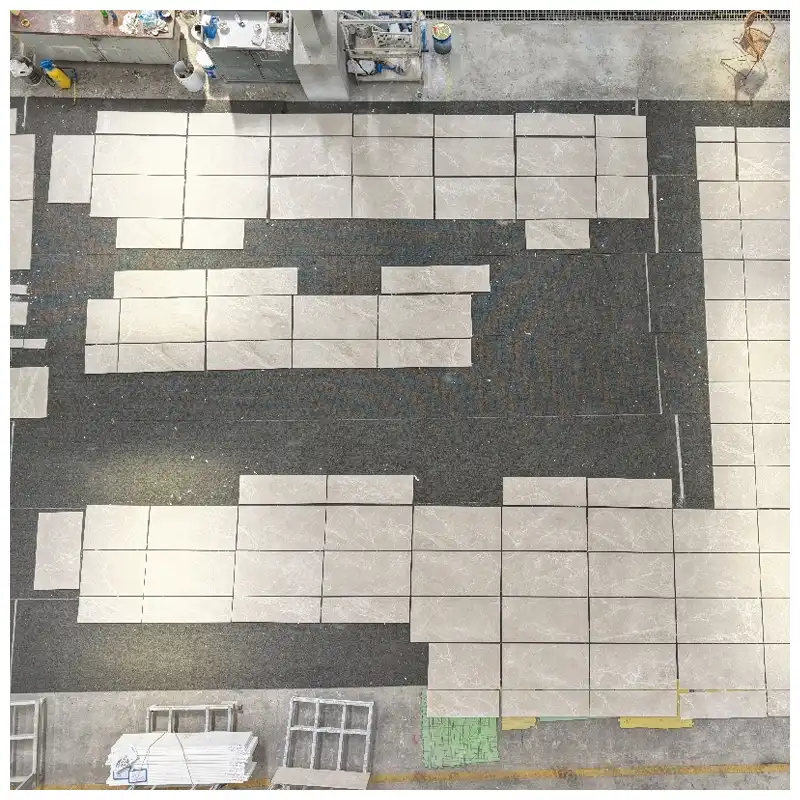
For larger orders of Natural Grey Marble Tiles, KA UNITED can arrange material grouping and factory layout review according to the agreed project scope. The objective is to establish a practical visual acceptance range and control the distribution of natural variation within individual building areas.
01. Establish the Approved Grey Color Range
Select representative production pieces that demonstrate the acceptable light-to-dark and warm-to-cool variation. A reference group is more useful than a single idealized sample when approving natural marble for a large building.
02. Separate Material According to Installation Zones
Allocate compatible stone groups to connected rooms, prominent reception areas or individual floor levels. This prevents material selected for separate parts of the building from being distributed indiscriminately during production.
03. Review Neighboring Tile Relationships
Where dry-lay review is specified, arrange representative or complete groups of finished tiles according to the agreed layout. Inspect adjacent background tones, mineral contrast and the overall appearance rather than evaluating every piece in isolation.
04. Record the Approved Arrangement
Identify the accepted layout with photographs and component references where required. Installation teams can then consult the approved material distribution rather than making all aesthetic decisions after crates arrive on site.
Factory dry-lay preparation can reduce avoidable color mismatches, but it cannot guarantee identical natural tones or eliminate every site adjustment. Lighting, final joint materials, installation orientation and viewing conditions also influence the completed floor.
Modern Grey Marble Technical Properties and Physical Performance Requirements
Architectural marble selection involves several physical properties that cannot be evaluated from polished surface photographs. A visually consistent tile may still require verification of water absorption, mechanical performance, wear resistance and suitability for the intended installation environment.
ASTM C503/C503M establishes a material specification framework for natural marble dimension stone. The relevant test methods help architects and contractors assess whether the selected production material meets their particular project requirements.
The following table identifies the technical information relevant to Modern Grey Marble Tiles. Batch-specific laboratory results have not been established for this selection, so unverified numerical strengths, absorption rates and performance classifications are not assigned.
| Technical Property | Reference Test Method | Project Relevance |
|---|---|---|
| Water Absorption | ASTM C97/C97M | Evaluates moisture uptake and informs the selection of suitable stone protection. |
| Bulk Density | ASTM C97/C97M | Supports calculation of permanent material loads, component weight and handling requirements. |
| Compressive Strength | ASTM C170/C170M | Characterizes the resistance of the stone specimen to compressive loading. |
| Modulus of Rupture | ASTM C99/C99M | Relevant to the material's behavior under the prescribed bending test conditions. |
| Flexural Strength | ASTM C880/C880M | Important for panel design, support geometry and assessment of vulnerable stone sections. |
| Abrasion Resistance | ASTM C241/C241M or C1353 | Assists evaluation of natural stone wear under pedestrian use. |
| Slip Resistance | Applicable Finish-Specific Test Method | Required for assessing walking surfaces under the specified dry or wet conditions. |
Nominal Stone Volume by Tile Size and Thickness
The geometric volume of each tile can be calculated directly from the supplied dimensions. This provides an initial basis for material scheduling and comparing the stone requirements of different thickness options before verified density and finished weights are available.
| Tile Format | Face Area | 20 mm Stone Volume | 30 mm Stone Volume |
|---|---|---|---|
| 600 × 900 mm | 0.54 m² | 0.0108 m³ | 0.0162 m³ |
| 1200 × 300 mm | 0.36 m² | 0.0072 m³ | 0.0108 m³ |
| 600 × 600 mm | 0.36 m² | 0.0072 m³ | 0.0108 m³ |
| 300 × 300 mm | 0.09 m² | 0.0018 m³ | 0.0027 m³ |
| Per Square Meter | 1.00 m² | 0.0200 m³ | 0.0300 m³ |
These calculated values represent nominal rectangular stone volumes before edge machining or other processing. Finished component weight can be determined by multiplying the actual stone volume by its verified bulk density. Adhesive, bedding, reinforcement and packaging are not included.
20 mm and 30 mm Marble Tiles for Different Construction Requirements
Stone thickness affects more than the visual depth of an exposed edge. It changes the permanent material load, total floor buildup, installation handling and the amount of material available for machining architectural details.
At the same surface area and density, 30 mm marble contains 50% more stone volume than 20 mm marble. This difference becomes significant when specifying an entire building floor or a series of large wall panels.
| Selection Factor | 20 mm Marble | 30 mm Marble |
|---|---|---|
| Typical Specification Direction | Supported interior floors and suitable wall systems. | Selected heavier stonework and deeper architectural edge details. |
| Floor Buildup | Lower nominal stone thickness. | Requires additional depth within the finished floor assembly. |
| Handling | Lower material weight for equivalent tile dimensions. | Greater handling and permanent loading requirements. |
| Edge Fabrication | Suitable for many straightforward finished edges. | Additional machining depth for certain approved profiles. |
| Project Coordination | Check substrate, bedding and adjoining floor levels. | Check structural loading, transitions and fixing requirements. |
A thicker marble tile is not automatically more resistant to surface abrasion or chemical etching. Those characteristics depend on the stone's mineral composition and surface condition. Structural suitability also requires consideration of the supporting construction rather than thickness alone.
Grey Marble Tiles for Bathrooms, Interior Walls and Selected Exterior Stonework
Using the same marble palette on floors and walls can establish continuity throughout a building. However, each application places different demands on the stone and its installation system.
Bathroom Walls
Warm grey marble works with white sanitaryware, brushed metal fixtures and natural timber. Wet-area waterproofing, compatible adhesives and appropriate sealant details remain separate construction requirements.
Interior Architectural Cladding
Rectangular panels can cover elevator surrounds, corridor walls and reception elevations. Fixing methods must account for panel dimensions, material weight, substrate condition and installation height.
Selected Exterior Applications
Exterior use requires independent assessment of stone soundness, weather exposure, drainage, fixing systems and freeze-thaw performance where relevant. Polished indoor tile specifications must not be transferred directly to exterior paving.
For shower floors, public entrances and other frequently wet surfaces, the appearance of Grey Marble Tiles should be considered alongside verified walking-surface traction. Neither a polished nor a honed finish alone establishes suitability for a particular slip-resistance requirement.
Exterior marble may also experience changes in appearance through weathering, moisture exposure and environmental contamination. An approved interior sample does not establish how the same material will perform on an exposed building facade or outdoor floor.
Commercial Marble Floor Maintenance: Managing Surface Wear, Etching and Staining
Natural marble contains carbonate minerals that are sensitive to acidic substances. Routine building maintenance must recognize this characteristic rather than treating a polished marble floor as though it were a chemically resistant manufactured surface.
Abrasive Particles and Traffic Paths
Fine sand and grit carried into buildings on footwear can gradually alter the polish, particularly along repeated pedestrian routes. Entrance matting and regular dust removal help limit abrasive contact before wet cleaning begins.
In an office lobby or hotel corridor, surface wear may become concentrated around reception desks, elevator entrances and doorway transitions. Maintenance planning should reflect the actual use of these areas rather than assuming every part of the floor experiences the same traffic.
Acid Etching Is Different from Staining
A stain develops when a substance penetrates or discolors the stone. Etching occurs when an acidic liquid reacts with the carbonate surface, potentially leaving a dull or roughened area. A suitable impregnating sealer may help reduce the absorption of some liquids, but it does not prevent the chemical reaction responsible for acid etching.
This distinction is important for bars, restaurants, bathrooms and commercial interiors where cleaning chemicals or spilled beverages may contact the marble.
Daily Cleaning and Periodic Surface Restoration
Use soft cleaning equipment and a pH-neutral product compatible with natural marble. Avoid acidic descalers, vinegar-based cleaners, aggressive chemicals and abrasive pads that can damage the finish.
For established commercial floors, professional honing or polishing may be considered when surface wear becomes visible. The need for restoration depends on the actual condition of the marble and the building's maintenance program, not a fixed service-life promise.
Finished Marble Tile Inspection, Project Identification and Export Packing

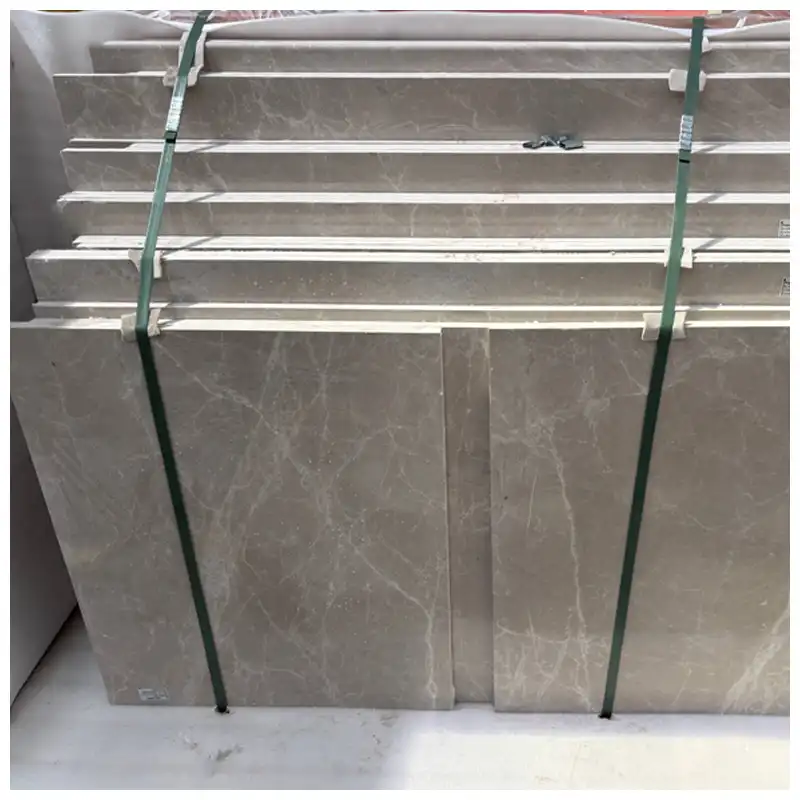
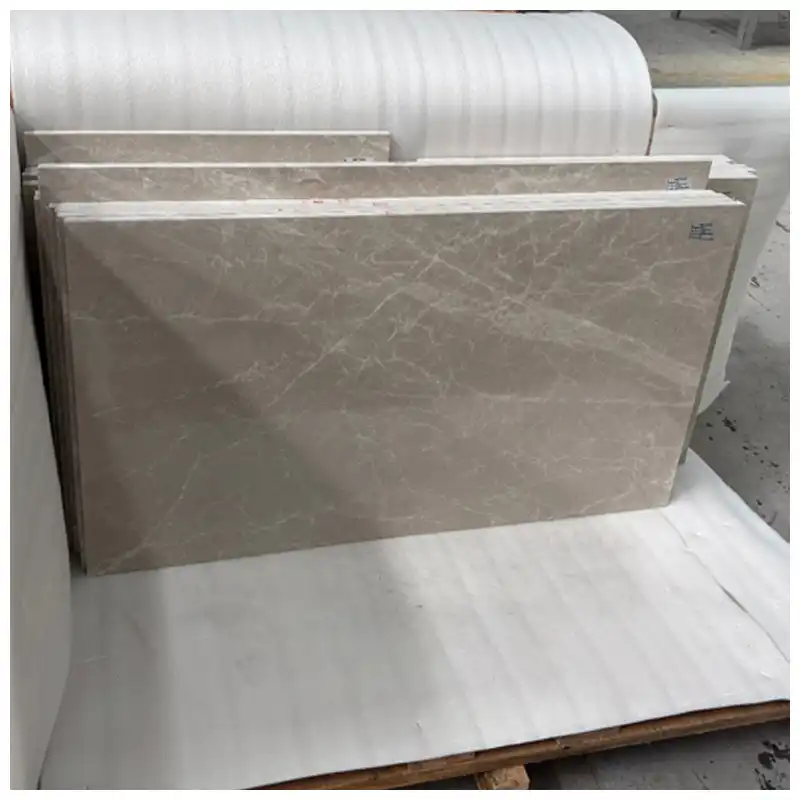
The supplied factory photograph shows finished grey marble pieces stored upright with protective materials and individual identification labels. This arrangement keeps the visible stone surfaces accessible while separating the processed components before subsequent handling.
For cut-to-size architectural orders, individual identification becomes particularly useful when similar-looking pieces have different finished dimensions. A panel prepared for one doorway or wall elevation may not be interchangeable with another, despite having the same marble color.
Finished-product inspection should cover the physical dimensions, surface condition, edge quality and stone soundness required by the approved order. Special components need to be checked against their individual drawing references rather than only against the standard tile specification.
Export packing must protect the marble faces and machined edges while accounting for component weight, dimensions and the intended lifting arrangement. Reinforced wooden crates and appropriate protective separation can be specified according to the shipment configuration.
| Inspection Item | Acceptance Consideration |
|---|---|
| Length and Width | Verify finished dimensions against the approved tile schedule or individual fabrication drawing. |
| Thickness and Flatness | Review dimensional variation and the agreed criteria relevant to floor installation and panel support. |
| Surface Finish | Check polish or hone consistency, machining marks and visible damage. |
| Edge and Corner Condition | Inspect chipped corners, damaged edges and any specially machined visible profiles. |
| Stone Soundness | Assess visible fractures, natural fissures and repaired areas against the agreed material acceptance requirements. |
| Piece Identification | Check that project-specific component references correspond to the relevant drawing and packing records. |
| Export Protection | Review protective separation, crate condition, component restraint and handling requirements. |
For phased building installations, crate identification can follow the designated floor level, room type or installation area. This allows receiving contractors to locate the appropriate stone components without unnecessarily unpacking materials reserved for later stages.
Design Reference: Warm Grey Marble Flooring in Contemporary Architectural Interiors

Warm grey marble creates a useful transition between cool architectural materials and warmer interior finishes. In residential spaces, pale oak, walnut, cream-colored walls and textured fabrics can soften the appearance of a polished floor.
Office and hospitality interiors may combine the same stone with brushed stainless steel, bronze-toned fittings, glass partitions and restrained wall finishes. The fine white veins maintain a natural stone identity without competing heavily with corporate signage or decorative elements.
An application reference illustrates how the marble may interact with surrounding finishes, lighting and architectural scale. The final project appearance remains dependent on the approved production material, tile arrangement and installation conditions.
Modern Grey Marble Compared with Four Related KA UNITED Marble Tile Collections
Selecting a marble floor involves more than choosing between grey, white or beige stone. Pattern intensity, background contrast and the way individual tiles interact across a large surface can materially change the finished architectural design.
| Marble Tile Collection | Visual Identity | Architectural Positioning | Main Selection Difference |
|---|---|---|---|
| Modern Grey Marble Tiles | Warm light grey with fine white interconnected mineral veins. | Continuous residential and commercial floors with coordinated wall surfaces. | Subdued background variation, neutral color continuity and flexible tile arrangements. |
| Blue Crystal Marble Tiles | Blue-toned natural stone with distinctive mineral variation. | Decorative floors, feature areas and expressive architectural surfaces. | Stronger color identity and greater emphasis on selected stone patterns. |
| Black White Marble Checkerboard Tiles | Alternating black and white marble forming a defined geometric pattern. | Entrance halls, decorative floors and patterned interior compositions. | Two-color module alignment, geometric symmetry and contrasting visual rhythm. |
| Pietra Grigio Marble Tiles | Deep graphite-grey background with lighter irregular mineral veins. | Darker contemporary floors and architectural wall cladding. | Greater dark-light contrast and a more pronounced grey architectural presence. |
| Ottoman Beige Marble Tiles | Warm beige natural marble palette. | Residential and hospitality interiors requiring warmer stone finishes. | Beige rather than grey color emphasis and coordination with warm interior materials. |
Modern Grey is the more restrained selection when the floor is intended to support other architectural features. Blue Crystal and Checkerboard introduce a stronger decorative identity, while Pietra Grigio and Ottoman Beige offer different directions within the broader neutral stone palette. Each material requires its own finish, performance and production sample approval.
Recommended Natural Marble Tiles from KA UNITED

Blue Crystal Marble Tiles
Blue-toned natural marble tiles for decorative flooring, expressive feature surfaces and distinctive architectural interiors.
View Product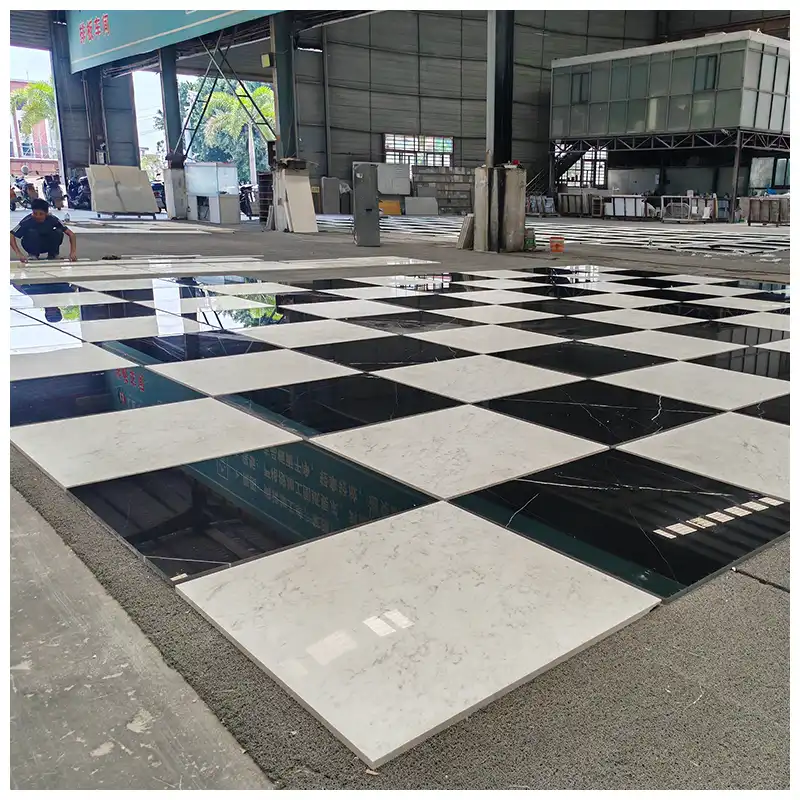
Black White Marble Checkerboard Tiles
Contrasting black and white marble modules for geometric flooring, entrance halls and coordinated decorative layouts.
View Product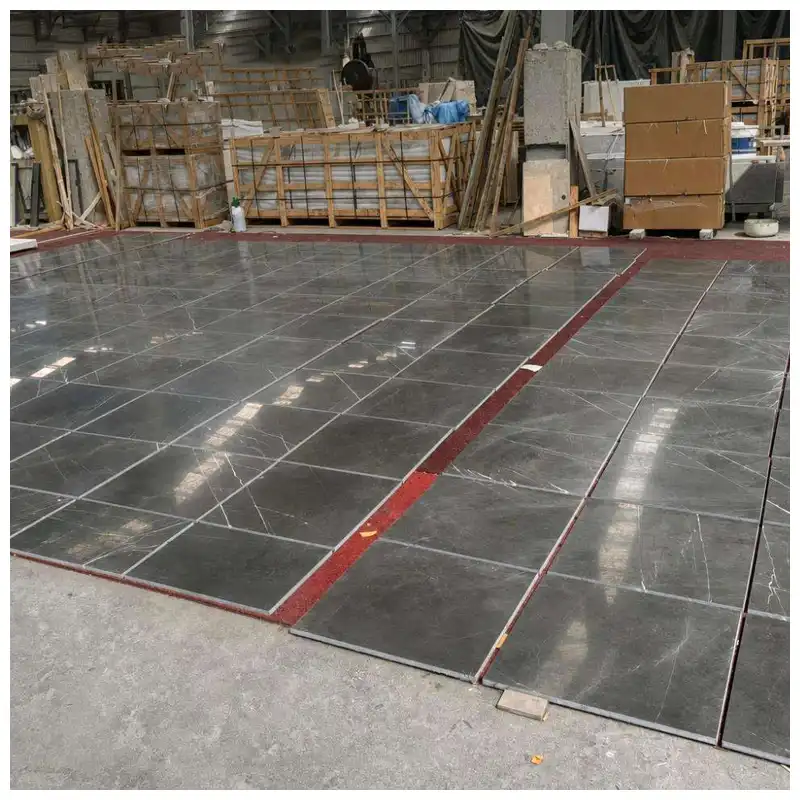
Pietra Grigio Marble Tiles
Deep graphite-grey natural marble with fine mineral veins for contemporary floors and coordinated interior wall cladding.
View Product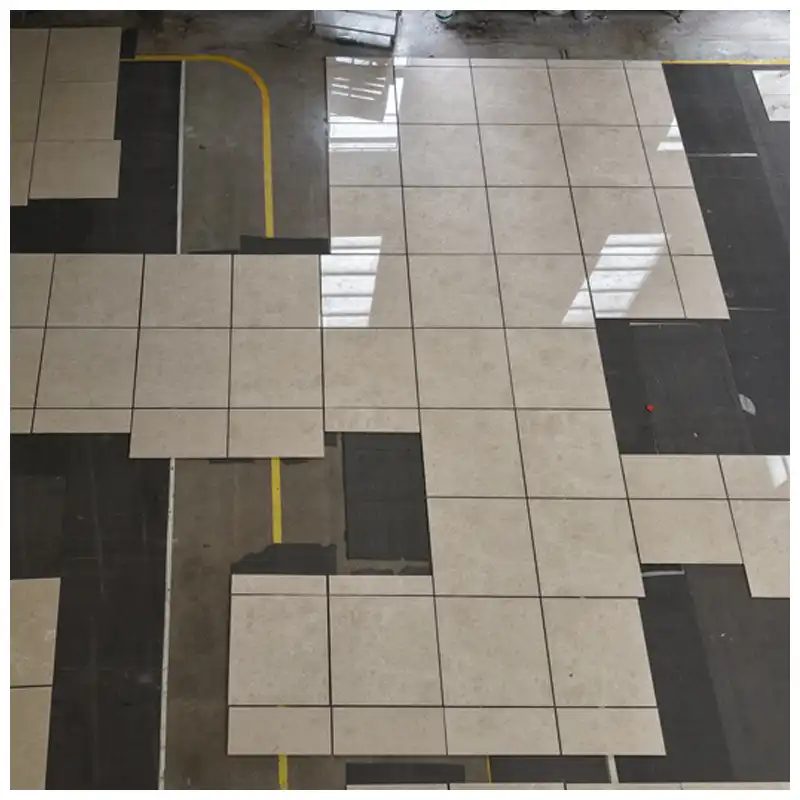
Ottoman Beige Marble Tiles
Warm beige marble tiles for coordinated residential flooring, hospitality interiors and neutral architectural stone finishes.
View ProductFrequently Asked Questions About Modern Grey Marble Tiles
1. Are Modern Grey Marble Tiles suitable for whole-house residential flooring?
Yes. Their warm light-grey background and fine white mineral veins create a restrained natural stone appearance across living rooms, entrance halls, dining areas and connecting corridors. The selected finish, floor layout, stone protection and installation system must suit the conditions of each room.
2. Which Modern Grey Marble tile size is suitable for large commercial floor areas?
The 600 × 900 mm and 600 × 600 mm formats are useful starting points for larger modular floor layouts, while 1200 × 300 mm pieces can support elongated architectural arrangements. The final size should be selected against the building grid, substrate condition, perimeter cuts, handling requirements and finished joint layout.
3. Can Modern Grey Marble Tiles be supplied with consistent color for an entire building?
Material can be selected within an agreed color range and grouped according to individual installation zones. Factory layout review can help identify unsuitable transitions between neighboring tiles. Exact color uniformity cannot be guaranteed because the material is natural marble with inherent mineral variation.
4. Is honed grey marble better than polished marble for commercial flooring?
Honed marble has lower reflection and may make some superficial wear less noticeable, while polished marble provides greater visual depth and gloss. The more appropriate finish depends on pedestrian traffic, cleaning procedures, lighting and verified slip-resistance requirements. Honing alone does not establish a slip-resistant classification.
5. Does sealing Modern Grey Marble prevent scratches and acid etching?
No. A suitable impregnating sealer may reduce the absorption of some liquids, but it does not make marble scratch-proof or prevent acid etching. Regular removal of abrasive grit, suitable stone cleaners and prompt attention to spills remain important for maintaining the finished surface.
6. Can Modern Grey Marble floor tiles be ordered with matching skirting and custom wall panels?
Yes. Matching skirting, thresholds, floor borders and custom wall panels can be reviewed against the approved architectural drawings. Finished dimensions, visible edge details, surface finish, panel support and material allocation should be established before fabrication.
Approve the Grey Marble Material Range and Building Installation Schedule Before Production
For a large residential or commercial order, the approved marble sample should be accompanied by a clear definition of which building areas require coordinated stone selection. Connected public spaces may need a more closely controlled color range than secondary rooms separated by doors or architectural boundaries.
Where construction proceeds in stages, buyers should establish whether all related marble will be selected during the initial production period or whether later releases will depend on additional material availability. The natural appearance of a future block may differ from the first delivery, even when the commercial stone name remains unchanged.
Replacement material deserves consideration at this stage. Retaining compatible spare tiles from the original selection can make future maintenance or individual component replacement less visually disruptive, especially in prominent continuous floor areas.
Final Note: The value of Modern Grey Marble Tiles lies in their ability to establish a restrained natural stone palette throughout a building. Treating material approval and phased installation as related procurement decisions helps preserve the intended architectural appearance beyond the initial delivery.

Request Modern Grey Marble Tiles for Your Residential or Commercial Project
KA UNITED supplies Modern Grey Marble in standard tile formats and customized architectural dimensions for natural stone distributors, general contractors, property developers and interior design projects.
Explore additional natural marble tile collections or submit your project requirements for material selection, fabrication and quotation review.
Project Information to Include in Your Inquiry
- Required tile dimensions, thickness and surface finish.
- Architectural floor plans, wall elevations and custom cutting schedules.
- Preferred grey color range and representative material samples.
- Requirements for skirting, thresholds, borders or custom wall components.
- Applicable testing, dimensional acceptance and layout approval requirements.
- Installation environment, project destination and delivery schedule.
Hot Tags: modern grey marble tiles, China modern grey marble tiles suppliers, factory, Arabescato Corchia Marble Tiles, Calacatta White Marble Tiles, marble and tile, real marble tiles, the marble, travertine marble tile
You Might Also Like


Send Inquiry
