Solid Wood Vs Plywood Bathroom Vanity Cabinets For Hotel Projects
Solid Wood vs Plywood Bathroom Vanity for Hotel Projects
The disagreement usually begins at a sample table. One person taps a solid timber door and says it feels expensive. Another points to a plywood box and says it will behave better in a bathroom. Both statements can be true, and both can mislead a hotel buyer if nobody asks which component is being discussed.
I have watched this conversation skip the details that decide daily use: a heavy door pulling on its hinge screws, a broad side panel reacting to moisture, a sink cutout forcing the top rail into the drawer space, or a replacement front arriving with a different grain. The useful question is not, "Which material wins?" It is, "Where does each material belong?"

That is how I approach a solid wood vs plywood bathroom vanity specification. I separate doors, drawer fronts, face frames, side panels, backs, bottoms, stretchers, toe kicks, and decorative end panels. Then I test each part against movement, fastening, water exposure, cleaning, top support, repair, and the number of identical rooms.
Table of Contents
Compare Components, Not Labels
Movement and Moisture
Hardware and Fixing Strength
Top, Sink, and Plumbing Coordination
Mock-Up and Production Approval
Frequently Asked Questions
Compare Solid Wood vs Plywood Bathroom Vanity Components
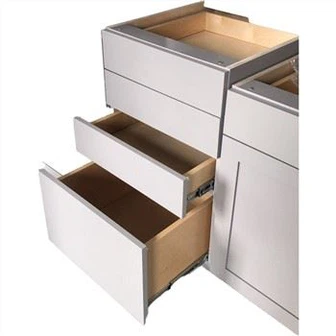
"Solid wood cabinet" is not a complete construction description. It may refer only to doors and drawer fronts, or it may include a face frame and selected structural rails. Likewise, "plywood cabinet" says nothing about veneer species, core quality, ply balance, thickness, exposed-edge treatment, adhesive class, or the way fittings are fixed.
For visible parts, timber has an advantage that a printed surface cannot imitate exactly. Light moves across real grain with small variations, and a repair technician can sometimes sand and refinish localized damage. Yet a wide timber panel also moves across the grain as moisture changes. A rigid construction that ignores that movement can split, cup, or open a joint.
A quality plywood panel uses crossed veneer layers to reduce directional movement. That does not make every plywood sheet bathroom-ready. Voids, thin face veneers, damaged edges, weak surface bonding, and careless screw placement still cause trouble. I want the quotation to state the panel grade and thickness rather than hiding behind a broad material name.
| Vanity component | Solid timber question | Plywood question | Approval evidence |
|---|---|---|---|
| Door or drawer front | Is the frame-and-panel construction free to move? | Is the face veneer durable enough for finishing and repair? | Full-size finish sample and operating mock-up |
| Side or partition | Can a broad panel remain flat through room changes? | Are core, thickness, edge, and fixing zones declared? | Section sample and component schedule |
| Top rail or stretcher | Does grain direction suit the load and fasteners? | Do screws avoid weak edges and core voids? | Stone overlay and fixing detail |
| Back near plumbing | Will cut edges remain fully protected? | Can access openings be cut without delamination? | Rough-in overlay and sealed opening sample |
| Decorative end | Will color and grain range suit adjacent units? | How will the visible edge be finished? | Room elevation and range board |
A solid wood vs plywood bathroom vanity table prevents a false comparison. A stable plywood side with a properly sealed edge may outperform a wide solid board in that location. A framed timber door may look and age better than a thin decorative face. The answer changes with the component.
Ask what the finish is actually covering
Paint can make different substrates look similar on day one. It does not erase their movement or edge behavior. A painted timber frame may show fine joint lines as seasons change. A painted plywood edge may telegraph veneer layers if the preparation is poor. Neither condition can be judged from a small color chip.
For stained work, grain matching matters more. I ask for a range board that shows the lightest and darkest acceptable pieces, not one unusually calm sample. Hotel rooms repeat. A narrow approved sample can become a patchy elevation when dozens of doors are viewed down one corridor during replacement or housekeeping work.
Let Moisture Risk Decide the Construction Detail
A bathroom cabinet does not need to sit in standing water to suffer. Vapor, cleaning spray, a slow trap leak, wet towels, and water travelling around the sink rim can reach unfinished edges. The vulnerable route is often a hole, notch, bottom edge, or back corner that nobody sees after installation.
In a solid wood vs plywood bathroom vanity review, I ask for moisture readings by component before finishing and before packing. The number only helps when the record identifies the meter, reading location, species or panel, date, and accepted range. One reading taken from a convenient door tells me little about a shipment.
Solid timber needs room for predictable cross-grain movement. Panel doors, floating panels, sensible operating gaps, and fastening that does not lock a broad board in two directions are practical responses. Plywood reduces that movement, but every machined opening still needs protection against water entering the veneer stack.
The finish schedule must cover faces, backs, top and bottom edges, hinge cups, handle holes, plumbing openings, scribe cuts, and any site-modified surface. "All visible faces" is not enough. The hidden edge beside a trap can cause more trouble than the polished door front.
The Hard-Won Lesson: Specify the cut edge, not only the face
A vanity sample can pass while every factory edge remains protected, then fail after site workers enlarge a plumbing opening and leave the fresh substrate bare. Water does not care whether the box began as timber or plywood. It follows the unsealed cut, darkens the edge, and can loosen the finish around it. The correction belongs in the site-cut procedure, not in an argument about the material label.
The Lesson: Record and reseal every site cut before the cabinet is released for use.
Match Hardware Fixing to Door Weight and Panel Structure
A solid timber door can be heavier than the alternative specified during early design. That changes hinge count, screw demand, soft-close behavior, and the force applied to the cabinet side. I do not approve hardware from a brand name alone. I want the actual hinge, mounting plate, screw, panel section, and door weight tested together.
Plywood gives good fastening performance when the grade and fixing position are suitable. Screws placed too close to a machined edge, driven into a void, or repeatedly removed during adjustment can still lose grip. Pilot holes, screw length, edge distance, and the number of adjustment cycles belong in the mock-up check.
Here is what I would do: load the drawer to the design condition, operate it repeatedly, then inspect alignment, fixing movement, soft-close action, and clearance around the trap. Run the same test after the stone top and sink are fitted. A cabinet that works empty on a bench may behave differently once the complete package is installed.
The existing Bathroom Vanity Cabinet Hardware record is useful here because it separates initial selection from adjustment and replacement. Material choice does not remove the need for serviceable hardware.
Plan repairs before the room opens
Solid timber often allows localized sanding or refinishing, but color matching becomes harder as the original surface ages. Veneered plywood may be repairable when the face is thick enough and the damage is shallow. A thin face can be sanded through quickly. The handover file should identify the finish system, sheen, touch-up method, and spare component policy.
For repeated rooms, I prefer replaceable fronts and accessible fittings. If a damaged decorative end is bonded behind the top and wall finish, a small impact becomes a major room repair. This is where you do not cheap out: make the service route part of the shop drawing.
Coordinate the Cabinet with the Top, Sink, and Plumbing
The solid wood vs plywood bathroom vanity debate becomes meaningless if the top rail blocks the basin or the drawer hits the waste. Overlay the cabinet plan with the sink template, faucet holes, drain center, shutoff valves, trap envelope, support lines, backsplash, wall condition, and service access before production.
A bathroom vanity top transfers load through rails, partitions, brackets, and cabinet sides. Wide sink openings can remove material from the top and reduce the available bearing area below. The support detail has to suit both the stone and the box construction.
For a solid wood vs plywood bathroom vanity package, wide rails need special attention. Solid timber grain direction affects movement and splitting near fasteners. Plywood orientation and edge condition affect screw holding. Neither should be cut casually on site to solve a late plumbing conflict.
The Bathroom Vanity Countertop Support article covers long spans, sink cutouts, rails, and brackets in detail. I use that support overlay beside the cabinet material schedule, not after it.
Surface choice also changes cleaning and edge exposure. A correctly detailed quartz surface can give repeated rooms a consistent finish, but the joint around the sink and backsplash still needs space, adhesion, and cure time. A dry cabinet cannot compensate for a leaking joint.
Approve the Complete Room Mock-Up
Do not approve the cabinet as a loose sample. Install one representative room type with the actual top thickness, sink model, faucet, waste, valves, hardware, wall finish, mirror, lighting, and housekeeping method. Then open every moving part and run water.
The Hotel Bathroom Vanity Packages Complete Guide provides the broader room coordination path. A solid wood vs plywood bathroom vanity decision sits inside that path; it does not replace room scheduling, mock-up approval, production records, installation checks, or handover.
During approval, inspect gaps before and after the room reaches its operating condition. Check door flatness in reflected light, the bottom edge after wiping, the plumbing opening, panel fixings, and the underside of the top. Record the sample components so production can match the approved construction rather than a photograph.
A useful solid wood vs plywood bathroom vanity decision also accounts for room type. A public washroom, accessible room, suite, and standard guest room may need different door spans, storage, cleaning exposure, and service access. One construction can still work, but it must be proven across the most demanding variant.
Write acceptance language that can be inspected
A statement such as "premium wood vanity" cannot be inspected. A component schedule can. It names material, thickness, joint, finish, edge protection, hardware, moisture record, dimensional tolerance, visual range, permitted repair, and required evidence.
I also separate visual acceptance from functional acceptance. Natural grain variation is not automatically a defect, but a twisted door that will not close is a function problem. A visible veneer repair may be unacceptable even if the panel remains stable. The project needs both standards.
Where the Material Decision Usually Goes Wrong
Mistake 1: Pricing a label instead of a construction
Two solid wood vs plywood bathroom vanity quotations can use the same phrase while including different components. Require a marked section drawing and material schedule before comparing cost. Otherwise, a lower price may simply exclude the timber parts the designer expected.

Mistake 2: Treating moisture resistance as waterproofing
No cabinet substrate should be asked to tolerate an active leak. Protect edges, test plumbing, detail sealant, provide ventilation where needed, and keep replacement access. Material selection reduces risk; it does not excuse poor water control.
Mistake 3: Ignoring room-to-room replacement
A single beautiful sample is easy. Matching a replacement front years later is harder. Keep range boards, finish codes, approved photographs, species information, veneer references, and component dimensions in the handover record.
How to Resolve the Choice before Production
First, mark every cabinet component on a section drawing. Second, assign its material and thickness. Third, identify wet edges, hardware fixing zones, top support lines, and service openings. Fourth, build the room mock-up. Finally, retain the approved records with the production release.
If a mismatch appears on site, photograph the room code, affected component, nearby water source, and measuring reference. Stop installing or modifying the affected units. Compare the evidence with the approved sample, moisture records, component schedule, finish standard, and packing record before deciding on adjustment, repair, or replacement.
Quick-Reference Checklist for Cabinet Material Approval
- Mark the material and thickness of every visible and hidden cabinet component.
- Check movement details on broad timber parts and exposed edges on every plywood cut.
- Test the specified hinge, screw, panel, and door weight as one assembly.
- Overlay the sink, drain, valves, trap, drawers, rails, and top support before machining.
- Inspect finish coverage on backs, bottoms, holes, notches, and site-cut edges.
- Approve grain range, color range, sheen, repair method, and spare component records.
- Release repeated production only after the complete room mock-up operates correctly.
Frequently Asked Questions
1. Is solid wood always better than plywood for a bathroom vanity?
No. The answer depends on the component, construction, moisture exposure, finish, fixing, and service plan. Solid timber can suit visible frames and fronts, while well-specified plywood can provide stability in broad box parts. Judge the complete assembly rather than one label.
2. What should a plywood vanity specification include?
State the panel type, veneer species, core construction, thickness, visible-face grade, adhesive or exposure classification where applicable, edge treatment, finish, fixing zones, permitted repairs, and sample requirements. The project team must be able to inspect what the quotation promises.
3. Which material holds vanity hardware better?
Both can hold hardware when the species or panel grade, screw, pilot hole, edge distance, door weight, and fitting are compatible. The dependable answer comes from a full assembly test, not a general claim about one substrate.
4. How does the stone top affect the cabinet material choice?
The top introduces weight, sink openings, bearing lines, overhangs, sealant joints, and possible service restrictions. Cabinet rails, partitions, brackets, and fixings must match the top drawing. Late cutting can expose or weaken either timber or plywood components.
5. How should a hotel decide between solid wood vs plywood bathroom vanity construction?
Map each component, define its exposure and function, compare movement and fastening behavior, coordinate the complete vanity package, and approve a working room mock-up. Keep the approved material schedule, range board, moisture record, hardware details, and repair information with the handover file.
Final Conclusion
The solid wood vs plywood bathroom vanity decision is not a contest between a noble material and a practical substitute. It is a component-by-component engineering and use decision. Specify what each part is, protect every vulnerable edge, test the real hardware and load, coordinate the top and plumbing, and keep the approval evidence.
I would rather defend a mixed construction that works in every room than a pure-sounding label that fails at the sink cutout, and that is the standard I bring to every KA UNITED vanity package.
References
- Wood Handbook: Wood as an Engineering Material, Forest Products Laboratory, U.S. Department of Agriculture.
- Architectural Woodwork Standards, Architectural Woodwork Institute.
- Kitchen & Bathroom Planning Guidelines, National Kitchen & Bath Association.
- 2026 Bath Trends Report, National Kitchen & Bath Association.
- Dimension Stone Design Manual, Natural Stone Institute.
- ANSI/BHMA Cabinet Hardware Performance Standards, Builders Hardware Manufacturers Association.
- Plywood, Wikipedia, English edition.