White Quartz Vanity Top Color And Lighting Approval For Hotel Bathrooms
White Quartz Vanity Top for Hotel Bathrooms: Light, Cabinets, Sinks, and Batch Control
A vanity can look neutral under sample-room ceiling lights, then separate into conflicting whites when the mirror lights come on. The top shifts slightly warm, the basin stays blue-white, and the painted cabinet moves toward cream. None of the products changed. The viewing conditions did.

That is why a white quartz vanity top needs more than a product code. White surfaces reveal their relationships. The basin becomes a color reference, the cabinet changes the edge, warm light pulls grey toward beige, and cool light can make a pleasant background feel clinical. A controlled mock-up settles those relationships before they repeat across guestrooms.
The direct answer is to approve a complete material set under the intended bathroom light, then connect it to full-slab or full-pattern evidence and a batch record. Color is not managed by describing everything as "pure white." It is managed by showing what difference the project will accept.
Table of Contents
- Define the accepted white relationship
- Test mirror light, daylight, and viewing angle
- Approve pattern scale, finish, and batch range
- Coordinate sinks, cabinets, joints, and cleaning
- Keep production and replacement evidence
- Answer color-approval questions
Define the White Quartz Vanity Top Relationship
White quartz may lean cool, warm, grey, cream, or nearly neutral. Fine particles can create a salt-and-pepper effect. Broad printed veins can bring grey, gold, beige, or brown movement. Surface finish changes reflection. Even two products with similar digital images can read differently beside a glossy ceramic bowl.
A white quartz vanity top does not need to match every adjacent white exactly. It needs an intentional relationship. The specification can ask the top to blend with the basin, contrast gently with the cabinet, or carry a vein that connects to wall tile. The material board records that intent in observable terms.
I put the quartz, sink, faucet finish, cabinet front, cabinet edge, wall finish, grout, sealant, and mirror frame together. Samples sit in the same orientation they will have in the bathroom. Horizontal quartz reflects light differently from a vertical cabinet face. A splash should be viewed upright, not flat on the table.
The broad Hotel Bathroom Vanity Packages Complete Guide keeps this color review tied to room schedules, sink geometry, plumbing, production, installation, cleaning, and handover. The visual approval cannot contradict the buildable package.
Write the approval so another person can use it
"Warm white" is a direction, not an inspection standard. The approval set needs a signed physical reference, product and finish codes, full-pattern images, intended lighting information, and the accepted relationship to adjacent materials. Photographs include a neutral reference where practical and avoid automatic phone filters.
Record which differences are normal. Fine aggregate distribution, vein position, print repeat, gloss, and production-lot tone may vary within the manufacturer's range. Also record what is not acceptable: a visible surface repair, a changed finish, a wrong code, a severe lot shift, or a built-up edge from an unrelated piece.
The quartz stone range provides a useful material starting point, but current samples still control. Old project photographs can guide preference; they cannot approve a new lot under a different bathroom light.
| Viewing condition | What can change | What to place beside the quartz | Decision to record |
|---|---|---|---|
| Warm mirror light near 3000K | Cream and gold notes become stronger | Basin, cabinet, wall, sealant | Whether the top still reads clean rather than yellow |
| Neutral light near 4000K | Grey particles and cool undertones become clearer | Approved physical reference | Batch and finish comparison condition |
| Daylight from doorway or window | Exposed ends may read cooler than the basin zone | Side panel and wall return | Whether mixed light creates an objectionable split |
| Raking light across polished face | Gloss changes, residue, edge polish, and repairs appear | Finished first piece | Accepted sheen and workmanship range |
Test Hotel Bathroom Lighting before Color Release
Correlated color temperature is only one part of lighting. Color rendering, source quality, brightness, direction, reflected wall color, mirror position, and daylight all affect perception. Two fixtures labeled with the same nominal temperature can still render material differently.
For a white quartz vanity top, check at least the dominant operating condition and any strongly different secondary condition. A hotel bathroom may use warm ambient light, brighter mirror light, and daylight at the entrance. The guest sees the top under all three, sometimes at once.
Vertical mirror lighting often strikes the front edge and basin zone directly. It can expose a slight gloss mismatch between face and edge. Downlights can create bright spots and leave the rear joint in shadow. Under-cabinet or toe-kick lighting changes the cabinet more than the top, but that shift can alter the overall white balance.
The published Hotel Vanity Lighting Checklist before Bathroom Approval provides the separate lighting review. Use it with the intended quartz, sink, cabinet, and mirror rather than approving fixtures on an empty wall.
Photograph color without pretending the camera is neutral
Phone cameras change white balance and exposure automatically. The same top can look warmer in one frame and cooler in the next. Keep the light stable, include the approved reference, photograph the complete vanity and close details, and avoid relying on a single cropped image.
Remote approval needs both evidence and limits. State the fixture or viewing condition, date, product code, sample identity, and whether the image is for range review or final acceptance. If color is sensitive, send a physical sample or complete a room mock-up. A PDF cannot reproduce every light-source and screen combination.
The Hard-Won Lesson: Approve all whites in one working room
A quartz chip approved under office lighting can sit acceptably beside a cabinet chip in the meeting room, yet the installed combination may separate under warm vertical mirror lights. The ceramic basin remains a bright cool reference, the cabinet finish grows creamier, and the quartz falls between them. Replacing one component later is far harder than testing the actual set before repeated production.
The Lesson: Turn on the final light, place every adjacent finish together, and approve the relationship rather than each sample alone.
Approve Full Pattern, Finish, and Batch Range
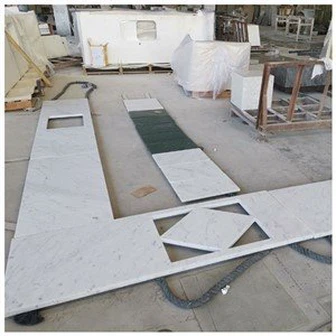
A small chip can show background and particle color. It cannot show vein scale, repeat distance, direction, quiet zones, or how a printed movement crosses a sink opening. Ask for full-slab images or representative full-pattern evidence from the intended production range.

Marble-look quartz needs a cut layout when the veins are prominent. The basin removes a large central area, so approve what remains at the faucet, front rail, outer ends, side splashes, and backsplash. Two vanity tops cut from neighboring areas can look unrelated if one receives a bold vein and the other remains quiet.
A white quartz vanity top with a nearly plain field creates another issue: minor surface residue, edge polish differences, adhesive color, and repairs can be more visible because the pattern offers little distraction. Inspect under both diffuse and raking light after cleaning.
Finish is part of the product identity. Polished, matte, honed-look, or textured surfaces behave differently under light and cleaning. Confirm what the manufacturer offers and test the intended care method. Do not create a local polish repair without checking how it will read beside the factory finish.
Control repeated rooms without demanding clones
Room allocation can distribute stronger and quieter patterns deliberately. Keep pairs together where two tops share one suite. Use consistent vein orientation where the design expects it. Identify exposed ends and side splashes so visually important pieces do not receive random remnants.
Batch records should include product code, finish, lot or production information where supplied, slab identifiers where relevant, piece codes, room allocation, and approval images. A signed sample remains the visual reference. Data without a physical comparison does not settle tone.
The main bathroom vanity tops path is useful for package selection, while the existing Quartz Vanity Top Thickness for Hotel Bathrooms article settles the separate section, edge, weight, and support decisions.
Coordinate Basin White, Cabinet Finish, Joints, and Cleaning
The basin is usually the strongest white reference because glazed ceramic reflects light sharply. Put the exact sink model beside the quartz, not another basin from the same general range. Check rim or reveal geometry because shadows around an undermount opening can make the adjacent surface appear darker.
Cabinet finish changes the front edge. Warm oak can make neutral quartz feel cooler. Cool grey paint can emphasize a cream undertone. Dark timber creates contrast and may make a thin white top appear visually lighter. View the cabinet door vertically beneath the actual edge profile.
Sealant and adhesive are narrow but visible. A bright white sealant can draw a line between warmer materials. Clear products can darken or reveal the wall behind. Approve joint color, width range, tooling, substrate preparation, and compatibility. Water at the basin and backsplash will make an untidy joint even more obvious.
Cleaners change appearance when residue remains. Test the operator's approved product on the actual finish, then view it under mirror lighting after drying. Makeup, toner, hair dye, soap, and hard-water residue each create different marks. The handover file should state routine cleaning and escalation steps based on the manufacturer's instructions.
This is where you don't cheap out: run water and clean the full mock-up. Morning use leaves drops around the faucet and basin; housekeeping wipes the same front edge repeatedly. A finish that looks calm when untouched may show every drying pattern under strong side light.
Plan replacements before the color is discontinued
Keep reasonable spare pieces when the project risk supports it, but store them flat or supported as required, protected, labeled, and traceable. Record which room types they can serve. A spare with the wrong edge, vein direction, sink drilling, or exposed end is not truly interchangeable.
For future procurement, keep product name, code, finish, thickness, edge, sink model, faucet layout, backsplash, production information, approval sample, and room images. Manufacturers can change ranges. The record helps the team judge whether a later lot is acceptable rather than pretending the name guarantees a match.
Release Production from a Traceable White-Surface Record
The final approval for a white quartz vanity top combines the physical reference, full-pattern evidence, lighting condition, complete material board, coordinated drawings, first finished piece, cleaning test, room schedule, and replacement data. Each item carries a revision and approval date.
Photographs show the entire vanity from the doorway, face-on at the basin, both exposed ends, the edge under mirror light, the backsplash joint, sink reveal, faucet drilling, and any visible repair. Measurement images support size and hole positions. Color images support the accepted relationship but do not replace the signed sample.
When a color difference appears on site, photograph the complete room and close detail under the normal operating lights. Record room, piece, product, and batch information. Do not install or modify more affected pieces. Compare with the approved reference and first-piece record, then contact the supplier with that evidence before polishing, cleaning aggressively, or changing sealant.
Here's what I'd do: separate light, residue, adjacent-color contrast, and real material difference before deciding the top is wrong. Turn off one light source at a time, clean a controlled area with the approved method, place the signed sample beside the surface, and compare equivalent viewing angles.
Quick-Reference Checklist for White Quartz Approval
- Place the quartz, exact basin, cabinet, wall, sealant, faucet, and mirror frame in one material set.
- View horizontal and vertical samples under the intended mirror, ambient, and daylight conditions.
- Record product, finish, accepted undertone, pattern range, lot information, and approval reference.
- Map bold veins around sink cutouts, faucet holes, exposed ends, splashes, and repeated room pairs.
- Inspect a cleaned first piece under diffuse and raking light for sheen changes, residue, and repairs.
- Test the operator's cleaner and document water, makeup, and hair-product response.
- Keep room-coded replacement records and labeled spare pieces where the project requires them.
Where White-Surface Approval Usually Breaks Down
Why the chip is not enough
The chip removes scale, sink geometry, edge treatment, adjacent whites, and room light. It is useful for narrowing options, not for approving a repeated bathroom package. Full-pattern evidence and a working mock-up supply the missing information.
What "matching" should mean
Matching should mean an accepted relationship under defined conditions, not visual identity across different materials. The record says whether the quartz blends, contrasts, or repeats a tone, and what normal production variation remains acceptable.
When the supplier needs to see the whole package
Send the supplier the cabinet finish, basin model, lighting information, wall material, edge, and room schedule whenever color is sensitive. A quartz code alone cannot reveal the visual target or which surfaces the designer expects it to relate to.
Frequently Asked Questions
1. Why does a white quartz vanity top look yellow under bathroom light?
Warm source temperature, color rendering, reflected cabinet or wall color, sealant, and the quartz undertone can all contribute. Compare the installed surface with the signed sample under the normal operating lights before deciding whether the material itself shifted.
2. Should the quartz match the ceramic sink exactly?
Not necessarily. Ceramic glaze and quartz have different composition, texture, and reflectance. Approve an intentional blend or contrast in the complete material set. Do not promise exact sameness unless the working mock-up genuinely demonstrates it.
3. Can a small sample approve marble-look veining?
No. It can indicate background and vein color, but not scale, direction, repeat, quiet zones, or the pattern left around a sink opening. Use current full-slab or full-pattern evidence and a proposed cut layout for prominent designs.
4. How should white quartz batches be compared?
Use the same product and finish information, stable lighting, a signed physical reference, complete and close photographs, and lot or slab identifiers where supplied. Compare clean surfaces at equivalent angles and record the accepted range before cutting.
5. What should happen if several installed tops look different?
Photograph each complete vanity under its normal light, record room and batch codes, pause further installation, and compare the surfaces with the approved reference and first-piece record. Contact the supplier with those records before polishing, harsh cleaning, sealant replacement, or removal.
Final Conclusion
A white quartz vanity top works across repeated hotel bathrooms when the project approves undertone, full pattern, sheen, adjacent whites, lighting, cleaning, and batch records as one visual system. Here's what I'd do: turn on the final mirror light before signing the sample, because KA UNITED would rather settle one honest color relationship in the mock-up than defend an impossible promise that every white must look identical.
References
- 2026 Bath Trends Report, National Kitchen & Bath Association.
- Lighting Design Guide for Bathrooms, Illuminating Engineering Society.
- Kitchen & Bathroom Planning Guidelines, National Kitchen & Bath Association.
- Dimension Stone Design Manual, Natural Stone Institute.
- Architectural Woodwork Standards, Architectural Woodwork Institute.
- ADA Standards for Accessible Design, U.S. Department of Justice.
- Color temperature, Wikipedia, English edition.