Bathroom Vanity Top Materials for 2026 Projects: Quartz, Marble, Granite, Quartzite, or Sintered Stone?
Quick Summary
Quick Summary: A bathroom vanity top should be selected around water exposure, cabinet style, sink type, cleaning habits, and the room's lighting. Quartz vanity tops are useful when consistency and simple care matter, marble and quartzite bring natural stone character, granite offers durable pattern variation, and sintered stone works well for modern vanities and wall-to-countertop surfaces.
Bathroom Vanity Top Materials For 2026 Projects: Quartz, Marble, Granite, Quartzite, Or Sintered Stone?
Bathroom design is becoming more storage-led and surface-led at the same time. The vanity is no longer just a cabinet with a basin. In many 2026 bathroom projects, it is part of a larger composition that may include a floating cabinet, wall-mounted faucets, tall storage, large mirrors, stone wall panels, soft lighting, and a countertop that has to look clean under close daily use.

That makes the vanity top decision more technical than it first appears. A small stone sample can look attractive on a desk, but the finished vanity top has sink cutouts, faucet holes, edge profiles, backsplash returns, cabinet support, and water exposure around the basin. The material also sits close to face-level lighting, so color, polish, and reflection become more obvious than they are on some kitchen counters.
KA UNITED works with countertops, quartz stone, marble, granite, luxury stone, sintered stone, and bathroom cabinets. For bathroom projects, those categories should be reviewed together. A vanity top is not only a slab choice. It is a cabinet, sink, plumbing, wall, mirror, and maintenance decision.
Current bath trend reporting supports this more integrated view. NKBA 2026 bath trend coverage points toward bathrooms with better storage, larger primary bath planning, wellness details, and more thoughtful material choices. The useful lesson for KA UNITED projects is not that every bathroom should follow one trend. It is that the surface and cabinet plan should be decided together before the vanity top is ordered.
1. Why a bathroom vanity top is different from a kitchen countertop
A bathroom vanity top may look like a smaller version of a kitchen countertop, but the use pattern is different. A kitchen counter has food preparation, cooking heat nearby, heavy appliances, and larger work zones. A bathroom vanity top has water around the basin, soap, toothpaste, cosmetics, hair products, cleaners, perfume bottles, and frequent wiping. The surface also has more small objects sitting on it for long periods.
Water exposure matters most around the sink. Drop-in sinks, undermount sinks, vessel bowls, and integrated basins each change the risk area. An undermount sink creates a visible stone edge around the opening. A vessel bowl places more visual weight on the top surface and usually needs careful faucet planning. A wall-mounted faucet can keep the top cleaner, but the wall and backsplash detail become more important.
Cabinet construction matters too. A vanity cabinet may be floor standing, wall mounted, framed, frameless, compact, double-sink, or furniture style. Some bathrooms use narrow vanities to save space. Others use wide double vanities with long stone tops. The longer the top and the more cutouts it has, the more important support, seam planning, and handling become.
Lighting also changes the surface. A polished marble vanity top under strong mirror lights can show reflection, water marks, and etching more clearly. A honed or leathered natural stone can feel softer, but it may need different cleaning habits. A quiet quartz vanity top may look warmer or cooler depending on mirror light temperature. This is why material selection should be reviewed inside the bathroom design, not as a loose sample.
2. Quartz vanity tops: consistent color and easier daily planning
Quartz is often the most direct choice when a bathroom needs a clean, consistent vanity top with predictable color. Because engineered quartz is manufactured, it usually has more controlled pattern repeat than natural stone. That helps when the same vanity material is used across several rooms, apartment units, hotel bathrooms, or repeated cabinet layouts.
For a family bathroom, a quartz vanity top can make daily cleaning simpler than many natural stones. It is still important to follow the manufacturer's care guidance, avoid harsh chemicals, and keep the surface clean around the sink. But quartz generally fits bathrooms where the design needs a refined stone look without making every slab approval highly variable.
KA UNITED's quartz countertops and quartz slabs are relevant when a project needs vanity tops, splash returns, and cabinet coordination in a controlled palette. Soft white quartz can keep a bathroom bright. Warm beige quartz can work with oak or walnut bathroom cabinets. Light gray quartz can support a cooler tile scheme if the lighting is planned carefully.
The main risk with quartz is treating it as automatic. The surface still needs a correct template, edge choice, sink cutout, faucet drilling, overhang, and installation method. Fabrication safety also belongs in the conversation. Cutting and finishing engineered stone can create respirable crystalline silica exposure in the workshop, so responsible processing methods are part of a serious countertop supply discussion.
Quartz is strongest when consistency is more valuable than one-of-one natural movement. It works well for compact bathrooms, repeated vanity runs, cabinet showroom displays, and modern bathrooms where the cabinet color and lighting should carry the design.
3. Marble vanity tops: natural softness with higher care expectations
Marble can make a bathroom feel calm and elegant, especially when the project uses white, cream, gray, or warm neutral walls. It is a familiar choice for vanity tops because the bathroom is usually less demanding than a kitchen. Still, marble needs honest care guidance. It is a natural calcium-based stone and can be sensitive to acidic products, some cleaners, and cosmetic spills.

A marble vanity top should be selected with the actual bathroom routine in mind. A guest powder room may be a good place for a beautiful marble top because use is lighter. A child's bathroom or busy shared bathroom may need a more forgiving surface. In a hotel or apartment project, maintenance staff and cleaning products should be considered before choosing marble for every vanity.
Finish changes the experience. Polished marble can look bright and crisp, but it may show water marks and surface changes more easily. Honed marble can feel quieter and softer, but it may absorb oils or show darkened marks if care is poor. Sealing can help with stain resistance, but it does not make marble immune to etching. That distinction should be clear before the material is approved.
Marble pairs well with painted bathroom cabinets, warm wood cabinets, brass hardware, and simple wall tile. The key is to keep the room balanced. If the marble has strong veining, the cabinet doors and wall surfaces should stay calmer. If the cabinet finish is already patterned, a quieter marble may look better than a dramatic slab.
For projects where natural stone character is the priority, marble remains a serious option. For projects where low-maintenance daily use is the priority, quartz or sintered stone may be easier to manage.
4. Granite vanity tops: durable pattern and strong color variation
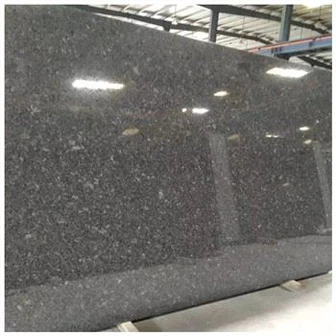
Granite is less discussed in some bathroom trend articles than marble or quartz, but it remains useful when a vanity top needs natural stone durability and visible mineral pattern. Many granite slabs can handle bathroom use well when properly selected, fabricated, sealed where needed, and cleaned with suitable products.
KA UNITED's granite category can fit bathrooms that need stronger contrast, darker vanity tops, or a natural pattern that hides small daily marks better than a very plain surface. Black, gray, white, and speckled granite can work with both classic and modern cabinets. The exact result depends on the slab, finish, cabinet color, and lighting.
Granite can be practical for double vanities because some patterns are visually forgiving across longer runs. A heavily uniform light surface may show every water spot. A granite with movement or mineral variation may be more tolerant in daily use. That said, not all granites behave the same. Porosity, fissures, finish, and resin treatment should be reviewed before final approval.
Granite also needs a clear edge and sink plan. Undermount sinks require a clean polished opening. Vessel sinks require accurate drilling and enough deck space around the bowl. If the vanity sits between walls, the installer should understand how the top will be carried into the room and whether side splashes are required.
Granite is a strong option when the bathroom needs natural stone, practical pattern, and a surface that does not depend on delicate marble-like veining.
5. Quartzite vanity tops: premium natural movement with slab-by-slab review
Quartzite can be a good vanity top choice when the bathroom needs natural movement and a more premium surface statement. It is often considered where the room has a larger vanity, a feature wall, or a stone-and-cabinet combination that should feel more custom. Some quartzites have soft beige movement suitable for warm bathrooms. Others have stronger veining better suited to a powder room or primary bath feature.
KA UNITED's luxury stone selection includes quartzite options that can connect a vanity top with a wall surface, shelf, or stone furniture detail. Materials such as Champagne Quartzite Countertops can work with warm cabinet finishes and quiet bathrooms. More expressive stones should be reviewed in full slab photos before the vanity is designed around them.
The main rule is simple: do not approve quartzite from a small name label alone. Natural quartzite varies by slab, and some stones sold with quartzite-related names may have different care needs. Current slab photos, finish samples, sealing expectations, edge details, and cutout placement should be checked before fabrication.
Quartzite works best when the bathroom layout gives the stone enough space. A narrow vanity with many cutouts may waste the slab's movement. A wide double vanity, tall backsplash, shelf, or wall return can show the material better. If the cabinet finish is busy, choose a calmer quartzite. If the cabinet is plain, a stronger stone can carry more visual interest.
6. Sintered stone vanity tops: large-format control for modern bathrooms
Sintered stone is especially useful when the bathroom design wants the vanity top, backsplash, and wall surface to feel connected. A sintered stone panel can create a clean modern look with controlled color and pattern. It can also reduce the visual breaks that happen when many small tiles surround a vanity.

KA UNITED's sintered stones category is relevant for contemporary bathrooms, floating vanity designs, and wall-to-countertop planning. A marble-look sintered stone can give a bathroom the look of light veining without the same natural variation as a marble slab. A quiet solid or stone-effect panel can work well with dark cabinets, warm wood cabinets, or handleless bathroom drawers.
The planning requirements are different from a simple vanity top. Panel size, thickness, edge method, sink type, faucet holes, wall alignment, transport, and installation sequence all need to be reviewed. Large-format surfaces can look very clean, but they leave less room for rough planning. Outlet positions, mirror sizes, wall-mounted faucets, and splash heights should be confirmed before the panel is cut.
Sintered stone is not automatically the best choice for every bathroom. It is strongest when the design needs visual continuity, thin profiles, controlled pattern, and matching wall panels. For a warmer natural look, quartzite or marble may feel more organic. For repeated vanity tops, quartz may be more straightforward.
7. How bathroom cabinets change the vanity top decision
The cabinet is the base of the vanity top, visually and physically. A stone top that looks good alone can feel wrong once it meets the cabinet doors. KA UNITED's bathroom cabinet options should be reviewed with the surface material before final selection.
Warm wood cabinets usually work best with cream quartz, beige quartzite, warm marble, or soft sintered stone. Matte white cabinets can support stronger veining, but the bathroom may need warmth from hardware, wall color, or lighting. Dark cabinets often need a lighter top or careful mirror lighting to keep the vanity from feeling heavy. Green, blue, or painted cabinets require more restraint because the cabinet color is already a design feature.
Door style also matters. A fluted or framed bathroom cabinet may pair better with a quieter top. A flat-panel cabinet can handle more movement in the stone. A floating vanity often looks cleaner with a slimmer edge, while a furniture-style vanity may accept a thicker edge profile. If the vanity is double-sink, the stone pattern should be reviewed across the full width, not only at the sample level.
Storage planning affects the top too. Tall bottles, countertop accessories, hair tools, and daily products can make a beautiful vanity top look cluttered. A stronger cabinet storage plan may allow a more delicate surface to stay visible and easier to clean.
8. Comparison table: vanity top material choices
| Material | Best Bathroom Use | Care And Planning Notes |
|---|---|---|
| Quartz | Repeated vanities, family bathrooms, clean modern cabinets, predictable color schemes | Check slab thickness, sink cutouts, faucet holes, edge profile, and responsible fabrication controls. |
| Marble | Powder rooms, guest baths, classic vanities, soft white or warm neutral bathrooms | Confirm finish, sealing expectations, cleaning products, and sensitivity to acidic spills. |
| Granite | Durable natural stone tops, darker schemes, forgiving mineral patterns, long double vanities | Review porosity, finish, sink edge polish, side splashes, and full slab appearance. |
| Quartzite | Premium natural stone vanities, wider tops, feature bathrooms, warm luxury surfaces | Review current slab photos, variation, resin, finish, sealing needs, and vein direction. |
| Sintered Stone | Floating vanities, modern bathrooms, wall panels, large-format backsplash planning | Confirm panel size, thickness, edge build-up, cutouts, wall alignment, and installation sequence. |
9. Details to confirm before ordering a vanity top
A bathroom vanity top should not be ordered from material name and rough size alone. The safest project path is to prepare a short technical package before final confirmation. This package does not need to be complicated, but it should remove the common unknowns that lead to wrong cutouts, weak support, awkward faucet placement, or a top that looks different from the design intent.
- Confirm vanity cabinet width, depth, finished height, and whether the cabinet is floor standing or wall mounted.
- Confirm sink type, sink model, bowl size, and whether the sink is undermount, drop-in, vessel, or integrated.
- Mark faucet holes, soap dispenser holes, wall-mounted faucet positions, and mirror clearance.
- Choose edge profile, visible thickness, backsplash height, side splashes, and wall returns.
- Review slab or panel photos, especially for marble, granite, quartzite, and stone-effect sintered surfaces.
- Confirm finish, sealing expectations, cleaning guidance, and maintenance responsibility.
- Check access into the bathroom, including stairs, elevators, door width, and turning space.
- Confirm who is responsible for final templating, shop drawings, fabrication, installation, and site protection.
These details are not decorative. They decide whether the vanity top can be fabricated cleanly and installed without forcing last-minute changes on site.
10. Related bathroom surface guides
11. Frequently asked questions
1. What is the best material for a bathroom vanity top?
The best bathroom vanity top material depends on use, cleaning habits, cabinet design, sink type, and the look of the room. Quartz is often practical for consistent color and simpler daily care. Marble and quartzite suit projects that want natural stone character. Granite can be durable and visually forgiving. Sintered stone works well when the vanity top connects to wall panels or a modern floating cabinet design.
2. Is quartz better than marble for bathroom vanities?
Quartz is usually easier to plan for bathrooms that need consistent color, repeated units, or simpler cleaning expectations. Marble can look softer and more natural, but it needs more care because acidic products and some cleaners can affect the surface. A powder room may suit marble well, while a busy shared bathroom may be better with quartz, granite, quartzite, or sintered stone.
3. Can natural stone be used around bathroom sinks?
Natural stone can be used around bathroom sinks when the correct material, finish, sealing plan, edge polish, and cleaning guidance are confirmed. Marble, granite, and quartzite vary by slab, so the actual stone should be reviewed before cutting. Undermount sinks need careful opening polish, while vessel sinks and wall-mounted faucets need accurate drilling and splash planning.
4. Do bathroom vanity tops need a backsplash?
A backsplash is not always required, but it often helps protect the wall behind the sink and makes the vanity easier to clean. A short stone backsplash works for simple vanities, while a full-height slab or sintered stone wall panel can make the vanity area look more integrated. The choice depends on faucet type, mirror position, wall finish, cabinet style, and how much water reaches the wall.
5. What information should be sent before ordering a vanity top?
Send the cabinet drawing, finished vanity size, sink model, faucet location, preferred material, slab thickness, edge profile, backsplash height, side splash needs, wall condition, and bathroom access details. For natural stone, include current slab photos or selected slab references. Clear information helps the supplier check cutouts, support, finish, and fabrication details before production.
12. Final Conclusion
A good bathroom vanity top is chosen by balancing material character with daily use. Quartz gives consistency. Marble gives a softer natural look but needs more care. Granite can be strong and forgiving. Quartzite can make a wider vanity feel more custom. Sintered stone works well when the countertop needs to connect with wall panels or a modern floating cabinet.
Before confirming a vanity top, review the bathroom cabinet, sink type, faucet position, lighting, backsplash, finish, and maintenance expectations together. KA UNITED can help compare quartz, marble, granite, quartzite, sintered stone, and bathroom cabinet options so the vanity design moves from attractive sample to production-ready surface plan.

Ask KA UNITED for vanity top material planning
For a bathroom project, send the cabinet drawing, vanity size, sink type, faucet plan, preferred surface material, color direction, and wall finish. KA UNITED can help review suitable vanity top materials, cabinet coordination, slab or panel options, and fabrication details before the order is prepared.
References
- NKBA / KBIS Releases Annual 2026 Bath Trends Report, National Kitchen and Bath Association Research Team, National Kitchen and Bath Association, NKBA Press.
- NKBA / KBIS 2026 Bath Trends Report, National Kitchen and Bath Association Research Team, National Kitchen and Bath Association, NKBA Research.
- 2026 NKBA Summit: Bath Trends, National Kitchen and Bath Association, National Kitchen and Bath Association, NKBA Events.
- Dimension Stone Design Manual 2024, Natural Stone Institute Technical Committee, Natural Stone Institute, Natural Stone Institute.
- Care and Cleaning for Natural Stone Surfaces, Natural Stone Institute Consumer Resources Team, Natural Stone Institute, Natural Stone Institute.
- Standards and Specifications for Natural Stone Products, Natural Stone Institute Technical Committee, Natural Stone Institute, Natural Stone Institute.
- OSHA/NIOSH Hazard Alert: Worker Exposure to Silica during Countertop Manufacturing, Finishing and Installation, Occupational Safety and Health Administration and National Institute for Occupational Safety and Health, CDC/NIOSH.
- Silica and Worker Health, National Institute for Occupational Safety and Health, Centers for Disease Control and Prevention, CDC/NIOSH.