Floating Bathroom Vanity With Stone Top: Support, Sink, and Cabinet Details Before Ordering
Quick Summary
Quick Summary: A floating bathroom vanity with a stone top needs more planning than a floor-standing cabinet because the wall, cabinet box, top thickness, sink opening, faucet holes, and fixing method all work together. Quartz, quartzite, marble, granite, and sintered stone can all be used, but the final choice should match the wall support, cabinet construction, basin type, and daily bathroom routine.
Floating Bathroom Vanity With Stone Top: Support, Sink, and Cabinet Details Before Ordering
Floating vanities are common in modern bathroom planning because they expose the floor, make cleaning easier, and give the vanity area a lighter profile. They can work in compact bathrooms, hotel bathrooms, apartment renovations, and primary bath designs where the cabinet should look precise rather than heavy. But once a stone top is added, the vanity is no longer only a cabinet design. It becomes a wall-supported surface system.

The important point is simple: the stone top and the cabinet cannot be planned separately. A quartz vanity top, marble top, quartzite slab, granite top, or sintered stone panel may all look suitable in a showroom. The real question is whether the wall, cabinet, sink, faucet, edge, and installation method support that surface in the finished bathroom.
KA UNITED supplies bathroom cabinets, quartz countertops, marble, granite, luxury stone, and sintered stones. For floating vanities, those categories should be reviewed as one plan. A good vanity top is not only beautiful. It fits the support condition, handles the sink layout, allows clean installation, and gives the bathroom enough storage for daily use.
Current bathroom trend reporting also explains why this detail matters. NKBA 2026 bath trend coverage points to better storage, improved bathroom layouts, and design decisions that support a more comfortable daily routine. A floating vanity can fit that direction, but only when the technical details are handled before production.
2. What makes a floating vanity different from a floor-standing vanity
A floor-standing vanity transfers much of its weight downward through the cabinet base. A floating vanity depends more heavily on the wall structure, mounting hardware, cabinet construction, and installer judgment. When a stone top is added, weight and leverage become more important. A thin-looking cabinet with a heavy top, wide basin, and long overhang can create problems if the support plan is weak.
The wall must be ready for the vanity. Stud position, blocking, masonry condition, wall flatness, moisture protection, and fixing method all matter. A finished wall that looks clean may still need reinforcement behind it. If the cabinet is installed on tile, stone, or another wall finish, the installation team should know how the fasteners will pass through the surface and what support exists behind it.
The cabinet box must also be strong enough. Drawer layout, internal partitions, back panels, rails, brackets, and side panels affect the way the cabinet carries the stone top. A vanity with a large drawer opening may have less structure near the sink area than expected. A double-sink floating vanity needs more careful support than a small powder room vanity.
This is why a floating vanity should be approved with drawings rather than only product photos. The drawing should show cabinet size, top size, sink location, faucet position, visible edge thickness, wall fixing points, and any special brackets or support rails. Without these details, the stone top may be ordered correctly as a slab but still fail as a finished vanity.
3. Choose the stone top after the support condition is known
Many bathroom projects choose the stone first and think about support later. For a floating vanity, that order can create trouble. The material choice should match the wall and cabinet condition. A wide natural stone slab with two undermount sinks may need different support than a compact quartz top with one vessel basin. A sintered stone top with a thin profile may need a different edge method from a thicker granite top.
Quartz is useful when the bathroom needs a consistent color and a practical surface for daily use. It can be a clean choice for floating cabinets with simple door fronts, warm wood finishes, or soft painted drawers. It still needs proper cutouts, edge finishing, and responsible fabrication controls in the workshop.
Marble can look very refined on a floating vanity, especially in powder rooms and quieter primary bathrooms. The tradeoff is care. Marble can react to acidic products and certain cleaners, so the project should confirm finish, sealing expectations, and cleaning guidance. A floating marble vanity with wall-mounted faucets can look simple, but the stone, wall panel, and faucet penetrations must be planned carefully.
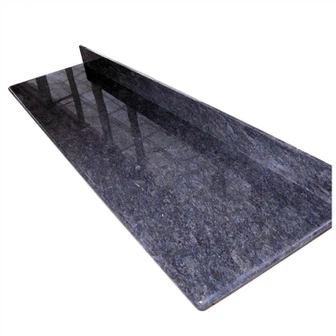
Granite can work when the bathroom needs a stronger natural stone with pattern variation. It may be helpful where a darker top or more forgiving mineral pattern suits the cabinet design. The slab should still be reviewed for porosity, finish, sink cutout strength, and edge detail.
Quartzite can give a floating vanity more natural movement and a more custom look. KA UNITED's Champagne Quartzite Countertops are relevant where a warm natural surface needs to pair with wood or cream bathroom cabinets. Stronger quartzite slabs should be reviewed in full images because a floating vanity may expose the edge and make vein direction more visible.
Sintered stone works well when the design wants a thin modern top, a matching wall panel, or a surface that continues behind the mirror or basin. It can look very clean with a wall-mounted cabinet, but panel size, handling, edge method, and cutouts need accurate planning before production.
4. Wall support should be confirmed before the cabinet is made
The most important hidden detail in a floating vanity is the wall. A beautiful cabinet and stone top cannot compensate for weak backing. Before ordering the vanity, the project should confirm what is behind the wall finish. Timber studs, steel studs, masonry, concrete, tile over board, and stone wall panels all require different fixing approaches.
For new construction or full renovation, blocking can often be added before the wall is closed. This is the cleanest time to prepare support for a floating vanity. For an existing bathroom, the installer may need to inspect the wall, locate studs, review tile condition, and decide whether extra reinforcement is possible. The vanity supplier should not be expected to guess the wall condition from a room photo.
The support plan should account for the finished top weight, the cabinet weight, sinks, stored items, and the way people use the vanity. People may lean on the counter edge. Children may pull drawers. Cleaning staff may place products on the top. These everyday actions create forces that a floating vanity must tolerate. Exact engineering should be handled by qualified professionals where the project requires it, especially for large or heavy stone tops.
If a sintered stone wall panel or stone backsplash is planned behind the vanity, the sequence becomes even more important. The wall panel, cabinet fixing, faucet holes, mirror, and top must be coordinated. Otherwise, the installer may need to drill through finished surfaces without a clear plan.
5. Sink type changes the cutout and support plan
The sink is where many vanity top mistakes begin. A floating vanity usually has limited cabinet depth and drawer space, so the sink cannot be chosen casually. The sink model affects the stone cutout, cabinet interior, drawer clearance, faucet position, drain alignment, and edge strength.

An undermount sink gives a clean top surface and is common with quartz, granite, marble, and quartzite. It needs a precise opening and polished edge. The stone around the sink must be wide enough to remain strong, and the cabinet must allow room for clips, adhesive, plumbing, and drawer movement. A large undermount sink in a small floating vanity can leave too little stone around the opening.
A vessel sink sits on top of the vanity and can reduce the size of the stone cutout, but it changes the height and faucet position. The bowl height should be checked against the cabinet height. A wall-mounted faucet may pair well with a vessel sink, but then the wall plumbing, backsplash, and mirror layout must be confirmed early.
An integrated sink can look very modern, especially with sintered stone or solid-surface approaches, but it requires more specific fabrication and product compatibility. It should be reviewed with the supplier before the project assumes the design can be made in the selected material.
For double vanities, the distance between sinks matters. Two basins can weaken a long stone top if the bridge between cutouts is narrow or if the cabinet support is poor. The drawing should show both sink openings, centerlines, faucet holes, and cabinet partitions. The top should not be approved until these details are visible.
6. Thickness and edge profile affect both look and handling
Floating vanities often look best when the top feels light. That does not always mean the slab itself must be extremely thin. The visible thickness can be created through the selected slab, edge build-up, mitered edge, or panel method. The correct choice depends on the material, cabinet design, and fabrication practice.
A 2 cm stone top can look slim and modern, but it may need additional support or an edge detail depending on the material and vanity size. A 3 cm top can look more substantial and may be suitable for heavier natural stone looks. Sintered stone can create thin profiles, but the edge and handling plan must be suitable for the selected panel. Quartz can be built up visually when a thicker edge is desired without using a thicker slab throughout.
The edge should match the cabinet. A floating cabinet with clean flat drawers often suits an eased edge, small bevel, or slim mitered look. A furniture-style vanity may allow a thicker or more shaped edge. The edge around an undermount sink must also be comfortable and cleanable. Sharp-looking details on drawings should be reviewed carefully because bathroom users touch the sink edge every day.
Overhang should be controlled. A floating vanity does not usually need a large countertop overhang. Excess overhang can make the top look heavy and increase leverage on the cabinet. A small, even reveal often looks better and is easier to plan. Any side overhang, front overhang, or open-end condition should be shown on the shop drawing.
7. Faucets, mirrors, and wall panels need early coordination
A floating vanity often appears in bathrooms with wall-mounted faucets, tall mirrors, and full-height tile or stone behind the basin. This can look clean, but it leaves little room for late changes. The faucet height, spout reach, mirror bottom edge, backsplash height, and stone top thickness all need to work together.
If the faucet is deck mounted, the stone top needs accurate drilling. The faucet holes should not conflict with sink clips, cabinet partitions, mirror frames, or backsplash thickness. If the faucet is wall mounted, the wall rough-in must match the sink centerline and the finished top height. A small error can make the faucet splash, sit off center, or interfere with the mirror.
Wall panels add another layer. A sintered stone or natural stone wall panel behind the vanity should be planned before the vanity top is cut. Outlet positions, mirror light wiring, faucet holes, wall seams, and panel joints should be shown in elevation drawings. A bathroom wall can look simple in a rendering but become difficult on site if these points are not marked.
For compact bathrooms, mirror size and medicine cabinet depth can also affect the vanity top. A deep mirror cabinet may need enough clearance above the faucet. A tall backsplash may change where the mirror begins. These details should be checked before the top and cabinet are ordered.
8.Comparison table: what to check by vanity type
| Vanity Type | Best Surface Direction | Details To Confirm |
|---|---|---|
| Compact floating vanity | Quartz, quiet granite, or thin-profile sintered stone | Wall support, sink size, faucet placement, drawer clearance, and small overhangs. |
| Wide single-sink vanity | Quartz, marble, quartzite, granite, or sintered stone depending on the room | Centerline, top length, wall fixing, splash detail, mirror position, and edge profile. |
| Double-sink floating vanity | Quartz for consistency, granite for pattern tolerance, quartzite for natural statement | Two sink cutouts, bridge strength, cabinet partitions, plumbing clearance, and installation handling. |
| Vanity with full wall panel | Sintered stone, marble-look panels, quartzite, or selected natural stone | Panel size, faucet holes, mirror light wiring, seams, wall flatness, and installation sequence. |
9. Storage and daily use should influence the surface
A floating vanity often has less hidden storage than a full floor-standing unit. That changes how the stone top is used. If the bathroom lacks tall storage, more daily products may remain on the counter. Toothbrush cups, cosmetics, hair tools, shaving products, and skincare bottles can all affect how practical the surface feels.
A very delicate marble top may not suit a bathroom where many products sit around the sink. A consistent quartz top may be easier for a busy family bathroom. A granite or quartzite top may hide small visual marks better if the pattern is appropriate. A sintered stone top may work well when the design includes wall niches or drawers that keep the surface clear.
The cabinet layout should solve storage before the stone is asked to do too much. Drawers, internal dividers, side cabinets, mirror storage, and tall units can reduce clutter. When the counter stays clearer, the vanity top can be easier to clean and the chosen stone has a better chance to look as intended.
KA UNITED's cabinet category matters here because the cabinet design affects the success of the stone surface. A better cabinet plan can make a simpler top look more refined. A poor storage plan can make even an expensive stone look messy in daily use.
10. Ordering checklist for a floating vanity with a stone top
Before ordering, prepare a package that both the cabinet team and stone team can understand. The goal is to avoid assumptions. The following checklist should be reviewed before the vanity top is cut.
- Finished wall condition, wall support, blocking, stud location, or masonry fixing method.
- Bathroom cabinet width, depth, height, drawer layout, and wall mounting method.
- Selected stone or quartz material, slab thickness, visible edge thickness, finish, and color reference.
- Sink type, sink model, cutout size, basin centerline, and mounting method.
- Faucet type, faucet holes, wall rough-in, spout reach, and splash risk around the basin.
- Mirror size, mirror cabinet depth, lighting position, outlet location, and wall panel layout.
- Backsplash height, side splash needs, full-height wall panel plan, and seam positions.
- Installation access, lifting path, bathroom door width, stair or elevator limits, and site protection.
- Care guidance, sealing expectations for natural stone, and suitable cleaning products.
- Final shop drawing approval before fabrication begins.
This list may feel detailed for a small vanity, but it is much easier to confirm these points before production than to correct a sink hole, faucet position, or unsupported cabinet after installation starts.
11. Related bathroom planning guides
12. Frequently asked questions
1. Can a floating bathroom vanity support a stone top?
A floating bathroom vanity can support a stone top when the wall structure, cabinet construction, mounting hardware, stone thickness, sink type, and installation method are suitable for the project. The wall should have proper backing or a fixing method approved by the installer. Wide double vanities, heavy natural stone tops, and large sink cutouts need especially careful review before ordering.
2. What stone is best for a floating vanity top?
The best stone for a floating vanity top depends on support, cabinet style, bathroom use, and care expectations. Quartz is practical for consistent color and simple planning. Granite can be durable and visually forgiving. Marble gives a softer natural look but needs more care. Quartzite can add premium natural movement, while sintered stone works well for thin modern tops and matching wall panels.
3. Is a 2 cm or 3 cm vanity top better for a wall-mounted cabinet?
Neither thickness is automatically better. A 2 cm top can look lighter and more modern, but it may need appropriate support or edge planning. A 3 cm top can look more substantial and may suit some natural stone designs. The decision should consider cabinet strength, wall support, vanity width, sink cutouts, overhangs, and local fabrication practice.
4. What sink works best with a floating stone vanity?
Undermount, vessel, drop-in, and integrated sinks can all work, but each changes the stone and cabinet plan. Undermount sinks need a precise polished opening and enough stone around the cutout. Vessel sinks change the finished height and faucet reach. Wall-mounted faucets need accurate rough-in and backsplash planning. The selected sink model should be confirmed before the stone top is fabricated.
5. What drawings are needed before ordering a floating vanity top?
Prepare cabinet drawings, finished wall details, vanity dimensions, stone thickness, edge profile, sink model, faucet hole locations, backsplash or wall panel height, mirror position, outlet locations, and installation access notes. These drawings help the supplier check support, cutouts, seams, handling, and the connection between the cabinet and stone top before production.
13. Final Conclusion
A floating bathroom vanity with a stone top can look clean and modern, but it must be planned as a complete assembly. The wall carries the cabinet. The cabinet carries the stone. The stone must handle sink cutouts, faucet holes, edge details, water exposure, and daily cleaning. If any one of those parts is treated as an afterthought, the finished vanity can lose both visual quality and practical reliability.
Before ordering, confirm the wall support, cabinet construction, selected material, top thickness, sink model, faucet plan, backsplash, wall panel, and installation route. KA UNITED can help compare quartz, marble, granite, quartzite, sintered stone, and bathroom cabinet options so the floating vanity is designed around both appearance and buildable details.

Ask KA UNITED for floating vanity planning
For a floating bathroom vanity, send the cabinet drawing, wall condition, vanity size, preferred stone or quartz material, sink model, faucet location, edge style, and wall panel idea. KA UNITED can review material choices, cabinet coordination, and production details before the vanity top is prepared.
References
- NKBA / KBIS Releases Annual 2026 Bath Trends Report, National Kitchen and Bath Association Research Team, National Kitchen and Bath Association, NKBA Press.
- NKBA / KBIS 2026 Bath Trends Report, National Kitchen and Bath Association Research Team, National Kitchen and Bath Association, NKBA Research.
- Wall-Hung Vanities and Bathroom Storage Planning, National Kitchen and Bath Association Research Team, National Kitchen and Bath Association, NKBA Learning.
- Dimension Stone Design Manual 2024, Natural Stone Institute Technical Committee, Natural Stone Institute, Natural Stone Institute.
- Standards and Specifications for Natural Stone Products, Natural Stone Institute Technical Committee, Natural Stone Institute, Natural Stone Institute.
- ASTM C1528/C1528M Standard Guide for Selection of Dimension Stone, ASTM Committee C18, ASTM International, ASTM International.
- OSHA/NIOSH Hazard Alert: Worker Exposure to Silica during Countertop Manufacturing, Finishing and Installation, Occupational Safety and Health Administration and National Institute for Occupational Safety and Health, CDC/NIOSH.
- Silica and Worker Health, National Institute for Occupational Safety and Health, Centers for Disease Control and Prevention, CDC/NIOSH.