Bathroom Vanity Door Hinges: Soft-Close Testing, Adjustment Range, And Humid-Room Corrosion
Bathroom Vanity Door Hinges: Soft-Close Testing, Adjustment Range, and Humid-Room Corrosion
A cabinet door is opened far more often than a drawing is read, and in a bathroom it is opened with wet hands in a room that never fully dries. The hinge is the component that quietly absorbs all of that. When the hinge has no adjustment left after the top, wall, and door reveal are set, the problem belongs to the package, not to the hardware. That is why I decide bathroom vanity door hinges from the adjustment range and the close action, not from a photograph.
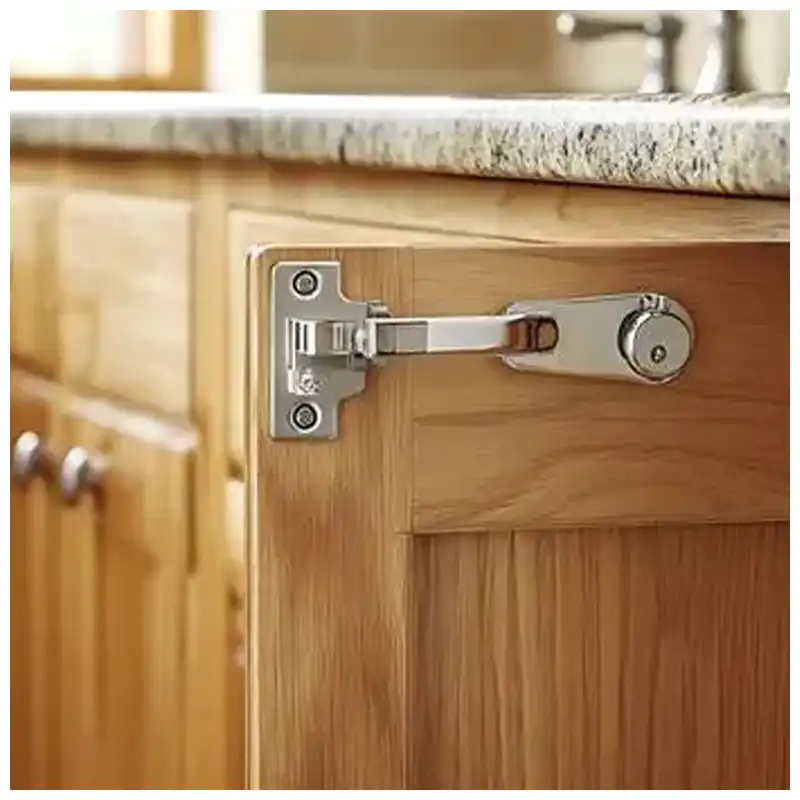
Most concealed hinges mount a door with a cup drilled into the door and a mounting plate on the cabinet side. A few screws control three separate directions: up and down, side to side, and in and out. If the spec never says how much of that range the installation actually needs, the installer has to bend the door or shim the cabinet to make the reveal even.
Three Screws, Three Axes: Reading the Adjustment Range
The three adjustments do different jobs. The vertical screw moves the door up and down to line up the top and bottom edges. The lateral, or side, screw slides the door left and right to set the reveal and how far it covers the face. The depth screw moves the door in and out to set the gap between the door and the cabinet. A hinge with a wide range on all three lets the installer correct for a wall that is out of plumb or a cabinet box that is a few millimetres out of square.
The adjustment range varies materially by hinge family and mounting plate, so I do not work from a generic figure. I record the published range per screw for bathroom vanity door hinges on the schedule, so the installer knows how much correction is left before the first fit instead of finding out after the door is hung.
I ask for the manufacturer's adjustment range in the hardware schedule, then I check it against the real installation. A door that needs constant force, rubs a neighbouring panel, or closes with a visible change in the reveal has run out of adjustment somewhere. That is a signal to stop and look at the hinge geometry, not to tighten the same screw harder.
The reveal is the real test result. Hold a door and look at the gap around all four edges in the finished room, not in the shop. A hinge that centers the door in the shop can still leave a wide gap once the wall leans or the floor settles. Budget the adjustment range so there is room left for that, rather than using every millimetre at the first fit.
Budgeting adjustment means leaving range on the table at first fit. If the installer uses the full depth screw to make the door meet the frame, there is nothing left when the wall settles or the door swells. I would rather hold the door a fraction off its final position than arrive with every screw bottomed out.
Soft-Close Is a Mechanism, Not a Label
"Soft close" hides two different mechanisms. A self-close hinge uses a spring to pull the door shut, and the door still lands with a tap. A true soft-close hinge adds a damper, usually a small piston or rotary unit, that catches the door in the last stretch and slows it to a stop. The difference shows up when a guest lets go of a door in a tiled bathroom at night.
I test the damper with the door it will actually carry. Fit the door, add the handle, then close it from a realistic open angle and listen. A damper that only catches when the door is pushed hard will be bypassed every day, and the door will slam anyway. A damper that engages late can also let the door bounce back instead of seating. The close action is the whole point of specifying bathroom vanity door hinges, so it is worth testing before the order repeats.
The test should also run with wet hands and an open neighbouring door, because that is how the room is used. If the damper cannot be removed and replaced as a unit, note it, because a worn damper should not force a full hinge swap later. The hardware guide on the broader package carries the replacement logic, while this decision stays on the door itself.
Humidity Reaches the Parts You Cannot See
The corrosion that defeats bathroom vanity door hinges can start inside, on the spring, the fasteners, the cut edges, and the mounting interface wherever moisture reaches them, even when the outside plating looks clean. Bathroom steam, cleaning spray, and a slow trap leak all raise the moisture around the hinge. The table below is a preliminary selection guide against the room condition.
| Finish or plating | Typical use | Humidity behavior | Check before release |
|---|---|---|---|
| Zinc-plated steel | Budget cabinets | Basic moisture resistance | Confirm plating covers cut edges |
| Nickel-plated | Mid-range | Good against ordinary steam | Match the door and handle finish |
| 304 stainless steel | Common starting point for ordinary indoor exposure | Strong against steam and cleaning spray | Verify the grade, not just the word stainless |
| 316 stainless steel | Spa or coastal rooms | Best chloride resistance | Confirm the grade for the room |
The grade matters more than the word stainless. A 304 hinge suits ordinary bathroom steam, while 316 adds molybdenum to resist the chlorides in a spa or a coastal room, at a higher cost. Actual suitability still depends on the coating, the room, and the cleaning chemicals, so I require the supplier's material and corrosion-performance documentation for the project environment rather than reading the table as a final answer. Plated hinges are often rated by neutral salt-spray hours, and ANSI/BHMA A156.9 covers cabinet hardware performance grades, so I ask for the model's test record instead of accepting the word rust-resistant.
The finish label is not the whole story. Plating covers a hinge until a screw is driven through it or a cut edge is left bare. I look at the hinge after the door is hung and after the cleaning routine is known, and I ask whether the mounting plate and the screws carry the same protection as the visible cup.
Ventilation does the other half of the job. A well-plated hinge in an unventilated bathroom can still rust at the screw head, while a zinc hinge in a dry, ventilated powder room can last. The finish decision and the room condition belong in the same sentence.
The Hard-Won Lesson: The plating is not the hinge
A hinge can pass a visual check on the showroom floor and start to squeak or sag after handover. The outside looks clean because the damage is happening on the spring and damper inside, where steam and cleaning spray reach through the screw holes. By the time the door droops, the plating was never the weak point.
The Lesson: Judge a hinge by its close action and its finish on the mounting plate and screws, not by the shine on the cup.
Overlay, Inset, and the Hinge Geometry That Follows
The door style changes the hinge geometry before a single screw is set. A full-overlay door covers the frame or box face and usually calls for a straight or lightly cranked arm, while an inset door sits inside the opening and usually calls for a cranked arm and a mounting plate that keeps the door clear of the frame edge. The boring is often the same standard cup across the range, and the arm crank is what sets where the door lands.

I settle overlay and inset before the hinge spec, because the adjustment range the installer needs is different for each. An inset door demands an even gap on all four sides that the vertical and depth screws have to hold. A full-overlay door hides the frame and lets the lateral screw set how much of the face it covers, while the depth screw moves the door in and out to close the gap. When bathroom vanity door hinges are ordered before the door style is fixed, the installer inherits a geometry that never quite lines up.
The hinge also meets the vanity top overhang. A door that opens wide under a protruding stone top has to clear the overhang as geometry first, through the overlay, the arm and plate selection, the door thickness, and the opening angle, and the adjustment screws then hold the final alignment. So the overhang distance and the door swing belong in the same drawing as the hinge schedule. I check that corner in the mock-up, because it is the one spot where the top and the door share the same few millimetres.
The same room that rusts a hinge also swells the door, and a swollen door changes the hinge load. Bathroom vanity door hinges carry the door whether it is dry or damp, so the finish and the door material are one decision, not two. A stainless hinge on a door that swells still needs the reveal range to absorb the movement.
Door Weight Decides the Hinge Count
Door weight varies by material, thickness, and size, and it changes everything downstream. A solid timber door is often heavier than a painted front of the same dimensions, but panel construction can reverse that, so I check the actual door weight rather than judging by the label. Heavier doors need more hinges, longer screws, and a mounting plate that spreads the load into the cabinet side. A spec that fixes the hinge count before the door is weighed is guessing.
I work the number back from the door. A tall or heavy full-overlay door on a hotel vanity can need three hinges instead of two once the door passes the published load and height limits for that hinge, and the soft-close damper has to be rated for the same duty. Makers publish hinge-count charts by door height and weight, and the figures move from model to model, so I read them from the selected hinge's chart rather than a general threshold, because two dampers struggling under a heavy door wear out together and the door starts slamming a room at a time.
The cabinet side matters too. The mounting plate screws into the face frame or the box edge, and that surface has to hold. When the door is heavy, I check screw length and the edge distance so the bathroom vanity door hinges do not pull loose the first time a guest swings the door wide. This is the same reason I keep the frame and box material in view when I set the hinge spec.
The Damper May Be the First Service Item
The soft-close unit is often the first part that needs attention, because it does work a plain hinge never had to. A piston or rotary damper cycles thousands of times in a busy bathroom, and once it loses its fluid or wears its seal, the door starts to slam. The hinge plates and screws can stay sound long after that, so the repair may be the damper rather than the whole hinge.
That is why the damper has to be identifiable and replaceable. A hinge with an integrated, unmarked damper can force a full swap when the close action goes, and the surrounding finish may need a touch-up with it. When a door is replaced or adjusted on a bathroom vanity cabinet already in service, the model code, not a photograph, decides what gets ordered. I record the damper type and the model so a replacement matches the first set and the door still seats the way it did at handover.
Approving a Hinge the Next Team Can Replace
The hinge needs a service record, because it is a wearing part and the room will outlast the first set. I keep the model, the overlay type, the cup diameter, the damper type, the finish, and the adjustment position in the handover file. Ten years later, maintenance should be able to order the same hinge without guessing what was fitted.
The record also carries the adjustment range and where the screws were set at handover, so a technician knows what is normal and what has drifted. A door that returns slowly against an uneven wall is not the same fault as a door that slams because the damper wore out. The record separates the two, which is the whole point of documenting bathroom vanity door hinges in the handover file.
When a hinge fails after delivery, the first step is evidence, not force. Photograph the door position and the reveal, note the close action and any stiffness, then compare against the approved hardware schedule and the original adjustment record before swapping parts. That keeps a small hinge problem from becoming a door-replacement argument.
The handover note should also name the overlay type and the cup diameter, because a replacement hinge has to match both. A hinge that looks identical in a catalogue can have a different cup depth and throw the door reveal off by a visible margin. The model number, not a photograph, is what lets maintenance order the right part.
Questions We Hear Before Release
1. What should the team confirm first about bathroom vanity door hinges?
Confirm the adjustment range on all three axes, the door weight, and the close action against the real installation before the order repeats.
2. What is the difference between soft-close and self-close?
Self-close uses a spring to pull the door shut and it still lands with a tap; soft-close adds a damper that catches the door near the end and slows it to a stop.
3. Why do hinges rust in a bathroom even with plating?
Because steam and cleaning spray reach the internal spring and damper through the screw holes and cut edges, so the protection has to cover the mounting plate and screws, not just the visible cup.
4. How many hinges does a vanity door need?
The door weight decides it. A heavy solid or tall full-overlay door may need three hinges instead of two, with a damper rated for that load.
5. What should happen when a door no longer closes properly?
Photograph the door position and reveal, note the close action and stiffness, and compare against the approved hardware schedule and adjustment record before swapping parts.
Quick-Reference Checklist for Door Hinges
- Record the adjustment range on all three axes in the hardware schedule.
- Test the soft-close with the real door, handle, and open angle.
- Match the finish to the room humidity and the mounting plate and screws.
- Set the hinge count from the door weight, not from a catalogue default.
- Keep the model, overlay, damper, finish, and adjustment position in the handover file.
Final Conclusion
A hinge is worth getting right because it is the part a guest touches every single day. I would rather test one door under real use than approve a finish from a photo and inherit a floor full of slamming doors. KA UNITED keeps bathroom vanity door hinges tied to the door weight, the frame, the vanity top, and the humid room the door will live in.
References
- Kitchen and Bath Planning Guidelines, National Kitchen & Bath Association (NKBA).
- Architectural Woodwork Standards, Architectural Woodwork Institute.
- ANSI/BHMA A156.9 American National Standard for Cabinet Hardware, Builders Hardware Manufacturers Association.
- ANSI/KCMA A161.1 Performance and Construction Standard for Kitchen and Vanity Cabinets, Kitchen Cabinet Manufacturers Association.