Quartz Stone Cabinet Countertop Vs Marble Cabinet Countertop, Who Is Better?
Where the Quartz vs Marble Countertop Decision Gets Made
Most of the cabinet countertop orders I quote come with the same open question attached: quartz or marble? The buyer usually frames it as a look, because both materials can be white with soft grey veining, and at a glance a photographed sample will not settle it. But by the time a countertop reaches a hotel or a house on the other side of the ocean, the question has turned into a list of physical behaviors. The stone that survives cutting, shipping, install, and daily use is not always the stone that won the photo comparison.
Here is the honest frame. I do not sell either material as better in the abstract. I sell the right surface for the job, and the job is set by where the countertop sits, how many units are in the order, and what touches the surface every day. So instead of a beauty contest, I walk through the six things I check when a buyer sends me a material decision: what each stone actually is, hardness, porosity, heat, batch consistency across a large order, and price. That order follows the way a real export order gets specified, not the way a showroom brochure gets laid out.
What Each Material Actually Is
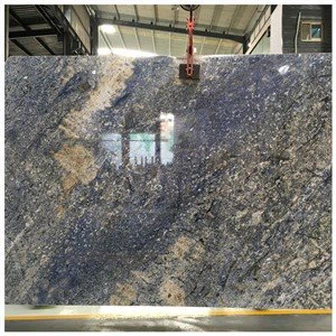
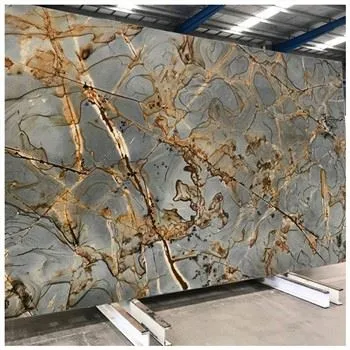
I start here because the word quartz confuses a lot of buyers, who assume it is a mined slab like marble. Engineered quartz is a manufactured sheet. A factory grinds natural quartz crystals, roughly 90 to 94 percent of the mix, into fine particles, binds them with polymer resin and pigment, then compacts and cures the blend under vacuum. Marble is the opposite. It is cut straight from a quarry, no two slabs are identical, and its chemistry is calcium carbonate, which sits around 3 to 4 on the Mohs scale and reacts with acid. I wrote a longer breakdown of marble's makeup in our note on the stone properties of marble; the short version is that marble is soft and acid-sensitive because it is calcite, not because the quarry cut it wrong.
Hardness: 7 against 3 to 4
Hardness is the first thing I check because it decides whether a surface still looks clean once it gets used. The Mohs scale runs from 1 to 10 and measures scratch resistance, not toughness. A steel knife sits around 5.5, which means quartz, at about 7, will not be scratched by normal kitchen tools. Marble, at 3 to 4, sits below that same blade, so a knife dragged across it, a cast iron pan slid over it, or grit caught under a plate will leave a mark over time.
For a cabinet countertop that is going to be boxed, shipped, and set in place, hardness also shows up during transport. Marble edges are the part I watch closest. A soft stone with a sharp cutout around a sink or a thin front overhang is exactly where a crate strap or a bump in transit leaves a chip. Quartz is harder at the edge, though it is not unbreakable, and a sharp impact can still take a corner off. The difference is that marble chips more readily, while quartz chips mainly under a real blow.
The practical split is this. If the countertop will face knives, pans, and everyday wear, quartz holds its surface longer. If the buyer accepts a softer surface that develops a patina of fine marks, and hones it back every few years, marble is a fair trade. Neither is scratch-proof, but quartz wins that race by a wide margin.
Porosity, Sealing, and the Acid Line
The second thing I check is how much the surface absorbs, because water is the delivery vehicle for nearly every stain a countertop will ever meet. Quartz is non-porous. Its resin fills the spaces between the crushed quartz particles, so coffee, wine, oil, and juice sit on top and wipe off with soap and water, and no sealer is ever applied. Marble is porous. Its calcite has microscopic channels that pull liquids in, so the same spills sink in and stain. The fix is sealing, applied periodically, and a busy kitchen top wants it more often than a low-traffic vanity, and even a sealed marble top still stains if a spill sits long enough.
Porosity is only half of the story. The other half is chemistry. Marble is calcium carbonate, and calcium carbonate reacts with acid. Lemon juice, vinegar, wine, and tomato sauce eat a microscopic layer off a polished marble surface and leave a dull, lighter patch called an etch. That mark is damage to the stone itself, not a stain on top, and no sealer stops it, because the acid reaction happens at the surface regardless of what has soaked in. Quartz does not etch. Its silica and resin do not react with the acids you find in a kitchen, which is the single biggest reason quartz is the easier material to live with around a sink and a cooktop.
For an export order, this gap lands as an after-sales difference. The most common complaint I see on a marble countertop is an etch mark or a stain that the property owner cannot clean off, and the fix usually means re-honing or replacing the piece. The same spill on quartz is a non-event. If a buyer wants to minimize claims and rework on the far end of the shipment, the acid line is where the two materials split hardest.
Heat: The One Place Marble Has an Edge
Heat is the place where the comparison flips, and buyers are often surprised by it. Marble is a natural stone, so it handles heat well in the sense that a hot pan will not discolor or melt it. The risk with marble is thermal shock. A very hot pot set on a cold stone surface can crack it, especially near an edge or a seam, so I still tell buyers to use a trivet, but the material itself is not damaged by heat alone.
Quartz has a resin binder, and resin softens and discolors under sustained heat. A pan taken straight off the stove and set on a quartz surface can leave a scorch mark that will not buff out. The common threshold people quote is around 300 degrees Fahrenheit for the resin to start to give, and I treat that number as a warning rather than a precise spec, since the damage depends on heat, weight, and contact time. The rule I give every buyer is the same for both materials: hot cookware goes on a trivet or a board, never directly on the stone.
Batch Consistency: The Hidden Cost of a Multi-Unit Order
This is the section most comparison articles skip, and for cabinet countertop orders it is often the one that decides the material. A single countertop in a single house can be matched by hand, because the fabricator only has to make one or two slabs agree. A hotel order with forty vanities, or a residential development with eighty kitchens, is a different problem entirely, and the two materials handle it very differently.
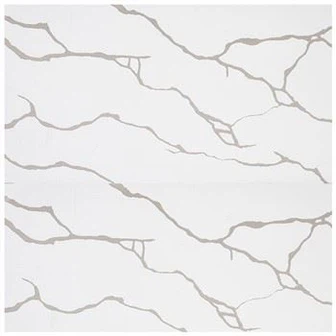
Quartz is engineered, so its color and pattern are mixed at the factory and held within a tolerance. Two slabs of the same quartz pattern, cut from different batches, look close enough that a row of vanities reads as one continuous design. The repeatability is not perfect, but it is far tighter than anything nature produces. When a buyer needs twenty matching countertops, quartz removes the single largest risk in the whole order, which is that the last five units arrive looking like a different stone.
Marble cannot be controlled that way. Every slab carries its own veining and background, so a large order has to be selected slab by slab, often from the same block, and laid out in a dry run so the pieces agree with each other. That selection work costs time and money, and even then the result is a natural material with natural variation. Some buyers want exactly that, because they are paying for the one-of-a-kind look. Variation is the feature they are buying, and consistency is the thing they are giving up.
For the procurement side of the decision, the question is simple. If the order values a uniform, repeatable finish across many units, quartz is the easier material to deliver. If the order values a unique natural surface and can absorb the selection and layout work, marble is worth the extra handling. I cover the quartz side of this in more detail in our guide on the secret of choosing a quartz countertop, where the consistency question comes up as the reason quartz fits repeat orders so cleanly.
Price: What Actually Moves the Number
The last thing I check is price, and I frame it differently than most buyers expect. The question is not which material costs more. Both quartz and marble have wide ranges, and a mid-grade quartz and a mid-grade marble can land within reach of each other. The more useful question is what drives the number in each material, because that tells you what you are paying for.
In quartz, the price is driven mostly by the brand, the pattern tier, and the thickness. Entry-level quartz lines cost less, while the premium marble-look patterns, the ones engineered to copy Calacatta or Carrara veining, climb higher because they are harder to produce. Thickness matters too, with 3 centimeter slabs costing more than 2 centimeter slabs, and the fabrication, edge profile, and sink cutout stack on top of the slab price.
In marble, the price is driven mostly by variety, background, and veining clarity. A common beige or grey marble costs less than a bright white slab with clean, controlled veining, and a rare variety from a named quarry can cost several times more than an ordinary one. Marble also carries a hidden running cost that quartz does not. The sealing schedule, the careful choice of cleaners, and the eventual re-honing are all part of owning marble, and those costs show up year after year.
The procurement lesson I give every buyer is to price the spec, not the material name. Two buyers can both say they want a white countertop and end up with numbers that are far apart, because one is buying a common quartz pattern and the other is buying a book-matched Calacatta slab. Fix the material, the pattern or variety, the thickness, the edge, and the number of units before anyone talks numbers. Those five things decide the quote far more than the words quartz or marble ever will.
Quartz vs Marble Countertop at a Glance
The six factors above line up cleanly when you set them side by side. This is the table I keep in my head when a spec sheet lands on my desk, and the one I would want a buyer to read before locking a material.
| Factor | Quartz | Marble |
|---|---|---|
| Material type | Engineered, roughly 90 to 94 percent quartz with resin and pigment | Natural metamorphic rock, mostly calcium carbonate |
| Mohs hardness | About 7, above a steel knife blade | 3 to 4, softer than a steel blade |
| Porosity | Non-porous, never needs sealing | Porous, needs periodic sealing |
| Acid reaction | Resists, no etch from lemon or vinegar | Etches from acid, mark cannot be cleaned off |
| Heat | Resin can scorch under a very hot pan | Handles heat but can crack from thermal shock |
| Batch consistency | Repeatable color and pattern across units | Varies slab to slab, needs selection and layout |
| Daily upkeep | Soap and water, no special cleaners | Careful cleaner choice plus resealing |
| Main price driver | Brand, pattern tier, and thickness | Variety, background, and veining clarity |
Read the table top to bottom and the pattern stays consistent. Quartz wins on repeatability and low upkeep, marble wins on natural character and heat behavior, and the two rarely compete for the same order once the buyer has named the job. Most of the projects I quote use one material for the working surfaces and save the other for a statement piece, and that is each material doing the job it was built for.
Frequently Asked Questions
Is quartz harder than marble?
Yes, by a wide margin. Quartz sits around 7 on the Mohs scale, above a steel kitchen knife, so normal cooking will not scratch it. Marble sits at 3 to 4, below that blade, so it picks up fine scratches over time, especially around sink cutouts and edges. For scratch resistance, quartz is the answer.
Does marble really etch from lemon juice and vinegar?
It does, and quickly. Marble is calcium carbonate, which reacts with acid, so lemon juice, vinegar, wine, and tomato sauce leave a dull, lighter patch called an etch. That mark is chemical damage to the stone, not a stain, and no sealer prevents it. Quartz does not etch, which is why it is the easier surface to live with in a kitchen.
Which countertop needs sealing?
Marble needs sealing. Its porous calcite absorbs liquids, so a sealer is applied periodically to slow staining, and the schedule depends on use. Quartz is non-porous, so it never needs sealing and cleans with soap and water.
Can quartz handle a hot pan straight from the stove?
I would not count on it. Quartz has a resin binder, and sustained heat from a very hot pan can soften and discolor the resin near the surface, leaving a scorch mark that will not buff out. Marble will not scorch the same way, but it can crack from thermal shock. The rule for both is the same: put hot cookware on a trivet or a board.
Which is cheaper, quartz or marble?
Neither is always cheaper. Both have wide ranges, and a mid-grade quartz and a mid-grade marble can land close to each other. Quartz prices move on brand, pattern tier, and thickness, while marble prices move on variety, background, and veining clarity. Marble also carries running costs, the sealing, the careful cleaners, and the occasional re-honing, that quartz does not. Fix the spec before you compare quotes, because the name alone does not set the number.
Final Conclusion
The quartz vs marble countertop decision is not a matter of taste. It is a matter of hardness, porosity, chemistry, heat, batch consistency, and price, and each points to the same split. Quartz is the working surface: harder, non-porous, indifferent to acid, and repeatable across a large order, so it belongs on kitchen counters and anywhere a surface takes daily contact and has to match across many units. Marble is the statement piece: softer and porous, with a surface that reacts to acid, carrying a natural character no factory can copy, so it belongs where it gets looked at more than it gets worked on.
My advice to a buyer is to stop asking which material is better and start asking which material fits the order, the room, and the maintenance the owner will actually keep up. Most projects are best served by both, with quartz carrying the working surfaces and marble reserved for the surfaces people notice. That is the same framework I use when I help a client spec a countertop package, and it is the honest answer I would give you when you source your cabinet countertops with KA UNITED.