Quartz Countertop Cleaner Approval For Bathroom Vanity Packages
Quartz Countertop Cleaner for Bathroom Vanities: Residue, Contact Time, and Housekeeping Handover
A pale haze appears across several dark vanity tops after opening. The quartz is unchanged beneath it; a shared cloth and concentrated product have spread residue from mirrors and fittings over the counter. Polishing harder only makes the room look more uneven.

The right quartz countertop cleaner is not chosen from the word "bathroom" on a bottle. I compare the selected surface manufacturer instructions with the actual soil, dilution equipment, contact time, cloth, rinse water, drying step, and every adjacent finish the liquid may touch.
My direct answer is to run the housekeeping procedure in a completed sample room. Clean it at normal speed, let every surface dry, then inspect the top, sink, faucet, sealant, splash, and cabinet edge under the operating light.
Table of Contents
- Start with the Surface Manufacturer Instructions
- Separate Soil Removal from Finish Damage
- Control Dilution, Contact Time, and Cloths
- Test Every Adjacent Vanity Material
- Inspect the Dry Result under Mirror Light
- Write Spill and Misuse Escalation Steps
- Keep the Cleaning Record with Replacement Data
- Frequently Asked Questions
Start with the Surface Manufacturer Instructions for Quartz countertop cleaner
At the faucet deck after the final dry wipe, I resolve the current surface care instructions before moving to finishes. I read the selected manufacturer instructions before testing while the relevant parts are still together. A late answer may mean that a cleaner can leave film even when it removes soap. The drawing set and mock-up photographs carry product name, batch, safety information, and approval date forward. Once the mirror, basin, and cabinet are present, the practical effect of the current surface care instructions becomes visible.
I do not separate rinse source and final drying step with approved response for cosmetics, soap, dye, and residue. One identifies the approved result and the other preserves how it was achieved. Site and factory now have one reference for resolving concentrate-to-water dilution.
Standing at the vanity, I examine the incident records from repeated rooms. I define the real soil and the least aggressive effective method before the same decision is repeated across rooms. Otherwise, a cleaner can leave film even when it removes soap. To judge incident records from repeated rooms, I move between the doorway, basin, open drawers, and cleaning position. I want the guest and housekeeper to encounter the same resolved detail.
I keep this room decision with Quartz Vanity Tops for Hotel and Multi-Unit Bathrooms, where the top, cabinet, sink, plumbing, light, installation, cleaning, and replacement details meet.
Separate Soil Removal from Finish Damage
Before signing the room type, I test the current surface care instructions. I measure dilution rather than estimating by eye before the same decision is repeated across rooms. That omission often means that concentrated product may change sheen or color. To judge the current surface care instructions, I move between the doorway, basin, open drawers, and cleaning position. Daily reach and clearance settle the question more honestly than a sample board.
When I inspect a dark top under vertical mirror lights, I test the soil the cleaner must remove against the room drawing. I define the real soil and the least aggressive effective method while the relevant parts are still together. The finish schedule cannot change the fact that concentrated product may change sheen or color. I put dilution ratio and dispensing method beside the room type rather than leaving the decision in an email. Daily use gives a more honest test of the soil the cleaner must remove than desk light.
I use the quartz surface range only after the sink, cabinet, wall, light, and maintenance needs are written into the same room decision.
For quartz countertop cleaner, choose the method from the actual surface and soil rather than a generic bottle label.
Control Dilution, Contact Time, and Cloths
While viewing the cabinet edge below a wet cloth path, I bring the concentrate-to-water dilution into the mock-up first. I measure dilution rather than estimating by eye while the relevant parts are still together. The mock-up has to test whether abrasive pads can create a different reflection. The production release points directly to application and maximum contact time. That is why I judge concentrate-to-water dilution in the working room rather than in isolation.
The final room record joins adjacent material observations after the trial with surface code, finish, first piece, and replacement reference. The pair shows what was accepted and where that acceptance applies. Nobody has to guess what the team meant when it accepted cloth type and laundering residue.
Housekeeping and maintenance bring me back to the soil the cleaner must remove. I time the application and rinse consistently before the same decision is repeated across rooms. The trouble is that abrasive pads can create a different reflection. To judge the soil the cleaner must remove, I move between the doorway, basin, open drawers, and cleaning position. That is how I separate a coordinated assembly from a decorative specification.
| Decision point | Evidence to inspect | Release condition |
|---|---|---|
| Product | Manufacturer instructions and intended use | Compatible with selected quartz and adjacent finishes |
| Method | Dilution, dose, contact time, cloth, and rinse | Staff can repeat the process consistently |
| Dry result | Film, streak, gloss, color, and joint inspection | No persistent residue or finish change |
| Adjacent materials | Sink, faucet, sealant, splash, cabinet, mirror | No damage from overspray or runoff |
| Escalation | Room, mark, product, photographs, and pause rule | Evidence exists before stronger treatment |
The Hard-Won Lesson in quartz countertop cleaner: Inspect after drying, not while the top is wet
A wet surface can look perfectly even after cleaning. As water evaporates, mineral residue and product film collect in arcs around the faucet and basin. Repeated wiping with the same contaminated cloth spreads the haze farther, while staff assume the quartz itself is changing.
The Lesson: Approve the complete cleaning cycle only after the top has dried under the normal bathroom light.
Test Every Adjacent Vanity Material
The second pass deals with the concentrate-to-water dilution. I assign separate clean cloths by surface zone before the same decision is repeated across rooms. Miss it, and one cloth can transfer oil and minerals between surfaces. To judge concentrate-to-water dilution, I move between the doorway, basin, open drawers, and cleaning position. That short walk tells me whether the detail survives daily use.
As I look at a sample room cleaned at normal housekeeping speed, I begin with the liquid contact time before wiping. I time the application and rinse consistently while the relevant parts are still together. The risk is that one cloth can transfer oil and minerals between surfaces. I save cloth type, color code, wash method, and replacement cycle after comparing the cabinet drawing, top drawing, basin, and visible finishes. The completed room shows whether liquid contact time before wiping still works beyond the isolated meeting-table sample.
With quartz countertop cleaner, measure dilution, time, rinse, cloth, and dry result as one procedure.
Inspect the Dry Result under Mirror Light
During a check of a basin rim carrying cosmetic and soap residue, I focus first on the cloth type and laundering residue. I assign separate clean cloths by surface zone while the relevant parts are still together. The reason is practical: overspray may affect hardware or cabinet finishes. The accepted room file receives rinse source and final drying step, along with the drawing and physical finish references. With every component present, the practical effect of cloth type and laundering residue becomes easier to judge.
For handover, I keep incident form with room, time, product, and action with dilution ratio and dispensing method. One fixes the approved appearance or dimension; the other carries it into repeated work. That evidence lets all three teams test final dry-wipe method against the same accepted condition.
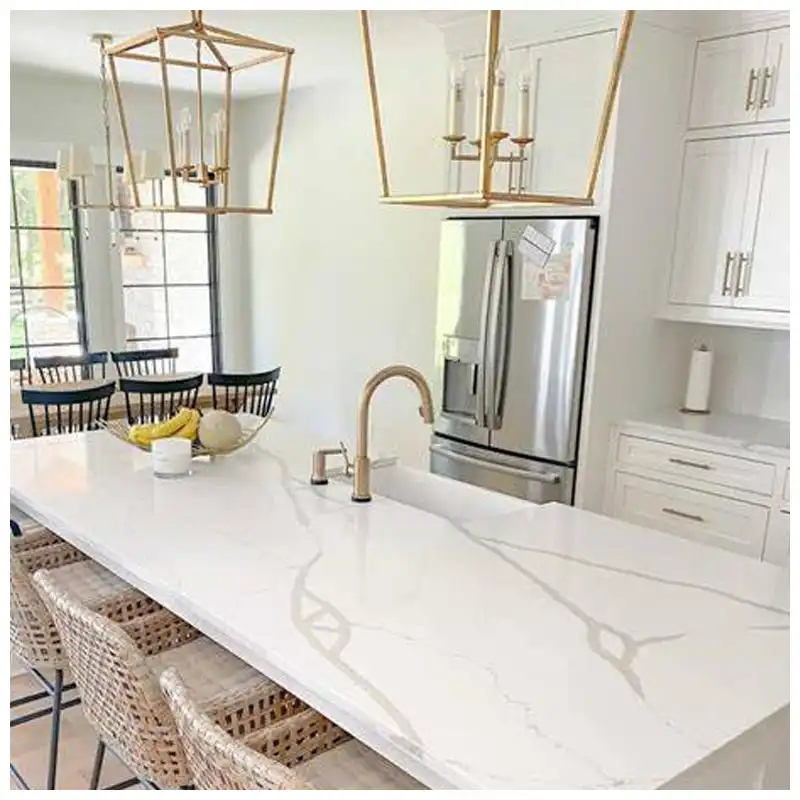
From there, I turn to the liquid contact time before wiping. I inspect only after the vanity has dried before the same decision is repeated across rooms. If nobody resolves it here, overspray may affect hardware or cabinet finishes. To judge liquid contact time before wiping, I move between the doorway, basin, open drawers, and cleaning position. The detail passes only when every position remains workable.
The bathroom vanity top range works best when its dimensions and finish are coordinated with the cabinet and plumbing before production.
Write Spill and Misuse Escalation Steps
Once the first point is settled, I check the cloth type and laundering residue. I test hidden or spare material before changing products before the same decision is repeated across rooms. A late answer may reveal that standing liquid can remain around faucet bases and joints. To judge cloth type and laundering residue, I move between the doorway, basin, open drawers, and cleaning position. A drawing answer is not enough if the movement feels awkward.
While reviewing the service cupboard where concentrates are mixed, I put the rinse-water mineral content ahead of the decorative choices. I inspect only after the vanity has dried while the relevant parts are still together. My concern is that standing liquid can remain around faucet bases and joints. My marked-up package ties before, wet, and dry photographs under fixed light to the cabinet, basin, top, and wall finishes. The completed vanity gives rinse-water mineral content a context that the sample board cannot reproduce.
Before the room type is released, I check it again against Quartz Vanity Tops for Hotel and Multi-Unit Bathrooms so one attractive detail does not conflict with the complete vanity package.
When the specification calls for quartz countertop cleaner, include every nearby finish that receives overspray or runoff.
Keep the Cleaning Record with Replacement Data
Returning to a maintenance inspection before anyone uses an abrasive pad, my first practical check concerns the final dry-wipe method. I test hidden or spare material before changing products while the relevant parts are still together. The room may reveal that hot styling tools can create damage unrelated to cleaning. I record adjacent material observations after the trial only after the top and cabinet information agree. Only the assembled room shows whether final dry-wipe method works beside its real neighbors.
The approval record places product name, batch, safety information, and approval date with cloth type, color code, wash method, and replacement cycle. Their references let the factory and site discuss the same physical condition. A replacement crew can understand sealant line and adhesive exposure without reopening the original design debate.
The assembly still has to answer for the rinse-water mineral content. I include faucets, sinks, joints, and cabinet edges in the trial before the same decision is repeated across rooms. The practical consequence may be that hot styling tools can create damage unrelated to cleaning. To judge rinse-water mineral content, I move between the doorway, basin, open drawers, and cleaning position. Those viewpoints reveal conflicts that an elevation can hide.
A decision about quartz countertop cleaner must keep an incident path that stops aggressive treatment until evidence is reviewed.
Where a Bathroom Cleaning Program Damages the Vanity
Stronger is not automatically cleaner
The least aggressive effective method is easier to control. Concentration, time, abrasion, heat, and repeated exposure all matter.
One bottle touches several materials
Runoff and overspray reach ceramic, metal coatings, sealant, paint, glass, and cabinet edges. Test the assembly rather than the quartz alone.
A written pause rule protects evidence
When an unexplained mark appears, photograph it and record the method before changing chemistry or abrasion. That record separates residue from damage.
Cosmetics require identification before treatment. Foundation, hair dye, nail products, toothpaste, soap, and oily creams do not respond to one universal procedure. Blot fresh material, follow the surface instructions, and test any approved response on spare or concealed material when possible. Do not turn a small stain investigation into a large gloss difference.
Frequently Asked Questions of Engineered Quartz Countertops
1. Can any neutral-pH cleaner be used on quartz?
No universal label replaces the selected manufacturer instructions and project testing. Ingredients, concentration, contact time, rinse, abrasion, and adjacent materials still matter.
2. Why does a quartz top look cloudy after cleaning?
Possible causes include product residue, hard-water minerals, transferred oils, dirty cloths, altered sheen, sealant smear, or another surface condition. Inspect the dry top before treatment.
3. Should housekeeping use the same cloth on mirrors and counters?
Separate cloths reduce transfer of glass-cleaner residue, oils, minerals, and soil. The final method should reflect the actual room workflow.
4. Does engineered quartz need routine sealing?
Many engineered quartz products do not use the same routine sealing process as porous natural stone. Follow the exact manufacturer care instructions.
5. What should staff do when a new mark will not wipe away?
Photograph the dry condition, stop stronger chemicals or abrasives, record the products and actions already used, and contact maintenance and the supplier with the original care record.
Quick-Reference Checklist for quartz countertop cleaner
- Confirm the selected quartz manufacturer care instructions.
- Define the soil and choose the least aggressive effective method.
- Measure dilution and control contact time.
- Use clean, assigned cloths and a complete rinse-and-dry step.
- Test the top, sink, faucet, sealant, splash, and cabinet edge together.
- Document unexplained marks before changing products or abrasion.
Final Conclusion
A care method is successful when ordinary staff can repeat it without residue, finish change, joint damage, or improvised stronger chemistry. The final decision on quartz countertop cleaner must stay attached to the evidence that production and site teams can verify.
I would rather label one more bottle than refinish one avoidable haze, and that practical handover stays with every KA UNITED bathroom package.
References
- Cleaning agent, Wikipedia.
- 2026 Bath Trends Report, National Kitchen & Bath Association.
- Dimension Stone Design Manual, Natural Stone Institute.
- Engineered Stone Fabrication Guidance, manufacturer-specific technical documentation.
- Bathroom Planning and Fixture Coordination Guidance, local code authority.
- Tile Installation Handbook, Tile Council of North America.
- Quartz Surface Care and Maintenance Instructions, selected surface manufacturer.