Bathroom Vanity Faucet Reach: Spout Projection, Basin Placement, And Splash Control
Bathroom Vanity Faucet Reach: Spout Projection, Basin Placement, and Splash Control
A hotel vanity can look complete before anybody turns the water on. Then the first test sends the stream onto the forward slope of the bowl, and the water answers a question the elevation never did. I have watched that happen at mock-up approval. The faucet was the right finish, the bowl was the right size, and the top was neatly cut. The pairing was still wrong for ordinary use.
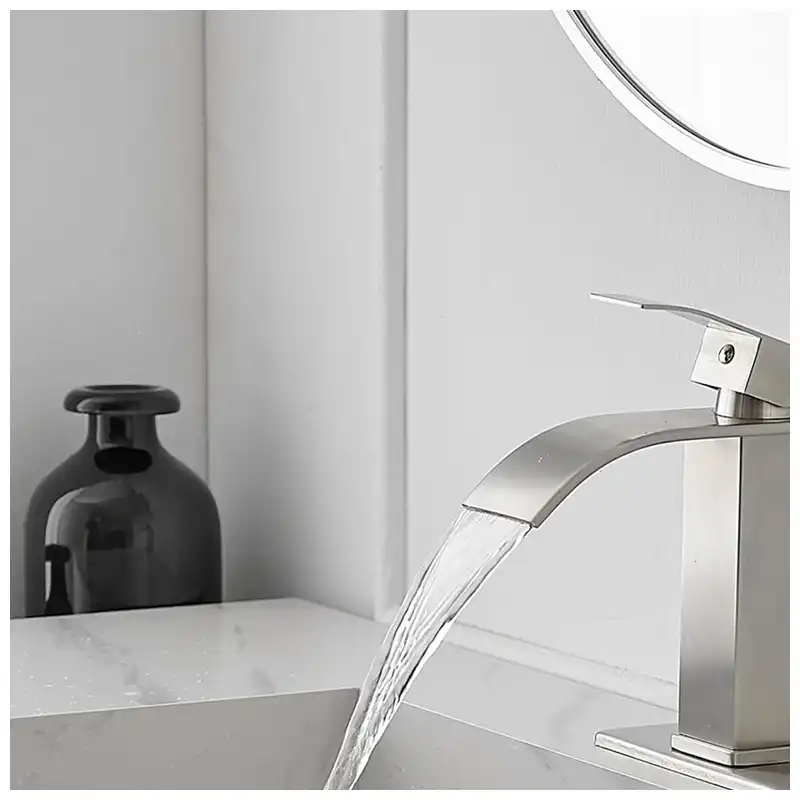
Bathroom vanity faucet reach is the part of the room that turns that first water test into a clear approval decision.
Bathroom vanity faucet reach is not a catalogue dimension that can be approved in isolation. It is the relationship between the outlet, the basin curve, the drain, the user's hands, the rear deck, and the cabinet below. Do not ask me how I know, but a fixture can be only a little too short or too long and still create a wet rear joint, a soaked drawer front, or a basin that feels awkward every morning.
I begin with the water path. Where does the stream land when the faucet runs at normal use? Does it strike a steep bowl wall and bounce forward? Is there a quiet part of the bowl where water can fall without throwing droplets onto the deck? Can a person use the handle without touching the splash? These are mundane questions. They are also the questions that decide whether the room stays pleasant after the photography is over.
Table of Contents
- Read the stream and bowl together
- Test the fixture on the real top
- Record the water path before repeated production
Read the stream and bowl together
Spout length has no useful meaning without the basin beneath it. A long projection may work beautifully with a deep undermount bowl. The same projection can be too far forward on a shallow basin, where the stream hits the front slope and leaves the user wiping the top after every wash. A shorter outlet may look restrained yet send water against a rear bowl wall if the deck and splash push the fixture too far back.
The goal is not to make water fall on the exact visual center of the basin. It is to make it fall in a part of the bowl that is comfortable, controlled, and easy to rinse. Many bowls are not symmetrical inside. Their drain position, rear curve, overflow, and front slope may change how the stream behaves. I want the selected basin in the mock-up, not a substitute with roughly the same outline.
Bathroom vanity faucet reach remains a live question until that exact fixture-and-bowl pair has been tested under normal use.
Faucet height matters as much as forward projection. A higher outlet can give hands more room, but it can also increase rebound if the water falls too far before it reaches a shallow bowl. An aerator can change the shape of the stream. Water pressure can change it again. That is why a static side view is not an approval test. This is where you do not cheap out: run the actual fixture.
That is where bathroom vanity faucet reach stops being a catalogue dimension and becomes a room-use measurement.
Bathroom vanity faucet reach earns approval only after that running-water test. Until then, the selected spout is a promising drawing item, not a proven part of the bathroom package.
Bathroom vanity faucet reach needs the exact fixture template
Two faucets from the same collection can share a finish and a general silhouette while using different mounting dimensions, outlet positions, or handle clearances. I do not accept a generic fixture symbol on a top drawing when a hotel package is about to repeat the detail. The selected model, its current technical template, and its actual mounting hardware should be present in the approval set.
The faucet body needs more than a drilled hole. It needs room for the base, mounting nut, supply connections, and the tool required to tighten them. A fixture placed too close to a backsplash can look elegant from the front while giving the installer no useful wrench path below. A very tight rear deck also becomes a cleaning problem. Soap residue and water collect in the narrow strip that nobody can reach easily.
When the fixture changes after the first mock-up, reopen the check. Do not assume a matching finish or a similar name means the same water path. The outlet height may have shifted. The body may be wider. The handle may travel farther. That small substitution can undo the top layout without changing any of the visible materials.
Keep the faucet and splash in the same section
The rear deck, backsplash height, mirror start, and faucet body all share a small piece of space. I mark those elements in one section so the team can see whether the handle clears, the mounting hardware remains reachable, and the rear deck can be wiped. A raised splash may protect a wall yet still crowd the selected fixture. That does not make the splash wrong. It means the two choices need to be made together.
Bathroom vanity faucet reach can change when a raised splash moves the fixture farther forward than the bowl profile can accept.
Check the normal hand position
A guest does not use a basin from a rendering viewpoint. They stand close, turn the handle, and move their hands under the stream. A thick front edge or a very deep bowl can move that hand position. So can a vessel bowl placed forward on the deck. I put the faucet, bowl, and counter at their intended height, then ask someone to use them normally. The test is simple and surprisingly revealing.
That ordinary movement is the last sensible check on bathroom vanity faucet reach before a repeated room type is released.
Watch what the deck does after normal use
Some water on a vanity top is ordinary. A persistent wet line behind the faucet, water running toward the cabinet front, or spray reaching the mirror frame is different. It means the bowl and fixture are making the room harder to maintain. I do not need a laboratory exercise. A normal hand wash, followed by a close look at the deck and cabinet, tells us a great deal.
Rear splash matters because it often goes unnoticed until the room has been cleaned hundreds of times. If the stream strikes the rear bowl wall and throws water toward the splash, the sealant joint stays wet longer than it should. If the stream lands too far forward, droplets can reach drawer pulls and the cabinet face. The correction may be a different basin, a different faucet, or a revised position. The mock-up tells you which one.
For bathroom vanity faucet reach, I also check what happens when the user turns the flow on quickly. A gentle stream can look fine while a stronger practical flow shows the real rebound pattern. The approved record should include the chosen fixture, bowl, deck, splash, and the observed water landing zone. That gives the project team a clear reason for the final layout.
Choose the stone detail after the water path is settled
Once the faucet and bowl behave well together, the fabricator can position them on quartz bathroom vanity tops with a more honest understanding of the rear deck and cutout. I do not move the bowl simply to make a pattern line look convenient. The surface should support the functional layout. It should not force a fixture into a poor relationship with the basin.
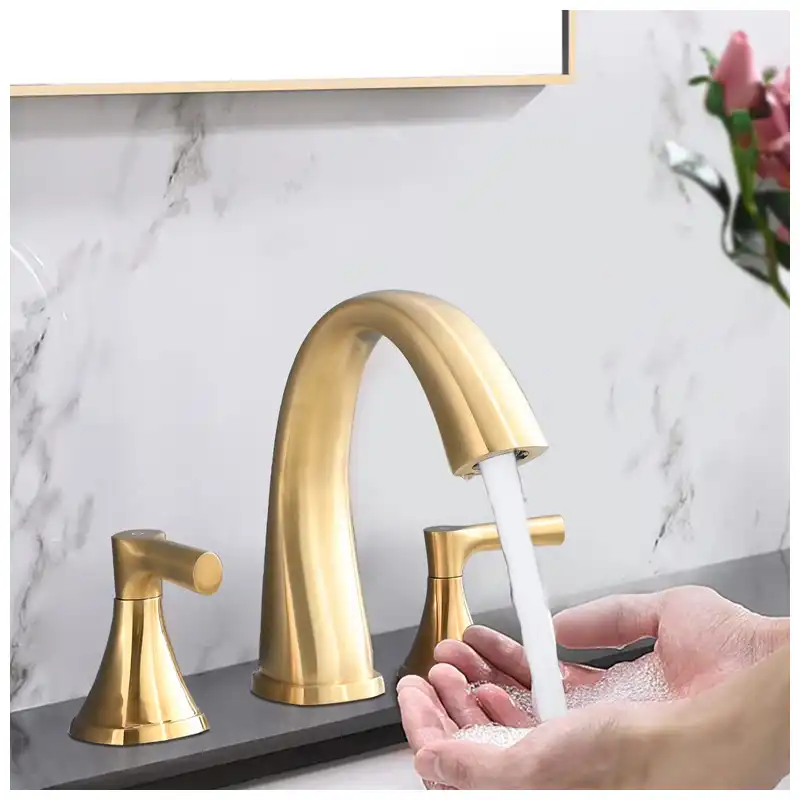
An undermount basin needs a considered reveal because the visible rim affects cleaning and the apparent size of the opening. A vessel basin asks for a different top detail and a different faucet height. A molded or integrated bowl has the least tolerance for late change because its form and drain fall are part of the top itself. In each case, the water test belongs before repeated fabrication.
Material finish can influence what a guest notices after use. A quieter finish may hide small water marks better than a reflective surface, while a highly patterned top can make residue hard to see until it builds up. That is a daily-use question, not an argument against a particular look. I simply want the sample, bowl, and faucet to be seen together under the bathroom light.
Bathroom vanity faucet reach belongs in the mock-up record beside the fixture model and the measured deck condition.
Make the first-unit record useful
I want one photograph of the stream running, one of the deck after normal use, one from below the top showing mounting access, and one with the cabinet doors or drawers open. The images should identify the room type and fixture model. A close-up of a dry faucet on a clean top is not enough. The record needs to show how the room works.
The same approval sheet should state what will trigger a new check. A substitute faucet, a different basin, a thicker splash, a revised cabinet rail, or an altered top thickness can all change the outcome. Here is what I would do: treat those changes as a new arrangement, not as a small purchasing substitution that can be absorbed without thought.
Keep bathroom vanity faucet reach on that change list. It is easy to lose when the new fixture has a similar name and finish, but it can be the part of the detail that changes daily use most.
After the first unit passes, keep the sample available until the repeated production run is well under way. If a question appears at final inspection, the team has a real benchmark. It is much easier to compare a panel, a fixture, or a top with the approved unit than to debate a recollection of what the mock-up looked like.
For bathroom vanity faucet reach, that benchmark should include both a dry view and a recorded water test. The two together make later substitutions easier to judge honestly.
What the approval table needs to settle
| Mock-up condition | What to observe | Decision it informs |
|---|---|---|
| Faucet running into an empty basin | Landing area and rebound from the bowl wall | Spout projection and basin position |
| Normal hand washing | Deck wetting, front splash, and handle reach | Bowl depth and rear-deck allowance |
| Cabinet doors and drawers open | Access to mounting hardware and supply hoses | Rear drilling position and cabinet layout |
| Housekeeping wipe-down | Reach behind faucet and along splash joint | Splash depth and fixture footprint |
| Fixture substitution | Changed outlet height or projection | Whether the top drawing must be reopened |
The Hard-Won Lesson: Do not sign off a faucet from a dry elevation
A repeated guestroom vanity used a shallow basin with a spout chosen from a finish board. The stream met the rear curve of the bowl and sent water onto the deck whenever the handle opened quickly. Nobody had misread a dimension. The team had simply not run the selected faucet before the rest of the tops were ordered.
The team resolved bathroom vanity faucet reach by changing the verified fixture-and-bowl pair before the repeated tops were drilled.
The Lesson: Put water through the approved fixture before you put the fixture into a repeated production drawing.
Reading bathroom vanity faucet reach as part of the finished package
The stream is a missing drawing line
A plan gives us centers and a section gives us heights. Neither drawing shows the water in motion. The parent Hotel Bathroom Vanity Packages Complete Guide helps project teams keep that practical mock-up observation connected to the cabinet, countertop, fixture, and room schedule.
Support and water behavior are separate decisions
A bowl and faucet may behave well while the top still needs a different rail, bracket, or span detail around the cutout. Before the fabrication drawing is frozen, compare the arrangement with Bathroom Vanity Countertop Support: Sink Cutouts, Long Spans, Cabinet Rails, and Brackets so the visible layout does not ignore the structure below it.
Bathroom vanity faucet reach should be retained on that fabrication check, because moving a bowl for support can alter the stream's landing zone.
Backsplash clearance is part of the same test
If the handle, body, or rear-deck cleaning zone is tight, the issue should be reviewed with Bathroom Vanity Backsplash Height: Faucet Clearance, Mirror Start, Outlets, and Wall Tolerance. Photograph the condition, pause repeated installation, and compare the fixture with the signed mock-up before any site adjustment is accepted.
Questions project teams ask before release
1. How do I test bathroom vanity faucet reach before production?
Install the selected faucet and basin on the real or full-scale mock-up. Run water at normal use, watch where it lands, then check the deck, splash, cabinet front, and mounting access. The test should use the actual fixture model, not a similar spout from the same collection.
2. Does a deeper basin always need a longer spout?
No. The correct projection depends on the bowl curve, outlet height, aerator angle, and how water behaves at normal flow. A deep bowl may accept a more forward stream, but the physical pairing should be tested rather than selected from a depth rule alone.
3. Can a backsplash affect faucet selection?
Yes. It limits rear-deck space, may restrict handle movement, and can create a difficult cleaning area if the fixture sits too close. Put the selected splash and fixture in the same section drawing before the top drilling location is approved.
Bathroom vanity faucet reach needs that section drawing whenever a changed splash depth shifts the fixture's usable position.
4. Why does water splash from an otherwise centered faucet?
The stream may hit a steep bowl wall or an area where the basin curve changes quickly. Basin placement, outlet height, and projection all influence rebound. A centered view from the front does not prove a controlled stream inside the bowl.
Bathroom vanity faucet reach is the reason a water test must carry more weight than the apparent centreline on an elevation.
5. What should we do if a completed room splashes onto the vanity top?
Document the running water and wet surfaces with photographs, pause repeated installation, compare the fixture and basin against the signed mock-up, and review the record with the supplier and installer before choosing a field fix. Do not let a one-room workaround become an untested production change.
Use bathroom vanity faucet reach as the name of that logged issue so the next room receives a tested correction rather than a verbal instruction.
Quick-Reference Checklist for bathroom vanity faucet reach
- Use the exact faucet model and current technical template in the mock-up.
- Run water into the selected basin at a normal use setting.
- Check the rear deck, splash joint, cabinet front, and floor after the test.
- Open the cabinet and prove the mounting hardware can be serviced.
- Photograph the stream landing and below-deck condition.
- Reopen the top drawing if the faucet model changes.
Bathroom vanity faucet reach is worth one final running-water check before the approved fixture and bowl are released across every room type.
Record bathroom vanity faucet reach in the first-unit sign-off, then repeat the tested relationship rather than relying on a visual match from room to room.
Keep bathroom vanity faucet reach visible in every approved room-type record, including any accessible or suite variation that uses a different bowl or deck depth.
Final Conclusion
Bathroom vanity faucet reach is worth testing because water does not care how convincing the elevation looked. Here's what I'd do: put the actual faucet and basin together, run the water, inspect the deck and cabinet, and record the answer before repeated tops are drilled. At KA UNITED, I would rather pause one mock-up than leave housekeeping with a wet edge for years.
References
- Faucet, Wikipedia.
- NKBA Bathroom Planning Guidelines, National Kitchen and Bath Association.
- Plumbing and Mechanical Systems Design Guidance, International Code Council.
- Bathroom Fixtures and Fittings, ASTM International.
- Hotel Design Standards: Guest Bathroom Planning, American Hotel and Lodging Educational Institute.
- Search Essentials, Google Search Central.