Travertine Wall Cladding in Hotels: Choosing the Right Grade
Travertine Wall Cladding in Hotel Bathrooms: Silver and Ivory Grades, Filled Surfaces, and Panel Planning
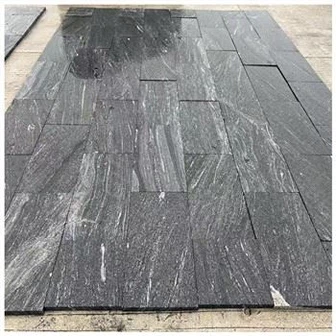
Stack the silver vein-cut panels upright beside the lobby wall and they look darker than the sample board promised. That is moisture, not a batch error: damp travertine reads several tones deeper and dries back to the lighter silver-grey within about a day. I have watched a site meeting stall over that shift; the fix is procedural, not a change of stone.
The panels in those crates belong to the hotel program behind this page. Three questions come before the saw starts: color family, grade and surface, and whether the wall is glued, anchored, or both. I walk through those decisions in order, ending where the wall meets the vanity package.

Table of Contents
- What Travertine Wall Cladding Is Made Of
- Choosing the Wall's Color Family
- Honed-and-Filled versus Open-Pore Walls
- Thin-Set Adhesive versus Anchored Panels
- Blending Tone across Long Walls
- Bathroom Walls and Wet-Area Limits
- Pairing the Wall with the Vanity Unit
- Frequently Asked Questions
What Travertine Wall Cladding Is Made Of: A Banded Sedimentary Stone with Natural Voids
Travertine is a sedimentary rock, a freshwater limestone deposited where calcium carbonate precipitates quickly from spring water, often at hot springs; the name traces to Tibur, the old name of Tivoli near Rome. An earlier version of this page called it metamorphic, which it is not: travertine keeps the porosity and softness of a limestone rather than the density of a true marble.
The hole structure decides everything downstream
Travertine forms in bands and is famous for voids left by gas bubbles and trapped plant matter as each layer hardened. Those holes drive every later decision about grade, filling, and cleaning. Because the stone is calcite-based it sits around 3 on the Mohs scale and reacts with acid, which explains most of the care rules I give below.
Vein-cut or cross-cut changes the face of the wall
How the block is sawn changes the pattern completely. Vein-cut material is cut parallel to the bands, showing long linear stripes; cross-cut (fleuri) material is cut across the bands and shows cloud-like movement. The original program used silver vein-cut tile for the lobby wall because the stripes read well behind a reception desk. Specify the cut in writing: once a block is sawn, the choice cannot be reversed.
Choosing the Wall's Color Family: Silver, Ivory, Noce, and Walnut
Travertine color names describe tone families, not one exact shade, and suppliers list more than ten. Choose by room: how much light the wall gets and whether it should recede or lead the eye. The Italian Silver group is one of the most ordered for hotel work because cool grey, warm cream, and darker grey bands sit in one stone, so a batch can be specified warm or cool.
| Family | Tone and pattern | Behavior in room light | Typical hotel wall role |
|---|---|---|---|
| Silver | Cool grey with white and cream banding | Stays composed under warm LED; grey cools the room | Lobby feature walls, spa corridors, modern panels |
| Ivory | Soft warm cream with low contrast | Brightens the room; warm lamps push it golden | Guestroom and bathroom walls that need an open feel |
| Noce | Walnut-to-coffee brown with medium contrast | Turns moody and warm under dimmed light | Lounge accent walls, fireplace surrounds, back bars |
| Walnut | Deep brown, the strongest variation | Absorbs light; can feel heavy when dim | Statement walls in suites, paired with light cabinetry |
Start from the light, then pick the stone
Lighting is the first test, not the last. Silver and ivory behave differently under warm corridor lamps than under cool skylight; no photo shows that shift. I hold a dry sample against the actual wall finish under the actual fixture before any color family goes on a drawing.
Keep one family per wall run
Large walls stay calm inside one color family, because drift within a single group reads as natural variation. Mixing ivory and walnut on one face creates a hard visual break at the transition. Save contrast for a change of plane, such as a walnut feature wall beside an ivory one.
Honed-and-Filled versus Open-Pore Walls: Matching Finish to Traffic and Water
Almost every travertine wall cladding quote we write for hotel interiors specifies a filled surface. Within arm's reach, open pores trap dust, oil, and splashed water, and each pocket becomes a housekeeping complaint.
What honed and filled means at the factory
Filled and honed is a two-step process: the factory packs the surface voids with a color-matched filler, usually a cement-based compound or resin, grinds the face flat, then hones it to a smooth matte plane. The result is a wall you can wipe without scrubbing around craters. Cement filler stays matte; resin filler can be polished if the wall is ever refinished.
Grades and pores: where open-pore stone still works
Unfilled travertine keeps the raw holes and costs less because it skips the filling step, and on a dry, out-of-reach accent wall the rustic texture may be exactly what the designer wants. Keep it off wet zones and surfaces that hands touch constantly. Outdoors, resin filler is generally not UV-stable and can yellow in direct sun, so cement filling or an unfilled face is more common on exteriors.
Grades run in three loose tiers: premium (first), standard (second), and commercial (third). Premium material is cut evenly with uniform thickness, holds a tight color range, and has small voids that need minimal filling; standard grade allows more filler and larger holes while keeping lot color consistent; commercial tolerates wide variation and heavy filling. On a wall the grade shows as tone consistency, so I start lobby and guestroom faces at premium.
Wall Mounting: Thin-Set Adhesive versus Anchored Panels
Once the material is chosen, mounting follows from piece size and wall height. The same decision chain applies to travertine wall cladding in any public area: tile-format stone beds in adhesive, and larger or heavier panels get mechanical anchorage.
| Method | Typical scope | Control points | Where it is normally used |
|---|---|---|---|
| Polymer-modified thin-set | Tiles about 10 to 15 mm thick | Flat plumb substrate, full coverage, back-buttering, even joints | Guestroom and bathroom walls up to roughly 600 and 900 mm formats |
| Thin-set plus mechanical anchors | Large-format tiles and panels from 15 to 20 mm | Adhesive bed plus anchors rated for panel weight at height | Tall interior feature walls and lobby panels |
| Engineered anchorage | Panels of 20 to 30 mm and all exterior stone | Kerf, dowel, or clip systems engineered to the backup structure | Double-height lobby walls and exterior facades |
Thin-set belongs to tile-format walls
For interior walls in tile sizes, polymer-modified thin-set mortar on a flat, plumb substrate is the standard route, and the TCNA Handbook covers coverage and joint rules. Full coverage matters more on a wall than people assume: an air pocket behind a tile is a hollow spot that can fail. Formats we regularly supply run from 400 by 400 by 10 mm and 600 by 400 by 15 mm up to 600 by 600 by 15 mm, 800 by 800 by 15 mm, 900 by 600 by 15 mm, and 915 by 305 by 12 mm planks, with 1200 by 600 by 20 mm as the largest panel that still beds in adhesive.
Tall and thick stone switches to engineered anchorage
As panels get taller, heavier, or exposed to weather, adhesive alone stops being the answer. Dimension stone is then fixed with kerf, dowel, or clip anchors engineered to the backup structure, following ASTM C1242. A 30 mm anchored panel is the common exterior form, and outdoors the filling and sealer choices follow the UV rules noted earlier. For double-height walls or 20 mm-plus panels, ask for the anchorage calculation.
Blending Tone across Long Walls: Bundles, Damp Color, and the Layout
For a long lobby run, travertine wall cladding is never one uniform tone. Silver vein-cut material moves from cool grey to warm cream inside one delivery, and the layout's job is to spread that drift evenly.
Pull from several bundles at once
Boxes and bundles are not color-matched to each other, so installers should draw tile from several crates at a time as the wall goes up, the same blending discipline used on stone floors. Working one bundle to the end before opening the next is how a wall ends up half light and half dark. I ask for lot numbers and bundle photos before shipment.
Judge color dry, and plan for the damp shift
The darker-when-damp effect I opened with is strongest on honed material out of the crate. A panel that looks storm-grey at delivery can be a calm silver-grey once dry, and damp-stone approvals cause the panic calls I get. Approve color dry, or accept that the wall settles lighter over about a day before sign-off.
Set joint and edge rules before the saw starts
Joint width, pattern, and corner treatment should be fixed on paper before cutting. A straight stack bond emphasizes the banding; a running bond softens it; book-matched or flipped pairs create the symmetrical panels designers want on feature walls. Fix miters and terminations at frames and the vanity, then dry-lay a representative section before bulk cutting.
Bathroom Walls and Wet Zones: Absorption, Sealing, and Joints
Bathrooms are where travertine earns its reputation, and the line between zones matters most: a vanity wall is not a shower spray wall.
Where water exposure changes the rule
Planning travertine wall cladding inside a shower is workable and common when the surface is filled and honed, the joints are sealed, and the waterproofing behind the stone is done properly. What changes is maintenance: calcite absorbs more water than granite or quartzite, soap film builds faster, and open pores collect soap scum in every pit. Some specifiers limit travertine to dry walls in steam-heavy rooms and use an impervious surface in the spray zone.
Seal at the right moments, and reseal on a schedule
Filling reduces porosity but does not make the stone impervious, so a penetrating impregnating sealer is part of the installation. I seal the tile faces before grouting so grout does not stain the stone, then apply a final coat after the grout cures, following the sealer instructions. In a daily-use shower, resealing every one to three years is common, and the test is simple: when water stops beading, the sealer has worn.
Cleaners and grout lines that protect the fill
Travertine walls need pH-neutral stone cleaner and soft cloths. Acidic bathroom sprays etch calcite and can soften cement fill, and no scrubbing restores an etched matte face. Match grout color to the filler tone, and in wet zones seal the joints or specify a water-resistant grout, because an unsealed joint lets moisture work behind the tile.
Pairing the Stone Wall with the Vanity Unit and Countertop
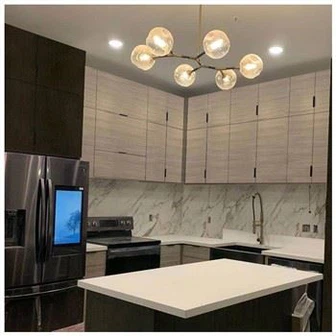
A travertine wall rarely ends at the tile edge; it ends at a vanity unit or a basin splash. The strongest travertine wall cladding programs we ship are ordered with the bathroom package, so the wall tone, countertop, and cabinet finish get approved against one another.
Choose the cabinet tone against the wall's undertone
Warm ivory walls take a walnut or dark oak cabinet without losing light, while a silver-grey wall pairs more cleanly with warm wood or neutral painted and melamine fronts. We compare cabinet fronts under the bathroom light rather than by names; a brown cabinet can pull grey against cool stone and orange against warm. The melamine versus solid wood cabinet decision belongs to the same approval meeting.
Fix the countertop, splash, and panel edges on one drawing
Panels behind and beside a vanity should be dimensioned against the actual countertop and basin, not a nominal room size. Backsplash height, overhang, mirror zone, and panel edges need one drawing so the stone order and cabinet order cannot drift apart, the coordination covered in our guide to hotel bathroom cabinet and vanity top packages. This is how the bathroom vanity top range is specified: wall, top, cabinet, and plumbing cutouts share one approved dimension set.
Frequently Asked Questions about Travertine Wall Cladding for Hotel Walls
1. Which travertine wall cladding grade should a hotel specify for a lobby?
Premium (first) grade is the usual starting point for high-visibility walls because it holds a tight color range and needs minimal filling, which keeps a long wall even. Standard grade fits where tonal variation is accepted; commercial grade is best for rustic or concealed areas.
2. Is silver travertine a better bathroom choice than ivory or walnut?
Color does not decide wet suitability; the surface, grade, and sealing do. Silver and ivory both brighten a bathroom, while walnut adds drama but absorbs light, so the choice follows room size and lighting. Any of the three works in a wet zone when filled, honed, sealed, and cleaned with pH-neutral products.
3. Can travertine wall cladding go inside a shower enclosure?
Yes, when the stone is honed and filled, the joints are sealed, and the waterproofing behind the wall is installed correctly. Unfilled, open-pore travertine should stay out of shower spray because soap scum collects in the pits. Plan on resealing every one to three years with pH-neutral cleaner only.
4. How can I tell whether a travertine wall panel is honed and filled?
Run a hand across the face: a filled panel feels flat and smooth, while an unfilled one has pits you can feel. Filled stone shows the holes as faint tonal patches level with the surface; open pores cast small shadows. Ask whether the filler is resin or cement based; the two need different care.
5. Does travertine wall cladding need sealing before installation?
Sealing normally happens after installation, with an optional pre-grout coat on the tile faces so grout does not stain the stone, then a final coat after the grout cures. Skip the step and a filled surface will still absorb soap film and mineral water, so budget it into the installation scope.
Final Conclusion
Choosing travertine wall cladding for a hotel wall comes down to five checks: color family under the real light, a grade that keeps the lot even, a honed-and-filled surface for anything hands or water touch, a mounting method matched to panel size and wall height, and a sealing routine in the maintenance plan. KA UNITED ships the stone panels with the matching bathroom vanity top and cabinet package, so wall, countertop, and joinery share one approved record from factory to handover.
References
- Travertine, Wikipedia.
- Dimension Stone Design Manual, Natural Stone Institute.
- ASTM C1242, Standard Guide for Selection, Design, and Installation of Dimension Stone Attachment Systems, ASTM International.
- ASTM C97, Test Methods for Absorption and Bulk Specific Gravity of Dimension Stone, ASTM International.
- TCNA Handbook for Ceramic, Glass, and Stone Tile Installation, Tile Council of North America.
- Types and Grades of Travertine Tile, BuildDirect Learning Center.
- Denizli Travertine Overview: Classic, Noce, Silver, Ivory, and Walnut, Atlas Natural Stones Academy.